
TRW Insight / Bangladesh
A co-sharer can take back land sold to an outsider, but only by meeting short deadlines and paying the full price, compensation and interest into court on day one. In 30 districts the claim must now start with legal aid mediation.
Pre-emption Bangladesh law in 2026: three regimes, one short window
Pre-emption Bangladesh law gives a co-sharer a statutory right to step into the shoes of an outsider who buys part of a shared holding. The right is old, but it is unforgiving: it runs on short deadlines, it demands the full price and compensation in court on the day of filing, and since 2025 it must often pass through legal aid mediation before any court will hear it. A purchaser who ignores it can lose land years after registration; a co-sharer who misreads it can lose the right in weeks.
This guide covers the three regimes that operate side by side: section 96 of the State Acquisition and Tenancy Act 1950, as substituted in 2006, for agricultural holdings; section 24 of the Non-Agricultural Tenancy Act 1949 for non-agricultural land; and pre-emption under Muslim law. It explains who can claim, the limitation periods and deposit rules, how pre-emption cases run from filing to a registered deed, the defences purchasers raise, and the mandatory mediation scheme now in force in 30 districts. Broader land dispute routes are covered in companion TRW guides, which are linked rather than repeated here.

Summary: A co-sharer by inheritance in an agricultural holding may apply under section 96 of the State Acquisition and Tenancy Act 1950 to buy back a share sold to an outsider, within two months of notice or knowledge of the sale and never more than three years after registration, depositing the price, 25 per cent compensation and 8 per cent annual interest. For non-agricultural land, section 24 of the Non-Agricultural Tenancy Act 1949 allows any co-sharer tenant four months and a 5 per cent compensation deposit. Muslim law pre-emption is a separate suit with strict formal demands and a one-year limitation period. In 30 notified districts, statutory pre-emption claims must first go to the district legal aid office for mediation.
Key point: The deposit is the point on which most pre-emption cases are lost. The Appellate Division treats the full statutory deposit as a condition precedent: an application filed without it is liable to dismissal, and a court has no jurisdiction to let the balance be paid after time has run. In July 2025 the High Court Division set aside two concurrent decisions in a pre-emptor's favour for exactly that reason.
At a glance
Three regimes
Section 96 for agricultural holdings, section 24 for non-agricultural land, and Muslim law for qualifying sales outside both.
Two months
A section 96 application runs from notice or knowledge of the sale, with an absolute three-year bar from registration.
Full deposit
Price plus 25% compensation plus 8% simple interest must be in court with the application.
Inheritance only
Under section 96 the applicant must be a co-sharer tenant by inheritance; section 24 has no such limit.
Mediation first
In 30 notified districts, statutory pre-emption claims go to the district legal aid office before court.
Table of Contents
What pre-emption is and why three regimes coexist
Pre-emption is a right to purchase land that has already been sold to someone else, on the same terms and with a statutory premium. It exists to keep shared holdings within the families and communities that hold them, and to discourage fragmentation by outsiders. In Bangladesh it is not one right but three, each with its own source, eligibility test, deadline and deposit. Choosing the wrong one can be fatal, because the deadlines and deposits differ and a court cannot easily repair a claim filed under the wrong law after time has run.[8]
The statutory regimes say so expressly. Section 96(17) of the State Acquisition and Tenancy Act 1950 provides that nothing in the section takes away the right of pre-emption conferred by "the Mohammadan Law", and section 24(10) of the Non-Agricultural Tenancy Act 1949 contains an equivalent saving for Muhammadan law.[1] [3] A single transfer may therefore expose a purchaser to a statutory application and a Muslim law suit, brought by different people on different timetables.
How this guide fits with other TRW land guides
Pre-emption is one of several land remedies. For the wider picture, including title, possession and partition suits, injunctions and the Land Crime Prevention and Remedy Act 2023, see our guide on how to resolve land disputes in Bangladesh. Where the real dispute is whether co-owners should divide the land at all, our analysis of partition suits in Bangladesh applies. This guide goes deeper on pre-emption alone.
Which pre-emption Bangladesh regime applies to your land
The first question in any pre-emption Bangladesh dispute is the character of the land at the date of the sale. Section 96 operates on a "holding of a raiyat", which in practice means agricultural land. Section 24 operates on non-agricultural land. Muslim law operates independently of both. The table below sets out the essentials; on a phone, scroll it sideways.
| Regime | Land covered | Who can claim | Time limit | Deposit |
|---|---|---|---|---|
| Section 96, SAT Act 1950 | Agricultural holding of a raiyat; not homestead | Co-sharer tenant by inheritance, eligible under section 90 | 2 months from notice or knowledge; 3-year bar from registration | Price + 25% compensation + 8% a year simple interest |
| Section 24, NAT Act 1949 | Non-agricultural land | Any co-sharer tenant of the land | 4 months from section 23 notice or knowledge | Price or value + 5% compensation |
| Muslim law (haq-shufaa) | Property sold by a valid, complete sale | Co-sharer (shafi-i-sharik) or adjoining owner (shafi-i-jar) | Suit within 1 year (Limitation Act, art 10) | No statutory compensation; price payable on decree |
| Mandatory mediation | Section 96 and section 24 claims | Aggrieved party in a notified district | Mediation time excluded from limitation | Statutory deposit still due on filing if mediation fails |
Mixed transfers: split the land, not the claim
Many deeds convey both agricultural and non-agricultural land. The High Court Division dealt with this in Khan Ashraful Alam v Md Golam Hossain Khan, decided on 9 December 2024. A single kabala conveyed 0.50 decimal described as a shop and 7 decimals of cultivable land. The court held that section 96 concerns agricultural land, allowed pre-emption only of the 7 decimals, and directed that the balance of the deposit be returned to the purchaser.[11] Where the deed mixes land types, a careful pre-emptor values each part separately and considers whether parallel applications are needed.
Land inside a municipality
Location is strong evidence of character. In a First Miscellaneous Appeal decided on 25 January 2026, the High Court Division accepted that land within Jhenaidah Pourashava, recorded as non-agricultural in the khatian, was properly the subject of a section 24 application, noting that the purchaser had never objected to the land's character or the procedure.[12] Record entries, municipal status, actual use and structures on the land should all be checked before filing.
Section 96 of the State Acquisition and Tenancy Act 1950
Section 96 was substituted by section 2 of the State Acquisition and Tenancy (Amendment) Act 2006 (Act No XXXIV of 2006).[1] It applies where "a portion or share of a holding of a raiyat is sold to a person who is not a co-sharer tenant in the holding". In that case one or more co-sharer tenants may apply to the court to have the share sold to them.[1]
Who can claim under section 96
The first proviso to section 96(1) narrows the class sharply. No application lies unless the applicant is both "a co-sharer tenant in the holding by inheritance" and a person to whom the share can lawfully be sold under section 90 of the Act.[1] A co-sharer who bought into the holding cannot use section 96. Section 96(2) requires the other co-sharers by inheritance and the purchaser to be made parties.[1]
Co-sharer status is a question of evidence, and pre-emptors who rely on oral claims lose. Courts look at the khatian, the inheritance chain and any earlier transfers. A proposed new khatian created through mutation does not by itself split the holding: in Khan Ashraful Alam the court held that a proposed, unfinalised khatian did not establish a separation under section 117, so the pre-emptor remained a co-sharer.[11] Our guide to land mutation in Bangladesh explains how such records are created and challenged.
What section 96 does not cover
Three exclusions matter in practice. First, section 96(16) provides that nothing in the section applies to homestead land.[1] Second, the section is triggered only where a share "is sold"; a genuine gift or exchange does not engage it.[1] Third, section 96(18) provides that the substituted section does not apply to a transfer made before the 2006 Amendment Act came into force.[1] Older transfers that are still in litigation are governed by the earlier text, and the deposit and deadline rules must be checked against it.
Notice of the sale under section 89
The two-month clock is tied to notice. Section 89(4) requires that, where a share of a holding is transferred, notices giving particulars of the transfer be filed with the prescribed fees for each co-sharer tenant who is not a party to it, and section 89(5) requires those notices to be served on the co-sharers by registered post.[2] A purchaser who wants certainty should make sure these notices are filed and served at registration, because a co-sharer who never received notice can rely on the date of knowledge instead.
Limitation and deposit: the two pre-emption Bangladesh rules that decide most cases
Most contested pre-emption cases turn on time or money rather than on the merits of the transfer, and pre-emption Bangladesh courts treat both as jurisdictional. Both are set by statute, and the courts apply them strictly.
The two-month period and the three-year bar
Under section 96(1) the application must be made within two months of service of notice under section 89 or, where no notice was served, within two months of the date of knowledge of the sale. The second proviso adds that no application lies "after expiry of three years from the date of registration of the sale deed".[1] The three-year bar operates even if the co-sharer genuinely never knew of the sale.
Knowledge must be proved by credible evidence. A pre-emptor who pleads a date of knowledge should be ready to show how and from whom he learned of the sale, and when he obtained a certified copy of the deed. In the January 2026 Jhenaidah appeal, for example, the pre-emptors pleaded that they learned of the sale on 1 October 2015 and filed on 11 January 2016, inside the four-month period that applies to non-agricultural land.[12]
What must be deposited with the application
Section 96(3) provides that an application "shall be dismissed" unless the applicant deposits in court the consideration money stated in the deed, compensation of 25 per cent of that amount, and simple interest at 8 per cent a year on the consideration from the date of execution of the sale deed to the date of the application.[1] On a sale price of Tk 10 lakh, a pre-emptor applying one year after execution would deposit Tk 10 lakh, Tk 2.5 lakh compensation and Tk 80,000 interest, a total of Tk 13.3 lakh, before any further sums the court later fixes.
That further sum comes under sections 96(4) and (5). On receiving the application and deposit, the court gives notice to the purchaser and requires him to state what he has paid in rent since the sale and what he has spent "in annulling encumbrances on, or for making any improvement" to the holding. After an enquiry the court may direct a further deposit within a reasonable period.[1]
The deposit is a condition precedent
In Md Rabiul Islam v Sultan Mahmud, 15 SCOB [2021] AD 95, decided on 12 January 2021, the Appellate Division held that the statutory deposit is "a condition precedent to the application being entertained", that non-compliance makes the application liable to dismissal, and that permitting the balance to be deposited after the statutory period is illegal and without jurisdiction. It relied on its earlier decision in Akhtarun Nessa v Habibullah, 31 DLR (AD) 88.[8]
The High Court Division applied that rule on 16 July 2025 in Mohammad Nurul Alam Chowdhury v Sree Shibu Prashad Dutta. The pre-emptors had filed with a part deposit and paid the balance and compensation about ten months later without the court's prior permission. Both lower courts had allowed pre-emption. The High Court Division set both judgments aside, distinguishing Mohiuddin v Nazir Hossain Patwary, 11 MLR (AD) 420, where the shortfall was deposited with permission within the period.[10] The practical rule is simple: compute the deposit generously and pay it in full on the day of filing.

Section 24 of the Non-Agricultural Tenancy Act 1949
For non-agricultural land, section 24(1) of the Non-Agricultural Tenancy Act 1949 allows "one or more co-sharer tenants of such land" to apply to the court for the transferred portion or share within four months of service of the notice issued under section 23 or, if no notice was issued or served, within four months of the date of knowledge of the transfer.[3]
Who can claim and what must be deposited
Unlike section 96, section 24 does not limit the right to co-sharers by inheritance. In the January 2026 Jhenaidah appeal the pre-emptors claimed co-sharer status through registered purchase deeds of 2001 and 2008, and the High Court Division allowed their appeal in part.[12] The deposit is lighter. Section 24(2) requires the consideration money or value stated in the section 23 notice plus compensation of five per cent; under section 24(3) the applicant must then deposit any rent, encumbrance and improvement sums the transferee proves, with interest at six and a quarter per cent a year.[3]
Where the applicant disputes the stated consideration, section 24(6) requires the court to determine the true amount after hearing the transferee, and the deposit becomes that amount plus five per cent.[3] A pre-emptor who suspects an inflated price should plead it squarely and deposit on the stated figure in the meantime.
Transfers outside section 24
Section 24(11) excludes several transfers: a transfer to a co-sharer whose interest did not accrue by purchase; a transfer by exchange or partition; a bequest or gift, including heba but not heba-bil-ewaz, to a spouse or a relation by consanguinity within three degrees; a wakf under Muhammadan law; and a debottor or other religious or charitable dedication with no pecuniary benefit reserved for an individual.[3]
The right attaches to the land, not the holding
The 2026 Jhenaidah judgment held that the "right to pre-emption under the Non Agricultural Tenancy Act, 1949 relates to the land not to the holding", so a later separation of the khatian did not defeat the claim. The court also ordered refund of the proportionate price for the part of the land not decreed.[12] Section 24(7) allows the court to apportion the property among several successful applicants, taking existing possession into account, without that apportionment operating as a division of the tenancy.[3]
Converting between section 24 and section 96
Filing under the wrong section is not always fatal, but the margin is thin. In Rabiul Islam the Appellate Division held that a section 96 application may be converted into a section 24 case, because the deposit already made is not an obstacle in that direction. Conversion from section 24 to section 96 is permissible only if the request is made within limitation and the additional deposit is made at the same time.[8] If the character of the land is doubtful, file under the regime with the shorter deadline and the higher deposit.
Pre-emption Bangladesh courts enforce under Muslim law
Muslim law pre-emption, or haq-shufaa, is enforced by a civil suit rather than a miscellaneous application. It matters most where neither statute applies, for example homestead land excluded from section 96.[1] The courts take the elements from Mulla's Principles of Mahomedan Law and apply them with a rigour that surprises many litigants.[13]
Who can claim
The recognised claimants include the shafi-i-sharik, a co-sharer in the property sold, and the shafi-i-jar, the owner of contiguous land. In a High Court Division appeal decided on 13 May 2025, the plaintiff relied on both capacities and the suit, decreed by the Joint District Judge, Moulvibazar, was upheld.[13]
The formal demands: talab-i-mowasibat and talab-i-ishhad
As reproduced from clause 236 of Mulla, the pre-emptor must first declare an intention to assert the right immediately on receiving information of the sale, the talab-i-mowasibat. He must then, with the least practicable delay, affirm that intention, referring expressly to the first demand, and make a formal demand in the presence of the buyer, the seller or on the property, and before at least two witnesses, the talab-i-ishhad.[13]
Formal defects defeat meritorious claims. In Abdul Hannan Sheikh v Md Safiul Azam, decided on 4 May 2025, the High Court Division restored the dismissal of a pre-emption suit because the talab-i-ishhad did not expressly refer to the talab-i-mowasibat and the plaint sought return of the land rather than pre-emption. Citing Shamsuddin Ahmed v Abdul Latif Bhuiyan, 33 DLR (AD) 359, the court said "the formalities are to be strictly performed by the preemptor".[14]
When the right accrues and the one-year limit
The right arises only from a valid, complete and bona fide sale, and a demand made before completion is of no effect. The May 2025 appeal applied Dewan Ali v Md Jasimuddin, 60 DLR (AD) 73, for the proposition that the right "accrues on the date of registration of the sale deed".[13] The suit itself must be filed within one year under article 10 of the First Schedule to the Limitation Act 1908, running from when the purchaser takes physical possession of the whole property sold or, where the property does not admit of physical possession, from registration of the instrument of sale.[4]
Mandatory mediation of pre-emption Bangladesh claims in 2025 and 2026
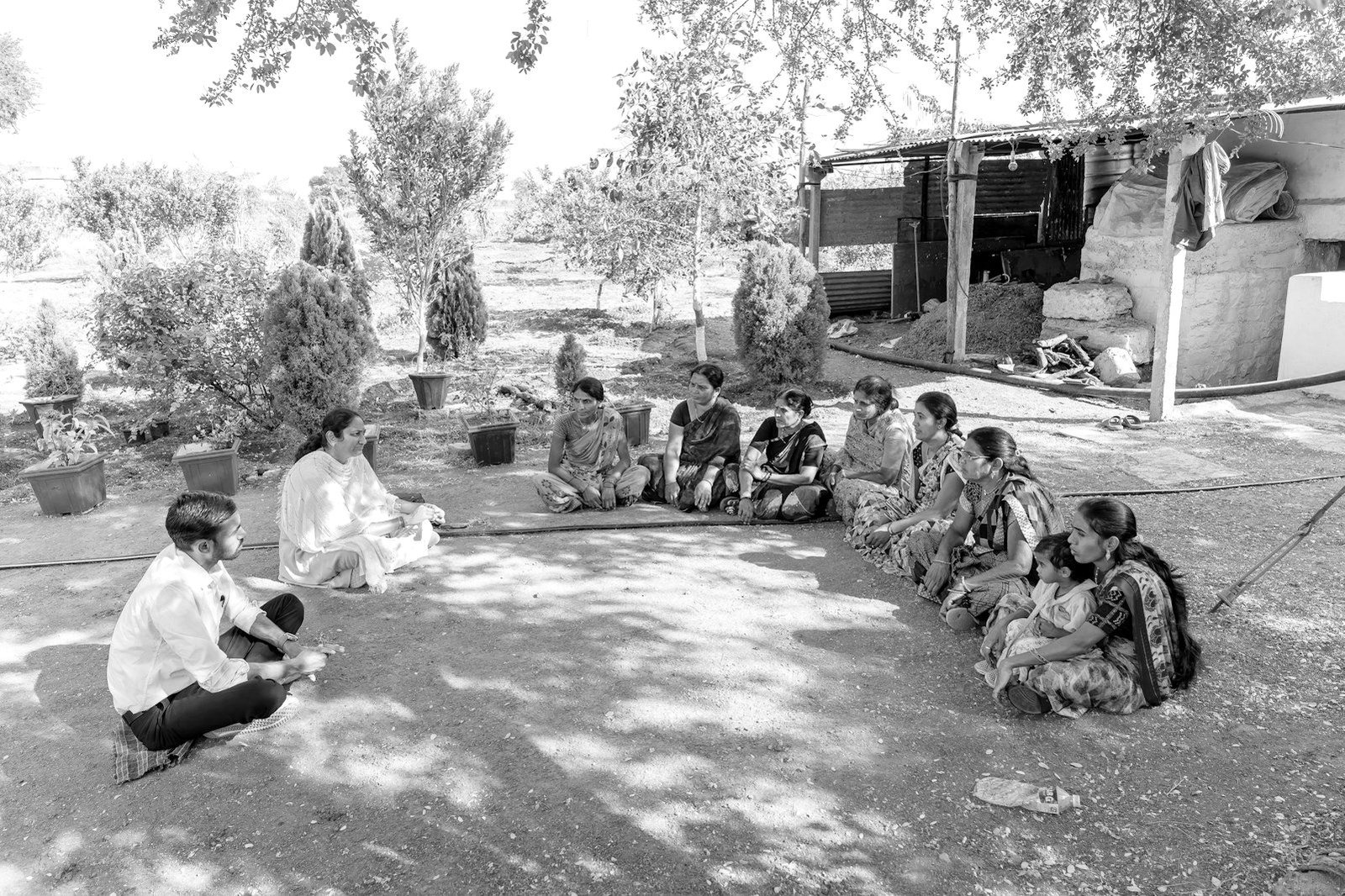
The largest procedural change to pre-emption Bangladesh practice in decades is that, in notified districts, a statutory pre-emption claim can no longer start in court. Section 21B of the Legal Aid Services Act 2000, inserted by section 30 of the Legal Aid Services (Amendment) Act 2026 (Act No 45 of 2026), applies notwithstanding any other law. For a dispute listed in the schedule, the aggrieved party must first apply to the legal aid office for mediation, and only if mediation fails may a party file in the appropriate court, submitting the mediation report.[5]
Which pre-emption claims are covered
The schedule to the Act, as published in 2026, refers to section 96 of the State Acquisition and Tenancy Act 1950 and section 24 of the Non-Agricultural Tenancy Act 1949, alongside family, rent, partition, parents' maintenance, cheque and dowry matters.[6] A Muslim law pre-emption suit is not among the statutory provisions listed. Our guide to legal aid in Bangladesh explains the schedule, eligibility and the mediation process in detail.
Where it applies
By S.R.O. No 288 of 30 July 2026, section 21B took effect from 31 July 2026 in 30 districts: Faridpur, Mymensingh, Rangpur, Dinajpur, Satkhira, Kushtia, Cumilla, Noakhali, Rangamati, Sylhet, Moulvibazar, Sunamganj, Munshiganj, Chapainawabganj, Joypurhat, Kurigram, Narsingdi, Jhenaidah, Magura, Lakshmipur, Bogura, Thakurgaon, Patuakhali, Bhola, Natore, Jashore, Shariatpur, Cox's Bazar, Panchagarh and Tangail.[5] Dhaka and Chattogram are not on the list. Check the current notification before filing, because further districts are expected to be added.
Limitation and deposit during mediation
Section 21B(4) provides that time spent in pre-case mediation is excluded when computing limitation.[5] That protects the two-month and four-month periods, but two points need care. The Act does not say expressly whether the three-year outer bar in section 96, framed as a bar on the application rather than a limitation period, is also extended; a pre-emptor close to that bar should apply for mediation at once and keep the record of dates. And mediation does not relieve the pre-emptor of the deposit: if mediation fails, the full statutory deposit must be ready on the day the application is filed.
Early results
On 21 July 2026 the Law Minister, Md Asaduzzaman, reported that in the pilot districts pre-emption cases under the State Acquisition and Tenancy Act filed between February and May fell from 17 in 2025 to 2 in 2026, a decline of 88.24 per cent, while partition suits fell from 2,001 to 661.[7] The numbers are small, but they show that a meaningful share of pre-emption disputes is now being settled before it reaches court. Our analysis of mediation in Bangladesh explains how to prepare for a mediation that has to succeed.
How pre-emption cases run: from application to registered deed
A statutory claim is filed as a pre-emption miscellaneous case. Section 96(14) requires it to be made to the court that would have jurisdiction to entertain a suit for possession of the land, which in recent reported section 96 cases has been the court of an Assistant Judge or Senior Assistant Judge.[1] [10] [11] The sequence we follow is set out below.
Fix the dates
Record the dates of execution and registration of the sale deed, any section 89 or 23 notice, and when the co-sharer first learned of the sale.
Identify the regime
Decide whether the land is agricultural, non-agricultural, homestead or mixed, and whether section 96, section 24 or Muslim law applies.
Prove co-sharer status
Assemble khatians, inheritance documents and earlier deeds showing a subsisting share in the same holding or land.
Check the district
Confirm whether the district is notified under section 21B; if so, apply to the district legal aid office for mediation first.
Compute the deposit
Calculate price, compensation and interest to the date of filing, round up, and arrange funds before the deadline.
File with full deposit
File the miscellaneous case before the court with jurisdiction over a possession suit, joining all co-sharers by inheritance and the purchaser.
Answer the purchaser's claims
Test the purchaser's statement of rent, encumbrance and improvement costs and make any further deposit the court orders.
Complete the transfer
Secure the registered deed within the statutory sixty days, then mutation and possession.
Joinder by other co-sharers
Under section 96(6), any remaining co-sharer tenant may apply to join within the original period or within two months of service of notice of the application, "whichever be earlier". A co-sharer who neither applies nor joins loses any further right to purchase.[1] Section 24(4) gives co-sharers of non-agricultural land the later of four months or one month from notice of the application.[3] Where several applications succeed, the court apportions the amount each must pay and dismisses any applicant who fails to deposit his share.[1]
The order and the registered deed
If section 96 applications are allowed, the court orders the purchaser to be paid from the deposits and directs him to execute and register a sale deed in favour of the successful pre-emptors within sixty days, with no tax, duty or fee payable on registration. If he fails, the court itself executes and presents the deed for registration within a further sixty days.[1] From registration, title vests in the pre-emptor free from encumbrances created after the sale, and on further application the court may put him in possession.[1] Under section 24, title vests from the date of the court's order allowing the application.[3]
Appeal and revision
An appeal lies to the ordinary civil appellate court from any order under section 96, and to the civil appellate court of competent jurisdiction under section 24.[1] [3] From the appellate decision, the High Court Division can be moved in revision under section 115 of the Code of Civil Procedure, and most reported pre-emption judgments arrive that way.[10] [11] Our guide to civil revision in Bangladesh covers the standard of review, which is limited to errors of law causing a failure of justice.
Assistant Judge or Senior Assistant Judge
Hears section 96 applications as the court with jurisdiction over a possession suit for the land.
Civil appellate court
Hears appeals from any order under section 96 or section 24.
High Court Division
Reviews appellate decisions for errors of law under section 115 of the Code of Civil Procedure.
District legal aid office
Mandatory first stop for section 96 and section 24 claims in 30 notified districts.
Sub-Registrar
Registers the court-directed sale deed in favour of successful pre-emptors.
Assistant Commissioner (Land)
Updates the record of rights through mutation after the pre-emptor takes title.
Defences available to a purchaser
A purchaser facing a pre-emption Bangladesh claim has more defences than is often assumed. Each turns on evidence, and the burden is not always on the pre-emptor.
Time bar and defective deposit
Check the filing date against registration, notice and the pleaded date of knowledge, and check the deposit to the taka. A short deposit is a complete defence under section 96(3) unless the court permitted the balance within time.[8] [10] In a Muslim law suit, test the one-year period against the date of possession or registration.[4]
The pre-emptor is not a qualifying co-sharer
Under section 96, show that the applicant is not a co-sharer in that holding, holds by purchase rather than inheritance, or had already transferred away his inherited share. Under Muslim law, show that the formal demands were not made or were defective.[1] [14]
The purchaser is not a stranger
Section 96 applies only to a sale to a person who is not a co-sharer tenant in the holding, and section 24(11)(a) excludes a transfer to a co-sharer whose interest did not accrue by purchase.[1] [3] A purchaser who is already a co-sharer by inheritance usually has a complete answer.
The transfer was not a sale
Gifts and genuine exchanges fall outside section 96, and section 24 lists its own exclusions. But the label on the deed does not decide the point, and the burden lies on the party who asserts it. In Uzzal Sarker v Kutub Uddin, decided on 22 August 2023, the Appellate Division held that a purchaser who claimed a deed was an exchange carried the burden of proving it, upheld the finding that the transaction was an out-and-out sale, and restated that a collusive or colourable transaction made to defeat pre-emption does not defeat the right.[9]

Waiver, estoppel and acquiescence
A pre-emptor who was offered the land and refused, or who encouraged the sale, may be held to have waived the right. The courts require strict proof. In the 2026 Jhenaidah appeal the purchaser's witness admitted he was not present at the alleged offer and did not know its date, and the defence failed.[12] In the May 2025 Muslim law appeal, undated and uncorroborated evidence of a telephone refusal was rejected, the court holding that a verbal assurance does not extinguish the right.[13] Any offer to a co-sharer should be in writing, dated and acknowledged.
Homestead, land type and defect of parties
Homestead land is outside section 96, and non-agricultural parts of a mixed transfer fall outside it too.[1] [11] Non-joinder of co-sharers by inheritance can be raised under section 96(2), but it must be taken at trial and the omitted parties identified; in Khan Ashraful Alam the objection failed because counsel could not name them.[11]
Improvements and costs
A purchaser who has built on the land can recover proved improvement and encumbrance costs through the further-deposit procedure under section 96(4) and (5) or section 24(3), but not if he has undertaken otherwise. In the May 2025 appeal, a claim for about Tk 11 lakh of construction failed because the purchaser's counsel had earlier undertaken to demolish the building at his own cost and make no claim.[1] [13]
Practical guidance for buyers, sellers and co-sharers
For buyers
Treat pre-emption as a title risk to be priced and managed before completion; in pre-emption Bangladesh practice, most purchaser losses come from skipped checks rather than weak defences. Identify every co-sharer by inheritance from the khatian and succession records, and consider buying from or with their written consent. Ensure section 89 or section 23 notices are filed and served at registration, so the short period starts to run.[2] [3] Delay construction until the pre-emption window has closed. Our guide to land ownership verification and due diligence sets out the wider checks.
For sellers
A seller should record the true price. Understating it to save registration costs can backfire, because the statutory deposit is calculated on the stated consideration and a pre-emptor may acquire the land at the understated figure. A seller who offers the share to co-sharers first should do so in writing and keep proof of delivery and refusal.
For co-sharers
Act within days, not weeks. Obtain a certified copy of the deed, confirm your status as a co-sharer by inheritance, compute the deposit, and identify whether your district is notified for mandatory mediation. In a notified district, apply to the legal aid office first; elsewhere, file the application with the full deposit. Where Muslim law may apply, make the talab-i-mowasibat immediately and the talab-i-ishhad before witnesses, and record both.[5] [14]
What to watch in 2026 and 2027
Three issues will shape pre-emption Bangladesh practice over the coming year. First, the roll-out of mandatory mediation beyond the 30 notified districts, and how district legal aid offices handle the deposit and timing pressures peculiar to pre-emption.[5] Second, whether the courts treat the three-year bar in section 96 as extended by time spent in mediation. Third, continued strict enforcement of the deposit rule, after the High Court Division's July 2025 decision set aside concurrent findings in a pre-emptor's favour.[10]
Pre-emption cases are decided in the first few weeks: identifying the right regime, proving co-sharer status, computing the deposit and meeting the deadline. TRW acts for pre-emptors and purchasers in pre-emption cases, appeals and revisions, and advises buyers on structuring acquisitions to manage the risk. Our real estate disputes practice and land records team can review a transfer within the statutory window, or you can contact TRW directly.
Frequently asked questions
What is pre-emption in Bangladesh land law?
It is a right of a co-sharer, and under Muslim law also a neighbour, to buy land that has been sold to an outsider, by paying the purchase price and any statutory compensation. It arises under section 96 of the State Acquisition and Tenancy Act 1950, section 24 of the Non-Agricultural Tenancy Act 1949 and Muslim law.[1] [3]
Who can claim pre-emption under section 96?
Only a co-sharer tenant in the holding by inheritance who is eligible to buy the land under section 90 of the Act. A co-sharer by purchase cannot apply under section 96.[1]
What is the time limit for a section 96 application?
Two months from service of notice of the sale under section 89, or from knowledge of the sale if no notice was served, and in any case no later than three years from registration of the sale deed.[1]
How much must be deposited to file a pre-emption case?
Can a short deposit be made up later?
Does pre-emption apply to homestead land?
Can a gift or exchange be pre-empted?
Is mediation compulsory before filing a pre-emption case?
What is the limitation period for a Muslim law pre-emption suit?
One year under article 10 of the Limitation Act 1908, from when the purchaser takes physical possession of the whole property or, if it does not admit of physical possession, from registration of the sale.[4]
Source register
Primary legal and regulatory sources
Materials checked on 20 October 2026. Confirm the current official text before relying on any provision.
- State Acquisition and Tenancy Act 1950, section 96 (as substituted by Act No XXXIV of 2006) — Laws of Bangladesh
- State Acquisition and Tenancy Act 1950, section 89 (manner of transfer and notices) — Laws of Bangladesh
- Non-Agricultural Tenancy Act 1949, section 24 (power of co-sharer to purchase) — Laws of Bangladesh
- Limitation Act 1908, First Schedule (article 10) — Laws of Bangladesh
- Legal Aid Services Act 2000, section 21B and S.R.O. No 288 of 2026 — Laws of Bangladesh
- Schedule to the Legal Aid Services Act 2000 (inserted 2026) — Laws of Bangladesh
- Dhaka Tribune, 21 July 2026 — Law minister: mediation yielding encouraging results in reducing case backlog
- Appellate Division, Md Rabiul Islam v Sultan Mahmud, Civil Appeal No 210 of 2010, 15 SCOB [2021] AD 95 (12 January 2021)
- Appellate Division, Uzzal Sarker v Kutub Uddin, Civil Appeal No 196 of 2009 (22 August 2023)
- High Court Division, Mohammad Nurul Alam Chowdhury v Sree Shibu Prashad Dutta, Civil Revision No 4517 of 2023 (16 July 2025)
- High Court Division, Khan Ashraful Alam v Md Golam Hossain Khan, Civil Revision No 6497 of 2023 (9 December 2024)
- High Court Division, First Miscellaneous Appeal No 272 of 2019 with FMA No 83 of 2020, Jhenaidah (25 January 2026)
- High Court Division, Md Iftekar Ahmod Sakil v Md Abdul Basit, First Appeal No 715 of 2018 (13 May 2025)
- High Court Division, Abdul Hannan Sheikh v Md Safiul Azam, Civil Revision No 3973 of 2023 (4 May 2025)
Related TRW assistance
Move from information to a defined next step
TRW acts for co-sharers and purchasers in pre-emption cases, legal aid mediation, appeals and civil revisions, and advises buyers on managing pre-emption risk. Explore our real estate disputes practice and land records and mutation practice, or contact TRW to discuss your matter.