
TRW Insight / South Asia
South Asia has a treaty-based arbitration council, a statutory Maldivian centre and strong national institutions, yet regional contracts still head for Singapore. For Bangladeshi parties the right choice depends on the counterparty's assets and on how each neighbour enforces awards.
SAARC arbitration Bangladesh parties use: the 2026 position
SAARC arbitration Bangladesh businesses actually use is rarely the arbitration the SAARC treaties envisaged. The SAARC Arbitration Council (SARCO) has existed since 2007 with a secretariat in Islamabad and its own rules, yet cross-border power purchase agreements in the region have generally chosen arbitration in a third country instead.[3] [5] What has changed is enforcement: since the Maldives acceded to the New York Convention in 2019, every SAARC member state is a party, so an award made in one can in principle be enforced in all the others.[2]
This guide is for Bangladeshi companies contracting with Indian, Nepali, Sri Lankan, Pakistani and Maldivian counterparties. It explains what SARCO is and why it is so rarely chosen, how arbitration in the Maldives works under the Arbitration Act 2013 and the rules of the Maldives International Arbitration Centre (MIAC), which seats and institutions make sense for each neighbouring country, and how awards travel between Dhaka and the region. The mechanics of enforcing a foreign award in a Dhaka court are covered in our companion guide and are summarised here only where the South Asian angle changes the answer.

Summary: SARCO is a SAARC specialised body with UNCITRAL-based rules and a secretariat in Islamabad, but it has a thin track record and regional energy contracts have preferred third-country seats such as Singapore. MIAC is the statutory arbitration centre of the Maldives under Arbitration Act No. 10/2013, and Maldivian parties still often prefer SIAC. All eight SAARC states are New York Convention parties; India, Nepal, Pakistan, Bhutan and Afghanistan apply it only on a reciprocity basis. A foreign award from any of them is enforced in Bangladesh under section 45 of the Arbitration Act 2001.
Key point: The institution does not decide where an award can be enforced; the seat does. A SARCO arbitration seated in Dhaka produces a Bangladeshi award, enforceable abroad only as a Bangladesh award. Before choosing Dhaka against an Indian counterparty with assets in India, confirm that India's gazette notification under its own law covers Bangladesh: Nepal's courts refused an Indian award precisely because India had not notified Nepal.[12]
At a glance
SARCO exists
The SARCO agreement was signed at the Thirteenth SAARC Summit and came into effect on 2 July 2007.
Rarely chosen
Regional power contracts signed after 2014 have generally used third-country arbitration rather than SARCO.
MIAC is statutory
The Maldives Arbitration Act No. 10/2013 creates MIAC as a separate legal entity with its own board.
Eight of eight
Every SAARC state is now a New York Convention party; the Maldives became the last to join in 2019.
Section 45
A foreign award from any SAARC state is enforced in Bangladesh by execution as if it were a decree of the court.
Table of Contents
Why the regional map matters in SAARC arbitration Bangladesh contracts
Bangladesh trades with India across a land border, imports from and exports to Sri Lanka and Pakistan, buys power from Nepal through India, and sends workers, contractors and suppliers to the Maldives. In SAARC arbitration Bangladesh practice, these contracts often end up with dispute clauses written in a hurry: "arbitration under SAARC rules", "arbitration in a neutral SAARC country" or simply "arbitration in Colombo". Each wording has consequences for which law governs the procedure, which court supervises it and where the award can be collected.
The region offers three layers of choice. The first is the regional body, SARCO, created by treaty among the SAARC member states. The second is national institutions in each capital or commercial centre: the Bangladesh International Arbitration Centre (BIAC) in Dhaka, the Mumbai Centre for International Arbitration (MCIA) and the India International Arbitration Centre (IIAC) in India, the ICLP Arbitration Centre and the Sri Lanka National Arbitration Centre in Colombo, and MIAC in Malé. The third is a neutral hub outside South Asia, most often Singapore. Our guide to international commercial arbitration in Bangladesh explains how the seat shapes the procedure; this article applies that analysis to the neighbours.
The legal starting point in Bangladesh
The Arbitration Act 2001 applies in full to an arbitration seated in Bangladesh. Where the place of arbitration is outside Bangladesh, section 3(2) applies only sections 45, 46 and 47, the provisions on recognition and enforcement of foreign awards.[1] Section 2(k) then defines a foreign arbitral award as one made under an arbitration agreement "in the territory of any state other than Bangladesh", excluding an award made in a state the Government has declared a "specified state" by gazette notification under section 47.[1]
Notice what the definition does not say: it does not require the seat to be a New York Convention state, and it does not depend on the institution. An award made in Colombo, Kathmandu, Karachi, Mumbai or Malé is a foreign award in Bangladesh because of where it was made.
The SAARC Arbitration Council: mandate, structure and rules
SARCO was established to provide cost-effective settlement of disputes through arbitration within the region. The agreement establishing it was signed during the Thirteenth SAARC Summit and came into effect on 2 July 2007.[3] It was declared a SAARC specialised body in 2012, and Pakistan is its permanent host country, with the arbitration centre located at the SARCO Secretariat in Islamabad. Parties may nonetheless hold proceedings at a venue of their choice.[4]
Governance
SARCO's policy body is a Governing Board with one representative from each member state, a representative of the SAARC Secretary General, a representative of Pakistan's Ministry of Foreign Affairs and the Director General. The Board decides unanimously. Member states fund the administrative and programme budgets under an agreed formula, while Pakistan funds the capital budget.[4] The Director General is the chief executive. Under Article III of the agreement the post rotates among the member states in alphabetical order, every three years, beginning with Pakistan.[4] Md Helal Chowdhury held the office in early 2024, when he met the SAARC Chamber of Commerce and Industry in Islamabad; by July 2026 the Director General was Choining Dorji.[15] [6]
The SAARC Arbitration Rules
SARCO's arbitration and conciliation rules are based on the UNCITRAL Model Law and are revised from time to time.[4] SARCO's own presentation of the rules groups them in four parts: introductory rules on the arbitration agreement, notices, representation and appointment; composition of the tribunal, including challenge and replacement; the arbitral proceedings, covering place and language, pleadings, evidence, interim measures and experts; and the award, including applicable law, interpretation, costs and confidentiality.[4] If the parties do not agree on the number of arbitrators there are three. Each party appoints one and the two choose the presiding arbitrator.
If a party fails to appoint, the Director General may make the appointment on request.[4] SARCO keeps two panels of arbitrators, one appointed by member governments and one nominated by professional bodies.[4]
The SARCO model clause refers any dispute, controversy or claim arising out of or relating to the contract to arbitration "in accordance with the SAARC Arbitration Rules as at present in force".[4] That wording names rules but no seat, language or number of arbitrators. A Bangladeshi party using it should add all three.
The treaty clause in SAARC instruments
SAARC's Council of Ministers agreed in 2014 that the SAARC arbitration clause should be included in future bilateral and multilateral agreements between member states, and a SARCO reference was written into the SAARC Framework Agreement for Energy Cooperation signed at the Kathmandu Summit in 2014.[4] That framework identified SARCO for electricity and energy disputes between states.[5] It does not bind private parties to SARCO; a company is bound only by the clause in its own contract.
SARCO's status in 2026 and why parties look elsewhere
For SAARC arbitration Bangladesh clients, the honest assessment is that SARCO is operational on paper and in outreach, but largely untested as a case-handling institution. A policy brief prepared under the South Asia Regional Initiative for Energy Integration reported no electricity arbitration cases between India and Nepal, Bangladesh or Bhutan, and found that power purchase agreements signed after the 2014 framework have generally provided for third-country arbitration rather than SARCO, with Singapore named as the third-country seat in India's bilateral contracts.[5] The same brief noted that referring disputes to SARCO requires consensus and trust among member states, and recommended strengthening it over the long term.[5]
The political backdrop
SARCO depends on a regional organisation whose machinery has largely stalled. When SARCO's Director General met the SAARC Chamber of Commerce and Industry in January 2024, the Chamber recorded that the SAARC Standing Committee had not met since 2016, and discussion turned to regional cooperation while regular SAARC meetings were paused.[15] Activity has not stopped. In July 2026 the SAARC Secretary General, Md Golam Sarwar, visited SARCO in Islamabad and was briefed on its programmes, ADR mechanisms and strategy for investment dispute resolution in South Asia.[6] But visits and capacity-building are not a published caseload, and counsel advising on a clause today should treat SARCO as an institution without a visible body of administered cases.
When SARCO can still make sense
There are narrow situations where a SARCO clause is defensible. A state-to-state or state-entity contract under a SAARC instrument may already point to it. A small contract between two South Asian companies, neither of which will accept the other's national centre, may value a regional label and modest cost. If SARCO is chosen, fix the seat in a jurisdiction with supportive courts, name a fallback appointing authority, and provide for the number and nationality of arbitrators.
A common misconception about SARCO awards
SARCO's own materials state that awards under its rules are treated as foreign awards enforceable under the New York Convention.[4] That is true only when the award is made in a state other than the state where enforcement is sought. Under Bangladeshi law an award is foreign because of where it is made, not who administered it.[1] A SARCO arbitration seated in Dhaka produces a Bangladeshi award, subject to setting aside in Bangladesh and to enforcement as a domestic award. The institution's name adds nothing to its enforceability abroad.
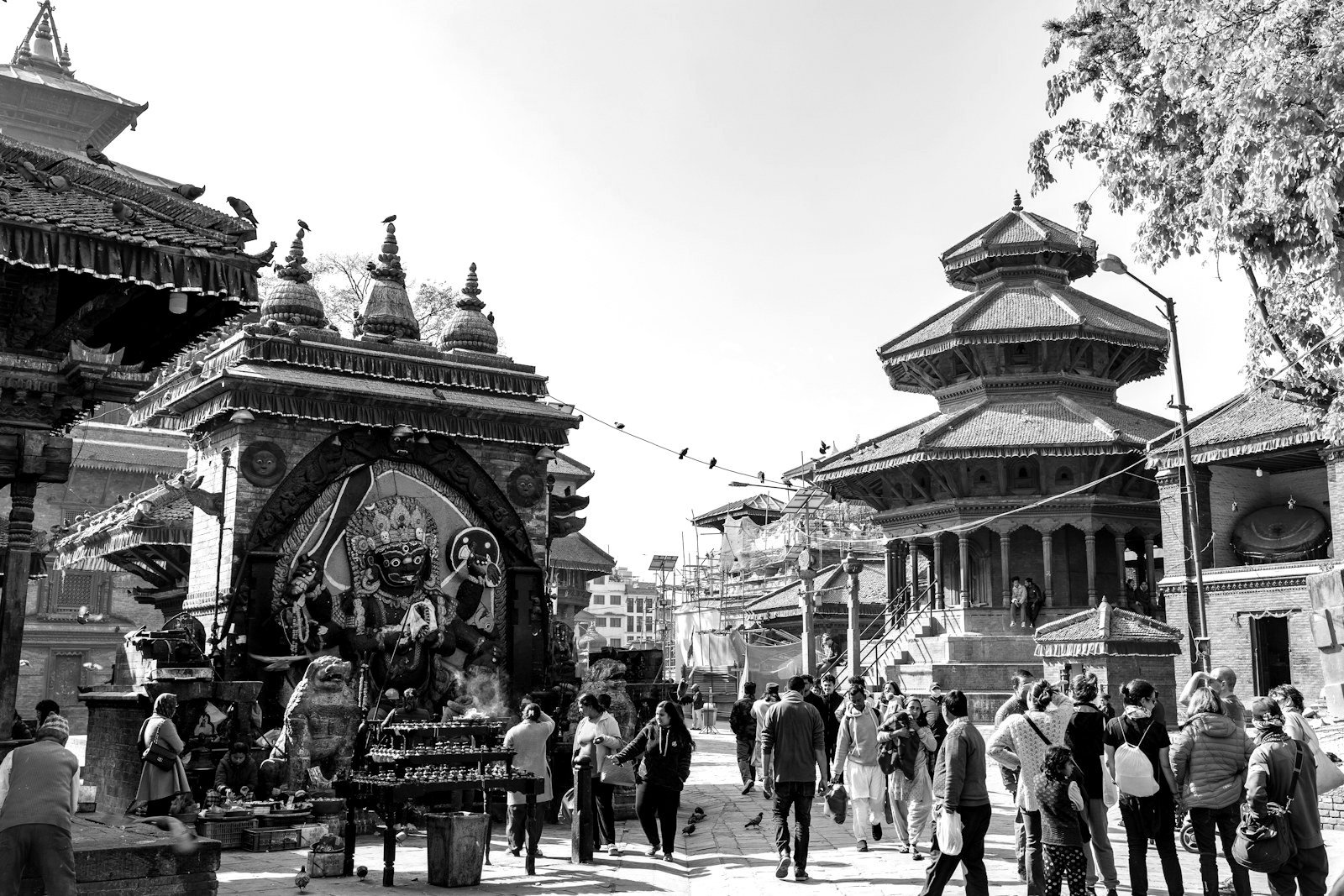
Arbitration in the Maldives under the Arbitration Act 2013
The Maldives modernised its law with the Arbitration Act, Law No. 10/2013. The Act applies where the arbitration agreement places the seat in the Maldives; where the seat is elsewhere, a small number of provisions on court support still reach the arbitration.[7] It follows the familiar Model Law structure: a written arbitration agreement, which may be a clause or a separate agreement and may be recorded electronically; party autonomy over the tribunal; tribunal powers over interim measures; limited court intervention; and closed grounds for setting aside and refusing enforcement.[7]
The tribunal and interim measures
The parties may choose the number of arbitrators, but it must be odd. Absent agreement, a dispute of MVR 1.5 million or more is heard by three arbitrators and a smaller one by a sole arbitrator.[7] Chapter 6 of the Act gives the tribunal power to order interim measures and, where notice would frustrate the measure, to make ex parte preliminary orders; the tribunal can require security, the courts can recognise and enforce the tribunal's measures, and the courts can grant their own.[7] A party that obtains a measure later found unjustified may be liable for costs and damages.[9]
Which court acts
The Act defines "court" as the High Court of the Maldives having jurisdiction over matters under the Act.[7] The High Court hears set-aside applications and requests for court assistance in taking evidence. For recognition and enforcement, however, the High Court held in Hilton v Sun (2017/HC-A/91) that the Civil Court is the relevant court, and the Civil Court is also treated as the competent court for recognising interim measures, a point not yet tested.[9]
Setting aside a Maldives award
Section 69 lists the grounds: incapacity, invalid agreement, lack of proper notice or opportunity to present the case, decisions beyond the submission, improper composition or procedure, non-arbitrability, public policy and, unusually, an arbitrator found guilty of corruption or fraud during the proceedings.[7] The application must be made within three months of the award, and section 70 states that it cannot be made once that period passes.[7] Section 71 allows the court to remit the award to the tribunal.[7] Compare Bangladesh, where the window is sixty days: a Bangladeshi party facing an adverse Maldives award has more time, but not much.
Foreign awards in the Maldives
The Maldives acceded to the New York Convention on 17 September 2019, with effect from 16 December 2019, and made no reservations.[2] Under the Act the enforcing party applies to the relevant court with the original or an attested copy of the award and, if the award is not in Dhivehi, a translation; section 74 sets out the grounds on which recognition and enforcement may be refused, which mirror the setting-aside grounds.[7]
The Hilton v Sun saga shows what enforcement can involve in practice. Hilton obtained a Singapore-seated ICC award in 2015 against Sun Travel and Tours, which was recognised in Singapore.
Its Maldivian enforcement went through several Civil Court and High Court rounds; an ex parte freezing order and a payment order were obtained in 2020, and the freezing orders survived appeal by a majority. In 2022, however, the High Court quashed the payment order by a two-to-one majority, holding that a separate recognition order was required before enforcement. An earlier High Court decision, Avista (2021/HC-A/284), had treated recognition and enforcement as one step.[9] A Bangladeshi award creditor should therefore plan for a two-stage application in the Maldives and seek freezing relief early.
Lawyers and representation
The Act imposes no nationality or qualification restrictions on arbitrators or party representatives in arbitration, although unlicensed representatives may address facts but not points of Maldivian law. Foreign lawyers need leave from the Bar Council of Maldives, and court appearances require Bar Council licences, with an enhanced licence for the High Court and Supreme Court.[9] Bangladeshi counsel can therefore appear in a Maldives-seated arbitration, but court applications in Malé need local counsel.
MIAC arbitration: the Maldives International Arbitration Centre and its rules
The Arbitration Act establishes the Maldives International Arbitration Centre as a separate legal entity. A three-member Board of Directors, appointed by the President on the Attorney General's recommendation for five-year terms, sets policy; the Chairman appoints a Chief Executive Officer; and the Centre's annual budget comes from the national budget.[7] Its statutory functions include promoting the Maldives as an arbitration venue and maintaining a register of arbitrators.[7] MIAC opened to the public in 2020 and is the only institution for domestic and international arbitration under the Act. It appoints arbitrators in certain circumstances, decides challenges to sole arbitrators, and hears appeals from decisions not to remove an arbitrator. Referral numbers have not been published.[9]
What the MIAC Rules provide
MIAC has published arbitration rules that largely mirror the Act.[9] The features that matter most to a foreign party are these:
- Commencement: unless otherwise agreed, the arbitration begins when the respondent receives the request to refer the dispute to arbitration (rule 22).[8]
- Short defence period: the respondent has 15 days from receipt of the statement of claim to file its defence (rule 24(b)), far shorter than most international rules.[8]
- Tribunal size: the MVR 1.5 million threshold for three arbitrators is repeated in rule 1.[8]
- Default appointments: MIAC appoints if a party or the co-arbitrators fail to act within 30 days, or if the parties cannot agree on a sole arbitrator (rules 4 and 5).[8]
- Nationality: nationals of the Maldives and of countries with which it has diplomatic relations may be appointed, and a sole arbitrator in a dispute between parties of different nationalities is to be of a different nationality from theirs (rules 2 and 7).[8]
- Interim measures: rules 14 to 20 track the Act, including ex parte preliminary orders, security and liability for unjustified measures.[8]
- Confidentiality and costs: proceedings and the award are confidential unless the parties agree otherwise (rule 40), and costs are shared as agreed or as the tribunal decides (rule 41).[8]
The rules contain no separate emergency arbitrator procedure and no expedited procedure, and set no overall deadline for the award.[8] A party that needs urgent relief before the tribunal is formed must look to the courts.
Mind the acronym
"MIAC" also denotes the Mauritius International Arbitration Centre, a different institution in a different seat. A clause that says only "MIAC arbitration" invites an argument about which centre the parties meant. Name the institution in full, state the seat as Malé, Maldives, and refer to the MIAC Rules in force at the commencement of the arbitration.
MIAC, SIAC or Dhaka
Maldivian parties often choose the Singapore International Arbitration Centre, mainly because Singapore is the nearest regional hub, and Malaysia, Dubai and London have also been used in high-profile matters.[9] For a Bangladeshi contractor or supplier, MIAC makes most sense for modest claims against a Maldivian party whose assets are only in the Maldives, where a local seat and a Dhivehi-speaking enforcement court shorten the path to payment. For larger contracts, especially resort construction, a Singapore seat under the SIAC Rules is usually the stronger choice; our analysis of SIAC arbitration for Bangladeshi parties covers the 2025 rules and fees.
Choosing a seat for SAARC arbitration Bangladesh disputes, country by country
A sound clause starts with where the counterparty's assets are, then asks which seat produces an award that the courts of that country will enforce without a fight. The national framework of each neighbour differs, and SAARC arbitration Bangladesh parties negotiate is only as good as the enforcement route at the end.
Indian counterparties
Indian companies often propose an Indian seat. The MCIA, founded in 2016 as a not-for-profit joint initiative of the domestic and international business and legal communities, now administers cases under the MCIA Rules 2025 and says those rules draw on experience of more than 180 matters.[10] The IIAC in New Delhi is the other institutional option. An India-seated arbitration brings Indian courts into the procedure, and a Bangladeshi party that accepts it should insist on institutional rules, a three-member tribunal with a neutral presiding arbitrator, and English as the language.
The bigger question is the reverse direction. India applies the New York Convention only to awards made in another contracting state and only to commercial relationships.[2]
Its law also requires the Government of India to notify each territory to which the Convention applies, and the absence of a notification has had real consequences in the region: India has not notified Nepal, and in Sanghi Brothers (Indore) v High Court, Patan Nepal's Supreme Court upheld the refusal of an Indian award on reciprocity grounds.[12] If you want a Dhaka-seated award that can be enforced in India, confirm that India's current notification list includes Bangladesh before signing. If it does not, a neutral seat already notified by India, such as Singapore, removes the risk.
Nepali counterparties
Nepal acceded to the New York Convention in 1998 with both the reciprocity and commercial reservations.[2] Its Arbitration Act 1999 has been amended by a 2025 Ordinance; recognition of a foreign award is sought from the High Court with jurisdiction over the award debtor, and the award must be final and binding at the seat with no challenge pending.[12]
Nepal enforces foreign awards only where the country of origin also enforces Nepali awards.[12] Bangladesh's law imposes no reciprocity condition, so a Bangladeshi award should satisfy that test, but a Bangladeshi party should expect a Nepali debtor to raise it and should be ready with section 2(k) and section 45 of the Arbitration Act 2001.[1] Grounds for refusal include an invalid agreement, lack of notice, an award beyond the scope of the submission, non-arbitrability and Nepali public policy, and the 2025 amendment bars re-examination of evidence.[12]
The track record is short but improving. On 2 March 2025 the Patan High Court recognised and enforced a Singapore-seated ICC award of more than €1.36 million in favour of Amadeus IT Group against Himalayan Airlines, relying on section 34 of the Arbitration Act and on both states being Convention parties; it was described as the first successful recognition of a foreign award by a Nepali court, after earlier applications had failed for reasons including lack of reciprocity and defective notice.[11] A Bangladeshi award creditor in Nepal should prove proper notice meticulously and file the award with certified Nepali translations.[12]
Sri Lankan counterparties
Sri Lanka's Arbitration Act No. 11 of 1995 is modelled on UNCITRAL principles. The Sri Lanka National Arbitration Centre and the ICLP Arbitration Centre are the country's principal arbitration institutions.[13] A domestic award is enforced by application to the High Court within one year after the expiry of fourteen days from the making of the award (section 31); an application to set it aside must be made within 60 days of receipt (section 32); and awards from New York Convention states are enforced under section 33, subject to the defences in section 34.[13]
Sri Lanka ratified the Convention in 1962 without reservations.[2] For mid-sized trade disputes, Colombo under ICLP rules is a credible neutral compromise when an Indian or Maldivian party will not accept Dhaka; for a Sri Lankan respondent, a Colombo seat also avoids any argument about foreign-award status at home.
Pakistani counterparties
Pakistan ratified the Convention in 2005 with the reciprocity reservation only.[2] Its Recognition and Enforcement (Arbitration Agreements and Foreign Arbitral Awards) Act 2011 gives the High Courts exclusive jurisdiction over recognition and enforcement of foreign awards, while the Arbitration Act 1940 still governs domestic arbitration.[14]
Pakistani courts once treated a foreign-seated award as domestic because Pakistani law governed the contract; the Lahore High Court has since held that a foreign award is one issued in a contracting state, whatever the governing law of the contract, although appeals on the point were pending before the Supreme Court when that analysis was written.[14] A Bangladeshi party should keep Pakistani law away from the arbitration agreement and choose a seat outside Pakistan. SARCO's Islamabad secretariat is a practical point in its favour for Pakistan-related disputes, but not a reason to seat the arbitration there.
Maldivian counterparties
The choice is between MIAC with a Malé seat, a Dhaka seat under BIAC rules, and a neutral hub such as Singapore. A Dhaka award must pass through the Maldivian recognition and enforcement stages described above; a MIAC award will be enforced at home but may be harder to set aside if the process goes wrong, given the three-month limit and the newness of the local case law.[7] [9] Translation costs matter too, since a non-Dhivehi award needs a translation for enforcement.[7]
The table below compares the options. On a phone, scroll it sideways.
| Counterparty | New York Convention | Regional options | Enforcement at home | Watch-point |
|---|---|---|---|---|
| India | 1960; reciprocity and commercial reservations | MCIA, IIAC, Indian seat, Singapore | Requires a gazette-notified territory | Confirm Bangladesh is notified before choosing Dhaka |
| Nepal | 1998 accession; reciprocity and commercial reservations | Dhaka, Singapore, SARCO with a neutral seat | High Court with jurisdiction over the debtor | Reciprocity test; Arbitration Act amended in 2025 |
| Sri Lanka | 1962; no reservations | ICLP or SLNAC in Colombo | High Court; foreign awards under sections 33 and 34 | One-year window for domestic award enforcement |
| Pakistan | 2005; reciprocity reservation | Neutral seat outside Pakistan; SARCO secretariat in Islamabad | High Courts, under the 2011 Act | Keep Pakistani law off the arbitration agreement |
| Maldives | 2019 accession; no reservations | MIAC in Malé, SIAC, Dhaka | Civil Court, possibly in two steps | Three-month set-aside limit; Dhivehi translation |
Enforcing SAARC arbitration Bangladesh awards from regional seats
Bangladesh acceded to the New York Convention on 6 May 1992 without any reservation, with effect from 4 August 1992.[2] Its enforcement regime is broader than the Convention's. Because section 2(k) covers awards made in any state other than Bangladesh, save a specified state, an award from Kathmandu, Karachi, Colombo, Mumbai, New Delhi, Thimphu or Malé qualifies as foreign without any reciprocity inquiry.[1]
What section 45 does
Section 45(1)(a) makes an enforceable foreign award binding for all purposes between the parties, so it may be relied on "by way of defence, set off or otherwise" in any legal proceedings in Bangladesh. Section 45(1)(b) provides that, on application by a party, a foreign award is enforced by execution by the Court under the Code of Civil Procedure "in the same manner as if it were a decree of the Court".[1]
The application must be accompanied by the original award or a copy authenticated as required by the law of the country where it was made, the original arbitration agreement or a certified copy, and evidence that the award is foreign.[1] Both limbs matter for SAARC arbitration Bangladesh disputes: an Indian supplier's award can be used defensively against a Bangladeshi buyer's local suit, and a Bangladeshi party's award from Colombo can be executed against the debtor's assets here.
Practical points for regional awards
The authentication requirement in section 45(2)(a) points to the law of the seat, so obtain the authentication formalities of Sri Lanka, Nepal, Pakistan, India or the Maldives at the time the award is issued, not years later.[1] Commission English translations of anything in Dhivehi, Nepali, Sinhala, Tamil or Urdu early, including the arbitration agreement if it was signed in a local language. Proving that the award is foreign is usually simple, but a SARCO award whose seat is unclear in the award itself can generate argument; insist that the tribunal states the seat expressly.
The forum, the documents, the section 46 defences, limitation and execution against assets are analysed in our guide to foreign arbitral award enforcement in Bangladesh, and the effect of the new commercial courts on arbitration applications in our guide to the Commercial Courts Act in Bangladesh. We do not repeat that analysis here.
Interim relief for foreign-seated arbitrations
Because section 3(2) extends only sections 45 to 47 to arbitrations seated abroad, the Bangladeshi courts' power to grant interim measures in aid of an arbitration seated in Colombo, Mumbai or Malé is contested.[1] That gap, and the case law on it, is discussed in our guide to international commercial arbitration in Bangladesh. For a Bangladeshi party whose counterparty has assets in Bangladesh, it is one of the strongest arguments for a Dhaka seat.
Taking a Dhaka award to India, Nepal, Sri Lanka, Pakistan or the Maldives
For SAARC arbitration Bangladesh companies win at home, the question is whether the neighbouring court will treat a Bangladeshi award as a Convention award. The answer turns on each state's reservations.[2]
- Reciprocity reservation: India, Nepal, Pakistan, Bhutan and Afghanistan apply the Convention only to awards made in another contracting state. Bangladesh is a contracting state, so this reservation is satisfied for a Dhaka award.[2]
- Commercial reservation: India, Nepal, Bhutan and Afghanistan apply the Convention only to relationships considered commercial under their national law. Sale, supply, construction, services and financing contracts will qualify; claims dressed up as employment or family disputes may not.[2]
- No reservations: Sri Lanka and the Maldives, like Bangladesh, apply the Convention without either reservation.[2]
- Additional domestic steps: India's gazette notification requirement and Nepal's reciprocity test sit on top of the Convention, and the Maldives may require separate recognition and enforcement orders.[12] [9]
Two further cautions apply. First, check the limitation period for enforcement in the debtor's country as soon as the award is issued: Sri Lanka's one-year window for domestic awards shows how short regional deadlines can be.[13] Second, a Dhaka award can be challenged in Bangladesh within sixty days of receipt; an award creditor that intends to enforce abroad should expect the debtor to argue in the foreign court that a pending Dhaka challenge means the award is not yet binding. Our guide to how to set aside an arbitral award in Bangladesh explains that process.
Institutions used in SAARC arbitration Bangladesh matters
The cards below set out the institutions most often relevant to Bangladeshi parties in regional contracts. None is right for every dispute; the seat, the counterparty's assets and the size of the claim decide which one fits.
SAARC Arbitration Council (SARCO)
SAARC specialised body with a secretariat in Islamabad and UNCITRAL-based arbitration and conciliation rules.
Maldives International Arbitration Centre
Statutory centre under Arbitration Act No. 10/2013, open to the public since 2020, administering the MIAC Rules.
Mumbai Centre for International Arbitration
Not-for-profit centre founded in 2016, now administering arbitrations under the MCIA Rules 2025.
ICLP Arbitration Centre and SLNAC
Colombo's two principal arbitration institutions under the Arbitration Act No. 11 of 1995.
Bangladesh International Arbitration Centre
Dhaka institution administering arbitration and mediation under its own rules for Bangladesh-seated cases.
Singapore International Arbitration Centre
Frequent choice for Maldivian parties and for regional power purchase agreements seeking a third-country seat.
The value of a regional institution
Regional institutions offer lower fees, shorter travel and arbitrators familiar with South Asian commercial practice. Their weakness is depth: thinner published rules on emergency relief, expedited procedure and joinder, and less experience administering complex multi-party cases. MIAC's rules, for example, have no emergency arbitrator or expedited procedure.[8] For a large contract, the extra cost of a Singapore or other established hub is often worth paying; for a contract worth less than the cost of a Singapore hearing, a regional centre may be the only proportionate option.
Drafting the clause for SAARC arbitration Bangladesh contracts
Most problems in SAARC arbitration Bangladesh disputes trace back to the clause. The sequence we follow when drafting or reviewing a clause with a South Asian counterparty is set out below.
Locate the assets
Identify where the counterparty holds bank accounts, receivables, property and shareholdings, because enforcement will happen there.
Check the reservations
Confirm the New York Convention reservations and any domestic notification or reciprocity test in the counterparty's country.
Choose the seat
Pick a seat whose courts are supportive and whose awards the debtor's courts will recognise, such as Dhaka, Colombo, Malé or Singapore.
Name the institution in full
Write out BIAC, SIAC, MCIA, ICLP, SARCO or the Maldives International Arbitration Centre, and the rules in force at commencement.
Fix tribunal and language
Specify the number of arbitrators, a neutral presiding arbitrator's nationality and English as the language of the arbitration.
Provide a fallback appointer
Name an appointing authority in case the chosen institution cannot or does not act within a set time.
Plan interim relief
Decide where urgent relief over assets will be sought, especially if the seat is outside Bangladesh.
Diary enforcement deadlines
Record set-aside windows and enforcement limitation periods in every country where the award may be enforced.
Clauses to avoid
- "Arbitration under SAARC rules": names rules but no seat, which leaves the court that supervises the arbitration and the nationality of the award open to argument.
- "MIAC arbitration": ambiguous between the Maldives and Mauritius centres.
- "Arbitration in a neutral SAARC country": agrees on nothing, and invites a dispute about the dispute.
- Silence on language: regional proceedings can drift into a local language, with translation costs at enforcement.
For the drafting principles behind each element, see our guide to the arbitration clause in Bangladesh.
What to watch in 2026 for SAARC arbitration Bangladesh users
Three developments deserve attention. First, SARCO is seeking a role in investment dispute resolution, as the July 2026 visit by the SAARC Secretary General shows; whether that produces published rules updates, a case list or fee schedules will decide whether counsel can recommend it.[6]
Second, Bangladesh's commercial courts, created by the Commercial Courts Act 2026, are now part of the enforcement landscape for arbitration matters, and reform of the Arbitration Act 2001 itself is under discussion; we track both in our Commercial Courts Act guide. Third, Nepal's 2025 amendment and the Maldivian High Court's split on recognition show that the law in neighbouring states is moving, so a clause signed in 2026 should be checked again before any award is enforced.[12] [9]
The underlying lesson for SAARC arbitration Bangladesh parties is constant. Choose the seat for the courts it brings and the award it produces, choose the institution for the service it gives, and check the enforcement route in the debtor's country before signing, not after the dispute starts.
Frequently asked questions
What is the SAARC Arbitration Council?
Is SARCO actually used for commercial disputes?
Rarely, as far as public information shows. A regional energy policy brief found that power purchase agreements signed after 2014 generally chose third-country arbitration instead, and SARCO publishes no caseload.[5]
Is a SARCO award automatically a foreign award in Bangladesh?
No. Under section 2(k) of the Arbitration Act 2001 an award is foreign because it is made in a state other than Bangladesh. A SARCO arbitration seated in Dhaka produces a Bangladeshi award.[1]
What law governs arbitration in the Maldives?
What is MIAC?
Do the MIAC Rules provide for an emergency arbitrator?
No. They allow interim measures and ex parte preliminary orders by the tribunal, but contain no separate emergency arbitrator or expedited procedure.[8]
Are all SAARC countries parties to the New York Convention?
Yes. Afghanistan, Bangladesh, Bhutan, India, the Maldives, Nepal, Pakistan and Sri Lanka are all parties; the Maldives joined last, with effect from 16 December 2019.[2]
Can a Bangladeshi award be enforced in India?
How is an award from Nepal, Sri Lanka or Pakistan enforced in Bangladesh?
Under section 45 of the Arbitration Act 2001, by an execution application supported by the authenticated award, the arbitration agreement and proof that the award is foreign. It is enforced as if it were a decree of the court.[1]
Which seat is best for a dispute with a Maldivian company?
It depends on the claim and the assets. MIAC suits modest claims against assets in the Maldives; Singapore is the usual choice for larger contracts, and Maldivian parties often prefer SIAC themselves.[9]
Source register
Primary legal and regulatory sources
Materials checked on 21 October 2026. Confirm the current official text before relying on any provision.
- Arbitration Act 2001 (Act No. I of 2001), English text — Daffodil International University e-learning copy
- UNCITRAL — Status: Convention on the Recognition and Enforcement of Foreign Arbitral Awards (New York, 1958)
- SAARC Cultural Centre — SAARC Specialized Bodies (SAARC Arbitration Council)
- SAARC Arbitration Council — SARCO presentation (hosted by FNCCI)
- IRADE / SARI-EI — Regional dispute resolution mechanism in South Asia for long-term sustainable cross-border power trade
- Diplomat Nepal, 16 July 2026 — SAARC Secretary General Sarwar visits SAARC Energy Centre and Arbitration Council
- Maldives Arbitration Act, Law No. 10/2013 (English translation hosted by Aceris Law)
- Maldives International Arbitration Centre — MIAC Rules of Arbitration (hosted by Aceris Law)
- Chambers Global Practice Guides — International Arbitration 2022: Maldives (S&A Lawyers)
- Mumbai Centre for International Arbitration — About MCIA
- Pradhan & Associates — The first successful case of recognition of a foreign arbitral award in Nepal (May 2025)
- Niti Partners — Enforcement of foreign arbitral awards in Nepal: a jurisdictional guide (2026)
- Conventus Law, August 2026 — Arbitration in Sri Lanka: a guide to the Arbitration Act
- RMA & Co — Legal framework governing foreign arbitral awards in Pakistan: from Hitachi Limited to present
- SAARC Chamber of Commerce and Industry, 30 January 2024 — Director General SARCO calls on SCCI Secretary General
Related TRW assistance
Move from information to a defined next step
TRW advises Bangladeshi companies on arbitration clauses, regional and Singapore-seated arbitrations, and enforcement of awards against Indian, Nepali, Sri Lankan, Pakistani and Maldivian counterparties. Explore our international arbitration practice or contact TRW to review a clause or an award.