
Space and Satellite Industry Disputes in Bangladesh
Disputes across the satellite industry for operators, capacity users, broadcasters, internet service providers, ground segment suppliers, insurers and investors with a Bangladesh connection, covering capacity and landing agreements, build and launch contracts, insurance claims, interference and licensing. We act for claimants and respondents.

- Contract and record review
- Technical assessment
- Negotiation or proceedings
- Resolution and continuity
Satellite industry disputes with a Bangladesh connection
Bangladesh is a growing user of satellite services. Television broadcasters, internet service providers, banks, telecoms operators, maritime users and government agencies all rely on satellite capacity, and since 2025 low earth orbit internet services have entered the market under licences from the Bangladesh Telecommunication Regulatory Commission (BTRC). As the satellite industry here grows, so do disputes over capacity, service levels, interference, payment, licensing and equipment. We advise operators, users, suppliers and investors on these disputes. This work sits within our dispute resolution practice in Bangladesh. Each matter is handled with technical and commercial care.
Satellite contracts are technical, long-term and international. A typical arrangement may involve a foreign satellite manufacturer, a launch provider, insurers in London or elsewhere, a Bangladeshi operator or capacity user, ground station suppliers and local resellers, each under a different contract and governing law. Disputes often turn on engineering evidence, such as whether an in-orbit anomaly falls within a warranty or exclusion, or whether degraded service was caused by the satellite, the ground segment or interference. We work with technical experts to translate this evidence into clear legal arguments. Satellite industry evidence must be gathered early.
The regulatory frame matters too. The Bangladesh Telecommunication Act 2001 and BTRC licences, guidelines and directives govern who may provide satellite-based services, use spectrum, operate gateways or land foreign satellite capacity in Bangladesh. Broadcasters, VSAT providers and internet service providers each have licensing conditions that affect their contracts with satellite operators. When a licence is suspended, a frequency assignment is disputed or a regulatory change disrupts a business model, the commercial dispute and the regulatory question need to be handled together. In the satellite industry, licensing and contract risk are closely linked, so we review both at once.
Barrister Tahmidur Rahman and Barrister Remura Meheruba Mahbub lead our international arbitration and contract work in the satellite industry, while Adv Syed Wahid, our managing partner, leads litigation and regulatory challenges in the Bangladesh courts. We work with counsel in the UK, US, UAE, China, India and Singapore, which is important where manufacturers, launch providers or insurers are based abroad. Our colleagues in the technology practice advise on licensing and transactional matters, so that dispute strategy reflects the client's continuing commercial needs. That joined-up view helps satellite industry clients avoid decisions that win a dispute but damage the business.
Many disputes in this sector are best resolved commercially, because operators and users often need to keep working together after the dispute. We look at the contract's escalation procedures, service credit regimes and termination rights before recommending formal proceedings. Where arbitration is needed, we advise on seat, rules and enforcement, including enforcement in Bangladesh under the Arbitration Act 2001. Where payment flows across borders, we also consider foreign exchange approvals and Bangladesh Bank requirements, which can affect both how a claim is framed and how an award is satisfied in practice. Practical recovery is always the aim.
Core workstreams
Four clear stages
- 01Contract and record review
- 02Technical assessment
- 03Negotiation or proceedings
- 04Resolution and continuity
Talk to a partner
Consultations in Dhaka or by video. Scope, team and fees are agreed in writing first.
Book →What we handle

Capacity and transponder agreements
- Contract and record review
- Technical assessment
- Negotiation or proceedings
- Resolution and continuity
Build and launch contracts
- Contract and record review
- Technical assessment
- Negotiation or proceedings
- Resolution and continuity
Insurance claims
- Contract and record review
- Technical assessment
- Negotiation or proceedings
- Resolution and continuity
Ground segment and VSAT disputes
- Contract and record review
- Technical assessment
- Negotiation or proceedings
- Resolution and continuity
Licensing and regulatory challenges
- Contract and record review
- Technical assessment
- Negotiation or proceedings
- Resolution and continuity
Interference and coordination issues
- Contract and record review
- Technical assessment
- Negotiation or proceedings
- Resolution and continuity
Capacity and transponder agreements
We advise on disputes under capacity lease, transponder and bandwidth agreements between satellite operators and Bangladeshi broadcasters, internet providers and enterprises. Common issues include unpaid fees, service level failures, service credits, early termination, migration to new satellites and suspension of service. We review the agreement, service records and correspondence, and advise on negotiation, contractual remedies or arbitration in the satellite industry's usual forums. Service continuity is protected wherever possible. Payment plans are often the quickest route.
Build and launch contracts
Satellite manufacturing and launch contracts involve milestone payments, delivery dates, in-orbit testing and strict liability allocation, including cross-waivers between launch participants. We advise purchasers, operators and suppliers on disputes about delay, defects, acceptance, performance warranties and termination. These claims usually proceed by international arbitration, and we coordinate with foreign counsel and technical experts on evidence and quantum. Satellite industry build disputes often turn on acceptance test records. Quantum experts are engaged early.
Insurance claims
Launch and in-orbit insurance claims can be large and technically complex. We advise insureds and insurers on notification, proof of loss, policy exclusions, partial loss calculations and salvage. Where a Bangladeshi operator or user is involved, we coordinate with London market counsel and loss adjusters, and we advise on the local law and regulatory points that may affect the claim or its payment into Bangladesh. Satellite industry insurance claims need precise notification. Loss adjusters are briefed early.
Ground segment and VSAT disputes
We act in disputes over teleports, gateways, VSAT networks, antennas, terminals and network management services, including supply, installation, maintenance and performance claims. These disputes often involve equipment imports, customs classification and type approval questions. We help clients assemble the technical record, identify whether the fault lies in the ground or space segment, and pursue or defend claims efficiently. Clear records shorten these disputes considerably. We also advise on related warranty claims against manufacturers.
Licensing and regulatory challenges
We advise satellite industry participants on disputes with the regulator, including licence conditions, renewals, suspensions, spectrum fees, landing rights and directives on service provision. We help clients engage with BTRC and the relevant ministry, and where necessary challenge decisions through writ petitions in the High Court Division. We also advise on how regulatory events affect contractual obligations, such as force majeure or change-in-law clauses. Satellite industry licensing disputes often need urgent action. Dialogue often resolves issues fastest.
Interference and coordination issues
Harmful interference can disrupt services and lead to commercial claims. We advise on contractual allocation of interference risk, cooperation obligations between operators, and how regulatory processes for frequency coordination interact with private remedies. Because coordination at the international level is carried out through administrations, we help clients work with the regulator and their counterparties to resolve interference in practice while preserving contractual rights. Operators should keep records of interference reports, notices and the responses received. We keep the regulator informed where appropriate.
Partner-led, on every matter.
Disputes & Arbitration matters at TRW are led by partners, supported by associates, with one responsible lawyer from first advice to final outcome.
Meet the firm →



01Our satellite capacity provider suspended service for non-payment. What can we do?
First check the agreement's payment, suspension and notice provisions and whether the provider followed them. Many agreements require written notice and a cure period before suspension. If payment was delayed because of foreign exchange approvals or bank processes in Bangladesh, document that clearly, as it may be relevant to negotiations or a defence. We can help negotiate a quick reinstatement, often through a payment plan, while preserving any claim for wrongful suspension. In the satellite industry, prompt restoration of service is usually the first commercial priority. We act quickly where service is affected.
02Who is liable if a satellite fails after launch?
It depends on the contract chain. Manufacturing contracts typically include in-orbit warranties for a defined period, often with limited remedies. Launch contracts usually contain reciprocal waivers of liability among launch participants, which shift risk to insurance. Insurance policies then respond according to their own terms and exclusions. Capacity users' contracts with the operator may include service credits but exclude larger losses. We analyse each layer to identify who bears the loss and whether any party has a viable claim, which is often the central question in satellite industry disputes. Insurance terms are often decisive.
03Where are satellite industry disputes usually resolved?
Most international satellite contracts provide for arbitration, often under ICC, LCIA or SIAC rules, with seats such as London, Paris, Geneva or Singapore, and governing law commonly English or New York law. Some local service contracts in Bangladesh provide for arbitration in Dhaka or for the Bangladesh courts. The choice affects cost, confidentiality, timing and enforcement. We advise on these clauses before disputes arise, and in live disputes we assess whether the clause covers the claim and how any award would be enforced in Bangladesh or elsewhere. Satellite industry clauses vary widely.
04Can BTRC regulatory action be a force majeure event?
Possibly. Whether a licence suspension, regulatory directive or change in rules counts as force majeure or change in law depends on the contract wording, the cause of the regulatory action and whether the affected party contributed to it. Many contracts exclude events within a party's control, such as failure to renew a licence on time. We review the clause, the regulatory record and notice requirements, and advise both on the contractual position and on whether the regulatory action itself can be challenged or resolved directly with the regulator. Notice periods must be observed.
05How is technical evidence handled in a satellite dispute?
Technical evidence is often decisive. It may include telemetry data, anomaly reports, carrier monitoring logs, interference reports, network performance records and engineering analyses. We work with independent experts in satellite engineering, RF performance and network design, and we advise on preserving and collecting data early, before it is overwritten or becomes hard to obtain. We then present the technical case in clear, non-technical terms so that arbitrators or judges can follow it, which is essential in satellite industry disputes. Send written retention requests to suppliers and contractors promptly. We also prepare clients' own engineers to give evidence clearly and consistently.
06Can a Bangladeshi company enforce a foreign arbitral award against a satellite operator?
If the operator has assets in a country that applies the New York Convention, the award can usually be enforced there, subject to the limited grounds for refusal. Many satellite operators hold assets and receivables in several jurisdictions, which can assist enforcement. If the operator is state-owned, sovereign immunity issues may arise, and these depend on the law of the enforcement country and the contract's waiver provisions. We coordinate with foreign counsel to identify assets and choose the most effective enforcement forum for the award. Asset information is best gathered before the award is issued.
07Do export controls affect satellite equipment disputes?
They can. Satellite components and ground equipment may be subject to export control regimes in the supplier's home country, such as those of the United States or European countries, as well as sanctions rules. A supplier may refuse delivery, delay shipment or terminate a contract citing export control restrictions. Whether that is a valid excuse depends on the contract and the regime. We work with foreign counsel to assess these issues and advise Bangladeshi purchasers on their position and options, including alternative suppliers where needed. Satellite industry supply chains are especially exposed.
08Is mediation useful in satellite industry disputes?
Often it is, particularly between parties who must keep working together, such as an operator and a long-term capacity customer. Mediation can produce commercial solutions, such as migration to new capacity, revised pricing or extended terms, that an arbitral tribunal cannot order. Some contracts require negotiation or mediation before arbitration. We prepare clients for mediation with a clear view of their legal position and best alternatives, so that any settlement reflects the real strength of the claim and the commercial value of the relationship. Mediated outcomes can be recorded as binding terms.
From first call to resolution.
- 01
Contract and record review
We review the full contract chain, licences and correspondence, and identify the dispute clause, notice obligations and immediate commercial risks, such as service suspension or loss of a licence. Urgent risks are addressed first.
- 02
Technical assessment
We secure telemetry, service and performance data and engage independent experts where needed, so that liability and causation in the satellite industry dispute are understood before positions are taken. Retention notices go to suppliers, operators and insurers so that logs are not overwritten. Experts report in plain terms.
- 03
Negotiation or proceedings
We pursue escalation, negotiation or mediation where they are realistic, and commence or defend arbitration, court or regulatory proceedings where they are not, coordinating counsel across jurisdictions. Satellite industry practice informs each choice. Costs are reviewed at each stage.
- 04
Resolution and continuity
We document settlements, enforce awards and help clients restore or migrate services, so that business continuity is protected and future contracts reflect the lessons of the dispute. Settlement terms address service credits, data return and any continuing obligations. Contract templates are then updated.

“Demonstrates an extraordinary command over both domestic litigation and international arbitration.”
The Legal 500 Asia Pacific, Bangladesh: Dispute resolution, client feedback
Related reading.

Technology Arbitration in Bangladesh 2026: IT and Software Disputes, AI, Crypto and Data Protection

BTRC Licence in Bangladesh 2026: Categories, Process, Fees and Compliance
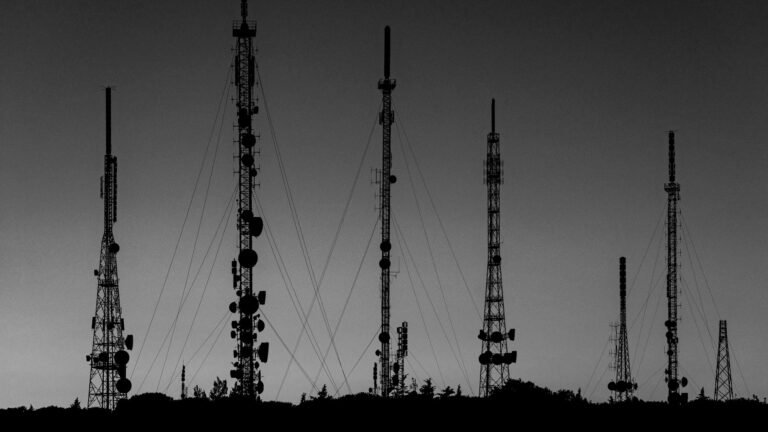
Telecommunications Law in Bangladesh: BTRC Licensing and Regulation in 2026

Foreign Arbitral Award Enforcement in Bangladesh 2026: The New York Convention and Sections 45 to 47
All insights →
What kinds of disputes arise in the satellite industry?
Who regulates satellite services in Bangladesh?
Are satellite contracts usually governed by foreign law?
What should we do immediately after a service outage?
Can satellite industry disputes affect broadcasting licences?
How long does satellite arbitration take?
Do you work with technical experts?
How can TRW help at an early stage?
Facing a satellite dispute? Speak with our team.
Speak with the partners about Satellite industry in Bangladesh or across borders.
Book a consultation →