
TRW Insight / Bangladesh
A clear guide to environmental impact assessment Bangladesh requirements: ECR 2023, DoE clearance, consultation and compliance.
Environmental assessment: a 2026 project-control framework
A defensible project path begins with the actual site and activity, then carries those facts consistently through classification, clearance, assessment and operating compliance.
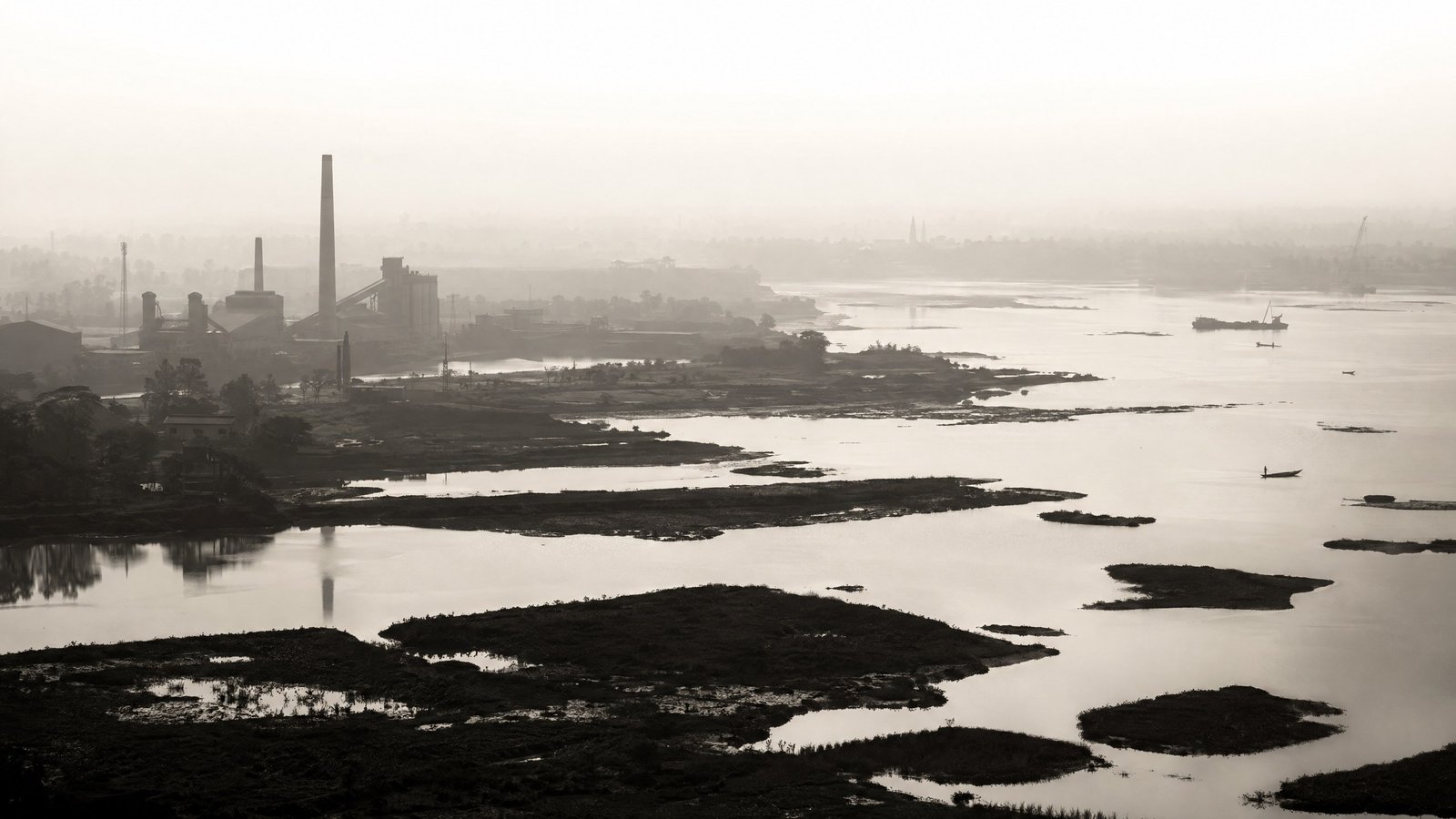
For organisations assessing environmental impact assessment Bangladesh requirements, the process is not a free-standing planning exercise. It operates within the environmental-clearance system administered by the Department of Environment (DoE). For a proposed industrial unit or project, the starting point is to establish the correct classification, the applicable clearance route and whether the project requires an environmental impact assessment (EIA). The answer depends on the project’s actual activity, site, scale, emissions, waste streams and sensitive receptors—not on a project label alone.
Position checked: 18 October 2026. This guide explains the current statutory framework at a general level and separates verified legal requirements from practical project-management considerations. It does not replace the project-specific classification, documents or directions issued by the DoE.
Table of contents
Current legal position
For environmental impact assessment Bangladesh work, the governing question is not simply whether a report has been commissioned; it is whether the project has entered the appropriate DoE classification and clearance pathway.
Verified legal position. Section 12 of the Bangladesh Environment Conservation Act, 1995 requires an environmental clearance certificate for an industrial unit or project before it is established or undertaken, in the manner prescribed by rules. The provision also addresses expansions, and expressly contemplates rules on EIA reports, environmental management plans, public opinion, public access to information, clearance conditions and appeals. [1]
The principal current regulation is the Environment Conservation Rules, 2023 (ECR 2023), issued under the Act and published in the Bangladesh Gazette on 5 March 2023. The Ministry and the DoE both publish the Rules. The UN Environment Programme’s legislative record, which draws on FAOLEX, records that the 2023 Rules replaced the 1997 Rules. A project team should therefore not build its approval strategy around the former ECR 1997 categories or document sequence. [2] [3] [4]
The statutory purpose of the 1995 Act is broader than approval paperwork: environmental conservation, improvement of environmental standards, and control and mitigation of pollution. The Director General and the DoE have regulatory and enforcement roles under that framework. Environmental clearance is consequently a control point in a continuing compliance regime, not a one-time assurance that all environmental issues have been resolved. [1]
The Environment Court Act, 2010 is also part of the published legal framework. Its stated purpose is to establish courts and consolidate the law for expeditious adjudication of environmental offences. That does not mean that every disagreement concerning an EIA proceeds directly to court. It does underline the importance of accurate records, compliance with DoE directions and a defensible factual account of project impacts. [5]
Practical point. The legal framework should be mapped before land acquisition, final engineering, construction procurement or utility requests become irreversible. A project can face avoidable redesign if its description, discharge route, fuel choice, production capacity or surrounding receptors are presented inconsistently across land, construction, utility and DoE submissions.
Environmental impact assessment Bangladesh: clearance pathway
The phrase “EIA approval” is often used loosely. In the Bangladesh framework, it should be distinguished from the environmental clearance certificate (ECC), which is the statutory clearance required under the Act. An EIA is an assessment document and review process that may be required in support of the clearance route. The DoE’s public service list separately identifies site clearance, environmental clearance, renewal, terms-of-reference approval and EIA approval. Its online portal likewise provides a digital route for environmental-clearance and laboratory services. [6] [7]
Verified legal position. ECR 2023 classifies industrial units and projects as Green, Yellow, Orange or Red according to activity, pollution and potential harm to the environment and human health. The Rules lay down procedures for environmental and location clearance, criteria for EIA and environmental-management planning, and an appeal structure. [3] [4]
A useful high-level distinction is as follows:
- Green projects are within the clearance regime but follow the lower-impact route.
- Yellow, Orange and Red projects generally require a location-clearance stage as well as environmental clearance, subject to the detailed Rules and applicable exceptions.
- Red projects require an EIA. Certain Orange projects may also require an EIA where the DoE directs it.
- The DoE portal refers to a Site Clearance Certificate, while published commentary on ECR 2023 refers to a location clearance certificate. The project team should use the wording, service type and documents prescribed by the DoE for the particular application rather than assuming the labels are interchangeable in every context. [3] [4] [8]
The 2023 Rules contain exceptions relevant to projects located in government or private export-processing zones, economic zones and Bangladesh Small and Cottage Industries Corporation industrial cities. Those exceptions should be read carefully. They may change the need for a location-clearance certificate; they do not establish a general exemption from environmental clearance or from the need to comply with environmental requirements. [8]
Where an EIA is required, a common sequence is: classify the activity and location; obtain the required location or site clearance; secure approval of the proposed terms of reference (ToR); carry out the EIA to the approved scope; complete the applicable consultation and disclosure steps; submit the EIA and supporting material; and obtain the ECC before proceeding. The exact sequence and documentary requirements can change with category, site and DoE instructions. Treating a generic EIA report as a substitute for this sequence is a material procedural risk. [3] [6] [7]
Practical point. Keep a single regulatory pathway chart. It should identify the project entity, exact site, category, proposed capacity, location-clearance status, ToR status, EIA status, ECC status, conditions, expiry/renewal date and accountable owner. It should also identify which design assumptions were used in each submission. This is a management tool, not an additional legal formality.
Screening, classification and site risk
Classification is the gateway decision. The ECR 2023 schedule and DoE materials should be consulted against the proposed activity; classification should not be inferred from a business-registration description or from a similar project elsewhere. The Rules place the four categories within the ECC system, and the DoE makes a project/industry classification resource available with its clearance documents. [3] [4] [6]
Verified legal position. Classification considers the industrial unit or project’s activity, pollution and potential environmental and health effects. The assessment is not confined to an end product. Inputs, process stages, fuel, effluent, air emissions, noise, hazardous and solid waste, water abstraction, drainage, construction activity and the proposed site can each be relevant to the risk picture. [4] [9]
Site is particularly important. The DoE’s current initial environmental examination template asks for project infrastructure and operational information, identifies nearby features such as wetlands, natural watercourses, flood-control reservoirs, forests and residential areas, and calls for the identification of locations within one kilometre and 500 metres of the project. The published format also asks about ecologically critical areas, protected areas, health and educational facilities and other sensitive uses. These prompts are not a universal substitute for the legal schedule; they show why a location cannot be treated as a mere address in a clearance application. [10]
A proposed change can alter the classification analysis or invalidate assumptions in an existing submission. Examples may include a capacity expansion, a new process line, a different raw material, a fuel change, an additional generator, a revised discharge point, a new waste-treatment arrangement or a move to another plot. The Act specifically addresses environmental clearance for expansion. [1]
Practical point. Prepare a concise project-description sheet before commissioning surveys. It should contain the legal entity; coordinates and plot information; construction and operating phases; capacity; production flow; raw materials and chemicals; water and energy sources; expected emissions and wastes; treatment infrastructure; discharge and disposal routes; transport profile; and adjacent uses. Reconcile it against the development proposal, engineering drawings and commercial plan. A technically polished assessment that describes the wrong project does not serve the decision-maker or the proponent.
Scoping, terms of reference and technical studies
A disciplined environmental impact assessment Bangladesh process keeps the site, activity, baseline studies and proposed mitigation aligned with the actual clearance application.
An EIA should be designed around decision-relevant risks, not assembled from a standard table of contents. For projects on the EIA route, the ToR is the discipline that converts the project concept into an agreed scope of study. The DoE’s EIA Guideline for Industries explains that a ToR should address the purpose and objectives of the proposal, project description, timetable, study area, applicable institutional considerations, public involvement, alternatives, impacts, baseline studies, mitigation, monitoring, report format and study-team responsibilities. [9]
Verified legal position. The current Rules provide for EIA criteria and environmental-management planning. The detailed published EIA guidance predates ECR 2023 and describes the earlier regulatory setting, so it should not displace the 2023 Rules or current DoE directions. It remains useful as official technical guidance on scoping and the content that an assessment needs to address where consistent with the current regime. [3] [9]
A sound scope normally separates four linked questions.
First, what is proposed? The description should cover pre-construction, construction, operation and, where relevant, closure or decommissioning. It should include supporting infrastructure that creates material impacts, rather than presenting a core facility in isolation.
Second, what is the receiving environment? Baseline work should be proportionate to the likely pathways of impact. It may need to address land use, hydrology and drainage, air and noise conditions, water quality, ecology and biodiversity, settlement patterns, livelihoods and other site-specific matters. The DoE’s IEE format illustrates this approach: it requests information on the project, waste and emissions, treatment arrangements, environmental conditions and impact/mitigation measures. [10]
Third, what credible alternatives exist? A proper alternatives analysis may consider location, layout, technology, input, fuel, water source, waste treatment, discharge route, construction method, transport arrangement and the no-project option. The purpose is not to defend every possible alternative. It is to explain the choices considered and how material environmental effects affected design.
Fourth, what can be done? Mitigation should be specific, capable of implementation and traceable to a responsible person, a time, a budget and a monitoring measure. General promises to comply are not an environmental-management plan.
The published DoE materials give this operational detail. The IEE format calls for information on process wastewater and treatment, air-emission controls, drainage, noise controls, impact significance and mitigation. It also includes an environmental management and monitoring plan with monitoring locations, parameters, frequency and responsible people or units. [10]
Practical point. Commission baseline work early enough to capture conditions that matter. Do not assume that a single sampling round will always answer a seasonal, hydrological or ecological question. Equally, do not commission broad studies without first agreeing the risk pathways, survey area and decision purpose. The appropriate programme is evidence-led and site-specific.
Consultation, disclosure and DoE review
Public participation is a substantive part of the EIA route, not a presentation exercise after key choices are fixed. ECR 2023 addresses public consultation and disclosure for projects that require an EIA. A published review of the Rules explains that the proponent must submit an EIA with a Bangla executive summary, make consultation/disclosure arrangements with relevant stakeholders and DoE officials, and make consultation information available through the DoE and project-proponent websites. The Rules should be read with current DoE directions before a consultation plan is finalised. [3] [11]
Verified legal position. The 2023 Rules provide for public opinion and access to information within the clearance framework. Section 12 of the Act expressly permits detailed rules on public-opinion assessment and public access to information in connection with ECCs. [1] [3]
Meaningful consultation starts with clear materials. Participants should be able to understand the project, its location, principal impacts, proposed mitigation and how comments will be recorded. A Bangla executive summary is especially important where potentially affected people would not reasonably be expected to engage with a technical English report. Consultation records should identify the method used, date and location, material disclosed, attendee categories, questions raised, comments received and the proponent’s response or proposed follow-up.
The DoE publishes a page containing selected EIA reports for named projects. That public library is useful evidence that EIA documentation can be made available, but it should not be treated as a complete register of approvals, a confirmation that an ECC has been granted, or a universal substitute for the project-specific disclosure process. [12]
During review, the DoE may examine the impacts, mitigation and environmental-management proposals, consultation material, alternatives, site conditions and the need for further information. A review request is not evidence of failure by itself. It is an opportunity to correct ambiguities before the environmental case becomes embedded in a clearance record. [3] [11]
Practical point. Design consultation and technical assessment together. If air, water, transport, noise, access, fisheries, flood risk, land use or livelihoods are likely to be community concerns, make sure the EIA team has evidence and maps capable of answering them. Avoid promising mitigation during consultation that is absent from the engineering design, budget or environmental management plan.

From clearance to operating compliance
The ECC is a regulatory permission, not merely a filing receipt. Project teams should read it with the approved EIA, ToR, environmental-management plan, drawings and any attached conditions. Where these documents contain different project descriptions or commitments, the inconsistency needs to be identified and resolved through the appropriate regulator-facing process. A clearance should not be read as a waiver of other applicable requirements. [1] [3]
Verified legal position. The Act provides for consequences for contravention, including contravention of section 12. It also contains an appeal mechanism for persons aggrieved by notices, orders or directions made under the Act or Rules. The detailed consequences and route depend on the provision engaged and the facts. [1]
Operational compliance normally turns on whether the facility continues to operate as assessed and cleared. Relevant controls may include treatment and pollution-control equipment; waste segregation, storage and handover; water and effluent management; air and noise controls; environmental monitoring; incident response; staff responsibilities; and records showing implementation. The DoE’s published EMP format includes monitoring for wastewater, emissions, hazardous waste and workplace conditions, together with emergency-management prompts. [13]
Renewal should be managed before a certificate expires. The DoE portal lists a dedicated renewal service, and the Rules address the validity of environmental and location clearance. Certificate dates, category, conditions, proposed changes and the current application requirements should be checked from the actual clearance and current DoE materials rather than assumed from an earlier project or online summary. [3] [6] [7]
Practical point. Convert the approved environmental commitments into operational controls. Assign an owner for each commitment, maintain evidence of monitoring and maintenance, and track changes against the cleared design. This reduces the risk that an EIA becomes a document created for approval but disconnected from construction contracts, operating procedures and senior management reporting.
Other approvals and regulatory interfaces
EIA and ECC requirements sit alongside, rather than replace, other permissions. Depending on the project, those may concern land use, building and construction, water abstraction or discharge, forest or biodiversity restrictions, hazardous or solid waste, sector licences, labour and occupational health and safety, fire and emergency arrangements, utilities and local-government approvals. The relevant requirements should be identified by reference to the site and activity, not by assuming that environmental clearance is a comprehensive development consent.
The Ministry’s current legal-resource page publishes, among other instruments, the Bangladesh Environment Conservation Act, ECR 2023, the Environment Court Act, waste-management rules and Ecologically Critical Area materials. This reflects the layered nature of environmental compliance. A site near a protected or environmentally sensitive area may require analysis beyond the general clearance route. [14]
For eligible investors, government digital channels may make submission more efficient. The DoE home page directs investment-related services to the Invest Bangladesh Authority One-Stop Service platform, and the OSS portal states that it routes applications and supporting documents to the relevant agencies. Administrative convenience does not change the underlying requirement to meet DoE standards or secure the necessary decision. [6] [15]
Practical point. Run an approvals matrix beside the EIA workstream. For each permission, record the legal basis, agency, project information used, dependency, responsible owner, expected supporting documents and change-control trigger. This helps prevent a change approved in one workstream from undermining the facts stated in another.
Practical preparation checklist
For environmental impact assessment Bangladesh planning, decision-makers should record the project footprint, classification rationale, agency correspondence and the version of every supporting study.
This checklist is a practical planning aid. It is not a substitute for the ECR 2023, the DoE’s current instructions or professional advice on a particular project.
- Confirm the applicant entity, project site, land status, coordinates, activity, process, capacity and phased-development plan.
- Check the ECR 2023 schedule and DoE classification material against the real activity, including ancillary infrastructure, fuel, emissions, effluent and waste.
- Identify whether location/site clearance, ToR approval, IEE, EIA, consultation, ECC and renewal are required for the route proposed.
- Reconcile the project description across feasibility materials, engineering drawings, construction plan, utility applications, land documents and DoE forms.
- Map sensitive receptors and relevant environmental constraints before committing to site layout, discharge arrangements or construction sequencing.
- Agree a ToR that addresses likely impacts, alternatives, study boundaries, baseline evidence, mitigation, monitoring, consultation and report deliverables.
- Use competent technical specialists appropriate to the issues identified, and retain source data, laboratory information, maps, assumptions and version control.
- Prepare consultation and disclosure material in an accessible form, including the applicable Bangla executive summary, and retain a clear comment-and-response record.
- Translate mitigation into designs, specifications, budgets, contractor duties, monitoring plans, emergency procedures and internal accountability.
- Read the issued clearance and conditions closely; diarise renewal, update the approvals matrix and apply change control before material deviations are implemented.
FAQ
What is an environmental impact assessment in Bangladesh?
An EIA is a structured assessment of a proposed project’s likely environmental impacts, alternatives, mitigation and management measures. It is part of the DoE environmental-clearance system where required; it is not itself the same document as an ECC. Under ECR 2023, EIA is required for Red-category projects and may be required for certain Orange projects as directed by the DoE. [3] [4] [11]
Does every project need an EIA?
No. Every industrial unit or project within the statutory regime needs to address environmental clearance, but the documentation and route depend on classification and applicable DoE directions. The 2023 Rules use Green, Yellow, Orange and Red categories. EIA is not the standard requirement for every category. [1] [3] [4]
Who decides the project category?
The DoE is the responsible regulator for the clearance system. The proponent should make a careful initial classification against the ECR 2023 schedule and submit the project accurately, but should not treat its own preferred label as determinative. Site, activity and potential impacts matter. [3] [6]
What is the difference between location clearance and environmental clearance?
They are distinct stages within the 2023 framework for categories that require both. Published ECR 2023 commentary states that Yellow, Orange and Red projects need location clearance and environmental clearance, while Green projects follow the ECC route without location clearance, subject to detailed rules and listed exceptions. The DoE also presents a Site Clearance Certificate service. The required route should be confirmed against the specific project and current DoE process. [3] [6] [8]
What should an EIA report cover?
The content should follow the approved ToR and current DoE requirements. Official guidance identifies the project description, baseline conditions, alternatives, impact assessment, mitigation, monitoring and public involvement as core subjects. The appropriate depth will vary with the project and its setting. [9] [10]
Is public consultation required?
For projects required to prepare an EIA, ECR 2023 contains consultation and disclosure provisions. The current Rules and DoE directions should be checked before the programme is designed. In practical terms, the process should give affected stakeholders intelligible information and create a reliable record of the issues raised and the project’s response. [1] [3] [11]
Can construction begin while the EIA is under review?
The Act states that an industrial unit or project must not be established or undertaken without environmental clearance in the prescribed manner. Whether a proposed early activity is permissible depends on the precise facts, the applicable clearance stage and other approvals. It should not be assumed that filing an EIA, or holding one form of clearance, authorises all construction activity. [1] [3]
Does an ECC cover all environmental and development permissions?
No. Environmental clearance is an important requirement, but it does not automatically satisfy other laws, sector requirements or site-specific restrictions. Separate workstreams may be required for land, construction, water, waste, forest or biodiversity, utilities, safety and other matters. [14]
When should an existing clearance be revisited?
Contact TRW
TRW & Co’s published contact route invites a written enquiry or a consultation booking. For an initial conversation, it is sensible to provide a non-confidential outline of the project, location, proposed activity, current DoE status and any time-critical decision. The firm’s contact page asks prospective clients not to send confidential, privileged or time-sensitive information through the initial route and states that contact does not create an attorney-client relationship. [16]
Source register
Primary legal and regulatory sources
Source materials were checked on 18 October 2026. Statutory interpretation should be confirmed against current official texts and the facts of the matter.
- Bangladesh Environment Conservation Act 1995 official text
- Department of Environment Environment Conservation Rules 2023
- Environment Conservation Rules 2023 official Gazette PDF
- UNEP legal record for Environment Conservation Rules 2023
- Environment Court Act 2010
- Department of Environment Bangladesh home and online services
- Department of Environment environmental clearance automation portal
- ECR 2023 legal overview
- Department of Environment EIA Guideline for Industries
- Department of Environment initial environmental examination format
- Review of EIA approval under ECR 2023
- Department of Environment EIA reports page
- Department of Environment environmental management plan format
- Ministry environmental policy laws and rules resources
- Invest Bangladesh Authority One Stop Service portal
- TRW and Co contact route
Related TRW assistance
Move from information to a defined next step
Explore TRW practice areas or contact TRW to discuss the current facts and applicable requirements.