
TRW Insight / Bangladesh
The 1972 Constitution decides whether a law stands, an ordinance survives or a government decision can be quashed. In 2025 and 2026 the courts revived the caretaker system and voters approved the July Charter, but the formal amendment process is still under way.
Constitutional law Bangladesh: how the 1972 Constitution works in 2026
Constitutional law Bangladesh courts apply begins and ends with one document: the Constitution of the People's Republic of Bangladesh of 1972. It allocates power between the President, the Prime Minister, Parliament and the Supreme Court, guarantees the fundamental rights that every law and every official act must respect, and declares itself the supreme law of the Republic, so that any inconsistent law is void to the extent of the inconsistency.[1] For companies, investors, public bodies and individuals, that makes the Constitution a working instrument rather than a ceremonial text: it decides whether a statute stands, whether an ordinance survives, and whether a government decision can be quashed.
This guide covers the structure of the Constitution, the most-cited articles, supremacy and the separation of powers, judicial review, emergency powers and the amendment record. It then sets out precisely what has and has not changed in 2025 and 2026: the caretaker government's restoration, the July National Charter, the February 2026 referendum and the amendment process as at October 2026.
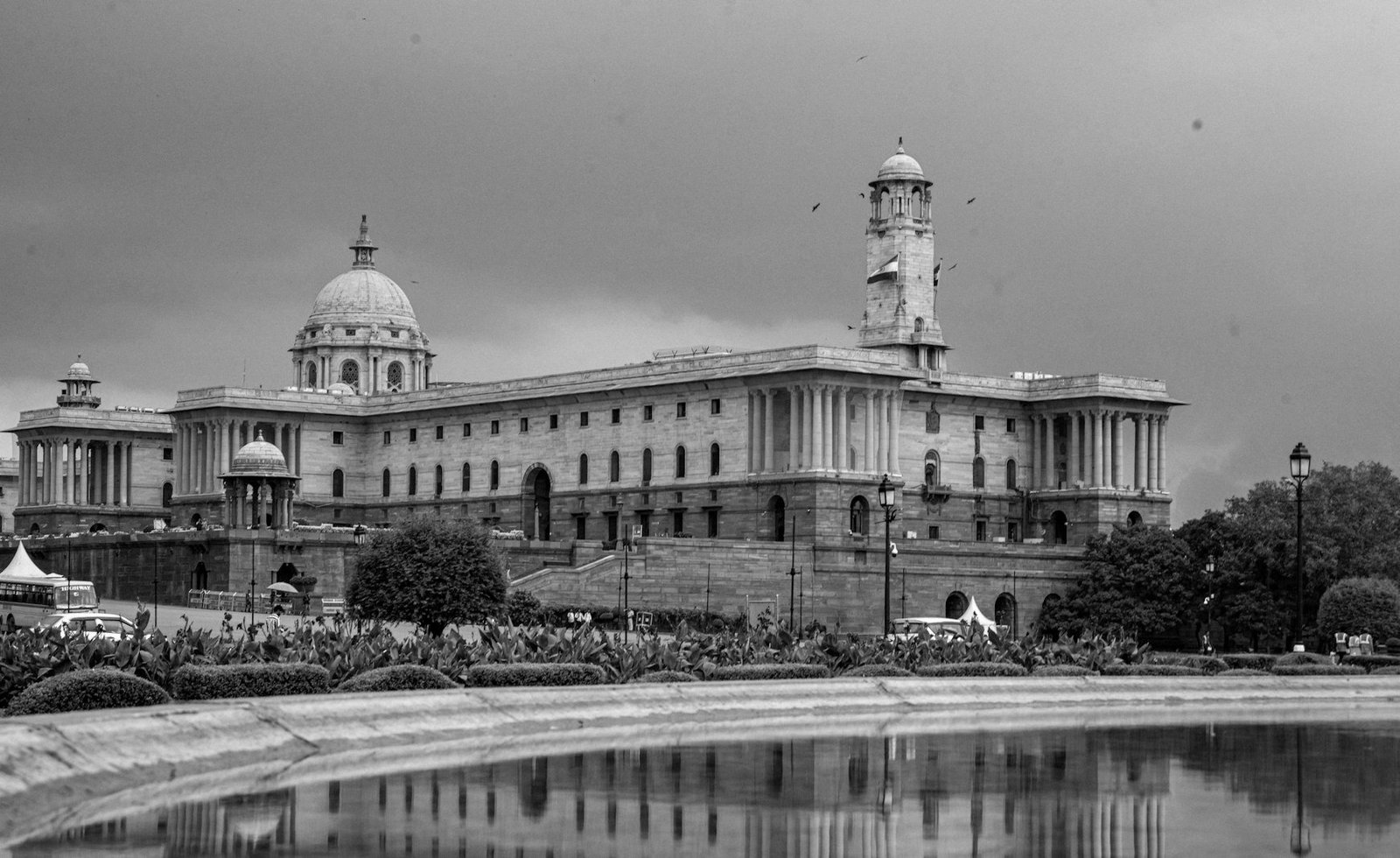
Summary: The 1972 Constitution is written, supreme and amendable only by a two-thirds majority of Parliament. It has eleven numbered Parts plus Part IXA, running from the Republic and fundamental principles through fundamental rights, the executive, the legislature and the judiciary, to elections, emergency powers and amendment. The Supreme Court enforces it through Article 102 and through review of constitutional amendments themselves. In 2025 and 2026 the courts revived the non-party caretaker government and the referendum provision, voters approved the July Charter reform proposals, and Parliament began an amendment process, but no constitutional amendment had been enacted by October 2026.
Key point: The official online text of the Constitution does not yet show the provisions the courts have revived. On 20 November 2025 the Appellate Division restored Chapter IIA of Part IV on the non-party caretaker government, and on 9 July 2026 it dismissed appeals against the High Court Division's 2024 ruling that struck down the Fifteenth Amendment's removal of the caretaker system and the referendum provision. Anyone relying on the Constitution must read the printed text together with these judgments.
At a glance
Supreme law
Article 7 makes the Constitution the supreme law; any inconsistent law is void to the extent of the inconsistency.
Eleven Parts
From the Republic and fundamental rights to the executive, legislature, judiciary, emergency powers and amendment.
Judicial review
The High Court Division enforces fundamental rights and reviews public action under Article 102; amendments themselves can be struck down.
Caretaker revived
The Appellate Division restored the non-party caretaker government provisions on 20 November 2025, with prospective effect.
Reform pending
Voters approved the July Charter proposals on 12 February 2026; a parliamentary committee is preparing amendments, none enacted yet.
Table of Contents
What constitutional law Bangladesh practitioners work with
The Constitution was adopted on 4 November 1972 and is published by the Ministry of Law as Act No. 367 in the official Laws of Bangladesh database.[1] It sits above every Act, ordinance, rule and executive order. Constitutional law in this sense means the text, the Supreme Court's judgments interpreting it, and the conventions that govern how the President, Cabinet and Parliament work together.
Three features shape constitutional law Bangladesh courts administer. The Constitution is supreme; it is rigid, because amendment requires an Act passed by at least two-thirds of the total membership of Parliament;[1] and it is justiciable, because the Supreme Court can invalidate laws, executive acts and even amendments. That is why constitutional arguments surface in tax, licensing, land and election disputes, not only in political litigation.
The Bengali text and the English text
The Constitution exists in an authoritative Bengali text and an authentic English translation; where they conflict, the Bengali text prevails under Article 153.[3] Commentary on Article 7B has shown that the two versions of that provision differ in scope.[3] Equally, the official online text does not always show provisions the courts have revived, so sound advice on constitutional law Bangladesh issues reads the text, the leading cases and current parliamentary practice together.
Structure of the 1972 Constitution: Parts and Schedules
The Constitution opens with a Preamble and then runs through eleven numbered Parts, I to XI, together with Part IXA on emergency powers and a Schedule section. The table below shows the Parts as they appear in the official text, with their article ranges.[1] On a phone, scroll it sideways.
| Part | Title | Articles | What it does |
|---|---|---|---|
| I | The Republic | 1–7B | State, territory, state religion, language and supremacy of the Constitution |
| II | Fundamental Principles of State Policy | 8–25 | Guiding principles, not judicially enforceable |
| III | Fundamental Rights | 26–47A | Enforceable rights and their limits |
| IV | The Executive | 48–64 | President, Prime Minister, Cabinet, Attorney-General; caretaker chapter revived by the courts |
| V | The Legislature | 65–93 | Parliament, legislative procedure, finance and ordinances |
| VI | The Judiciary | 94–117 | Supreme Court, subordinate courts and administrative tribunals |
| VII | Elections | 118–126 | Election Commission and electoral rolls |
| VIII | Comptroller and Auditor General | 127–132 | Audit of public accounts |
| IX | The Services of Bangladesh | 133–141 | Public services and the Public Service Commissions |
| IXA | Emergency Provisions | 141A–141C | Proclamation of emergency and suspension of rights |
| X | Amendment of the Constitution | 142 | Procedure for amendment |
| XI | Miscellaneous | 143–153 | Property of the Republic, interpretation, repeals, citation and authoritative text |
Part VIA, which once provided for a single national party, is shown in the official text as omitted.[1] It is a reminder of the Fourth Amendment of 1975, which replaced the parliamentary system with a presidential one-party state and curtailed the Supreme Court's power to enforce fundamental rights.[5]
The Preamble and the Schedules
The Preamble records the ideals of the liberation struggle and guides interpretation. The Schedules cover matters such as the laws protected under Article 47, the oaths of constitutional office-holders and transitional provisions.[1] Oaths matter in practice: the validity of the 2026 oath for members of the proposed Constitution Reform Council is itself under challenge.[10]
Supremacy of the Constitution: Article 7 and Article 26
Article 7(1) provides that all powers in the Republic belong to the people, and that their exercise on behalf of the people is effected only under, and by the authority of, the Constitution. Article 7(2) declares the Constitution, as the solemn expression of the will of the people, the supreme law of the Republic, and provides that any other law inconsistent with it is void to the extent of the inconsistency.[1] Article 26 applies the same rule specifically to fundamental rights: existing laws inconsistent with Part III are void to the extent of the inconsistency, and the State may not make a law inconsistent with Part III.[1]
What "void to the extent of the inconsistency" means in practice
Supremacy rarely means an entire statute falls. The courts strike down, read down or disapply the offending provision and leave the rest standing, so a challenger must identify the precise section, the right or structural rule it breaches, and the narrowest remedy that cures the problem.
Articles 7A and 7B after the 2024 and 2026 judgments
The Fifteenth Amendment of 2011 added Article 7A, creating an offence of abrogating or suspending the Constitution, and Article 7B, declaring a large part of the Constitution beyond amendment.[1] [3] On 17 December 2024 the High Court Division declared Articles 7A, 7B and 44(2) invalid as inconsistent with the Constitution. On 9 July 2026 a four-judge Appellate Division bench led by Chief Justice Zubayer Rahman Chowdhury dismissed all three appeals against that judgment, leaving the High Court Division's ruling in place.[7] With Article 7B gone, the limits on amendment rest once more on the judge-made basic structure doctrine discussed below.
Separation of powers under constitutional law Bangladesh recognises
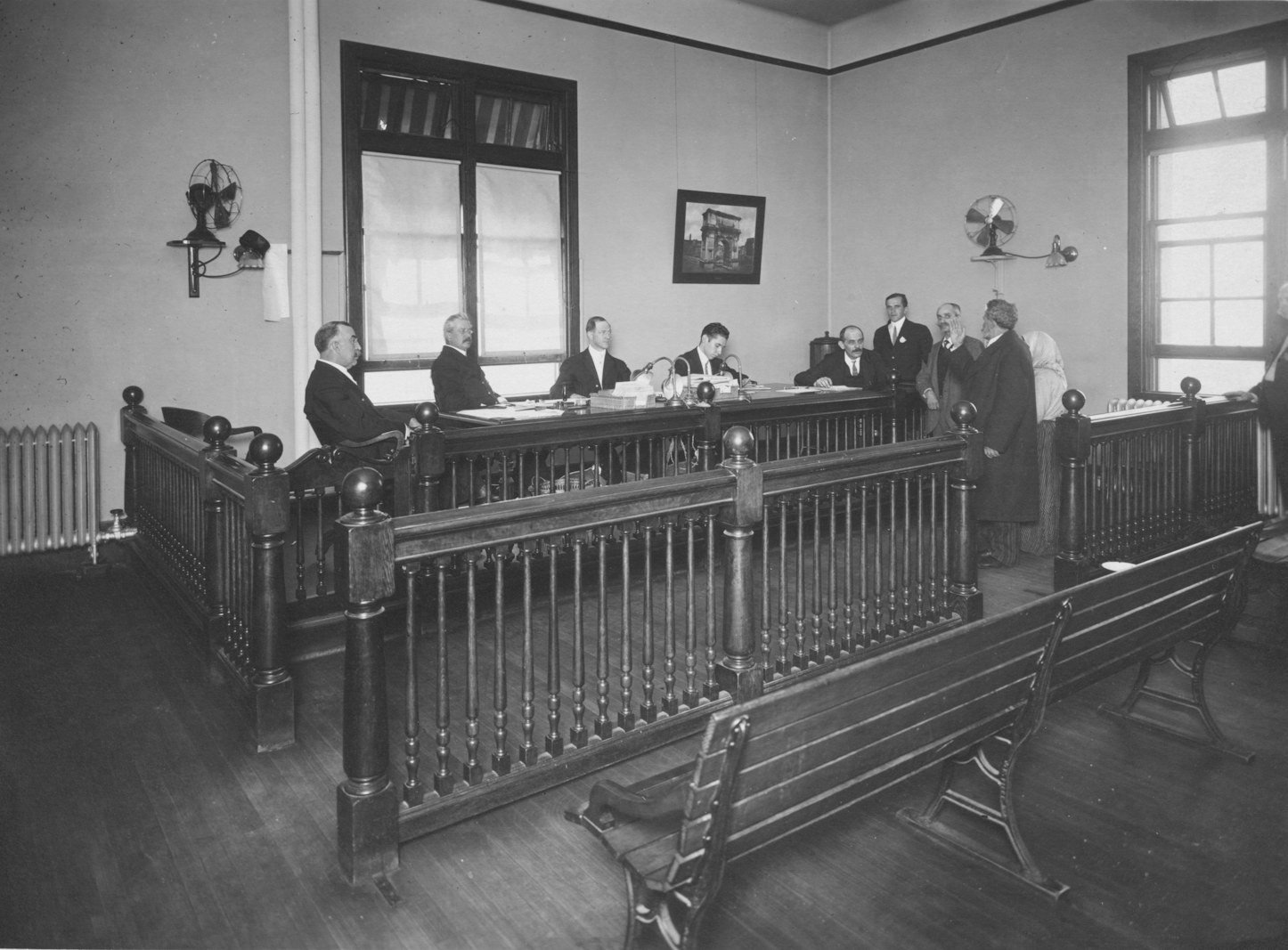
The Constitution achieves the separation of powers structurally, vesting executive, legislative and judicial power in separate institutions in Parts IV, V and VI, and directing in Article 22 that the State ensure the separation of the judiciary from the executive.[1] [4] The system is parliamentary: the executive is drawn from, and accountable to, Parliament.
The executive: President, Prime Minister and Cabinet
Article 48 establishes the President as head of state, elected by Parliament and in most matters acting on the Prime Minister's advice; Article 55 establishes the Cabinet headed by the Prime Minister, by or on whose authority executive power is exercised.[1] The model dates from the Twelfth Amendment of 1991, which followed a referendum and returned executive power to the Prime Minister.[5]
The legislature: Parliament, Article 70 and ordinances
Article 65 establishes a single-chamber Parliament, the Jatiya Sangsad, in which legislative power is vested; Article 80 sets the legislative procedure.[1] Article 70 provides that a member vacates the seat on resigning from, or voting against, the party that nominated them, a rule that has long been criticised for subordinating members to party leadership. The July Charter reform proposals include changes to Article 70 and the creation of a second chamber, but neither has yet been enacted.[8] [13]
Article 93 lets the President make ordinances when Parliament is dissolved or not in session, but an ordinance cannot do anything Parliament could not do by Act, cannot alter or repeal any provision of the Constitution, and must be laid before Parliament at its first meeting. It ceases to have effect thirty days after being laid unless repealed earlier or disapproved by resolution.[1] That rule shaped the legal landscape in 2026. The interim government had issued 133 ordinances; a special parliamentary committee reported on 2 April 2026, and Parliament passed 91 bills by 10 April, the last day of the thirty-day window, to convert the ordinances it wished to keep.[11]
The judiciary: the Supreme Court and its independence
Article 94 establishes the Supreme Court, comprising the Appellate Division and the High Court Division. Article 95 governs the appointment of judges, Article 96 their tenure and removal, and Articles 116 and 116A the control of subordinate courts and the independence of judicial officers.[1]
Judicial independence has largely been built by litigation. In the Masdar Hossain case the Supreme Court held that the judicial service is functionally and structurally distinct from the civil administrative services and laid down twelve points to secure its separation, which was implemented in 2007.[4] In the Sixteenth Amendment litigation the courts struck down a 2014 amendment giving Parliament power to remove Supreme Court judges, and on 20 October 2024 the Appellate Division upheld that outcome on review, preserving the Supreme Judicial Council.[3] [5]
Judicial appointments after the 2026 repeal
The Supreme Court Judges Appointment Ordinance 2025, which created a council led by the Chief Justice to recommend appointments, did not survive. In April 2026 Parliament passed bills tabled by the Law Minister, Md Asaduzzaman, repealing it together with the Supreme Court Secretariat Ordinance 2025 and its 2026 amendment; the National Human Rights Commission Ordinance 2025 was also repealed.[12] Our analyses of the Supreme Judicial Appointment Council and the 2025 judicial appointment selection framework explain the repealed model and what any replacement must address.
Key articles in constitutional law Bangladesh litigation
Most constitutional litigation turns on a small group of articles. The cards below set out those that appear most often in pleadings and judgments, and what each one does in practice.[1]
Supremacy of the Constitution
All power belongs to the people; any law inconsistent with the Constitution is void to the extent of the inconsistency.
Laws inconsistent with fundamental rights
Existing and future laws that conflict with Part III are void to the extent of the conflict.
Equality and protection of law
Equality before the law and the right to be dealt with only in accordance with law, the basis of most fairness challenges.
Right to life and personal liberty
Read broadly by the courts to cover health, environment and dignity in public interest cases.
Enforcement and writ jurisdiction
Guarantee the right to move the High Court Division and empower it to review public action.
Amendment
Constitutional amendment by Act of Parliament passed by at least two-thirds of the total membership.
Fundamental principles of state policy (Part II)
Part II, Articles 8 to 25, sets out the fundamental principles of state policy, including the separation of the judiciary from the executive and equality of opportunity. Under Article 8(2) they guide law-making and interpretation but are not judicially enforceable.[1] Counsel use them as an interpretive aid, often alongside the right to life in Article 32, rather than as a freestanding cause of action.
Fundamental rights (Part III)
Part III, Articles 26 to 47A, contains the enforceable fundamental rights. Some are expressed without qualification, such as equality before the law in Article 27 and protection of law in Article 31; others, such as the freedoms of movement, assembly, association and speech in Articles 36 to 39, are subject to reasonable restrictions imposed by law.[1] Equality in Article 27 is framed for citizens, while Article 31 and the guarantees in Articles 32, 33 and 35 extend to every person for the time being in Bangladesh, which matters for foreign investors and expatriate staff. An executive instruction with no statutory basis cannot cut down a guaranteed freedom.
Articles 33 and 35 deserve special mention in criminal practice. They protect arrested persons, require production before a magistrate within twenty-four hours and protect against self-incrimination and double jeopardy.[1] Our guides to police remand and High Court bail show how these guarantees play out in the criminal courts.
Judicial review: how the courts enforce the Constitution
Article 44 guarantees the right to move the High Court Division under Article 102(1) to enforce fundamental rights, and Article 102(2) lets it review the acts of public functionaries where no other equally efficacious remedy exists.[1] Procedure, the five writs, standing, stays and appeals are covered in our writ petition guide; this section focuses on the principles behind them.
Review of ordinary legislation
A statute is presumed valid. The challenger must show a clear inconsistency: breach of fundamental rights, an unreasonable restriction, excessive delegation, unjustified discrimination or a law outside Parliament's competence. The remedy is a declaration that the provision is void to the extent of the inconsistency.[1]
Review of constitutional amendments: the basic structure doctrine
Bangladesh is one of the few jurisdictions where the courts have struck down constitutional amendments. In Anwar Hossain Chowdhury v Bangladesh, 41 DLR (AD) 165, the Appellate Division held the Eighth Amendment's restructuring of the High Court Division into permanent benches outside Dhaka unconstitutional, establishing that the amending power in Article 142 cannot be used to destroy the basic structure of the Constitution.[2] [3] A 2016 larger bench of the High Court Division applied that approach while upholding Article 2A on the state religion, holding that the test is compatibility with the Constitution, not the political motive behind an amendment.[2]
The Fifth, Thirteenth, Fifteenth and Sixteenth Amendments have all been the subject of major judgments since.[5] [6] [7] The lesson for constitutional law Bangladesh disputes is that an amendment is not immune from challenge merely because two-thirds of Parliament passed it.
Binding effect and compliance
Under Article 111 the law declared by the Appellate Division binds the High Court Division, and the law declared by either division binds all subordinate courts; Article 112 requires all authorities to act in aid of the Supreme Court.[1] A single well-chosen test case can therefore change practice across a whole sector.
Emergency provisions under Part IXA
Part IXA, inserted by the Second Amendment of 1973, contains Articles 141A to 141C.[1] [5] Under Article 141A, if the President is satisfied that a grave emergency exists in which the security or economic life of Bangladesh, or any part of it, is threatened by war, external aggression or internal disturbance, the President may issue a Proclamation of Emergency, but only with the prior countersignature of the Prime Minister. A proclamation may be issued before the threat materialises if the President is satisfied there is imminent danger.[1]
Time limits and parliamentary control
A proclamation must be laid before Parliament and ceases to operate after 120 days unless approved by a resolution of Parliament before that period expires. Where it is issued while Parliament is dissolved, or Parliament is dissolved during the 120 days, it ceases to operate thirty days after the reconstituted Parliament first meets unless approved within that period.[1] These limits are the main safeguard against an emergency becoming a permanent mode of government.
Effect on fundamental rights
While a proclamation is in force, Article 141B lifts the limits that Articles 36 to 40 and 42 place on State action, and Article 141C allows the President, on the Prime Minister's advice, to suspend the right to move any court to enforce specified Part III rights for the period of the emergency.[1] Action taken under emergency powers can still be examined for lawful authority once the emergency ends.
Amending the Constitution: Article 142 and the amendment record
Article 142 allows any provision of the Constitution to be amended by addition, alteration, substitution or repeal by Act of Parliament. The bill's long title must expressly state that it will amend a provision of the Constitution, and the bill cannot be presented for assent unless passed by at least two-thirds of the total membership of Parliament. The President must assent within seven days, failing which assent is deemed given.[1]
The referendum requirement
The Twelfth Amendment of 1991 was itself approved at a referendum, and certain later amendments required referendum approval before assent until the Fifteenth Amendment removed that requirement.[5] The High Court Division declared the relevant section void in December 2024, and the Appellate Division's dismissal of the appeals on 9 July 2026 leaves the referendum provision restored, although the online text of Article 142 still omits it.[1] [7] The committee now preparing amendments has said that changes to the Preamble and Articles 8, 48, 56 and 142 would go to a referendum before assent.[14]
Seventeen amendments in brief
The Constitution has been amended seventeen times. The most consequential changes were these:[5]
- First and Second (1973): protection for war-crimes prosecution laws, and the emergency provisions in Part IXA.
- Fourth (1975): a presidential, one-party system with a curtailed judiciary.
- Fifth (1979) and Seventh (1986): validation of martial-law-era actions.
- Eighth (1988): Islam as state religion and permanent High Court benches outside Dhaka, the latter struck down in 1989.[2]
- Twelfth (1991): restoration of parliamentary government after a referendum.
- Thirteenth (1996): the non-party caretaker government for elections.
- Fifteenth (2011): abolition of the caretaker system, Articles 7A and 7B, and 50 reserved seats for women.
- Sixteenth (2014): parliamentary removal of judges, struck down by the courts.
- Seventeenth (2018): a 25-year extension of the reserved seats for women.
The caretaker government: abolition and restoration
The Thirteenth Amendment of 1996 inserted Chapter IIA into Part IV, providing for a non-party caretaker government to hold office between the dissolution of Parliament and the formation of a new government, so that general elections would be overseen by a neutral administration.[5] [6] The High Court Division upheld the amendment in 2004, but on 10 May 2011 the Appellate Division declared it unconstitutional, and the Fifteenth Amendment later that year removed the chapter.[5]
The 2024 and 2025 judgments
On 17 December 2024 the High Court Division declared the Fifteenth Amendment's abolition of the caretaker system unconstitutional. The Appellate Division granted leave to appeal against its own 2011 judgment on 27 August 2025, heard the appeal together with review petitions filed by the BNP, Jamaat-e-Islami and a group of citizens including Dr Badiul Alam Majumdar, and on 20 November 2025, in a unanimous decision of the bench led by Chief Justice Syed Refaat Ahmed, allowed the civil appeals.[6] The court set aside the 2011 judgment in its entirety for errors apparent on the face of the record and revived Chapter IIA of Part IV.[6]
Prospective effect and the 2026 position
The revived provisions operate only prospectively, subject to the enforcement of the revived Articles 58B(1) and 58C(2), and did not govern the February 2026 election.[6] The Appellate Division's 9 July 2026 judgment on the Fifteenth Amendment left the High Court Division's restoration of the caretaker system intact.[7] The ruling party has proposed that any future amendment to the caretaker provisions should require a referendum; how a caretaker government would be formed remains under discussion.[14]

The July Charter, the 2026 referendum and constitutional reform
After August 2024 the interim government and a National Consensus Commission negotiated state reforms with the political parties. The resulting July National Charter was agreed in 2025 among as many as 30 parties and the interim government and has 26 signatory parties.[9] [13]
The Implementation Order and the referendum
On 13 November 2025 the President issued the July National Charter (Constitution Reform) Implementation Order 2025, which provided for a referendum and for the newly elected Parliament to act as a Constitution Reform Council, required to complete the reforms within 180 working days of its first session.[8] [9] The referendum was held with the general election on 12 February 2026. Voters were asked to approve the order and four groups of proposals covering the caretaker government, a bicameral Parliament, thirty consensus reforms and other Charter commitments.[8]
The Yes side won with roughly 68 per cent of valid votes on a turnout of about 60 per cent; the Election Commission published a corrected gazette on 26 February 2026.[8] [13] The BNP won the parliamentary election.[9] The proposals include a 100-seat upper house, a ten-year limit on any one person serving as Prime Minister, restoration of the caretaker system, changes to Articles 7A, 7B and 70, and stronger judicial independence.[8] The referendum result is a political mandate: it does not itself amend the Constitution, which can still be changed only through the constitutional amendment process.[8]
Reform Council or ordinary amendment
The route to implementation has been contested from the start. On 17 February 2026, opposition members took an additional oath as members of the Constitution Reform Council, but members of the ruling party declined to do so.[9] The government instead formed a 12-member special parliamentary committee on constitutional amendment on 13 July 2026, chaired by the Home Minister, Salahuddin Ahmed, after opposition parties declined to nominate members.[13] [14] The opposition alliance has refused to join, arguing that the Charter's own process should be followed.[13]
The court challenge to the Implementation Order
On 3 March 2026 a High Court Division bench of Justice Razik-Al-Jalil and Justice Md Anowarul Islam issued rules on two writ petitions asking why the Implementation Order, including section 3 and its schedule, the Referendum Ordinance and the letters inviting members to take the Reform Council oath should not be declared unlawful.[10] The challenge raises a fundamental question of constitutional law Bangladesh courts have not had to answer before: whether a presidential order made outside Article 142 can bind a future Parliament to a particular method of amendment. We are not aware of a final judgment as at the date of this guide.
What has actually been enacted: the October 2026 position
No constitutional amendment has been enacted in 2026. As of 20 September 2026 no amendment bill had been introduced in Parliament; the special committee aims to submit its report by December 2026, and the bill may be moved in the January 2027 session, with a referendum to follow passage for the entrenched provisions.[13] [14] The committee has signalled that it will propose restoring the phrase "absolute trust and faith in Almighty Allah" to the Preamble and Article 8, a manifesto commitment of the ruling party.[14] Until a bill is passed by two-thirds of Parliament and assented to, the Constitution remains the 1972 text as amended seventeen times and as modified by the court judgments described above.
Impact of constitutional law in Bangladesh on legislation, government and citizens
The impact of constitutional law Bangladesh-wide is felt less in landmark political cases than in the ordinary working of government: every statute is drafted against Part III, every regulator's powers must be traceable to a lawful source, and every citizen can test those powers in court.
On legislation
Parliament cannot legislate inconsistently with fundamental rights and must follow Articles 80 and 142.[1] The 2026 conversion of interim-government ordinances shows the discipline Article 93 imposes: measures not re-enacted within the window could not continue.[11] Regulated businesses should check not only that a rule exists but that its parent law still stands.
On government action
Ministries, regulators, city corporations and statutory bodies can be reviewed for acting without lawful authority, unfairly or discriminatorily. Licence cancellations, procurement blacklisting, tax demands and acquisition notices are routinely challenged; our guide to land acquisition in Bangladesh shows how Article 42 interacts with the compensation scheme.
On citizens and society
The societal impact of constitutional law in Bangladesh is most visible in public interest litigation on the environment, detainees' rights and the accountability of public bodies. The Constitution also frames political life: the caretaker system, the referendum provision and judicial independence are constitutional answers to disputes about how power is won and checked.[6] [7]
On business and foreign investors
The protection of law, the right to life and liberty and the safeguards on arrest extend to every person in Bangladesh, and companies can use the writ jurisdiction against public authorities.[1] Foreign investors facing arbitrary regulatory action should consider a constitutional challenge alongside treaty or contractual remedies, because a stay can preserve the status quo while other proceedings run.
When to instruct constitutional law lawyers in Bangladesh
Instruct a constitutional lawyer early when a statute, rule or circular appears to infringe a fundamental right; when a public authority acts without clear power or without hearing you; when an ordinance or notification changes your position and its validity is uncertain; when an election or public office is disputed; or when you need urgent interim relief against government action. The steps below show how TRW approaches a constitutional matter.
Identify the measure
Pin down the exact statute, rule, ordinance, circular or decision that affects you, and the date it took effect.
Check the current text
Read the Constitution with the latest judgments, since revived provisions may not appear in the online text.
Map the right or rule
Identify the specific fundamental right or structural provision engaged and whether it protects citizens only or every person.
Test alternative remedies
Confirm whether a statutory appeal, tribunal or arbitration offers an equally efficacious remedy before choosing Article 102.
Preserve the position
Assess whether an interim stay is needed and act promptly, because delay weakens both interim and final relief.
Frame the relief narrowly
Ask the court to strike down or read down the inconsistent provision, not the whole Act, and propose workable directions.
Plan for appeal
Anticipate an appeal to the Appellate Division and the effect of any stay on your business while it is pending.
Choosing the right counsel
Look for constitutional law lawyers in Bangladesh who appear regularly before both divisions of the Supreme Court, understand your sector's regulatory regime, and will say candidly whether a statutory appeal, arbitration or negotiation is the better route. Our constitutional and writ litigation practice acts for companies, investors, institutions and individuals.
Mistakes to avoid
- Relying on the online text alone: revived provisions such as the caretaker chapter and the referendum requirement do not yet appear in it.
- Challenging too broadly: identify the specific provision and the specific right; courts strike down the inconsistency, not the whole Act.
- Ignoring the alternative remedy: where a statute provides an equally efficacious appeal, the High Court Division may decline to intervene under Article 102(2).[1]
- Delaying: there is no fixed limitation period for writs, but unexplained delay can defeat relief.
- Assuming reform has happened: the July Charter proposals are approved in principle but not yet law.
What to watch in constitutional law Bangladesh during 2026 and 2027
Four developments will define the next twelve months. First, the special committee's report, due by December 2026, and the amendment bill expected in the January session.[14] Second, the High Court Division's decision on the validity of the Implementation Order and the Referendum Ordinance.[10] Third, how Parliament reinserts the caretaker provisions and the referendum requirement into the formal text after the 2025 and 2026 judgments.[6] [7] Fourth, whether a new statutory framework for appointing Supreme Court judges replaces the repealed 2025 ordinance.[12]
If a question of constitutional law Bangladesh courts may soon decide affects your rights, a regulatory decision or a transaction, contact TRW for advice on your options.
Frequently asked questions
What is the supreme law of Bangladesh?
The Constitution of 1972. Article 7 declares it the supreme law of the Republic and provides that any other law inconsistent with it is void to the extent of the inconsistency.[1]
How many Parts does the Bangladesh Constitution have?
Eleven numbered Parts plus Part IXA on emergency provisions, running from Part I on the Republic to Part XI on miscellaneous matters, with a Preamble and Schedules. Part VIA is omitted.[1]
Are the fundamental principles of state policy enforceable in court?
No. Article 8(2) makes them fundamental to governance and a guide to interpretation, but not judicially enforceable. The fundamental rights in Part III are enforceable through Article 102.[1]
How is the Constitution of Bangladesh amended?
Has the caretaker government system been restored?
Was the Constitution amended after the February 2026 referendum?
Can the Supreme Court strike down a constitutional amendment?
How long can a state of emergency last?
A proclamation under Article 141A lapses after 120 days unless Parliament approves it by resolution, and it requires the Prime Minister's prior countersignature.[1]
Can a presidential ordinance change the Constitution?
No. Article 93 bars ordinances that alter or repeal any constitutional provision, and every ordinance lapses thirty days after being laid before Parliament unless re-enacted.[1]
Can foreign companies rely on the Constitution?
Yes, for the rights that protect every person, such as the protection of law and the right to life and personal liberty, and through the writ jurisdiction against public authorities. Some rights are reserved to citizens.[1]
Source register
Primary legal and regulatory sources
Materials checked on 20 October 2026. Confirm the current official text before relying on any provision.
- Constitution of the People's Republic of Bangladesh (Act No. 367) — Laws of Bangladesh
- High Court Division, Swairachar O Sampradaiyikata Protirodh Committee v Bangladesh, Writ Petition No 1434 of 1988 (28 March 2016), applying Anwar Hossain Chowdhury v Bangladesh, 41 DLR (AD) 165
- Kawser Ahmed, 'Revisiting Judicial Review of Constitutional Amendments in Bangladesh: Article 7B, the Asaduzzaman Case and the Fall of the Basic Structure Doctrine', Israel Law Review 56(2) (2023)
- The Daily Star — Independence of the judiciary: the Masdar case
- Amendments to the Constitution of Bangladesh — overview of the seventeen amendments and related judgments
- BSS — Timeline of the Appellate Division's caretaker government verdict (20 November 2025)
- Prothom Alo, 9 July 2026 — SC verdict upholds reinstatement of caretaker government and referendum provisions
- 2026 Bangladeshi constitutional referendum — question, results and Implementation Order
- ConstitutionNet (International IDEA), 15 April 2026 — A mandate deferred: constitutional reform in Bangladesh
- Prothom Alo, 3 March 2026 — HC issues rules over legality of July National Charter order and Referendum Ordinance
- The Daily Ittefaq, 10 April 2026 — 91 bills passed to convert interim-government ordinances
- The Daily Star, 10 April 2026 — Judiciary, NHRC reforms rolled back
- Dhaka Tribune, 20 September 2026 — Amendment committee fast-tracks July Charter reforms
- The Financial Express, 28 September 2026 — Constitution amendment bill in new year's first session of JS
Related TRW assistance
Move from information to a defined next step
TRW advises on constitutional challenges to legislation and regulation, writ petitions, judicial review of government action, election and public-office disputes and appeals to the Appellate Division. Explore our constitutional and writ litigation practice or contact TRW to discuss your matter.