
TRW Insight / Bangladesh
Bangladesh has no single minimum wage. It has a statutory process that fixes rates industry by industry, now on a three-year cycle, with a new garment wage board being formed and much tougher penalties for underpayment from 2026.
Minimum wage Bangladesh law in 2026: process, rates and penalties
Minimum wage Bangladesh law does not set one national figure. It sets a process. Under Chapter XI of the Bangladesh Labour Act 2006 the government directs a Minimum Wage Board to recommend rates for a particular industry, the government declares those rates by gazette notification, and every employer in that industry is then bound to pay at least the declared rate to every worker it covers.
In 2026 that process is under unusual pressure: Parliament has shortened the review cycle from five years to three, the garment sector's December 2023 settlement reaches its third anniversary in December 2026, and in October 2026 the Ministry of Labour and Employment began forming a new garment wage board while workers protested for a Tk 30,000 minimum.
This guide explains how the wage boards work under sections 138 to 149, what changed with the Bangladesh Labour (Amendment) Act 2026, the rates currently in force in the ready-made garment sector and in other gazetted industries, how wages are fixed inside export processing zones, the deadlines for paying wages, and how the Department of Inspection for Factories and Establishments, the Labour Court and the criminal courts enforce the rules. It is written for employers, HR and payroll teams, buyers auditing supply chains and investors pricing a Bangladesh workforce. The wider employment framework is covered in our guide to labour law in Bangladesh.
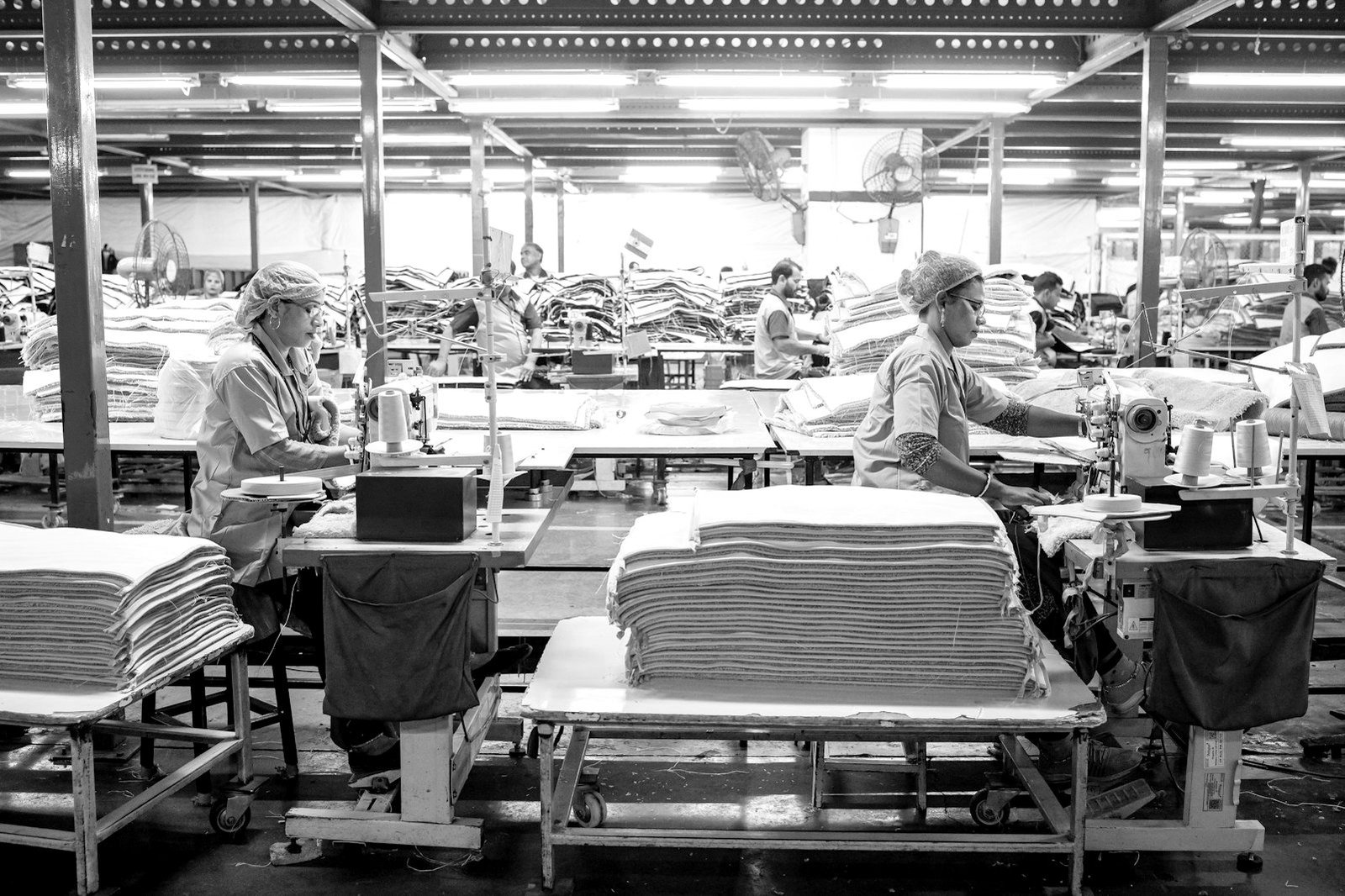
Summary: Bangladesh fixes minimum wages sector by sector. The government directs the Minimum Wage Board to recommend rates for an industry, declares them by gazette, and the declared rates bind every employer in that industry; paying less is a criminal offence. Since the Bangladesh Labour (Amendment) Act 2026, rates must be re-determined every three years. The garment entry-level minimum is Tk 12,500 a month from 1 December 2023, with the annual increment raised to 9 per cent from December 2024, and a new garment wage board was being formed in October 2026.
Key point: The penalty for paying below a declared minimum rate rose sharply in April 2026. Section 289 now provides for imprisonment of up to one year, a fine of Tk 20,000 to Tk 50,000, or both, in place of the old Tk 5,000 maximum fine, and the court can order the employer to pay the worker the shortfall. Section 132 also now lets an inspector bring a wage claim to the Labour Court.
At a glance
Sector-based system
No single national minimum wage: the Minimum Wage Board recommends rates industry by industry, and the government declares them by gazette.
Three-year cycle
The 2026 amending Act cut the re-determination period in section 139(6) from five years to three.
Garment rate
Tk 12,500 a month at entry grade from 1 December 2023, with a 9 per cent annual increment from December 2024.
Pay deadlines
Wages within seven working days after the wage period ends; final dues within thirty working days of separation.
Penalties
Underpayment carries up to one year's imprisonment and a fine of Tk 20,000 to Tk 50,000, plus an order to pay the shortfall.
Table of Contents
How minimum wage Bangladesh law works
Much commentary on the minimum wage law in Bangladesh treats the garment rate as if it were the national minimum. It is not. The Labour Act creates a mechanism, not a number. Chapter XI, headed "Wage Board", runs from section 138 to section 149: sections 138 to 142 deal with the Minimum Wage Board and the declaration and review of rates, sections 143 to 147 with a separate wage board for newspaper workers, and sections 148 and 149 with the binding effect of declared rates.[1] A worker is protected by a minimum rate only if the government has declared one for that worker's industry.
Sector-by-sector rather than national
Section 139(1) allows the government, where it considers it reasonable having regard to prevailing wage rates in an industry, to direct the Board to inquire into and recommend minimum rates for all workers or any class of workers in that industry. The explanation to the section confirms that employers, workers or both may apply for this.[1] The consequence is a patchwork. In February 2025 the Board's coverage stood at 42 sectors, against roughly 140 sectors and sub-sectors in the economy, and agriculture and domestic work fell entirely outside it.[8] By June 2026 minimum wages had been fixed in 44 of 47 listed sectors.[9]
Binding effect and the floor principle
Section 148 makes a declared rate binding on every employer to whom it applies and entitles every worker to wages at no lower rate. Section 149(1) prohibits paying less. Section 149(2) preserves any right to higher wages or benefits under an agreement, an award or established custom.[1] In practice the minimum wage Bangladesh gazette is a floor, not a pay scale. A settlement, a collective agreement or a long-standing factory practice that pays more cannot be cut back to the gazetted figure simply because a new declaration has been published.
What counts towards the minimum
Declarations normally fix a gross monthly figure made up of basic wage and listed allowances, and they do so by grade. The garment declaration, for example, builds the entry-level Tk 12,500 from a basic wage of Tk 6,700 plus allowances.[3] Under section 108 overtime is paid at twice the ordinary rate of basic wage (plus any dearness or ad hoc allowance),[1] so an employer that inflates allowances while holding basic pay down below the gazetted basic figure is in breach even if the gross total looks compliant. Always test both the gross figure and the basic component for every grade.
The Minimum Wage Board under sections 138 to 142
The Minimum Wage Board is a standing statutory body whose membership is supplemented for each industry it examines. Understanding its composition and timetable is the starting point for any employer that wants to influence, or simply budget for, a new declaration.
Composition
Under section 138 the Board consists of a chairman, one independent member, one member representing employers and one representing workers. When it inquires into a particular industry under section 139, two further members join: one representing that industry's employers and one representing its workers. All members are appointed by the government.
The chairman and independent member must have adequate knowledge of industry, labour and the economy and must not be connected with any industry or any trade union. The government must consider nominations from employer and worker organisations, and if repeated attempts fail it may appoint any suitable person.[1] That produces the six-member board, with two temporary industry members who carry most weight in the negotiation, described in the October 2026 garment reporting.[12]
Recommendation: six months, grades and areas
The Board must make its recommendation within six months of the government's direction, extendable on its request. It may recommend rates for every class of worker in any grade, time rates and piece rates, and minimum time rates for piece workers, expressed by the hour, day, week or month. It must also say whether the rates should apply uniformly nationwide or with local variations for specified areas.[1] Section 141 lists what it must weigh: cost of living, standard of living, cost of production, productivity, product prices, inflation, the nature, risk and standard of the work, business capacity, and the economic and social conditions of the country and the area concerned.[1]
Declaration by gazette
Under section 140 the government may declare the recommended rates by notification in the official gazette. If it considers a recommendation unfair to employers or workers, it may return it to the Board within forty-five days with comments; the Board then reconsiders and either revises the recommendation or explains why no change is needed. The government may then declare the rates as recommended or as revised by it. A declaration takes effect on publication unless it states another date, and section 140(7) makes declared rates final: they cannot be questioned in any court or before any authority.[1]
Special powers and periodic review
Section 140A, inserted in 2013, allows the government in special circumstances to reconstitute the Board and declare new rates at any stage of implementing an existing structure, or to revise existing rates by gazette after consulting workers and employers without declaring a new structure.[1] That is the power behind mid-cycle adjustments such as the 2025 garment increment. Section 142 lets the Board review its recommendations when the section 141 factors change, but not within one year of a previous recommendation unless special circumstances justify it.[1]
The 2026 amendment: a three-year review cycle
The most important change to the minimum wage law in Bangladesh in a decade is short. Section 30 of the Bangladesh Labour (Amendment) Act 2026 (Act No 43 of 2026, dated 10 April 2026) substituted "three" for "five" in section 139(6), so the minimum rate for an industry must now be re-determined at the government's direction every three years.[1] The change was first made by the interim government's labour ordinance in late 2025 and then enacted by the elected Parliament.[11]
Does the clock run from December 2023?
The garment rate took effect on 1 December 2023, so a three-year cycle points to December 2026. Labour leaders say the next wage is due by then and want new rates effective from January.[11] The BKMEA president has argued that the amended law cannot apply retrospectively and that it is the wrong time to raise wages, citing falling export orders and rising costs.[11] The government has effectively settled the practical question by starting the process: whatever the legal merits of the retrospectivity argument, employers should plan for a new garment structure in 2027.
The October 2026 garment wage board
On 15 October 2026 the Department of Labour wrote to the two garment owners' associations and a workers' organisation seeking nominations for a new board, while workers in Uttara blocked roads demanding a Tk 30,000 monthly minimum.[12] On 17 October the Labour and Employment Secretary, Md Abdur Rahman Tarafder, said the board would be formed soon, that he hoped the gazette would be published within October, and that the board, not the ministry, would set the wage after considering the economy, wages in neighbouring countries and factory conditions.
A National Tripartite Consultative Council meeting on the labour situation, the wage board and the draft Labour Rules was scheduled for 27 October 2026.[13] As at 20 October 2026, publication of the gazette constituting the board had not been reported.
How long the process takes
The previous garment cycle took about six months from formation of the board to gazette.[11] The final 2023 garment gazette was published on 20 December 2023, effective retrospectively from 1 December.[3] Section 139(2) gives the Board six months to report, and the government then has up to forty-five days to accept or return the recommendation.[1] A board constituted in late October 2026 could therefore report in the first half of 2027, and retrospective effect is a real possibility that should be reflected in accruals.

Garment sector minimum wage: the 2023 revision and increments
For most readers searching for minimum wage Bangladesh figures, the ready-made garment declaration is the one that matters. It covers the country's largest industrial workforce and is the benchmark buyers, unions and other sectors use. The rate climbed from Tk 8,000, set in 2018, to Tk 12,500 at the entry grade, an increase of more than 56 per cent.[5] [11]
The four-grade structure gazetted in December 2023
The labour ministry gazetted the final structure on 20 December 2023, effective from 1 December 2023. The final structure has four worker grades. The entry-level grade 4 carries Tk 12,500 gross with Tk 6,700 basic; grade 3 Tk 13,550 with Tk 7,400 basic; grade 2 Tk 14,273; grade 1 Tk 15,035; and apprentices Tk 9,875.[3] The minimum wage law Bangladesh 2023 revision therefore shifted the debate from the headline figure to the narrow gaps between grades, which matter for skilled operators.
| Sector and grade | Monthly minimum | Effective from | Annual increment | Note |
|---|---|---|---|---|
| Garment, grade 4 (entry) | Tk 12,500 (basic Tk 6,700) | 1 December 2023 | 9% from December 2024 | Benchmark rate; continuation of 9% disputed |
| Garment, grade 3 | Tk 13,550 (basic Tk 7,400) | 1 December 2023 | 9% from December 2024 | Includes general operators |
| Garment, grade 1 | Tk 15,035 | 1 December 2023 | 9% from December 2024 | Highest worker grade |
| Garment, apprentice | Tk 9,875 | 1 December 2023 | Not applicable | Training rate only |
| EPZ workers | Tk 12,800 plus food and transport | 1 December 2023 | 9% to 10% from December 2024 | EPZ Labour Act 2019 regime |
| Cotton textile, grade 10 | Tk 10,001 | 1 March 2024 | Per declaration | House rent varies by area |
| Cold storage | Tk 14,000 | 2024 | Per declaration | Separate sectoral gazette |
The annual increment: from 5 to 9 per cent
The 2023 structure provided for a 5 per cent annual increment on basic wage. After the 2024 unrest, a committee formed on 29 September 2024 recommended a change, and on 5 January 2025 the Ministry of Labour and Employment gazetted an additional 4 per cent, taking the increment to 9 per cent with effect from 1 December 2024, payable with January 2025 wages.[4]
Is the 9 per cent increment permanent?
This is the live compliance dispute of 2025 to 2026. Labour leaders rely on wording in the January 2025 gazette that the increase continues until the government re-evaluates it. The BKMEA president argued it was a one-off for 2025, and the Bangladesh Employers' Federation president noted that the gazette does not say how long it lasts and suggested a return to 5 per cent.[5]
An Awaj Foundation survey cited in October 2025 found that 65 per cent of garment workers said the enhanced increment had been implemented, 13 per cent that it had not and 22 per cent were unsure.[5] Our view is that an employer reverting to 5 per cent without a further gazette carries real risk of a section 132 claim and of buyer audit findings. Until the government issues a fresh notification or a new structure is declared, apply 9 per cent or take specific advice.
Apprentices and staff
The apprentice rate of Tk 9,875 is a training rate, not a permanent grade.[3] Employers sometimes keep workers on apprentice rates long after training has ended. That is underpayment, and it is one of the first items an inspector or auditor checks.
Minimum wages in other sectors
Outside garments, minimum wage Bangladesh rules apply through separate declarations, each with its own grades, components and sometimes area-based variations. Paying above Tk 12,500 does not prove compliance in a different industry, because another declaration may set a higher figure for a particular grade or a different basic wage.
How many sectors are covered
Board data reported in February 2025 showed 42 covered sectors, of which 19 had not updated their wages in five years.[8] By June 2026 rates were fixed in 44 of 47 sectors, with negotiations under way for ceramics, battery manufacturing, and dyes and chemicals. The Board chairman, Mamunur Rashid, had sent the ministry a list of 67 further sectors identified from the Bangladesh Standard Industrial Classification, and the government had asked for nominations to form boards for 15 of them, including shipbuilding, paper, private clinics and diagnostic centres, super shops, dairy, brick kilns, electrical and electronic products, privately owned air transport and IT parks.[9] Businesses in those industries should expect their first declaration within the next cycle.
Examples of current declarations
The cotton textile declaration effective from 1 March 2024 sets a gross minimum of Tk 10,001 at worker grade 10, up from Tk 5,710 in 2018, rising to Tk 14,307 at grade 1, with a separate six-grade scale for employees. It also shows the area mechanism in section 139(5) in action: house rent is 55 per cent of basic in upazila towns and higher in district towns and divisional cities.[10] [1] The cold storage minimum was raised to Tk 14,000 in 2024, and in the tannery sector a proposed Tk 18,001 fell well short of a Tk 25,000 worker demand.[8] Always obtain the gazette itself, because press reports rarely reproduce every grade and allowance.
Newspaper workers
Newspaper workers are handled by a separate wage board under sections 143 to 147, which fixes wages for newspaper employees, publishes its decisions and may set interim rates. Section 148 makes those published rates binding in the same way as Minimum Wage Board declarations.[1]
The case for a national minimum wage
About 84 per cent of the workforce, more than 58 million people, works informally, largely beyond the reach of sectoral declarations.[9] Researchers and the executive director of the Bangladesh Institute of Labour Studies have called for a national minimum wage tied to inflation, household expenditure and per capita income, and analysts have urged a national wage policy setting methodology and update frequency.[8] [9] No national rate has been legislated, so sectoral declarations remain the law.
Minimum wage Bangladesh rules in export processing zones
Factories inside zones under the Bangladesh Export Processing Zones Authority are governed by the Bangladesh EPZ Labour Act 2019, not by Chapter XI of the Labour Act. The EPZ regime has its own wage board, its own rates and its own enforcement route, and groups with plants inside and outside a zone need two payroll rule-sets.
The EPZ Minimum Wages Board
Section 65 of the EPZ Act provides for an EPZ Minimum Wages Board chaired by the BEPZA Executive Chairman or a government appointee, with members from the Authority, the Prime Minister's Office, the Finance Division and the Ministry of Labour and Employment, and two employer and two worker representatives nominated by the Authority. After government approval, the Authority declares the rates by gazette under section 67; they are final, bind all employers concerned under section 70, and section 71 prohibits paying less and lets the Authority act against an employer that does.[2]
Section 68 requires the Board to take account of minimum wages in industries outside the zones, which is why EPZ rates track the garment declaration closely. Review under section 69 is triggered by changed circumstances rather than a fixed period, so the 2026 three-year rule in section 139(6) does not by itself apply in the zones.[2]
Current EPZ rates
The EPZ wage board, formed on 9 November 2023, recommended a minimum of Tk 12,800 a month effective from 1 December 2023, made up of Tk 6,950 basic, Tk 3,475 house rent and Tk 2,375 medical allowance, with food and transport allowances continuing in addition. It replaced a 2018 figure of Tk 8,200 and covers about 500,000 workers.[6] BEPZA later reported that the EPZ Board, with worker and employer agreement, raised annual increments to between 9 and 10 per cent, with no worker below 9 per cent, effective from 1 December 2024.[7]
Payment deadlines and claims in the zones
The EPZ Act mirrors the seven-working-day rule for ordinary wages in section 26 but requires final dues within fifteen working days of separation under section 56, half the Labour Act period. Wage claims go to the EPZ Labour Court, generally within one year.[2] For a fuller comparison of the two regimes, see our labour law in Bangladesh guide and our note on relocating a factory to an economic zone.
Wage payment deadlines and methods
Paying the right amount late is still a breach of minimum wage Bangladesh rules. Chapter X of the Labour Act sets the timing rules that sit alongside every minimum wage declaration, and unpaid wages and dues dominate worker complaints.[14]
Wage period and the seven-day rule
The person responsible for paying wages must fix a wage period, which may not exceed one month (section 122). Wages must be paid within seven working days after the last day of the wage period (section 123(1)), and always on a working day (section 123(3)).[1] For a calendar-month payroll, the deadline therefore usually falls in the first ten days of the following month, depending on weekly and public holidays.
Final dues on separation
Where employment ends through retirement, retrenchment, discharge, removal, resignation or any other reason, all wages payable must be paid within thirty working days of the date the employment ends (section 123(2), as amended in 2013).[1] Notice pay, service benefits and other termination amounts carry their own rules, covered in our guide to hiring and firing laws in Bangladesh and our note on terminating employees.
Cash, cheque or digital payment
Section 124 requires wages to be paid in current coin, currency notes or by bank cheque, and since 2013 also allows payment, at the worker's request, by electronic transfer to the worker's bank account or another digital method.[1] Keep the worker's written request on file. A documented digital trail is the strongest evidence of timely, full payment when a claim or inspection arrives.
Minimum wage Bangladesh enforcement, claims and penalties
Minimum wage Bangladesh enforcement works on three tracks: administrative inspection and complaint handling by the Department of Inspection for Factories and Establishments (DIFE), civil recovery in the Labour Court, and criminal prosecution. The 2026 amendments strengthened the second and third tracks significantly.
DIFE inspections and complaints
DIFE handles worker complaints, which can be made by letter, email or the 16357 helpline. Its Dhaka office received 802 complaints over thirteen months to January 2022, of which 362 concerned wages and 370 unpaid dues, about 91 per cent in total; nationally 5,236 complaints were lodged in 2020-21. DIFE settles most complaints itself and unresolved matters can go to the Labour Court.[14] A DIFE settlement is often the cheapest exit for an employer that has made a genuine payroll error, provided it is paid promptly and documented.
Wage claims in the Labour Court
Under section 132, a worker, or after death an heir or legal representative, may apply to the Labour Court where wages are deducted unlawfully, unpaid or paid late, including delayed gratuity or provident fund dues. The 2026 Act added "or any inspector" to the list of applicants.[1] The application must be made within twelve months of the deduction or of the date wages became payable, though the court may admit a late application for sufficient cause.
The court can order payment and award additional compensation of up to 25 per cent of the wages, unless the delay arose from a bona fide error or dispute, an emergency or the worker's own failure to accept payment.[1] Inspector-led claims mean employers can no longer assume that workers who fear retaliation will stay silent.
Criminal penalties after the 2026 Act
Section 289 makes it an offence to pay any worker below a rate declared under Chapter XI. Following section 62 of the 2026 Act, the penalty is imprisonment of up to one year, or a fine of not less than Tk 20,000 and not more than Tk 50,000, or both. The court may also order the employer to pay the worker the difference between the wages due and the wages actually paid.[1]
Before April 2026 the maximum fine was Tk 5,000, a figure analysts had criticised as no deterrent.[8] Breaches of other provisions without a specific penalty, such as the timing rules, fall under the substituted section 307: up to three months' imprisonment, a fine of Tk 25,000 to Tk 50,000, or both.[1]
Commercial consequences
For exporters, the legal penalty is often the smaller cost. Buyer codes of conduct and social compliance audits treat any shortfall against the gazetted wage, or a missed increment, as a critical finding. A shortfall discovered in an audit can lead to remediation demands covering every affected worker and every month, which quickly outweighs the statutory fine.
Minimum Wage Board
Recommends sector rates under sections 138 to 142 of the Labour Act 2006 when the government directs it.
Ministry of Labour and Employment
Declares rates by gazette, may return recommendations within forty-five days and can revise rates under section 140A.
DIFE
Handles worker complaints, including through the 16357 helpline, and settles many wage and dues disputes.
Labour Court
Hears section 132 wage claims within twelve months and can add compensation of up to 25 per cent.
BEPZA and the EPZ Wages Board
Set and enforce minimum wages for enterprises in export processing zones under the EPZ Labour Act 2019.
Criminal courts
Try offences under section 289, with up to one year's imprisonment and fines of Tk 20,000 to Tk 50,000.
Avoiding minimum wage mistakes: an employer compliance plan
Most minimum wage Bangladesh breaches we see are not deliberate. They come from misclassifying workers, applying the wrong declaration, missing an increment or treating the gazette as a target rather than a floor. The common failure points are predictable.
- Wrong declaration: applying the garment rate in a textile, packaging or accessories unit governed by its own gazette.
- Grade drift: keeping skilled operators in the entry grade, or apprentices on apprentice rates after the permitted period.
- Basic wage shortfall: meeting the gross figure while paying basic below the gazetted basic, which depresses overtime.
- Missed increments: failing to apply the 9 per cent garment increment from December each year, or reverting to 5 per cent without a new notification.
- Late payment: paying after the seventh working day, or delaying final dues beyond thirty working days.
- EPZ confusion: applying Labour Act rules in a zone unit, or EPZ rules in a group's non-zone factories.
A disciplined review cycle avoids all of these. The sequence below is the one we use for payroll compliance reviews.
Identify the declaration
Confirm which Minimum Wage Board or EPZ gazette covers each establishment, and obtain the full notification, not a press summary.
Map every worker to a grade
Match job titles to the gazette's grade descriptions and move anyone wrongly held in an entry or apprentice grade.
Test gross and basic
Check that both the gross wage and the basic component meet the gazetted figure for every grade.
Apply increments
Calculate the annual increment on basic wage from the effective month and keep a record of each year's uplift.
Lock in pay dates
Fix a wage period of no more than one month and pay within seven working days; diarise thirty working days for final dues.
Document payment
Keep signed wage records, payslips and written requests for bank or digital payment.
Resolve complaints early
Settle genuine shortfalls through DIFE or directly, with arrears and a written record, before a Labour Court claim.
Watch the next board
Track wage board formation for your sector and budget for retrospective effect.
Budgeting for the 2026 to 2027 revision
Garment employers should model a new structure taking effect in 2027, possibly with retrospective effect, and should take part in the Board process through their association's nominee rather than wait for the gazette. Other sectors should check when their last declaration was made: under the three-year rule, any declaration older than three years is due for re-determination, and boards for newly identified sectors are being formed.[9] Price the next minimum wage Bangladesh revision into buyer negotiations and investment cases now.
When to take advice on minimum wage law in Bangladesh
Take advice before a new declaration is gazetted if you want to make submissions to the Board; when a declaration is published, to map grades and components onto your payroll; when a DIFE inspector, union or buyer raises a wage finding; and whenever a Labour Court claim or prosecution under section 289 is threatened. Early, documented remediation is usually far cheaper than litigation.
TRW advises employers, investors and buyers on wage compliance, payroll structures, EPZ employment and Labour Court claims. See our compensation and benefits practice, our employment law compliance practice and our employment litigation team, and read our guide to employment contracts in Bangladesh for the documents that should sit behind every pay decision.
Frequently asked questions
What is the minimum wage in Bangladesh in 2026?
There is no single national minimum wage. Rates are declared sector by sector. In the garment sector the entry-level minimum is Tk 12,500 a month from 1 December 2023, rising to Tk 15,035 at grade 1.[3]
Who fixes minimum wages in Bangladesh?
How often must minimum wages be reviewed?
Every three years. The Bangladesh Labour (Amendment) Act 2026 replaced the five-year period in section 139(6) with three years.[1]
Is a new garment wage board being formed?
What is the annual increment for garment workers?
What is the minimum wage in EPZs?
Tk 12,800 a month from 1 December 2023, made up of basic, house rent and medical allowance, with food and transport allowances paid in addition.[6]
When must wages be paid?
Within seven working days after the end of the wage period, which cannot exceed one month, and on a working day. Final dues on separation must be paid within thirty working days.[1]
What is the penalty for paying below the minimum wage?
Under section 289, as amended in 2026, imprisonment of up to one year, a fine of Tk 20,000 to Tk 50,000, or both, and the court may order the shortfall to be paid to the worker.[1]
How long does a worker have to claim unpaid wages?
Twelve months from the deduction or the date wages became payable, under section 132, although the Labour Court may admit a late claim for sufficient cause. It may add compensation of up to 25 per cent.[1]
Can a declared minimum wage be challenged in court?
No. Section 140(7) provides that declared rates are final and cannot be questioned in any court or before any authority. Any objection must be raised with the Board or the government before the rates are declared.[1]
Source register
Primary legal and regulatory sources
Materials checked on 20 October 2026. Confirm the current official text before relying on any provision.
- Bangladesh Labour Act 2006 (Act No 42 of 2006), consolidated text with 2026 amendments, sections 108, 122 to 124, 132, 138 to 149, 289 and 307 — Laws of Bangladesh
- Bangladesh EPZ Labour Act 2019 (Act No II of 2019), English version
- The Financial Express, 20 December 2023 — Minimum wage for garment workers gazetted
- Dhaka Tribune, 7 January 2025 — Govt issues gazette on annual wage increment hike for RMG sector
- The Financial Express, 28 October 2025 — Row brews over continuation of RMG workers' wage hike
- The Business Standard, 21 December 2023 — Tk12,800 minimum wage set for EPZ workers
- BEPZA — EPZ Minimum Wage Board recommends 9-10% annual increment for the workers
- The Business Standard, 28 February 2025 — Minimum wage in Bangladesh: all talk and no action
- The Financial Express, 1 June 2026 — Move underway to bring 67 sectors under formal wage framework
- FashionNetwork, 9 April 2024 — Bangladesh sets new minimum monthly wage for cotton textile workers
- The Business Standard, 7 October 2026 — Govt mulls wage increase for RMG workers
- The Business Standard, 15 October 2026 — Govt to seek nominations for garment wage board as workers protest for Tk30,000 minimum wage
- The Business Standard (BSS), 17 October 2026 — Wage board for garment workers soon: Labour Secretary
- Prothom Alo English, 1 May 2022 — Wages and dues are the main bones of contention
Related TRW assistance
Move from information to a defined next step
TRW advises employers, investors and buyers on minimum wage compliance, payroll structures, EPZ employment, DIFE inspections and Labour Court wage claims. Explore our compensation and benefits practice or contact TRW to discuss your workforce.