
Litigation and Disputes in Bangladesh
We handle litigation and disputes for companies, banks, investors and individuals across Bangladesh, from urgent injunctions and civil suits to writ petitions, commercial court claims, appeals in the Supreme Court and the enforcement of decrees, with clear advice on cost, timing and settlement.

- Early case assessment
- Protect the position
- Run the case
- Appeal and enforce
Our approach to litigation and disputes in Bangladesh
A dispute rarely arrives with a complete file. It may start with an unpaid invoice, a contested board decision, a cancelled licence, a bank demand or a project that has stalled. Our litigation and disputes practice helps clients establish quickly what has happened, what needs protecting now and which forum offers the most practical route to a result. We act for Bangladeshi companies, multinationals, banks, investors, NGOs and individuals in courts across the country. This work forms the core of our dispute resolution practice in Bangladesh, alongside our arbitration, mediation and regulatory work for clients.
Civil proceedings in Bangladesh are governed mainly by the Code of Civil Procedure 1908, the Specific Relief Act 1877, the Limitation Act 1908 and the Evidence Act 1872, with specialist legislation. Money suits and title suits begin in the district courts, bank recovery claims are heard by the Artha Rin Adalat, and the Commercial Courts Act 2026 introduces a dedicated framework for commercial disputes. The High Court Division hears writ petitions against public bodies, company matters and appeals, and the Appellate Division sits at the top of the system. In litigation and disputes, choosing the right forum early saves cost.
Adv Syed Wahid, our managing partner, leads the firm's court practice, with a practice covering civil, commercial and constitutional litigation in the district courts and the Supreme Court. Barrister Tahmidur Rahman and Barrister Remura Meheruba Mahbub bring transactional, banking, foreign investment and arbitration experience to complex commercial cases, particularly those with a cross-border element. We work with counsel in the UK, US, UAE, China, India and Singapore where proceedings or assets are abroad. The Legal 500 Asia Pacific ranks Tahmidur Remura Wahid (TRW) Law Firm for dispute resolution in Bangladesh, the area that includes our litigation and disputes work.
Litigation and disputes in Bangladesh can be slow, and interim orders often matter as much as the final judgment. A temporary injunction, an order for attachment before judgment, a stay from the High Court Division or a writ order can change the commercial balance within weeks. Equally, an adverse interim order can freeze a business. We therefore plan the interim stage carefully, prepare evidence that will persuade a judge quickly, and anticipate the other side's likely applications. We also keep a close eye on limitation, court fees and the realistic prospects of enforcing any decree against the assets available.
Not every dispute should be litigated to the end. Courts refer many civil disputes to mediation, and the Legal Aid Services (Amendment) Act 2026 is introducing mandatory pre-case mediation for certain disputes, district by district. Negotiated settlements, arbitration and regulatory complaints may offer faster or cheaper results. In all litigation and disputes, we give a frank view of the strengths and weaknesses of a case, the likely timetable and the cost, and recommend the route that best fits the client's commercial objectives. To discuss a dispute, please contact our Dhaka office with a short summary and the key documents.
Core workstreams
Four clear stages
- 01Early case assessment
- 02Protect the position
- 03Run the case
- 04Appeal and enforce
Talk to a partner
Consultations in Dhaka or by video. Scope, team and fees are agreed in writing first.
Book →What we handle

Commercial and contract disputes
- Early case assessment
- Protect the position
- Run the case
- Appeal and enforce
Injunctions and urgent relief
- Early case assessment
- Protect the position
- Run the case
- Appeal and enforce
Writs and public law challenges
- Early case assessment
- Protect the position
- Run the case
- Appeal and enforce
Banking, finance and recovery
- Early case assessment
- Protect the position
- Run the case
- Appeal and enforce
Corporate and shareholder disputes
- Early case assessment
- Protect the position
- Run the case
- Appeal and enforce
Appeals and enforcement
- Early case assessment
- Protect the position
- Run the case
- Appeal and enforce
Commercial and contract disputes
In commercial litigation and disputes, we bring and defend money suits, claims for specific performance, declarations and damages arising from supply, distribution, agency, construction, services and joint venture contracts. Our work covers pre-action notices, pleadings, evidence, trial and appeal. We also assess whether a dispute falls within the Commercial Courts Act 2026 framework or an arbitration clause, and advise on the most efficient route to judgment and recovery.
Injunctions and urgent relief
When assets, contracts, licences or reputations are at immediate risk, we seek and resist temporary injunctions, attachment before judgment, status quo orders and stays. These applications must be prepared fast and supported by clear evidence of urgency, a prima facie case and the balance of convenience. We also advise on undertakings, contempt for breach, and appeals against interim orders in the higher courts, as part of litigation and disputes strategy.
Writs and public law challenges
We file and defend writ petitions in the High Court Division under its constitutional jurisdiction, challenging decisions of ministries, regulators, utilities and other public bodies on licences, tenders, tax, customs, land acquisition and enforcement actions. In public law litigation and disputes, writ proceedings can offer a faster route to interim protection than ordinary suits. We assess the grounds of challenge, alternative remedies and the risk of delay before filing.
Banking, finance and recovery
We act for banks, financial institutions and borrowers in money loan cases before the Artha Rin Adalat, in disputes about bank guarantees, letters of credit and security, and in cheque dishonour cases under the Negotiable Instruments Act 1881. Our litigation and disputes team also advises on restructuring negotiations, settlement and the enforcement of mortgages and other security, balancing recovery with the borrower's realistic ability to pay over time.
Corporate and shareholder disputes
We handle company matters before the High Court Division, including oppression and mismanagement petitions, rectification of the share register, disputes over meetings, directors and transfers, and winding-up proceedings. These disputes often run alongside negotiations between shareholders, and we keep both tracks closely aligned. We also advise directors and investors on their exposure and on protecting value while litigation and disputes are resolved, including deadlock and exit options.
Appeals and enforcement
We prepare and argue appeals, revisions and review applications in the district courts and the Supreme Court, and advise on leave to appeal. After judgment, we pursue execution of decrees through attachment and sale of property, attachment of bank accounts and other measures, and resist improper execution. In all our litigation and disputes work, enforcement planning starts early, so that a favourable judgment translates into real recovery.
Partner-led, on every matter.
Disputes & Arbitration matters at TRW are led by partners, supported by associates, with one responsible lawyer from first advice to final outcome.
Meet the firm →



01How long do commercial litigation and disputes take in Bangladesh?
Timing varies with the court, the complexity of the case and the conduct of the parties. Ordinary civil suits can take several years to reach final judgment, and appeals and revisions add further time. Interim relief, however, can often be obtained within days or weeks, and many cases settle once interim orders are made. The Commercial Courts Act 2026 is intended to speed up commercial claims, though its practical effect is still developing. We give a realistic timetable at the outset and explain the steps that can shorten it, rather than offering promises that the court system cannot keep.
02Should we sue straight away or try to settle the dispute first?
Usually both tracks should be considered together. A well-prepared claim, or an urgent application, can strengthen a negotiating position, while early settlement can save years of cost and management time. Some disputes must now go through mediation before a case can be filed, under the Legal Aid Services (Amendment) Act 2026 as it is rolled out by district, and courts can refer pending cases to mediation. We assess what the client needs commercially, the other side's incentives and assets, and the likely court outcome, then recommend a sequence that keeps pressure on without closing doors to a sensible settlement.
03What are the time limits for bringing litigation and disputes to court?
The Limitation Act 1908 sets periods for different types of suit, appeal and application, and the period depends on the nature of the claim and when the cause of action arose. Many contract claims must generally be brought within a few years, while appeals and some applications have much shorter deadlines measured in days or months. Some statutes, such as those governing bank recovery, labour or public procurement, contain their own time limits. Missing a deadline can end a claim entirely, so we identify the relevant periods immediately and diary them, even while negotiations continue between the parties.
04Can we get an urgent injunction to stop the other side acting?
Often, if the facts justify it. A court will generally consider whether there is a prima facie case, whether the balance of convenience favours relief, and whether the applicant would suffer irreparable loss without an order. Applications can sometimes be heard without notice to the other side in genuine urgency, but full and frank disclosure is essential. Injunctions are commonly sought to stop encashment of guarantees, transfers of property, termination of contracts or use of confidential information. We prepare the application and supporting evidence quickly and advise on undertakings the court may require as a condition of relief.
05How much does litigation and disputes work cost in Bangladesh?
Costs depend on the forum, the value of the claim, the number of interim applications, the volume of evidence and whether appeals follow. Court fees for money suits are generally ad valorem, calculated by reference to the amount claimed under the applicable rules, while writ petitions and many applications attract fixed fees. Legal fees are usually the largest component. Courts can award costs, but recoverable costs are often modest compared with the actual expense. We agree a staged budget at the outset and update it as the case develops, so there are no surprises for the board or finance team.
06When should a dispute go to the High Court Division by writ?
A writ petition under the constitutional jurisdiction of the High Court Division is generally available to challenge the actions of public bodies and statutory authorities, such as licensing decisions, tender awards, tax demands and regulatory orders, where no equally efficacious alternative remedy exists. It can also be used in some cases against bodies performing public functions. Writs are not normally suitable for purely private contract litigation and disputes. Because the court may decline relief where an alternative remedy exists, we assess the statutory appeal routes first and advise whether a writ is the right step for the client.
07We are a foreign company. Can we litigate in Bangladesh without travelling?
Largely, yes. A foreign company can appoint a representative through a properly executed and authenticated power of attorney and board resolution, and we can manage the case and report remotely. Documents signed abroad may need notarisation and legalisation before use in Bangladesh. Witness evidence may require attendance, although commissions or other arrangements are sometimes possible. A foreign plaintiff may face an application for security for costs. In cross-border litigation and disputes, we explain the formalities for the country concerned, so that the authority documents are accepted first time and the case is not delayed by technical objections.
08What happens after we win a judgment or decree in our favour?
A decree must usually be executed through an execution case if the losing party does not pay voluntarily. Execution measures include attachment and sale of land, buildings and movable property, attachment of bank accounts and debts, and in limited cases arrest. The judgment debtor may raise objections, which can add time. We trace assets while litigation and disputes are running so execution can begin promptly, and consider whether security, guarantees or third-party assets can be reached. For bank recovery claims, the Artha Rin Adalat has its own execution procedure, which we also handle for lenders and borrowers.
From first call to resolution.
- 01
Early case assessment
We review the documents, chronology and objectives, identify limitation periods, urgent risks and evidence gaps, and advise on the strengths, weaknesses, likely cost and best forum for the dispute before any formal step is taken in court for the client.
- 02
Protect the position
We send notices, preserve evidence and, where justified, seek urgent injunctions, attachment or stay orders to protect assets, contracts or licences while the main claim is prepared and filed. Early protection often shapes the litigation and disputes outcome.
- 03
Run the case
We prepare pleadings, witness evidence and documents, conduct hearings and trial, manage mediation and settlement opportunities, and keep the client informed in writing of each step and any change in strategy throughout the litigation and disputes process.
- 04
Appeal and enforce
After judgment, we advise on appeals or revisions, defend appeals brought by the other side, and pursue execution of the decree against identified assets and accounts until the judgment is fully satisfied or an acceptable settlement is reached.

“Demonstrates an extraordinary command over both domestic litigation and international arbitration.”
The Legal 500 Asia Pacific, Bangladesh: Dispute resolution, client feedback
Related reading.

How to Resolve Disputes in Bangladesh (2026): Courts, ADR and Your Legal Rights
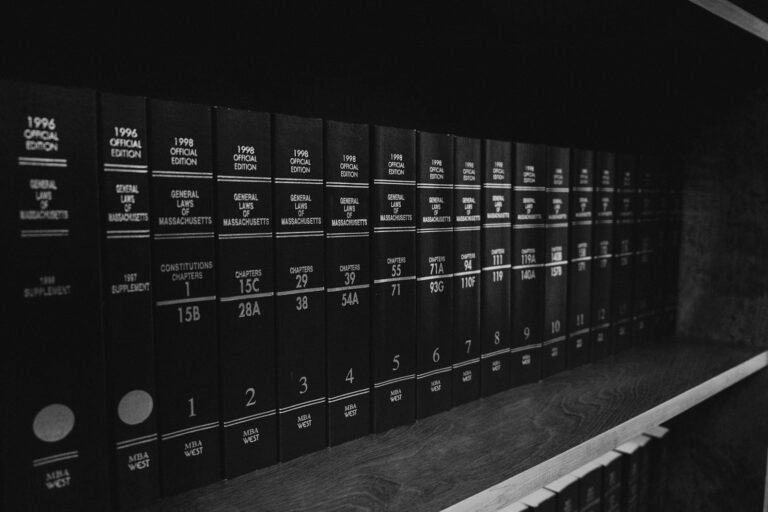
How to File a Civil Suit in Bangladesh: Dhaka Judge Court Guide 2026
Commercial Courts Act Bangladesh 2026: Jurisdiction, Procedure, Interest and Appeals

Contract Enforcement in Bangladesh: Money Suits and Contract Dispute Claims in 2026
All insights →
Which courts handle litigation and disputes in Bangladesh?
Do you handle criminal cases connected to commercial litigation and disputes?
Is mediation now compulsory before filing a civil case?
Can a company recover its legal costs if it wins the case?
What documents should we gather at the very start?
Can a court case be transferred or expedited?
Do you act in arbitration as well as court litigation?
How do you keep clients informed during a case?
Talk to our litigation team about your dispute
Speak with the partners about Litigation and disputes in Bangladesh or across borders.
Book a consultation →