
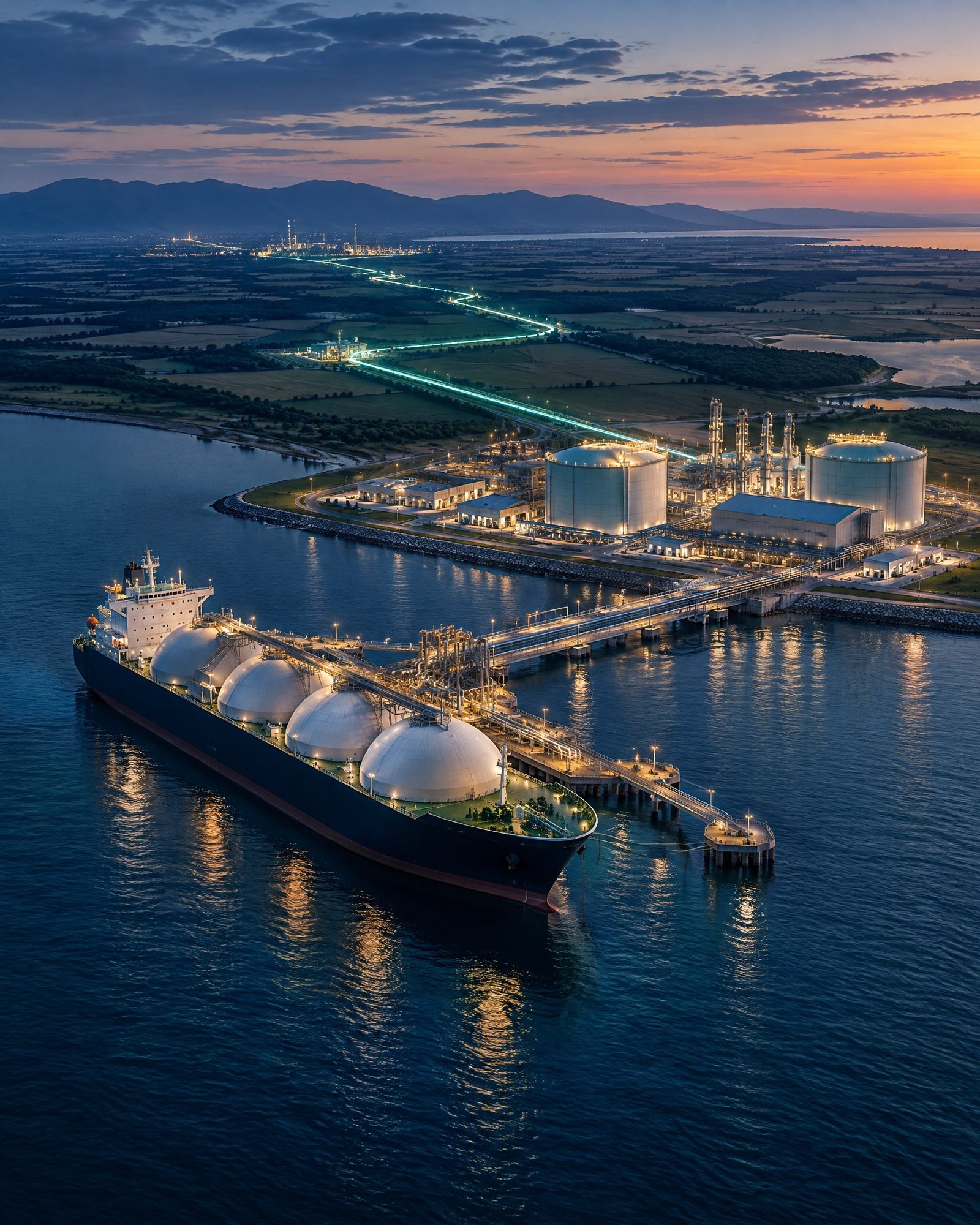
LNG Sales, Regasification and Cross-Border Gas Infrastructure in Bangladesh
Advice on LNG sale and purchase agreements, floating and land-based regasification terminals, transmission pipelines and cross-border gas infrastructure in Bangladesh, for suppliers, terminal developers, contractors, lenders and large gas users dealing with Petrobangla and its group companies on LNG and gas infrastructure.

- Map the chain
- Test the structure
- Negotiate the documents
- Manage and enforce
Bangladesh LNG and gas infrastructure in context
Bangladesh has relied on imported LNG since its first floating storage and regasification units (FSRUs) began operating off Moheshkhali, as domestic gas output declined while demand from power plants, fertiliser factories and industry kept growing. That has created a chain of contracts linking international suppliers, shipping, regasification, transmission and distribution, with Petrobangla and its group companies at the centre. Gas infrastructure projects in this chain carry large sums and long terms. We advise suppliers, terminal developers, contractors, lenders and industrial users on the legal structure of these arrangements, within our wider projects and infrastructure practice in Bangladesh.
On the supply side, Bangladesh buys LNG under long-term sale and purchase agreements with suppliers in the Gulf, and through spot and short-term purchases from international traders. Each route raises different questions: pricing formulas and reviews, take-or-pay and make-up rights, delivery terms, cargo diversion, force majeure, payment security and dispute resolution. Foreign exchange availability and payment timing became serious commercial issues in recent years, so letters of credit, payment guarantees and Bangladesh Bank processes now matter as much as the headline price. We review and negotiate these terms from a Bangladesh law, regulatory and enforcement perspective.
Regasification and storage sit in the middle of the chain. FSRU arrangements typically combine a terminal use or charter agreement, a regasification services contract, mooring and marine works, and an interconnection with the onshore grid operated by Gas Transmission Company Limited. Land-based terminals add land acquisition, environmental and coastal permitting, and port interfaces. Responsibility for LNG import and regasification sits mainly with Rupantarita Prakritik Gas Company Limited within the Petrobangla group. We help sponsors and contractors understand who signs, who pays, who bears delay and outage risk, and how capacity charges and termination payments work across the gas infrastructure package.
The regulatory environment has changed. The special provisions law that allowed power and energy contracts to be awarded without competitive tender was repealed by ordinance in late 2024, and contracts signed under it have faced review. Gas pricing and tariffs are regulated by the Bangladesh Energy Regulatory Commission, and the Gas Act 2010 and environmental law apply to pipelines and facilities. New gas infrastructure in Bangladesh therefore needs a transparent procurement record, proper approvals and clear tariff assumptions. We advise on procurement routes, approvals, regulatory submissions and how to protect investments if policy, tariffs or counterparties change later.
Cross-border gas infrastructure, including proposed regional pipelines and supply arrangements, raises questions of public international law, intergovernmental agreements, customs and transit, as well as ordinary project finance and construction risk. Disputes over LNG and gas infrastructure often turn on price reviews, payment delays, cargo shortfalls or terminal outages, and are usually resolved by international arbitration. Barrister Tahmidur Rahman and Barrister Remura Meheruba Mahbub advise on energy transactions and arbitration, and our dispute resolution team handles enforcement in Bangladesh. We also work closely with counsel in the UK, US, UAE, China, India and Singapore on these matters.
Core workstreams
Four clear stages
- 01Map the chain
- 02Test the structure
- 03Negotiate the documents
- 04Manage and enforce
Talk to a partner
Consultations in Dhaka or by video. Scope, team and fees are agreed in writing first.
Book →Our LNG and gas work

LNG sale and purchase agreements
- Map the chain
- Test the structure
- Negotiate the documents
- Manage and enforce
FSRU and regasification terminals
- Map the chain
- Test the structure
- Negotiate the documents
- Manage and enforce
Pipelines and transmission networks
- Map the chain
- Test the structure
- Negotiate the documents
- Manage and enforce
Procurement and regulatory approvals
- Map the chain
- Test the structure
- Negotiate the documents
- Manage and enforce
Project finance and security
- Map the chain
- Test the structure
- Negotiate the documents
- Manage and enforce
Disputes and price reviews
- Map the chain
- Test the structure
- Negotiate the documents
- Manage and enforce
LNG sale and purchase agreements
We advise suppliers, traders and buyers on long-term and spot LNG sale and purchase agreements and master agreements with Bangladesh counterparties. Key negotiating points include pricing and price review, take-or-pay, delivery windows, cargo cancellation, force majeure, payment security, sovereign or quasi-sovereign status, governing law, arbitration and the practical route to enforcing awards against assets in Bangladesh if payment fails or is delayed.
FSRU and regasification terminals
For floating and land-based regasification projects, we advise on terminal use and regasification agreements, charters, capacity and availability payments, performance standards, outage and maintenance regimes, termination payments, insurance and handover. We also review the interfaces with the national transmission operator, port authorities and marine contractors, so that each party's obligations fit together and delay risk sits with the party best able to manage it.
Pipelines and transmission networks
We advise on the legal framework for gas infrastructure such as transmission and distribution pipelines, including rights of way, land acquisition and compensation, environmental clearance, construction contracts and connection agreements with GTCL and distribution companies. For gas infrastructure serving power plants, fertiliser factories and industrial estates, we align supply agreements, connection timing and tariff assumptions with the project's financing documents and construction programme.
Procurement and regulatory approvals
Following the repeal of the special provisions regime, procurement records and approvals for gas infrastructure now receive much closer scrutiny. We advise on competitive tender routes, unsolicited proposals, government-to-government arrangements and the PPP structures now handled through Invest Bangladesh, as well as BERC tariff, pricing and licensing questions, environmental approvals and the board and ministerial approvals needed within the Petrobangla group before signing.
Project finance and security
Lenders and export credit agencies financing LNG and gas infrastructure need bankable contracts, effective security and clear step-in rights. We act for lenders and sponsors on Bangladesh law aspects of facility agreements, security over onshore assets and receivables, direct agreements with state counterparties, foreign exchange approvals and withholding tax, including the reduced 10% withholding rate on interest paid to non-residents under the Finance Act 2026.
Disputes and price reviews
We advise on price review clauses, payment delays, cargo shortfalls, terminal outages, force majeure claims and termination disputes. Most international LNG and gas infrastructure contracts provide for arbitration in Singapore, London or another neutral seat. We work alongside international arbitration counsel on strategy, evidence and Bangladesh law questions, and handle recognition and enforcement of foreign awards before the Bangladesh courts where a counterparty does not pay voluntarily.
Partner-led, on every matter.
Projects & Real Estate matters at TRW are led by partners, supported by associates, with one responsible lawyer from first advice to final outcome.
Meet the firm →



01Who are the main state counterparties for LNG and gas infrastructure in Bangladesh?
Petrobangla, the state oil, gas and mineral corporation, sits at the centre, with group companies handling particular functions. Rupantarita Prakritik Gas Company Limited is involved in LNG import and regasification arrangements, Gas Transmission Company Limited operates the national transmission network, and regional companies handle distribution. The Ministry of Power, Energy and Mineral Resources sets policy, and the Bangladesh Energy Regulatory Commission regulates tariffs and certain licensing matters. Knowing which entity signs, which approvals it needs and whose credit stands behind its obligations is one of the first diligence points on any LNG or gas infrastructure project in Bangladesh.
02How can a foreign LNG supplier protect itself against payment delays in Bangladesh?
Payment risk is commercial as well as legal. Suppliers typically rely on letters of credit, standby letters of credit or other bank support, clear payment terms with interest on late payment, suspension rights and termination triggers, and arbitration outside Bangladesh. Foreign exchange availability can affect the speed of payment even where the buyer is willing, so the documents should expressly anticipate Bangladesh Bank processes and remittance timing. We review the security package, the buyer's authority to sign and the approvals behind it, and explain realistically how an arbitral award would be enforced against assets located in Bangladesh.
03Is an FSRU contract treated as a lease, a charter or a services agreement under Bangladesh law?
It can be any of these, and the label matters less than the risk allocation. Many projects combine a charter or terminal use agreement for the vessel with a separate regasification services agreement and marine works contracts. The legal characterisation affects corporate and withholding tax, customs, registration, insurance and how claims are pursued if the unit is unavailable. We review all of the documents together, check their treatment under Bangladesh tax and customs law, and make sure capacity payments, availability deductions, maintenance windows and termination payments operate consistently across every part of the gas infrastructure package.
04What changed for energy investors after the special provisions energy law was repealed?
The law that allowed power and energy projects to be awarded without competitive tender, and limited legal challenge to those awards, was repealed by ordinance in late 2024. Since then, contracts awarded under it have been reviewed, and new projects face greater scrutiny of procurement, pricing and approvals. For investors, the practical consequence is that a clean procurement record, documented approvals and transparent pricing are now central to project bankability. We review how an existing project was procured, identify any legal exposure, and advise on structuring new gas infrastructure projects so that they can withstand later review.
05Which regulator sets gas tariffs for gas infrastructure users in Bangladesh, and can investors challenge decisions?
The Bangladesh Energy Regulatory Commission determines gas tariffs following its procedures, which include public hearings, and also handles certain licensing matters. Government policy decisions and subsidies also affect prices in practice. Investors and large users can participate in the hearing process and make written submissions. Where a decision appears unlawful or procedurally unfair, appeal routes or judicial review in the High Court Division may be available, depending on the decision. We advise on submissions, building the regulatory record and the realistic options for challenge, bearing in mind the long-term commercial relationship with state counterparties and offtakers.
06Can a private company build and own gas infrastructure such as a pipeline, storage facility or terminal?
Private participation is possible, but gas infrastructure in Bangladesh is closely linked to the state sector, and most projects involve Petrobangla group companies as counterparties, offtakers or owners. Routes include competitive tender, PPP arrangements, joint ventures and government-to-government frameworks, each with its own approvals, timetable and competition. A private developer will also need land rights, environmental clearance, construction and operating permits, and connection agreements with the relevant transmission or distribution company. We assess the available routes for a particular project, advise on structure and approvals, and identify the points that lenders and credit agencies will examine before committing finance.
07How are disputes under LNG and gas infrastructure contracts usually resolved?
Most international LNG sale and purchase agreements and terminal contracts provide for arbitration, often seated in Singapore or London under institutional rules. Domestic contracts with Bangladesh entities may provide for arbitration in Bangladesh under the Arbitration Act 2001 or for court proceedings. Price review disputes may follow a specific expert or arbitration procedure in the contract. Bangladesh is a party to the New York Convention, so foreign awards can be enforced through the Bangladesh courts, though timing in the courts can be unpredictable. We plan disputes strategy with enforcement in mind from the first notice of claim onwards.
08Does cross-border gas infrastructure need intergovernmental agreements as well as commercial contracts?
Usually, yes, in some form. Pipelines or supply arrangements crossing borders typically rest on agreements between governments or state entities, covering transit rights, customs treatment, taxation, safety standards, security and dispute resolution, with commercial contracts sitting underneath. Public international law, treaty commitments and investment protection may become relevant if something goes wrong. We advise on the Bangladesh law side of cross-border gas infrastructure structures, the interaction between intergovernmental and commercial documents, and how private investors and lenders can protect their position if political relationships, sanctions positions or regulatory policies change over the life of the project.
From first call to resolution.
- 01
Map the chain
We identify where the client sits in the LNG and gas chain, the state counterparties involved, the internal and external approvals each needs and how supply, regasification, transmission and payment obligations connect across the full set of project documents.
- 02
Test the structure
We review the procurement history, authority to sign, tariff assumptions, foreign exchange and tax treatment, and the enforceability of payment security, then report the legal risks clearly, in a format suited to sponsors, boards, credit committees and lenders.
- 03
Negotiate the documents
We draft and negotiate sale and purchase, terminal, pipeline, construction and finance documents, aiming for consistent risk allocation, workable outage and force majeure regimes, sensible change of law protection and dispute clauses that lead to an enforceable result.
- 04
Manage and enforce
During operations we advise on renewals, price reviews, variations, tariff and regulatory changes and claims, and if a dispute arises, we coordinate arbitration strategy and enforcement in Bangladesh with international co-counsel and the client's in-house legal team at each stage.

“Demonstrates an extraordinary command over both domestic litigation and international arbitration.”
The Legal 500 Asia Pacific, Bangladesh: Dispute resolution, client feedback
Related reading.
Energy Arbitration in Bangladesh 2026: Power, Gas and LNG Disputes, Price Reviews and Enforcement
Power and Energy Law in Bangladesh 2026: BERC, Power Contracts and Energy Deals
Project Finance in Bangladesh: Legal Structure and Key Agreements (2026)
Foreign Arbitral Award Enforcement in Bangladesh 2026: The New York Convention and Sections 45 to 47
All insights →
Does Bangladesh import LNG under long-term contracts, spot purchases or both?
What is an FSRU, and why does Bangladesh use them?
Who regulates gas infrastructure safety, permits and licensing in Bangladesh?
Is land acquisition usually required for gas infrastructure projects?
Can foreign companies own LNG terminals and other gas infrastructure in Bangladesh?
How does the Finance Act 2026 affect LNG project financing?
What happens to an LNG contract if the Bangladesh buyer cannot pay in foreign currency on time?
Can TRW act alongside our international energy and finance counsel?
Discuss your LNG or gas project with Dhaka counsel
Speak with the partners about Gas infrastructure in Bangladesh or across borders.
Book a consultation →