
TRW Insight / Bangladesh
Act No 43 of 2026 changed the entitlements every worker in Bangladesh should check: maternity benefit, festival holidays, death benefit, union registration, harassment protection and the right to refuse dangerous work. This is the right-by-right guide, with the route to enforce each one.
Workers rights in Bangladesh: the 2026 catalogue
Workers rights in Bangladesh were rewritten in 2026. The Bangladesh Labour Act 2006 is still the core statute, but the Bangladesh Labour (Amendment) Act 2026, Act No 43 of 2026, dated 10 April 2026, replaced the interim government's 2025 Ordinance and changed maternity benefit, festival holidays, death benefit, trade union registration, harassment protection and the right to stop dangerous work.[2] Many employees, HR teams and older online guides still quote the pre-2026 figures, and those figures are now wrong.
This guide sets out workers rights in Bangladesh from the employee's side, right by right: documents, hours, leave, pay, safety, injury compensation, social security, unions and protection from harassment. It explains what an employer may still lawfully require, how each right is enforced and when to take advice, and covers export processing zones and domestic workers separately. Employer compliance, minimum wage rates and dismissal claims have their own TRW guides, linked rather than repeated here.
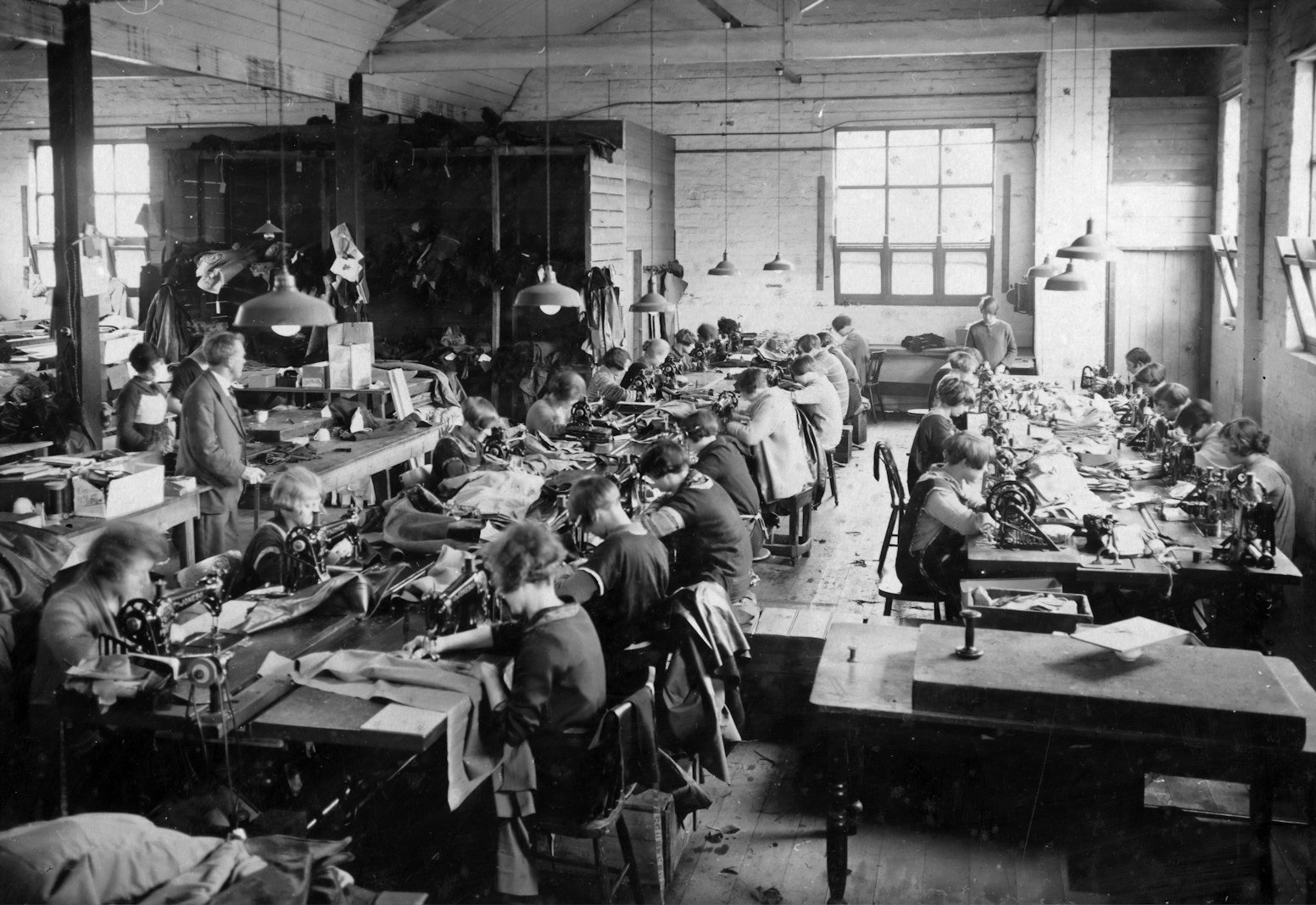
Summary: A person employed for wages in skilled, unskilled, manual, technical, business development or clerical work, directly or through a contractor, is a "worker" under the Bangladesh Labour Act 2006 unless employed in a genuinely managerial or administrative role. Workers are entitled to an appointment letter and photo identity card, an eight-hour day, overtime at double the basic rate, 10 days' casual leave, 14 days' sick leave, annual leave, 13 festival holidays and, for women, 120 days' maternity benefit. Rights are enforced through a written grievance to the employer, the Labour Court, the labour inspectorate and the Director General of Labour.
Key point: Maternity benefit is no longer sixteen weeks. Act No 43 of 2026 replaced "eight weeks" with 60 days on each side of childbirth, so a qualifying worker is now entitled to 120 days, calculated on her last fixed monthly gross wage divided by 26.[2] [8] Any appointment letter, HR policy or payslip that still applies 112 days short-changes the worker by eight days.
At a glance
Paper first
No worker may be employed without an appointment letter and a photo identity card under section 5 of the Labour Act.
Hours and pay
Eight hours a day, 48 a week ordinarily; overtime at twice the basic wage; wages within seven working days of the wage period.
2026 leave
13 festival holidays and 120 days' maternity benefit, both increased by Act No 43 of 2026.
Union rights
Twenty workers can apply to register a union, with minimum membership fixed by workforce size rather than a percentage.
Thirty days
A grievance about dismissal or similar action must reach the employer in writing within 30 days.
Table of Contents
Who can claim workers rights in Bangladesh
Almost every statutory protection attaches to the "worker". The 2026 Act replaced the definition in section 2(65): a worker is any person, including an apprentice, employed for wages in skilled, unskilled, manual, technical, business development or clerical work, directly or through a contractor, whether the terms are express or implied.[1] [2] The only person excluded by the definition is someone appointed in writing to a managerial or administrative role under section 2(49)(b).[1]
Sales staff and contractor-supplied workers are now expressly inside the Act, and a job title takes no one outside it: an "executive" with no real power to manage or discipline others is usually still a worker.
Officers and managers
Genuine managers rely on their contracts, service rules and the general law of contract, usually through a civil suit rather than the Labour Court. Our guide to wrongful dismissal in Bangladesh explains how officers, public servants and bank employees enforce their contracts.
Workers outside most of the Act
Section 1(4) excludes certain groups, including domestic workers, seafarers and farms ordinarily employing fewer than five workers. After the 2026 amendments, each of these groups is nonetheless covered by Chapters XII, XIII and XIV, which deal with compensation for injury, trade unions and industrial disputes.[1] [2] Export processing zones follow a separate statute, discussed below.
Probation and continuous service
Many entitlements depend on length of service. For Chapter II, a worker has "one year" of continuous service after actually working at least 240 days in the previous twelve months, and "six months" after 120 days in the previous six months. Days of lay-off, paid or unpaid sick or injury leave, lawful strike, unlawful lockout and up to 120 days of maternity leave all count as days worked.[1]
Workers rights in Bangladesh start with the appointment letter
Section 5 is short and absolute: no employer may employ a worker without issuing an appointment letter, and every worker must be given an identity card bearing a photograph.[1] Section 6 adds a service book, which records the worker's employment history.[1] Most later claims are won or lost on these documents.
What the appointment letter must say
Rule 19 of the Bangladesh Labour Rules 2015 lists the required contents. The letter must state the worker's name, parents' names and spouse's name where applicable, present and permanent address, designation, type of work and date of joining, class of worker, wages or pay scale with any annual increment, and other financial benefits such as house rent, medical, transport, festival and attendance allowances and gratuity. It must also state that the appointment is governed by the Labour Act and any service rules.[5]
The identity card is issued in the prescribed form at the employer's own cost; a worker who loses it can obtain a replacement on payment of Tk 50.[5] If an appointment letter is lost or damaged, the worker can apply for a duplicate or photocopy.[5]
Keep copies of all three away from the workplace, check that the letter states the worker's class, because notice and compensation depend on it, and compare the stated basic wage with the payslip. If no letter is issued, ask for one in writing and keep a copy: a refusal is itself a breach of section 5.[1]
Working hours, rest days and overtime
An adult worker may not ordinarily be required or allowed to work more than eight hours a day; subject to the overtime rules, a day may extend to ten hours.[1] Weekly hours are capped at 48 ordinarily. With overtime, total hours may not exceed 60 in any week and must average no more than 56 a week over a year, although the government may grant time-limited exemptions for particular industries.[1]
Weekly holiday
Factory and industrial workers are entitled to one day off each week, and workers in shops and other establishments to one and a half days. Road transport workers receive one continuous 24-hour rest period a week. No wage may be deducted for these holidays.[1]
Overtime pay
Work beyond the daily or weekly limit is paid at twice the ordinary rate of basic wage plus dearness allowance and any ad hoc or interim wage.[1] The double rate does not apply to piece-rated workers.[1] Overtime should appear on the payslip, which rule 111 requires the employer to give every worker before wages are paid, showing wages, overtime, deductions and net pay.[5]
Overtime disputes are decided on records, so a worker who regularly stays late should keep a dated diary of start and finish times. Unpaid overtime is a wage claim like any other.
Leave and holidays: the 2026 entitlements
Leave is where the 2026 Act made its most visible changes to workers rights in Bangladesh.
Casual and sick leave
Every worker is entitled to ten days' casual leave a year on full wages, except tea estate workers.[1] Every worker other than a newspaper worker is entitled to fourteen days' sick leave a year on full wages, granted on a registered doctor's certificate.[1] Neither casual nor sick leave carries forward into the next year.[1]
Annual leave
After one year of continuous service, an adult worker in a shop, commercial or industrial establishment, factory or road transport earns one day of paid annual leave for every 18 days worked; tea garden workers earn one day for every 22 days, and newspaper workers one for every 11.[1] Unused annual leave carries forward. Accrual stops at 40 days for factories and road transport and 60 days for shops, commercial and industrial establishments and tea gardens, but leave the employer refuses is added on top of the cap.[1]
Festival holidays
Section 118(1) now gives every worker 13 days of paid festival holiday a year, increased from eleven by the 2026 Act.[1] [2] An employer that still publishes an eleven-day festival calendar for 2026 is in breach.
Maternity benefit: 120 days
A woman worker is entitled to maternity benefit for the 60 days before the expected date of childbirth and the 60 days after it, provided she has worked for that employer for at least six months immediately before the birth.[1] The 2026 Act replaced "eight weeks" with "60 days" throughout sections 45 to 50, moving the total from 112 days to 120.[2] [8] After receiving notice, the employer must allow her to be absent for up to 120 days with the benefit.[2]
The benefit is now calculated on a fixed formula: the daily average wage is the worker's most recently fixed monthly gross wage divided by 26, paid in cash, into a bank account or by electronic fund transfer.[2] The statutory exception remains: no maternity benefit is payable to a woman who has two or more living children at the time of the birth, although she keeps any other leave due to her.[1] Up to 120 days of maternity leave counts as days worked for continuous service and annual leave.[1]

Wages, bonuses and deductions
Wages must be paid within seven working days after the end of the wage period. On leaving, for whatever reason, a worker must receive all wages due within thirty working days. Wages must be paid on a working day.[1] Unauthorised deductions are prohibited; the Act lists the limited deductions an employer may make, such as for absence, damage or loss, services provided and recovery of advances.[1]
Equal pay and the minimum wage
The 2026 Act substituted section 345: when any wage or minimum wage is fixed, the principle of equal pay for men, women and disabled workers for work of the same nature or value must be followed.[1] Paying less than the minimum wage declared for the industry is an offence punishable with up to one year's imprisonment, a fine of Tk 20,000 to Tk 50,000, or both, and the court may order the employer to pay the worker the shortfall.[1] [2] Current rates, the Wage Board process and the three-year review cycle are explained in our guide to minimum wage in Bangladesh.
Festival bonus
Under rule 111(5) of the Labour Rules, a worker who has completed one year of continuous employment receives two festival bonuses each year. Each bonus may not exceed one month's basic wage and is paid in addition to wages.[5] The Rules fix the floor; many agreements pay more.
Recovering unpaid or delayed wages
Section 132 gives a worker a direct claim in the Labour Court where wages are unlawfully deducted, unpaid or delayed, or where gratuity or provident fund dues are delayed. Since 2026 an inspector may also file on the worker's behalf, as may an heir or legal representative if the worker has died.[1] [2] The application must be made within twelve months of the deduction or of the date the wages fell due, though the court may admit a late claim for sufficient cause.[1]
The court can order payment of the wages and, in its discretion, compensation of up to 25 per cent of the wages, unless the delay was caused by a genuine dispute, an emergency or the worker's own failure to collect pay. A claim the court finds malicious or vexatious may attract a fine of up to Tk 200.[1]
The right to a safe workplace
Safety is one of the oldest workers rights in Bangladesh law. Chapters V to VIII of the Labour Act impose detailed duties on cleanliness, ventilation, fire safety, machinery, hazardous processes and welfare facilities.[1] Two 2026 changes give workers personal rights.
The right to stop dangerous work
New section 61A prohibits any work process or storage that may cause physical injury. An employer may not force a worker to perform dangerous work after the worker has told a superior that the method could seriously endanger life or health. No disciplinary or other unwarranted action may be taken against a worker who uses personal protective measures or removes himself or herself from a situation reasonably believed to pose an imminent and serious danger. If work stops for a safety risk, the employer may move the worker to safer work only on the same wages and conditions.[1] [2]
Safety committees and accidents
Every establishment employing fifty or more workers must form and operate a safety committee, which must report identified risks, accidents, dangerous occurrences and diseases to the owner.[1] The 2026 Act also inserted a definition of accident covering a sudden event in the course of duty, at or outside the workplace or while under the employer's control, that causes bodily injury, mental trauma or death.[1]
International commitments
On 20 November 2025 Bangladesh deposited ratifications of ILO Conventions No 155 on occupational safety and health, No 187 on the promotional framework for occupational safety and health, and No 190 on violence and harassment.[10] They do not create new claims by themselves, but they shape how the domestic provisions are read.
Compensation for injury and death at work
Under Chapter XII, an employer must pay compensation for personal injury caused by an accident arising out of and in the course of employment.[1] The amounts are fixed by section 151 and the Fifth Schedule, as substituted in 2018.[1] [6]
- Death: Tk 2,00,000 to the worker's dependants, in addition to any amount due on retrenchment, dismissal, termination or resignation.[6]
- Permanent total disablement: Tk 2,50,000.[6]
- Permanent partial disablement: the percentage of the permanent total disablement figure that matches the loss of earning capacity listed in the First Schedule, or assessed for unlisted injuries.[1]
- Temporary disablement: monthly payments after a four-day waiting period, for the period of disablement or one year, whichever is shorter, at full wages for the first two months, two-thirds for the next two and half thereafter.[1] [6]
The 2026 Act replaced the First, Second and Third Schedules but left the Fifth Schedule amounts unchanged, so the figures above still apply to employer-liability claims.[2]
The separate death benefit under section 19
Where a worker dies in service after at least one year of continuous employment, the employer must pay the nominee, or a dependant, 30 days' wages for every completed year of service or part exceeding six months, rising to 45 days' wages if the worker dies at work or from a work accident. If gratuity is higher, gratuity is paid. This is in addition to retirement benefits.[1] The 2026 Act reduced the qualifying period from two years to one.[1] [2]
The Employment Injury Scheme
New section 151A allows the government to establish an Employment Injury Scheme Fund for notified industries or sectors. Where it applies, the employer-liability rules in section 150 do not.[1] [2] In export processing zones, a pilot run by BEPZA with the ILO and GIZ was launched on 26 February 2025 for garment workers; benefits started on 14 September 2025 for death and permanent disability, including commuting accidents, and the parties have committed to a permanent scheme by 2027.[11]

Social security: provident fund, pension and gratuity
Private-sector workers have no universal social insurance. Long-term protection comes from provident funds, the universal pension scheme and statutory end-of-service payments.
Provident fund or Progoti
Section 264, rewritten in 2026, allows any private-sector establishment to set up a provident fund for its workers. An establishment with at least 100 permanent workers must establish one if at least two-thirds of its workers ask for it in writing, and must make the rules and operate the fund within six months.[1] Contributions after one year's service are between 7 and 8 per cent of basic wage from the worker, matched by the employer.[1]
The employer is relieved of that obligation if it ensures that interested workers join Progoti, the universal pension scheme run by the National Pension Authority, paying half of the contribution while the worker pays the other half. A worker who declares in writing that he or she is not interested releases the employer from its share for that worker.[1]
End-of-service payments
Termination without misconduct under section 26 attracts 30 days' wages for each completed year of service, or gratuity if payable and higher.[1] A resigning permanent worker receives 7 days' wages per year of service up to three years, 15 days for more than three but less than ten years, and 30 days or gratuity, whichever is greater, for ten years or more.[1] [2] Section 14(3), replaced in 2026, fixes the wage for these calculations as the last monthly basic wage and dearness allowance, with any ad hoc or interim wage.[1] [2] Our guide to hiring and firing laws in Bangladesh works through each exit route in detail.
Trade union and collective bargaining rights
Freedom of association is where workers rights in Bangladesh moved furthest in 2025 and 2026: the old requirement that a union enrol 20 per cent of the workforce has gone.
Registration thresholds from 2026
At least 20 workers in an establishment may apply jointly to register a union. The union must then meet a minimum membership tied to the size of the workforce:[1] [9]
- 20 members where the establishment employs 20 to 300 workers;
- 40 members for 301 to 500 workers;
- 100 members for 501 to 1,500 workers;
- 300 members for 1,501 to 3,000 workers; and
- 400 members for 3,001 workers or more.
No more than three registrations may exist at any one time in an establishment or group of establishments.[1] Officers may hold office for up to three years before re-election, extended from two by the 2026 Act.[1] The Director General can verify the employer's workforce list physically or online.[1]
Protection against anti-union conduct
The 2026 Act defines blacklisting as compiling a list or database to bar workers, including temporary and substitute workers, from re-employment after dismissal, discharge, termination or other separation.[1] Employers are barred from blacklisting workers or union members, setting up unions under their control, funding union activity to influence it and backing rival unions.[9] Under new section 196B, the Director General may order the employer to stop an unfair labour practice or anti-union discrimination immediately and to restore any loss and pay compensation to the worker.[1]
Collective bargaining beyond the factory
New section 203A creates a framework for bargaining at sectoral and national level. A federation or confederation may request bargaining with employers' organisations, or vice versa, and the party receiving the request must reply in writing within ten days.[1] A registered union, as well as a collective bargaining agent, may now apply to the Labour Court under section 213 to enforce any right under the Act, an award, a settlement or established practice.[1] Our collective labour relations practice advises on recognition and bargaining.
Freedom from harassment and discrimination
The 2026 Act turned what had been a short provision on women's dignity into a full anti-harassment regime, aligned with ILO Convention No 190.[8] [10]
Employer duties under section 332
Owners and employers must keep the workplace from becoming hostile, publicise the prohibitions and penalties against sexual harassment and violence, adopt a workplace policy against violence and harassment, assess and control the risks, train workers, publish the reporting and complaint procedure on the establishment's website, and take legal action against sexual harassment that occurs in the establishment.[1] Where a woman is employed, no colleague or other person may behave towards her in a way that is obscene, indecent or contrary to her modesty and dignity, whatever her rank.[1]
The complaint committee
Section 332A requires every employer to set up a five-member complaint committee, chaired by a woman, with a majority of women from the establishment and two members from an organisation working on gender and sexual abuse issues. The committee receives and investigates complaints, applies a zero-tolerance approach, and must keep matters confidential.[4] Failure to comply is punishable by a fine of Tk 20,000 to Tk 50,000.[1] The detailed procedure is left to rules that had not been issued by mid-2026.[8]
Discrimination and forced labour
Section 345A prohibits discrimination on grounds of caste, race, sex, gender identity, religion, political opinion, nationality, social status, descent or disability that denies equal opportunity or treatment in employment. Genuine occupational requirements and positive measures for disadvantaged groups are not discrimination.[1] Section 345C prohibits forced labour, and section 307B penalises it.[1] A worker facing harassment should complain in writing to the committee, keep a copy and report criminal conduct to the police.
Employee rights and employer prerogatives
The Act protects workers but preserves the employer's right to manage, and the Labour Court decides most disputes by locating the line between the two.
What an employer may lawfully do
- Discipline for misconduct: after a written allegation, at least seven days to reply, a hearing and an enquiry by a committee with equal employer and worker representation completed within sixty days, the employer may impose the penalties in section 23. Suspension pending enquiry is capped at sixty days.[1]
- End employment without blame: under section 26, on 120 days' notice for a monthly-rated permanent worker or 60 days for others, or pay in lieu, with the compensation described above.[1]
- Treat prolonged absence as leaving: where a worker is absent for more than ten days without notice or permission, and fails to explain or return after the notices section 27(3A) requires, the worker is treated as having left service.[1]
- Require notice on resignation: a permanent worker must give 60 days' written notice, a monthly-rated temporary worker 30 days and other temporary workers 14 days, or pay wages in lieu.[1]
Where the employer's prerogative stops
An employer cannot contract out of the Act, cannot deduct wages except as the Act permits, cannot retaliate for union activity or a safety refusal, and cannot use section 26 as a disguised punishment. A section 26 termination can be challenged where it was made for trade union activity or with malicious intent, or where the worker was denied the benefits due.[3]
The full employer perspective, including how to run a defensible enquiry, is in our labour law in Bangladesh hub.
Workers rights in Bangladesh export processing zones
Workers in factories inside export processing zones are governed by the Bangladesh EPZ Labour Act 2019 rather than the Labour Act 2006, and the zone Act overrides other laws.[7] The 2026 amending Act amends only Act No 42 of 2006, so its changes do not by themselves reach the zones.[2]
How EPZ entitlements differ
- Maternity: eight weeks before and eight weeks after delivery, after six months' service, with the same two-living-children exception.[7]
- Festival leave: eleven days a year with full wages; a worker required to work on a festival holiday receives two compensatory days within thirty days.[7]
- Festival bonus: equivalent to two months' basic wages for each permanent worker in each calendar year, at the worker's own religious festival.[7]
- Earned leave: accumulated earned leave can be encashed each calendar year, in the manner the Authority determines.[7]
Workers' welfare associations
EPZ workers organise through workers' welfare associations, not trade unions. An association requires the support of at least 20 per cent of the permanent workers of the industry, and disputes go to the EPZ Labour Court and the EPZ Labour Appellate Tribunal.[7] The 2026 union thresholds do not apply inside the zones. For the employer perspective on zone location, see our factory setup guide.
Domestic workers: policy protection and the 2026 Act
The Domestic Workers Protection and Welfare Policy 2015 recognises domestic work as labour and provides for contracts, defined hours, weekly leave, festival bonuses, medical care and maternity benefits, restricts heavy work by children, and proposed a monitoring cell and complaint helpline.[12] It is a policy, not a statute, so it cannot be enforced in the Labour Court, and in 2022 the High Court issued a rule asking why the failure to frame enforceable guidelines should not be declared unlawful.[12]
The 2026 Act inserted a statutory definition of domestic worker: a person doing household work full-time or part-time under an oral or written arrangement, with a mess or dormitory treated as a home.[1] Domestic workers remain outside most of the Act but are now covered by Chapters XII, XIII and XIV on injury compensation, trade unions and industrial disputes.[1] Minimum wages, hours, holidays and service benefits still do not apply to them by statute.[8] Bangladesh has not ratified ILO Convention No 189 on domestic workers.[12]
In practice, an injured domestic worker can now claim compensation under Chapter XII, while abuse remains a matter for the criminal law and the police.
How workers enforce their rights
Workers rights in Bangladesh are enforced through a small number of institutions, each with its own trigger and time limit.
Employer
Receives the written section 33 grievance and must hear the worker and decide within 30 days.
DIFE
Inspects workplaces, takes complaints on helpline 16357 and may file wage claims for workers.
Director General of Labour
Registers unions and may order an end to unfair labour practices with compensation.
Labour Court
Hears grievances, wage claims and enforcement applications without court fees for section 33 cases.
Labour Appellate Tribunal
Hears appeals from the Labour Court within 30 days; its decision on a grievance appeal is final.
National Legal Aid Services Organisation
Runs labour legal aid cells in Dhaka and Chattogram for workers who cannot afford a lawyer.
The section 33 grievance
A worker, including one who has been laid off, retrenched, discharged, dismissed or removed, who has a grievance under Chapter II must send it to the employer in writing by registered post within 30 days of learning of the cause; hand delivery is enough if the employer acknowledges receipt in writing. The employer must investigate, hear the worker and decide within 30 days. If it does not, or the worker is dissatisfied, the worker may complain to the Labour Court within 30 days.[3]
The Labour Court can order reinstatement, with or without back wages, or substitute a lesser penalty for a dismissal, removal or discharge. Either side may appeal to the Labour Appellate Tribunal within 30 days, and the Tribunal's decision is final. No court fee is payable, and the complaint is not a criminal case.[3]
| Right | Labour Act 2006 (as amended 2026) | EPZ Labour Act 2019 | Enforcement route |
|---|---|---|---|
| Maternity benefit | 60 days before and 60 days after childbirth | 8 weeks before and 8 weeks after | Grievance, then Labour Court |
| Festival holidays | 13 days a year | 11 days a year | Grievance or inspector |
| Festival bonus | Two a year, each up to one month's basic wage | Two months' basic wages a year | Wage claim under section 132 |
| Overtime | Twice the basic wage, 60-hour weekly cap | Twice the basic rate | Wage claim; DIFE helpline |
| Unpaid wages | Within 7 working days; final dues within 30 | Claim in the EPZ Labour Court | Labour Court within 12 months |
| Union membership | 20 workers may apply; fixed minimum membership | Welfare association with 20 per cent support | Director General; Labour Court |
| Harassment | Policy and five-member complaint committee | Act's own provisions | Committee; police; fine of Tk 20,000 to Tk 50,000 |
Inspectors, the helpline and the Director General
The Department of Inspection for Factories and Establishments (DIFE) accepts complaints by letter, email and its worker helpline, 16357, and most concern unpaid dues and wages.[14] Inspectors can now file wage claims for workers under section 132.[1] Union-related retaliation goes to the Director General of Labour, who can order the employer to stop and compensate under section 196B.[1]
Alternative dispute resolution
New section 348C provides for an Alternative Dispute Resolution Authority with panels of conciliators and arbitrators to resolve individual and collective labour disputes.[1] Its rules and panels had not been prescribed by June 2026, so the Labour Court remains the working forum.[8]
A worker's enforcement sequence
Collect the documents
Gather the appointment letter, identity card, payslips, attendance records and any notices or letters from the employer.
Write down the timeline
Record the dates of each event, especially the date you learned of a dismissal, deduction or other grievance.
Send a written grievance
Within 30 days, send the grievance to the employer by registered post, or hand it over against a written acknowledgement.
Use the helpline or inspector
Report unpaid wages, overtime or safety breaches to DIFE on 16357, and ask whether an inspector will file a claim.
Escalate union retaliation
Complain to the Director General of Labour where the action follows union activity or a complaint.
File in the Labour Court
Apply within 30 days of the employer's decision on a grievance, or within twelve months for a wage claim.
Consider settlement
Negotiate dues in writing, and never sign a release without checking every statutory payment.
Appeal if needed
Appeal to the Labour Appellate Tribunal within 30 days of the Labour Court's order.

Getting legal advice as an employee
Many workers rights in Bangladesh can be enforced without a lawyer, and the Labour Court charges no fee for section 33 complaints.[3] But the deadlines are short, the forum depends on whether the person is a worker or an officer, and a badly drafted grievance can waive points that would otherwise win.
Free legal aid
The National Legal Aid Services Organisation, under the Law and Justice Division, provides legal aid at government expense and runs labour legal aid cells in Dhaka and Chattogram specifically for workers. Between 2009 and December 2025, 29,829 workers received assistance through it, including 21,971 who received legal advice and 3,309 cases handled through alternative dispute resolution.[13]
When a private lawyer adds value
Advice pays for itself in five situations: a dismissal, where the 30-day grievance must preserve every ground; a senior employee who may be an officer rather than a worker; a serious injury or death, where Fifth Schedule compensation, the section 19 benefit, injury scheme payments and provident fund dues must be combined; harassment, where committee, criminal and employment processes run in parallel; and retaliation after union activity.
What to bring to a first meeting
Bring the appointment letter, identity card, payslips, attendance or overtime records, any show-cause notice, enquiry papers and the termination letter, with a short timeline of events and dates. TRW's employment litigation and workforce disputes practice acts in the Labour Court and Labour Appellate Tribunal, and our compensation and benefits practice advises on provident funds, gratuity and end-of-service calculations.
What to watch in 2026 and 2027
Three developments will shape workers rights in Bangladesh over the next year. First, the rules implementing the 2026 Act: the harassment committee procedure, the ADR Authority and other new provisions all depend on subordinate legislation that was still awaited in mid-2026.[8] Second, social protection: the EPZ injury scheme is due to become permanent by 2027, and section 151A allows the government to extend a fund to other sectors by notification.[1] [11] Third, domestic workers, whose limited statutory coverage leaves the 2015 policy as their main protection.[12]
For employees the message is simpler: check the appointment letter, keep the payslips, calendar the 30-day grievance window the day a problem arises, and test every leave calculation against the 2026 figures. Contracts drafted before April 2026 should be read with our guide to employment contracts in Bangladesh.
Frequently asked questions
What are the basic workers rights in Bangladesh?
An appointment letter and photo identity card, an eight-hour day and 48-hour week ordinarily, overtime at twice the basic wage, wages within seven working days, casual, sick, annual and festival leave, maternity benefit, a safe workplace, injury compensation, union membership and protection from harassment and discrimination.[1]
How long is maternity leave in Bangladesh in 2026?
How many festival holidays do workers get?
Is a festival bonus compulsory?
What is the overtime rate in Bangladesh?
Twice the ordinary rate of basic wage plus dearness allowance and any ad hoc or interim wage, except for piece-rated workers. Total hours may not exceed 60 a week.[1]
How many workers are needed to form a trade union?
At least 20 workers may apply, and minimum membership ranges from 20 in establishments of up to 300 workers to 400 in establishments of more than 3,000. No more than three unions may be registered at once.[1]
How much compensation is payable if a worker dies in a workplace accident?
How do I complain about unpaid wages?
What is the deadline to challenge a dismissal?
The written grievance must reach the employer within 30 days of learning of the cause. The worker then has 30 days after the employer's decision, or after its 30 days to decide expire, to go to the Labour Court.[3]
Source register
Primary legal and regulatory sources
Materials checked on 20 October 2026. Confirm the current official text before relying on any provision.
- Bangladesh Labour Act 2006 (Act No 42 of 2006), consolidated Bangla text with 2026 amendments — Laws of Bangladesh
- Bangladesh Labour (Amendment) Act 2026 (Act No 43 of 2026), 10 April 2026 — Laws of Bangladesh
- Bangladesh Labour Act 2006, section 33: grievance procedure — Laws of Bangladesh
- Bangladesh Labour Act 2006, section 332A: complaint committee on discrimination, violence and harassment — Laws of Bangladesh
- Bangladesh Labour Rules 2015 (SRO No 291-Law/2015), unofficial English translation
- Bangladesh Labour Act 2006, English text up to 2018, Fifth Schedule (compensation amounts)
- Bangladesh EPZ Labour Act 2019 (Act No II of 2019), authentic English text (SRO No 257-Law/2021)
- Mondaq (The Legal Circle), 11 June 2026 — The rules have changed: Bangladesh's 2025-2026 labour law reforms
- UNB, 9 April 2026 — Parliament passes labour bill: layoff compensation and trade union rights
- ILO, 20 November 2025 — Landmark ratifications: Bangladesh towards a future of work that is safe and healthy
- ILO, June 2026 — BEPZA and ILO commit to permanent injury scheme for EPZ workers
- The Business Standard, 22 March 2026 — Domestic worker protection on paper, welfare absent in reality
- BSS, 2 March 2026 — Workers receive legal aid at government expense
- Prothom Alo English, 1 May 2022 — Wages and dues are the main bones of contention
Related TRW assistance
Move from information to a defined next step
TRW acts for employees and workers in grievances, wage claims, injury and death compensation, and Labour Court and Labour Appellate Tribunal proceedings. Explore our employment litigation and workforce disputes practice or contact TRW to have your entitlements reviewed before the 30-day grievance window closes.