
TRW Insight / Bangladesh
Most Dhaka flats are bought off-plan from a developer building on someone else's land. The Real Estate Development and Management Act 2010 gives buyers real protection, but only if the approvals, the landowner's power of attorney and the allotment agreement are checked before the money moves.
Buying apartment Dhaka: the legal position in 2026
Buying apartment Dhaka stock in 2026 is a contract with a developer long before it becomes a deed of ownership. Most buyers pay a booking deposit and years of instalments for a flat that exists only as an approved drawing, on land the developer usually does not own. The protection that matters lies in four places: the Real Estate Development and Management Act 2010 and its 2011 Rules, the RAJUK approvals behind the building, the documents linking landowner and developer, and the allotment agreement the buyer signs.
This guide is written for that buyer, whether resident in Dhaka or abroad. It explains what the 2010 Act requires of developers, how to read RAJUK approvals under the Detailed Area Plan 2022–2035, what due diligence a flat purchase needs beyond the ordinary land search, how to review the allotment agreement clause by clause, how home loans and non-resident purchases work, and what happens after handover. It closes with the dispute routes a buyer actually has: statutory arbitration under section 36, REHAB mediation, court-annexed mediation and litigation.
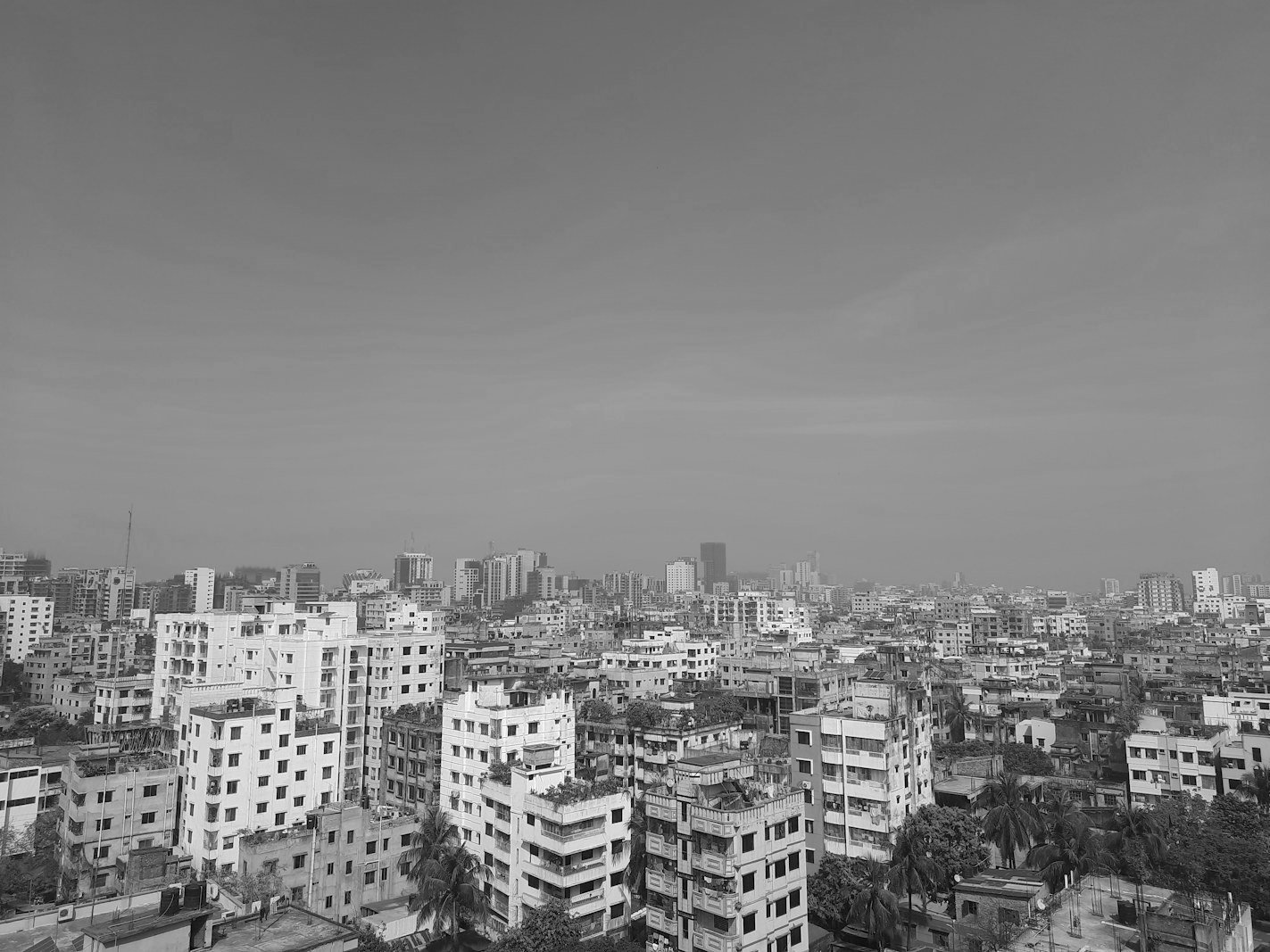
Summary: A flat bought off-plan in Dhaka is protected by the Real Estate Development and Management Act 2010: the developer must be registered, the project must be approved before any sale, payments run through banks, and late delivery triggers a refund with compensation of at least 15 per cent. Those rights only work if the buyer checks the approvals, the landowner's power of attorney and any mortgage before paying, and signs an allotment agreement with clear dates, specifications and a workable dispute clause.
Key point: A developer may not advertise, sell or sign a sale agreement for any unit until the authority has approved the project and the developer holds the power to execute transfer deeds. If it misses the agreed handover date, it must refund everything paid with the contractual compensation, or 15 per cent where the contract is silent, within six months.
At a glance
Registered developer
Developers must register with RAJUK in Dhaka; registration runs for five years and is renewable.
Approval before sale
No advertising, booking or sale agreement until the project is approved and transfer authority is in place.
Three-month handover
After full payment, possession, deed execution and registration must be completed within three months.
15% default compensation
Late delivery means a refund with agreed compensation, or 15 per cent of sums paid, within six months.
Section 36 disputes
Buyer, developer and landowner disputes go first to negotiation, then to a joint arbitral tribunal or court.
Table of Contents
The legal framework for buying apartment Dhaka projects
Three bodies of law meet in every developer flat: the Transfer of Property Act and Registration Act for the eventual sale deed, RAJUK's planning regime for what may be built, and the Real Estate Development and Management Act 2010 (Act No. 48 of 2010) for the developer's conduct from advertisement to handover. This article concentrates on the last two. For the wider statutory map, see our guide to real estate law in Bangladesh.
Scope and commencement of the 2010 Act
The penal provisions in sections 19 to 32 took effect when the Act was passed, while its remaining provisions are deemed to have taken effect from 7 December 2008.[1] The Act does not apply to projects run entirely by the government, but a project a government body runs jointly with a developer is treated as a public–private joint venture and is covered.[1] It also reaches a person who buys land and builds for sale, and individuals or groups who build on their own land for sale.[1] For projects already running when it came into force, the Act applies so far as practicable without overriding existing agreements.[1]
Developer registration with RAJUK
No one may run a real estate business without registration under section 5. The developer applies to the relevant authority, which in Dhaka is RAJUK, with its trade licence, TIN, VAT registration, professional qualifications, company documents and any membership of REHAB or the land developers' association. The authority must decide within 60 days, registration lasts five years and is renewable, and the authority must keep and publish a list of registered developers.[1] Running the business unregistered carries up to two years' imprisonment, a fine of up to Tk 10 lakh, or both.[1]
What the 2011 Rules add
The Real Estate Development and Management Rules 2011, made under section 38 and published in the Bangladesh Gazette on 5 September 2011, supply the machinery.[2] A developer must apply for renewal at least 60 days before its certificate expires. A registration may be cancelled for breach of the Act, the Rules or the certificate after a 15-day show-cause notice, and cancellations and convictions are to be published in a national daily. The authority must keep an updated list of registered and renewed developers open to the public.[2]
One provision matters directly to buyers. Even after a developer's registration is cancelled, the Rules allow it to complete, market, hand over and maintain projects approved before the cancellation.[2] A cancelled registration is therefore a red flag for new bookings, not automatically the end of a project you have already paid into.
The 2026 statutes around RAJUK
RAJUK itself now operates under the Rajdhani Unnayan Kartripakkha Act 2026 (Act No. 67 of 2026), published on 10 April 2026 alongside the Bangladesh Building Regulatory Authority Act 2026 (Act No. 66 of 2026) and the Legal Aid Services (Amendment) Act 2026 (Act No. 45 of 2026).[14] The building regulator's rules and transition arrangements are still developing, so check which body signs a given approval before relying on it.
RAJUK approvals: DAP, building permit and occupancy certificate
The single most useful document in a buying apartment Dhaka file is the approval set for the building. Section 6 of the 2010 Act requires every prospectus to state the developer's registration number and the reference details of the approved design, and requires the developer to show buyers the approval and the land ownership documents.[1] Ask for copies, not sight of a framed certificate in the sales office.
The Detailed Area Plan 2022–2035
The Detailed Area Plan fixes what each plot may be used for and how intensively it may be built on. The revised DAP was gazetted on 14 December 2025.[4] For a buyer, the practical question is whether the approved design matches the plan in force when it was approved, and whether the developer is relying on extra floors that the revision allowed but that have not yet been approved for this building. A sales brochure showing more floors than the approved drawing is a warning sign, not a bonus.
Land use clearance, design approval and construction permit
RAJUK's online construction permit system works in stages: land use clearance once the plot is owned, design approval by the building construction committee, and a construction permit before work begins.[3] Under the 2011 Rules, project approval must follow the Building Construction Act 1952, the Bangladesh National Building Code and, for Dhaka, the building rules made under the Town Improvement Act 1953 and the 1952 Act.[2] Match the permit number, plot details, number of storeys and use class on the approval with the allotment agreement.
The occupancy certificate
RAJUK states that an occupancy certificate is required after completion of construction and before the building is used, and that the certificate is valid for five years.[3] Make the developer's application for, and delivery of, the occupancy certificate a written handover condition, because a building used without it is exposed to enforcement and may struggle with utility, fire-safety and later resale questions.
Deviation from the approved design
Under section 18, approved designs cannot be changed without the authority's approval, and buyers are entitled to copies of the architectural, structural and services drawings with a possession letter countersigned by the developer.[1] Building outside the approved design is an offence carrying up to three years' imprisonment, a fine of up to Tk 20 lakh, or both, and common spaces shown in the approved design cannot be reduced.[1]
Flats on government-leased plots
Many Dhaka buildings stand on 99-year lease plots allotted by RAJUK or other agencies of the housing ministry. By a notification of 10 November 2025, the ministry removed the requirement to obtain the lessor's prior approval to transfer listed residential plots and flats. The transferee instead pays the relevant authority 2 per cent of the deed value where the land carries a flat or building, or 5 per cent for a bare plot, at the sub-registry with the registration fee.[5] Prior permission is still needed to change allotment conditions, combined areas or use class, so confirm whether the plot is covered before you budget.[5]
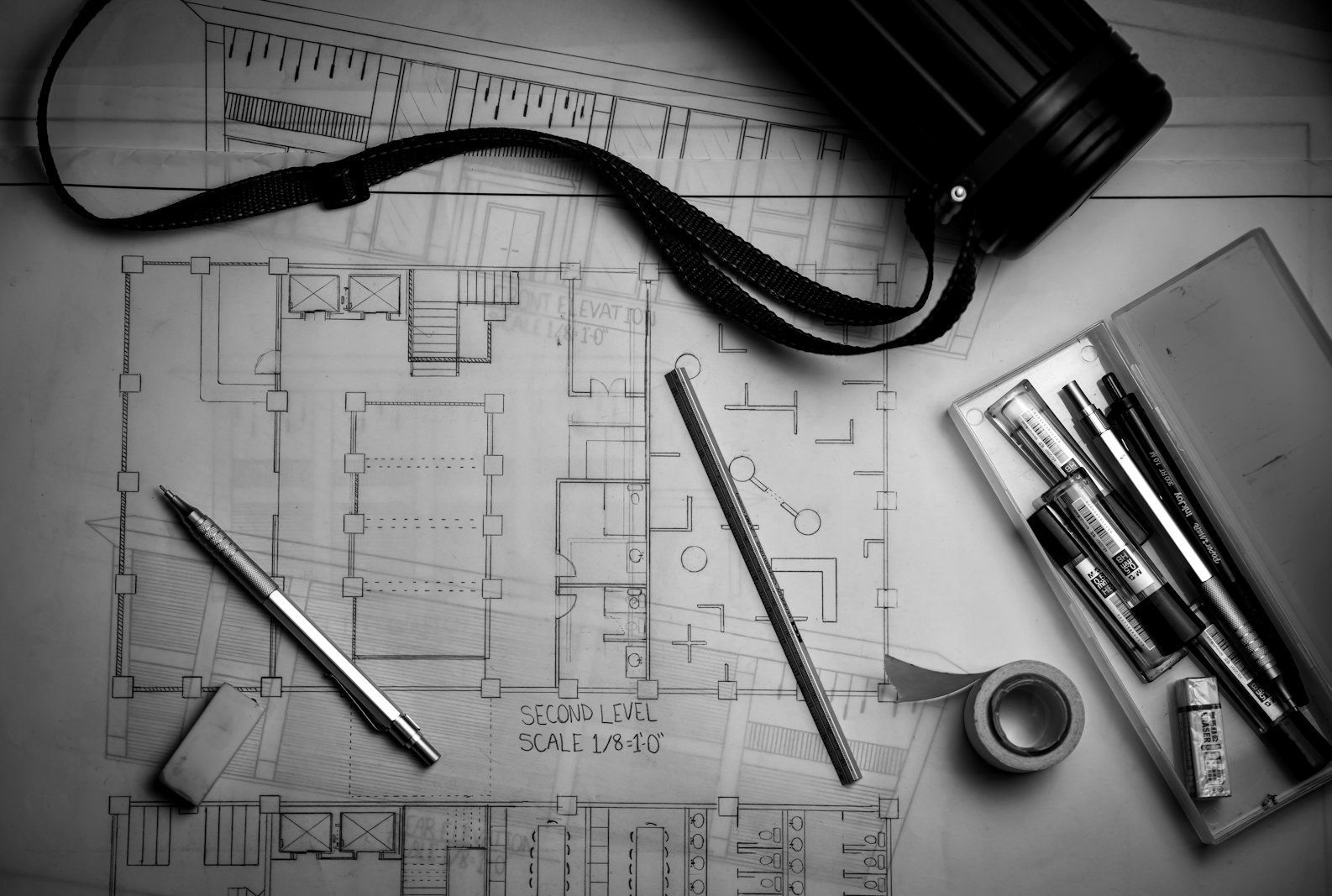
Due diligence: land, landowner, developer and lender
A developer flat carries two sets of risk at once: the title to the land beneath it and the developer's right to sell the unit above it. The ordinary land search, covering the title chain, khatians, mutation, land development tax and litigation, is set out in our guides to land ownership verification and buying property in Bangladesh. What follows is the additional work a flat purchase requires.
The joint venture agreement and the developer's share
Most Dhaka buildings are built under a land-for-flats arrangement. Section 10 requires a written joint venture agreement stating the developer's share, a power of attorney clause authorising the developer to execute and register deeds for its nominated buyers, and the start and completion dates for the work.[1] Ask for the agreement and its allocation schedule. A developer can only sell the flats allocated to it; a unit in the landowners' share is not the developer's to sell, however convincing the booking receipt looks.
The landowner's power of attorney
Section 9 requires the landowner to give the developer a registered power of attorney to execute deeds for the developer's share. If none was given, the landowner must execute the buyer's deed within 15 days of the developer's written request, failing which the developer may execute it as if it were the owner.[1] Check that the power is registered, covers every co-owner and heir, names the developer entity you are contracting with, and has not been revoked. Revoking a registered development power without at least 30 days' notice is itself an offence.[1] Our guide to powers of attorney in Bangladesh covers registration and revocation.
No-objection certificates and consents
Collect a written no-objection from any lender holding a mortgage over the land or the project, confirmation of lessor status for a leased plot, and, where the landowners are numerous, evidence that all of them signed the joint venture agreement and power. Each gap is a point where a third party can later hold up your deed.
Mortgage checks
Section 16 prohibits a developer from selling a mortgaged unit. It may mortgage the project with the landowner's consent, or an allotted unit with the buyer's consent, but must clear the mortgage before executing the transfer deed.[1] Ask the developer to disclose project finance in writing, search the sub-registry for registered mortgages over the land, and require a release letter from the lender before registration. Breach of section 16 carries up to one year's imprisonment, a fine of up to Tk 5 lakh, or both.[1]
The developer as a business
Check the developer's RAJUK registration and its expiry date, its company documents, and its record on completed projects. REHAB has reported that a commerce ministry circular makes its membership mandatory for housing businesses, that about 1,500 real estate companies remain outside it, and that buyers who purchase from non-members often fall victim to fraud.[4] Membership is not a guarantee, but it opens the REHAB mediation route discussed below.
The allotment agreement: clause-by-clause review
The allotment letter and the sale or allotment agreement are where the buying apartment Dhaka transaction is really priced. The 2010 Act sets a floor beneath them, and section 8 requires the saleable area to be described clearly in the prospectus and allotment letter, with the detailed terms in the sale agreement.[1] Read the agreement against the approvals and the statute, not against the brochure.
The unit, the area and the land share
The agreement should identify the flat by floor, number and orientation, state the saleable area and how it is measured, and describe the undivided proportionate share of land and the car parking space conveyed with it. A developer may change an allotted unit only with the buyer's consent.[1] If the area delivered differs from the area bought, the price difference must be adjusted at the agreed rate within three months, so the agreement should fix that rate.[1]
Price, instalments and payment
Buyers must pay through the banking system as the prospectus or allotment letter provides, and no interest may be charged, other than instalment-related interest, until the unit is ready for possession with utilities.[1] Insist on receipts on the developer's letterhead tied to bank transfers, and never pay cash to an agent. Link instalments to construction milestones where you can, rather than to calendar dates alone.
Delivery date and delay compensation
Section 15 measures the developer's liability against the date in the agreement. If it fails to hand over on time, it must refund all amounts paid with the compensation fixed in the contract, by account payee cheque within six months; where no rate is fixed, compensation is 15 per cent of the amount paid, payable in no more than three instalments within six months.[1] If both sides agree a later date in writing, compensation is still payable.[1] A clause with no firm date, or a "force majeure" clause that excuses any delay, undermines this protection.
Specification, fittings and upgrades
The agreement must list the fittings and fixtures to be used, and the developer may not demand money beyond the agreed terms unless both sides sign a supplementary agreement for upgraded items.[1] Attach a schedule naming brands and grades for tiles, sanitary ware, lifts, generators and electrical fittings. Using substandard or insufficient materials for unlawful gain is an offence carrying up to three years' imprisonment, a fine of up to Tk 20 lakh, or both.[1]
Buyer default, cancellation and refund
The allotment documents must state the consequences of non-payment. The developer may cancel only after at least 60 days' prior notice by registered post; a late instalment may be paid with 10 per cent interest on the overdue amount; and cancellation is allowed after three instances of delayed payment.[1] A buyer who asks in writing to withdraw is entitled to a refund within three months, less a deduction of up to 10 per cent of the amount paid for overheads.[1] Forfeiture clauses that go further than this should be resisted.
The dispute clause
Every allotment agreement is overlaid by section 36, discussed below, but the contract still decides how smoothly a dispute runs. A one-line clause referring disputes to "arbitration in Dhaka" with no appointment mechanism invites months of preliminary litigation. Our guide to arbitration clause drafting in Bangladesh sets out workable wording.
Handover, deed and registration
After full payment, section 9 requires the developer to hand over possession and complete execution and registration of the deed within three months.[1] Section 13 requires it to take effective steps to provide the promised utilities before handover, although it is not liable where the delay lies with the utility provider and it has applied and pursued the connection.[1]
Snagging and the possession letter
Inspect the flat with the approved drawings in hand before signing the possession letter. Record defects in writing, measure the area, test fittings and confirm the parking allocation. The developer must repair construction defects at its own cost for at least two years after handover and maintain the building for at least one year, as the agreement provides.[1] Keep the possession letter, the drawings and the defect list together; they are your evidence if a claim follows.
Registration costs and the deed
The sale deed is registered at the sub-registry, and the buyer bears the registration fee, stamp duty, local government tax, source tax and, for new flats, VAT. Rates change with each Finance Act, so we do not repeat them here; our guide to property registration fees in Bangladesh sets out the current figures with worked flat examples. The drafting and execution of the deed itself are covered in our guide to the sale deed in Bangladesh, and recording your proportionate land share afterwards is explained in our guide to land mutation.

Penalties and buyer remedies under the 2010 Act
The 2010 Act combines contractual rights with criminal sanctions, and the second often drives the first. Knowing which provision has been breached tells a buyer both what to claim and how much leverage the claim carries.
The offences that matter to buyers
- Unapproved project: starting work, advertising or selling without approval carries up to two years' imprisonment, a fine of up to Tk 10 lakh, or both.[1]
- Utilities: failing to provide utilities as section 13 requires carries a fine of up to Tk 5 lakh.[1]
- Cancellation without notice: cancelling an allotment in breach of section 14 carries up to one year, a fine of up to Tk 5 lakh, or both.[1]
- Double selling: selling a promised unit to someone else for unlawful gain carries up to three years, a fine of up to Tk 20 lakh, or both.[1]
- Abandonment: signing with a buyer or landowner and then abandoning the work without compensation is treated as fraud, with up to two years, a fine of up to Tk 20 lakh, or both.[1]
How a criminal complaint works
Offences are tried summarily by a Metropolitan or First Class Magistrate, and directors or officers who knowingly take part are personally liable.[1] The offences are compoundable, bailable and non-cognisable, so the case is begun by complaint to the magistrate rather than a police case, and it can be settled.[1] The court may order up to 50 per cent of a fine collected from a convicted developer to be paid to the affected buyer.[1] A complaint is leverage, not a refund mechanism; the money claim still needs a civil or arbitral route.
Civil remedies
The main civil claims are the statutory refund with compensation under section 15, specific performance of the agreement to obtain the deed, damages for defects or short area, and a declaration and injunction where the developer has sold the unit twice or the landowner refuses to sign. Where a deed has been registered to someone else, see our guides on title suits and deed cancellation suits.
NRB buyers, foreign nationals and home loans
A large share of Dhaka flats are bought by Bangladeshis living abroad, often with a bank loan. Both features add steps to the buying apartment Dhaka process.
Non-resident Bangladeshis
Non-resident Bangladeshis buy as citizens. General permission for housing finance to non-residents was already in place under Bangladesh Bank's 2018 foreign exchange guidelines, and in October 2024 the central bank allowed banks to lend taka to regular remitters for legitimate purposes, capped at the lower of the need or Tk 10 lakh, with repayment from inward remittances.[7] Pay instalments from a Bangladeshi bank account fed by documented remittances so that the source of funds is clear at registration and on any later sale.
Signing from abroad
An NRB who cannot attend the sub-registry usually acts through a power of attorney executed and authenticated at a Bangladesh mission. Amendments to the Power of Attorney Rules gazetted in February 2025 allow a national identity card or birth certificate in place of a passport, and expatriates holding RAJUK plots or flats can complete the process remotely through the embassy.[8] Draft the power narrowly: to sign the agreement, pay, take possession and register this flat, not to sell or mortgage it.
Foreign nationals
Foreign individuals face a separate approvals regime with payment in foreign currency, and government agency projects may be closed to them. Our guide to buying property in Bangladesh explains who can buy and how.
Home loans
By a circular issued on 6 January 2026, Bangladesh Bank tied the maximum housing loan to a single borrower to the lending bank's default ratio: up to Tk 4 crore where the bank's default rate is below 5 per cent, Tk 3 crore between 5 and 10 per cent, and Tk 2 crore above 10 per cent. The 70:30 debt-equity ratio for housing loans was unchanged, and banks must verify income and repayment capacity.[6] In practice the lender will want the same approval and title file described above, a tripartite arrangement with the developer for an under-construction flat, and a mortgage over the flat and land share once the deed is registered.
Owners' association, common areas and life after handover
Once the last flat is handed over, the building is run by its owners. In practice, the rights of flat owners among themselves are defined mainly by the sale deeds, the approved plan and the owners' association's constitution, so these documents deserve attention before purchase, not after.
Common areas
The 2010 Act protects common space at the design stage: approved designs cannot be altered to reduce facilities or change common space, and buyers must receive a statement of amenities at allotment.[1] The sale deed should describe the common areas and facilities the flat shares in, including roof, stairs, lifts, lobby, generator, reservoir and community space, and should state that they are held in common and not reserved to the developer or landowners.
The owners' association
The developer's statutory maintenance duty lasts at least one year after handover.[1] Before then, the owners should form an association, adopt a written constitution covering service charges, sinking funds, use restrictions and leasing, and take over the maintenance accounts, utility contracts and equipment warranties. Ask the developer for a draft constitution before signing the allotment agreement. On a resale, check the association's records for service-charge arrears and any restriction on letting; our guide to lease agreements in Bangladesh covers the tenancy side.
Real estate arbitration and property development disputes
Disputes in a buying apartment Dhaka transaction usually involve three parties: buyer, developer and landowner. The 2010 Act gives them a statutory route that sits on top of the contract, and the case law shows it must be followed carefully. The landowner–developer side of these disputes is analysed in depth in our guide to developer–landowner disputes; this section focuses on the buyer.
Section 36: negotiation first, then a joint tribunal
Where a dispute arises between buyer, developer or landowner about the offences in sections 21 to 25 and 27 to 30, or about breach of their agreement, the parties must first try to settle it themselves. If that fails through one party's non-cooperation, the other may give notice of arbitration under the Arbitration Act 2001, and the recipient must join in forming a tribunal within 30 days. The award binds the parties and those claiming through them. If no tribunal is formed, either party may sue in the appropriate court.[1]
Arbitration clauses in allotment agreements
In Shara Khan v Dr Mandy Karim, a dispute over a flat bought from a developer, the High Court Division read section 36 as a mechanism for settling disputes amicably or through a jointly constituted tribunal; where the parties fail to constitute one, the remedy is a case in the appropriate court, and there is no scope for a second arbitration by court appointment under section 36 read with section 12 of the Arbitration Act. The court set aside the appointment of arbitrators.[10] Other decisions allow a contractual clause to operate for disputes outside the listed offences, so a buyer's notice should satisfy both the statute and the clause.
Two practical points follow. First, put the attempt to settle in writing and keep proof of service, because section 36 makes negotiation the first step. Second, once an award is made, the 60-day period for applying to set it aside under the Arbitration Act 2001 is treated strictly; see our analyses of how to set aside an arbitral award and of arbitration law in Bangladesh.
REHAB mediation
REHAB has offered out-of-court settlement since 2004 through a mediation and customer service cell open to developers, landowners and customers, coordinated by a former judge, for a nominal complaint fee. REHAB forwards the complaint to the developer for a response and then convenes one or more meetings.[9] It suits claims against member developers over delay, specification or area. It cannot bind a non-member, and any settlement should be recorded as a supplementary agreement with dates and payment terms.
RAJUK
Registers developers in Dhaka and approves land use, building designs, construction permits and occupancy certificates.
REHAB
Runs a mediation and customer service cell for complaints involving member developers, landowners and buyers.
Section 36 tribunal
Jointly constituted arbitral tribunal under the 2010 Act and the Arbitration Act 2001 for buyer, developer and landowner disputes.
Metropolitan Magistrate
Tries offences under the 2010 Act summarily on complaint and may award part of the fine to the buyer.
Civil courts and District Judge
Hear refund, specific performance and title suits, run section 89A mediation and supervise arbitration.
District legal aid offices
Conduct mandatory pre-case mediation for listed rent, partition and pre-emption disputes in notified districts.
Land dispute mediation in Bangladesh courts and legal aid offices
Mediation in property matters now runs through two statutory channels. Neither replaces section 36 for a developer dispute, but both shape how property cases are run once they reach a court, and the second now controls whether some property cases may be filed at all.
Court-annexed mediation under CPC section 89A
Under section 89A of the Code of Civil Procedure 1908, after the written statement is filed in any suit other than an Artha Rin suit, the court must mediate or refer the dispute to the legal aid officer, the parties' lawyers or a panel mediator. Mediation is to conclude within 60 days, extendable by up to 30 days; communications are privileged; a settlement becomes an order or decree under Order XXIII; and the court directs refund of the court fees.[11] In a buyer's suit for specific performance or refund, this stage is a genuine opportunity to obtain the deed or the money without a full trial. Our guide to court-annexed mediation explains the process.
Pre-case mediation under section 21B of the Legal Aid Act
Mandatory pre-case mediation through district legal aid offices began in twelve districts on 18 September 2025. The covered categories include rent disputes under the House Rent Control Act 1991, property-distribution disputes before Assistant Judge courts and pre-emption claims, and a settlement signed by the parties and certified by the chief legal aid officer is final, binding and enforceable as a court order.[12] On 21 July 2026 the scheme was extended to ten more districts; Dhaka was not among the districts named.[13]
A buyer's claim against a developer is not one of the listed categories, but partition between co-owning landowners, rent disputes with a tenant in your flat and pre-emption claims can be. Check the current district notification before filing. Our guides to mediation in Bangladesh and legal aid in Bangladesh cover the regime in full.
Choosing the right remedy as an apartment buyer
The table compares the main routes available to a buyer.
| Route | Legal basis | Best for | Outcome | Key point |
|---|---|---|---|---|
| Negotiation and demand | 2010 Act, s 36(1) | Every dispute | Supplementary agreement | Statutory first step; keep written proof |
| REHAB mediation | REHAB cell (since 2004) | Delay, area, specification | Voluntary settlement | Member developers only |
| Section 36 arbitration | 2010 Act, s 36; Arbitration Act 2001 | Refunds, compensation, breach | Binding award | Tribunal to be formed within 30 days of notice |
| Civil suit | 2010 Act, s 36(5); Specific Relief Act | Deed, refund, title, injunction | Decree | Court must attempt s 89A mediation |
| Criminal complaint | 2010 Act, ss 20 to 27, 33 to 35 | Double selling, abandonment, deviation | Conviction and fine | Compoundable; up to 50% of fine to buyer |
Most disputes are best run in sequence: a written demand citing the statutory provision, a REHAB complaint or negotiation window, then a section 36 notice, with a criminal complaint held in reserve for double selling or abandonment. Our real estate disputes practice acts for buyers at each stage.
Step-by-step: the buying apartment Dhaka checklist
The sequence below reflects how we run a developer flat purchase for clients, from first visit to the owners' association.
Verify the developer
Check RAJUK registration and expiry, company documents, REHAB membership and the record on completed projects.
Obtain the approvals
Collect land use clearance, approved design and construction permit, and match plot, storeys and use class to the brochure.
Search the land and the power
Run the title search, read the joint venture agreement and allocation schedule, and confirm the registered power of attorney covers every owner.
Clear the mortgages
Get written disclosure of project finance, search for registered mortgages and secure a lender's no-objection and release undertaking.
Negotiate the agreement
Fix the unit, area, land share, price, milestone payments, delivery date, delay compensation, specification schedule and dispute clause.
Pay only through banks
Pay by traceable bank transfer to the developer's account and keep receipts tied to each instalment.
Inspect and take possession
Snag the flat against the drawings, require the occupancy certificate and possession letter, and record defects in writing.
Register and organise
Register the deed within three months of full payment, mutate the land share and join the owners' association.
Buying apartment Dhaka mistakes to avoid
- Booking before approval: a developer that takes money before project approval is already in breach of section 6; treat that as a reason to walk away, not a discount opportunity.
- Buying the landowner's flat from the developer: check the allocation schedule, or you may pay for a unit the developer cannot convey.
- Ignoring the power of attorney: an unregistered, incomplete or revoked power stalls registration and can leave you dependent on reluctant heirs.
- Accepting an open-ended delivery date: section 15 compensation is measured against the agreed date, so a vague date weakens your claim.
- Paying cash or to individuals: the Act requires payment through banks, and cash leaves no proof.
- Taking possession without the occupancy certificate or drawings: you lose leverage the moment you move in.
- Letting the section 36 clock run: a dispute managed only by phone calls leaves no record of the attempt to settle that the statute requires.
How TRW helps apartment buyers and developers
A lawyer adds most value before the first payment. On a typical buying apartment Dhaka mandate, TRW reviews the developer's registration and approvals, the joint venture agreement, power of attorney and allocation schedule, and the mortgage position; negotiates the allotment agreement and specification schedule; coordinates with the lender on a home loan; prepares powers of attorney for non-resident buyers; and attends registration and handover.
For developers, we draft joint venture agreements, allotment agreements and dispute clauses that work with section 36 rather than against it. When a project goes wrong, we act on REHAB complaints, section 36 arbitrations, magistrate complaints under the 2010 Act and civil suits, and on the settlements that end them. See our real estate disputes and alternative dispute resolution practices.
What to watch in 2026 and 2027
Three developments will shape the market for flat buyers. First, the revised DAP and the new Dhaka building rules will feed through into approvals, and buyers should expect more projects marketed on additional floors that still need approval. Second, the Bangladesh Building Regulatory Authority Act 2026 and the new RAJUK Act will reshape who approves and polices buildings once their rules take effect.[14] Third, the expansion of mandatory pre-case mediation will continue district by district, and Dhaka's inclusion would change how rent and partition disputes in the capital begin.[13]
A flat is only as secure as the approval behind it, the title beneath it and the agreement that promises it. If you are about to sign, or a handover date has already passed, contact TRW for a review of your file.
Frequently asked questions
Must a developer be registered with RAJUK to sell flats in Dhaka?
Yes. Section 5 of the Real Estate Development and Management Act 2010 requires registration with the relevant authority, which is RAJUK in Dhaka. Registration lasts five years and is renewable, and operating without it carries up to two years' imprisonment, a fine of up to Tk 10 lakh, or both.[1]
Can a developer take a booking before the project is approved?
No. A developer may not advertise, sell or sign a sale agreement before the authority approves the project and the developer has power to execute transfer deeds. Doing so is an offence under section 20.[1]
What compensation do I get if my flat is delivered late?
Under section 15, the developer must refund everything paid with the compensation stated in the agreement within six months; if the agreement fixes no rate, compensation is 15 per cent of the amount paid. Compensation remains payable if the parties agree a later date in writing.[1]
How long does the developer have to register my deed after I pay in full?
Section 9 requires the developer to hand over possession and complete execution and registration of the deed within three months of full payment.[1]
Can I cancel my booking and get my money back?
Yes. On a written request, the developer may deduct up to 10 per cent of the amount paid for overheads and must refund the balance within three months.[1]
What is an occupancy certificate and do I need one?
It is RAJUK's certificate that a completed building may be used. RAJUK states that it is required after completion and before use, and that it is valid for five years. Make its delivery a handover condition.[3]
Do I need RAJUK's permission to buy a flat on a RAJUK lease plot?
Since a housing ministry notification of 10 November 2025, prior lessor approval is no longer needed to transfer listed residential plots and flats. The buyer instead pays the authority 2 per cent of the deed value for land with a building at the sub-registry. Changes of use or allotment conditions still need permission.[5]
How much can I borrow to buy a flat in 2026?
From January 2026, the ceiling depends on the lending bank's default ratio: up to Tk 4 crore, Tk 3 crore or Tk 2 crore, at a maximum debt-equity ratio of 70:30.[6]
Does the arbitration clause in my allotment agreement apply?
Section 36 of the 2010 Act requires an attempt to settle first and then a jointly constituted arbitral tribunal; if one is not formed, the remedy is a case in the appropriate court. The High Court Division has refused a second, court-appointed arbitration under that section, so the notice should be framed carefully.[1] [10]
Can REHAB resolve my complaint against a developer?
REHAB's mediation and customer service cell has handled complaints between member developers, landowners and customers since 2004 for a nominal fee. It cannot bind a developer that is not a member.[9]
Source register
Primary legal and regulatory sources
Materials checked on 20 October 2026. Confirm the current official text before relying on any provision.
- Real Estate Development and Management Act 2010 (Act No. 48 of 2010), sections 1 to 38 — Laws of Bangladesh
- Bangladesh Gazette, 5 September 2011 — Real Estate Development and Management Rules 2011 (SRO No 277-Ain/2011), rules 3 to 8 (Bangla)
- RAJUK Construction Permit system — Frequently asked questions (land use clearance, construction permit, occupancy certificate)
- The Business Standard, 22 December 2025 — Dhaka's skyline transforms as flat owners reach 3.5 lakh (DAP gazetted 14 December 2025; REHAB membership)
- bdnews24.com, 25 November 2025 — Residential plots and flats can be transferred without prior approval (housing ministry notification of 10 November 2025)
- Dhaka Tribune, 7 January 2026 — BB expands flat purchase by raising home loan limit
- Dhaka Tribune, 3 October 2024 — NRBs now eligible for availing loans
- bdnews24.com, 7 November 2025 — Revised Power of Attorney rules allow overseas Bangladeshis to manage property without passport
- The Daily Star, 24 December 2024 — Handover troubles? Act wisely (section 15 and the REHAB mediation cell)
- High Court Division, Shara Khan v Dr Mandy Karim, Civil Revision No 2153 of 2022 (section 36 of the 2010 Act)
- Code of Civil Procedure 1908, section 89A (mediation) — Laws of Bangladesh
- Dhaka Tribune, 17 September 2025 — Pre-litigation mediation to begin in 12 districts
- Dhaka Tribune, 21 July 2026 — Law Minister: mediation yielding encouraging results (ten more districts)
- Legislative and Parliamentary Affairs Division — Acts made in 2026 (Act Nos 45, 66 and 67 of 2026)
Related TRW assistance
Move from information to a defined next step
TRW reviews developer approvals, title and allotment agreements for flat buyers, advises NRB purchasers and lenders, and acts in section 36 arbitrations, REHAB complaints and property litigation. Explore our real estate disputes practice or contact TRW before you sign or when a handover date has passed.