
TRW Insight / Bangladesh
Title to land in Bangladesh depends on the khatian, a registered deed and prompt mutation, while flat buyers rely on the Real Estate Development and Management Act 2010. New 2023 and 2026 laws have tied tax, records and registration together and made land fraud a serious crime.
Real estate law Bangladesh: how the 2026 framework fits together
Real estate law Bangladesh investors, families and developers deal with is a stack of statutes rather than a single code. Title passes under the Transfer of Property Act 1882, only through documents registered under the Registration Act 1908, and only if the seller appears in the khatian maintained under the State Acquisition and Tenancy Act 1950. Developers are licensed and policed by the Real Estate Development and Management Act 2010. Since 2023 a dedicated criminal statute punishes land fraud, forgery and unlawful dispossession, and in 2026 Parliament added new laws on land use, agricultural land and the capital's development authority.
This guide brings the framework together. It covers the core statutes, the khatian and mutation system, the transaction process, residential property and flat purchases, joint-venture development, construction approvals, the main taxes, foreign ownership, investment structures, compliance obligations, land crime and disputes, and the point at which a property lawyer in Dhaka adds real value. Each section links to the deeper TRW guides on registration, due diligence, partition and litigation.

Summary: A valid property deal in Bangladesh needs four things to line up: a seller whose name, or whose predecessor's name, is in the latest khatian; a registered sale deed carrying the particulars the Registration Act demands; mutation of the record of rights into the buyer's name; and land development tax paid and kept current. Flat purchases add the protections of the Real Estate Development and Management Act 2010, and the Land Crime Prevention and Remedy Act 2023 now makes fraud, forgery and unlawful occupation criminal offences with fast-track trials.
Key point: Section 6(3) of the Land Crime Prevention and Remedy Act 2023 bars a person from selling, gifting, giving a power of attorney over or registering a deed for land unless they hold the latest operative khatian and proof of up-to-date land development tax. Section 53C of the Transfer of Property Act already makes a sale void where the seller is not in the latest khatian. The record of rights is now the gateway to every transaction.
At a glance
Khatian first
A sale by someone missing from the latest khatian is void under section 53C of the Transfer of Property Act.
Register everything
Sale deeds, contracts for sale and irrevocable powers of attorney must all be registered.
Mutate promptly
E-mutation runs through the national portal and costs Tk 1,170 in official fees.
Developer duties
Handover within three months of full payment, two years of defect repairs and 15% default compensation.
Land crime
Land fraud and forgery carry up to seven years' imprisonment and are non-bailable.
Table of Contents
The statutes that make up real estate law Bangladesh
No single code governs land and buildings in Bangladesh. The rules sit across colonial-era statutes, tenancy legislation from 1950, sector-specific acts and a wave of laws passed in 2023 and 2026. Anyone working with real estate law Bangladesh courts apply should map a transaction against each layer below, because a defect at any one of them can undo the deal.
Transfer of Property Act 1882
The Transfer of Property Act defines sale, mortgage, lease, exchange and gift, and sets the conditions for a valid transfer. Section 54 provides that a sale of tangible immovable property can be made only by a registered instrument.[1] Amendments inserted Bangladesh-specific safeguards. Section 53C makes a sale void unless the seller, or the seller's predecessor in the case of inheritance, appears in the latest khatian. Section 53D voids any re-mortgage or sale of property under a registered mortgage without the mortgagee's written consent. Section 53E requires every instrument of sale, gift, mortgage or heba to be supported by the executant's affidavit of lawful title.[1]
Section 54A goes further: a contract for sale of immovable property can be made only by a registered written instrument, whether or not the buyer has taken possession. The contract must state a time for executing and registering the sale deed, and if it does not, six months is deemed to apply.[1] Section 53A, the part-performance rule, still protects a buyer in possession under a written contract, but it is no substitute for registration.
Registration Act 1908
Section 17 lists the documents that must be registered, including gifts of immovable property, declarations of heba and any non-testamentary instrument that creates, assigns or extinguishes an interest in land.[2] Section 17A requires a contract for sale to be in writing, executed by the parties and presented for registration within sixty days of execution. Section 23 requires other documents to be presented within three months of execution.[2]
Section 52A is the working core of every conveyance. The registering officer must refuse a sale or gift deed unless it includes or attaches the latest khatian in the name of the seller or predecessor, the nature and price of the property, a map with boundaries, a brief ownership history for the last 25 years and the executant's affidavit that the property has not already been transferred.[2] Our property registration guide walks through the sub-registry stage in detail.
State Acquisition and Tenancy Act 1950
The State Acquisition and Tenancy Act abolished the zamindari system and created the modern record of rights. Section 143 obliges the Collector to keep that record up to date, including by mutation of names on transfer or inheritance and by recording subdivision or amalgamation of holdings.[3] Section 96 gives co-sharer tenants by inheritance a right of pre-emption when a share of the holding is sold to an outsider, discussed under disputes below.[3] The land law framework guide explains how this Act interacts with the Non-Agricultural Tenancy Act 1949.
Real Estate Development and Management Act 2010
Act No. 48 of 2010 regulates the private development and sale of plots, flats and floor space. It requires every developer to register with the relevant authority, controls advertising and sale before project approval, fixes handover and refund timelines, sets default compensation and creates offences for developers and landowners alike.[4] It applies to joint public-private projects but not to development carried out entirely by government.[4]
The 2023 and 2026 statutes
Three 2023 Acts reshaped land administration. The Land Development Tax Act 2023 (Act No. 31 of 2023) replaced the 1976 Ordinance and came into force on 1 July 2024.[6] The Land Crime Prevention and Remedy Act 2023 (Act No. 36 of 2023) took effect on 18 September 2023.[5] In 2026 the elected Parliament enacted the Land Use Control and Agricultural Land Protection Act 2026 (Act No. 50 of 2026) and the Rajdhani Unnayan Kartripakkha Act 2026 (Act No. 67 of 2026), both dated 10 April 2026, replacing interim-government ordinances.[7] [8]
Khatian, mutation and land development tax: the record that decides who can sell
The khatian is the record of rights: it names the holder, the plot (dag) numbers, the share and the class of land. Under real estate law Bangladesh courts enforce, it is no longer just evidence of possession. Section 53C of the Transfer of Property Act voids a sale by a person missing from the latest khatian, and section 52A of the Registration Act makes the latest khatian a mandatory attachment to the sale deed.[1] [2]
The Land Crime Prevention and Remedy Act 2023 closes the remaining gap. Section 6(3) provides that a person without the latest operative khatian prepared or updated under sections 143 or 144 of the State Acquisition and Tenancy Act, and without proof of up-to-date land development tax, cannot sell, gift, transfer, execute a power of attorney over or register a deed for that land, while preserving the Registration Act.[5]
Mutation and e-mutation
Mutation (namjari) is the process by which the land administration, acting for the Collector, updates the khatian after a sale, gift or inheritance under section 143 of the 1950 Act.[3] Applications are made online through the government's e-mutation portal at mutation.land.gov.bd.[14] In February 2026 the Ministry of Land directed every land office to display its fees on a signboard and confirmed the e-mutation charge at Tk 1,170: a Tk 20 court fee, a Tk 50 notice fee, a Tk 1,000 record-correction fee and a Tk 100 khatian supply fee. A certified or online khatian copy costs Tk 120, and the ministry stated that all payments, including the annual land tax, must be made online.[12]
A buyer who registers but never mutates is exposed. The seller remains on the record, can appear to have title to a second buyer, and the buyer cannot pay land development tax in their own name or meet the khatian requirement on a later resale. Where the record is wrong, our land records, mutation and khatian correction practice handles objections, appeals and correction proceedings.
Land development tax
The Land Development Tax Act 2023 requires each year's tax to be paid by 30 June of that year without penalty, and allows owners to pay up to three years in advance.[6] Collection is electronic under section 8. If tax is unpaid for three consecutive years, it becomes recoverable with an annual penalty of 6.25% and, after the third year, through a certificate case under the Public Demands Recovery Act 1913. Section 9(5) provides that a land development tax claim is never time-barred.[6]
Rates are set by gazette notification by class and use of land. Non-agricultural land is divided into commercial, industrial and residential-and-other categories, and land used partly for commercial or industrial purposes is taxed in full at the commercial or industrial rate.[6] Agricultural land of up to 8.25 acres (25 bighas) held by a person or family dependent on agriculture is exempt.[6]

Legal advice for a real estate purchase: the step-by-step process
Most failed purchases fail before registration, when a buyer pays an advance on the strength of photocopies. The process below reflects the sequence that the statutes require and the checks that experienced conveyancers insist on.
Verify the khatian
Confirm the seller, or the seller's predecessor for inherited land, is in the latest khatian and that mutation is complete.
Trace 25 years of title
Collect and check every deed and record in the chain, matching plot numbers, shares and boundaries.
Search for encumbrances
Check registered mortgages, litigation, acquisition notices, khas or vested status and land development tax arrears.
Check zoning and approvals
Confirm land class and permitted use, and for flats the developer's registration and the approved plan.
Register the contract for sale
Execute a written contract with a completion date and present it for registration within sixty days.
Execute and register the deed
Present the sale deed with the section 52A particulars within three months, paying source tax by e-challan.
Mutate and pay tax
Apply for e-mutation immediately and start paying land development tax in the buyer's name.
Take and protect possession
Take physical possession, secure boundaries and keep originals and receipts in a safe place.
The registered contract for sale (bayna)
Because a contract for sale must be registered within sixty days of execution, an unregistered "bayna" receipt gives a buyer very little.[2] Section 21A of the Specific Relief Act 1877 adds that no contract for sale of immovable property can be specifically enforced unless it is in writing and registered, and the buyer deposits the balance of the price in court when filing the suit.[11] A buyer who pays most of the price under an unregistered agreement may be left with a money claim against a seller who has already sold to someone else.
Due diligence before money moves
Title investigation should trace the chain of deeds and khatians back at least 25 years, the period the deed itself must summarise under section 52A.[2] It should confirm mutation in the seller's name, current land development tax receipts, the absence of registered mortgages (which section 53D makes fatal without the mortgagee's consent), pending litigation, acquisition notices and vested or khas status.[1] The land ownership verification guide sets out the full checklist.
Registration, tax and mutation
The sale deed must be presented within three months of execution.[2] From 1 July 2026, the Finance Act 2026 requires the income tax collected at source under section 125 of the Income-tax Act 2023 to be paid against each deed by e-challan, and inserts a new section 125(2A) requiring the registering officer to collect any gift tax due under the Gift Tax Act 1990, also by e-challan.[9] Once the deed is registered, the buyer should apply for mutation immediately and begin paying land development tax in their own name.
Residential property law: buying a flat from a developer
Most urban buyers acquire a flat, not land. The Real Estate Development and Management Act 2010 gives them a statutory floor of protection that the allotment letter cannot reduce. Understanding residential property law Bangladesh developers must follow is the best defence against delayed handovers and substitution of units.
Before signing
A developer may not advertise a project for sale before the authority approves it and before the developer holds the power to execute transfer deeds, and may not sell or agree to sell any unit before project approval.[4] Every developer must show buyers the authority's approval and the land ownership documents, and every prospectus must state the developer's registration number and the approval number and date of the approved plan.[4] The contract must specify the fittings and fixtures to be used, and the developer may not demand money beyond the contract unless both sides sign a supplementary agreement for upgrades.[4]
Payment, cancellation and refund
Buyers must pay through the banking system, and no interest may be charged on instalments until the unit is ready for handover with utilities.[4] A developer cannot cancel an allotment for non-payment without at least sixty days' prior notice by registered post, and must refund the buyer's money within three months of cancellation. A late-paying buyer may cure by paying 10% interest for the delay, but three defaults allow cancellation.[4] A buyer who withdraws voluntarily is entitled to a refund within three months, less a 10% deduction for incidental costs.[4]
Handover, delay and defects
After full payment, the developer must hand over possession and complete execution and registration of the deed within three months.[4] If the developer fails to deliver on time, it must refund everything paid with the compensation fixed in the contract within six months; where the contract is silent, compensation is 15% of the sums paid.[4] Utilities must be connected before handover, the developer must repair construction defects at its own cost for at least two years and maintain the building for at least one year, and common spaces and facilities shown in the approved plan cannot be reduced.[4]
Mortgaged projects
A developer may not sell a mortgaged unit to a buyer. It may mortgage a project with the landowner's consent, or an allotted unit with the buyer's consent, but must release the mortgage before executing the transfer deed.[4] Buyers financing with a home loan should insist on a lender's no-objection and a release before registration.
Tenancies
Residential and commercial tenancies are governed principally by the House Rent Control Act 1991. Disputes under that Act now sit in the schedule of matters that the Legal Aid Services (Amendment) Act 2026 subjects to mandatory pre-case mediation in notified areas, alongside partition and pre-emption claims.[10]
Real estate development law: land-owner and developer joint ventures
In Dhaka and Chattogram the dominant model is the joint venture in which a landowner contributes land and a developer builds, with the finished space shared in agreed ratios. The 2010 Act treats this as a regulated relationship rather than a private bargain.
Section 10 requires a written bilateral joint venture agreement that states the developer's share, the obligation to grant the developer a power of attorney to sell that share to nominated buyers, and the start and completion dates for the works.[4] Under section 9, where the landowner has not given the developer power to execute deeds, the landowner must execute deeds in favour of the developer's buyers within fifteen days of a written request; if the landowner fails, the developer may execute the deed itself as though it were the owner.[4]
Both sides carry criminal exposure. A landowner who fails to hand over possession of the land within the agreed time, or who cancels a registered power of attorney without at least thirty days' notice, faces up to two years' imprisonment or a fine of up to Tk 10 lakh. A developer who fails to deliver the landowner's share on time faces up to two years or a fine of up to Tk 20 lakh.[4] Abandoning a project after signing, without compensating the landowner or buyer, is a fraudulent offence carrying the same maximum.[4]
Section 36 sets a mandatory dispute route for most of these offences and for breach of the agreement: the parties must first try to settle, then a party may give notice of arbitration under the Arbitration Act 2001, and the recipient must join in constituting the tribunal within thirty days. The section declares the award binding with no right to object in court; if the tribunal is not constituted, either party may sue.[4]
Tax now follows the joint venture too. The Finance Act 2026 inserted section 58(3) into the Income-tax Act 2023: cash, flats or any other benefit a landowner receives from a developer under a registered "specified contract" are capital receipts, taxed at 15% of their value less the acquisition cost of the land contributed, payable in equal instalments over the relevant tax year and the next two.[9] The same Act expressly brings landowners acting under joint development agreements, irrevocable powers of attorney or co-development arrangements within the definition of a developer.[9]
| Statute | Governs | Key requirement | Consequence of breach |
|---|---|---|---|
| Transfer of Property Act 1882 | Sale, mortgage, gift, lease | Seller in latest khatian; registered sale and contract for sale | Sale void under section 53C |
| Registration Act 1908 | Registration of documents | Contract for sale within 60 days; deed within 3 months with section 52A particulars | Registration refused |
| State Acquisition and Tenancy Act 1950 | Record of rights, pre-emption | Mutation under section 143; co-sharer pre-emption under section 96 | Sale may be pre-empted |
| Real Estate Development and Management Act 2010 | Developers, flats, joint ventures | Developer registration, approval before sale, handover in 3 months | Up to 3 years or Tk 20 lakh |
| Land Development Tax Act 2023 | Annual land tax | Pay by 30 June each year | 6.25% penalty and certificate case |
| Land Crime Prevention and Remedy Act 2023 | Fraud, forgery, unlawful occupation | Khatian and tax proof before transfer | Up to 7 years for fraud or forgery |
| Land Use Control and Agricultural Land Protection Act 2026 | Zoning and agricultural land | No non-agricultural use of multi-crop land; approval to change land class | Penalty, removal and restoration |
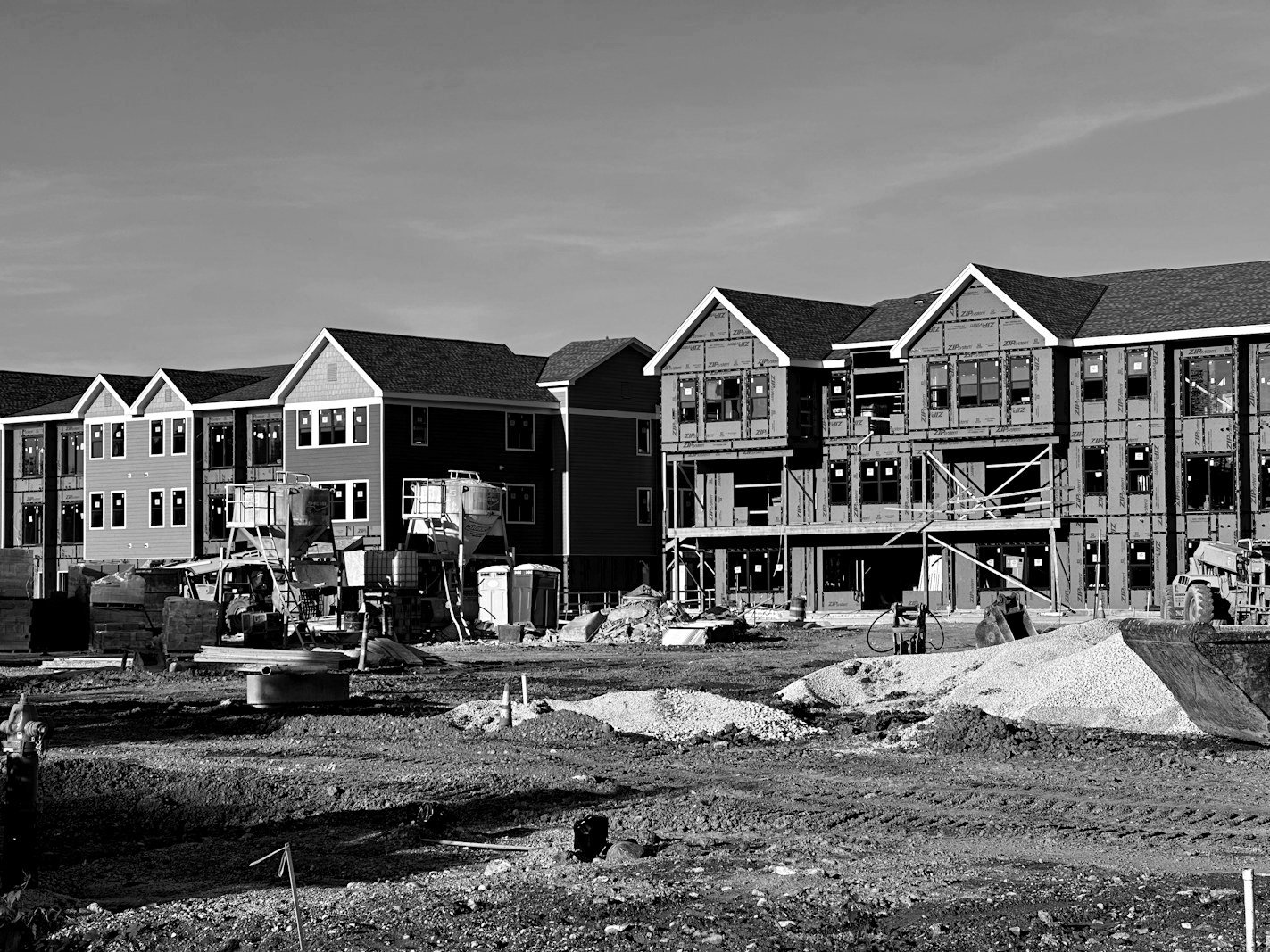
Construction law matters: plans, approvals and land use
Construction law in Bangladesh is approval-driven. Under the 2010 Act, architectural and structural designs must be prepared and supervised by qualified professionals under the Building Construction Act 1952, must follow the applicable building rules and the Bangladesh National Building Code, and cannot be altered without the authority's approval.[4] Building beyond the approved plan is an offence carrying up to three years' imprisonment or a fine of up to Tk 20 lakh, as is using inferior materials in place of those promised to buyers.[4]
Within the capital region, the Rajdhani Unnayan Kartripakkha Act 2026 now governs RAJUK. It applies to Dhaka metropolitan area, Keraniganj and Savar upazilas, and areas of Narayanganj and Gazipur districts, and provides for a master plan, strategic plans and detailed area plans.[8] Section 54 makes construction outside an approved plan within RAJUK's area an offence punishable by up to two years' imprisonment or a fine of up to Tk 50 lakh, or both.[8]
Agricultural land and zoning after 2026
The Land Use Control and Agricultural Land Protection Act 2026 applies across Bangladesh except the three Chittagong Hill Tracts districts and took effect immediately.[7] It provides for land-use zoning maps, special agricultural zones and protection of double, triple and multi-crop land, which cannot be used for non-agricultural purposes. The recorded class of any land cannot be changed without approval under the rules.[7] Building commercial housing, resorts, factories or similar structures on agricultural land, water bodies or wetlands is an offence, and the person responsible can be ordered to remove the structure and restore the land.[7]
An owner may still build a homestead and related structures on their own agricultural land with permission under the rules.[7] For developers assembling land outside city limits, zoning and land class are now threshold diligence issues, not afterthoughts. Construction contract disputes, delay claims and defects claims are handled by our construction claims and project disputes practice.
Real estate tax law: what buyers, sellers and developers pay
Property taxation in Bangladesh operates at three points: on transfer, on holding and on income. The rates for transfer charges and source tax are fixed by rules and notifications that change with each budget, so the current schedule should be confirmed with the sub-registry for the specific location before a deal is priced.
On transfer
A registered transfer attracts registration fees, stamp duty, local government tax and income tax collected at source under section 125 of the Income-tax Act 2023. From 1 July 2026 that source tax must be paid against each deed by e-challan, and the registering officer must also collect any applicable gift tax.[9] The Finance Act 2026 also adds a proviso allowing a mortgaged property to be transferred where the owner owes income tax, if the bank or finance company files an undertaking approved by the tax commissioner to pay that tax.[9]
On holding and income
Owners pay annual land development tax under the 2023 Act at rates fixed by use of the land.[6] Rental income is taxed under the Income-tax Act, and the Finance Act 2026 revised how rental value is computed and brought selami and premium within it.[9] Corporate holders should read the property rules alongside our corporate income tax guide, and structuring questions go to our tax compliance practice.
Foreigners and property: what real estate law Bangladesh allows
Foreign ownership is one of the least codified areas of real estate law Bangladesh practitioners advise on. There is no single statute setting out a foreign-ownership regime; the position is shaped by administrative practice and approval requirements. According to the Directorate of Registration, foreign individuals have been permitted to buy only flats since 1996, not land or houses.[13]
A foreign-owned company that has permission to operate in Bangladesh can buy land and buildings in its own name with the same rights as a local company.[13] In practice, foreign buyers need approvals and documents involving the Bangladesh Investment Development Authority, Bangladesh Bank, the National Board of Revenue and the Directorate of Registration, and REHAB reports that payment must be made in foreign currency. A senior practitioner quoted in the same report notes that BIDA rules bar foreign citizens and companies from residential units in government projects such as RAJUK's.[13]
For most foreign investors, the practical route is a Bangladesh company or branch acquiring or leasing land, or a lease in an economic zone, with inward remittance through banking channels documented from day one so that sale proceeds can later be repatriated. Non-resident Bangladeshis, by contrast, buy as citizens; their usual risk is an agent acting under a power of attorney executed abroad, which must satisfy the formalities for documents executed outside Bangladesh before a sub-registrar will act on it.
Real estate investment law: structures, finance and exit
Institutional investment in land and buildings in Bangladesh usually runs through a company that holds title, a joint venture with a landowner, or a long lease. Each structure carries the same title risks; the vehicle only changes who bears them. Real estate law Bangladesh lenders rely on also shapes the deal: under section 53D, no property under a registered mortgage can be resold or re-mortgaged without the mortgagee's written consent.[1]
Key investment-stage issues are title depth across the full 25-year chain, zoning under the 2026 land use law, RAJUK or other authority approvals, the developer's registration status, and the tax cost of contribution and exit, including the new 15% charge on landowner benefits from joint development.[4] [7] [9] Our real estate investment practice advises on acquisitions, joint ventures and portfolio diligence. Where land is earmarked for public projects, see our guide to land acquisition in Bangladesh.
Compliance obligations under real estate law Bangladesh
Compliance is continuous, not a one-time registration event. Owners, developers and lenders each carry ongoing duties, and several bodies enforce them.
A developer must hold a registration certificate from the relevant authority to carry on real estate business, valid for five years and renewable; operating without one carries up to two years' imprisonment or a Tk 10 lakh fine.[4] Starting a project without approval, or advertising or selling an unapproved project, carries the same penalty.[4] Where a developer is a company, any owner, director or officer with knowledge of and participation in the offence is personally liable.[4]
Sub-Registry Offices
Register deeds, contracts for sale and powers of attorney, and collect source tax and gift tax.
Assistant Commissioner (Land)
Decides mutation applications and maintains the khatian under section 143 of the 1950 Act.
Union and municipal land offices
Assess and collect land development tax electronically and issue receipts.
RAJUK and other authorities
Register developers, approve projects and plans, and enforce building rules.
Executive Magistrates
Restore possession to persons unlawfully dispossessed under the Land Crime Act 2023.
District legal aid offices
Run mandatory pre-case mediation for partition, pre-emption and rent disputes in notified areas.
Owners must keep the khatian current through mutation, pay the annual land tax by 30 June each year, and respect zoning and land-class rules.[6] [7] The Land Crime Act also requires the government to build an interoperable database covering government land, land under litigation, mortgaged land and transfer, survey and registration data, which will make non-compliance easier to detect.[5]
Land crime and property disputes
The Land Crime Prevention and Remedy Act 2023 sits on top of the civil law rather than replacing it.[5] For victims of fraud and land-grabbing, real estate law Bangladesh now offers a criminal route alongside a civil suit.
Offences under the 2023 Act
Land fraud includes advertising another's land as one's own, transferring land while concealing information, transferring more land than one owns, impersonation and signing a deed containing false statements; each carries up to seven years' imprisonment and a fine.[5] Land forgery, including making or altering false documents, carries the same maximum.[5] Holding land without title through the khatian owner, inheritance, a lawful deed or a court order, or dispossessing a lawful occupant without an order, is punishable by up to two years and a fine.[5]
A seller who has received the full price and, without reasonable cause, refuses to hand over possession commits an offence with the same two-year maximum.[5] Offences are cognisable; fraud and forgery are non-bailable, while the others are bailable and compoundable. Trials before first-class judicial or metropolitan magistrates must finish within 180 days.[5]
Restoring possession
A person dispossessed without a court or authority order may apply to the Executive Magistrate, who must hear both sides, inspect the site and dispose of the application, restoring possession where appropriate, within three months.[5] The civil alternative is a suit under section 9 of the Specific Relief Act 1877, which allows a person dispossessed otherwise than in due course of law to recover possession regardless of title; no appeal or review lies from the decree, and the suit cannot be brought against the government.[11]
Title, partition and pre-emption suits
Where title is denied, section 42 of the Specific Relief Act allows a declaratory suit, but the court will not grant a bare declaration where further relief, such as possession, was available and not claimed.[11] Co-sharers by inheritance may pre-empt a sale to an outsider within two months of notice or knowledge, and never after three years from registration, by depositing the price plus 25% compensation and 8% annual simple interest.[3] In notified areas, partition and pre-emption disputes must now go to pre-case mediation first.[10] See our guides to partition suits and land dispute litigation.

When and why to hire a property lawyer in Dhaka
A property lawyer earns their fee before the first payment, not after the dispute. The requirements of real estate law Bangladesh on khatian, registration and mutation are strict, and the consequences of missing them, a void sale or an unenforceable contract, cannot be repaired by goodwill later.
Instruct a lawyer before signing any bayna, allotment letter or joint venture agreement; before paying an advance on inherited land, where every heir must join or be accounted for; when buying through or from an agent holding a power of attorney; when the property is mortgaged, under acquisition, in a disputed khatian or outside city zoning; and when a developer is late, demands extra money or threatens cancellation. Foreign buyers and non-resident Bangladeshis should take advice before money leaves their bank.
A good Dhaka property lawyer will read the deeds and khatians themselves, inspect the sub-registry volumes, search the court lists, check the developer's registration and the plan approval, and draft the contract so the statutory protections are reinforced rather than diluted. For inheritance-related transfers, our heba and gift registration guide covers the specific documentation.
How TRW's property practice helps
TRW acts for buyers, landowners, developers, lenders and foreign investors across the life of a property. On transactions we run title investigation, draft and negotiate sale contracts, joint venture agreements and powers of attorney, manage registration and mutation, and structure the tax position under the Finance Act 2026. On disputes we bring and defend title, possession, partition, pre-emption and specific performance suits, prosecute and defend land crime complaints, run joint venture arbitrations under section 36 of the 2010 Act and pursue khatian correction.
Our real estate disputes practice handles contentious matters from mediation to the High Court Division, and our land records team works with land offices on mutation and correction. We advise in English and Bangla, and coordinate with tax, corporate and banking colleagues when a property deal sits inside a wider investment.
What to watch in 2026 and 2027
Three developments will shape real estate law Bangladesh practice over the next year. First, the rules under the Land Use Control and Agricultural Land Protection Act 2026 will fix the approval process for changing land class and the zoning maps that decide where development is allowed.[7] Second, RAJUK's new strategic and detailed area plans under the 2026 Act will govern building permissions in the capital region.[8] Third, the e-challan regime and the 15% landowner charge under the Finance Act 2026 will change how joint venture deals are priced and documented.[9]
The direction is consistent: more digital records, stricter links between khatian, tax and registration, and criminal consequences for fraud. Buyers and developers who treat real estate law Bangladesh compliance as a precondition of the deal, rather than paperwork after it, will find the system more predictable than its reputation suggests.
Frequently asked questions
What are the main property laws in Bangladesh?
The Transfer of Property Act 1882, the Registration Act 1908, the State Acquisition and Tenancy Act 1950 and the Real Estate Development and Management Act 2010, supplemented by the Land Development Tax Act 2023, the Land Crime Prevention and Remedy Act 2023 and the 2026 land use and RAJUK Acts.[1] [4] [7]
Can a person sell land if they are not in the khatian?
Does a bayna or sale agreement need to be registered?
How much does e-mutation cost in 2026?
Tk 1,170 in official fees: Tk 20 court fee, Tk 50 notice fee, Tk 1,000 record-correction fee and Tk 100 khatian fee, paid online.[12]
When is land development tax due?
By 30 June each year without penalty. After three consecutive years of arrears, a 6.25% annual penalty applies and the tax can be recovered by certificate case.[6]
What can I do if a developer delays handing over my flat?
Section 15 of the 2010 Act requires refund of all sums paid with contractual compensation within six months, or 15% if the contract is silent. Disputes go first to negotiation and then to arbitration under section 36.[4]
Can foreigners buy property in Bangladesh?
Foreign individuals have been able to buy flats, not land, since 1996 according to the Directorate of Registration, while foreign-owned companies with permission to operate can buy land. Several approvals apply.[13]
Is land grabbing a criminal offence?
Yes. Unlawful occupation and dispossession carry up to two years' imprisonment, and land fraud or forgery up to seven years, under the Land Crime Prevention and Remedy Act 2023.[5]
How is a landowner taxed in a joint venture with a developer?
From 1 July 2026, cash, flats and other benefits received under a registered specified contract are taxed at 15% of their value less the land's acquisition cost, payable over three tax years.[9]
Can agricultural land be used for housing?
Double, triple and multi-crop land cannot be used for non-agricultural purposes under the 2026 Act, but an owner may build a homestead on their own agricultural land with permission.[7]
Source register
Primary legal and regulatory sources
Materials checked on 20 October 2026. Confirm the current official text before relying on any provision.
- Transfer of Property Act 1882 (sections 53A to 54A) — Laws of Bangladesh
- Registration Act 1908 (sections 17, 17A, 23 and 52A) — Laws of Bangladesh
- State Acquisition and Tenancy Act 1950 (sections 96 and 143) — Laws of Bangladesh
- Real Estate Development and Management Act 2010 (Act No. 48 of 2010) — Laws of Bangladesh
- Land Crime Prevention and Remedy Act 2023 (Act No. 36 of 2023) — Laws of Bangladesh
- Land Development Tax Act 2023 (Act No. 31 of 2023) — Laws of Bangladesh
- Land Use Control and Agricultural Land Protection Act 2026 (Act No. 50 of 2026) — Laws of Bangladesh
- Rajdhani Unnayan Kartripakkha Act 2026 (Act No. 67 of 2026) — Laws of Bangladesh
- Finance Act 2026 (Act No. 96 of 2026), amending the Income-tax Act 2023 — Laws of Bangladesh
- Legal Aid Services (Amendment) Act 2026 (Act No. 45 of 2026), schedule to section 21B — Laws of Bangladesh
- Specific Relief Act 1877 (sections 9, 21A and 42) — Laws of Bangladesh
- Dhaka Times, 27 February 2026 — Land ministry orders service fees displayed at land offices
- The Business Standard, August 2023 — How foreign buyers are boosting real estate
- Ministry of Land — e-Mutation (e-Namjari) portal
Related TRW assistance
Move from information to a defined next step
TRW advises buyers, landowners, developers, lenders and foreign investors on title, transactions, joint ventures and land disputes. Explore our real estate disputes practice, our land records and mutation practice or contact TRW to discuss your matter.