
TRW Insight / Bangladesh
Foreigners can invest in Bangladeshi property, but rarely by owning land directly. The vehicle chosen at the start decides the approvals, the tax bill and whether Bangladesh Bank will let the capital and profit leave again.
Foreign investment real estate Bangladesh: the 2026 position
Foreign investment real estate Bangladesh rules are among the least codified parts of the country's investment law. No single statute tells an overseas buyer, fund or developer what it may own. The answer comes from administrative practice on land and flats, Bangladesh Bank's foreign exchange circulars, the Invest Bangladesh Act 2026, the BEPZA leasing regime and the Income Tax Act 2023, read together. Get the structure wrong at the start and the money may go in easily but come out only with difficulty, or not at all.
This guide is written for the investor rather than the home buyer. It explains what foreign individuals, foreign-owned companies and non-resident Bangladeshis can hold, how real estate development and industrial land fit into the 2026 investment framework, how rental income and sale proceeds are repatriated under the September 2026 consolidated circular, what the property and income taxes cost, where REITs fit, and how to manage title risk. It also sets out the investment process step by step, from structuring to exit.
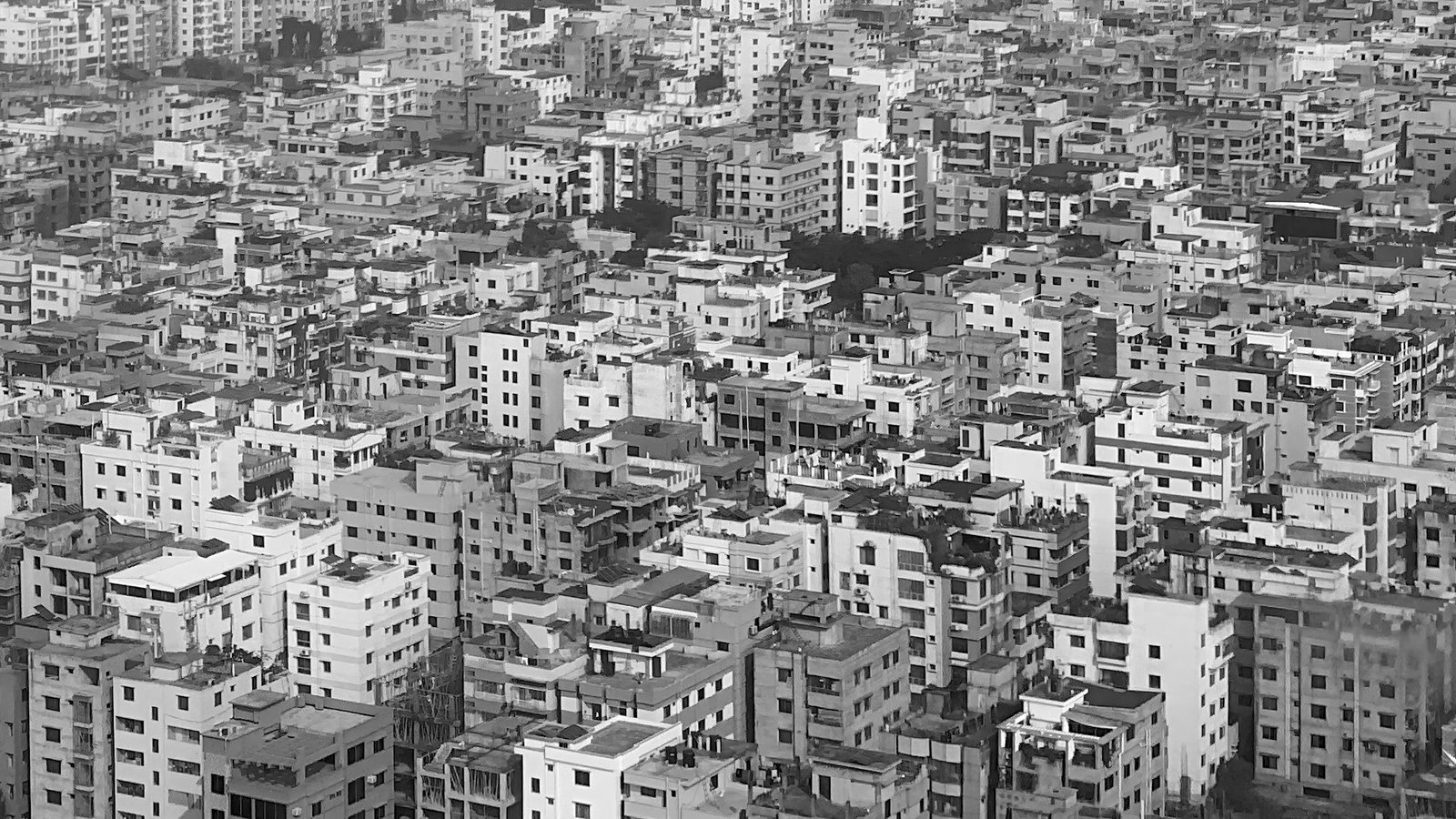
Summary: Foreign individuals have, in practice, been limited to buying flats with multi-agency approvals, while foreign-owned companies operating in Bangladesh may hold land and buildings in their own name. Most serious investors therefore use a locally incorporated company, a long lease in an economic zone or EPZ, or a regulated fund. The structure decides the tax cost and, above all, whether Bangladesh Bank will let the capital and profit leave again.
Key point: Bangladesh Bank's FEPD-1 Circular No. 40 of 30 September 2026 does not let banks remit the sale proceeds of real estate on their own authority: the application must be forwarded to Bangladesh Bank. For foreign companies, profit on the sale of land or buildings is deducted from remittable profit unless Bangladesh Bank has given prior permission. Plan the exit before the purchase.
At a glance
Individuals
Foreign nationals have been permitted to buy flats only, not land or houses, since 1996, with approvals and payment in foreign currency.
Companies
A foreign-owned company permitted to operate in Bangladesh may buy land and buildings in its own name; a local subsidiary is the default vehicle.
Zones
BEPZA leases serviced plots for 30 years; the Invest Bangladesh Authority now allots, rents and leases land in industrial areas.
Exit
Real estate sale proceeds need Bangladesh Bank's approval to leave; share sales of a property company follow the March 2026 master circular.
Tax
From FY2026–27, tax collected on a property transfer is no longer final, and rent now expressly includes selami and premium.
Table of Contents
How the foreign investment real estate Bangladesh framework fits together
Bangladesh is open to foreign direct investment. Foreign and private investment is prohibited only in a short list of sectors reserved to the state, such as arms, nuclear energy and currency printing, and regulated by licensing in sectors such as banking, insurance, aviation and broadcasting.[1] Real estate development is not on either list. The restriction that matters is not on investing in real estate but on who may hold title to land, and on how money moves across the border.
Four bodies of law do most of the work. Ownership questions are governed by administrative practice operated through the sub-registry and the investment authority. Cross-border money is governed by the Foreign Exchange Regulation Act 1947 and the consolidated circulars Bangladesh Bank issues under it.[4] Industrial land sits under the Invest Bangladesh Act 2026 and the BEPZA regime.[3] [11] Tax runs through the Income Tax Act 2023 and the VAT collection rules.[7] [9]
No single code
The lack of a statute has two practical consequences. First, the position can shift by policy decision without legislation, so every transaction should be checked against current practice at the sub-registry and the bank. Second, there is no statutory safe harbour. An investor cannot point to a section that confirms its right to hold a flat or a plot; it relies on approvals, documents and a clean money trail. Our overview of real estate law in Bangladesh explains the domestic statutes that govern every transfer, whoever the buyer is.
What changed in 2025 and 2026
Three developments reshape foreign investment real estate Bangladesh planning this year. The Invest Bangladesh Act 2026, Act No. 104 of 2026 dated 16 July 2026, came into force on 20 August 2026 and replaced the BIDA, economic zones, PPP and one-stop service statutes with a single Invest Bangladesh Authority.[3] Bangladesh Bank reissued its consolidated circulars, including FEPD-1 Circular No. 32 on loans on 2 September 2026 and FEPD-1 Circular No. 40 on current account remittances on 30 September 2026, after a March 2026 master circular on share transfers.[6] [4] [5] And the Finance Act 2026 changed how property gains and rent are taxed.[8]
Can foreigners buy property in Bangladesh?
The short answer is: flats, yes, with approvals; land and houses, generally no, unless held through a company. The fullest public statement of the position comes from a senior official of the Directorate of Registration, reported in August 2023. Foreign individuals had been restricted from buying land or houses, but the government permitted foreigners to buy flats only from 1996, subject to permission from the Bangladesh Investment Development Authority, Bangladesh Bank, the National Board of Revenue and the Directorate of Registration.[2] Chambers' 2026 guide states the position more starkly: foreign persons or entities are not allowed to own land directly and may take only non-perpetual leases or rent.[1]
Foreign individuals buying flats
Payment for a residential unit by a foreign buyer must be made in foreign currency, according to the Real Estate and Housing Association of Bangladesh.[2] A senior practitioner quoted in the same report said that foreign citizens and companies are barred from buying residential units in projects of government agencies such as RAJUK and the Chittagong Development Authority.[2] The approval file typically demands proof of income, the source and route of funds, and a nominee, and REHAB described the process as complicated enough to deter buyers.[2]
The numbers show that this foreign investment real estate Bangladesh route works but is narrow. Unofficial Directorate of Registration data put foreign purchases at 2,486 flats worth Tk 2,542 crore between 2013 and 2022, of which 1,304 were bought by foreign individuals and 1,182 by companies; in 2022 alone, 216 flats were bought for about Tk 321 crore.[2] Buyers were mainly expatriates on long contracts and multinationals housing staff.
Is there an express statutory bar?
We are not aware of a statute that expressly prohibits a foreign individual from owning land in Bangladesh. The restriction operates through practice: sub-registrars will not register the deed, and the authorities will not grant the approvals, without which the purchase money cannot lawfully be brought in and later repatriated. For an investor the distinction is academic. Without the approvals the title is exposed and the capital is trapped, so the practical rule must be treated as binding.
Leases and rentals
A foreigner may lease or rent property. A lease from year to year, for any term exceeding one year or reserving a yearly rent can be made only by a registered instrument executed by both lessor and lessee.[10] Where the lease is for ten years or more, the sub-registrar will not register it unless the lessee pays tax at 4% of the lease amount.[7] Our guide to lease agreements in Bangladesh covers the drafting points.
Foreign-owned companies and the local company route
For anything beyond a single flat, foreign investment real estate Bangladesh practice turns on the local company. The Directorate of Registration official quoted in 2023 explained that once a multinational or foreign company has permission to operate in Bangladesh, it may buy properties, including land and houses, in its own name, because it then enjoys the same rights as a citizen; permission from the investment authority is also needed.[2] Chambers confirms that a wholly or partly foreign-owned local company may own or lease land, and that foreigners may hold shares in a local company that owns land.[1]
Why the local company is the default
A local company incorporated as a private limited company holds title as a domestic person, can register deeds and mutations, opens ordinary bank accounts and can borrow locally within Bangladesh Bank limits. Exit can then be achieved by selling shares rather than land, which brings the transaction within the March 2026 share-transfer circular rather than the more restrictive rule for real estate sale proceeds, as explained below.[5] Our guides to private limited company registration and foreign company registration cover set-up.
Funding the acquisition
Equity must arrive through banking channels and be recorded, because the record of inward remittance is what later supports repatriation. Local debt is restricted. Section 18(2) of the 1947 Act bars residents from lending to a company controlled by non-residents without Bangladesh Bank approval, but Bangladesh Bank has given general authorisation for Taka working capital loans to foreign-owned industrial and trading companies.[6] Taka term loans are available to foreign-controlled companies engaged in manufacturing or services for three years or longer, for expansion, provided total debt does not exceed a 60:40 debt-equity ratio.[6]
Foreign borrowing is no easier. The 1998 Board of Investment notification on borrowing from abroad, still reproduced in Bangladesh Bank's 2026 loans circular, states that borrowing for outlays of a speculative nature in sectors such as real estate or commercial office buildings is to be discouraged.[6] In practice, a property-holding vehicle should expect to be funded mainly by equity. Our note on foreign loan approval sets out the approval route where debt is needed.

NRB investment routes into Bangladeshi property
Non-resident Bangladeshis are citizens and buy on the same legal footing as residents, which makes them the largest overseas source of residential demand. Remittance inflows reached a record USD 35.34 billion in FY2025–26, up 17.6% on the previous year, according to Bangladesh Bank data.[14] The legal questions for NRBs are funding, attendance at the sub-registry and tax filing, not ownership. A foreign spouse or a foreign-national child of an NRB does not share that status and falls under the rules for foreigners.
Home loans and remitter loans
Under FEPD-1 Circular No. 32, banks may lend Taka to NRBs working abroad for housing in Bangladesh at a maximum debt-equity ratio of 75:25. The equity must come from inward remittances or non-resident accounts fed from abroad, and repayment must come from inward remittances, although rental income from the house, net of tax, may be used, with the bank optionally collecting the rent.[6] Separately, regular remitters may borrow for bona fide purposes up to the lower of their need or Tk 10 lakh.[6]
Attendance, documents and tax
An NRB who cannot attend registration acts through a power of attorney executed abroad with the required formalities; the process is covered in our guide to buying property in Bangladesh, which we do not repeat here.
On tax, the Income Tax Act 2023 requires proof of return submission for registration by a resident of a deed of transfer, baynanama or power of attorney over land, a building or an apartment in a city corporation, paurashava or cantonment area where the deed value exceeds Tk 10 lakh.[7] The Finance Act 2026 rationalised the scope of that requirement, so the current list should be checked for each deal.[8] NRBs buying a new flat should also read our guide to buying an apartment in Dhaka.
FDI in real estate development
A foreign investor that wants to develop, rather than simply hold, property works through a local development company. Real estate is not a restricted sector, and a 100% foreign-owned subsidiary is permissible.[1] The company then carries the same regulatory load as a domestic developer: registration as a developer under the Real Estate Development and Management Act 2010, planning and building approvals, and the developer-specific tax regime. Our guide to real estate and construction law covers the approvals.
Registration with the Invest Bangladesh Authority
The Invest Bangladesh Act 2026 establishes the Invest Bangladesh Authority, dissolves the Bangladesh Investment Development Authority, the economic zones authority and the PPP authority, and repeals their statutes along with the One Stop Service Act 2018.[3] Acts done under the repealed laws are treated as done under the new Act, so existing registrations and allotments continue.[3] Chapter 7 deals with registration of private-sector industrial projects, and Chapter 10 creates a single digital platform.[3] Bangladesh Bank's circulars already refer to approvals by the Invest Bangladesh Authority.[4] Our analysis of the Invest Bangladesh Act 2026 explains the transition.
Joint development with landowners
Most urban residential projects are joint developments in which a landowner contributes land and receives a share of the built units. A foreign-owned developer entering such an arrangement takes on the landowner's title risk without owning the land until handover. The Finance Act 2026 introduced a new computation method for the income of developers and landowners and widened the definition of developer to include persons developing land or property, whether owned or not, under joint development arrangements.[8] Disputes in this model are common; see our guide to developer and landowner disputes.
Industrial land: economic zones, industrial areas and EPZ leases
For manufacturers and logistics investors, the preferred route is often not to buy land at all but to lease it inside a zone, where title has already been assembled by the state. Section 19 of the Invest Bangladesh Act 2026 empowers the Authority to allot, rent or lease land, buildings and space, and section 20 allows suspension or cancellation of an allotment, lease or tenancy.[3] Our guide to economic zone leases and lender rights covers the lease terms that financiers examine.
BEPZA plots and factory buildings
Export processing zones remain under BEPZA. BEPZA's December 2025 investor brochure offers fully serviced plots on 30-year leases and standard factory buildings on renewable two-year leases.[11] Published plot rents are USD 2.50 per square metre per year in Chattogram, Dhaka, Adamjee, Cumilla and Karnaphuli EPZs, USD 1.40 in Ishwardi, Mongla and Uttara, and USD 2.75 in the BEPZA Economic Zone, with factory space from USD 1.75 to 3.50 per square metre per month.[11] BEPZA permits 100% foreign ownership and advertises full repatriation of profit and capital.[11]
Valuation of leasehold interests on exit
A lease is cheaper to enter but can be harder to value on exit. Under Bangladesh Bank's March 2026 share-transfer circular, leasehold land and buildings on such land cannot be revalued where the lease has no transfer rights, a total term below 99 years or less than 10 years remaining.[5] A zone-based company sold at net asset value may therefore be priced on historic cost. Our guides to investment approvals and relocating a factory to an economic zone discuss zone selection.
How to invest in real estate in Bangladesh: the investment process
The investment process follows the same order whichever vehicle is used. Structure first, then money, then title, then registration, and only then the operating and exit arrangements. Skipping ahead, typically by paying a deposit before the vehicle and the remittance route are in place, is the most common source of trapped capital we see in foreign investment real estate Bangladesh matters.
Choose the vehicle
Decide between a flat purchase with approvals, a local subsidiary, a zone lease, a joint development or a regulated fund, based on use and exit.
Map the approvals
List the investment authority, Bangladesh Bank, NBR, zone authority and sub-registry approvals the chosen route needs, and their order.
Set up the money trail
Open the accounts and bring in equity through banking channels, keeping encashment certificates and remittance records for the exit.
Diligence the title
Check the chain of deeds, khatian, mutation, encumbrances, litigation and approvals before any deposit is paid.
Model tax and costs
Price registration costs, source tax, VAT, rental tax and exit tax under the Finance Act 2026 rules.
Sign and register
Register the agreement for sale and the deed or lease, and complete mutation in the investor's or company's name.
Operate and report
Collect rent through the company, deduct and deposit source tax, file returns and keep audited accounts current.
Plan the exit
Choose between asset sale and share sale, prepare valuations early and file the repatriation application with complete documents.
Whatever the route, assemble the documents that prove where the money came from before the first payment, because foreign investment real estate Bangladesh exits are approved on that record.
Repatriation of sale proceeds and rental income
Repatriation is where foreign investment real estate Bangladesh structures succeed or fail. The 1980 foreign investment statute guarantees repatriation of capital, returns and liquidation proceeds, but only within the foreign exchange rules Bangladesh Bank operates.[1] Those rules treat real estate differently from shares, and they treat direct holdings differently from holdings through a company. Our guides to foreign exchange regulations and capital repatriation cover the wider regime.
Direct sale of real estate
FEPD-1 Circular No. 40 of 30 September 2026 is the current consolidated circular on outward current account remittances; it repealed earlier instructions and is valid for one year.[4] It requires applications for remittance of sale proceeds of real assets, including real estate, to be forwarded to Bangladesh Bank with a statement of purchase price and date, sale date and proceeds, and supporting receipts.[4] Even the provision allowing departing foreign employees to remit savings and retirement benefits without approval expressly excludes the sale proceeds of real estate.[4] Approval is discretionary, and the strongest application shows that the purchase was funded by recorded inward remittance.
Sale by a branch or company
Where a branch of a foreign company sells land or buildings, profit on the sale is deducted from remittable profit unless Bangladesh Bank gives prior permission on an application supported by an auditor's certificate of market value, accounts showing book value, the certified sale agreement and evidence of tax paid on the capital gain.[4] For foreign banks and financial institutions, profit above Tk 10,000 on sale of immovable assets is excluded from remittable profit.[4] A local subsidiary that sells property instead distributes the gain as a dividend, which banks may remit to non-resident shareholders on the prescribed application.[4]
Exit by share sale
Selling the shares of a property-holding company is usually the cleaner exit. Under FEID Circular No. 01 of 8 March 2026, a bank may repatriate the proceeds of a non-resident's sale to a resident without Bangladesh Bank approval where the price does not exceed net asset value from the latest audited accounts, or the deal is up to Tk 10 million with a joint price-justification statement, or up to Tk 1 billion at an independent fair value.[5] The transfer must complete within 45 days of the MoU or approval, and the bank should remit within five working days if the file is clean.[5] The non-resident must pay gain tax and stamp duty with funds brought from abroad.[5]
The circular names property-holding firms and REITs as businesses suited to the asset-based approach.[5] Revaluation reserves are accepted only on conditions: at least three years between valuations, no upward revaluation within two years of acquisition, and freehold land revalued to fair value.[5] Investors should therefore plan valuation cycles years before exit. Our guide to share transfer in Bangladesh covers the corporate steps.
Rental income
For a company, rent is ordinary business or rental income that reaches the investor as dividends. For a non-resident individual who owns a flat directly, Circular No. 40 contains no dedicated provision for remitting rent, so the authorised dealer bank will apply the general framework and may refer the request to Bangladesh Bank.[4] Before buying, confirm with the bank in writing how net rent will be remitted, and keep tax deduction certificates for every payment.

Foreign investment real estate Bangladesh taxes: what investors pay
For foreign investment real estate Bangladesh structures, tax arises at four points: on acquisition, on holding and letting, on development sales and on exit. The detailed registration costs are set out in our guide to property registration fees in Bangladesh; the points below are those that change the economics for a foreign or non-resident investor.
Rental income
Income from rent is gross rental value less allowable expenses.[7] For house property, the owner may deduct insurance, bank interest on acquisition or construction loans and annual non-capital charges, plus a statutory allowance of 30% of rental value for commercial use and 25% for non-commercial use.[7] Specified persons, including companies, must deduct 5% tax at source when paying rent for house property.[7] Payments to non-residents attract deduction at a rate of up to 30%, unless the NBR certifies a treaty or other reduced rate.[7] The Finance Act 2026 widened rent to include warehouse rent, selami and premium.[8]
Non-resident filing and finality
The Finance Act 2026 provides that a non-resident individual without a permanent establishment in Bangladesh is no longer required to file a return, and that withholding tax suffered by non-residents without a permanent establishment is final.[8] The same Act also provides that withholding on capital gains from the transfer of property is no longer treated as final tax.[8] How these rules interact for a non-resident seller of property is a point to settle with the tax adviser before signing, not after.
Transfer and development taxes
On a transfer, the sub-registrar collects tax from the transferor under section 125 of the Income Tax Act 2023, capped at the higher of Tk 20 lakh per katha of land, Tk 1,000 per square foot of building or 10% of the deed value.[7] Developers pay a separate tax under section 126, capped at Tk 1,600 per square metre for residential space, Tk 6,500 for non-residential space and 5% of the value of appurtenant land.[7] VAT is collected at source at 2% on flats up to 1,600 square feet, 4.5% on larger flats, 2% on re-registration and 2% on supplies by land developers.[9]
| Charge | Legal basis | Who pays | Key point |
|---|---|---|---|
| Tax on transfer | Income Tax Act 2023, s 125 | Transferor | Capped at higher of Tk 20 lakh per katha, Tk 1,000 per sq ft or 10% of deed value; no longer final from FY2026–27 |
| Developer tax | Income Tax Act 2023, s 126 | Developer | Up to Tk 1,600 (residential) or Tk 6,500 (other) per sq m, plus up to 5% on land |
| VAT on developer sales | VDS Rules 2025 | Buyer, collected at source | 2% up to 1,600 sq ft, 4.5% above, 2% on re-registration |
| Long lease tax | Income Tax Act 2023, s 128 | Lessee | 4% of lease amount for leases of 10 years or more |
| Rent withholding | Income Tax Act 2023, ss 109 and 119 | Tenant | 5% for specified payers; up to 30% on payments to non-residents |
| Rental income tax | Income Tax Act 2023, ss 36 to 38 | Owner | 25% or 30% statutory allowance; selami and premium now included |
Stamp duty, registration fees and local government tax are added on top and are paid at registration. Where a non-resident sells shares rather than land, the seller must pay gain tax and stamp duty from funds brought in from abroad, not by the company.[5] Tax treaty relief requires an NBR certificate under section 119(2).[7] Our tax structuring practice models these costs before a structure is fixed.
REITs and real estate funds
For portfolio investors who want foreign investment real estate Bangladesh exposure without holding title, the regulated fund is the most promising route. BSEC finalised its Real Estate Investment Trust rules in 2024.[12] A REIT is constituted as a trust; the minimum fund size is Tk 200 crore, or Tk 300 crore for funds investing only in city corporation areas; sponsors must contribute at least 20%; and the REIT manager must invest at least 2%.[12] Development schemes are closed-end with a 10-year term, rental schemes open-end with a 15-year term, and at least 90% of distributable income must be paid as cash dividends.[12]
Because the trustee holds title for the trust, foreign unitholders do not hold land in their own names, which avoids the ownership question entirely, although repatriation still runs through Bangladesh Bank's rules on securities. Rules, governance and tax are covered in our guide to REIT regulations in Bangladesh, and fund structures more broadly by our real estate investment and private equity practice.
Due diligence and title risk
Title is the risk that no structure removes. Chambers warns that land titles must be verified carefully because records are often archaic and manually maintained.[1] Foreign investment real estate Bangladesh due diligence therefore starts with the land record and works outward to the money, the vehicle and the exit. Our guides to land ownership verification and land mutation set out the record checks.
Statutory checkpoints
Three provisions of the Transfer of Property Act 1882 are central. A contract for sale of immovable property must be in writing and registered, whether or not possession has passed.[10] Property under a registered mortgage cannot be resold or re-mortgaged without the mortgagee's written consent, and a sale made otherwise is void.[10] Every instrument of sale, gift or mortgage must be supported by the executant's affidavit of lawful title.[10] Each should be checked against the documents, not assumed.
Investor-specific checks
Beyond title, foreign investors need to diligence the approvals for their own route, the inward remittance records, the target company's audited accounts if buying shares, the zone allotment and lease terms if leasing, and the tax status of the property. In a share deal, the date of the target's latest audited accounts must not be more than six months older than the MoU, or interim accounts are needed.[5] Our transaction due diligence practice runs these checks in parallel with title work.
Invest Bangladesh Authority
Successor to BIDA and the economic zones authority; registers projects and allots land in industrial areas.
Bangladesh Bank
Sets the rules for inward investment, dividends, share sales and real estate sale proceeds.
BEPZA
Leases serviced plots and factory buildings in export processing zones and the BEPZA Economic Zone.
National Board of Revenue
Administers income tax, source tax at registration and VAT on developer sales.
Sub-registry and Directorate of Registration
Registers deeds, agreements for sale and leases, and applies the approval checks for foreign buyers.
BSEC
Regulates REITs and other real estate funds open to foreign investors.

Market and policy context in 2025–26
Official statistics show steady growth. Nominal output of real estate activities reached Tk 4.77 trillion in FY2025–26, up 52.5% from Tk 3.13 trillion in FY2020–21.[13] Industry voices are less optimistic: a former REHAB senior vice-president has identified the 15% income tax burden and Detailed Area Plan height restrictions as major constraints on new projects.[13] For foreign investors, that gap between demand and developer viability creates opportunities in land assembly, joint development and income-producing assets, but it also raises counterparty risk.
The policy direction favours structured routes. The Invest Bangladesh Act consolidates approvals, the REIT rules create a regulated vehicle, and Bangladesh Bank's 2026 circulars give clearer timelines for share-based exits.[3] [12] [5] Direct ownership by foreign individuals, by contrast, remains a matter of practice, not law.
Mistakes to avoid
The same errors recur. Paying a deposit from an offshore account to a seller's personal account, outside banking channels, leaves no record to support repatriation. Buying land in the name of a Bangladeshi friend or employee as nominee exposes the investor to loss of the asset with little remedy. Choosing a lease that cannot be transferred, then selling the company at net asset value, may lock the valuation at historic cost.[5] Assuming that sale proceeds will flow back as freely as dividends ignores the approval requirement in Circular No. 40.[4] And treating tax collected at registration as the final bill is no longer safe after the Finance Act 2026.[8]
None of these is fatal if identified before money moves. Most foreign investment real estate Bangladesh problems we are asked to fix were preventable at the structuring stage. Individual investors should also check how residence status interacts with the investment; see our note on the Bangladesh investor visa.
Frequently asked questions
Can a foreigner buy land in Bangladesh?
Can a foreigner buy an apartment in Dhaka?
Yes, with approvals involving the investment authority, Bangladesh Bank, the NBR and the Directorate of Registration, and payment in foreign currency. Units in government agency projects such as RAJUK's are reported to be closed to foreign buyers.[2]
Can a 100% foreign-owned company own land in Bangladesh?
Do non-resident Bangladeshis face any ownership restrictions?
No. NRBs are citizens and buy on the same footing as residents. Banks may also give NRBs working abroad Taka housing loans at up to 75:25 debt to equity, repaid from remittances.[6]
Can sale proceeds of property be sent abroad?
Only with Bangladesh Bank's approval. Under FEPD-1 Circular No. 40 of 30 September 2026, banks must forward applications to remit sale proceeds of real estate to Bangladesh Bank.[4]
Is selling shares in a property company easier than selling the property?
Usually. Under the March 2026 master circular, banks may repatriate share sale proceeds without prior approval within set value and valuation limits, with remittance within five working days on a clean file.[5]
How long are BEPZA plot leases?
BEPZA offers serviced plots on 30-year leases and standard factory buildings on renewable two-year leases.[11]
What tax applies to rent paid to a non-resident landlord?
The payer must deduct tax at a rate of up to 30% under section 119 of the Income Tax Act 2023, unless the NBR certifies a treaty or reduced rate.[7]
Is the tax paid at property registration final?
No longer. The Finance Act 2026 provides that withholding on capital gains from transfer of property is not treated as final tax.[8]
Can foreign investors put money into a Bangladeshi REIT?
Yes. BSEC's 2024 REIT rules create trust-based funds with a minimum size of Tk 200 crore; the trustee holds title, so unitholders do not own land directly.[12]
Source register
Primary legal and regulatory sources
Materials checked on 20 October 2026. Confirm the current official text before relying on any provision.
- Chambers Global Practice Guides — Investing In 2026: Bangladesh
- The Business Standard, 12 August 2023 — How foreign buyers are boosting real estate
- Invest Bangladesh Act 2026 (Act No. 104 of 2026), sections 1, 4, 19, 20, 28 and 66 — Laws of Bangladesh (Bangla)
- Bangladesh Bank, FEPD-1 Circular No. 40 (30 September 2026) — consolidated circular on outward current account remittances
- Bangladesh Bank, FEID Circular No. 01 (8 March 2026) — master circular on transfer of shares and repatriation of sale proceeds
- Bangladesh Bank, FEPD-1 Circular No. 32 (2 September 2026) — consolidated circular on loans, overdrafts, guarantees and external borrowings
- Income Tax Act 2023 (Act No. XII of 2023), sections 36–38, 109, 119, 125, 126, 128 and 264 — authentic English text, National Board of Revenue
- PwC Bangladesh, June 2026 — Finance Act 2026: Key Amendments
- National Board of Revenue — VAT Deduction and Collection at Source Rules 2025 (SRO No 182-Law/2025/310-Mushak)
- Transfer of Property Act 1882 (sections 53D, 53E, 54A and 107) — Laws of Bangladesh
- BEPZA, December 2025 — Investment promotional brochure (plots, factory buildings, lease rents)
- The Business Standard, 8 August 2024 — Real estate trust rules finalised to boost financing
- The Financial Express, 18 August 2026 — Real estate output rises, but developers face hurdles
- UNB, June 2026 — Remittances grow 17.6% to record $35.34bn in FY2025-26
Related TRW assistance
Move from information to a defined next step
TRW advises foreign investors, funds and NRBs on property acquisitions, holding structures, zone leases, joint developments and repatriation. Explore our real estate investment and private equity practice and industrial parks and economic zones practice, or contact TRW to discuss your investment.