
TRW Insight / Bangladesh
The bonded warehouse is the duty engine of Bangladesh's export economy. In 2026 it runs on new 2024 rules, a fully online bond system and a budget package that widens access while data-driven enforcement closes in on misuse.
Bonded warehouse Bangladesh law in 2026: how the bond works
A bonded warehouse Bangladesh customs authorities license lets a business import dutiable goods, store them and, in most cases, process them without paying import duties and taxes at the port. Duty is deferred and then extinguished when the finished goods are exported, or paid in full if the goods are cleared for home consumption. The facility sits at the heart of the export economy: in 2026 it supports roughly 6,000 direct and deemed exporters and the NBR extends bonded benefits worth nearly Tk 35,000 crore a year.[9] [7]
This guide sets out how the regime works in 2026. It covers the warehousing provisions of the Customs Act 2023, the licence categories, the Warehouse Licensing Rules 2024 that replaced the 2008 bonded warehouse rules, the general bond, bonding capacity and import entitlement, annual audits, the penalties for misuse, and the automation and budget reforms that are reshaping the system. A separate section deals with diplomatic, duty-free and duty-paid bonds, the warehouses through which most lawful imported liquor reaches the market. For the wider customs framework, read it alongside TRW's guide to customs law in Bangladesh.
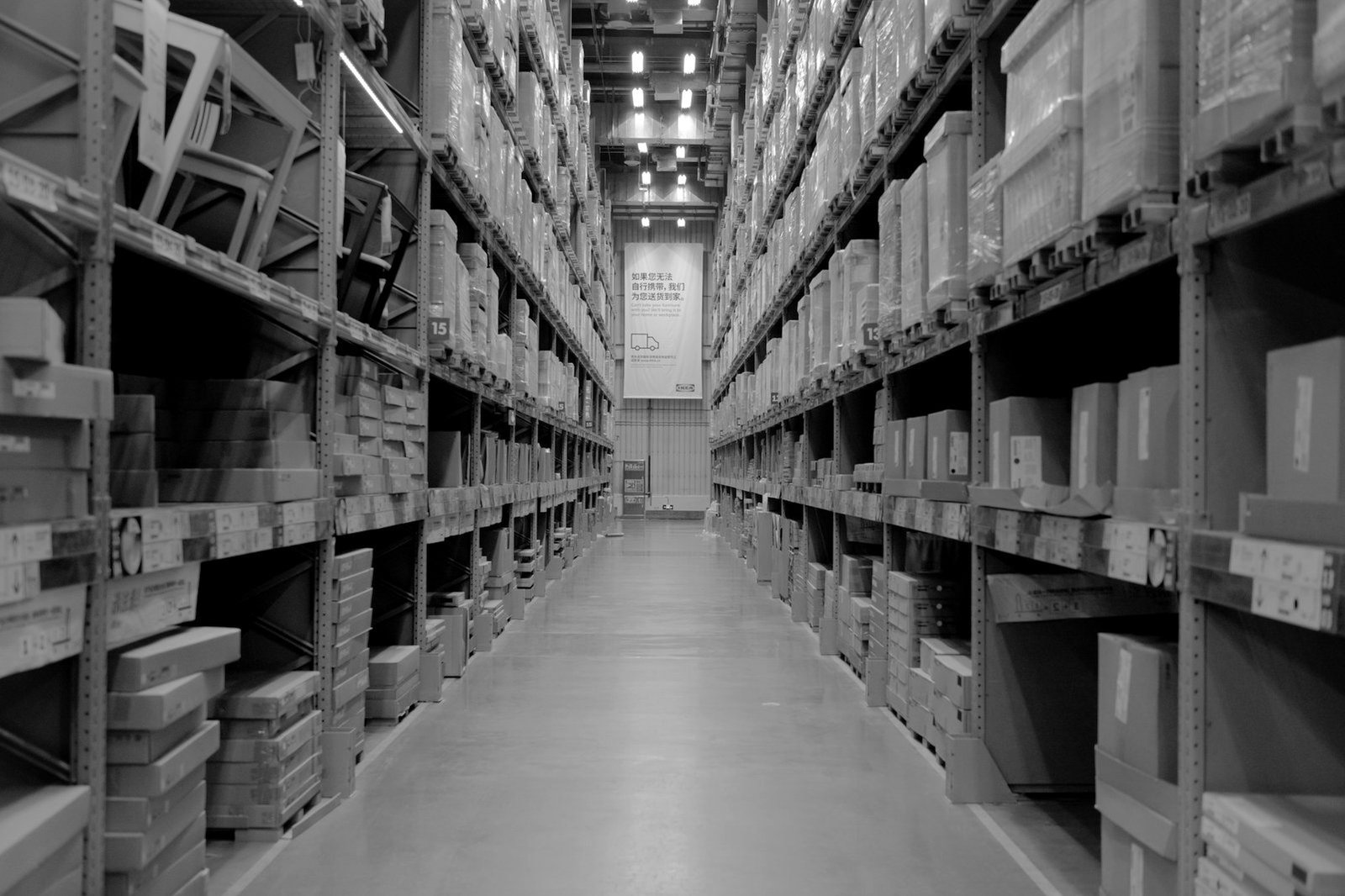
Summary: A bonded warehouse licence in Bangladesh is granted by the Commissioner of Customs (Bond) under section 12 of the Customs Act 2023 and the Warehouse Licensing Rules 2024. It allows duty-free import and storage of inputs against a general bond, within a bonding capacity and an import entitlement, subject to annual audit, online utilisation permissions through the Customs Bond Management System and heavy penalties for diversion of bonded goods.
Key point: Bonded goods remain under customs control from release until export or duty payment. Any shortfall the licensee cannot account for is treated as duty-payable on demand under section 126 of the Customs Act 2023, and diverting bonded inputs to the local market can lead to a penalty of up to twice the duty, prosecution and cancellation of the licence.
At a glance
Section 12 licence
The Commissioner of Customs (Bond) licenses private warehouses for storage or for manufacturing from dutiable imports.
Rules of 2024
The Warehouse Licensing Rules 2024, General Bond Rules 2024 and storage-period rules took effect on 6 June 2024.
Three-year licence
Licences run for three years, with automatic renewal where at least two years of audits are up to date.
Online only
Utilisation permissions have been issued only through the Customs Bond Management System since 1 January 2026.
Misuse risk
Diversion of bonded goods carries a penalty of one to two times the duty, confiscation and possible imprisonment.
Table of Contents
What the bonded warehouse Bangladesh regime covers in 2026
The Customs Act 2023 speaks of "warehouses", "warehousing stations" and "customs warehousing procedure"; traders speak of "bond" and "bond licence". The National Board of Revenue declares warehousing stations by gazette notification under section 10. Within those stations, a Commissioner may designate public warehouses under section 11, where dutiable goods can be deposited without payment of duty, or license private warehouses under section 12.[1]
Public and private warehouses
Public warehouses are designated, operated or supervised by customs and are used mainly for storage. The commercial regime is the private warehouse. Section 12(1) allows the Commissioner of Customs (Bond), or another Commissioner authorised by the Board, to license any building, part of a building or enclosure at a warehousing station for three purposes: storing dutiable goods imported by or for the licensee, storing imported goods where public warehouses have no space, and processing or manufacturing goods wholly or partly from dutiable imports.[1] The third purpose is what makes the export-oriented bond work: the factory itself becomes the warehouse.
Who administers it
Day-to-day administration sits with the Customs Bond Commissionerates, which issue licences, approve input-output coefficients, grant utilisation permissions and conduct audits. Three Customs Bond Commissionerates issued online utilisation permissions in early 2026.[6] Enforcement is shared with the Customs Intelligence and Investigation Directorate and the Customs Valuation and Internal Audit Commissionerate, whose officers of Assistant Commissioner rank or above may enter any part of a warehouse and examine goods, records and accounts under section 113(2).[1]
Customs Act 2023: the statutory framework for bonded warehouses
The Customs Act 2023 (Act No. 57 of 2023) replaced the Customs Act 1969, and the NBR published its authentic English text by SRO No. 441-Law/2025 in November 2025.[1] Section 12 governs licensing; Chapter XVI (sections 108 to 134) governs the warehousing procedure itself. Section 12(2) lets rules be made on the grant of licences and management of private warehouses, on conditions and restrictions on their operation and the goods stored, and on the import entitlement of the warehouse. Those rules are the 2024 rules discussed below.
Bond and guarantee
Section 108 allows imported goods to be placed in a warehouse without payment of import duties and taxes. In return, section 109 requires the importer to execute a general bond for the amount, conditions and limits the Commissioner directs. The bond survives transfer of the goods to another person or another warehouse unless the transferee executes a fresh bond. Section 110 allows the Board or an authorised Commissioner to require a bank guarantee as well, capped at the duties leviable on the goods, and section 12(3) allows a guarantee to be demanded from the licensee for the duties and taxes on stored goods.[1]
Control, access and manufacture
All warehoused goods are under the control of the appropriate officer (section 113). Officers may order packages opened, weighed, examined and sealed (section 114), and owners may access their goods only in the presence of an officer (section 115). With sanction, owners may sort, repack, sample or protect goods (section 116). Section 117 permits manufacturing and other operations in the warehouse, subject to the rules and the licence conditions. Waste generated in producing goods that are exported bears no duty, provided the waste is destroyed or duty is paid on it as if imported in that form; waste attributable to goods cleared for home consumption is dutiable, with value fixed by the Commissioner of Customs (Bond).[1]
Removal, storage periods and cancellation
No warehoused goods may leave a warehouse except on clearance for home consumption, export or removal to another warehouse (section 118). The Board fixes storage periods by rules, counted from release of the goods (section 119). Where a private warehouse licence is cancelled, the owner must remove the goods to another warehouse or clear them for home consumption or export within ten days of the cancellation notice, or any extended period the officer allows (section 120). Transfers within a customs station and between warehousing stations need the Commissioner's permission (sections 121 and 122).[1]
Demand and recovery
Section 126 is the provision every licensee should know. The appropriate officer may demand the full duty, rent, penalty, interest and charges on goods removed in breach of section 118, goods not removed after cancellation, goods taken as duty-free samples, and bonded goods that are not cleared, removed or used as the Act allows, are lost or destroyed (other than by accident under section 129), or "are not accounted for to the satisfaction of the appropriate officer".
If the demand is not paid, section 127 allows enforcement on the bond and detention of warehouse goods, plant, machinery and other property, which may be sold if the demand is not discharged within fifteen days of notice.[1] Section 238 adds powers to stop clearances from the bonded warehouse and to freeze bank accounts until dues are paid.
Two further provisions protect licensees. Section 129 lets the Commissioner remit duty on bonded goods destroyed by unavoidable accident, but for a private warehouse written notice must be given within three working days of discovering the loss. Section 125 allows natural loss of volatile goods notified by the Board to be ignored.[1] Section 128 requires the warehouse-keeper to keep stock accounts and records in the manner the Board prescribes, which is the foundation of every bond audit.

Bonded warehouse licence types under the Warehouse Licensing Rules 2024
The Warehouse Licensing Rules 2024 were made by SRO No. 209-Law/2024/61/Customs dated 29 May 2024 under sections 12 and 263 of the Customs Act 2023, and took effect on 6 June 2024. They repealed the Bonded Warehouse Licensing Rules 2008 and are commonly still described as the bonded warehouse licensing rules.[2] Rule 4 lists the institutions that may receive a licence or, where applicable, bond registration.
Direct export-oriented industry
Exports all output for foreign currency; general bond of Tk 3 crore.
Deemed export-oriented industry
Supplies accessories to 100% exporters against back-to-back LCs; general bond of Tk 1 crore.
EPZ, economic zone and hi-tech park units
Direct and deemed exporters in zones are licensed or registered under the same rules.
Diplomatic bond
Sells duty-free to diplomats and privileged foreign nationals in foreign currency.
Duty-free and duty-paid bonds
Sell to passengers duty-free, or to foreigners after duty, in foreign currency.
Commissariat
Sells food, cigarettes and liquor to foreign investors and workers in export processing zones.
Direct, deemed and dual export-oriented industries
A direct export-oriented industry exports all of its output outside Bangladesh in exchange for foreign currency. A deemed export-oriented industry makes accessories, such as packaging, cartons, labels or trims, and supplies them as backward linkage to 100% export-oriented industries against back-to-back letters of credit opened in foreign currency. A dual industry does both.[2] Garment manufacturers have long been treated as a special category: Chattogram commissionerate guidance describes a "special bonded warehouse" for woven, knit and sweater exporters and a "general bonded warehouse" for other export-oriented activity, including shipbuilding and accessories.[5]
Zone-based industries
Direct and deemed exporters located in public and private export processing zones, in export processing areas and commercial areas of economic zones under section 7(1) of the Bangladesh Economic Zones Act 2010, and in hi-tech parks under the Bangladesh Hi-Tech Park Authority Act 2010 also fall within the rules.[2] For zone-level approvals, see TRW's guide to export law in Bangladesh.
Diplomatic, duty-free, duty-paid and commissariat bonds
Rule 2 defines four trading bonds that sell rather than manufacture. A diplomatic bond sells goods imported under bond duty-free to diplomats and privileged foreign nationals in foreign currency. A duty-free bond sells duty-free to outbound and inbound passengers in foreign currency. A duty-paid bond sells bonded imports to foreign nationals visiting or living in Bangladesh, in foreign currency, after duties are paid. A commissariat sells imported food, cigarettes, liquor and other beverages only to foreign investors, foreign workers and foreign technicians of export processing zones.[2] These are the warehouses through which much of the lawful liquor trade passes, discussed in a separate section below.
Home-consumption and central bonded warehouses
Two further models matter in practice. A home-consumption bond allows inputs to be imported under bond and processed for the local market, with duty paid on clearance; the storage-period rules give these bonds six months.[4] A central bonded warehouse stocks inputs for supply to export-oriented manufacturers. Under the Finance Act 2026 amendments, the general bond for central bonded warehouses rises from Tk 10 million to Tk 50 million.[8]
Bonded warehouse Bangladesh licence: eligibility, documents and fees
An applicant applies to the licensing authority, which under rule 3 is the Commissioner of Customs (Bond) or another Commissioner authorised by the NBR, on the Schedule 1 form with the Schedule 2 documents attested by the lien bank and a court-fee stamp (rule 5).[2] The jurisdiction for licences is the area notified by the NBR under section 10 (rule 14).
Eligibility thresholds
Schedule 2 contains the hard requirements that decide most applications. The premises, including storage, must be at least 5,000 square feet. Rented premises need a lease of at least ten years and a landlord certificate stating whether a licensed warehouse previously operated there. Power or gas must be connected in the applicant's own name, though sub-meters are allowed in shared buildings. A limited company needs paid-up capital of at least Tk 1 crore; a sole proprietorship or partnership needs turnover of at least Tk 50 lakh. The business must have operated successfully for at least six months before applying.[2]
The physical standards are equally specific. Bonded raw-material warehouses must meet international standards, with no utility connections or electrical wiring inside and adequate light and ventilation. A perimeter security wall is required, with a certified engineer's drawing. Locally sourced second-hand machinery needs a life-span certificate from an internationally reputed surveyor confirming at least ten years of working life, evidence of VAT payment and a minimum value of Tk 40 lakh.[2]
Documents
The Schedule 2 list runs to twenty-two items, including BIDA or BSCIC registration, the company TIN and directors' wealth statements, current trade and fire licences, VAT registration, notarised details of owners and directors, memorandum and articles, machinery invoices and bills of entry, ammonia-print blueprints of the proposed warehouse countersigned by a certified engineer, the title deed or notarised lease, and an affidavit to comply with all laws. An association recommendation is required where applicable, but non-members may apply directly.[2] Rule 16 adds a lien bank certificate of financial solvency to execute the general bond and requires foreign directors, whether resident or not, to hold a Private Investor visa and a TIN under the Income Tax Act 2023.
Grant, fee and the sister-concern test
If satisfied, the authority grants the licence on the Schedule 4 form within thirty days, after the applicant pays a licence fee of Tk 1,00,000 plus applicable VAT and income tax by treasury challan and lodges the signed general bond (rule 6). Rule 6(3) adds a test that often catches groups: audits of all sister concerns must be up to date, and a licence cannot be granted where a fine has been imposed by judgment against them, subject to an NBR review where a bona fide director has been let down by a defaulting co-director.[2]
Validity, renewal and change
A licence is valid for three years from grant (rule 9). Renewal requires at least one year of import-export activity within the term, an application thirty days before expiry and a renewal fee of Tk 10,000 a year for three years, routed through the trade association for members. Where at least two of the three years' audits are up to date, the licence renews automatically (rule 10).[2]
All transactions must pass through an approved lien bank; up to three lien banks may be added at Deputy or Assistant Commissioner level, and up to five where turnover is at least US$50 million, audits are current and there are no classified loans (rule 15). Temporary relocation of a factory must be finalised within two months (rule 19), and any change of ownership or management needs approval, interviews of old and new owners and a fresh general bond (rule 20).
Continuous bond for multi-site groups
Rule 12 allows a "continuous bond" so that production units of the same owner at different locations under the same commissionerate are treated as part of the main licence. It is available to members of listed associations, including BGMEA, BKMEA, BTTLMEA, BTMA, LFMEAB, the Bangladesh Tanners Association and the Bangladesh Shipbuilders Association, for up to three similar factories at up to three locations. Each unit must still keep separate accounts, registers and documents.[2]
Confirm eligibility
Check premises of at least 5,000 sq ft, a ten-year lease if rented, Tk 1 crore paid-up capital and six months of operation.
Prepare the premises
Build bonded storage without internal utility wiring, with a perimeter wall and certified engineer drawings.
Assemble Schedule 2 papers
Collect registrations, TIN, trade and fire licences, VAT registration, title or lease, blueprints and machinery records.
Secure the lien bank
Obtain lien bank attestation and a certificate of financial solvency to execute the general bond.
File and inspect
Apply to the Commissioner of Customs (Bond) and host the site inspection that measures warehouse capacity.
Pay and execute the bond
Pay the Tk 1,00,000 licence fee by challan and lodge the signed general bond.
Set coefficients and go online
Obtain approved input-output coefficients and operate all utilisation permissions through CBMS.
Diarise audit and renewal
File audit documents within 60 days after each licence year and renew 30 days before expiry.
General bond, bonding capacity and import entitlement
Three numbers define what a licensee may import: the general bond, the bonding capacity and the import entitlement. Each is set by rules, and each has been revisited in the 2026 reforms.
The general bond
The General Bond Rules 2024 (SRO No. 210-Law/2024/62/Customs, effective 6 June 2024) require the Commissioner to direct each licensee to execute a general bond for the amount in rule 17 of the Warehouse Licensing Rules 2024.[3] That amount is Tk 1 crore for a deemed export-oriented industry, and Tk 3 crore each for a direct exporter, a dual exporter, and a diplomatic, duty-free, duty-paid or commissariat bond.[2] The bond is executed on Tk 2,000 non-judicial stamp paper signed by the directors and attested by the lien bank.
Under the 2024 rules, a general bond for direct and deemed exporters other than garments runs for one year where the licence is renewed. Direct knit, woven and sweater exporters may execute a three-year bond where audits are current, or where all audit documents were filed but customs could not complete the audit for reasons not attributable to the licensee. Where audits have been pending for two years and documents were not filed, the Commissioner may allow only a three-month bond, which lapses if the documents are not filed in that time.[3]
The standard bond form also makes the original licensee liable for the final duty on goods transferred to another licensed warehouse, so inter-bond transfers do not shift risk as much as many operators assume.
Warehouse capacity and bonding capacity
Rule 7 fixes warehouse capacity by measurement. Officers measure the raw-material and finished-goods warehouses, deduct 10% for movement and loading, and apply the formula [{(area − 10%) ÷ 1,360} × 12] metric tonnes, treating a 20-foot container as 1,360 cubic feet holding 12 tonnes on average. One-time bonding capacity is the lower of one-third of annual import entitlement and warehouse capacity, and goods beyond it may not be imported.[2] The Finance Act 2026 package withdraws one-time bonding capacity and treats warehouse capacity as bonding capacity, which removes a frequent cause of blocked shipments.[8]
Import entitlement and utilisation permission
Import entitlement is the annual quantity of each input a licensee may import duty-free. Section 12(2)(c) of the Customs Act 2023 authorises rules on it, and rule 22 of the Warehouse Licensing Rules 2024 leaves it to the relevant provisions of law.[1] [2] In practice, yearly import entitlement is based on the production capacity of installed capital machinery and the previous year's performance, while direct garment exporters import against utilisation declarations and master letters of credit rather than an annual import entitlement. Raw-material quantities are calculated from approved input-output coefficients and reconciled after export.[5] The utilisation permission, or UP, is the bond commissionerate's approval of that usage, and since 1 January 2026 it has been issued only online.[6]
Storage periods
The Rules Determining the Storage Period of Goods in Warehouses 2024 (SRO No. 211-Law/2024/63/Customs) set maximum periods counted from release at the customs house or, for local procurement, from the supplier's VAT invoice. Direct and deemed exporters have 24 months, export-oriented shipbuilders 48 months, diplomatic, duty-free, duty-paid and commissariat bonds 12 months, and home-consumption and other bonds six months.[4] The Commissioner may extend by up to six months where quality is not at risk, or shorten the period where goods may deteriorate. Beyond that, the licensee must apply to the NBR, which decides case by case, considering quality, export capacity, current audit and renewal status and the absence of any case or penalty against the goods.
| Category | General bond | Storage period | Key control |
|---|---|---|---|
| Direct exporter | Tk 3 crore | 24 months | Utilisation declaration and utilisation permission against master LC |
| Deemed exporter | Tk 1 crore | 24 months | Supplies only against back-to-back LCs |
| Dual exporter | Tk 3 crore | 24 months | Separate tracking of direct and deemed output |
| Export-oriented shipbuilder | By export category | 48 months | Longest storage period of any bond |
| Diplomatic, duty-free, duty-paid, commissariat | Tk 3 crore | 12 months | Sales against TEC, passbook or eligible buyer |
| Home-consumption and other bonds | Set by the Commissioner | 6 months | Duty paid on clearance |

Bonded warehouses for liquor and duty-free shops
Liquor is where the bonded warehouse Bangladesh system meets the narcotics regime, and where enforcement has been sharpest. Imported spirits, wine and beer reach diplomats, privileged persons, travellers and foreign residents largely through diplomatic bonds, duty-free bonds, duty-paid bonds and commissariats licensed under the Warehouse Licensing Rules 2024.[2] Each requires a Tk 3 crore general bond and is limited to a twelve-month storage period, half the period allowed to exporters.[2] [4]
Diplomatic bonds, passbooks and exemption certificates
Diplomats and privileged persons may buy imported liquor and cigarettes without duty, at nominal prices, under the Vienna Convention on Diplomatic Relations, and foreign nationals working for international organisations are also entitled. Diplomats buy against a tax exemption certificate issued by the Ministry of Foreign Affairs; other privileged persons need a passbook issued by the Customs Bond Commissionerate.[13] From 1 October 2021 the NBR moved diplomatic bond sales onto an automated system, with eight diplomatic bonded warehouses then operating.[13]
Duty-free and duty-paid bonds
Duty-free bonds supply passengers and are typically airport-based; duty-paid bonds sell to foreigners after duty has been paid. Both trade in foreign currency.[2] The commercial risk is the same in each case: the goods are high-value, highly taxed and easily resold, so any gap between imports, sales records and stock is presumed to be leakage. Section 126 makes unaccounted goods duty-payable on demand, and the Act's penalty table applies in full.[1]
The narcotics overlay
A customs licence is not enough to deal in alcohol. The Alcohol Control Rules 2022, made on 5 February 2022 under the Narcotics Control Act 2018, govern licences for clubs, bars, hotels and restaurants, drinking permits for persons aged 21 or over, purchase limits, trading hours and closures. They allow duty-free shops for foreign remittance earners to import alcohol.[14] A liquor bond operator therefore runs two compliance tracks, customs and narcotics.
Enforcement in 2026
On 2 October 2026 the Customs Intelligence and Investigation Directorate, the Department of Narcotics Control and Special Response Battalion-1 sealed four warehouses of Toss Bond Private Ltd in South Gulshan. The NBR said the company was authorised to operate two warehouses but was storing liquor and other duty-free goods in four, and sealed all of them to prevent unauthorised removal pending investigation.[12] The case illustrates a simple rule: goods may be kept only in premises approved under the licence, and section 131 lets the Commissioner decide where and how goods are deposited.[1]
Bonded warehouse Bangladesh audits and record-keeping
The audit is the main control over a bonded warehouse and the main source of friction between licensees and customs. Rule 11 of the Warehouse Licensing Rules 2024 requires an audit every year. An export-oriented licensee must submit the audit documents within sixty days after each one-year period of the licence, and the licensing authority must complete the audit within ninety days of receiving them.[2]
What the audit tests
The audit reconciles opening stock, imports, local procurement, consumption under approved coefficients and utilisation permissions, wastage, exports and closing stock. Section 128 of the Customs Act 2023 requires stock accounts to be kept as the Board prescribes, and the bond form requires every bonded import to be entered in the passbook and bond register.[1] [3] An unexplained shortfall becomes a demand for duty under section 126.
Consequences of falling behind
Audit status drives everything else. If documents are not filed and the licensee is not ready for audit, the Commissioner may suspend renewal of the licence together with the business identification number (BIN), and lift the suspension only once the annual audit is completed (rule 13). The licence and BIN may also be suspended, or the licence cancelled after a show-cause opportunity, where renewal information is not sent within sixty days of expiry, audits are incomplete for more than two years, or the law, rules or licence conditions are breached.[2] Audit arrears also shorten the general bond and block new licences for sister concerns.
Audit reform
The FY2026-27 budget announced that annual bond audits would be dropped for fully compliant garment factories.[7] The Finance Act 2026 package also introduces deemed completion of audit for direct export-oriented garment industries that meet specified conditions.[8] Relief from the annual cycle is not relief from the records. Customs retains its powers of access and examination, and the bank-data cross-checks described below operate independently of the audit calendar.
Bonded warehouse Bangladesh misuse: penalties and enforcement
NBR officials estimate that misuse of bonded facilities, through false declarations, diversion of inputs and similar irregularities, costs Tk 5,000 to 7,000 crore a year in revenue.[7] The typical case is simple: duty-free fabric, yarn, board or film is sold in the local market while exports are shown on paper.
The penalty table
Section 171 of the Customs Act 2023 sets penalties in a table. Item 2 imposes a penalty of Tk 50,000 to Tk 3 lakh for failing to comply with any condition or obligation of a customs warehouse. Item 22 imposes the same range, with confiscation, for activity in a warehouse in breach of the Act or rules or without permission.
Item 23(1) covers a warehouse keeper who fails to store goods as Chapter XVI requires or misuses the facility to evade duty: a penalty of one to two times the duties and taxes, with confiscation, or on conviction rigorous imprisonment of six months to three years, a fine of one to two times the duty, or both. Item 23(2) applies similar penalties, with imprisonment from three months, to illegally removing goods without duty or abetting it.[1]
Licence consequences
Section 12(4) allows suspension or cancellation for any breach or in the public interest, and a public-interest suspension also suspends the licensee's BIN under section 12(5), which effectively stops the business. Government dues remain recoverable after cancellation under section 12(6).[1] Under rule 13(4) of the Warehouse Licensing Rules 2024, where illegal removal of bonded raw materials or forgery is proved three times in succession, the licence may be cancelled outright.[2]
How cases are now detected
Detection has shifted from tip-offs to data. In January 2026 the NBR began collecting five years of banking data on about 100 exporters suspected of diverting duty-free inputs, to cross-check against ASYCUDA World import and export records; where bank activity exceeds export data without explanation, diversion will be presumed.[9] In October 2026 the Customs Intelligence and Investigation Directorate reported alleged evasion of Tk 85.21 crore by UAGM BD Limited, a deemed exporter in Narayanganj, after a raid found little production, idle machinery and electricity use far below reported output; the directorate said it would keep checking power consumption and actual capacity at bonded warehouses.[10]
Disputes and appeals
A person aggrieved by a decision of the licensing authority may appeal to the Customs, Excise and VAT Appellate Tribunal within three months (rule 24).[2] Alternative dispute resolution under the Customs Act 2023 is not available for disputes on violations of customs bonded warehouse licensing or bond conditions, which section 217(2)(e) expressly excludes.[1] Penalty adjudications follow the ordinary show-cause and appeal route described in TRW's customs law guide, and duty demands often turn on the value assigned to diverted goods, a question covered in our guide to customs valuation in Bangladesh.

Bonded warehouse Bangladesh automation and 2026 reforms
The Customs Bond Management System
The Customs Bond Management System (CBMS) went live on 1 January 2025 and became mandatory on 1 January 2026. Between 1 January and 16 March 2026 the three Customs Bond Commissionerates issued 24,963 utilisation permissions online against approved input-output coefficients. CBMS is linked to Bangladesh Bank's online system by API to verify import and export documents, and the NBR is coordinating with the Duty Exemption and Drawback Office and the BGMEA and BKMEA e-utilisation declaration systems. The NBR plans to bring all bond services, including audits, under automation.[6] Rule 25 of the Warehouse Licensing Rules 2024 already requires every function that can be performed on CBMS to be performed there, and gives customs officers access to all linked systems.[2]
The FY2026-27 budget package
The budget presented in June 2026 proposed the largest overhaul of the bond regime in years: removal of annual audits for fully compliant garment factories, general bond validity extended from one to three years, removal of stock limits, utilisation permission approvals within 24 hours, and transfers of bonded inputs between licensed operators and export-oriented industries. Coverage extends beyond garments to leather, footwear, terry towel, pharmaceuticals and jewellery, with a separate framework for importing gold bars and scrap for jewellery exports. The package was to be implemented through amendments to the licensing rules, the export-oriented bonded warehouse management rules, the General Bond Rules 2024 and the provisions on annual import entitlement.[7]
The Finance Act 2026 adds three structural changes. It introduces Free Trade Zones under the Customs Act in which no bonded warehouse licence is required, manufacturing, trading and re-packing are allowed and duties on sales to the domestic tariff area are deferred. It allows ten more industries without bonded warehouse facilities to import raw materials duty-free against a bank guarantee. And it withdraws one-time bonding capacity while raising the general bond for central bonded warehouses to Tk 50 million.[8] Check the operative notification before relying on any of these in a transaction, because several take effect through amended rules rather than the Act itself.
Targeted restrictions
Liberalisation is not uniform. On 7 September 2026 the NBR, by an order under section 266 of the Customs Act 2023, withdrew the bonded warehouse facility for imports of 10 to 30 count cotton yarn, requiring licensed exporters to import against an unconditional, continuous bank guarantee for the full duties, released only after export compliance is verified. BGMEA and BKMEA objected in writing to the commerce minister.[11] Licensees should expect product-specific controls of this kind wherever the NBR sees diversion risk.
Bonded warehouse Bangladesh compliance: mistakes to avoid
Licensees that run into trouble rarely set out to evade duty. They fall behind on audits, let coefficients drift, store goods in unapproved space or neglect the bond register.
Keep the audit current
Treat the sixty-day filing window after each licence year as a hard deadline. Audit arrears trigger suspension of renewal and BIN, short-term general bonds and refusal of licences to sister concerns.[2] [3]
Reconcile monthly, not annually
Match imports, utilisation permissions, consumption, wastage and exports every month against CBMS and bank data. With the NBR comparing bank transactions against export records, a discrepancy the licensee cannot explain will be read as diversion.[9]
Use only approved premises and lien banks
Store bonded goods only in licensed space, never import beyond the approved import entitlement, add warehouses only with approval under rule 7(5), and route every transaction through an approved lien bank.[2] The Toss Bond sealing shows how quickly unapproved storage escalates.[12]
Plan transfers, relocations and ownership changes
Inter-bond transfers leave final duty liability with the original licensee under the bond form, relocations must be finalised within two months, and ownership changes need prior approval and a new bond.[2] [3] Build these steps into any acquisition of a bonded business; for the duty exposure on goods that leave the bond, see TRW's guide to import duty in Bangladesh.
TRW's customs and trade compliance practice advises on bonded warehouse licences, audits, CBMS processes and misuse investigations, and our tax disputes team handles demands, penalties and Appellate Tribunal appeals.
Frequently asked questions
What is a bonded warehouse in Bangladesh?
It is a public or licensed private warehouse in which imported dutiable goods are stored, and in a private warehouse processed or manufactured, without paying import duties and taxes until they are cleared for home consumption, or at all if they are exported.[1]
Who grants a bonded warehouse licence?
Are the Bonded Warehouse Licensing Rules 2008 still in force?
No. They were repealed by the Warehouse Licensing Rules 2024, which took effect on 6 June 2024. Acts done under the 2008 rules are saved, and pending proceedings continue under them.[2]
What are the minimum requirements for a bond licence?
Key thresholds include premises of at least 5,000 square feet, a ten-year lease for rented premises, paid-up capital of Tk 1 crore for a limited company or Tk 50 lakh turnover for a proprietorship or partnership, and six months of successful business operation.[2]
How much is the licence fee and how long is the licence valid?
The licence fee is Tk 1,00,000 plus applicable VAT and income tax. The licence is valid for three years, and renewal costs Tk 10,000 a year for three years.[2]
How much is the general bond?
How long can goods stay in a bonded warehouse?
Up to 24 months for direct and deemed exporters, 48 months for shipbuilders, 12 months for diplomatic, duty-free, duty-paid and commissariat bonds, and six months for home-consumption and other bonds, with limited extensions.[4]
Can a bonded warehouse sell liquor?
Only within its licence category. Diplomatic bonds sell duty-free to diplomats and privileged persons, duty-free bonds to passengers, duty-paid bonds to foreigners after duty, and commissariats to foreigners in export processing zones, and alcohol dealing also falls under the Alcohol Control Rules 2022.[2] [14]
What is the penalty for misusing a bonded warehouse?
Misuse to evade duty carries a penalty of one to two times the duties and taxes with confiscation, or on conviction rigorous imprisonment of six months to three years, a fine of one to two times the duty, or both.[1]
Source register
Primary legal and regulatory sources
Materials checked on 21 October 2026. Confirm the current official text before relying on any provision.
- Customs Act 2023 (Act No. 57 of 2023) — Authentic English Text, SRO No. 441-Law/2025, National Board of Revenue
- Warehouse Licensing Rules 2024, SRO No. 209-Law/2024/61/Customs (29 May 2024) — Bangladesh Customs Import Export Hub
- General Bond Rules 2024, SRO No. 210-Law/2024/62/Customs (29 May 2024) — Bangladesh Customs Import Export Hub
- Rules Determining the Storage Period of Goods in Warehouses 2024, SRO No. 211-Law/2024/63/Customs — Bangladesh Customs Import Export Hub
- Customs Bond Commissionerate, Chattogram — Bonded Warehouse
- The Business Standard, 24 March 2026 — NBR issues 25,000 online bond permissions in 2.5 months
- The Daily Star, 19 June 2026 — Landmark customs bond reforms to boost competitiveness
- PwC Bangladesh, 2026 — Finance Act 2026: Key Amendments
- The Business Standard, 2 January 2026 — NBR scans bank transactions of 100 exporters to crack down on bond misuse
- BSS, 14 October 2026 — NBR detects Tk 85.21cr revenue evasion through misuse of bonded warehouse facility
- The Business Standard, 8 September 2026 — BGMEA, BKMEA object to withdrawal of bond facility on yarn imports
- The Business Standard, 2 October 2026 — 4 Toss Bond warehouses sealed over unauthorised storage of duty-free liquor, goods
- The Financial Express, 22 September 2021 — Diplomatic bonded warehouse facility automated
- The Daily Star, 18 February 2022 — Liquor management: colonial-era rules discarded, fresh ones in place
Related TRW assistance
Move from information to a defined next step
TRW advises exporters, zone investors and duty-free operators on bonded warehouse licences, general bonds, CBMS compliance, bond audits and misuse investigations. Explore our customs and trade compliance practice or contact TRW to discuss your licence or audit.