
TRW Insight / Bangladesh
The 2025 Council that advertised, interviewed and recommended Supreme Court judges was repealed in April 2026. Appointments again run through Article 95 alone, while appointment criteria and the separate judicial secretariat remain contested.
Judicial appointments in Bangladesh: the 2026 position
Judicial appointments in Bangladesh are back where they stood before January 2025. Supreme Court judges are appointed under Article 95 of the Constitution: the President appoints the Chief Justice and, after consulting the Chief Justice, every other judge. For fifteen months a statutory body, the Supreme Judicial Appointment Council, stood between those two steps. It advertised for candidates, interviewed them and sent recommendations to the President. On 9 April 2026 Parliament repealed the ordinance that created it, keeping valid the 25 appointments already made, and appointments now run through the constitutional text alone.[6]
This guide explains the framework as it actually operates in October 2026: the constitutional qualifications, the route by which a lawyer or district judge becomes an Additional Judge and then a permanent judge of the High Court Division, what the 2025 Ordinance required and why it fell, the parallel fight over a separate Supreme Court secretariat and Article 116, and the constitutional reform work now under way. It closes with what the position means for litigants, lenders and foreign investors who depend on the higher judiciary to decide their cases.
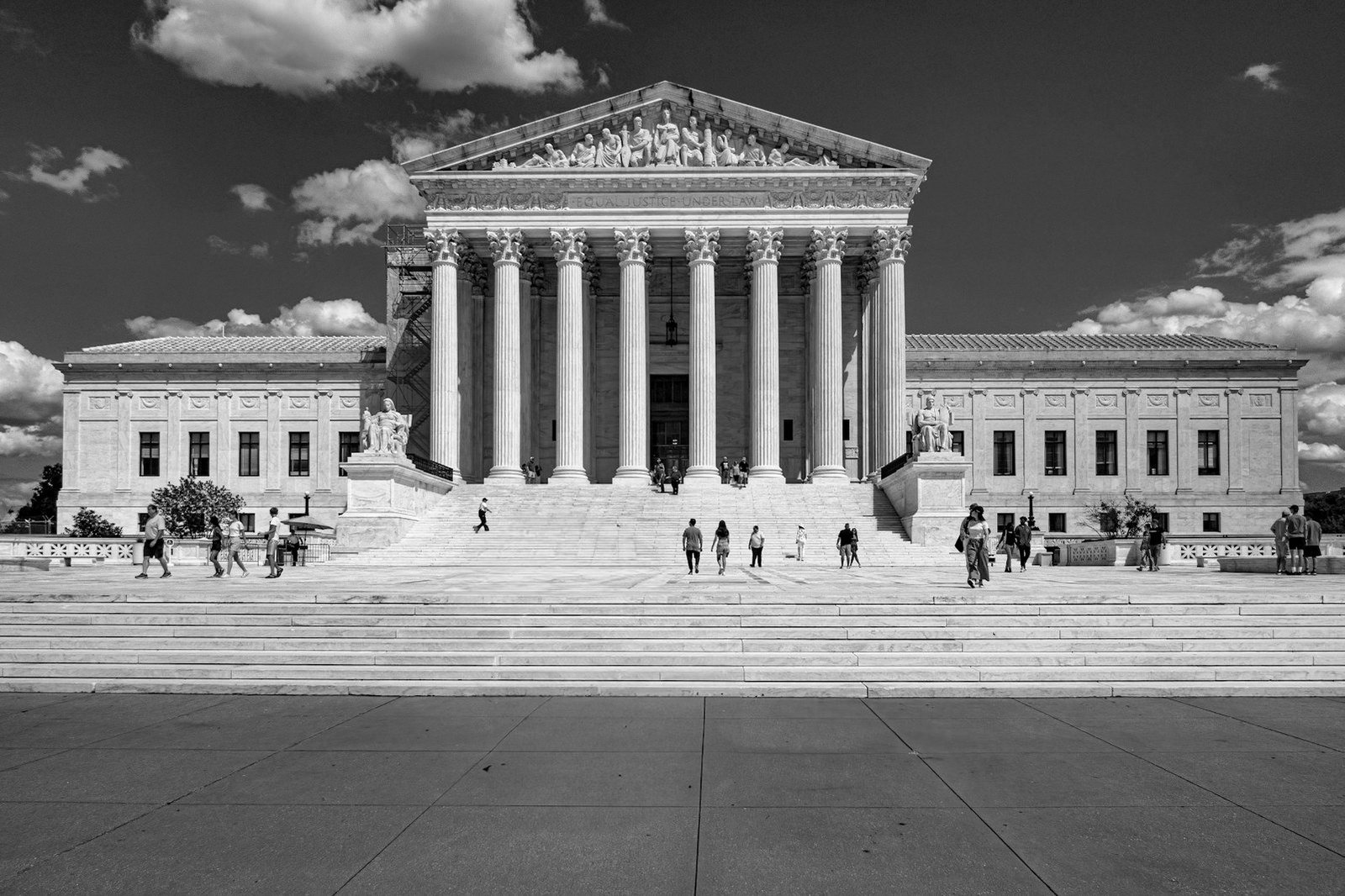
Summary: The President appoints Supreme Court judges under Article 95 after consulting the Chief Justice; new High Court Division judges start as Additional Judges for up to two years under Article 98 and may then be made permanent. The Supreme Court Judges Appointment Ordinance 2025 added a council, public applications, interviews and a minimum age of 45, but Parliament repealed it on 9 April 2026 with a savings clause. No replacement law has been enacted, and the criteria are now before a parliamentary constitutional reform committee.
Key point: The judges appointed through the 2025 Council keep their offices: the repeal Act preserves every appointment made, action taken and proceeding begun under the Ordinance.[6] What changed is the route for future appointments, which no longer requires public advertisement, interviews or a written Council recommendation.
At a glance
Constitutional basis
Article 95: the President appoints judges after consulting the Chief Justice. Candidates need ten years at the Supreme Court Bar or in judicial office.
Entry route
Most new High Court Division judges start as Additional Judges for up to two years under Article 98, then are confirmed or dropped.
2025 Ordinance
Created a Council chaired by the Chief Justice, public calls for applications, interviews and a minimum age of 45 for High Court Division candidates.
2026 repeal
Parliament repealed the Ordinance and the Supreme Court Secretariat Ordinance on 9 April 2026; earlier appointments are saved.
What comes next
A special committee on constitutional reform is considering appointment criteria; the Article 116 appeal is pending in the Appellate Division.
Table of Contents
Judicial appointments in Bangladesh under the Constitution
The Constitution creates a single Supreme Court with two divisions, the Appellate Division and the High Court Division, and declares that the Chief Justice and the other judges are independent in the exercise of their judicial functions.[1] Everything about how those judges are chosen flows from three provisions: Article 95 on appointment and qualifications, Article 98 on Additional Judges, and Article 48(3) on when the President must act on the Prime Minister's advice. Article 96 fixes retirement at sixty-seven, so the number of vacancies each year is largely predictable.[1]
Article 95: who appoints, and after whose consultation
Article 95(1) provides that the Chief Justice is appointed by the President, and the other judges are appointed by the President after consultation with the Chief Justice.[1] The consultation requirement has a history. The Fourth Amendment of 1975 removed it from the text, and the Fifteenth Amendment of 2011 restored it; in the meantime the Appellate Division treated consultation as a binding constitutional convention.[12]
Article 48(3) completes the picture. The President acts on the Prime Minister's advice in all functions except two: appointing the Prime Minister and appointing the Chief Justice.[1] The appointment of every other judge is therefore, in constitutional terms, an executive decision taken on prime-ministerial advice, conditioned by a duty to consult the Chief Justice. That combination, rather than any statute, is the operating rule for judicial appointments in Bangladesh in 2026.
The qualifications in Article 95(2)
A person may not be appointed a judge unless he or she is a citizen of Bangladesh and has, for at least ten years, been an advocate of the Supreme Court, or has held judicial office in Bangladesh for at least ten years, or has such qualifications as may be prescribed by law for appointment as a Supreme Court judge.[1] The third limb has always been the gap. Until 2025 no law prescribed additional qualifications, which is why commentators and Parliament alike have described the Constitution as anticipating an appointments law that did not exist.[7]
The ten-year figure is a floor, not a test of merit, and the Constitution sets no minimum age. Both points were central to the litigation over the 2025 Ordinance.[3]
How High Court Division judges are appointed in practice
The practical entry point to the bench is Article 98. Where the President is satisfied that the number of judges of a division should be temporarily increased, he may appoint qualified persons as Additional Judges for a period not exceeding two years. A person so appointed may later be appointed a judge under Article 95, or reappointed as an Additional Judge for a further period.[1] Almost every new High Court Division judge starts this way, which makes the confirmation decision at the end of the two years the real point of scrutiny.
Additional Judges and the two-year probation
The two-year term operates as a probation. In October 2024, 23 Additional Judges were appointed; on 11 November 2025 the government made 22 of them permanent by gazette notification issued under Article 95 after consultation with the Chief Justice.[5] The 23rd, Justice Debasish Roy Chowdhury, was confirmed on 24 September 2026, again under Article 95 in consultation with the Chief Justice, and took his oath before Chief Justice Zubayer Rahman Chowdhury. The Supreme Court administration explained the earlier delay by the fact that he had not then reached 45, the minimum age the 2025 Ordinance had imposed.[11]
That appointment brought the number of permanent High Court Division judges to 100.[11] It is also the clearest evidence of how judicial appointments in Bangladesh now operate after the repeal: a presidential order, consultation with the Chief Justice, a gazette notification from the Law and Justice Division and an oath administered by the Chief Justice, with no Council recommendation in between.
Dropped Additional Judges and the duty to give reasons
Non-confirmation has been litigated. In ABM Altaf Hossain v Bangladesh, decided by a seven-judge Appellate Division bench on 14 June 2023, two former Additional Judges had been recommended by the Chief Justice for permanent appointment but were left out by the executive without explanation.[12] Justice Md Nuruzzaman held that dropping them without reasons offended natural justice and settled case law, and the Court left their cases to be considered by the appropriate authority.[12] An Additional Judge who is not confirmed therefore has a public-law argument, but not a right to appointment.
The judicial gloss on consultation
The leading authority remains the Ten Judges' Case, Bangladesh v Idrisur Rahman, 29 BLD (AD) 79. As the Appellate Division later summarised it, the short order divided authority: the Chief Justice's opinion is dominant on legal acumen and suitability, and the executive's opinion is dominant on a candidate's antecedents.[12] In Altaf Hossain Justice Nuruzzaman observed that this split supplies no mechanism for resolving a disagreement, so that in practice the executive has the final word, and proposed a synthesis in which the Chief Justice, sitting with the two senior-most judges, examines the executive's reasons and gives a binding opinion.[12] That proposal has not been legislated.
Selection criteria: what the law and the courts require
Because Article 95(2)(c) was never filled, the criteria for judicial appointments in Bangladesh have come from three sources at different times: the constitutional minimum, judicial suggestions addressed to the Chief Justice, and, for fifteen months, a statute. Anyone assessing a candidate, or the legitimacy of an appointment, needs to keep them apart.
The Raghib Rauf Chowdhury suggestions (2017)
In Raghib Rauf Chowdhury v Bangladesh, Writ Petition No 4403 of 2010, decided on 13 April 2017 and reported at 9 SCOB [2017] HCD 34, the High Court Division declined to direct the government to frame guidelines but suggested criteria for the Chief Justice to consider before recommending a candidate.[13] They included a strong academic record, high professional skill, legal acumen and integrity; publishing candidates' CVs on the Supreme Court website, with an optional interview and a statement of assets and liabilities; a minimum age of 45; priority for advocates of the Appellate Division; and, for district judges, at least three years as District and Sessions Judge.[13]
The judgment also suggested that the Chief Justice may consult the two senior-most judges of each division, and that once the Chief Justice recommends a person the executive should not reject that person unless there is an antecedent of anti-state or anti-social subversive activity.[13] These were suggestions, not binding rules, but they remain the clearest judicial statement of what a merit-based process for judicial appointments in Bangladesh should consider.
The criteria in the 2025 Ordinance
The Supreme Court Judges Appointment Ordinance 2025 turned many of those ideas into law. In addition to the constitutional minimum, the Council was to weigh education, professional skill, experience, publications and training, any criminal conviction, specialist knowledge of a branch of law, and overall knowledge, wisdom, honesty, reputation and respect for law.[2] Section 6(2)(a) set a minimum age of 45 for High Court Division candidates.[5]
For confirming an Additional Judge, the Council was to consider the number of cases disposed of, the quality of judicial orders and judgments, court management, overall efficiency, honesty and reputation. For elevation to the Appellate Division, it was to consider seniority together with the same performance and conduct factors.[2] These are no longer binding, but a candidate or confirmation that would plainly have failed them is likely to attract public and professional comment.
The position in October 2026
With the Ordinance repealed, no statutory criteria apply. The constitutional qualifications in Article 95(2) remain the only legal test, and the weight given to merit, seniority and antecedents depends on the consultation between the executive and the Chief Justice described above.[1] [12] The Law Minister told Parliament that the government wants complete transparency and accountability in appointments and does not want more politicised judges, and that criteria will be fixed through constitutional reform.[6]
The Supreme Court Judges Appointment Ordinance 2025
The interim government promulgated the Supreme Court Judges Appointment Ordinance on 21 January 2025.[3] It was the first statute in the country's history to regulate how Supreme Court judges are selected, and it was presented as part of a wider judicial reform programme that also proposed a separate judicial secretariat.[2]
The Supreme Judicial Appointment Council
The Ordinance created a permanent Supreme Judicial Appointment Council chaired by the Chief Justice. Its members were the senior-most judge of the Appellate Division, a retired Appellate Division judge, two senior High Court Division judges, the Attorney General, and a law professor or legal expert nominated by the Chief Justice.[2] The Registrar General of the Supreme Court was its ex officio secretary, with the Registrar General's office providing secretarial support, and a quorum required at least five members.[2]
How the Council worked
The Council collected names of potential candidates, and any person or lawyer could apply or propose a name. After initial scrutiny it interviewed candidates. For Additional Judges it could invite applications by public notice, and it had to meet at least two months before an Additional Judge's term expired to consider confirmation.[2] The Chief Justice transmitted its recommendations to the President under Article 95(1).[2]
The Ordinance also disciplined the executive side. The President was to make the appointment from the recommended names within 15 days. If he disagreed with the advice, he could refer the matter back to the Chief Justice for review with reasons.[2] The government could make rules under the Ordinance only in consultation with the Council.[2]

The Council's appointments
The Council's main exercise was the 2025 round of Additional Judges. A public notice drew several hundred applicants; the Council shortlisted more than 50 after scrutiny, interviewed them and sent its recommendations to the President, who appointed 25 Additional Judges under Article 95(1). Chief Justice Syed Refaat Ahmed administered the oath on 26 August 2025.[4] In all, 25 Supreme Court judges were appointed under the Ordinance before its repeal.[6] The Ordinance also shaped confirmations: the age bar in section 6(2)(a) explains why one of the 2024 Additional Judges was left out of the November 2025 confirmations.[5]
The challenge in the High Court Division
The Ordinance was challenged soon after it was made. In Md Ajmol Hossain v Bangladesh, Writ Petition No 3936 of 2025, the petitioner sought to have sections 3, 4, 6 and 9 declared ultra vires. He argued that the Council under-represented the Bar, that a law professor was not equipped to assess candidates, and that the minimum age of 45 conflicted with the experience-based test in the Constitution.[3] On 28 April 2025 the High Court Division summarily disposed of the petition without issuing a rule. It observed that the Council's opinion was not final, since the President could accept it or send it back, and described the Ordinance as desirable in the national interest given concerns over politically influenced appointments.[3]
The Court added that the next Parliament could discuss the Ordinance at its first session, which is what happened: its validity was never decided on the merits.[3]
The 2026 repeal and its savings clause
Ordinances made while Parliament is not in session must be laid before Parliament and lapse unless Parliament acts within a fixed window.[1] The interim government had made 133 ordinances, and a 13-member special committee chaired by Zainul Abedin MP reviewed them for the 13th Parliament. Its report said the appointments ordinance conflicted with the Constitution and that the Chief Justice's powers under it could hinder coordination with the government.[7]
What Parliament passed
On 9 April 2026 Parliament passed the Supreme Court Judge Appointment (Repeal) Bill 2026, moved by Law Minister Md Asaduzzaman, by voice vote over the objection of the National Citizen Party member Akhtar Hossain.[6] In the same sitting it repealed the Supreme Court Secretariat Ordinance 2025 and its 2026 amendment.[7] The statement of objects said that a permanent legal framework was needed and that repeal would allow more detailed scrutiny of the appointment provisions through a constitutional reform committee.[6]
The savings clause
The repeal Act provides that all appointments made, actions taken and proceedings begun under the 2025 Ordinance remain valid and effective.[6] For litigants this matters more than any other feature of the repeal. The 25 judges appointed through the Council sit with full authority, and a judgment or order they make cannot be attacked on the ground that the statute under which they were selected no longer exists.
The arguments on each side
The government's position, as the Law Minister put it, is that it shares the goal of transparency and accountability but wants a more robust and permanent system through constitutional amendment. He said the government was not discarding the 2025 provisions but seeking time for wider consultation, and invited the opposition to join a special committee to define appointment criteria.[6] [7] He also acknowledged that, as Attorney General, he had defended the Ordinance in court on the government's instructions.[6]
Opposition members argued that the Ordinance had brought transparency, that without it the executive would again control appointments, and that it had kept partisan figures off the bench; Jamaat-e-Islami members called the secretariat repeal an interference with judicial independence.[6] [7] Both positions are on the record. For practitioners, the point is narrower: until a new law or constitutional amendment is made, the process for judicial appointments in Bangladesh is the Article 95 process, without statutory criteria.
Separate judicial secretariat and Article 116
Appointments to the Supreme Court are one half of judicial independence; control of the subordinate judiciary is the other. Article 22 directs the State to separate the judiciary from the executive, and Article 109 gives the High Court Division superintendence and control over courts subordinate to it.[1] But Article 116, in its current form, vests the control, including posting, promotion and leave, and discipline of judicial officers in the President, exercised in consultation with the Supreme Court.[1]
From Masdar Hossain to the 2025 verdict
The modern separation of the judiciary traces to the Masdar Hossain litigation, filed in 1995 by the then general secretary of the judicial service association; the Appellate Division's 1999 judgment set the course for separating the lower judiciary from the executive.[9] Our guide to constitutional law in Bangladesh covers that history. The current dispute began on 25 August 2024, when a group of Supreme Court lawyers challenged Article 116 and the Judicial Service (Discipline) Rules 2017 and sought a separate secretariat; a rule was issued on 27 October 2024.[8]
On 2 September 2025 a bench of Justice Ahmed Sohel and Justice Debasish Roy Chowdhury made the rule absolute. It struck down the amended Article 116 together with the provisions of the Fourth and Fifteenth Amendments that sustained presidential control, restored the original 1972 text giving the Supreme Court control over posting, promotion and leave of judicial officers, declared the 2017 Rules unconstitutional, and directed the government to establish a separate judicial secretariat within three months.[8] [10]
The Secretariat Ordinance and its repeal
The interim government approved the proposal on 20 November 2025 and promulgated the Supreme Court Secretariat Ordinance 2025 on 30 November, giving the secretariat authority over transfers, promotions, discipline, leave and recruitment of lower court judges. Chief Justice Syed Refaat Ahmed inaugurated it on 11 December 2025.[9] After the April 2026 repeal, those functions returned to the Ministry of Law, and on 19 May 2026 fifteen judicial officers serving in the dissolved secretariat were transferred back to the Law and Justice Division.[9]
The appeal in the Appellate Division
The full 185-page High Court Division judgment was published on 7 April 2026, and the state filed its appeal on 21 May 2026. On 9 June 2026 a four-member Appellate Division bench headed by Chief Justice Zubayer Rahman Chowdhury stayed the judgment and fixed 16 June for hearing.[10] As at the date of this guide we have not seen a reported final decision. Until the Appellate Division rules, Article 116 operates in its pre-2025 form and the Law and Justice Division administers the subordinate judiciary.[9] [10]
The President
Appoints the Chief Justice and, after consultation with the Chief Justice, all other Supreme Court judges.
The Chief Justice
Gives the constitutionally required view on every appointment and administers the oath.
Law and Justice Division
Processes appointments, issues gazette notifications and, since April 2026, again administers the subordinate judiciary.
Supreme Judicial Council
Inquires into the conduct or capacity of Supreme Court judges under Article 96.
Special committee on constitutional reform
Parliamentary committee considering appointment criteria and judicial independence proposals.
Appellate Division
Hearing the state's appeal against the 2025 Article 116 and separate secretariat judgment.
The process for High Court Division judges step by step
No statute or published rule now sets out the procedure. The sequence below is drawn from the constitutional text and from how the 2025 and 2026 appointments and confirmations were actually made.[1] [5] [11] It is the process a candidate, a bar association or an observer should expect for judicial appointments in Bangladesh until reform legislation is passed.
Vacancy or need identified
Retirements at sixty-seven, elevations and caseload create vacancies; under Article 98 the President may add Additional Judges for up to two years.
Candidates identified
Names come from the Supreme Court Bar and the senior judicial service. There is currently no public notice or application stage.
Consultation with the Chief Justice
Article 95(1) requires the President to consult the Chief Justice on every appointment other than the Chief Justice's own.
Advice to the President
Under Article 48(3) the President acts on the Prime Minister's advice for all judicial appointments except that of the Chief Justice.
Gazette notification
The Law and Justice Division issues the appointment by gazette notification under the President's order.
Oath
The Chief Justice administers the oath; the appointment takes effect and the two-year term of an Additional Judge begins.
Confirmation or non-confirmation
At the end of the term the Additional Judge is appointed a permanent judge under Article 95, reappointed under Article 98, or not continued.
Two features distinguish this process from the 2025 model. There is no public call for applications or interview stage, and there is no fixed time within which the President must act on the Chief Justice's view. Each was a deliberate feature of the Ordinance.[2]
Comparing the Article 95 route with the 2025 Council model
The table sets the current process beside the repealed Council model and the 2017 judicial suggestions. Neither the 2025 nor the 2017 requirements now bind the appointing authority.
| Feature | Article 95 route (current) | 2025 Ordinance (repealed) | 2017 judicial suggestions |
|---|---|---|---|
| Legal status | Binding constitutional text | Repealed 9 April 2026; past appointments saved | Non-binding suggestions to the Chief Justice |
| Who identifies candidates | Executive, with Chief Justice consultation | Council; anyone could apply or propose names | Chief Justice, consulting senior judges |
| Open applications | No | Public notice for Additional Judges | CVs published on the Supreme Court website |
| Interview | No | Yes, after scrutiny and shortlisting | Optional |
| Minimum age | None | 45 for High Court Division | 45 |
| Executive deadline | None | 15 days to appoint or return with reasons | None stated |
| Confirmation review | Executive with Chief Justice consultation | Council review of disposals, quality and conduct | Not addressed |
What any replacement will have to settle
Whichever model Parliament adopts, four questions will decide whether it works. Who identifies candidates, and whether applications are open. Whether the Chief Justice's view binds the executive or can be overridden, and with what reasons. Whether minimum age and experience criteria are added under Article 95(2)(c). And whether the reasons for confirming or dropping an Additional Judge are recorded, which the Appellate Division in Altaf Hossain treated as a matter of natural justice.[12]
Constitutional reform and the 2026 outlook
The special parliamentary committee on constitutional reform is chaired by Home Minister Salahuddin Ahmed and is working from the BNP manifesto and the July National Charter signed on 17 October 2025.[14] Its proposals on the judiciary, as reported in October 2026, include having the President choose the Chief Justice from the two senior-most Appellate Division judges, whereas most other Charter parties favour automatic appointment of the senior-most judge; strengthening the Supreme Judicial Council and widening its jurisdiction; giving the Supreme Court complete control over the service terms of subordinate judges; and allowing permanent High Court Division benches in each administrative division.[14]
Those proposals point in different directions on judicial appointments in Bangladesh. Full Supreme Court control of subordinate judges would deliver much of what the 2025 secretariat was meant to achieve, while a choice between two candidates for Chief Justice preserves executive discretion at the top. The appointment criteria themselves, which the Law Minister promised in April, have not yet been published.[6] [14]
Watch points for the next twelve months
- Appointment criteria: whether the reform committee proposes statutory qualifications under Article 95(2)(c) or a new appointments body.[6] [14]
- Article 116 appeal: the Appellate Division's decision on the 2025 judgment and the separate secretariat.[10]
- New Additional Judges: the first fresh round of appointments under the post-repeal process, and whether any public notice or interview is used.
- Confirmations: the 25 Additional Judges appointed in August 2025 reach the end of their two-year terms in August 2027, and their confirmation will be decided without Council review.[1] [4]
Why judicial appointments in Bangladesh matter to litigants and investors
For anyone with a case before the High Court Division, judicial appointments in Bangladesh are a practical question, not an abstract one. The Division hears writ petitions against public authorities, company matters, admiralty claims and, since the Commercial Courts Act 2026, appeals from the new commercial courts. Our guide to the High Court Division of Bangladesh explains each jurisdiction and how benches are assigned, and our analysis of the Commercial Courts Act covers the commercial appeal benches.
For litigants
- Validity of benches: judges appointed under the 2025 Ordinance sit lawfully because of the savings clause. An objection based on the repeal is not a viable ground of appeal.[6]
- Bench capacity: the number of judges drives listing times. The High Court Division had 100 permanent judges after September 2026, plus Additional Judges; the pace of new appointments will affect how quickly the backlog moves.[11]
- Public-law remedies: appointment decisions are made by the President on advice, so challenges are rare and narrow. Altaf Hossain shows the courts will insist on reasons for dropping a recommended judge, but will not order an appointment.[12]
For foreign investors and lenders
Investors look at the higher judiciary for three things: predictable interpretation of contracts and statutes, enforceable interim relief, and courts seen as independent of the government when the state or a state-owned entity is the counterparty. Changes to the process for judicial appointments in Bangladesh bear on the third. The practical response is contractual. Choose arbitration with a clear seat and institutional rules where the counterparty is a public body, plan for writ jurisdiction where regulatory action is likely, and use our guides to writ petitions and judicial review to understand how High Court Division remedies operate.
None of this suggests the courts cannot be relied on: the High Court Division continues to give reasoned judgments against the state, including the 2025 Article 116 judgment itself.[8] It does mean that counsel should track bench composition, judicial vacancies and the reform process as part of any long-horizon dispute strategy. TRW's constitutional and writ litigation practice advises on these questions.
Frequently asked questions
Who appoints Supreme Court judges in Bangladesh?
The President. Under Article 95(1) the President appoints the Chief Justice, and appoints the other judges after consultation with the Chief Justice. Under Article 48(3) the President acts on the Prime Minister's advice in every appointment except that of the Chief Justice.[1]
What qualifications must a High Court Division judge have?
Bangladeshi citizenship and either ten years as an advocate of the Supreme Court, ten years in judicial office in Bangladesh, or qualifications prescribed by law. No law currently prescribes additional qualifications.[1]
Is the Supreme Court Judges Appointment Ordinance 2025 still in force?
No. Parliament repealed it on 9 April 2026 through the Supreme Court Judge Appointment (Repeal) Bill 2026, with a savings clause for appointments and actions already taken.[6]
Are judges appointed by the Council still validly in office?
Yes. The repeal Act keeps valid and effective all appointments made, actions taken and proceedings begun under the Ordinance. Twenty-five Supreme Court judges were appointed under it.[6]
Is there a minimum age for appointment as a judge?
What is an Additional Judge?
A judge appointed under Article 98 for a period not exceeding two years when the President is satisfied that a division needs more judges temporarily. An Additional Judge may then be appointed a permanent judge under Article 95 or reappointed.[1]
Can an Additional Judge be dropped without reasons?
The Appellate Division held in ABM Altaf Hossain v Bangladesh (2023) that dropping Additional Judges recommended by the Chief Justice without reasons offended natural justice, and left their cases to the appropriate authority. It did not order their appointment.[12]
Does the Supreme Court have a separate secretariat in 2026?
What did the High Court Division decide about Article 116?
Will there be a new law on judicial appointments?
Source register
Primary legal and regulatory sources
Materials checked on 21 October 2026. Confirm the current official text before relying on any provision.
- Constitution of the People's Republic of Bangladesh (English text) — Constitute Project
- The Daily Star, 22 January 2025 — Supreme Court judges to be appointed through council (print edition)
- High Court Division, Md Ajmol Hossain v Bangladesh, Writ Petition No 3936 of 2025 (28 April 2025)
- Dhaka Tribune, 26 August 2025 — CJ administers oath to 25 new HC judges
- bdnews24.com, 12 November 2025 — 22 additional High Court judges made permanent
- Dhaka Tribune, 9 April 2026 — Parliament repeals Supreme Court judge appointment ordinance
- The Daily Star, 10 April 2026 — Judiciary, NHRC reforms rolled back
- The Daily Star, 2 September 2025 — Big stride towards judicial autonomy (Article 116 verdict)
- The Financial Express, June 2026 — HC verdict on SC secretariat stayed, appeal hearing on June 16
- Dhaka Tribune, 9 June 2026 — Appellate Division stays HC verdict on SC secretariat
- bdnews24.com, 24 September 2026 — Justice Debasish Roy Chowdhury sworn in as permanent High Court judge
- Appellate Division, ABM Altaf Hossain v Bangladesh, Civil Appeal No 232 of 2014 with CPLA Nos 2680 of 2014 and 602 of 2017 (14 June 2023)
- High Court Division, Raghib Rauf Chowdhury v Bangladesh, Writ Petition No 4403 of 2010 (13 April 2017), 9 SCOB [2017] HCD 34
- The Daily Star, 7 October 2026 — Constitutional reform committee: BNP focusing on its polls promises
Related TRW assistance
Move from information to a defined next step
TRW advises on constitutional and public-law questions affecting the higher judiciary, writ petitions before the High Court Division and dispute strategy for investors facing state counterparties. Explore our constitutional and writ litigation practice or contact TRW to discuss your matter.