
TRW Insight / Trade
Bangladesh is due to leave the LDC category on 24 November 2026 and has asked the UN for three more years. Either way, graduation starts transition clocks in the EU, UK and Japan, ends the TRIPS pharmaceutical waiver and narrows export subsidies.
LDC graduation Bangladesh: the timetable and the deferral request
LDC graduation Bangladesh agreed to in 2021 is scheduled to take effect on 24 November 2026, and with only weeks to go the date itself is in question. The government has asked the United Nations for three more years, the UN's expert committee and its Economic and Social Council have passed the request to the General Assembly, and exporters are pricing contracts without knowing which tariff regime will apply in 2027.[1] [2] [4]
Whatever the General Assembly decides, the legal consequences are already fixed in the rules of the EU, the UK, Japan, the WTO and Bangladesh's own export support schemes. Graduation starts transition clocks running, changes the rules of origin garments must meet, ends the pharmaceutical patent waiver and narrows the room for export subsidies. This briefing explains the timetable, the consequences market by market, and what businesses should do now to protect margins, contracts and compliance.
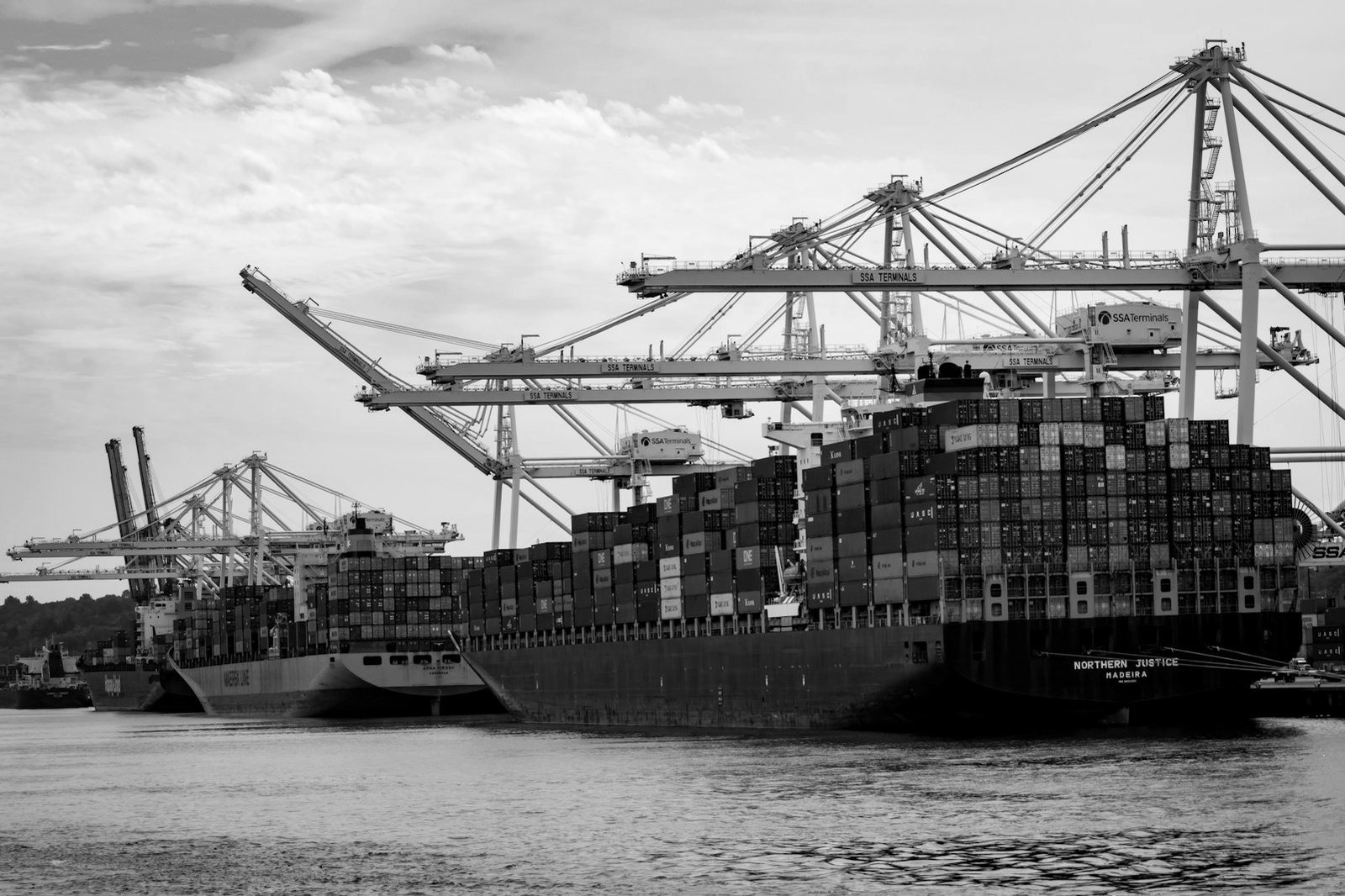
Summary: Bangladesh is scheduled to leave the least developed country category on 24 November 2026, but has requested a three-year extension of its preparatory period to 24 November 2029, which the UN General Assembly must decide. Graduation triggers three-year transition periods in the EU, UK and Japan, after which garment exporters face stricter EU origin rules and the loss of duty-free access unless they qualify for GSP+, while the TRIPS pharmaceutical waiver and LDC export-subsidy flexibility fall away.
Key point: Most preference schemes do not end on graduation day. The EU, the UK and Japan each give a graduating country about three years. The real cliff edge is the end of those transitions, and the conditions of the replacement regimes, especially EU GSP+, need to be met before that date, not after it.
At a glance
Date
Graduation set for 24 November 2026 under UN General Assembly resolution 76/8, with a three-year deferral to 2029 requested and pending.
European Union
Three-year EBA transition, then standard GSP or GSP+ under the new Regulation (EU) 2026/1395, with double-transformation origin rules for garments.
UK and Japan
Three-year transitions; the UK then moves Bangladesh to Enhanced Preferences and Japan's EPA offers a permanent route.
Pharmaceuticals
The WTO TRIPS waiver for LDC pharmaceutical patents runs to 2033 only for countries that remain LDCs.
Export support
Cash incentives have been cut in stages and must be phased out in line with WTO subsidy rules after graduation.
Table of Contents
LDC graduation Bangladesh: the timetable and the deferral request
Bangladesh met all three UN graduation criteria, income per head, the human assets index and the economic vulnerability index, at the 2018 and 2021 triennial reviews. On 24 November 2021 the General Assembly adopted resolution 76/8 on the graduation of Bangladesh, Lao PDR and Nepal, granting an exceptionally extended five-year preparatory period, rather than the standard three years, so the countries could plan their recovery from COVID-19.[1] [3] That period ends on 24 November 2026.
The February 2026 request
On 18 February 2026 the Economic Relations Division wrote, on behalf of the government, to the chair of the UN Committee for Development Policy asking for a three-year extension of the preparatory period to 24 November 2029, invoking the crisis-response provision of the enhanced monitoring mechanism.[2] The letter accepted that Bangladesh still meets all three criteria but argued that the preparatory period had been consumed by crisis management: the after-effects of COVID-19, the wars in Ukraine and the Middle East, financial sector irregularities, the July 2024 uprising and the cost of hosting displaced Myanmar nationals. It identified probable ineligibility for EU GSP+ on garments as a specific trade risk.[2]
The UN process so far
Bangladesh's Ministry of Finance announced on 2 June 2026 that the Committee for Development Policy had backed the request, with the committee chair stressing that the extra time must be used for financial-sector, revenue and productivity reforms and should not be treated as an opportunity to delay them.[3] Other accounts of the committee's assessment report that it favoured a shorter extension than the three years requested.[5] On 21 July 2026 the Economic and Social Council, by consensus, recommended that the General Assembly take a final decision on the Bangladesh and Nepal requests before 24 November 2026.[4]
As of mid-October 2026, published analysis still described the General Assembly decision as pending.[5] Businesses should therefore plan for two scenarios: graduation on 24 November 2026, with transition periods starting then, or a deferral that pushes every downstream date back by the period the Assembly grants.
Differing views on deferral
The request has divided opinion. BGMEA's president welcomed it as a positive step backed jointly by a group of business federations, arguing that extra time would help Bangladesh avoid rushing trade agreements on unfavourable terms. The executive director of the Centre for Policy Dialogue, Dr Fahmida Khatun, questioned whether an extension would be granted, noting that Bangladesh continues to meet all three thresholds.[2] The UN committee itself warned that any extension should not be viewed as an opportunity to delay reform.[3]
What LDC graduation Bangladesh changes in law
Leaving the LDC category is not itself a change to Bangladeshi law, and the duty-free status of most exports does not end on graduation day. Its effects arrive through the rules of other jurisdictions and international agreements that grant LDC-specific treatment. The four that matter most to business are preference schemes for exports, the rules of origin attached to them, the WTO TRIPS transition for pharmaceuticals and WTO disciplines on subsidies. Graduation also narrows access to a small number of concessional finance sources reserved for LDCs, although commentators note that it has little direct effect on most borrowing terms.[5]
Most of the trade consequences turn on a transition period rather than an immediate cut-off. The EU, the UK and Japan each give a graduating country about three years before LDC treatment ends.[8] [9] [7] That design gives the LDC graduation Bangladesh faces a staggered character: some obligations bite on graduation day, others years later.

The European Union: EBA, standard GSP and GSP+
The EU is Bangladesh's largest export market and takes more than half of its apparel exports.[7] As an LDC, Bangladesh exports to the EU duty-free and quota-free under Everything But Arms. After graduation it keeps EBA for a three-year transition, after which it must qualify for one of the other two tiers of the EU scheme.[7]
The new EU GSP Regulation
Those tiers are now set by Regulation (EU) 2026/1395 of 17 June 2026 on applying a generalised scheme of tariff preferences, which repeals Regulation (EU) No 978/2012, enters into force on 1 January 2027 and runs until 31 December 2036.[6] The European Parliament adopted its position on 28 April 2026, and the three-tier structure of EBA, standard GSP and GSP+ is retained.[7]
Why standard GSP offers little for garments
Standard GSP is automatic for low and lower-middle income countries but covers only part of the tariff schedule and gives a modest margin on apparel: a 12 per cent MFN duty falls only to 9.6 per cent. The new regulation also lowers the product-graduation threshold for HS chapters 61 and 62 from 47.2 per cent to 37 per cent of EU GSP imports in that section. With Bangladesh's share estimated at around half, its apparel would be graduated out of standard GSP to full MFN duties.[7]
GSP+ conditions
GSP+ removes duties on covered lines, including apparel, but is conditional. Under the new regulation the import-share vulnerability test is removed while the concentration test remains, under which the seven largest GSP product groups must make up at least 75 per cent of GSP-covered exports to the EU; Bangladesh is reported to meet it. The number of international conventions a GSP+ country must ratify and effectively implement rises from 27 to 32, with the Paris Agreement added.[7] In November 2025 Bangladesh became the first Asian country to ratify the full set of fundamental ILO conventions.[7]
The difficulty is the safeguard. GSP+ and standard GSP both carry an automatic safeguard where a beneficiary's covered exports in a product section exceed 37 per cent of EU GSP imports in that section. One analysis concludes that this threshold effectively rules out GSP+ for Bangladeshi apparel unless the EU grants relief, and that labour-rights monitoring creates a continuing risk of withdrawal.[7] Exporters should therefore treat GSP+ as a possible but uncertain outcome, not a planning assumption.
Double transformation
Rules of origin may matter as much as tariffs. Under EBA, garments benefit from a single-transformation rule. Outside EBA, apparel under HS chapters 61 and 62 qualifies only if both yarn-to-fabric and fabric-to-garment stages take place in the beneficiary country. Bangladesh imports about 60 per cent of its woven fabric, so much of its woven sector cannot meet double transformation without new upstream capacity or regional cumulation.[7]
The United Kingdom: DCTS Enhanced Preferences
The UK position is more favourable. Under the Developing Countries Trading Scheme, Bangladesh currently has tariff-free access for 99.8 per cent of its goods. On 19 August 2026 the British High Commission confirmed to the Commerce Secretary that existing access continues unchanged for three years after graduation, after which Bangladesh moves directly into the Enhanced Preferences tier, where 92 per cent of goods remain duty-free without renegotiation.[8]
Knitwear and woven garments keep their current access under Enhanced Preferences, and the UK's revised rules of origin do not require double transformation, giving garment exporters more flexibility to source inputs from other countries.[8] For many exporters the UK will therefore become relatively more attractive than the EU after the transition periods end.
Japan: a three-year extension and the EPA
Japan amended Article 8-2(3) of its Temporary Tariff Measures Law so that a graduated LDC can keep LDC preferential treatment for up to three years after graduation, and notified the WTO in November 2025.[9] On the original timetable that protection would run to around November 2029, after which garments would face a duty of about 9 per cent.[9]
The longer-term answer is the Japan-Bangladesh Economic Partnership Agreement, signed in Tokyo on 6 February 2026. It gives immediate duty-free access to 7,379 Bangladeshi products and allows single-stage transformation for garments, so apparel made from imported fabric can still qualify. Bangladesh reciprocates on 1,039 products, mostly over 18 years. The agreement still requires ratification before it enters into force.[10] Our overview of Bangladesh's trade agreements tracks it alongside other negotiations.
Other markets
Canada, Australia, China, India and other preference-granting countries apply their own LDC and developing-country schemes, each with its own transition and origin rules. Exporters to those markets should obtain a market-specific analysis rather than assume that the EU, UK or Japanese model applies.

LDC graduation Bangladesh: sector-by-sector impact
The effects are uneven across the economy, and a single national narrative hides the differences that matter to individual businesses. The analysis below draws together the market-by-market rules discussed above.
Ready-made garments
Garments carry the greatest exposure because they dominate exports and because the EU, the largest buyer, combines the strictest rules of origin with an uncertain route to GSP+. Knitwear producers that spin or knit fabric locally are better placed to meet double transformation than woven-garment producers relying on imported fabric.[7] For the UK, the transition and Enhanced Preferences leave garment access unchanged, and for Japan, the EPA's single-stage rule protects the existing model once the agreement applies.[8] [10]
Pharmaceuticals
Pharmaceutical producers face a different problem: not tariffs, but intellectual property. Their exposure depends on how many products in their portfolio are still covered by patents and whether those patents can be enforced in Bangladesh once the waiver ceases to apply.[13] Producers of off-patent generics face little legal change, while those making newer molecules need a licensing strategy.
Leather, jute, agro-processing and light engineering
These sectors have relied heavily on cash incentives, which in January 2026 ranged up to 10 per cent of shipment value for products such as leather goods, processed agricultural products, diversified jute goods and light engineering.[11] As those incentives fall away, their competitiveness will depend more on duty-free access abroad and on productivity at home. Exporters in these sectors should check origin rules carefully, because inputs such as chemicals, components and packaging are often imported.
Services and outsourcing
Services exports are generally less dependent on LDC tariff preferences, but service suppliers should watch the services schedules in new agreements such as the Japan EPA, which open sub-sectors on a negotiated basis rather than through unilateral preferences.
LDC graduation Bangladesh and foreign investors
For foreign investors, graduation changes the investment case in three ways. First, the duty-free access that made Bangladesh attractive as an export base becomes conditional on origin compliance and, in the EU, on GSP+. Investment decisions now need a market-by-market tariff model that runs beyond the transition periods. Second, the country's access to the most concessional external finance narrows. Bangladesh already lost access to the softest International Development Association terms after moving to lower-middle income status in July 2015, and recent loans carry higher interest with shorter grace and repayment periods.[5]
Third, fiscal pressure will shape policy. External debt servicing reached about US$4.5 billion in FY2025-26 and is projected by the Finance Division to rise to around US$7.6 billion by 2028-29, against revenue of about 8 per cent of GDP.[5] Investors should expect continued pressure to broaden the tax base, review incentives and tighten compliance, which argues for robust tax structuring and documented entitlement to any exemption claimed. Our guide to export law in Bangladesh covers the domestic export framework that sits alongside these changes.
Using the remaining preparatory period
Whether the preparatory period ends in November 2026 or later, investors planning new capacity should build graduation into feasibility studies now. That means pricing in the end of duty-free access where origin rules cannot be met, choosing locations and suppliers that support compliance, and negotiating contracts with buyers that share the risk of a change in tariff treatment.
Pharmaceuticals and the end of the TRIPS waiver
The LDC graduation Bangladesh is preparing for has its sharpest legal edge in pharmaceuticals. On 6 November 2015 the WTO TRIPS Council extended the transition period under which LDCs need not protect patents on pharmaceutical products until 1 January 2033.[14] The flexibility belongs to LDC members, and reporting on Bangladesh's position anticipates that after graduation the country must comply with global patent rules for pharmaceuticals. A proposal by LDCs to extend the waiver for graduating countries has been described as having slim prospects.[13]
Why it matters to the industry
Local companies supply about 98 per cent of Bangladesh's domestic medicine needs, and pharmaceutical exports reached more than 160 countries in FY2024-25, earning US$213 million. A Centre for Policy Dialogue analyst estimates that around 20 per cent of drugs manufactured in Bangladesh are still under patent elsewhere.[13] For those products, manufacture without a licence after the waiver ends would expose producers to infringement claims, while generics whose patents have expired are largely unaffected.[13]
Bangladesh's Patents Act 2023 currently lists pharmaceutical and agrochemical products among non-patentable subject matter in section 4, an exclusion commentators link to the LDC waiver, and it contains compulsory licensing provisions in section 36.[12] Both will come under pressure once the waiver no longer applies. Manufacturers should audit their portfolios now, identify products that may be covered by patents filed in Bangladesh, and plan voluntary licences, design-arounds or product switches. Our guides to patent registration in Bangladesh and pharmaceutical company registration cover the regulatory side.
Export subsidies and cash incentives
Bangladesh has long supported exporters with cash incentives paid through banks under Bangladesh Bank circulars. WTO rules require a country graduating from LDC status to phase out direct export subsidies gradually, and incentives were cut twice in 2024 in line with that objective. In January 2026 the government nevertheless extended incentives for 43 sectors through June 2026, at rates from 0.30 to 10 per cent, citing economic pressures including possible US tariffs and Indian land-port restrictions.[11]
For exporters, the lesson is that cash incentives are a declining, discretionary benefit. Any business model that depends on them should be stress-tested against their withdrawal, and claims should be documented carefully because incentive schemes attract audit after the fact. Check the current Bangladesh Bank circular for each financial year rather than assuming last year's rates continue.
The smooth transition strategy
Bangladesh's Smooth Transition Strategy was prepared with UN DESA support and is overseen by a steering committee chaired by the head of government. The government's own deferral letter acknowledged that several of its priority actions had not been fully implemented.[2] The UN committee welcomed the strategy but tied any extension to progress on financial-sector stability, revenue mobilisation, productive capacity and diversification.[3]
For businesses the strategy matters less as a document than as a signal of policy direction: more trade agreements, more emphasis on compliance with labour and environmental standards, a gradual retreat from subsidies and a push for export diversification. The LDC graduation Bangladesh is undergoing will reward companies that adapt to that direction early. Our analysis of the WTO's impact on Bangladesh trade sets out the multilateral context.
What businesses should do now
The uncertainty over the General Assembly decision is not a reason to wait. The following steps protect exporters and investors under either scenario.
Plan for both dates
Model graduation on 24 November 2026 and a deferral to 2029, and identify every transition end-date that follows from each.
Map products to markets
List each export line by destination and record the current preference, the post-transition regime and the MFN rate.
Test the origin rules
Check each product against EU double transformation, UK rules and Japan's single-stage rule, and fix gaps in sourcing.
Reprice and recontract
Add duty-allocation, price-review and origin-warranty clauses to contracts running beyond the transition periods.
Strengthen compliance records
Document labour, safety and environmental compliance to the standard buyers and GSP+ monitoring will expect.
Audit patent exposure
Pharmaceutical producers should identify products still under patent and plan licences or alternatives.
Reduce subsidy dependence
Stress-test margins against withdrawal of cash incentives and keep incentive claims audit-ready.
Use the new agreements
Prepare documentation to claim preferences under the Japan EPA and future agreements as soon as they apply.
Contracts and pricing
Supply contracts running into 2027 and beyond should identify which preference regime the price assumes, allocate the risk of a duty increase, and include a price-review or termination mechanism tied to objective events such as the end of a transition period or loss of a preference. Buyers increasingly require origin warranties and indemnities; exporters should limit them to facts within their control and to duty and penalties actually assessed.
Compliance for GSP+ and buyers
GSP+ eligibility depends on Bangladesh's implementation of the listed conventions, and EU monitoring will draw on evidence from factories. Labour law compliance, freedom of association, occupational safety and environmental permits are therefore commercial issues, not only regulatory ones. Our guides to labour law compliance and environmental compliance in Bangladesh set out the domestic requirements.
Rules of origin planning
Map each product's inputs against the EU double-transformation rule, the UK's more flexible rules and Japan's single-stage rule. Where the EU rule cannot be met, decide whether to invest in fabric capacity, change sourcing, shift volume to markets with more flexible rules of origin, or accept MFN duty in the price. Keep origin records for the full retention period each scheme requires.
A board-level agenda for the transition
The LDC graduation Bangladesh is working through is a multi-year legal transition, and it belongs on the board agenda rather than only in the export department. Boards of exporters and foreign-owned manufacturers should ask management for four things before the end of 2026.
First, a tariff exposure map showing, for each major product and market, the duty payable today, at the end of each transition period and under the best available alternative regime. Second, an origin compliance assessment identifying which products meet the rules of origin of each scheme and what it would cost to close any gap. Third, a contract review listing supply agreements that run beyond the transition periods and whether they allocate the risk of a duty increase. Fourth, a compliance evidence file on labour, safety and environmental standards that a buyer, auditor or EU monitoring mission could rely on.
Management should also report on dependencies that graduation weakens: reliance on cash incentives, reliance on patented molecules in pharmaceutical portfolios, and reliance on a single market whose preferences are at risk. None of these requires waiting for the General Assembly. Each can be quantified now and revisited once the date of graduation is known, so the company is ready to act on the day the outcome is announced.
Comparing the main markets after graduation
The table below summarises the position in the principal markets. On a phone, scroll it sideways.
| Market | Current regime | Transition | After transition | Garment origin rule |
|---|---|---|---|---|
| European Union | Everything But Arms | Three years | Standard GSP or GSP+ under Regulation (EU) 2026/1395 | Double transformation |
| United Kingdom | DCTS, 99.8% tariff-free | Three years | Enhanced Preferences, 92% of goods duty-free | No double transformation |
| Japan | LDC preferences | Up to three years | EPA once in force, otherwise GSP or MFN | Single-stage under the EPA |
| Pharmaceuticals (WTO) | TRIPS LDC waiver to 2033 | Tied to LDC status | Patent obligations apply | Not applicable |
| Export incentives | Cash incentives under circulars | Phased reduction | Must conform to WTO subsidy rules | Not applicable |
The bodies that will shape the outcome are set out below.
Committee for Development Policy
Assesses graduation readiness and extension requests and advises ECOSOC.
ECOSOC and the General Assembly
ECOSOC refers recommendations; the General Assembly decides graduation and any deferral.
Economic Relations Division
Leads graduation diplomacy and the Smooth Transition Strategy.
European Commission
Administers EBA, standard GSP and GSP+ under Regulation (EU) 2026/1395.
WTO
Sets TRIPS and subsidy rules, including the LDC pharmaceutical waiver.
BGMEA
Represents garment exporters and backed the deferral request.

Mistakes to avoid in LDC graduation Bangladesh planning
- Treating graduation day as the cliff edge: the decisive dates are the ends of the three-year transitions in each market.
- Assuming EU preferences will survive: the EU safeguard threshold and convention monitoring make it uncertain for apparel.[7]
- Ignoring rules of origin: a tariff preference is worthless if the product cannot meet double transformation.
- Relying on cash incentives: they are being phased down and depend on annual circulars.[11]
- Leaving patent exposure unmapped: pharmaceutical producers need a product-by-product view before the TRIPS waiver ceases to apply.
- Signing long contracts without a duty clause: price, origin warranties and termination rights must reflect the transition timetable.
- Waiting for the deferral decision: the preparatory steps are the same whichever way the General Assembly decides.
Outlook for the rest of 2026
The next few weeks will settle whether the LDC graduation Bangladesh has prepared for takes effect on 24 November 2026 or is deferred. Either way, the new EU GSP Regulation applies from 1 January 2027, the UK and Japanese transitions are defined, and the Japan EPA awaits entry into force.[6] [8] [10] Companies that use the remaining preparatory period to fix their origin chains, contracts, compliance records and patent positions will carry their margins through the transition. For advice on any of these steps, explore our international trade practice, our WTO and trade dispute practice, or contact TRW in Dhaka.
Frequently asked questions
When does Bangladesh graduate from LDC status?
Has the UN approved the deferral?
Will Bangladesh lose EU duty-free access immediately?
No. Everything But Arms continues for a three-year transition after graduation, after which Bangladesh must qualify for standard GSP or GSP+ under the new EU regulation.[7]
Can Bangladesh qualify for EU GSP+?
Possibly. It must ratify and effectively implement 32 conventions and meet the concentration test, but the 37 per cent apparel safeguard threshold makes GSP+ for garments uncertain.[7]
What are the EU rules of origin for garments after graduation?
Outside EBA, apparel in HS chapters 61 and 62 generally needs double transformation, meaning both fabric and garment production in the beneficiary country.[7]
What happens to UK market access?
Existing DCTS access continues for three years after graduation. Bangladesh then moves to Enhanced Preferences, with 92 per cent of goods duty-free and garments unchanged, without a double-transformation requirement.[8]
What about Japan?
How does graduation affect pharmaceutical companies?
Will export cash incentives continue?
They have been reduced in stages and were extended for 43 sectors only through June 2026. WTO rules require their gradual phase-out after graduation, so check each year's Bangladesh Bank circular.[11]
What should exporters do first?
Map every product against each market's tariff and origin rules, update contracts to allocate duty risk, and strengthen labour and environmental compliance records that buyers and GSP+ monitoring will examine.
Source register
Primary legal and regulatory sources
Materials checked on 23 October 2026. Confirm the current official text before relying on any provision.
- UN DESA — Graduation of Bangladesh, Lao PDR and Nepal from the LDC category (A/RES/76/8)
- The Business Standard, February 2026 — Bangladesh seeks 3-year deferral of LDC graduation
- Prothom Alo, June 2026 — UN CDP supports 3-year delay to Bangladesh's LDC graduation
- The Daily Star, July 2026 — UN body refers Bangladesh's 3-year LDC extension request to General Assembly
- East Asia Forum, 13 October 2026 — Bangladesh's LDC graduation comes with a bill
- EUR-Lex — Regulation (EU) 2026/1395 on applying a generalised scheme of tariff preferences
- The Daily Star — EU GSP rules and Bangladesh's RMG
- The Daily Star, 20 August 2026 — UK market to remain open for Bangladesh in post-LDC era
- The Financial Express, 11 November 2025 — Bangladesh to get duty-free access to Japan market for 3 years after graduation
- The Daily Star, February 2026 — Japan EPA to cost Bangladesh Tk 20cr annually
- Dhaka Tribune, 14 January 2026 — Govt extends export incentives for 43 sectors
- Dhaka Law Review, May 2025 — Patent law and innovation: analysing the Bangladesh Patents Act 2023
- The Daily Star, August 2025 — The end of exemption?
- Intellectual Property Watch, 6 November 2015 — LDC pharma IP waiver until 2033 approved by WTO TRIPS Council
Related TRW assistance
Move from information to a defined next step
TRW advises exporters, manufacturers and investors on preference planning, rules of origin, trade agreements, pharmaceutical IP and WTO issues. Explore our international trade practice and WTO and trade dispute practice, or contact TRW in Dhaka.