
TRW Insight / Bangladesh
Environmental clearance is only the start. Annual renewals, continuously running treatment plants, sampling-based inspections, compensation hearings and personal liability for directors now define what it means to operate lawfully in Bangladesh.
Environmental compliance Bangladesh operators face in 2026: life after the ECC
Environmental compliance Bangladesh regulators expect from industry does not end when the environmental clearance certificate is issued. That is where it starts. Once a plant is running, the Department of Environment can inspect it without warning, take samples that are admissible as evidence, order an effluent treatment plant to be rebuilt, assess compensation for damage, cut gas and electricity, and prosecute the directors personally. The clearance is a conditional, time-limited permission, and every condition attached to it is an obligation that can be checked, tested and enforced.
This guide is written for operators, not applicants. It assumes the clearance has been obtained (our separate guides cover environmental impact assessment and the wider framework of environmental law in Bangladesh) and concentrates on what happens next: keeping the certificate valid, running treatment systems, monitoring and record-keeping, handling inspections, responding to enforcement, the penalty exposure for companies and directors, and how the Invest Bangladesh Act 2026 affects factories inside industrial zones.
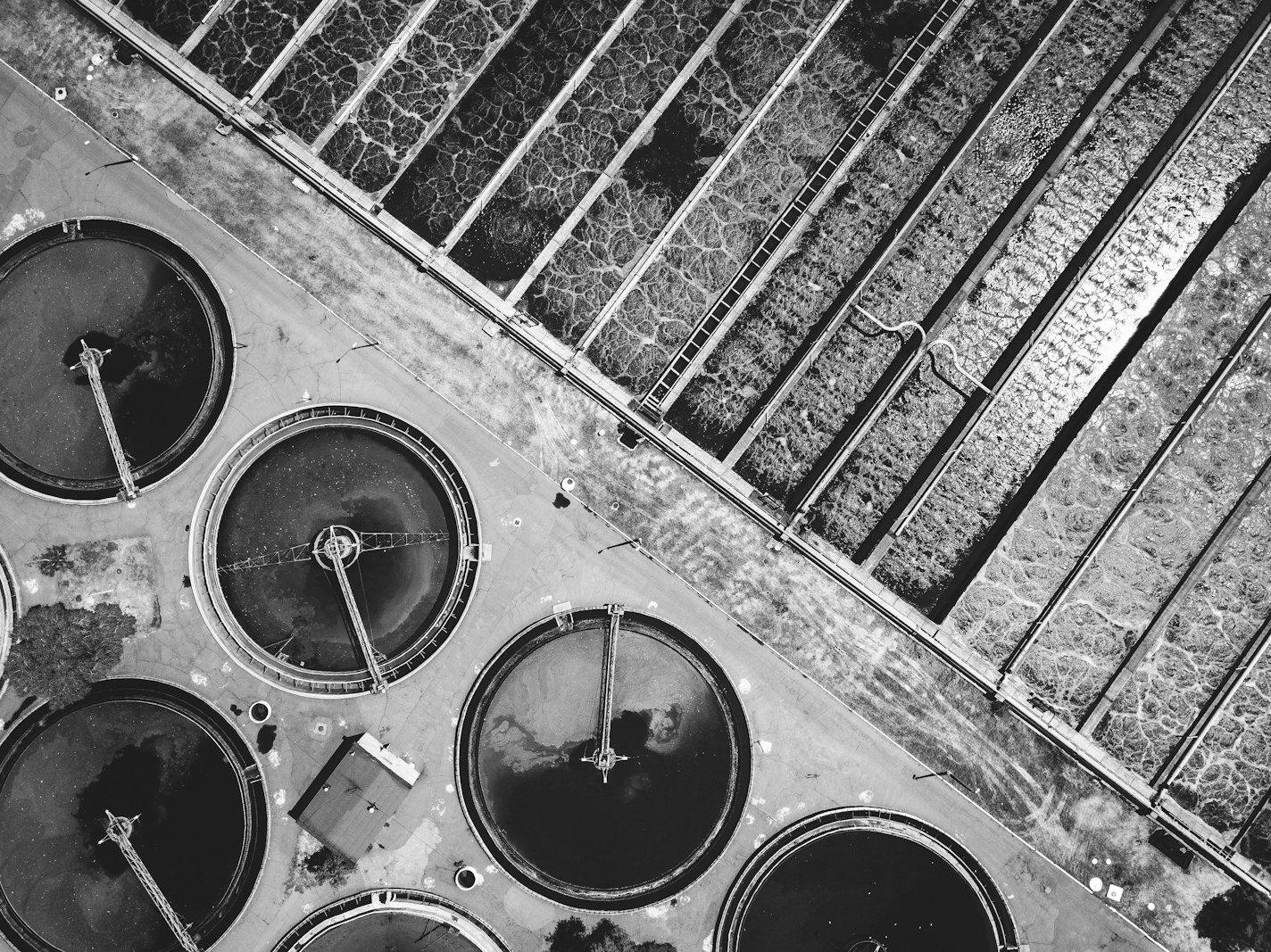
Summary: After clearance, a Bangladeshi industrial unit must keep its certificate renewed on a one-, two- or five-year cycle depending on category, run its effluent treatment plant continuously and within standards, monitor and document its discharges, emissions and waste, cooperate with inspections and sampling, and notify the Department of Environment of any excess discharge. Breaches lead to directions, compensation orders, utility disconnection, mobile court fines and criminal liability for directors.
Key point: Orange and Red category certificates are valid for only one year, and renewal should be applied for at least 30 days before expiry. A lapsed certificate puts an operating plant in the same position as one that never had clearance, with exposure of two to five years' imprisonment, a fine of Tk 1 lakh to Tk 5 lakh, or both.[1] [3] [4]
At a glance
Renewal cycle
Green certificates last five years, Yellow two, and Orange and Red one year, so most manufacturers renew annually.
Treatment plants
Liquid-waste dischargers must run their effluent treatment plant at all times, with qualified staff and, where required, flow meters and continuous monitoring.
Inspection powers
Authorised officers may enter, inspect records, sample air, water and soil, and seize evidence under sections 10 and 11 of the 1995 Act.
Compensation
The Department of Environment imposed about Tk 622.8 crore in compensation on 18,617 establishments between 2010 and March 2026.
Personal liability
Owners, directors and managers are deemed guilty of a company's environmental offence unless they prove lack of knowledge or due diligence.
Table of Contents
What environmental compliance Bangladesh law requires after clearance
The Bangladesh Environment Conservation Act 1995 is built around a single gateway: no industrial unit may be established and no project undertaken in any area without environmental clearance from the Director General of the Department of Environment, and any expansion needs clearance too.[1] Most commentary stops there. In practice, the larger body of obligations applies afterwards, while the plant operates, and it is these obligations that generate most enforcement action, compensation orders and prosecutions.
The environmental compliance Bangladesh imposes on an operating unit draws on three sources. The first is the Act itself, which gives the Director General power to issue binding directions, to inspect and sample, to order compensation and to require immediate action on excess discharges.[1] The second is the Environment Conservation Rules 2023, which set the clearance categories, certificate validity and renewal procedure, water-quality and liquid-waste standards, and requirements for effluent and sewage treatment plants.[2] [3] The third is the conditions written into each environmental clearance certificate, which translate the general law into plant-specific duties.
Ongoing obligations, not a one-off permit
A useful way to think about the certificate is as a licence with a running scorecard. Each renewal is effectively a fresh review of whether the conditions have been met, and the renewal decision for most categories follows a site visit.[3] Between renewals, the Department can act at any time on an inspection, a complaint, a sample result or a press report. Every condition that cannot be evidenced from the plant's own records is a condition the operator may be unable to prove it complied with.
Who carries the obligation
The Act places duties on several people at once. Where pollutants are discharged beyond prescribed limits, both the person responsible for the discharge and the occupier of the place where it happens must control and mitigate the pollution and notify the Director General immediately.[1] Section 16 then extends criminal liability for any company offence to every owner, director, manager, secretary or other officer, unless the individual proves the breach occurred without their knowledge or that they made every reasonable effort to prevent it.[1] Landlords of industrial premises, tenants, contract manufacturers and buyers of going concerns should therefore each map where their own exposure lies.
Keeping the environmental clearance certificate valid
The single most common avoidable breach of environmental compliance Bangladesh operators commit is allowing the certificate to lapse. Under the 2023 Rules, environmental clearance certificates for Green category units are valid for five years, for Yellow units two years, and for Orange and Red units one year, with renewal on the same cycle.[3] [4] Since most textile, dyeing, washing, tannery, chemical, pharmaceutical, steel and power projects sit in the Orange or Red categories, annual renewal is the norm for heavy industry.
The renewal process
Renewal should be applied for at least 30 days before the current certificate expires, using the prescribed renewal form and fee.[3] [4] For Green and Yellow units, the relevant Department of Environment office renews the certificate after a site visit if the conditions are met. For Orange and Red units, the file is forwarded to the metropolitan, divisional or regional office for decision.[3] Applications are filed through the Department's online clearance system; our note on DOE environmental clearance sources maps the official forms and portals.
What renewal is really testing
A renewal file is only as strong as the evidence behind it. Officers will typically want current effluent and emission test reports, evidence that the effluent treatment plant has been running, chemical and waste records, fire and safety documents relevant to environmental risk, and an explanation for any past notice or hearing. A plant that has spent the year without monitoring data is effectively asking for renewal on trust, which is not how the Department approaches Orange and Red units.
Expansion, process change and transfer of ownership
Because section 12 requires clearance for expansion as well as establishment, adding production lines, increasing capacity, introducing a new chemical process or building a new block may require a fresh or amended clearance rather than a simple renewal.[1] The 2023 Rules also contain a procedure for transfer of ownership of a cleared unit.[3] In acquisitions, the certificate should be checked for the correct legal owner, address, capacity and product mix; mismatches are frequently discovered only when the buyer tries to renew. Our analysis of liabilities when buying an existing factory in Bangladesh covers the diligence in more detail.
Location matters after clearance too
A clearance obtained years ago does not insulate a plant from later area-wide measures. When the Department declared Savar upazila a degraded air shed under rule 5 of the Air Pollution (Control) Rules 2022 in August 2025, it halted the issue of location and environmental clearances for new industries that may cause air pollution and banned open burning of solid waste in the area.[10] Existing operators in such an area should expect closer scrutiny of emissions at renewal and any planned expansion to be harder to clear.

Effluent treatment plant obligations
For water-intensive industries, the effluent treatment plant is the centre of environmental compliance Bangladesh enforcement. The 2023 Rules set water-quality standards and liquid-waste discharge standards in rules 31 and 32, and rule 33 governs the construction, approval and operation of liquid-waste and sewage treatment plants for industrial units and projects.[2]
Design, approval and staffing
An effluent treatment plant must be built according to sound engineering practice, and the Director General may order its machinery to be renovated, altered or replaced if performance falls short. The plant must be run by suitably qualified technical staff, and the staffing structure and qualifications are to be submitted to and approved by the Department of Environment.[4] For Red and relevant Orange projects, the clearance committee structure also reviews effluent treatment and air-pollution control systems before approval.[3] A treatment plant designed for one production volume rarely copes with a doubled one, so capacity reviews should precede any expansion.
Running the plant at all times
The legal duty is not merely to own a treatment plant but to operate it continuously. Between 13 and 22 February 2025, the Department issued final notices to 2,046 factories in Dhaka, Gazipur, Narayanganj and Narsingdi directing them to keep their effluent treatment plants operational at all times, and to run sewage treatment plants where they generate sewage, warning of strict legal action for non-compliance.[5] The notices relied on the 1995 Act and the 2023 Rules, under which factories discharging liquid waste must run treatment plants.[5]
Flow meters, continuous monitoring and cameras
Where liquid waste is discharged into surface or inland water, the operator must install flow meters, automated sampling devices and continuous monitoring equipment at its own cost.[4] Enforcement is moving in the same direction. In July 2026, the Director General of the Department of Environment, Dr Md Lutfor Rahman, said the government plans to bring the treatment plants of liquid-waste-discharging industries under online monitoring and to install IP cameras in pollution-prone areas, as part of a drive to clean the Buriganga, where 307 waste outlets have been identified.[6] Operators should assume that gaps in flow and quality data will be visible to the regulator.
Bypass, sludge and the cost of getting it wrong
The leading example of what goes wrong is the July 2023 hearing against Chittagong Waste Treatment Plants Limited in the Chattogram Export Processing Zone. The Department found that untreated liquid waste was being bypassed from the inlet, that outlet samples exceeded standards for total dissolved solids, chemical oxygen demand and biochemical oxygen demand, that sludge management standards had not been met for months, and that an IP camera had not been installed despite repeated requests. It imposed compensation of Tk 2.59 crore.[7] Every one of those failures was a documentation or operational issue that a functioning compliance system would have caught.
Excess discharge: the duty to report
If a discharge exceeds prescribed limits, whether through a breakdown, a power cut or a process upset, section 9 requires the person responsible and the occupier to control and mitigate the pollution and to inform the Director General immediately. The Director General may direct remedial action, the cost can be recovered as a public demand, and a rapid test showing an exceedance is admissible in evidence.[1] Breach of section 9 carries one to two years' imprisonment, a fine of Tk 50,000 to Tk 2 lakh, or both, for a first offence.[1] Self-reporting is therefore both a legal duty and the best mitigation available.
Air, waste, plastics and other operating duties
Liquid effluent is the most visible issue, but the environmental compliance Bangladesh requires of a modern plant covers several other streams, each with its own rules and, increasingly, its own registration and reporting cycle.
Air emissions
Stack emissions, boilers, generators and fugitive dust are governed by the standards made under the 1995 Act and by the Air Pollution (Control) Rules 2022. The degraded air shed mechanism shows how air-quality enforcement now works geographically: a single declaration can restrict kiln technologies, ban open burning and freeze new clearances for polluting industries across an upazila.[10] Boiler and generator emissions should be tested on the schedule set by the clearance conditions, and the results filed.
Hazardous waste and e-waste
Section 6C of the Act restricts the production, import, storage, loading, transport and handling of hazardous waste, and breach of the rules made under it carries up to two years' imprisonment, a fine of up to Tk 2 lakh, or both, rising to two to ten years or Tk 2 lakh to Tk 10 lakh for repeat offences.[1] Chemical containers, spent solvents, sludge and contaminated packaging should be tracked from generation to authorised disposal.
Electronics businesses carry an additional layer. Under the Hazardous Waste (E-waste) Management Rules 2021, manufacturers, assemblers, importers, traders, recyclers and others in the electronics chain must register with the Department, and manufacturers and large importers face collection targets rising from 10 per cent in year one to 50 per cent from year five, with annual reports to the Department.[12]
Plastic packaging and the 2026 EPR guidelines
The extended producer responsibility guidelines published in the gazette on 13 August 2026 under section 13 of the 1995 Act add a new compliance cycle for producers, importers and brand owners of plastic products, excluding industries producing solely against export orders.[11] Once listed by the Department, an obligated entity must register within six months, registration lasts three years, and annual progress reports are required; registration cannot be renewed without them. Collection and recycling targets start at 15 and 7.5 per cent for the first two years and rise to 30 and 15 per cent, and the Department may inspect, audit, suspend or cancel registrations and take action over false information.[11] Large industries will be listed first.
Noise, chemicals and occupational overlap
Noise controls, chemical storage and fire safety overlap with labour and building law. They are often inspected by different agencies on different days, but a single incident such as a chemical spill or fire can trigger environmental, labour and criminal proceedings at once. Integrated environment, health and safety management, with one register and one owner, is the efficient answer. TRW's occupational safety and health governance practice works alongside our environmental team on these overlaps.
Monitoring, reporting and record-keeping
Bangladesh does not have a single statutory self-reporting return that applies to every factory. Instead, monitoring and reporting duties come from the clearance conditions, the environmental management plan approved with the clearance, the standards in the 2023 Rules, the section 9 duty to report exceedances, and the sector registrations described above.[1] [2] [3] The practical consequence is that each plant must build its own monitoring programme from its own documents.
What a regulator-ready compliance file contains
- The current certificate, every previous certificate, all renewal applications and fee receipts, and the approved environmental management plan.
- Effluent and emission test reports from accredited laboratories, at the frequency the conditions require, plotted against the applicable standards.
- Effluent treatment plant logbooks: flow readings, chemical dosing, power consumption, downtime and its causes, sludge generation and disposal manifests.
- Hazardous waste, e-waste and plastic records showing quantities, contractors, transport and final disposal, together with any registrations.
- Every notice, direction, hearing record and compensation order, with evidence of the corrective action taken.
Monitoring for an operating Red project
For Red category projects in operation, the Department may require the proponent to revise its environmental impact assessment on the basis of monitoring reports and environmental or social concerns.[3] Monitoring data is therefore not only evidence of past compliance; it can trigger a reassessment of the project. Material changes in pollution load, complaints from neighbours or a pattern of exceedances should be escalated to management and to counsel before they reach the Department.
Complaints from neighbours
Under rule 3 of the 2023 Rules, a person who has suffered loss from pollution may apply to the Department for relief, and the application is to be disposed of within 30 working days.[2] For an operator, that means a farmer, fish-farm owner or neighbouring factory can put an allegation on the regulator's file quickly. Keeping data that can answer such a complaint within days is the best protection.
Buyer, lender and investor reporting
Export manufacturers face a parallel monitoring regime from international brands, development finance institutions and lenders, who commonly require wastewater testing, chemical management and corrective action plans. These requirements are contractual rather than statutory, but a failed brand audit often precedes a regulatory problem, and the data overlap almost entirely. Aligning the two programmes avoids paying twice for the same tests.
Department of Environment inspections and sampling
Inspections are where the theory of environmental compliance Bangladesh meets the factory floor. The Act gives authorised officers broad powers, but it also sets procedural rules that matter when evidence is later used against the company.
Powers of entry and the duty to assist
Under section 10, an authorised officer may enter any place at a reasonable time, inspect work, examine equipment, documents and records, search where an offence is reasonably believed to have been committed, and seize evidence; searches and seizures follow the Code of Criminal Procedure 1898.[1] The occupier of an industrial unit or a site handling hazardous substances must give full assistance. Failing to assist without reasonable cause carries one to three years' imprisonment, a fine of Tk 50,000 to Tk 3 lakh, or both, and obstructing an officer is separately punishable.[1]
How sampling must be done
Section 11 lets officers take samples of air, water, soil or other substances. The officer must give the occupier notice, take the sample in the occupier's presence, seal it and prepare a signed report; if the occupier is absent or refuses to sign, the officer signs in the presence of two witnesses and records the refusal.[1] Sample and laboratory reports are admissible as evidence.[1] The 2023 Rules prescribe a format for the notice to an owner, occupier or agent before samples are collected.[2]
Handling an inspection in practice
Every plant should have a written inspection protocol. Designate a trained responder on every shift, verify the officers' authority, accompany them throughout, and ask for a split or duplicate sample so the company can commission an independent test. Record which points were sampled, at what time and under what operating conditions. Never refuse entry or obstruct, but do not volunteer speculation; answer factual questions and produce documents that are requested. Within 24 hours, brief management and counsel, and start preparing the response to any notice that is likely to follow.
Enforcement: directions, hearings and compensation
Enforcement in Bangladesh is primarily administrative. Most companies meet the Department of Environment in a hearing room or through a mobile court long before they meet a judge, and the administrative stage often decides the outcome.
Directions and closure
Section 4 allows the Director General to issue written directions to any person, including directions to close, prohibit or regulate a factory, enterprise or process. Before ordering closure, the Director General must give written notice allowing time to comply, but may act immediately where there is an emergency threatening public life. Deadlines for compliance can be imposed.[1] Breach of a direction carries one to two years' imprisonment or a fine of Tk 50,000 to Tk 2 lakh for a first offence, rising to two to ten years or Tk 2 lakh to Tk 10 lakh for repeat offences.[1]
Operating without clearance
Where a unit is found operating without a valid certificate, the 2023 Rules provide for a show-cause notice giving 10 working days to respond, followed by a hearing within 7 working days. If the explanation is unsatisfactory, operations are halted and utilities may be disconnected; reopening requires a fresh application with an environmental management plan and fee.[3] The Director General can also assess environmental damage and impose compensation, with non-payment or failure to remediate leading to proceedings under section 7 of the Act.[3] Failure to pay assessed compensation can also lead to suspension or cancellation of existing licences.[4]
Compensation under section 7
Section 7 is the Department's main financial tool. Where an act or omission damages the ecosystem or any person or group, the Director General may assess the damage and order compensation, corrective measures or both, may appoint experts to assess damage, and may file civil or criminal proceedings if compensation is not paid.[1] The scale is significant. In Parliament on 29 April 2026, Environment Minister Abdul Awal Mintoo said the Department had imposed Tk 6.228 billion in compensation on 18,617 polluting establishments between 13 July 2010 and 31 March 2026, of which only 47.52 per cent had been realised.[8] Low realisation reflects appeals and litigation, not leniency; unpaid orders remain live liabilities.
Mobile courts
Mobile courts, run by executive magistrates alongside Department officers, impose on-the-spot fines and closure orders. Between 2 January and 28 April 2025, 819 mobile court operations filed 1,755 cases and imposed Tk 24.6 crore in fines, while also dismantling illegal tyre pyrolysis and lead-battery recycling units.[9] A mobile court fine closes the immediate case, but it does not cure the underlying breach, and a repeat finding moves the company into the heavier second-offence penalty bands.
Penalties for environmental non-compliance
Section 15 of the 1995 Act, as substituted in 2010, sets penalties offence by offence. The table below focuses on the breaches most relevant to operating plants; the full list includes ecologically critical areas, hill cutting, ship breaking, water bodies and vehicle emissions.[1]
| Breach | Provision | First offence | Repeat offence |
|---|---|---|---|
| Operating or expanding without clearance | Section 12 | 2 to 5 years, Tk 1 lakh to Tk 5 lakh, or both | Not separately specified |
| Disobeying a Director General direction | Section 4 | 1 to 2 years, Tk 50,000 to Tk 2 lakh, or both | 2 to 10 years, Tk 2 lakh to Tk 10 lakh, or both |
| Disobeying a compensation or corrective order | Section 7 | 1 to 2 years, Tk 50,000 to Tk 2 lakh, or both | 2 to 10 years, Tk 2 lakh to Tk 10 lakh, or both |
| Excess discharge, failure to report or remediate | Section 9 | 1 to 2 years, Tk 50,000 to Tk 2 lakh, or both | 2 to 10 years, Tk 2 lakh to Tk 10 lakh, or both |
| Failing to assist an inspecting officer | Section 10 | 1 to 3 years, Tk 50,000 to Tk 3 lakh, or both | Not separately specified |
| Breach of hazardous waste rules | Section 6C | Up to 2 years, up to Tk 2 lakh, or both | 2 to 10 years, Tk 2 lakh to Tk 10 lakh, or both |
| Other breaches or obstruction | Section 15, item 13 | Up to 3 years, up to Tk 5 lakh, or both | Not separately specified |
Rule-based offences and repeat offending
Section 15(2) allows rules to create further offences, with penalties capped at two years' imprisonment, a fine of Tk 2 lakh, or both.[1] For most operational breaches, the Act doubles down on repetition: second and subsequent offences carry minimum imprisonment of two years and fines of up to Tk 10 lakh. A company with an earlier mobile court conviction or an unresolved direction is therefore in a very different position from a first-time offender, and that history should be reviewed before any new hearing.
Directors and managers
Section 16 is what turns environmental compliance into a board issue. Where a company commits an offence, each owner, director, manager, secretary or other officer is treated as liable unless they prove the offence was committed without their knowledge or that they made every reasonable effort to prevent it. The company itself may be prosecuted, but only a fine may be imposed on it, so imprisonment risk falls on individuals.[1] The defence of reasonable effort is evidential: board minutes, budgets approved for treatment plants, monitoring reports and documented responses to notices are what make it available. Our guide to corporate governance and directors' duties in Bangladesh explains how this fits into wider board oversight.
Collateral consequences
The financial and commercial consequences often exceed the statutory fine. Utility disconnection stops production; suspension of licences halts exports; compensation orders sit on the company's books; lenders treat environmental breach as an event of default; and brands may suspend orders. Anyone harmed by a breach, or the Director General on their behalf, may also claim compensation under section 15A.[1]
Challenging a Department of Environment order
A notice, order or direction can be appealed under section 14 to the appellate authority constituted by the government within 30 days, extendable by up to 30 more days for unavoidable reasons. The appeal must be decided within three months, and the appellate decision is final.[1] Appellants against compensation orders must also deposit 25 per cent of the compensation with the treasury in advance.[8]
The appeal backlog
The appellate system has struggled. Before the elected government took office in February 2026, 577 appeals were pending before the appellate authority; after the minister ordered faster resolution, the backlog fell below 450 by May 2026.[8] Operators should expect decisions to move faster than in previous years and should not rely on delay as a strategy.
Writ petitions
Some companies bypass the appellate authority and file writ petitions in the High Court Division, which may stay a compensation order until the court rules.[8] The writ route is appropriate where the Department acted without jurisdiction, ignored natural justice or failed to give reasons, but it is not a substitute for addressing a real pollution problem, and the court can impose compliance directions of its own. Our guide to writ petitions in Bangladesh explains the procedure.

Industrial zones and the Invest Bangladesh Act 2026
Many manufacturers operate inside economic zones, export processing zones, hi-tech parks or private industrial parks, and assume that the zone authority handles environmental matters. That assumption is only partly right.
What changed in August 2026
The Invest Bangladesh Act 2026 (Act No. 104 of 2026), dated 16 July 2026, came into force on 20 August 2026.[13] It repealed the Bangladesh Investment Development Authority Act 2016, the Bangladesh Economic Zones Act 2010, the Bangladesh Public-Private Partnership Act 2015 and the One-Stop Service Act 2018, and brought approvals, registration, incentives and zones under a single framework administered by Invest Bangladesh.[14]
The Act defines an industrial zone to include existing economic zones, free trade zones and private export processing zones, makes the Authority responsible for meeting environmental, social and economic commitments in industrial zones, and requires clearances, certificates and permits to be issued through a single digital platform.[13] It also contemplates zones dedicated to green industry, renewable energy and waste management and recycling.[13]
Department of Environment standards still apply
None of this displaces the 1995 Act. Section 12 requires environmental clearance for industries in any area, and the standards, inspection powers and penalties apply equally inside and outside zones.[1] A single digital window changes how an application is submitted, not who decides it or what standards apply. Former economic zone units now deal with Invest Bangladesh for zone services, while government export processing zones under BEPZA, whose statute was not among those repealed, continue under their existing arrangements.[14] The Chattogram Export Processing Zone compensation case shows that zone location gives no immunity from Department enforcement.[7] Our analysis of the Invest Bangladesh Act 2026 industrial area framework covers zone approvals in depth.
Who enforces the environmental compliance Bangladesh requires
An operating plant may deal with several authorities in the same year, and each has different powers.
Department of Environment
Issues and renews clearances, inspects and samples, issues directions, holds hearings and assesses compensation.
Ministry of Environment, Forest and Climate Change
Makes rules and guidelines under the 1995 Act and constitutes the appellate authority.
Appellate authority under section 14
Hears appeals against notices, orders and directions within 30 days; its decision is final.
Mobile courts
Executive magistrates with Department officers impose on-the-spot fines and closure orders.
Invest Bangladesh and BEPZA
Provide zone services and single-window processing, without displacing Department of Environment standards.
Environment courts and the High Court Division
Try environmental offences and compensation claims, and hear writ challenges to regulatory action.
Coordination between these bodies is imperfect, so a clean inspection by one does not guarantee a clean result with another. A single compliance register, owned by a named senior manager and reviewed by the board, is the most effective way to track every obligation, renewal date and open notice.
Building an environmental compliance programme
The sequence below reflects how TRW helps manufacturers, developers and acquirers move from a clearance certificate to a defensible, auditable compliance position.
Map every obligation
List the clearance conditions, environmental management plan commitments, applicable standards and sector registrations in one register with a named owner.
Fix the renewal calendar
Record each certificate's category and expiry, and file renewal at least 30 days before expiry with current test evidence.
Run and log treatment systems
Operate the effluent treatment plant continuously, with qualified staff, flow and quality records, sludge manifests and downtime logs.
Test on schedule
Commission accredited laboratory tests at the frequency the conditions require and compare every result with the applicable standard.
Prepare for inspections
Adopt a written inspection protocol, train shift responders and request duplicate samples for independent testing.
Report and correct fast
Notify the Department of any excess discharge immediately and document the corrective action taken.
Respond to notices within time
Answer show-cause notices fully, prepare for hearings with data, and diarise the 30-day appeal window.
Report to the board
Give directors regular compliance reports and approve budgets for treatment and monitoring, to support the reasonable-effort defence.
The programme does not need to be elaborate, but it must be real. A short procedure that the plant actually follows, supported by data and board oversight, is worth more than an extensive manual that nobody uses. For a wider view of the life cycle of a plant, see our guide to factory setup in Bangladesh.
Common environmental compliance mistakes to avoid
- Renewing late. For Orange and Red units the certificate expires every year; a missed renewal date exposes the company to the clearance offence and the directors to section 16.
- Running the treatment plant only when inspectors are expected. Online monitoring, cameras and flow data make intermittent operation increasingly easy to detect.
- Expanding without clearance. New lines, capacity increases and process changes can count as expansion under section 12.
- Failing to report an exceedance. Section 9 requires immediate notification; concealment converts a breakdown into an offence.
- Treating a mobile court fine as closure. The breach continues until it is fixed, and the next finding attracts second-offence penalties.
- Ignoring the 30-day appeal window. Once it passes, a compensation order or direction is difficult to reopen.
- Leaving it to the plant. Board-level oversight is what supports the reasonable-effort defence for directors.
Outlook for environmental compliance Bangladesh businesses should plan for
Three developments will shape 2026 and 2027. First, monitoring is becoming technical rather than physical: online treatment plant monitoring and IP cameras in pollution-prone areas mean regulators will increasingly see the data before they visit.[6] Second, producer responsibility is spreading from electronics to plastics, adding registration and annual reporting cycles to the existing clearance cycle.[11] [12] Third, the elected government has prioritised faster enforcement, including clearing the backlog of compensation appeals.[8]
The practical message is that environmental compliance Bangladesh operators can defend is compliance they can evidence. Companies that renew early, run and log their treatment systems, test on schedule, report exceedances and involve the board will spend far less on hearings, compensation and lost production than those that wait for a notice. TRW's industrial parks, economic zones and manufacturing facilities practice advises on clearance renewal, inspection response, compensation hearings, appeals and compliance programmes.
Frequently asked questions
What does environmental compliance Bangladesh law require after an ECC is issued?
The operator must meet every clearance condition, renew the certificate on time, run treatment systems within the standards in the 2023 Rules, monitor and record discharges and waste, cooperate with inspections, and notify the Department of Environment immediately of any excess discharge.[1] [2] [3]
How long is an environmental clearance certificate valid?
When should I apply to renew my ECC?
Must an effluent treatment plant run all the time?
Yes. In February 2025 the Department of Environment served final notices on 2,046 factories around Dhaka requiring their effluent treatment plants to be operational at all times, relying on the 1995 Act and the 2023 Rules.[5]
Do factories need flow meters and online monitoring?
Can Department of Environment officers inspect without notice?
Authorised officers may enter at any reasonable time to inspect, examine records, search and seize evidence, and the occupier must assist. Sampling requires notice to the occupier, sampling in their presence and a sealed, signed record.[1]
What happens if a discharge exceeds the standards?
Under section 9, the person responsible and the occupier must control the pollution and inform the Director General immediately. Breach carries one to two years' imprisonment, a fine of Tk 50,000 to Tk 2 lakh, or both, for a first offence.[1]
Can the Department of Environment order compensation?
Are directors personally liable for a factory's pollution?
Yes. Section 16 deems owners, directors, managers and other officers guilty of a company's offence unless they prove lack of knowledge or every reasonable effort to prevent it. The company itself can only be fined.[1]
Does the Invest Bangladesh Act 2026 change environmental clearance in zones?
Source register
Primary legal and regulatory sources
Materials checked on 20 October 2026. Confirm the current official text before relying on any provision.
- Bangladesh Environment Conservation Act 1995 (Act No. 1 of 1995, as amended to 2010), sections 4 to 16 — Laws of Bangladesh
- UNEP Law and Environment Assistance Platform — Environment Conservation Rules 2023 (S.R.O. No. 53), rules 3 to 5 and 31 to 33
- American Journal of Environmental Protection (2025) — EIA approval system in Bangladesh: a review of the Environment Conservation Rules 2023
- LegalSeba — Environmental clearance in Bangladesh under the 2023 Rules (validity, renewal and ETP requirements)
- The Financial Express (UNB), 24 February 2025 — Final notice issued to 2,046 factories: operate ETPs or face action
- BSS/APP, 24 July 2026 — ETP systems to be brought under online monitoring to make the Buriganga pollution-free
- The Business Standard, 10 July 2023 — CEPZ waste treatment plant fined for pollution
- Mongabay, June 2026 — Bangladesh struggles to enforce polluter pays principle amid legal delays
- The Business Standard, 28 April 2025 — Anti-pollution drives: Tk24cr fined, 670 illegal brick kilns shut down
- The Business Standard, 18 August 2025 — Savar declared degraded air shed under the Air Pollution (Control) Rules 2022
- The Financial Express, 20 August 2026 — Bangladesh enforces 2026 EPR guidelines for plastic products
- ChemLinked — Bangladesh publishes Hazardous Waste (E-waste) Management Rules 2021
- Invest Bangladesh Act 2026 (Act No. 104 of 2026) — Laws of Bangladesh
- IR Global — Bangladesh unifies investment governance under the Invest Bangladesh Act 2026
Related TRW assistance
Move from information to a defined next step
TRW advises manufacturers, zone occupiers, lenders and acquirers on clearance renewal, effluent and waste compliance, inspection response, compensation hearings, appeals and board-level compliance programmes. Explore our industrial parks, economic zones and manufacturing facilities practice or contact TRW to discuss your plant.