
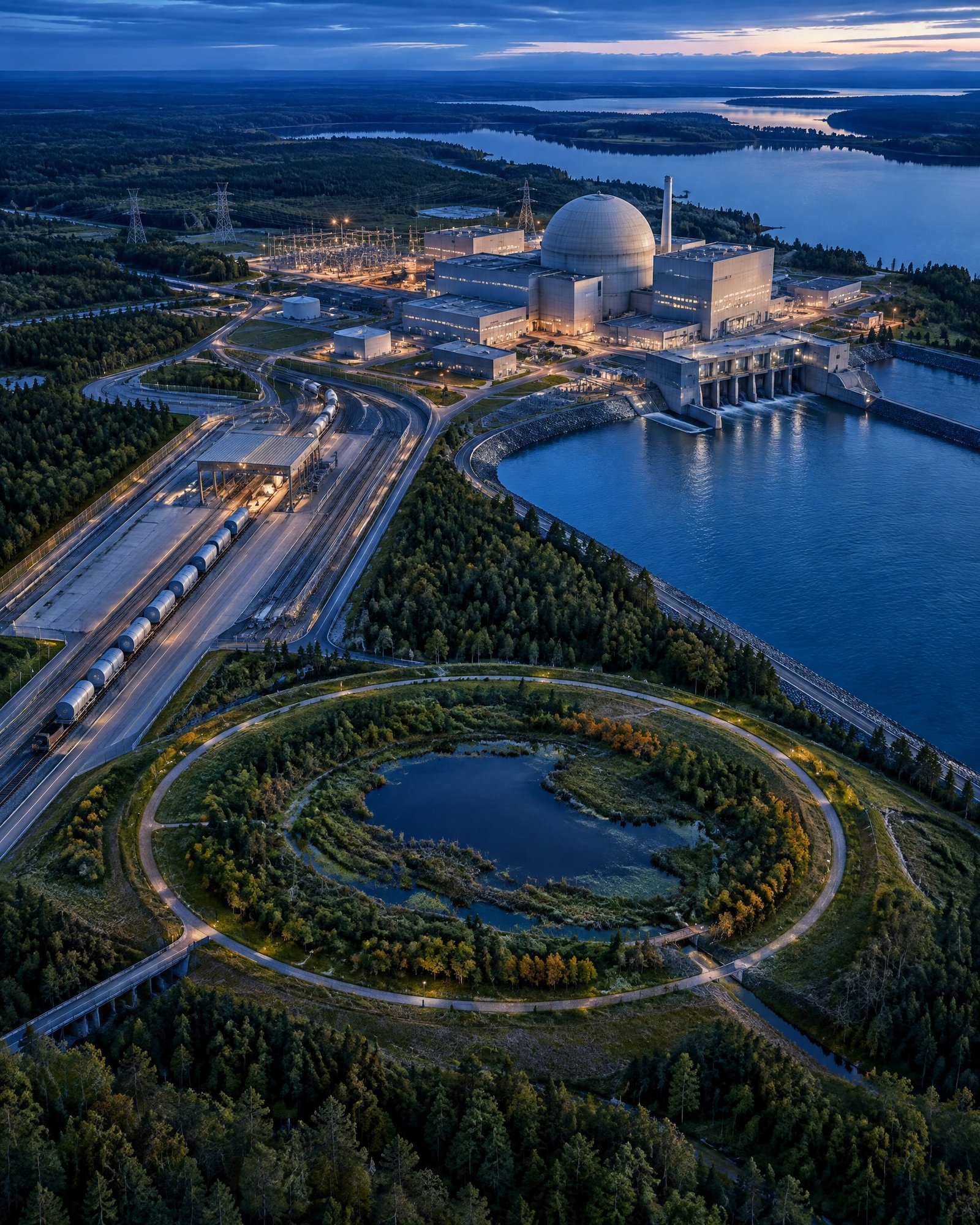
Nuclear New Build, Fuel Supply & Decommissioning Projects in Bangladesh
We advise equipment suppliers, contractors, lenders, insurers, operators and public bodies on nuclear new build in Bangladesh, from regulatory licensing and procurement through fuel supply, spent-fuel arrangements, liability allocation, project disputes and the long-term planning and funding of decommissioning.

- Map role and status
- Review the contract chain
- Negotiate and secure approvals
- Support through delivery
Nuclear new build in Bangladesh: law, regulation and contract
Nuclear new build is unlike any other power project. It runs for decades, it sits under a dedicated safety regulator, and it ties together state policy, intergovernmental agreements, specialist supply chains and obligations that last long after the plant stops generating. In Bangladesh the Rooppur programme at Pabna has made these questions practical rather than theoretical. Our projects and real estate team advises businesses and public bodies that need to understand where they fit in that framework, what they are signing, and which risks remain with them once the contract is executed and work begins.
The legal architecture for nuclear new build in Bangladesh rests on a small number of core instruments. The Bangladesh Atomic Energy Regulatory Act 2012 established the Bangladesh Atomic Energy Regulatory Authority (BAERA), which licenses siting, construction, commissioning and operation, and regulates radiation protection, safeguards and waste. The Nuclear Power Plant Act 2015 provides for Nuclear Power Plant Company Bangladesh Limited as the owner and operator. Intergovernmental agreements with the Russian Federation cover construction, financing and the fuel cycle. Every subcontract and supply arrangement has to sit consistently within that structure. Any nuclear new build participant should read these together.
For a foreign or local supplier, the first legal question is usually not price but status. Is the company supplying safety-classified equipment, conventional plant, civil works, services or training? The answer drives the qualification, quality assurance and documentation regime, the regulator's interest in the supplier, and the flow-down of obligations from the main contract. On nuclear new build work, a supplier that misreads its classification can find itself carrying audit rights, retention of records and rectification duties far beyond what its pricing assumed. We review these interfaces before bids are submitted, not after the first nonconformance report.
Liability is the second recurring theme. International nuclear liability conventions channel liability to the operator, but whether and how that principle applies depends on the treaties a state has joined and its domestic law. In Bangladesh, the Bangladesh Atomic Energy Regulatory Act 2012 contains a chapter on nuclear liability, but suppliers should not rely on statute alone, so contracts, indemnities and insurance still carry real weight. We help suppliers and contractors examine what protection they actually have for a nuclear incident, what is excluded, and how any gap can be addressed through contract, insurance or government support.
Fuel supply, spent fuel and decommissioning complete the lifecycle. These arrangements are often settled at government level, yet they affect commercial parties through take-back obligations, transport and security requirements, and the funding of end-of-life costs. We advise on the documents that implement those commitments, on customs and foreign exchange questions for imported equipment and services, and on related disputes, working with our dispute resolution practice where claims arise. On any nuclear new build matter we work alongside technical advisers and, where needed, counsel in other jurisdictions. Nuclear new build is a long commitment, and the advice must last.
Core workstreams
Four clear stages
- 01Map role and status
- 02Review the contract chain
- 03Negotiate and secure approvals
- 04Support through delivery
Talk to a partner
Consultations in Dhaka or by video. Scope, team and fees are agreed in writing first.
Book →How we support nuclear programme participants

Licensing and regulatory interface
- Map role and status
- Review the contract chain
- Negotiate and secure approvals
- Support through delivery
Supply and subcontract terms
- Map role and status
- Review the contract chain
- Negotiate and secure approvals
- Support through delivery
Nuclear liability and insurance
- Map role and status
- Review the contract chain
- Negotiate and secure approvals
- Support through delivery
Fuel cycle and spent fuel
- Map role and status
- Review the contract chain
- Negotiate and secure approvals
- Support through delivery
Decommissioning and waste planning
- Map role and status
- Review the contract chain
- Negotiate and secure approvals
- Support through delivery
Payments, finance and disputes
- Map role and status
- Review the contract chain
- Negotiate and secure approvals
- Support through delivery
Licensing and regulatory interface
We explain how BAERA licensing stages, inspection rights and reporting duties affect a participant's role, and help companies prepare submissions, respond to regulatory queries and align internal procedures with licence conditions. We also advise on safeguards, radiation protection and security obligations that apply to people, materials and information on site, and on how those duties pass through the contract chain to subcontractors and site personnel. Nuclear new build licensing is staged, so timing matters.
Supply and subcontract terms
We draft and negotiate equipment supply, construction, installation and service contracts for nuclear and conventional island work. Our focus is on scope definition, quality assurance flow-downs, document retention, change control, delay and performance liability, warranty periods and limitation of liability, so that the commercial deal reflects the real technical risk the supplier is accepting and the evidence it will need later to defend its position.
Nuclear liability and insurance
We review indemnity, waiver and insurance provisions against the nuclear liability provisions of the Bangladesh Atomic Energy Regulatory Act 2012. We advise on how liability for a nuclear incident is allocated between operator, main contractor and suppliers, how property and third-party cover responds, and what additional comfort, such as state undertakings or specialist pool insurance, a supplier may reasonably request before accepting nuclear new build work.
Fuel cycle and spent fuel
We advise on contracts and procedures connected to fresh fuel delivery, storage, transport and the return of spent fuel under intergovernmental arrangements. This includes customs clearance, physical protection and security requirements, permits for the movement of radioactive material, and the allocation of cost and responsibility between government entities, the operator and commercial service providers at each stage of the chain.
Decommissioning and waste planning
We help public bodies and investors think through decommissioning liabilities from the outset: who bears the cost, how funds are set aside and protected, what records must survive the plant's operating life, and how radioactive waste management obligations under the regulatory framework are met. Early planning reduces the risk that end-of-life costs fall unexpectedly on contractors and suppliers who were never priced for them.
Payments, finance and disputes
We advise on payment security, foreign exchange approvals for remittances to overseas suppliers, sanctions screening where counterparties or banks are affected by international measures, and the dispute resolution clauses in programme contracts. Where disagreements arise over delay, variations, defects or payment, we act in negotiation, expert determination, arbitration and related court applications in Bangladesh, coordinating with overseas counsel as needed on foreign-law issues.
Partner-led, on every matter.
Projects & Real Estate matters at TRW are led by partners, supported by associates, with one responsible lawyer from first advice to final outcome.
Meet the firm →



01Which regulator controls nuclear new build in Bangladesh, and what does it license?
The Bangladesh Atomic Energy Regulatory Authority, established under the Bangladesh Atomic Energy Regulatory Act 2012, is the independent safety regulator. It licenses each stage of a facility's life, from siting and construction through commissioning, operation and decommissioning, and regulates radiation protection, safeguards and radioactive waste. The Bangladesh Atomic Energy Commission performs separate research and promotional functions. Commercial participants rarely hold the main licence themselves, but they must support the licensee's compliance, accept inspection and audit by the regulator, and keep the records the regulator expects to see. On nuclear new build work, that support role is contractual too.
02We are a foreign equipment supplier. Do we need to register a company or branch in Bangladesh before we start work?
It depends on how you deliver. A pure offshore supply of goods may not require a local entity, although tax, customs and foreign exchange rules still apply to the transaction. If your people will work on site for extended periods, or you will perform installation or services in Bangladesh, a branch, liaison arrangement or subsidiary may be needed, together with work permits for staff. Branch and liaison approvals now sit with Invest Bangladesh, which replaced BIDA in August 2026. We map the delivery model first and then confirm the registrations it actually requires, including tax registration, to avoid payment delays.
03How is liability for a nuclear incident allocated on a nuclear new build project?
In states that have joined the international nuclear liability conventions, liability is channelled to the operator and capped, with suppliers generally protected. In Bangladesh, the 2012 regulatory Act includes nuclear liability provisions, but protection for suppliers also depends heavily on the contract chain: operator indemnities, waivers of recourse, insurance and any government undertakings. Suppliers on nuclear new build work should check whether the indemnity they receive is backed by a creditworthy party, whether it covers third-party and property claims, and whether it survives termination and the end of the warranty period.
04What quality assurance obligations flow down to subcontractors, and how long do they last?
Nuclear programmes impose layered quality regimes. The operator's licence conditions and the main contractor's quality programme typically require subcontractors to follow approved procedures, maintain traceable records, permit audits and notify nonconformances promptly. Counterfeit or fraudulent items are treated very seriously. These obligations are often attached as technical schedules that commercial teams do not read closely. We review them with the contract, so the subcontractor understands the cost of compliance, the length of record retention and the consequences of a quality failure discovered years later. On nuclear new build programmes, this review belongs at bid stage, before price is fixed.
05Can disputes on a nuclear new build contract be arbitrated?
Yes, in most cases. Main contracts between states or state companies may follow intergovernmental dispute provisions, while commercial supply and subcontract terms usually provide for international or domestic arbitration. The Arbitration Act 2001 governs arbitrations seated in Bangladesh and the enforcement of foreign awards here. The practical issues are often the seat, the governing law, confidentiality of sensitive technical information, and whether a dispute with a state entity raises immunity, consent or enforcement questions. We advise on drafting these clauses and on running claims when they arise. Nuclear new build clauses need care on all of these points.
06How are fuel supply and spent fuel handled for Rooppur?
Publicly reported arrangements provide for fuel to be supplied from Russia and for spent fuel to be returned there, under intergovernmental agreements. For commercial parties, the relevant questions are narrower: who is responsible for transport, storage, security and customs at each stage, what permits are required to move radioactive material, how costs are passed through, and what happens if a shipment is delayed. We advise logistics providers, freight forwarders, insurers and service contractors on the documents and approvals that implement those government-level commitments. Delay, damage and loss in transit should also be addressed by insurance.
07Do international sanctions affect a foreign company's participation in nuclear new build in Bangladesh?
They can. Where a programme involves counterparties, banks or technology from a sanctioned jurisdiction, suppliers from the UK, EU, US or other states must check whether their own sanctions laws restrict the work, the payment route or the supply of particular items. Bangladesh does not implement those unilateral measures as domestic law, but a foreign company remains bound by its home regime. We work with counsel in the relevant jurisdictions to assess exposure and to structure payment, export licensing and contractual protections, including sanctions clauses and termination rights, where participation is permitted. Payment routes deserve separate checking.
08Who pays for decommissioning a nuclear plant, and when should the planning start?
Decommissioning costs ultimately sit with the operator and the state, but the regulatory framework expects them to be planned well before operation ends. For participants, the issue is whether any part of that cost, or any long-tail obligation such as record retention, waste handling or site restoration, has been pushed down to them by contract. Planning should start at the licensing and contracting stage, when funding mechanisms, record systems and responsibility for waste streams can still be set clearly. We advise on those provisions for public bodies and their counterparties. Nuclear new build documents should say so expressly.
From first call to resolution.
- 01
Map role and status
We identify where the client sits in the programme, the regulatory classification of its scope, and the government, operator and contractor documents that govern its rights and obligations before any commitment is made. This also tests the nuclear new build timetable.
- 02
Review the contract chain
We review the draft terms against the main contract and licence conditions, highlighting flow-down obligations, liability gaps, quality and record duties, payment security and the dispute resolution route that would apply. We then propose priority amendments and fallback positions.
- 03
Negotiate and secure approvals
We negotiate the commercial and legal terms, then coordinate registrations, work permits, customs, foreign exchange and regulatory steps needed for the client to perform lawfully and be paid in Bangladesh. Approvals are sequenced against the programme schedule.
- 04
Support through delivery
During performance we advise on variations, regulatory queries, claims, audit findings and termination risk, and help maintain the record the client will need for any future dispute or decommissioning question. We stay involved until close-out.

“Demonstrates an extraordinary command over both domestic litigation and international arbitration.”
The Legal 500 Asia Pacific, Bangladesh: Dispute resolution, client feedback
Related reading.
Power and Energy Law in Bangladesh 2026: BERC, Power Contracts and Energy Deals
Energy Transition in Bangladesh 2026: Legal Framework, Power Projects and Carbon Markets
EPC Contracts in Bangladesh (2026): FIDIC, O&M, G2G Projects and Contractor Debarment
Energy Arbitration in Bangladesh 2026: Power, Gas and LNG Disputes, Price Reviews and Enforcement
All insights →
What is Nuclear Power Plant Company Bangladesh Limited?
Does TRW act on nuclear new build matters outside Bangladesh?
Is a nuclear new build contract in Bangladesh treated as a public procurement?
What records should a supplier keep, and for how long?
Can foreign engineers and specialist staff work on the Rooppur site?
How are payments from Bangladesh to overseas suppliers made?
What role do intergovernmental agreements play in nuclear new build?
How do I start a matter with TRW?
Discuss your nuclear programme role with our team
Speak with the partners about nuclear new build in Bangladesh or across borders.
Book a consultation →