
TRW Insight / Bangladesh
Bangladesh is now using trade remedies to protect local industry just as its exporters face more of them abroad. Origin proof and sanctions screening decide whether preferential, bankable trade survives LDC graduation.
Anti dumping Bangladesh: trade remedies, origin and sanctions in 2026
Anti dumping Bangladesh law sits at the point where three compliance problems meet: protecting local industry from unfairly priced imports, defending Bangladeshi exports against foreign trade remedies, and keeping cross-border trade clear of preference fraud and sanctions risk. In 2026 all three are moving at once. The Bangladesh Trade and Tariff Commission has set up a dedicated panel to investigate dumping, India has reimposed revised duties on Bangladeshi jute goods after a mid-term review, and LDC graduation is forcing exporters to rebuild their rules-of-origin files for a post-preference world.
This guide is written for manufacturers who want protection, exporters who are being investigated abroad, and traders and banks who need to manage origin and sanctions exposure. It explains how a trade remedy petition is built and decided under the Customs Act 2023, how Bangladeshi exporters should respond when India or another market opens a case, how GSP and preferential certificates of origin work for the EU, UK, Japan and Canada, and how US, EU and UN sanctions reach Bangladeshi trade through banks, vessels and counterparties. The wider WTO, customs and export frameworks are covered in companion TRW guides, linked where they matter.

Summary: Bangladesh can impose anti-dumping, countervailing and safeguard duties under sections 19 to 23 of the Customs Act 2023, but only after the Bangladesh Trade and Tariff Commission finds prima facie evidence of injury on a domestic industry's written application or its own initiative. Bangladeshi exporters face more remedies than they bring, led by India's duties on jute goods. Preferential access depends on valid origin proof, and sanctions risk travels through banks, vessels and counterparties rather than Bangladeshi statute alone.
Key point: No Bangladeshi anti-dumping or countervailing proceeding can start without the BTTC first informing the government that prima facie evidence of injury exists. A domestic industry that wants protection must therefore build a petition that survives that gatekeeping test, and an importer or foreign exporter that wants to resist one should engage at that stage, not after a Gazette notification.
At a glance
Statutory basis
Sections 19 to 23 of the Customs Act 2023 govern countervailing, anti-dumping and safeguard duties and appeals.
BTTC gatekeeper
The Bangladesh Trade and Tariff Commission formed a nine-member panel in June 2026 to investigate dumping complaints.
India jute duties
India reimposed revised anti-dumping duties of up to US$445 per tonne on Bangladeshi jute goods in September 2026.
Origin proof
EU preferences rest on REX statements on origin; EPB issues GSP and other certificates only to exporters with current registration.
Sanctions reach
UN sanctions bind directly; US and EU measures arrive through banks, shipping, insurers and buyers' contract terms.
Table of Contents
How anti dumping Bangladesh law works under the Customs Act 2023
The Customs Act 2023 (Act No. 57 of 2023) repealed the Customs Act 1969 and carried its trade remedy provisions forward. The government published an authentic English text by SRO No. 441-Law/2025 dated 9 November 2025, which also records amendments made by the Finance Ordinance 2025.[1] Section 19 deals with countervailing duties, section 20 with anti-dumping duties, section 21 with exclusions and undertakings, section 22 with appeals and section 23 with safeguards. Our guide to international trade law in Bangladesh summarises the duration rules in a single table; this guide concentrates on how a case is actually run.
The legal test in section 20
The government may impose an anti-dumping duty, by Gazette notification and on the BTTC's recommendation, where goods are exported to Bangladesh at less than normal value and a similar domestic industry is damaged or likely to be damaged. The duty cannot exceed the margin of dumping, defined as the difference between export price and normal value.[1] Three elements must therefore be proved: dumping, injury to a like domestic industry, and the connection between them. Petitions usually fail on the second and third elements rather than the first, because Bangladeshi producers often lack the audited cost, capacity and sales data needed to show injury convincingly.
Normal value, export price and the transshipment rule
Normal value is ordinarily the comparable domestic price of the like goods in the exporting country. Where there are no domestic sales in the ordinary course of trade, or a particular market situation or low volume makes them unreliable, normal value may be based on a representative export price to a third country or on cost of production plus reasonable administrative, selling and general costs and profit. Where the export price is unreliable because exporter and importer are associated or have a compensatory arrangement, it may be constructed from the first resale price to an independent buyer.[1]
One proviso matters in practice for South Asian supply chains. Where goods are merely transshipped through the country of export, or are not produced there, normal value is determined by reference to prices in the country of origin.[1] Routing goods through a third country does not change the investigation's target.
Provisional and retrospective duties
Pending final determination, the government may impose a provisional anti-dumping duty based on a provisional estimate of normal value and margin, a formulation substituted by the Finance Ordinance 2025. Any excess over the final margin must be reduced and refunded. Where there is a history of injurious dumping, or the importer knew or should have known of the dumping, duty may be levied retrospectively, but not beyond ninety days before the provisional notification.[1] Importers who continue to buy from a supplier under investigation are taking a real, quantifiable risk.
Which procedural rules govern anti dumping Bangladesh cases
Under the 1969 Act, detailed rules for identifying dumped goods, determining injury and assessing duty were made by SRO No. 209-Law/1995/1642/Cus, and SRO No. 210-Law/1995/1643/Cus nominated the then Bangladesh Tariff Commission as designated authority.[2] Section 269 of the 2023 Act keeps rules, orders and notifications made under the repealed Act in force so far as they are consistent with the new Act, until repealed or amended.[1] Until new rules are notified, practitioners should read the 1995 rules alongside sections 19 to 23 and the WTO Anti-Dumping Agreement, and confirm with the BTTC which procedural text it is applying to a given case.
Petitioning the Bangladesh Trade and Tariff Commission
Section 20(7) is the gateway. No anti-dumping proceeding may begin unless the BTTC, on a written application by or on behalf of a domestic industry, or on sufficient evidence it has collected itself, informs the government that there is prima facie evidence of injury to the domestic industry caused by dumping of particular imported goods. Section 19(8) imposes the same condition for countervailing duties.[1]
The BTTC's 2026 trade remedy panel
In June 2026 the BTTC formed a nine-member panel, headed by Md Enamul Hoque, Member of its Trade Remedy Division, to investigate complaints of dumping and other distortive practices, recommend protective measures, oversee related legal disputes and issue trade-related notices. The report noted that Bangladesh has rarely used anti-dumping, countervailing or safeguard instruments, and that LDC graduation will narrow the use of regulatory duties, supplementary duties and minimum values that have traditionally protected local industry.[3] For domestic producers, that combination makes trade remedies the protection tool of the next decade, and anti dumping Bangladesh petitions are likely to become more common, more contested and more technical.
What a petition must contain
A credible application reads like a litigation file. It should define the product under investigation by description and HS code, identify the like domestic product and the producers on whose behalf the petition is filed, and present evidence of export prices and normal value in the exporting country. Injury evidence should cover import volumes and prices, price undercutting or suppression, and the domestic industry's sales, market share, capacity use, profits, employment and cash flow over a multi-year period. Causation analysis must address other factors, such as falling demand or the industry's own inefficiencies, that could explain the harm.
The step sequence below reflects how TRW prepares a petition, or a response to one, before the BTTC.
Define the product
Fix the product description, HS codes, the like domestic product and the producers supporting the petition.
Gather price evidence
Assemble export prices and normal value, or third-country and constructed values where domestic sales are unreliable.
Prove injury
Present multi-year data on import volumes and prices, sales, market share, capacity use, profits and employment.
Address causation
Separate the effect of dumped imports from other causes such as falling demand or internal inefficiency.
Protect confidential data
Prepare confidential and non-confidential versions with meaningful summaries of redacted material.
File and engage
Lodge the written application with the BTTC, answer its queries and take part in hearings and verification.
Plan the endgame
Track the Gazette, consider undertakings, diarise the 90-day appeal window and the review dates.
Confidentiality and participation
Petitions inevitably include commercially sensitive cost and pricing data. Applicants should prepare confidential and non-confidential versions from the start, with meaningful summaries of anything redacted, so that the file can be shared with interested parties without damaging the business. Importers, users and foreign exporters should register as interested parties as soon as an investigation is notified. In anti dumping Bangladesh proceedings, as elsewhere, the party that supplies verifiable data early usually shapes the margin calculation; the party that stays silent tends to be assessed on facts available.
Countervailing and safeguard duties: choosing the right remedy
In anti dumping Bangladesh practice, an anti-dumping petition is not always the best tool. Where the harm comes from a foreign subsidy, section 19 permits a countervailing duty not exceeding the subsidy, but only where the subsidy relates to export performance, rewards the use of domestic over imported inputs, or is limited to a specific group of producers. Specific subsidies for research, disadvantaged regions or environmental adaptation are carved out.[1] Countervailing cases require evidence about a foreign government's programmes, which is harder for a private petitioner to assemble than price data.
A safeguard under section 23 responds to a surge of fairly traded imports causing or threatening serious injury, defined as significant impairment in the position of the domestic industry. A provisional safeguard duty may last no more than 200 days and must be refunded if serious injury is not finally found; a definitive duty lapses after four years unless extended, and in no case may continue beyond ten years.[1] Because a safeguard applies to imports from all sources, it suits industries facing a general import surge rather than a single low-priced supplier.
Exclusions and price undertakings
Section 21 bars both a countervailing and an anti-dumping duty for the same situation, and prevents either duty being levied merely because the exporter received a refund or exemption of domestic taxes, which protects duty drawback schemes. It also lets the government accept a voluntary undertaking from the exporter to revise prices or stop exporting at dumped prices, in place of a duty, where that will eliminate the injurious effect.[1] For a foreign exporter, an undertaking can preserve market access on predictable terms; for the domestic industry, it can deliver relief faster than a contested final determination.
Challenging a trade remedy decision
Trade remedies imposed in Bangladesh can be tested on appeal. An appeal against an order of determination, or a review of one, concerning the existence, degree or effect of any subsidy or dumping lies to the Customs, Excise and VAT Appellate Tribunal. It must be filed within ninety days of the order, although the Tribunal may admit a late appeal for reasonable cause. A special bench of the President and at least two members hears it and may confirm, modify or annul the order.[1]
Two practical points follow. First, section 22 covers anti-dumping and countervailing determinations; it does not expressly cover safeguard measures, so a challenge to a safeguard is more likely to proceed by writ in the High Court Division on public-law grounds such as procedural unfairness or failure to consider material evidence. Second, in every anti dumping Bangladesh case the record built before the BTTC is the record on appeal. Arguments and data not put to the investigating authority are hard to introduce later. Customs assessment disputes that arise once a duty is in force, such as classification of goods within or outside the scope of a measure, follow the ordinary route explained in our guide to HS code disputes in Bangladesh.
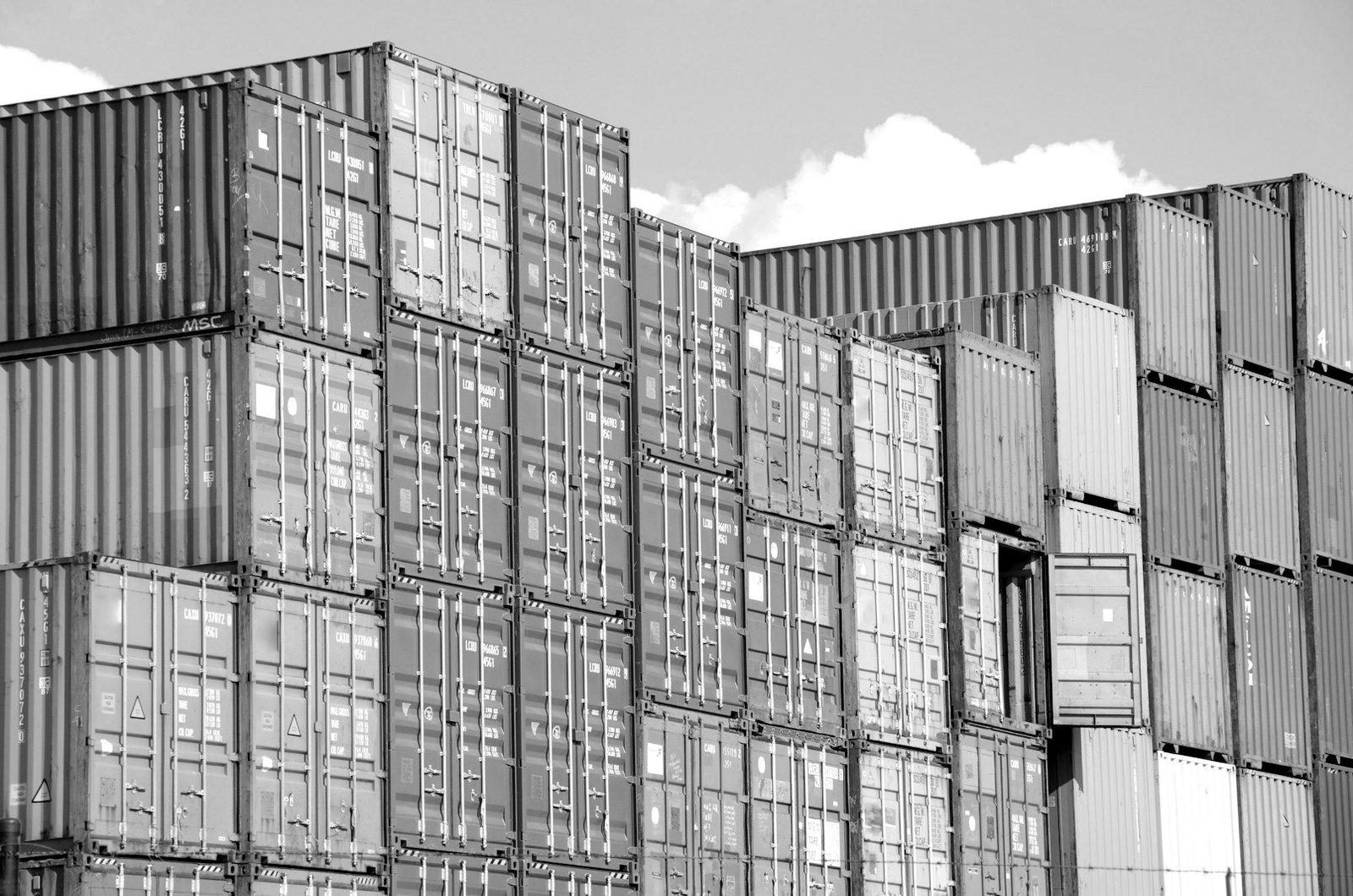
Anti dumping Bangladesh exporters face abroad
Bangladesh is more often the target of trade remedies than the user of them. Bangladeshi jute and jute products, hydrogen peroxide, artificial staple fibre and knitted textile gloves have faced anti-dumping duties in markets including Brazil, Pakistan, India, Turkey and Argentina.[3] The leading case, and the best guide to how foreign investigations treat Bangladeshi producers, is India's long-running measure on jute goods.
India's duties on jute products: the 2026 position
India first imposed anti-dumping duties on jute products from Bangladesh and Nepal in January 2017, covering jute yarn and twine, hessian fabric, sacking bags and sacking cloth. After a sunset review, India's Finance Ministry approved continuation on 30 December 2022. The Directorate General of Trade Remedies then initiated a mid-term review on 30 June 2025, on petitions from the Indian Jute Mills Association and the AP Mesta Twine Mills Association.[4] By June 2026 the review had concluded that Bangladeshi exporters were still dumping and injuring the Indian industry.[3]
A Ministry of Finance notification published on 24 September 2026 implemented the outcome. Duties reach US$445 per tonne, the maximum rate applying to jute yarn and twine from producers not individually named; seventeen Bangladeshi companies face US$120 per tonne on jute bags; 36 Bangladeshi manufacturers are listed by name; and six firms are exempt across all product lines. Questionnaires had been sent to 54 Bangladeshi mills, of which 38 responded.[5] The spread between rates shows why cooperation matters: mills that answered fully and were individually examined obtained materially better outcomes than the residual rate.
The commercial effect is already visible. Bangladesh's jute exports to India fell 18 per cent year on year in FY25 to 117,000 tonnes.[5] India has also used non-tariff tools, including port-of-entry restrictions on Bangladeshi jute goods, so exporters should treat the trade remedy and the logistics restrictions as one market-access problem.
New investigations: PET film
Trade remedy exposure is spreading beyond jute. In July 2026 India's DGTR announced a virtual oral hearing in an anti-dumping investigation into polyethylene terephthalate film from Bangladesh, brought by Chiripal Poly Films, Ester Industries and Vacmet India, with Akij Biax Films and the Bangladesh High Commission in New Delhi listed among the parties.[6] As Bangladesh diversifies into plastics, chemicals and light engineering, more of its exports will cross the volume thresholds that attract investigations.
How to defend a foreign investigation
Defending anti dumping Bangladesh exporters face abroad is a data exercise run to the foreign authority's timetable. The exporter should register as an interested party immediately, answer the questionnaire completely and on time, reconcile cost-of-production and sales data to audited accounts, and prepare for on-the-spot verification at the mill. It should argue product scope and like-product questions early, seek an individual margin rather than accepting the residual rate, and consider a price undertaking where the authority's rules allow one.
Where the foreign determination is flawed, the exporter's remedy is ordinarily in the investigating country's own appeal forum, not in Bangladesh. A state-to-state challenge at the WTO is a matter for the Ministry of Commerce, and Bangladesh's experience in the India batteries dispute is discussed in our analysis of the WTO impact on Bangladesh trade. Exporters should brief the Ministry and the High Commission early, as the PET film case shows the mission is treated as an interested party.
GSP certificates and rules of origin for Bangladeshi exports
Preferential tariff access is only as good as the proof of origin behind it. A shipment that would enter the EU, UK, Japan or Canada duty-free can attract the full most-favoured-nation tariff, years later and with penalties, if the importing customs authority concludes that the goods did not meet the applicable rules of origin or that the origin document was invalid. For apparel exporters working on thin margins, an origin failure can wipe out the profit on an entire programme.
The Export Promotion Bureau's role
The Export Promotion Bureau is the central origin authority for Bangladeshi exporters. Since an EPB order of April 2023, exporters may hold an enrolment certificate valid for between one and five years, and GSP, certificate of origin, SAPTA, SAFTA, APTA and REX certificates are not issued to an exporter without up-to-date registration.[7] A lapsed enrolment certificate therefore blocks preferential documentation altogether, and renewal should be on every exporter's compliance calendar. The general export registration and documentation regime is covered in our guide to export law in Bangladesh.
EU: REX and statements on origin
For the EU, the certificate model has largely given way to self-certification. Under the Registered Exporter (REX) system, an exporter registers with the competent authority of its country and then makes a statement on origin on the invoice or another commercial document, using the wording set out in Annex 22-07 of Implementing Regulation (EU) 2015/2447. Consignments of originating products below EUR 6,000 may carry a statement on origin made by any exporter, registered or not, and registrations can be checked publicly.[8] Self-certification shifts legal responsibility onto the exporter, whose statement is only as reliable as the supply-chain records behind it.
UK: the Developing Countries Trading Scheme
Bangladesh currently enjoys tariff-free UK entry for 99.8 per cent of its goods under the DCTS. In a letter of 19 August 2026, the British High Commission confirmed that Bangladesh will keep its current access for three years after LDC graduation and then move to the Enhanced Preferences tier, where 92 per cent of goods, including garments under HS chapters 61 and 62, remain duty-free. The UK's revised rules of origin drop the double transformation requirement, allowing imported fabric, and the High Commission will run DCTS workshops with the EPB.[9]
Japan and Canada
Japan's GSP has traditionally worked on certificates, and the EPB issues GSP certificates for that purpose.[7] Japan has amended Article 8-2(3) of its Temporary Tariff Measures Law to give countries graduating from LDC status a further three years of duty-free, quota-free GSP treatment, and the WTO published Japan's notification on 7 November 2025.[10] Canada has signalled duty-free, quota-free access for Bangladesh until at least 2034.[11] In each market, the origin rule for a specific product, not the headline preference, decides whether a shipment qualifies.
The table below summarises the position for the four markets as it stood in October 2026.
| Market | Current scheme | Proof of origin | After LDC graduation |
|---|---|---|---|
| European Union | Everything But Arms | REX statement on origin; any exporter below EUR 6,000 | Transition period, then stricter GSP rules; see TRW's WTO analysis |
| United Kingdom | DCTS, 99.8% of goods tariff-free | DCTS origin proof, supported by EPB | Current access for three years, then Enhanced Preferences: 92% duty-free |
| Japan | GSP | GSP certificate issued through EPB | Three further years of duty-free, quota-free GSP |
| Canada | LDC tariff treatment | Canadian origin rules | Duty-free, quota-free access signalled to at least 2034 |
GSP certificate disputes: verification, denial and defence
Like foreign trade remedies, most origin disputes start abroad, months or years after shipment. The importing customs authority sends a verification request, usually through the EPB, asking the exporter to prove that specified consignments met the origin rule. If the reply is late, incomplete or unconvincing, preference is denied and the importer receives a duty demand, which it will try to pass back to the Bangladeshi supplier under the contract.
Where disputes usually arise
- Input tracing: the exporter cannot show where fabric or yarn came from, or which consignment of inputs went into which order.
- Wrong rule: goods were certified under the wrong product-specific rule, or under rules that no longer apply after a change in the scheme.
- Document defects: statements on origin with the wrong wording, missing REX numbers, or certificates that do not match the invoice, packing list or bill of lading.
- Transshipment: goods routed through a third country without the documents the importing market requires to show they stayed under customs control.
- Contract allocation: sales contracts that say nothing about who bears a retrospective duty demand.
Building a defensible origin file
The defence is built before the shipment, not after the query. For each style or product, keep the bill of materials, supplier invoices and origin declarations for inputs, production and cutting records, utilisation declarations and the link between import consignments and export orders. Retain them for at least the longest verification period of any market you supply. Sales contracts should allocate the risk of preference denial clearly, cap liability where the buyer controls routing, and require the buyer to notify verification requests promptly. Where Bangladeshi importers claim SAFTA, APTA or other preferences into Bangladesh, the same discipline applies in reverse, and disputes with Customs follow the routes described in our guide to customs law in Bangladesh.
LDC graduation: what it changes for remedies and rules of origin
Bangladesh is scheduled to graduate from LDC status on 24 November 2026. On 18 February 2026 the government asked the UN Committee for Development Policy to extend the preparatory period by three years to 24 November 2029, and in early June 2026 the Committee was reported to support the request, conditional on progress with domestic reforms, leaving the final decision to the General Assembly.[11] The decision was still awaited in mid-October 2026; the latest position, and the EU's post-graduation EBA transition, are tracked in our analysis of the WTO impact on Bangladesh trade.
Graduation matters for anti dumping Bangladesh strategy in two directions. Defensively, Bangladeshi exporters lose LDC flexibilities, and export-contingent cash incentives become exposed to countervailing duties in importing markets, a risk explained in our export law guide. Offensively, as the BTTC itself has recognised, the loss of tariff and para-tariff space makes trade remedies the main lawful way to protect domestic producers.[3] For origin, the change is just as sharp: rules that tolerate single-stage processing for LDCs may give way to stricter tests, so supply chains should be audited now against the post-graduation rules in each market.

Trade sanctions Bangladesh businesses must manage
Sanctions compliance is no longer confined to banks. Garment exporters, commodity importers, shipping agents, freight forwarders and power-sector contractors all deal with counterparties, vessels and payment routes that may be designated somewhere in the world. The legal question is which regimes bind a Bangladeshi business directly, and which bind it in practice because its bank, insurer, buyer or shipowner must comply.
UN sanctions: binding in Bangladesh
United Nations Security Council sanctions are implemented through section 20A of the Anti-Terrorism Act 2009 and through SROs issued by the Ministry of Foreign Affairs under the United Nations (Security Council) Act 1948. Section 20A empowers the government to freeze the assets of listed persons without delay and without prior notice, prohibit making funds or services available to them, and prevent the supply of arms and related goods and technology and illicit trafficking in nuclear, chemical or biological weapons materials, including by inspecting cargo.[12] Breach of a freezing order is punishable by up to four years' imprisonment, a fine of twice the value of the property, or both.[12]
Bangladesh Bank and BFIU expectations
Bangladesh Bank's guidance requires reporting organisations to cover the UN regimes under Resolutions 1267, 1373, 1540, 1718 and 1737 and their successors, including 2231. Each must have a board-approved sanctions policy, screen customers against updated sanctions lists and trade embargoes electronically, run real-time screening on all cross-border payments including SWIFT messages, freeze immediately on a match, report to the BFIU within the next working day and keep an audit trail including false positives. A reporting agency that fails to freeze faces a fine of Tk 5 lakh to Tk 25 lakh, or twice the suspected funds if greater, and possible suspension of its licence.[12] The wider AML framework is set out in our guide to anti-money laundering law in Bangladesh.
US, EU and UK sanctions: binding in practice
Bangladeshi law does not give direct effect to OFAC, EU or UK designations. They still decide outcomes, because a Bangladeshi bank clearing US dollars, an insurer reinsured in London or a buyer listed in Europe will refuse a transaction that exposes it. The US also has secondary sanctions that can cut foreign banks off from US correspondent accounts for significant transactions involving Russia's military-industrial base, and EU law requires EU exporters of certain sensitive goods to impose contractual bans on re-export to Russia. A Bangladeshi importer of EU machinery or electronics should expect those clauses in its purchase contracts and should comply with them.
Russia, Myanmar and Iran: where Bangladeshi exposure sits
Russia and the Rooppur payments
The clearest illustration of sanctions reaching Bangladesh is the Rooppur nuclear power plant. The project's designated Russian bank, VEB, was cut off from SWIFT after 2022, so Bangladesh Bank deposited repayments into an escrow account, which held US$1.03 billion by June 2025. In August 2025 OFAC authorised Bangladesh to proceed with overdue payments, subject to conditions including completion by December, with fresh OFAC approval to be sought once Russia nominated a payment channel; Chinese banks had declined to act.[13] If a sovereign payment needs an OFAC licence, a private Russia-linked transaction routed through Bangladeshi banks will face at least the same scrutiny.
Shipping: sanctioned vessels and cargo
In October 2024 the Department of Shipping issued a circular telling maritime stakeholders to avoid dealing with vessels sanctioned by the UN, the US, the EU or other relevant authorities, and prohibiting sanctioned cargo from being loaded, unloaded, transited or stored within Bangladesh's jurisdiction regardless of origin or destination. Violators face fines, suspension of operating licences and possible criminal charges.[14] The circular is significant because it extends a domestic regulatory consequence to unilateral designations, so ship agents, terminal operators, lighterage operators and charterers cannot treat OFAC and EU lists as someone else's problem.
Iran: LPG and petroleum products
The October 2024 circular followed allegations that LPG reportedly of Iranian origin was being imported through ship-to-ship transfers, after a fire during a transfer from the Tanzania-flagged Captain Nikolas at the Kutubdia anchorage of Chattogram port.[14] Importers of LPG, fuel oil and petrochemicals should verify origin, vessel history and transfer locations, and should expect banks to ask for the evidence before an LC is negotiated.
Myanmar: border trade and military-linked counterparties
Myanmar presents a different risk profile. Border trade through Teknaf has been repeatedly disrupted by the conflict in Rakhine State, and the US, EU and UK maintain sanctions programmes aimed at Myanmar's military and military-linked businesses and state enterprises. A Bangladeshi trader dealing with Myanmar counterparties should identify beneficial owners, check whether a counterparty or its bank is designated, and avoid paying informal levies to armed groups, which can raise both sanctions and terrorist financing issues under Bangladeshi law.
Dual-use goods and export controls
Bangladesh's export controls rest mainly on the Imports and Exports (Control) Act 1950 and the Export Policy, which are discussed in our guide to export law in Bangladesh, together with the UN obligations implemented through section 20A. In practice, the controls Bangladeshi businesses most often meet are foreign. US export rules follow US-origin items and certain foreign-made items with US content wherever they go, so re-exporting US-origin electronics, software or machinery from Bangladesh can require a US licence. EU and UK controls similarly follow goods exported from those jurisdictions.
Bangladesh Bank's guidance lists proliferation-financing red flags that also serve as a practical dual-use checklist: a freight forwarder named as final destination, goods inconsistent with the technical level of the destination country, circuitous shipping or payment routes, declared values obviously low against shipping costs, inconsistencies between trade documents and financial flows, and payments to parties not named on the original letter of credit.[12] Traders handling chemicals, electronics, machine tools, drones or telecommunications equipment should obtain end-user statements, screen end-users against foreign denied-party lists and keep the evidence with the transaction file. Payment-side issues are discussed in our guide to letters of credit in Bangladesh.
Who decides: the authorities that matter
A single transaction can engage several authorities, each with its own procedure and appeal route.
Bangladesh Trade and Tariff Commission
Receives petitions, finds prima facie injury and recommends anti-dumping, countervailing and safeguard measures.
Government, NBR and Customs
The government imposes duties by Gazette notification; Customs collects them at import.
Customs, Excise and VAT Appellate Tribunal
Hears section 22 appeals on dumping and subsidy determinations through a special bench.
Export Promotion Bureau
Registers exporters and issues GSP, certificate of origin, regional and REX documentation.
BFIU and Bangladesh Bank
Direct sanctions screening, freezing and reporting by banks and other reporting organisations.
Department of Shipping
Polices dealings with sanctioned vessels and cargo in Bangladeshi ports and waters.
The Department of Shipping's circular and the BFIU's guidance show that sanctions enforcement in Bangladesh, like the administration of trade remedies, is now spread across ministries, ports and banks, not concentrated in one regulator.[12] [14] Compliance programmes should map every touchpoint, from LC opening to vessel nomination.
Building a combined trade compliance programme
Trade remedies, origin and sanctions are usually handled by different people in a Bangladeshi business: the factory accountant, the commercial team and the bank. They draw on the same documents, however, and an error in one area often surfaces in another. A combined programme should cover the following.
- Market monitoring: track investigations opened against your products in India, Turkey, Brazil, Pakistan and other markets, and keep cost and sales data in a form that could answer a questionnaire within weeks.
- Import surveillance: for domestic producers, track import volumes and prices for your product lines, so that a petition to the BTTC can be filed with evidence rather than anecdote.
- Origin control: maintain current EPB enrolment, REX registration and origin files for every preferential market, and review them against post-graduation rules.
- Counterparty screening: screen buyers, suppliers, banks, vessels and end-users against UN, OFAC, EU and UK lists at onboarding and before each shipment.
- Contract terms: include sanctions warranties, termination rights, origin warranties and allocation of retrospective duty and penalty risk.
- Escalation: decide in advance who stops a shipment, who talks to the bank and who calls counsel when a match, a verification request or a questionnaire arrives.
Mistakes to avoid
The most expensive mistakes we see in trade remedies, origin and sanctions work are predictable. Exporters ignore a foreign questionnaire and receive the residual rate. Domestic producers file a petition without injury data and lose credibility with the BTTC. Factories let enrolment or REX registration lapse and discover the problem at shipment. Traders assume that because Bangladesh has not adopted a foreign sanction, it does not apply to them. In each case the cure is the same: treat the matter as a legal file from day one. TRW's customs and trade compliance practice and export licensing and market access practice advise on all three areas.

What to watch in late 2026 and 2027
Four developments will shape anti dumping Bangladesh practice over the coming year. First, the General Assembly's decision on the graduation date will fix the timetable for every preference transition described above.[11] Second, the BTTC's new panel is likely to produce Bangladesh's first sustained run of domestic trade remedy investigations, and with them the first appeals before the Appellate Tribunal.[3] Third, India's revised jute duties and the PET film investigation will test whether Bangladeshi exporters can coordinate their defence.[5] [6] Fourth, Russia-related payments, vessel designations and Myanmar border trade will keep sanctions screening at the centre of bank and port practice.[13] [14]
Whether you need protection from dumped imports, are defending a foreign investigation, face an origin verification or have a sanctions question on a live shipment, the earliest decisions carry the most weight. Contact TRW to discuss the matter before deadlines start to run.
Frequently asked questions
What law governs anti-dumping duties in Bangladesh?
Section 20 of the Customs Act 2023, read with sections 21 and 22, allows the government to impose anti-dumping duties not exceeding the margin of dumping, by Gazette notification and on the recommendation of the Bangladesh Trade and Tariff Commission.[1]
Who can petition for anti-dumping protection in Bangladesh?
A domestic industry, or someone acting on its behalf, may file a written application with the BTTC, which may also act on its own evidence. No proceeding starts until the BTTC tells the government there is prima facie evidence of injury caused by dumping.[1]
How long does an anti-dumping duty last in Bangladesh?
Five years from imposition unless revoked earlier, extendable for a further five years after a review, with the duty continuing for up to one year while a review started before expiry is pending.[1]
Can a Bangladeshi anti-dumping duty be appealed?
Yes. A determination on the existence, degree or effect of dumping or subsidy can be appealed to the Customs, Excise and VAT Appellate Tribunal within ninety days, before a special bench of the President and at least two members.[1]
Does India still impose anti-dumping duties on Bangladeshi jute?
Who issues GSP certificates in Bangladesh?
The Export Promotion Bureau issues GSP, certificate of origin, SAPTA, SAFTA, APTA and REX documentation, and will not do so for an exporter whose registration is not up to date.[7]
Do Bangladeshi exporters need a GSP Form A for the EU?
Not ordinarily. EU preferences rely on statements on origin made by exporters registered in the REX system; consignments below EUR 6,000 can carry a statement by any exporter.[8]
What happens to UK duty-free access after LDC graduation?
Bangladesh keeps current DCTS access for three years, then moves to Enhanced Preferences, where 92 per cent of goods, including garments, remain duty-free under rules of origin without double transformation.[9]
Are US and EU sanctions legally binding in Bangladesh?
Bangladeshi law gives direct effect to UN sanctions through the Anti-Terrorism Act 2009. US and EU measures bind in practice through banks, insurers and buyers, and the Department of Shipping's 2024 circular applies domestic penalties to dealings with vessels sanctioned by the UN, US or EU.[12] [14]
What should a bank do when a trade transaction matches a sanctions list?
Stop the payment or transaction immediately, freeze the relevant funds where a UN listing applies, report to the BFIU within the next working day and keep a full audit trail.[12]
Source register
Primary legal and regulatory sources
Materials checked on 20 October 2026. Confirm the current official text before relying on any provision.
- Customs Act 2023 (Act No. 57 of 2023), authentic English text, SRO No. 441-Law/2025 — National Board of Revenue
- Bangladesh Customs — Anti-dumping duties (SRO Nos. 209 and 210-Law/1995)
- The Daily Star, 21 June 2026 — Panel formed to probe foreign goods dumping
- India Seatrade News — India initiates mid-term review of anti-dumping duties on jute imports from Bangladesh and Nepal
- Dhaka Tribune, 29 September 2026 — India imposes new anti-dumping duties on Bangladeshi jute products
- Prothom Alo English, 31 July 2026 — India launches anti-dumping probe against Bangladesh over new export item
- The Business Standard, 9 May 2023 — EPB's enrolment certificate tenure for exporters extended to 5 years
- European Commission, Access2Markets — REX system
- The Financial Express, 20 August 2026 — Bangladesh to retain duty-free market access to UK after LDC exit
- Apparel Resources, 12 November 2025 — Japan's market extension for LDC-graduating nations
- Dhaka Courier, 5 June 2026 — Not quite the graduate yet
- Bangladesh Bank / BFIU — Guidance Notes for Prevention of Terrorist Financing and Financing of Proliferation of WMD
- The Daily Star, 16 August 2025 — Govt moves to clear Rooppur dues to Russia after US waiver
- The Daily Star, 15 October 2024 — Follow international and national regulations strictly concerning sanctioned vessels: shipping ministry
Related TRW assistance
Move from information to a defined next step
TRW acts for domestic producers petitioning the BTTC, for exporters defending foreign anti-dumping investigations, and for traders and banks on origin verification and sanctions screening. Explore our customs and trade compliance practice and export licensing and market access practice, or contact TRW to discuss your matter.