
TRW Insight / Maritime & Shipping
The charterparty says London arbitration, but the ship, the cargo and the assets are in Bangladesh. Recent Admiralty Court decisions set clear limits on arrest, liens and interim relief, and on how long a foreign award stays enforceable.
Charterparty disputes in Bangladesh: the 2026 framework
Charterparty disputes in Bangladesh tend to surface at the worst possible moment: a vessel waiting at the Chattogram outer anchorage with demurrage running, a time charterer withholding hire over an off-hire dispute, a head owner exercising a lien on cargo bound for a Bangladeshi receiver, or a London award that has to be turned into money in Dhaka. The contract usually says English law and London arbitration. The ship, the cargo, the receiver and the assets are often in Bangladesh. Success depends on handling both systems at once.
This guide explains how these disputes are run in 2026. It covers the main types of charterparty and the disputes each generates, how the Admiralty Court of the High Court Division treats claims under charterparties, when a ship, cargo or bunkers can be arrested, what security is accepted, how liens on cargo and sub-freights operate against Bangladeshi consignees, the time bars that defeat late claims, the current case law on stays and interim relief in support of foreign-seated arbitration, and how London and Singapore awards are enforced under the Arbitration Act 2001. The analysis draws on decisions handed down by the High Court Division between 2025 and 2026.
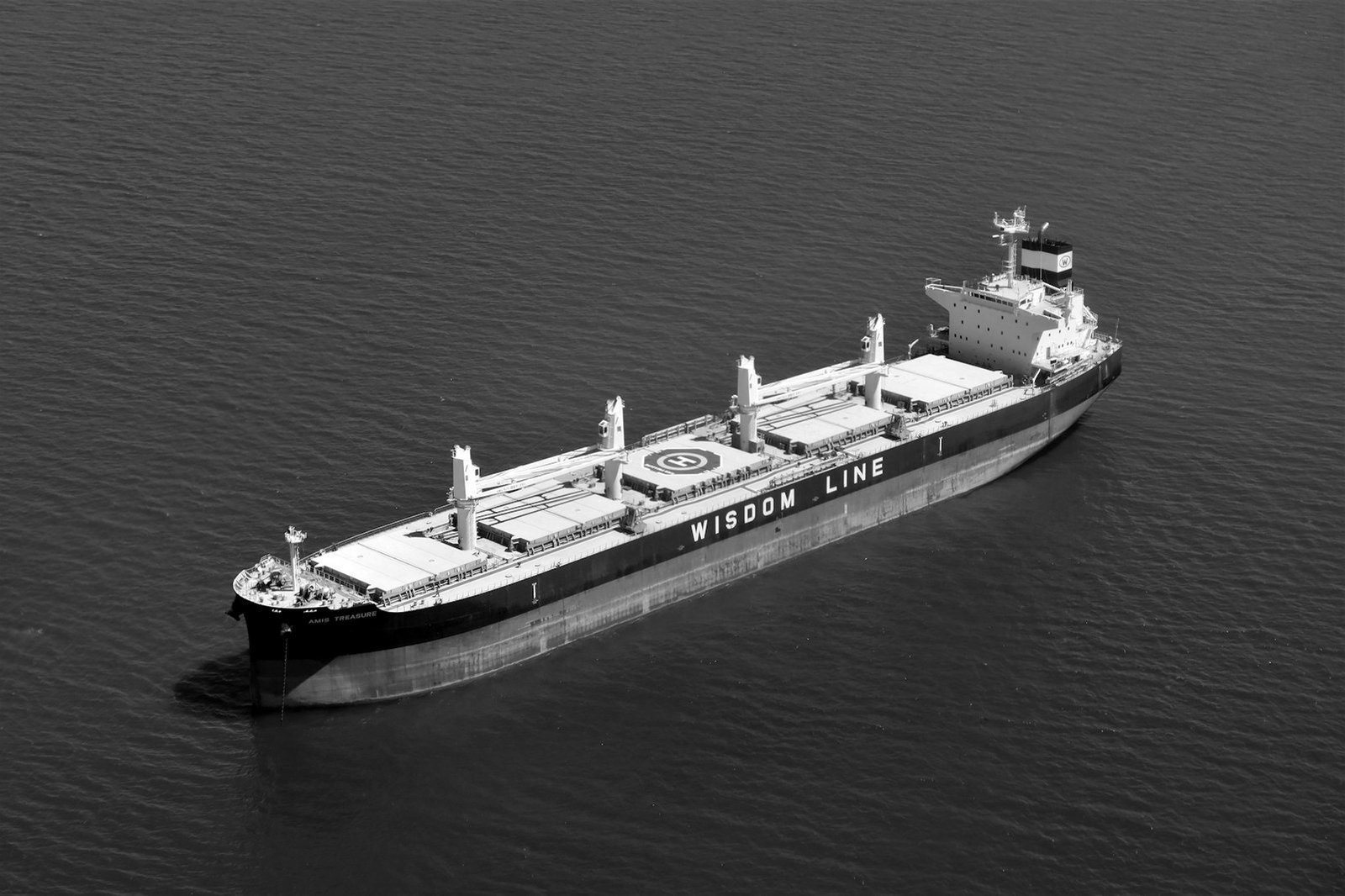
Summary: Most charterparties touching Bangladesh choose foreign law and arbitration, but the Admiralty Court in Dhaka still decides arrest, security and liens, and the District Judge's Court in Dhaka enforces foreign awards. Recent decisions confirm that a charterparty claim alone does not support an arrest in rem, that wrongful or non-disclosed arrests are vacated, and that a foreign award must be put into execution within three years.
Key point: Under section 4 of the Admiralty Court Act 2000, a claim arising from the use or hire of a ship cannot by itself found an action in rem through the general route that covers ownership, possession and mortgage claims. Arrest depends on satisfying the statutory conditions, so claimants must match the right defendant to the right vessel before they file.
At a glance
Jurisdiction
Section 3(2)(h) of the Admiralty Court Act 2000 covers claims arising from carriage of goods or the use or hire of a ship.
Arrest
Arrest is granted ex parte on admission of the suit but is vacated where the statutory in rem conditions are not met.
Arbitration
A larger bench has held that the Act's stay and interim relief provisions do not reach foreign-seated arbitration, and it still binds single judges in 2026.
Enforcement
Foreign awards are executed by the District Judge's Court in Dhaka under section 45 of the Arbitration Act 2001.
Time bar
Execution of a foreign award must start within three years of the award, with no power to condone delay.
Table of Contents
Charterparty disputes in Bangladesh: the 2026 framework
Three bodies of law meet in charterparty disputes in Bangladesh. The first is the contract itself, usually on a BIMCO or other standard form, almost always governed by English law and providing for London arbitration, and occasionally Singapore. The second is the admiralty jurisdiction of the High Court Division under the Admiralty Court Act 2000, which decides whether a ship, cargo or other property in Bangladesh can be arrested to secure the claim. The third is the Arbitration Act 2001, which governs whether a Bangladeshi court will stay local proceedings, grant interim relief and enforce the eventual award.[1] [3]
Bangladeshi courts apply English authorities extensively when they construe charterparties. In recent admiralty judgments the High Court Division has relied on The Spalmatori, The Miramar, The San Nicholas and Carver on Charterparties in deciding demurrage, freight and lien questions.[4] For parties used to London practice, the substantive analysis will look familiar. The procedure, the available security and the timetable are where Bangladesh differs.
Types of charterparty and the disputes they generate
Voyage charters
Under a voyage charter the owner carries a cargo between named ports for freight, and the charterer has a fixed laytime for loading and discharge, after which demurrage runs. Disputes centre on freight, dead freight, laytime and demurrage, and the owner's lien on cargo. A typical Bangladeshi example is the carriage of bagged or bulk urea for a state buyer to Chattogram or Mongla, which has produced several admiralty suits in recent years.[4] [5]
Time charters
Under a time charter the charterer hires the ship for a period or a trip and pays hire, while the owner keeps control of navigation through the master. The charterer directs the ship's employment and can usually call on the master to sign bills of lading in the form it chooses.[4] Disputes turn on unpaid hire, off-hire periods, bunkers on delivery and redelivery, speed and consumption claims and indemnities for bills of lading.
Bareboat charters and charter chains
Under a bareboat or demise charter the charterer takes possession and control of the ship and appoints the crew. Many charterparty disputes in Bangladesh involve chains: a registered owner, a bareboat charterer, a disponent owner who time-charters the ship out, and one or more sub-charterers. In a January 2026 arrest case, the High Court Division had to unravel exactly that structure, with the registered owner, a bareboat charterer in between and a disponent owner described as "owner" for contractual purposes.[6] Identifying who is actually liable, and whether that person owns the ship to be arrested, is the first question in any arrest.
The most common charterparty disputes in Bangladesh
Laytime and demurrage
Once laytime expires the charterer is in breach, and demurrage is the agreed daily rate of liquidated damages for detaining the ship. The High Court Division applied that principle, citing The Spalmatori, in Melimas Shipping S.A. v Bangladesh Chemical Industries Corporation (Admiralty Suit No. 40 of 2014), decided on 10 December 2025.[4] The owner had claimed demurrage of USD 94,250 at the load port, where loading took more than 22 days against an allowance of seven, and further demurrage at Mongla.[4]
Where a charterparty has no demurrage clause, the owner is confined to unliquidated damages for detention and must prove actual loss, generally measured by the market rate of hire less expenses saved and mitigation. In Melimas the owner's detention claim, put at USD 6,500 a day for a period at Colombo, failed for want of proof.[4] The lesson is practical: laytime statements, notices of readiness and port logs must be complete before the claim is filed. Our guide to demurrage and detention claims in Bangladesh covers the calculation in detail.
Freight and conditional payment clauses
Freight disputes often turn on carefully drafted payment conditions. In Dry Bulk Shipping (Pvt.) Ltd v BCIC (Admiralty Suit No. 2 of 2023), decided on 9 September 2026, the carrier had been paid 80 per cent of freight for about 29,829 tonnes of urea carried from Qatar and discharged at Chattogram, and sued for the 20 per cent balance of USD 438,661.80 plus demurrage.
The court held that the balance was payable only on delivery to the buyer's designated godowns and production of the documents the charterparty required, that discharge at Chattogram alone was not enough, and that a separate clause excluded the demurrage claim. The suit was dismissed.[5] Owners carrying for Bangladeshi government buyers should read multi-leg tender terms as carefully as the charter itself. See our analysis of freight and charterparty claims.
Unpaid hire and off-hire
Hire and off-hire accounting is the core of time charter disputes, and it is usually arbitrated abroad. In Globe Ocean Shipping Pte Ltd v M.V. Telerig (Admiralty Suit No. 61 of 2025), disputes over hire and alleged off-hire on a Malaysia to Turkey voyage led the disponent owner to exercise a lien over cargo at the discharge port, and the time charterer then arrested the ship at Chattogram. The court found that the dispute was in substance about hire and off-hire accounting, subject to London arbitration, and vacated the arrest.[6]
Cargo claims under charterparty bills of lading
Cargo interests in Bangladesh frequently sue in the Admiralty Court even when the bill of lading incorporates a charterparty arbitration clause. In the Joker case, a Bangladeshi receiver of soya bean meal shipped from Brazil to Chittagong filed an admiralty suit and arrested the ship after seawater damaged the cargo in Bangladeshi waters. The English Commercial Court held that the bills incorporated the voyage charter's English law and London arbitration clause and granted a final anti-suit injunction restraining the Bangladeshi proceedings.[11] Our guide to cargo loss and short delivery claims explains the local side of such claims.
Bunkers
Disputes over bunkers arise on delivery and redelivery and when a charterer fails to pay a supplier. In Cetus Maritime Pool Ltd v M.V. Schuyler Trader (Admiralty Suit No. 43 of 2024), a claimant with claims against a sub-charterer concerning two unrelated vessels arrested the bunkers on a ship at Mongla. On 12 January 2025 the court vacated the arrest: there was no claim against the vessel or her owner, no maritime lien over the bunkers, and bunkers cannot be arrested independently of the ship.[3]
Governing law and arbitration clauses
Charterparties used in the Bangladesh trades almost always refer disputes to arbitration, most commonly in London, and the bills of lading issued under them often incorporate the charter's law and arbitration clause. The decisions show three recurring scenarios: a London clause in a time charter between foreign parties, as in Telerig; a London clause incorporated into charterparty bills held by a Bangladeshi receiver, as in Joker; and a Singapore clause in a commercial agreement with a Bangladeshi counterparty, as in Legend World Tank.[6] [11] [7]
Incorporation into bills of lading
Whether a charterparty clause binds a Bangladeshi consignee depends on the words of incorporation. In Melimas the bill of lading was a Congenbill form that incorporated "all terms and conditions, liberties and exceptions of the Charter Party dated as overleaf, including the Law and Arbitration Clause", but the date was left blank.
Following The San Nicholas, the court held that where the head charter and the sub-charters are all voyage charters, general words of incorporation point to the head charter.[4] The court distinguished the Appellate Division's decision in Samsun Shipping Corporation v Hossain and Sons, 47 DLR (AD) 31, which concerned time charters and refused to bind a consignee to a charter that was neither incorporated nor mentioned in the bills.[4]
Stay of Bangladeshi proceedings
Section 10 of the Arbitration Act 2001 requires a court, on an application made before the written statement is filed, to refer the parties to arbitration and stay proceedings unless the arbitration agreement is void, inoperative or incapable of determination by arbitration.[1] Section 3, however, applies the Act where the place of arbitration is in Bangladesh, and extends only sections 45, 46 and 47 to arbitrations seated abroad.[1]
In Accom Travels and Tours v Oman Air SAOC, 27 BLC 596, a larger bench of the High Court Division held by a majority of two to one that sections 7, 7A and 10 do not apply to foreign-seated arbitrations, save that section 7A interim relief may be granted at the enforcement stage, and that the court may instead stay a suit under its inherent power in section 151 of the Code of Civil Procedure.[7] In practice, a party facing a Bangladeshi suit in breach of a London clause should still apply promptly for a stay, citing both the arbitration agreement and the court's inherent jurisdiction.
Interim relief in support of foreign arbitration: the 2026 position
On 12 July 2026, in Legend World Tank Pte v Multinational Shipping Co Ltd (Arbitration Application No. 30 of 2025), a Singapore principal sought section 7A orders preserving 107 tank containers in Bangladesh pending SIAC arbitration.
The judge expressed the view that sections 7, 7A and 10 can operate in aid of foreign-seated arbitration. He noted that the Appellate Division in the ECOM review had upheld a section 10 stay in favour of a Liverpool arbitration and that Accom had not considered it. He nonetheless held that a single bench remains bound by Accom and dismissed the application.[7]
Until the Appellate Division or a larger bench resolves the point, section 7A relief for a London or Singapore charterparty arbitration cannot be assumed. Admiralty arrest therefore remains the main protective tool in charterparty disputes in Bangladesh.
The Admiralty Court's jurisdiction over charterparty claims
The High Court Division exercises admiralty jurisdiction under the Admiralty Court Act 2000. Section 3(2)(h) gives it jurisdiction to hear and determine any claim arising out of any agreement relating to the carriage of goods in a ship or to the use or hire of a ship, which captures freight, hire, demurrage and most other charterparty claims.[3] In Melimas the court confirmed that a demurrage claim falls within clause (h).[4]
Actions in rem and in personam
Jurisdiction over the claim is not the same as the right to arrest. Under section 4(2), the jurisdiction may be exercised in rem against the ship or property for claims under clauses (a) to (c) and (r) of section 3(2); clause (h) is not among them. Under section 4(3), an action in rem lies against a ship or property subject to a maritime lien or other charge.[3] For claims under the other heads, including clause (h), the court in Telerig examined whether the statutory preconditions in section 4 were met, including whether the person liable in personam was the owner or demise charterer of the ship at the relevant time.[6]
Foreign charterers and the residence test
A charterparty claimant must also be able to reach the defendant. In Melimas the head charterer and its agent were Singapore businesses that did not appear and had no office in Bangladesh. Applying section 4(8) of the Act together with section 20 of the Code of Civil Procedure, the court dismissed the demurrage claim against them for want of jurisdiction, without deciding the merits, and left the owner to pursue them in the proper forum.[4] A demurrage claim against a foreign charterer with no Bangladeshi presence will usually belong in the contractual arbitration, not the Admiralty Court.
A real Bangladeshi connection
The court will also look for a genuine connection. In Telerig the cargo had been carried from Malaysia to Turkey and never came to Bangladesh, and the court held that the presence of the ship at Chattogram did not convert a wholly foreign charterparty and cargo dispute into a Bangladeshi admiralty claim.[6] For a fuller account of the statute, see our guide to the Admiralty Court Act.
Ship arrest and security in charterparty disputes
Arrest remains the strongest lever in charterparty disputes in Bangladesh, and the court acts quickly. In Telerig the suit was presented on 23 December 2025, admitted the same day, and the court ordered the ship's arrest ex parte at the outer anchorage of Chattogram.[6] Speed cuts both ways, because arrests obtained on a weak footing are set aside, sometimes within weeks.
Security in practice
The Joker case illustrates the commercial dynamics. The Bangladeshi receiver obtained an arrest order on 14 May 2019, served the next day, and sought security of about USD 15.4 million. The owner offered a P&I club letter of undertaking for USD 4.84 million, which the English judge later considered reasonable. The arrest in Bangladesh was lifted on 25 June 2019 only against a bank guarantee, and the ship sailed on 26 July 2019.[11] Owners should plan on providing local bank security rather than relying on a club letter. Our guide to ship release against a bank guarantee sets out the mechanics.
Disclosure and wrongful arrest
An applicant for ex parte arrest must make full disclosure. In Telerig the claimant had not disclosed the London arbitration clause when it sought the arrest. The court held that arrest in aid of arbitration presupposes a prima facie maintainable maritime claim and full disclosure, found that the claimant had no maintainable maritime claim against the ship or her registered owner, and released the ship without requiring any security.[6] The court described the arrest as having so little legal foundation as to fall within the principle in The Evangelismos, the classic English test for damages for wrongful arrest.[6] Our analysis of wrongful ship arrest in Bangladesh explains how owners can respond.

Liens on cargo and sub-freights
In charterparty disputes in Bangladesh, owners commonly protect themselves through a lien clause over cargo and sub-freights. In Melimas, clause 8 of the head charter gave the owners a lien on the cargo and all sub-freights for freight, dead freight, demurrage, damages and other sums due.[4] The court held that the lien clause was incorporated into the bill of lading held by the Bangladeshi end charterer and consignee, and that the consignee was therefore liable to pay the balance of freight at the head-charter rate, decreeing USD 45,072 with interest at ten per cent a year if not paid within thirty days.[4]
Demurrage was treated differently. Applying the House of Lords in The Miramar, the court held that the consignee did not become personally liable for demurrage under the head charter, which the owner could claim only against the head charterer.[4] The distinction matters for owners chasing payment in a chain: a lien may secure freight against cargo arriving in Bangladesh, but it will rarely make a receiver pay a defaulting charterer's demurrage.
Statutory maritime liens
Statutory maritime liens under the Bangladesh Merchant Shipping Ordinance 1983 are narrow. Seamen have a lien on the ship for wages that cannot be contracted away, the master has the same rights for wages and for disbursements and liabilities properly incurred for the ship, and the seaman's lien ranks ahead of all other liens and charges.[2] A charterparty claim for hire or demurrage is not a maritime lien under the Ordinance, and in Schuyler Trader the court recorded that there is no maritime lien against bunkers.[3]
Limitation of liability and time bars
Limitation of liability
Part XII of the 1983 Ordinance allows the owner of any ship, Bangladeshi or foreign, to limit liability for loss or damage caused without its actual fault or privity. The limits are tonnage-based: Tk 1,500 per ton of gross tonnage for property claims alone, and Tk 5,000 per ton where personal injury or loss of life claims arise, with priority rules where both occur.[2] The Supreme Court may determine and distribute the limitation amount among claimants and stay other proceedings. For these purposes "owner" includes the charterer, manager and operator.[2] Charterers facing large third-party claims arising from a casualty in Bangladeshi waters should therefore consider whether limitation is available to them.
When a suit is instituted
Time bars are strictly applied in charterparty disputes in Bangladesh. In Kuwait Oil Tanker Company S.A.K. v LCT Shakti Sanchar (Admiralty Suit No. 24 of 2021), decided on 27 November 2025, the court rejected a collision claim as time-barred under the two-year limit, holding that a suit is instituted when the plaint is presented to the judge for admission, not when it is verified or registered. The plaint had reached the judge in July 2025 for a June 2019 collision.[12] The same discipline applies to charterparty claims: prepare the plaint and the arrest application well before the period expires.
Contractual time bars
Standard charterparty forms carry their own time bars for demurrage claims and supporting documents, and arbitration clauses may contain short appointment deadlines. Those deadlines run under the governing law of the contract, regardless of any parallel admiralty suit in Bangladesh, so an owner who arrests in Chattogram must still commence arbitration in time.
Enforcing London and Singapore awards in Bangladesh
Where the charterparty dispute ends in a foreign award, enforcement is governed by sections 45 and 46 of the Arbitration Act 2001. A foreign arbitral award is one made under an arbitration agreement in the territory of a state other than Bangladesh, excluding any state the government declares a "specified state" under section 47.[1]
Procedure and documents
A foreign award is binding and may be relied on by way of defence or set-off, and on application it is enforced by execution under the Code of Civil Procedure as if it were a decree of the court. For this purpose "Court" means the District Judge's Court in Dhaka. The application must attach the original award or a duly authenticated copy, the original arbitration agreement or a certified copy, and evidence that the award is a foreign award, with certified translations where needed.[1]
Grounds for refusal
Recognition may be refused only on the grounds in section 46: incapacity, invalidity of the arbitration agreement, lack of proper notice or inability to present one's case, excess of jurisdiction, irregular composition or procedure, an award not yet binding or set aside at the seat, non-arbitrability or conflict with the public policy of Bangladesh. If a challenge is pending at the seat, the court may adjourn and order security.[1]
Time limit and delay
On 26 February 2026, in Jess Smith & Sons Cotton LLC v Patriot Spinning Mills Ltd (Arbitration Appeal No. 24 of 2024), the High Court Division held that an application to execute a foreign award must be filed within three years of the award under Article 182 of the Limitation Act 1908, and that section 5 of the Limitation Act does not apply, so delay cannot be condoned. An award of February 2012 put into execution in October 2023 was held hopelessly time-barred.[9]
Even timely enforcement can be slow. In Litmond Shipping Ltd v Tiryaki Agro FZE, a London Maritime Arbitrators Association award of 13 February 2014 for about USD 825,094 was put into execution in Dhaka in January 2017. The debtor's section 46 objection, alleging lack of notice, was still being litigated when the High Court Division, on 24 February 2025, set aside an attachment order and directed the District Judge to dispose of the execution within ninety days.[8] Our guide to foreign arbitral award enforcement in Bangladesh covers the process step by step.
Getting the money out
Remitting the proceeds abroad needs Bangladesh Bank cooperation. On 2 August 2026, in Nautical Bulk Carriers S.A. v M.V. Prosperity (Admiralty Suit No. 20 of 2021), the court addressed a central bank condition that VAT, tax and advance income tax be deducted before compromise decree sums were remitted to foreign parties. It held that a decretal amount becomes a judgment debt that is not "income", that no such deduction may be made, and directed the banks to remit the sums.[10] The court reasoned that the same principle applies to amounts awarded in arbitration.[10]
Chattogram and Mongla in practice
The reported cases show where charterparty disputes in Bangladesh concentrate. Arrests are commonly effected at the outer anchorage of Chattogram, where the Telerig lay, and at Mongla, where the Schuyler Trader was lying when her bunkers were arrested.[6] [3] Fertiliser imports for state buyers discharge at both ports, and charterparties for that trade often combine sea carriage with onward delivery to inland godowns, creating the conditional freight structure seen in Dry Bulk Shipping.[5] [4] The court's Marshal executes arrest and release orders together with the port authorities, so release instructions should be served on both promptly once security is posted.[6]
A practical playbook for charterparty disputes in Bangladesh
Whether you are an owner, a disponent owner, a charterer or a cargo receiver, the same disciplined sequence protects your position in charterparty disputes in Bangladesh.
Read the contract chain
Map the head charter, sub-charters and bills of lading, and identify the law, seat and incorporation wording in each.
Identify the liable party
Decide who owes the money and whether that party owns or demise-charters any ship that will call in Bangladesh.
Secure the evidence
Collect notices of readiness, statements of facts, laytime calculations, hire statements and correspondence.
Choose the protective step
Assess arrest, a contractual lien on cargo or sub-freights, or a stay application, with full disclosure of the arbitration clause.
Commence arbitration in time
Serve the notice of arbitration and appoint an arbitrator within the contractual and statutory deadlines.
Negotiate security
Agree bank security in Bangladesh, or a club letter abroad, sized to the realistic claim.
Plan enforcement early
Prepare authenticated copies of the award and agreement and file for execution in Dhaka well within three years.
Clear remittance
Engage Bangladesh Bank early so that recovered sums can be remitted abroad without delay.
Two points run through every step. Keep the arbitration and the Bangladeshi proceedings consistent, because positions taken in one will be read in the other. And never let a negotiation run past a time bar, a contractual notice period or an arbitrator-appointment deadline without protective steps in place.
Choosing the right forum and remedy
The table summarises how the main disputes are usually handled. On a phone, scroll it sideways.
| Dispute | Usual forum on merits | Local protective step | Key authority | Key point |
|---|---|---|---|---|
| Demurrage | London arbitration or Admiralty Court | Arrest only if in rem conditions met | Melimas (2025) | Consignee not liable for head-charter demurrage |
| Freight balance | Arbitration or Admiralty Court | Lien on cargo under incorporated clause | Melimas (2025); Dry Bulk (2026) | Payment conditions are applied strictly |
| Unpaid hire and off-hire | London arbitration | Lien on cargo or sub-freights | Telerig (2026) | Hire dispute alone did not support arrest |
| Cargo damage under charter bills | Contractual arbitration | Arrest by cargo interests | Joker (2019) | English court restrained Bangladeshi suit |
| Bunkers | Contract forum | None against bunkers alone | Schuyler Trader (2025) | No maritime lien over bunkers |
| Award enforcement | District Judge, Dhaka | Attachment in execution | Jess Smith (2026) | Three-year limit, no condonation |
For most owners and charterers, the right answer combines tools: arbitration under the contract for the merits, a carefully founded arrest or lien in Bangladesh for security, and early planning for enforcement in Dhaka. TRW's admiralty and maritime disputes practice and international arbitration practice advise on each stage, and our guide to maritime arbitration in Bangladesh explains the arbitral side in more depth.
Mistakes to avoid
- Arresting the wrong ship: a claim against a charterer will not usually support arrest of a ship it does not own or demise-charter.
- Hiding the arbitration clause: non-disclosure on an ex parte application can lead to release without security and exposure to wrongful arrest arguments.
- Arresting bunkers alone: the Admiralty Court has held that bunkers cannot be arrested independently of the ship.
- Chasing the receiver for demurrage: incorporating a lien from the head charter may secure freight, but it does not make a consignee personally liable for demurrage.
- Relying on a club letter: plan for bank security to obtain release in Bangladesh.
- Expecting section 7A relief for a London arbitration: under current binding authority it is not available before enforcement.
- Sitting on an award: execution must begin within three years, and delay cannot be condoned.
What to watch in 2026 and beyond
Three developments will shape charterparty disputes in Bangladesh. The first is whether the Appellate Division or a larger bench revisits Accom. The July 2026 judgment in Legend World Tank sets out a detailed case for allowing section 7A relief in support of foreign-seated arbitration, and a reconsideration would give charterparty claimants a second protective tool alongside arrest.[7] The second is the Admiralty Court's increasingly rigorous scrutiny of arrests, seen in Telerig and Schuyler Trader.[6] [3] The third is the court's willingness to clear obstacles to remitting decretal sums abroad, which improves the value of a Bangladeshi judgment or award for foreign owners.[10]
The first forty-eight hours of a dispute usually decide its outcome: whether to arrest, where to arbitrate, what security to accept and what to put on the record. If a vessel, cargo or award connected with Bangladesh is at stake, contact TRW to discuss strategy.
Frequently asked questions
Can the Admiralty Court in Bangladesh hear charterparty claims?
Can I arrest a ship in Bangladesh for unpaid hire?
Is a Bangladeshi receiver liable for demurrage under the head charter?
Generally not. In 2025 the High Court Division applied The Miramar and held that the consignee was not personally liable for head-charter demurrage, although it was liable for the balance of freight under an incorporated lien clause.[4]
Will a Bangladeshi court stay a suit in favour of London arbitration?
Under the binding larger-bench decision in Accom, section 10 does not apply to foreign-seated arbitration, but the court may stay the suit under its inherent jurisdiction. The Appellate Division has upheld a section 10 stay in favour of a Liverpool arbitration in the ECOM review.[7]
Can I get interim relief in Bangladesh for a Singapore arbitration?
Not under current binding authority, except at the enforcement stage. In July 2026 a single judge dismissed a section 7A application in aid of an SIAC arbitration while questioning the reasoning in Accom.[7]
Which court enforces a London arbitration award?
The District Judge's Court in Dhaka, which executes the award under the Code of Civil Procedure as if it were a decree, on production of the award, the arbitration agreement and evidence that the award is foreign.[1]
How long do I have to enforce a foreign award in Bangladesh?
Three years from the date of the award under Article 182 of the Limitation Act 1908, and the court has no power to condone delay.[9]
Will a P&I club letter of undertaking release an arrested ship?
Do not rely on it. In the Joker case the owner offered a club letter, but the arrest in Bangladesh was lifted only against a bank guarantee.[11]
Can bunkers be arrested for a claim against a charterer?
No. In 2025 the Admiralty Court vacated an arrest of bunkers, holding that there is no maritime lien over bunkers and that they cannot be arrested independently of the ship.[3]
Is tax deducted when decree money is remitted to a foreign owner?
In August 2026 the High Court Division held that VAT, tax and advance income tax cannot be deducted from a decretal amount remitted abroad, and directed the banks to remit the full sums.[10]
Source register
Primary legal and regulatory sources
Materials checked on 23 October 2026. Confirm the current official text before relying on any provision.
- Arbitration Act 2001 (Act No. I of 2001), English text hosted by the Bangladesh International Arbitration Centre
- Bangladesh Merchant Shipping Ordinance 1983 (Ordinance No. XXVI of 1983), Part XII, consolidated text — ILO NATLEX
- High Court Division (Admiralty), Cetus Maritime Pool Ltd v M.V. Schuyler Trader, Admiralty Suit No. 43 of 2024, order of 12 January 2025
- High Court Division (Admiralty), Melimas Shipping S.A. v Bangladesh Chemical Industries Corporation, Admiralty Suit No. 40 of 2014, judgment of 10 December 2025
- BD Law Post, 28 September 2026 — Dry Bulk Shipping (Pvt.) Ltd v BCIC, Admiralty Suit No. 2 of 2023 (judgment of 9 September 2026)
- High Court Division (Admiralty), Globe Ocean Shipping Pte Ltd v M.V. Telerig, Admiralty Suit No. 61 of 2025, order of 13 January 2026
- High Court Division, Legend World Tank Pte v Multinational Shipping Co Ltd, Arbitration Application No. 30 of 2025, judgment of 12 July 2026
- High Court Division, Litmond Shipping Ltd v Tiryaki Agro FZE, Civil Revision No. 3417 of 2024, judgment of 24 February 2025
- High Court Division, Jess Smith & Sons Cotton LLC v Patriot Spinning Mills Ltd, Arbitration Appeal No. 24 of 2024, judgment of 26 February 2026
- High Court Division (Admiralty), Nautical Bulk Carriers S.A. v M.V. Prosperity, Admiralty Suit No. 20 of 2021, order of 2 August 2026
- England and Wales High Court (Commercial Court), Seniority Shipping Corporation SA v City Seed Crushing Industries Ltd (m.v. Joker) [2019] EWHC 3541 (Comm)
- High Court Division (Admiralty), Kuwait Oil Tanker Company S.A.K. v LCT Shakti Sanchar, Admiralty Suit No. 24 of 2021, order of 27 November 2025
Related TRW assistance
Move from information to a defined next step
TRW acts for owners, charterers, cargo interests and financiers in charterparty disputes, ship arrests, release and security, and the enforcement of London and Singapore awards in Bangladesh. Explore our admiralty and maritime disputes practice and international arbitration practice, or contact TRW to discuss your matter.