
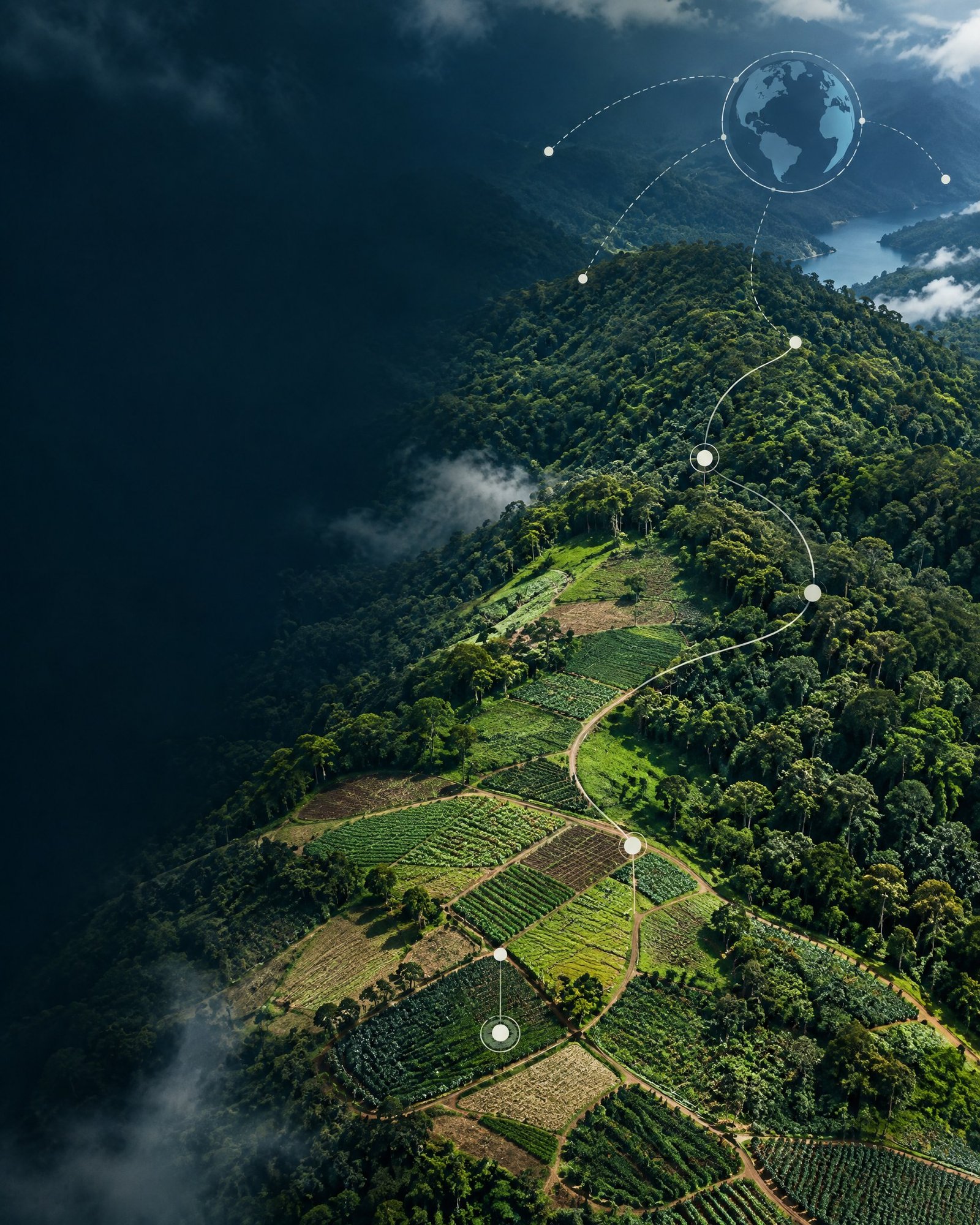
Deforestation-Free Commodity Supply-Chain Due Diligence for Bangladesh
Deforestation-free supply chain advice for Bangladeshi exporters of wooden furniture, paper, printed products, rubber goods and leather, and for importers and traders, covering the EU Deforestation Regulation, geolocation and legality evidence, supplier contracts, buyer requirements, contracts and enforcement risk in each market.

- Confirm product scope first
- Map suppliers and collect data
- Align supplier and buyer contracts
- Maintain records and defend
Deforestation-free due diligence for Bangladeshi supply chains
The European Union's Deforestation Regulation requires businesses placing certain commodities and products on the EU market to show that they are deforestation-free, produced legally in the country of origin and covered by a due diligence statement. The covered commodities are cattle, cocoa, coffee, oil palm, rubber, soya and wood, and many derived products. For Bangladesh, the most relevant lines include wooden furniture, paper, paperboard and printed matter, and certain rubber products. A Commission delegated act adopted in July 2026, subject to EU scrutiny, removes cattle hides and leather. We advise through our trade and regulatory practice in Bangladesh.
The legal duties under the Regulation fall mainly on operators and traders in the EU, but can only be met with supply-chain information. An EU importer of Bangladeshi wooden furniture needs to know where the timber was harvested, down to the geolocation of the forest plots, and that the land was not deforested after 31 December 2020. A buyer of paper or rubber products needs comparable evidence for the pulp or rubber. That deforestation-free evidence must be collected, verified and passed along the chain, often across several countries, so Bangladeshi manufacturers are asked for data they never held.
Application dates have moved more than once. After postponements, the Regulation is currently scheduled to apply to larger operators from the end of 2026 and to micro and small enterprises from mid-2027, and the European Commission completed a simplification review in May 2026. Businesses should confirm the current position before finalising plans, but should not treat further delay as certain. Buyers are already asking suppliers for traceability data and contractual commitments. Other markets, including the United Kingdom through its forest risk commodities legislation, are developing similar rules, and many brands apply deforestation-free sourcing policies regardless of the law.
Bangladeshi exporters face particular practical challenges. Natural rubber may come from domestic plantations or imported sources, collected through traders and processed in mixed batches. Timber for furniture may be imported from several countries or sourced locally, sometimes through informal channels. Paper and pulp often come from mills abroad, through agents and distributors. Each of these supply chains needs mapping, supplier engagement and documentation that links products to their origin. We help clients assess which products are actually in scope, what evidence buyers can reasonably require, and how to build deforestation-free records without unnecessary cost.
Our work brings together trade regulation, environmental law, commercial contracts and disputes. We review buyer deforestation-free requirements and contracts, draft supplier obligations, advise on legality evidence under Bangladeshi forestry, environmental and land laws, and coordinate with technical providers offering geolocation, mapping and satellite monitoring services. We also advise EU importers on obtaining information from Bangladeshi suppliers and on structuring due diligence across the supply chain. When orders are rejected, payments withheld or allegations made, our dispute resolution team protects the client's position in negotiation, arbitration and court proceedings, in Bangladesh or abroad.
Core workstreams
Four clear stages
- 01Confirm product scope first
- 02Map suppliers and collect data
- 03Align supplier and buyer contracts
- 04Maintain records and defend
Talk to a partner
Consultations in Dhaka or by video. Scope, team and fees are agreed in writing first.
Book →Deforestation due diligence work we handle

Scope and product classification
- Confirm product scope first
- Map suppliers and collect data
- Align supplier and buyer contracts
- Maintain records and defend
Supply-chain mapping and data
- Confirm product scope first
- Map suppliers and collect data
- Align supplier and buyer contracts
- Maintain records and defend
Legality evidence in Bangladesh
- Confirm product scope first
- Map suppliers and collect data
- Align supplier and buyer contracts
- Maintain records and defend
Supplier and buyer contracts
- Confirm product scope first
- Map suppliers and collect data
- Align supplier and buyer contracts
- Maintain records and defend
EU importer and trader support
- Confirm product scope first
- Map suppliers and collect data
- Align supplier and buyer contracts
- Maintain records and defend
Rejections, claims and disputes
- Confirm product scope first
- Map suppliers and collect data
- Align supplier and buyer contracts
- Maintain records and defend
Scope and product classification
We review your products and their customs classifications against the Regulation's annex to confirm which items are in scope, which are excluded and which depend on composition or use. Furniture, paper products, rubber items, packaging and leather, given the pending change to its status, can all raise borderline questions. We give a clear written view that management, buyers and customs brokers can rely on when planning production, sourcing and the deforestation-free data each order requires.
Supply-chain mapping and data
We help exporters map supply chains for each in-scope product line, identify the suppliers holding origin and geolocation information, and design a data collection process that links each batch to its sources. We coordinate with technical providers on geolocation, mapping and satellite verification, and make sure information is stored securely and can be shared with buyers in the formats their due diligence systems require, without exposing commercially sensitive supplier details unnecessarily.
Legality evidence in Bangladesh
The Regulation requires products to be produced in accordance with the relevant laws of the country of production, including land use, environmental, forestry, labour, human rights, tax and anti-corruption rules. Where raw materials originate in Bangladesh, we advise on the documents that demonstrate legality, such as forest transit permits, land records, environmental clearances and supplier licences, and how to present them credibly to buyers and auditors as part of a deforestation-free evidence file.
Supplier and buyer contracts
We draft supplier undertakings, data sharing agreements and contract clauses that require origin information, allow verification, protect confidential data and set out remedies for false declarations. We also review and negotiate buyer terms, making sure that obligations placed on Bangladeshi exporters are proportionate, linked to what the law actually requires and balanced by reasonable cooperation, timing and cost-sharing provisions. We also advise on warranties and indemnities, so that liability for deforestation-free declarations sits with the party that actually controls the information.
EU importer and trader support
For EU operators sourcing from Bangladesh, we advise on how local supply chains work, which documents are realistically available, and how to engage suppliers effectively. We help design questionnaires, verify Bangladeshi legality documents and assess local risk factors. Working with EU counsel, we make sure the importer's due diligence statement is supported by evidence that would stand up if a competent authority carries out a check or asks for supporting documents.
Rejections, claims and disputes
When a shipment is questioned, an order is cancelled or a buyer alleges that information was incomplete or inaccurate, we review the contract, the evidence and the regulatory position, and advise on the response. We negotiate solutions, pursue claims against upstream suppliers who provided false data and represent clients in arbitration or court proceedings where a commercial settlement cannot be reached, aiming always to preserve valuable buyer relationships.
Partner-led, on every matter.
Trade, Competition & Regulation matters at TRW are led by partners, supported by associates, with one responsible lawyer from first advice to final outcome.
Meet the firm →



01Which Bangladeshi exports are affected by the new EU deforestation-free rules?
The EU Regulation covers products derived from cattle, cocoa, coffee, oil palm, rubber, soya and wood, as listed in its annex. For Bangladesh, the main affected exports are wooden furniture, certain paper and paperboard products, printed materials and some rubber products. Cattle hides and leather are being removed from scope by a delegated act adopted in July 2026, subject to EU scrutiny, and cotton or synthetic garments are not covered as such. Exact coverage depends on the customs classification and composition of each product, so we review product lists line by line before any deforestation-free compliance programme starts.
02Who must file the EU due diligence statement for products made in Bangladesh?
The due diligence statement is submitted in the EU information system by the operator who first places the product on the EU market or exports it, which is usually the EU importer. A Bangladeshi exporter does not normally file it, but must provide the information that supports it, including geolocation of production plots, supplier details, quantities and evidence of legality. Large traders and downstream operators have further obligations. If a Bangladeshi company sells directly into the EU through its own EU entity, that entity may become the operator. We clarify each party's role and the deforestation-free data flows required.
03Do leather exporters still need deforestation-free geolocation data?
For cattle products, the Regulation requires geolocation of all establishments where the cattle were kept, and hides and leather were originally covered. In July 2026, however, the European Commission adopted a delegated act removing cattle hides, skins and leather from scope, subject to scrutiny by the European Parliament and Council. Tanneries and leather goods makers should confirm whether the change has taken effect before investing heavily in hide traceability. Buyers may still ask for origin information under their own sourcing policies. We help leather exporters assess their position, respond to buyer requests and explain current traceability limits honestly and constructively.
04Is wooden furniture made in Bangladesh within the scope of the Regulation?
Many wooden furniture products are listed in the Regulation's annex, so exports to the EU are likely to be covered. The importer will need the geolocation of the forest where the timber was harvested and evidence of legal harvesting in the country of origin. Where timber is imported into Bangladesh from another country, information must come from that country's suppliers as well. Furniture manufacturers should identify timber sources for each product line and require supplier documentation. We advise on contracts, legality evidence and how to manage mixed or recycled timber, which may be treated differently under the rules.
05When do deforestation-free obligations start to apply?
Application has been postponed more than once. On the current timetable, the main obligations apply to larger operators from the end of 2026 and to micro and small enterprises from mid-2027, and the European Commission completed a simplification review of the Regulation in May 2026. Dates and details could still change, so they should be checked against the latest official sources before decisions are made. However, many buyers are already requiring information now, and building traceability systems takes time, so Bangladeshi exporters should not wait for final certainty before preparing their supply chains.
06How does the EU country benchmarking system affect Bangladeshi suppliers?
The European Commission classifies countries as low, standard or high risk for deforestation. The classification affects the level of due diligence required, with simplified obligations for products from low-risk countries and enhanced checks for high-risk ones. What matters is the country where the commodity was produced, not only where the product was manufactured. Wooden furniture made in Bangladesh from imported timber is assessed by reference to where the trees were harvested. We review the current benchmarking list for each source country in your supply chain and advise on the due diligence level that applies.
07Can we rely on certification schemes to show products are deforestation-free?
Certification schemes for forestry, leather and other commodities can provide useful information and help structure supplier engagement, but they do not automatically satisfy the Regulation. Operators must still collect geolocation data, assess risk and confirm legality. Certification may not cover the cut-off date, the full supply chain or the specific legal requirements. Buyers will often accept certification as part of the evidence rather than as a substitute for it, and authorities take a similar view. We advise on how to use certifications alongside your own records and supplier declarations, and on avoiding overstated deforestation-free claims in marketing materials.
08What are the penalties if a product sold in the EU is found non-compliant?
Penalties are set by EU member states and must be effective, proportionate and dissuasive. They can include fines calculated by reference to turnover, confiscation of products and revenues, exclusion from public procurement and temporary bans on placing products on the market. These penalties apply directly to EU operators and traders, but they inevitably affect Bangladeshi suppliers through rejected shipments, cancelled orders, contractual claims and loss of customers. Clear contracts, reliable data, regular supplier reviews and documented checks reduce the risk that a Bangladeshi supplier is blamed for a deforestation-free compliance failure it did not cause.
From first call to resolution.
- 01
Confirm product scope first
We review your products, customs codes, materials and EU sales to identify which items are covered, which are excluded and where classification or composition needs closer technical or legal review before deforestation-free planning begins.
- 02
Map suppliers and collect data
We map supply chains for in-scope products, engage suppliers, coordinate geolocation and verification providers, and build records that link each batch to its origin and legality evidence, ready for buyer and authority requests.
- 03
Align supplier and buyer contracts
We revise supplier undertakings and buyer agreements so that data obligations, verification rights, confidentiality, costs and remedies are clear, proportionate and consistent with the Regulation's requirements and with your deforestation-free sourcing policy.
- 04
Maintain records and defend
We help keep records current as suppliers and rules change, support buyer audits and authority checks, and act in disputes over rejected orders, false declarations or claims for losses, protecting the business and its relationships.

“Demonstrates an extraordinary command over both domestic litigation and international arbitration.”
The Legal 500 Asia Pacific, Bangladesh: Dispute resolution, client feedback
Related reading.
Export Law in Bangladesh: Legal Guide for Exporters in 2026
International Trade Law in Bangladesh: Legal Framework and Compliance in 2026
Bangladesh Trade Agreements in 2026: SAFTA, APTA, the Japan EPA, the US Deal and LDC Graduation

Environmental Law in Bangladesh 2026: Acts, Clearance, Courts and New Rules
All insights →
What does deforestation-free mean under the EU Regulation?
Are cotton and synthetic garments made in Bangladesh affected?
Does Bangladesh have its own deforestation-free law?
Can Bangladeshi suppliers keep farm, forest and supplier origin data confidential?
How much does deforestation-free compliance usually cost a Bangladeshi exporter?
What happens if one of our suppliers provides false origin information?
Is natural rubber from Bangladesh covered by the Regulation?
How can TRW help with deforestation-free due diligence?
Keep your EU exports deforestation-free and compliant
Speak with the partners about deforestation-free in Bangladesh or across borders.
Book a consultation →