
TRW Insight / Bangladesh
Bangladesh Bank has opened trade finance beyond the letter of credit, made overdue export proceeds costlier and let importers hedge commodity prices. Exporters, commodity and metals traders and their lenders need to know which structures are permitted and how to get paid.
Trade finance Bangladesh rules in 2026: what changed
Trade finance Bangladesh banks provide has changed more in 2026 than in the previous decade. Bangladesh Bank has opened the door to open account trade, documentary collections and supply chain finance alongside the letter of credit, refinanced pre-shipment credit at new rates, tightened access to the Export Development Fund for exporters with overdue proceeds and, for the first time, allowed importers of grains, edible oil, metals and fuel to hedge commodity price risk through their banks without prior approval. Each change creates opportunity, and each carries legal conditions that decide whether a transaction is compliant, financeable and recoverable.
This guide is written for exporters, commodity importers, metals traders, lenders and foreign buyers. It does not repeat the mechanics of letters of credit or the general foreign exchange regime, which our dedicated guides already cover. Instead it maps the financing layer: which instruments are permitted, what Bangladesh Bank requires of each, how agricultural commodity, grains and metals trading is regulated, and how to recover export proceeds when a buyer abroad does not pay.

Summary: Trade finance in Bangladesh is regulated through Bangladesh Bank's consolidated export and import circulars under the Foreign Exchange Regulation Act 1947. In 2026 the regime moved beyond the letter of credit to permit open account, documentary collection, receivables discounting and supply chain finance, while making overdue export proceeds far more costly for exporters and opening commodity price hedging to importers.
Key point: An exporter with overdue export proceeds is now barred from Export Development Fund financing until the proceeds are repatriated or Bangladesh Bank's Discount Committee grants an exemption. A single unpaid shipment can therefore cut off the working capital that funds the next one.
At a glance
Beyond the LC
Since June 2026 banks may support open account, documentary collection, factoring and receivables finance under a formal Bangladesh Bank framework.
Refinance schemes
The EDF lends in foreign currency for 180 days, extendable to 270, and the taka pre-shipment refinance fund grew to Tk7,000 crore in October 2026.
Export proceeds
Four months to repatriate, monthly overdue reporting by banks and loss of EDF access for exporters who fall behind.
Commodity hedging
Importers of grains, edible oil, metals, fertiliser and fuel may hedge up to 100 per cent of genuine exposure through their banks.
Metals and gold
Steel inputs and scrap ships qualify for 360-day usance; gold imports need a dealer licence and approval for every consignment.
Table of Contents
How trade finance Bangladesh Bank regulates is structured in 2026
Three bodies shape every cross-border trade transaction. The Ministry of Commerce decides what may be imported or exported, and by whom, through the Imports and Exports (Control) Act 1950, the Import Policy Order and the Export Policy. Bangladesh Bank decides how the transaction is paid for and financed, through circulars issued under section 20(3) of the Foreign Exchange Regulation Act 1947.[1] The National Board of Revenue decides what the goods cost at the border. Authorised dealer banks sit in the middle: they open credits, negotiate documents, report to Bangladesh Bank's online monitoring systems and carry personal and institutional liability when the rules are broken.
The core instruments are two consolidated circulars that are reissued every year. FEPD-1 Circular No. 26 of 30 July 2026 governs export transactions, and FEPD-1 Circular No. 30 of 13 August 2026 governs imports; each repeals the previous instructions it consolidates and remains valid for one year.[1] [2] Any trade finance structure that cannot be traced to a provision in one of them, or to a specific Bangladesh Bank approval, should be treated as unauthorised.
Where this guide fits
Letters of credit, UCP 600 and documentary discrepancies are covered in our guide to letters of credit in Bangladesh, and the choice between credits and transfers in our analysis of LC versus TT. Registration, EXP forms, retention quotas and export incentives are covered in our guide to export law in Bangladesh, and the wider exchange control regime in our guide to foreign exchange regulations. This article concentrates on the financing, commodity and recovery questions those guides leave open.
Bangladesh Bank (FEPD-1)
Issues the consolidated export, import and hedging circulars under the Foreign Exchange Regulation Act 1947.
Authorised dealer banks
Open credits, discount bills, report to OEMS and OIMS and carry liability for non-compliance.
Ministry of Commerce
Sets the Import Policy Order, Export Policy, essential commodities law and gold policy.
Ministry of Food
Grants and conditions private rice and grain import allocations.
Department of Agricultural Marketing
Licenses agricultural traders, warehouses and cold stores and settles market disputes.
BSEC and the Chittagong Stock Exchange
Will regulate and operate the planned commodity exchange once approvals are granted.
The financing toolkit: pre-shipment, post-shipment and usance credit
Most trade finance Bangladesh exporters use falls into two windows: pre-shipment finance for inputs and production, and post-shipment finance that turns a receivable into cash before the buyer pays. Importers use usance and buyer's credit to defer payment while goods are processed and sold.
Refinance schemes for pre-shipment credit
The Export Development Fund remains the largest foreign currency source for input imports. Under the master circular issued in July 2026, Bangladesh Bank refinances authorised dealers at the six-month SOFR plus 0.50 percentage points, and banks may lend to exporters at up to six-month SOFR plus 1.50 percentage points. Loans are repayable within 180 days, extendable to a maximum of 270 days with Bangladesh Bank approval. A new EDF facility of up to USD 500,000 covers eligible bulk imports regardless of sector, and back-to-back limits of up to USD 20 million continue by sector.[4]
For taka working capital, Bangladesh Bank expanded its pre-shipment credit refinance fund for export-oriented industries in early October 2026 from Tk5,000 crore to Tk7,000 crore, moving Tk2,000 crore from the Export Facilitation Pre-finance Fund. The maximum rate to borrowers rose from 5 to 6 per cent, and the refinance rate to banks from 2 to 3 per cent.[5]
Discounting and assigning export bills
Once an exporter holds an accepted usance bill, it may discount the bill through its bank for immediate funds. The bank must be satisfied that the bill arises from a bona fide direct or deemed export, may fund the discount from its own resources, its offshore banking unit, correspondents or financial institutions abroad, and cannot charge an all-in cost above 3 percentage points over a benchmark such as SOFR or Euribor.[1]
The export circular also grants general permission to assign an exporter's rights under a usance export bill to a licensed bank or financial institution abroad, provided that institution has fully prepaid the bill as a final, without-recourse settlement.[1] That permission is what makes forfaiting and true-sale receivables purchases possible without a separate approval. A with-recourse discount leaves the exporter exposed to the buyer's default; a compliant without-recourse assignment shifts that risk to the financier.
Usance and buyer's credit for imports
Industrial importers may buy raw materials on supplier's or buyer's credit for up to 270 days or the cash conversion cycle, whichever is earlier, and the bank must test that cycle against the customer's trading history. Agricultural implements and chemical fertilisers qualify for the same 270 days. Spares may be imported on 360-day terms and capital machinery on terms of up to three years.[2] Usance interest is capped at an all-in cost of 3 percentage points over the relevant benchmark, and the same ceiling applies to buyer's credit from foreign banks.[2] The import circular also allows forward rate agreements to hedge the floating interest rate on such credits.

Beyond the letter of credit: alternative trade finance in Bangladesh
The most important structural change of 2026 is a new part of the export circular, introduced by FEPD-1 Circular No. 11 of 11 June 2026, on the development of alternative trade finance mechanisms. It records that the letter of credit remains important but that open account trade, documentary collection, supply chain finance including factoring, and receivables financing are now part of global practice, and it permits authorised dealers to support them alongside LC-based exports.[1]
Three mechanisms are expressly permitted: advance payments, open account trade subject to the statutory realisation period and a satisfactory record, and documentary collection on documents-against-payment or documents-against-acceptance terms under the ICC's Uniform Rules for Collections.[1]
Open account exports and payment risk cover
Open account is not unsecured trade. Exports on open account terms must be backed by a payment undertaking or payment risk cover from an international factor, a foreign bank or financial institution, a trade financier or an insurer, so that the exporter is paid on a priority basis if the importer defaults. The cover may include early payment before maturity, which must be on a non-recourse basis, and the all-in cost of guarantee commission and early payment interest cannot exceed 3 percentage points a year over the benchmark.[1] Banks may also arrange payment risk cover from local insurers, issued in foreign currency and backed by reinsurance abroad.
Supply chain finance and reverse factoring
Banks are encouraged to build export-oriented supply chain finance, including factoring and receivables finance, and the circular names reverse factoring as a way for exporters to receive early payment against buyer-approved invoices. There is a procedural gate: a bank intending to launch a supply chain finance product must first inform Bangladesh Bank's Foreign Exchange Policy Department-1 with the product structure, risk framework, credit methodology, exposure limits and monitoring arrangements, and may implement it only after regulatory acknowledgement.[1]
Electronic documents and prudential controls
Banks may accept electronic invoices and transport documents where verification is adequate and enforceability is ensured, and every non-LC structure must rest on buyer credit assessment, exposure limits, a full documentation trail and strict AML and CFT compliance.[1] For a lender taking security over stock or receivables at home, the registry under the Secured Transactions (Movable Property) Act 2023 is covered in our guide to secured transactions in Bangladesh.
Export proceeds realisation: the Bangladesh Bank rules that drive recovery
Realisation is where trade finance Bangladesh exporters rely on meets exchange control. The prescribed period for repatriating export proceeds is four months under Notification No. FE 1/77-BB of 16 April 1977, and an exporter who fails to receive the full proceeds within that period, without Bangladesh Bank authorisation, faces action under the Foreign Exchange Regulation Act 1947. Raw jute and jute goods may be sold on terms of up to 360 days on qualifying terms.[1] The general rules, retention quotas and EXP procedure are set out in our export law guide; what follows focuses on the consequences of non-payment.
The reporting trail that follows an unpaid bill
Banks must upload information on every overdue EXP form to the Online Export Monitoring System by the 10th day of each month, including the reason the proceeds are overdue, the actions taken to realise them and the status of any litigation.[1] An exporter that cannot show demands, insurance claims or proceedings against the buyer will struggle to argue that the delay was commercial rather than deliberate.
Why overdue export proceeds now cost more than the receivable
Since July 2026, exporters who fail to repatriate export proceeds within the prescribed time, or whose EDF liabilities have been converted into funded facilities, are barred from EDF financing. Eligibility returns only when the overdue proceeds are repatriated or the Discount Committee grants an exemption.[4] For a garment or textile exporter that funds yarn and fabric through the EDF, one defaulting buyer can stop the production line.
The scrutiny has a background. In August 2024 two central bank reports listed 40 companies in Dhaka and Chattogram with about USD 588 million of unrepatriated export proceeds, and a central bank official said overdue proceeds had earlier exceeded USD 1.5 billion.[7] Some named groups were also accused of using fake export bills. Banks therefore treat persistent overdue bills as a fraud and money laundering signal, not merely a credit problem; our guide to LC fraud in Bangladesh explains how those investigations unfold.
Discounts, short realisation and lost cargo
A buyer's claim for a price discount is not a private matter in trade finance Bangladesh law. Discounts claimed by importers on shipments of readymade garments, leather goods, jute goods, ships, frozen shrimp and fish products must be submitted through the bank to Bangladesh Bank's Discount Committee for decision, and the bank must first be satisfied that the claim is genuine.[1] Accepting a discount informally and repatriating less than the EXP value leaves a short realisation, for which the bank must obtain a full explanation from the exporter and pass it to Bangladesh Bank.[1]
Delay or non-realisation exposes the exporter to punitive action under the 1947 Act, and banks and their officials are liable where their own non-compliance caused it. Where goods are lost in transit before payment, the bank must ensure an insurance claim is lodged promptly and endorse the insurance details on the EXP form.[1]
Recovering overdue export proceeds: a practical playbook
Recovery succeeds when legal steps run in parallel with the regulatory record rather than after it. The first question is how the sale was paid. Under a letter of credit, the exporter's claim is against the issuing or confirming bank, and the documentary rules and the remedies described in our guide to LC disputes in Bangladesh apply. Under collection or open account terms, the claim is against the buyer, its bank's handling of documents, or the factor or insurer that gave payment cover.
Insurance, guarantees and payment undertakings
Where the bank financed the bill with credit insurance, the policy is an extra comfort for the lender, but Bangladesh Bank is explicit that insurance cover does not waive the exporter's obligation to realise export proceeds.[1] Where an open account sale carried a payment undertaking from a designated institution abroad, the exporter's first move is to present the invoices and documents under that undertaking within its terms. Missing a claim window is one of the least recoverable errors.
Proceedings against the buyer
If the contract contains an arbitration clause, arbitration in a New York Convention state generally gives the most portable result. A foreign court judgment against the buyer in its home jurisdiction is often the practical route for a single unpaid invoice. Claims against a Bangladeshi bank, a local agent or a domestic counterparty belong in the Commercial Courts established under the Commercial Courts Act 2026, Act No. 23 of 2026, which channels banking and trade disputes through pre-suit mediation and case management; see our analysis of the Commercial Courts Act. Awards from abroad are enforced under the regime explained in our guide to foreign arbitral award enforcement.
Whichever forum is chosen, tell the bank in writing at each stage, so that the monthly overdue report reflects active recovery and litigation status. That record supports any later request to Bangladesh Bank for an extension of time or Discount Committee relief.
Classify the transaction
Identify whether the sale is under LC, collection, open account, advance or merchanting terms, and the circular paragraph that authorises it.
Secure payment cover
For open account sales, obtain a payment undertaking or risk cover from a designated institution before shipment.
Diarise every deadline
Record the four-month realisation date, insurance and undertaking claim windows, and any EDF repayment date.
Escalate early
Send demands through the collecting or presenting bank as soon as a bill passes maturity and keep copies for the bank's overdue report.
Route discounts properly
Submit any buyer discount claim through the bank to the Discount Committee instead of accepting a short payment informally.
Claim under cover
Present invoices and documents under the policy or undertaking within its terms, without waiting for the buyer.
Choose the forum
Commence arbitration, foreign proceedings or a Commercial Court claim according to the contract and the counterparty's assets.
Keep the record current
Give the bank written updates so the monthly OEMS entry shows active recovery and litigation status.
Commodity trading in Bangladesh: agricultural goods and grains
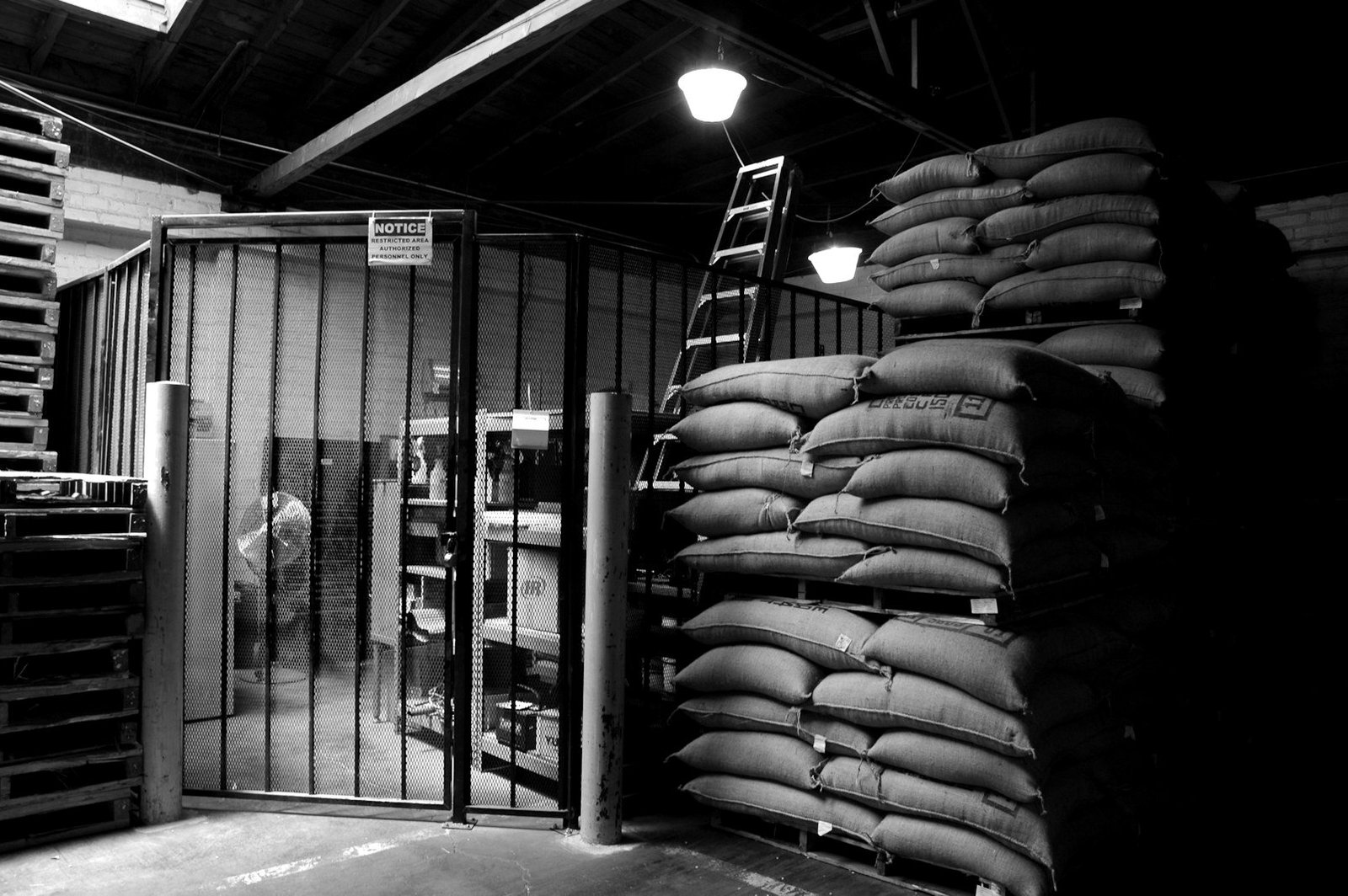
Commodity trading in Bangladesh is shaped by food security policy as much as by commercial law. Staple foods are politically sensitive, and the state intervenes through duties, import allocations, price monitoring and criminal enforcement against hoarding. Any trade finance Bangladesh lenders extend to these traders is only as safe as the trader's regulatory standing.
Licensing and market regulation
The Agricultural Marketing Act 2018, Act No. 44 of 2018, requires exporters, importers, dealers, millers, suppliers and processors of agricultural produce, and operators of warehouses and cold storage, to hold a licence. The government may declare notified markets, the Department of Agricultural Marketing monitors the sector and provides price support, and its Director General settles disputes among traders, farmers, stockists and warehouse owners. Offences can be tried by magistrates and mobile courts.[10]
Above that sits the essential commodities regime. The Pakistan-era Essential Commodities Control Act 1956 is due to be replaced: in December 2025 the commerce ministry finalised a draft Essential Commodities Act letting the government intervene from production to import and consumption and adding paddy, rice, wheat, flour and potatoes to the essential list, leaving its passage to the elected parliament.[9]
Separately, the Special Powers Act 1974 treats hoarding beyond the quantity allowed by law and black-marketing as grave offences.[11] Stock-holding strategies that are ordinary elsewhere can therefore carry criminal risk in Bangladesh; competition exposure is covered in our guide to competition law.
Grains trading and rice imports
Grains trading by the private sector runs within government allocations. In March 2024, for example, the Ministry of Food authorised 30 companies to import 83,000 tonnes of rice, required the rice to reach the domestic market by a fixed date, prohibited import permits above each allocation and barred repackaging under the importer's own brand, after duties had been cut to make private imports viable.[8] Trade finance Bangladesh lenders extend to grains traders should therefore be tied to the permit: the credit, shipment and clearance timetable must fit inside the allocation window.
Hedging commodity price risk under the 2026 guidelines
On 13 September 2026 Bangladesh Bank issued Guidelines on Hedging of Commodity Price Risk for Import Trades in International Markets. Authorised dealers may now offer hedging to eligible importers, inside or outside specialised zones, using exchange-traded futures, index-linked forwards, commodity swaps and options, including zero-cost collars.[3]
Eligible importers include importers of crude oil, edible oil, metals, grains, fertiliser and other primary commodities, importers of essential commodities and public sector buyers. The conditions are strict: a verifiable exposure backed by LCs or contracts, no speculative or leveraged trading, notional amount and tenor no greater than the underlying import, a board-approved risk management policy, a written non-speculation declaration, IFRS 9 accounting and an annual certificate from the importer's statutory auditors. Importers may hedge up to 100 per cent of exposure, and banks may issue standby credits or guarantees of up to one year in lieu of margin.[3]
The commodity exchange is still waiting
Bangladesh still has no operating commodity exchange. The Chittagong Stock Exchange applied for approval of its commodity products in July 2025 and filed broker licence applications in October 2025, planning to start with gold, silver and crude oil, but as of August 2026 no approvals had been granted, largely because of a dispute over a strategic partner's shareholding cap.[12]

Metals trading in Bangladesh: steel, scrap, ship recycling and gold
Metals trading in Bangladesh divides into three markets with very different rules: industrial inputs for the steel sector, end-of-life ships bought for recycling, and gold and precious metals. All three depend on licensing before any trade finance Bangladesh banks will extend; registration with the import and export controller is covered in our guide to import and export licensing.
Steel inputs and scrap
The import circular gives the steel industry some of the longest credit terms available. HR coil, scrap, pig iron and sponge iron imported by steel manufacturers for use in their own factories may be bought on usance terms of up to 360 days, and raw materials for pre-fabricated steel structure industries on terms of up to 180 days.[2] The qualifier "for use in own factories" is the legal hinge: a trader buying scrap for resale does not fall within it and is limited to ordinary terms. Finished steel products such as reinforcing bars are subject to mandatory standards, explained in our guide to BSTI certification.
Ships bought for scrapping
Vessels procured for scrapping may be imported on usance of up to 360 days.[2] The finance is only one layer of a heavily permitted trade. Yard authorisation under the Bangladesh Ship Recycling Act 2018 and the Hong Kong Convention, the no-objection certificate for each vessel and the risk of sanctioned or fraudulently documented tonnage are covered in our guide to shipbuilding and ship breaking in Bangladesh.
Gold and precious metals
Gold coin, bullion, sheet and ingot, and silver bullion, may not be imported into Bangladesh except with the general or special permission of Bangladesh Bank, under a 1948 notification issued under section 8(1) of the Foreign Exchange Regulation Act 1947. Bangladesh Bank grants approvals to authorised gold dealers under the Gold Policy 2018 as amended in 2021, and gold jewellery imports must also go through authorised dealers.[2]
Bangladesh Bank's unified licensing circular of October 2026 makes gold dealer licences valid for two years, requires renewal applications at least three months before expiry, and confirms that a licence does not itself permit imports: each consignment needs separate prior approval. Institutions permitted to refine gold face an initial application fee of Tk3,000,000, a renewal fee of Tk500,000 and a five-year permit.[13] In August 2026 the commerce ministry also circulated a draft revised Gold Policy intended to bring import, storage and sale of legally imported gold under one monitoring system.[14]
Merchanting, re-export and counter-trade structures
Commodity and metals traders often buy in one country and sell to another without the goods touching Bangladesh, which the export circular permits as merchanting trade. The whole transaction must run through one authorised dealer, counterparties must be in FATF-compliant countries, the bank must verify transport documents, and the import leg must be paid from export-leg receipts, although short-term buyer's credit from abroad may bridge the gap against an assignment of the export receivable. The bank may not issue its own undertaking for that credit or pay from its own funds.[1]
Export-leg receipts are held in a foreign currency margin account until the supplier is paid, the trader earns retention quota at the rate for service exports, and both legs are reported to Bangladesh Bank on a gross basis. Re-export and entrepôt trade must meet the Ministry of Commerce's minimum value addition rules.[1] Counter-trade is also possible: Bangladeshi parties may voluntarily settle linked imports and exports through escrow accounts maintained with their banks, reported as counter-trade in the IMP and EXP systems.[1]
| Instrument | Use | Key condition | Cost ceiling | Risk to note |
|---|---|---|---|---|
| Export Development Fund | Foreign currency input finance for exporters | No overdue export proceeds | Six-month SOFR plus 1.50 points | 180 days, 270 with approval |
| Export bill discounting | Post-shipment cash against usance bills | Bona fide direct or deemed export | 3 points over benchmark, all-in | Recourse unless assigned without recourse |
| Open account export | Sales without LC | Payment undertaking or risk cover | 3 points over benchmark, all-in | Claim windows under the cover |
| Supply chain finance | Factoring, reverse factoring, receivables | Prior notice to and acknowledgement by FEPD-1 | Bank pricing within FX rules | Product must be acknowledged first |
| Import usance or buyer's credit | Deferred payment for inputs | Category limits: 180, 270, 360 days or 3 years | 3 points over benchmark, all-in | Bill of entry within four months |
| Commodity price hedge | Futures, forwards, swaps, options | Genuine exposure, board policy, auditor certificate | Market pricing | No speculative or oversized hedges |
| Merchanting trade | Third-country commodity sales | Single AD, FATF-compliant counterparties | Margin account until supplier paid | Import leg paid from export receipts |
What a trade finance lawyer in Bangladesh does
Good trade finance Bangladesh advice is worth most before the first shipment. The work is structuring: matching the payment method to the counterparty's risk, tying the instrument to a specific paragraph of the export or import circular, drafting sale contracts whose Incoterms, governing law and arbitration clauses work with the credit, and reviewing facility letters, security and insurance. For foreign financiers, it means checking that the Bangladeshi bank holds any acknowledgement the structure needs.
A commodity trading lawyer adds a regulatory layer: agricultural marketing licences, food ministry import permissions, hoarding and pricing exposure, BSTI standards and, for metals, ship recycling permits and gold dealer approvals. When things go wrong, the same adviser runs recovery and the regulatory correspondence that keeps the overdue file defensible. Bank-side recovery against defaulting borrowers runs through the Artha Rin Adalat. TRW's banking and finance practice and customs and trade compliance practice handle both sides.
Trade finance Bangladesh mistakes to avoid
Treating open account as unsecured trade. Without a payment undertaking or risk cover from a designated institution, an open account export does not meet the circular's conditions, and the exporter carries the whole credit risk alone.[1]
Agreeing buyer discounts informally. A discount on garments, leather, jute, ships or fish products that has not gone through the Discount Committee leaves a short realisation on the exporter's record that the bank must explain to Bangladesh Bank.
Assuming insurance solves realisation. Credit insurance protects the lender's exposure; it does not discharge the exporter's duty to bring the proceeds home.
Stretching usance beyond the category. The 360-day terms for steel inputs apply to manufacturers' own use, and the 270-day terms for raw materials are capped by the real cash conversion cycle.[2]
Hedging without the paperwork. A commodity hedge without a board-approved policy, documented exposure and an auditor's certificate is outside the 2026 guidelines, and an over-sized hedge is speculation by definition.[3]
Missing the bill of entry. Importers that fail to submit a customs-certified bill of entry within four months of payment are barred from opening new credits without Bangladesh Bank permission.[2]
What to watch in 2026 and 2027
Four developments will shape trade finance Bangladesh traders use over the next year. The first is how quickly banks launch factoring and supply chain finance under the June 2026 framework. The second is the mid-2027 reissue of the export and import circulars, which may change the usance categories. The third is whether the elected parliament passes the new Essential Commodities Act and the government finalises the revised Gold Policy.[9] [14] The fourth is the commodity exchange: if the regulator resolves the Chittagong Stock Exchange shareholding issue, domestic gold and crude oil contracts could follow.[12]
The Import Policy Order 2026-2029, gazetted on 24 August 2026, has already removed the value limit on imports under purchase and sale contracts without a letter of credit, which had capped commercial importers at USD 500,000 a year.[6] As the letter of credit becomes optional, contracts, credit cover and recovery planning will decide who gets paid. To review a structure or an overdue file, contact TRW.
Frequently asked questions
Who regulates trade finance in Bangladesh?
Bangladesh Bank regulates payment and financing through circulars under the Foreign Exchange Regulation Act 1947, while the Ministry of Commerce controls what may be imported and exported. Authorised dealer banks implement both and report to Bangladesh Bank's online monitoring systems.[1]
Can Bangladeshi exporters sell on open account terms?
Yes, within the statutory realisation period and with a payment undertaking or payment risk cover from a factor, foreign bank, financial institution, trade financier or insurer. The all-in cost of the cover and any early payment is capped at 3 percentage points over the benchmark rate.[1]
How long does an exporter have to repatriate export proceeds?
Four months, under Bangladesh Bank Notification No. FE 1/77-BB, unless Bangladesh Bank authorises a longer period. Raw jute and jute goods may be sold on terms of up to 360 days on qualifying terms.[1]
What happens if export proceeds become overdue?
The bank reports the overdue EXP form monthly with the reason, recovery steps and litigation status, the exporter may face action under the Foreign Exchange Regulation Act 1947, and it loses access to EDF financing until the proceeds are repatriated or the Discount Committee grants an exemption.[1] [4]
What are the current EDF loan terms?
Under the July 2026 master circular, banks may lend at up to six-month SOFR plus 1.50 percentage points, with repayment within 180 days, extendable to 270 days with Bangladesh Bank approval.[4]
Is factoring or supply chain finance allowed in Bangladesh?
Yes. Since June 2026 banks are encouraged to offer export-oriented supply chain finance, including factoring and reverse factoring, but must notify Bangladesh Bank's Foreign Exchange Policy Department-1 and receive acknowledgement before launching a product.[1]
Can importers hedge commodity prices in Bangladesh?
Yes. Guidelines issued on 13 September 2026 allow eligible importers of commodities such as crude oil, edible oil, metals, grains and fertiliser to hedge up to 100 per cent of genuine exposure through authorised dealers, using futures, forwards, swaps and options, but not for speculation.[3]
Do agricultural commodity traders need a licence?
Generally, yes. The Agricultural Marketing Act 2018 requires exporters, importers, dealers, millers, suppliers and processors of agricultural produce, and warehouse and cold storage operators, to be licensed.[10]
How long can steel manufacturers defer payment for scrap imports?
Up to 360 days for HR coil, scrap, pig iron and sponge iron imported by steel manufacturers for their own factories. Vessels bought for scrapping also qualify for 360-day usance.[2]
Source register
Primary legal and regulatory sources
Materials checked on 21 October 2026. Confirm the current official text before relying on any provision.
- Bangladesh Bank, FEPD-1 Circular No. 26 (30 July 2026) — Consolidated circular on foreign exchange regulations, export trade transactions
- Bangladesh Bank, FEPD-1 Circular No. 30 (13 August 2026) — Consolidated circular on foreign exchange regulations, import transactions
- Bangladesh Bank, FEPD-1 Circular No. 34 (13 September 2026) — Guidelines on Hedging of Commodity Price Risk for Import Trades in International Markets
- The Financial Express, 24 July 2026 — BB tightens EDF lending rules
- Dhaka Tribune, October 2026 — BB expands export pre-shipment refinance fund to Tk7,000 crore
- Dhaka Tribune, 25 August 2026 — Imports allowed outside LCs without value limits (Import Policy Order 2026-2029)
- The Business Standard, 15 August 2024 — 40 companies fail to repatriate $588m in export proceeds
- The Business Standard, 21 March 2024 — Food ministry allows private import of 83,000 tonnes of rice
- Prothom Alo English, December 2025 — Pakistan-era essential commodity act to be replaced by new law
- UNEP LEAP / FAOLEX — Agricultural Marketing Act 2018 (Act No. 44 of 2018)
- Banglapedia — Special Powers Act, 1974
- The Financial Express, 3 August 2026 — Commodity exchange yet to get going
- Dhaka Tribune, 18 October 2026 — BB unifies licensing policy for foreign currency dealers, money changers and gold dealers
- The Financial Express, 6 August 2026 — Govt moves to formalise gold sector with revised policy
Related TRW assistance
Move from information to a defined next step
TRW advises exporters, commodity and metals traders, banks and foreign financiers on trade finance structures, Bangladesh Bank compliance, commodity hedging and the recovery of overdue export proceeds. Explore our banking and finance practice and customs and trade compliance practice, or contact TRW to review a transaction or an overdue file.