Nuclear New Build, Fuel Supply & Decommissioning Projects

by tahmidrahman1995@gmail.com | Sep 20, 2026

Projects & Real EstatePractice area

Nuclear New Build, Fuel Supply & Decommissioning Projects

Nuclear projects are long-duration programmes in which public policy, safety governance, project delivery, fuel-cycle arrangements and end-of-life planning must remain connected. This page outlines general commercial and legal considerations that may arise for programme sponsors, owners, public bodies, lenders, technology suppliers, contractors and other participants across the nuclear lifecycle. A credible project pathway is rarely created by one contract or approval alone. Its resilience can depend on the consistency of programme decisions, institutional responsibilities, procurement and supply interfaces, financing assumptions, information controls and decommissioning arrangements from the earliest stage. The applicable law, regulatory framework, technology and project structure will determine the appropriate analysis in each case.
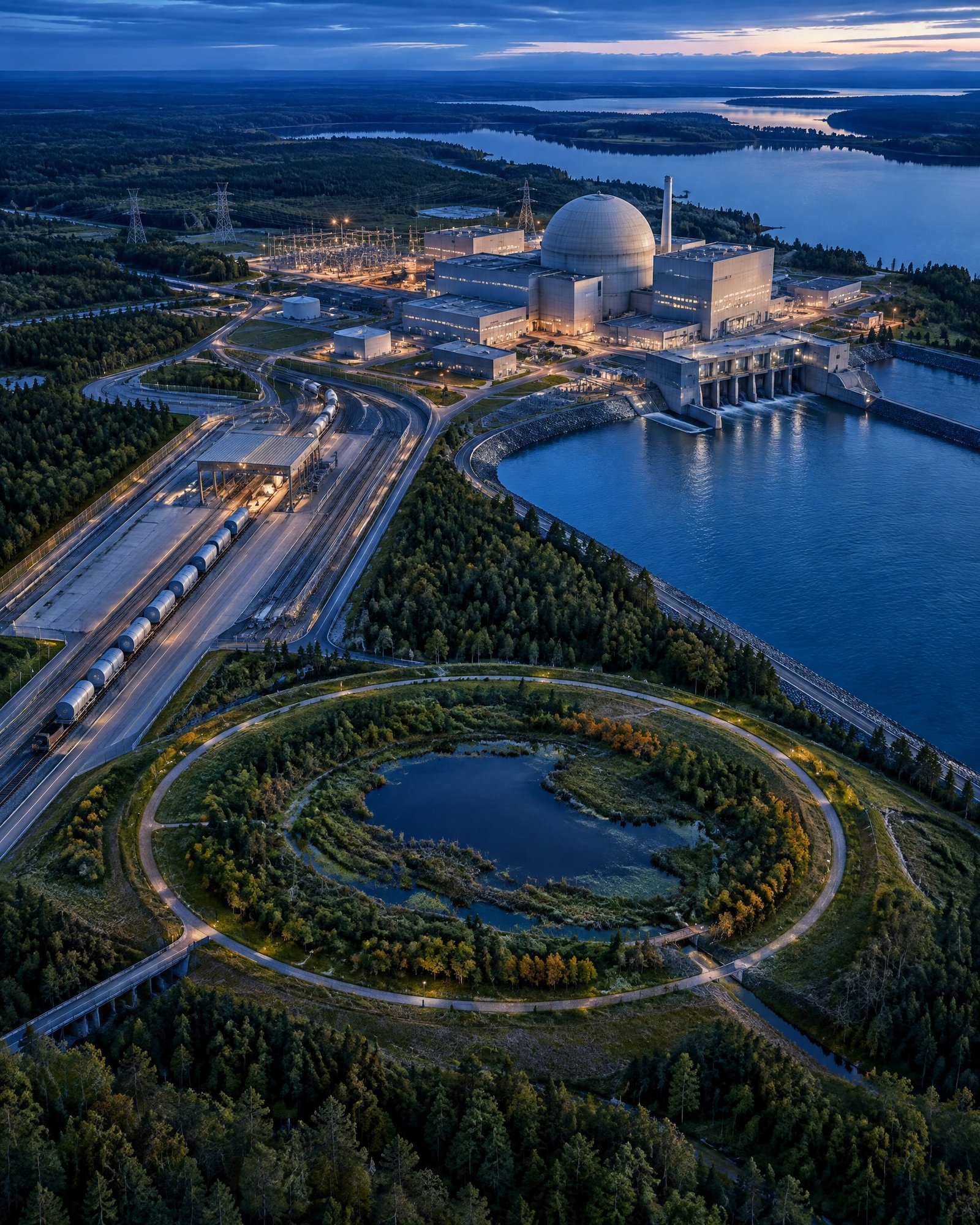
Abstract aerial view of a nuclear energy complex, fuel transport infrastructure and a carefully restored landscape in one continuous composition.
An editorial study of structure, record and direction.
focusDefined cross-border commercial decision
formatPractice-area information
approachContext, records and conditional legal analysis

Make the next decision with the commercial context in view.

The IAEA’s Milestones Approach describes a phased route from considering a nuclear programme, through preparation for contracting and construction, to implementation and operation; it also identifies the need for clear government, regulatory-body and owner/operator roles.[1] That framework is useful context, not a substitute for project-specific legal, technical, safety or regulatory assessment. The commercial challenge is to ensure that the assumptions made at one stage can be carried through the next. New-build schedules, nuclear-quality requirements, fuel-supply arrangements, interface management, financing documentation and eventual closure planning should be examined as connected lifecycle questions rather than isolated workstreams.

The work around the decision.

Clear legal workstreams for a defined commercial question, coordinated with the people, documents and local inputs the matter requires.
01

Programme governance and decision architecture.

Mapping the proposed allocation of roles among sponsoring institutions, owners, regulators, technical advisers and delivery participants; identifying decision gates, delegations, reporting lines and document hierarchies that may affect accountability and timely escalation.
02

Development, siting and project interfaces.

Framing the relationship between site control, environmental and social processes, grid and water interfaces, enabling infrastructure, local approvals and project-development milestones, while keeping technical studies and regulatory determinations within their appropriate specialist processes.
03

New-build procurement and contract integration.

Considering the architecture and interaction of technology, engineering, construction, equipment, commissioning and operational-support arrangements, including scope boundaries, quality obligations, programme dependencies, acceptance regimes, change control and interface-management provisions.
04

Fuel supply and nuclear-material arrangements.

Reviewing the commercial and documentary interfaces around fuel procurement, conversion, enrichment, fabrication, transport, storage, inventory information and continuity planning, with appropriate regard to the applicable safety, security, safeguards and export-control framework.
05

Funding, risk allocation and bankability review.

Examining how delivery, revenue or support assumptions, completion risk, security, insurance, termination, change in law, force majeure and direct-agreement concepts are reflected across project documents and the relevant funding structure, where such a review is required.
06

Decommissioning, waste and closure planning.

Testing whether lifecycle documents recognise the need for a credible decommissioning strategy, responsibilities, records, funding and waste-management interfaces, so that closure is considered alongside design, construction, commissioning and operation rather than deferred without a defined framework.[3]

The facts and records that shape the route.

The appropriate route depends on the parties, markets, documents, technology or assets involved, and the legal frameworks that may apply. A structured record helps keep the commercial question, evidence, ownership and specialist inputs aligned without assuming that one jurisdictional framework supplies every answer.

What should be clarified before a new-build procurement is launched?

The starting point may include the decision authority, institutional responsibilities, regulatory pathway, project-delivery model, technology assumptions, funding route, site and infrastructure dependencies, and the evidence required at each decision gate. The IAEA describes Phase 2 as preparatory work for contracting and construction after the programme decision, when key organisations and legal and regulatory frameworks are established.[1] The practical order and content of those questions will depend on the governing framework and project facts.

How can new-build and fuel-supply assumptions remain aligned?

Alignment normally requires the project’s reactor design, commissioning programme, fuel specification, supply timetable, transport and storage assumptions, information requirements and contingencies to be compared rather than documented in isolation. The IAEA identifies the fuel cycle as an area under increasing demand as nuclear power use grows.[2] Any contractual or compliance analysis must be tailored to the relevant technology, commercial arrangements and applicable controls.

Why address decommissioning while the facility is being planned or built?

Early treatment can help ensure that records, design choices, operational responsibilities, lifecycle funding concepts and waste-management interfaces are not considered only after they become difficult to reconstruct or allocate. IAEA GSR Part 6 expressly states that decommissioning must be considered during design, construction, commissioning and operation, while also addressing roles, strategy, planning, conduct and termination of authorisation.[3] The resulting requirements remain framework- and fact-specific.

What may matter.

These questions are general information intended to help decision-makers frame an initial discussion. The applicable position depends on the facts, current law, governing documents and relevant jurisdictions.
What should be clarified before a new-build procurement is launched?
The starting point may include the decision authority, institutional responsibilities, regulatory pathway, project-delivery model, technology assumptions, funding route, site and infrastructure dependencies, and the evidence required at each decision gate. The IAEA describes Phase 2 as preparatory work for contracting and construction after the programme decision, when key organisations and legal and regulatory frameworks are established.[1] The practical order and content of those questions will depend on the governing framework and project facts.
How can new-build and fuel-supply assumptions remain aligned?
Alignment normally requires the project’s reactor design, commissioning programme, fuel specification, supply timetable, transport and storage assumptions, information requirements and contingencies to be compared rather than documented in isolation. The IAEA identifies the fuel cycle as an area under increasing demand as nuclear power use grows.[2] Any contractual or compliance analysis must be tailored to the relevant technology, commercial arrangements and applicable controls.
Why address decommissioning while the facility is being planned or built?
Early treatment can help ensure that records, design choices, operational responsibilities, lifecycle funding concepts and waste-management interfaces are not considered only after they become difficult to reconstruct or allocate. IAEA GSR Part 6 expressly states that decommissioning must be considered during design, construction, commissioning and operation, while also addressing roles, strategy, planning, conduct and termination of authorisation.[3] The resulting requirements remain framework- and fact-specific.
Which interfaces most often need disciplined change management?
Change management may be important wherever a change in design, schedule, standards, counterparty capacity, regulatory expectation, fuel requirements, financing assumptions or end-of-life planning affects more than one document or delivery package. The OECD Nuclear Energy Agency highlights early supply-chain planning and change management among recurring themes in complex new-build construction.[4] A useful process identifies authority, evidence, notice, assessment and decision consequences without assuming a universal allocation.

Put the decision into focus.

For an initial conversation, share only high-level, non-confidential context about the relevant business decision, markets, parties, documents and timetable. Do not send confidential, privileged, personal or time-sensitive material through a website enquiry.

Legal information only. This page provides general legal information, not legal advice. It does not address the facts of any individual matter and does not create a lawyer-client relationship. The appropriate route, framework, timing and outcome depend on the applicable law, documents and circumstances.


Message TRW on WhatsApp