
TRW Insight / Bangladesh
Every gateway, aggregator and e-wallet in Bangladesh now needs a Bangladesh Bank licence under the Payment and Settlement Systems Act 2024. The category, the capital and the ownership structure you choose decide whether the product can launch at all.
PSO PSP license Bangladesh Bank grants: the 2026 framework
A PSO PSP license Bangladesh Bank grants is now the legal gateway to almost every non-bank payment business in the country, from online payment gateways and merchant aggregators to e-wallets and white-label ATM networks. Since the Payment and Settlement Systems Act 2024, operating a payment system or providing a payment service without a Bangladesh Bank licence is a criminal offence, and in September 2026 the central bank publicly named 22 unlicensed payment platforms and warned the public away from them. For founders, telecom groups, e-commerce platforms and foreign fintechs, the licence decides whether a payment product can lawfully touch customer money at all.
This guide explains the licensing regime in full: what separates a payment system operator from a payment service provider, the Payment and Settlement Systems Act 2024 and the 2014 regulations that sit under it, capital, ownership and foreign investment, the two-phase application, and the rules that apply after licensing. It also covers mobile financial services, the draft e-money regulations, digital banks and the licences issued in 2026, buy now pay later, cross-border gateways such as Payoneer and PayPal, and a map of financial services regulation in Bangladesh across Bangladesh Bank, BSEC, IDRA, MRA and the cooperative regulator.
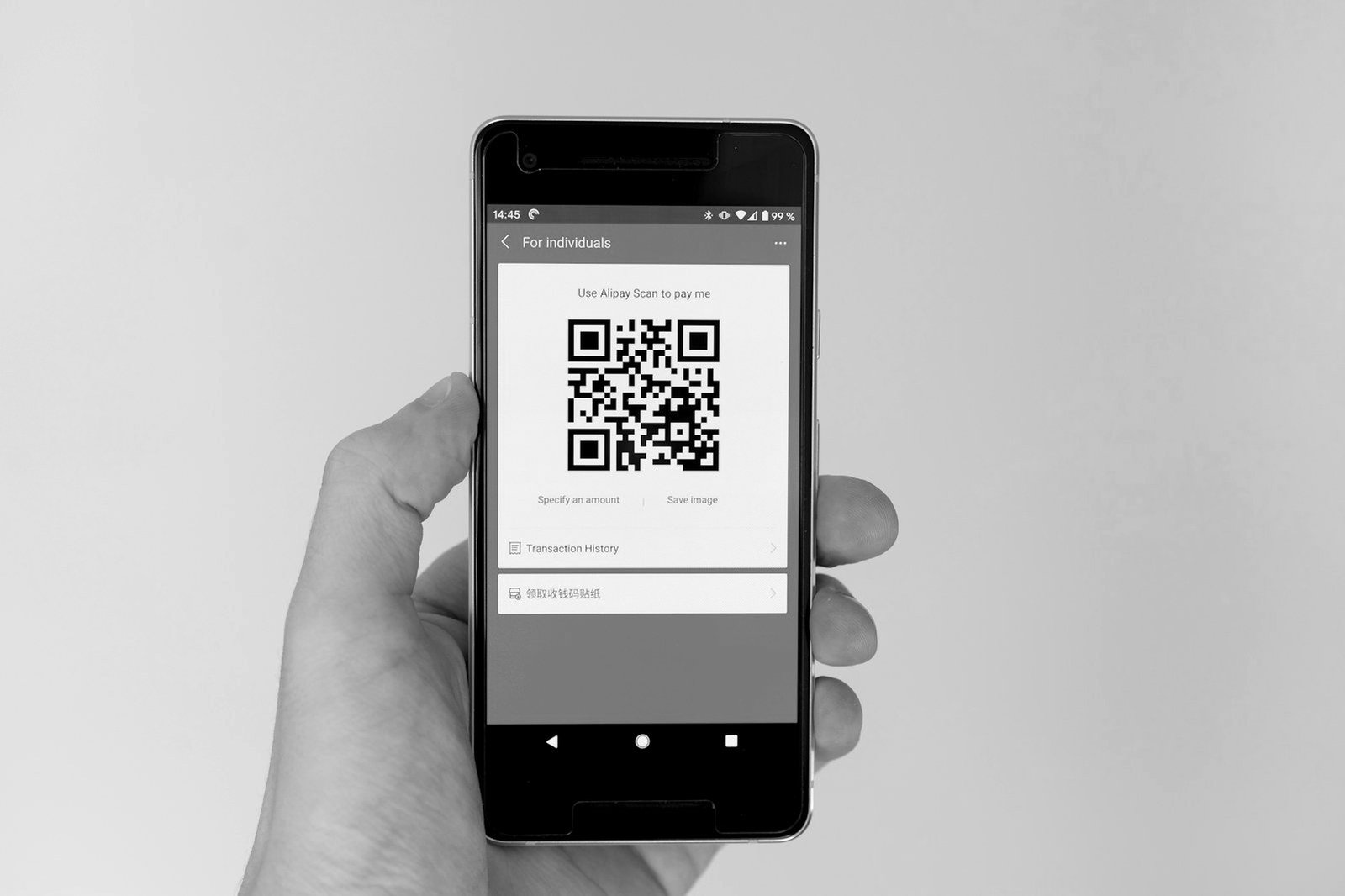
Summary: Bangladesh Bank licenses payment system operators (PSOs), which run gateways, switches and merchant-acquiring infrastructure, and payment service providers (PSPs), which run customer-facing e-wallets that issue e-money against a trust and settlement account. The legal basis is the Payment and Settlement Systems Act 2024 and the Bangladesh Payment and Settlement Systems Regulations 2014. Licensing runs in two phases, a no objection certificate and then a final licence after on-site inspection, and new PSO and e-money regulations published in draft in November 2025 will raise capital and governance standards.
Key point: Running a payment platform, digital wallet or online gateway without Bangladesh Bank authorisation is an offence under the Payment and Settlement Systems Act 2024 that is cognisable, non-bailable and non-compoundable. In August 2026 Bangladesh Bank confirmed ten licensed PSPs, and in September 2026 it named 22 unlicensed aggregators. Using an unlicensed provider exposes merchants as well as operators.
At a glance
Two licences
PSOs run payment infrastructure and cannot issue e-money; PSPs run wallets and may issue e-money against a trust account.
Statute
The Payment and Settlement Systems Act 2024 (Act No. 9 of 2024) now sits above the 2014 regulations.
Capital
Tk 20 crore for a PSP; Tk 1 crore to Tk 20 crore for a PSO under the 2025 draft, depending on the service.
Two phases
A no objection certificate first, then on-site inspection and the final licence.
Wider map
MFS, e-money, digital banks, cross-border gateways and the other financial regulators all shape the licence you need.
Table of Contents
What a PSO PSP license Bangladesh Bank issues actually covers
Bangladesh Bank describes its fintech licensing framework as having two distinct roles. Payment service providers primarily manage customer-facing e-wallet services, while payment system operators run the underlying infrastructure, including merchant aggregation, acquiring, white-label ATMs and point-of-sale networks, payment gateways and switching.[1] The distinction matters because the capital, the safeguarding duties and the permitted services differ, and an application framed for the wrong category will not succeed.
The definitional line between a PSO and a PSP
Under the Bangladesh Payment and Settlement Systems Regulations 2014, a PSO is an entity licensed to operate a settlement system for payment activities between participants, whose principal participant must be a scheduled bank. A PSO provides only the services approved in its licence, cannot issue e-money or any payment instrument, and must settle transactions through a scheduled commercial bank.[2]
A PSP is an entity licensed to provide payment services to its participants or to a payment system and to settle through a scheduled bank. Unlike a PSO, a PSP may issue e-money or a payment instrument on the terms of its licence, and it must maintain a trust and settlement account, which the procedure calls a trust cum settlement account, with a scheduled commercial bank.[2] In practice the PSP is the wallet; the PSO is the pipe.
Who needs a licence, and who does not
The test is functional. A business that collects money from customers on behalf of merchants, routes card or wallet transactions, operates a switch, deploys ATMs or POS terminals for third parties, or stores value for users is providing a payment service or operating a payment system. A merchant that simply accepts payment through a licensed gateway does not need its own licence, but it must make sure its provider is licensed, because Bangladesh Bank has told banks since March 2020 to refrain from serving unauthorised entities that provide payment services as a PSP or PSO.[1]
The licensed population is small and public. Bangladesh Bank's 2025 payment systems report listed twelve PSOs, made up of one switching operator, two white-label merchant acquirers and nine digital payment gateway providers, including SSLCommerz, ShurjoPay, PortPos, AamarPay and PayStation, and nine PSPs, including Pathao Pay, Pocket, TallyPay and Sheba Pay.[1] By August 2026 the PSP count had reached ten, after NEO PSP Limited, a Banglalink subsidiary, was licensed under the Payment and Settlement Systems Act 2024.[7]
The legal framework: the 2024 Act and the 2014 regulations
For fifteen years Bangladesh regulated payments through central bank regulations rather than statute. The Bangladesh Payment and Settlement Systems Regulations were first approved in 2009 under article 7A(e) of the Bangladesh Bank Order 1972 and reissued on 15 May 2014.[1] They remain the operative rulebook for PSO and PSP licensing, supplemented by procedure documents, guidelines and circulars.
The Payment and Settlement Systems Act 2024
Parliament passed the Payment and Settlement Systems Bill on 2 July 2024,.[3] Bangladesh Bank records the Act as dated 4 July 2024 and describes it as the primary legislative framework for the payment ecosystem, giving it clear authority to license and supervise payment system participants and to enforce settlement finality.[1] Bangladesh Bank's own draft e-money regulations identify it as Act No. 9 of 2024.[6]
According to Bangladesh Bank, the Payment and Settlement Systems Act empowers it to license, authorise and regulate participants in payment systems, payment operators, payment service providers and mobile financial service providers; provides that a settlement executed in accordance with established procedures is final and irrevocable; sets out the obligations of participants towards consumers; and lets the central bank demand data, audit systems and order corrective measures.[1]
What the Act prohibits
Three prohibitions drive the Payment and Settlement Systems Act in practice. A bank needs Bangladesh Bank approval to join or operate a payment system or to provide electronic money payment services. Issuing, buying or selling a prepaid payment instrument requires approval. And no one may take investments, lend, accept deposits or conduct financial transactions with the public, online or offline, without Bangladesh Bank approval.[3] The last prohibition reaches well beyond payments: it catches app-based lending, deposit-style savings schemes and investment platforms that operate without a licence.
Penalties and enforcement in 2026
As passed, the core offences carry up to five years' imprisonment, a fine of up to Tk 50 lakh, or both, and other contraventions up to three years and Tk 30 lakh. All offences are cognisable, non-bailable and non-compoundable.[3] In late September 2026 Bangladesh Bank publicly named 22 unlicensed online payment aggregators, stating that running a payment service without a licence breaches section 4(2) of the Act and is punishable under section 37(1), and that section 15(2) makes it illegal to run a payment platform, digital wallet or online gateway without authorisation.[4]
The guidelines and circulars that complete the rulebook
Applicants must also read a stack of instruments: the Guidelines for White Label ATM and Merchant Acquiring Services (May 2020), the trust fund management guidelines (December 2022), the Guidelines for Merchant Acquiring and Escrow Services (September 2023), the Guidelines for issuing Prepaid Instruments by non-payment system entities (June 2024), a circular on online gambling (May 2025), a self-assessment circular for PSOs and PSPs (September 2025) and the October 2025 circular launching interoperable transactions between banks, MFS providers and PSPs through the National Payment Switch.[1] E-commerce businesses should also read our guide to e-commerce law in Bangladesh, which covers escrow and fund-release rules from the merchant side.

Capital requirements for a PSO PSP license Bangladesh applicants seek
Capital is the first filter, and it is changing: the 2014 figures are modest for operators and substantial for wallets, and the 2025 drafts recalibrate both by risk.
The 2014 procedure: Tk 50 lakh and Tk 20 crore
Bangladesh Bank's Approval Procedure for PSOs and PSPs, issued under section 5.3 of the 2014 regulations, sets the minimum paid-up capital of a PSO at Tk 5,000,000 (Tk 50 lakh) and of a PSP at Tk 200,000,000 (Tk 20 crore), and in each case reserves the central bank's right to re-fix the minimum by reference to services and business exposure.[2] The higher PSP figure reflects the fact that a PSP holds customer value; a PSO only moves it.
The draft PSO Regulation 2025: capital by service
In November 2025 Bangladesh Bank published a draft Payment System Operator Regulation 2025 for consultation, to operate under the Payment and Settlement Systems Act. It sets minimum capital by service line, from Tk 1 crore for digital merchant acquiring up to Tk 20 crore for ATM and cash recycler services, and adds ongoing capital of 0.3 per cent of average monthly transaction volume over the previous twelve months for merchant acquiring and payment initiation, and 0.1 per cent for switching, ATM and card scheme services.[5] Model capital for the most demanding service line and for volume growth.
PSP and e-money capital under the draft e-money regulations
The draft Regulations for E-Money in Bangladesh keep the PSP minimum at Tk 20 crore, create a new Dedicated E-Money Issuer category with a minimum of Tk 50 crore, and require every licensed issuer to maintain, in addition, 1 per cent of its average outstanding e-money balance. A Dedicated issuer that falls below the minimum must file a restoration plan and pays a daily penalty of 0.05 per cent of the shortfall.[6] Banks and finance companies that issue e-money as Authorised issuers need no additional capital beyond their prudential requirements.[6]
Fees
Under the 2014 procedure the non-refundable application fee is Tk 25,000 and the licence fee Tk 1 lakh, paid at final approval.[2] The 2025 PSO draft raises these to Tk 50,000 and Tk 5 lakh.[5]
Ownership, sponsors and foreign investment
Every PSO and PSP must be a company incorporated under the Companies Act 1994, and a PSP must keep its technology infrastructure within Bangladesh.[2] The 2025 PSO draft adds that payment services must appear in the memorandum of association.[5] A foreign fintech cannot therefore hold a PSO PSP license Bangladesh issues through an offshore entity: it needs a local subsidiary or joint venture. Our guide to company registration in Bangladesh covers incorporation.
Foreign shareholders
The licensing procedure expressly contemplates foreign investment: where it is involved, the applicant must submit the investor's company documents, BIDA approval where applicable, credit rating and business profile.[2] The draft e-money regulations go further and accept a board on which only 40 per cent of directors of a Dedicated issuer need be resident in Bangladesh, with at least one quarter independent.[6] Equity inflows, share pricing and dividend repatriation then follow the foreign exchange rules described in our guide to foreign exchange regulations in Bangladesh.
Sponsor lock-in and share transfers
Both drafts restrict exits. Under the PSO draft, sponsor shareholders cannot transfer shares for five years without Bangladesh Bank approval.[5] Under the draft e-money regulations, sponsors of a Dedicated issuer are locked in for five years from licensing, later investors for three years, unless the issuer is listed, and any transfer of more than 15 per cent of shares, or one creating or ending a significant shareholding of 10 per cent or more, must be reported to Bangladesh Bank within ten days.[6] Build them into shareholder agreements and exit timetables.
Board, CEO and fit and proper tests
The 2014 procedure requires key personnel to have at least three years of relevant experience and CIB clearance for directors and key staff.[2] The PSO draft is stricter: a board of at least five, two-thirds non-executive with a non-executive chair; directors with five years' professional experience who are not loan defaulters and do not sit on another PSO's board; and a chief executive with a graduate degree and five years' relevant experience, two at senior level, whose appointment Bangladesh Bank must approve after background, education and CIB checks.[5]
How to apply for a PSO PSP license Bangladesh Bank will approve
The process is a two-phase review by the Payment Systems Department that rewards a complete technical and business case.
Map the money flows
Trace who holds customer funds, who settles and who touches foreign exchange, to fix whether you need a PSO, PSP, MFS, e-money or bank licence.
Incorporate locally
Form a Companies Act 1994 company with payment services in its memorandum, and obtain BIDA registration for any foreign shareholding.
Fund the capital
Raise paid-up capital for the category and the most demanding service line, with evidence of the source of funds.
Build the file
Prepare company, business and technical documents, including fund flows, five-year projections, AML/CFT and IT risk policies.
Apply and pass evaluation
File with the Payment Systems Department, answer document requests and pass committee scoring to obtain a no objection certificate.
Build and declare readiness
Deploy the system, data centre and disaster recovery site, open the trust and settlement account and file the go-live declaration.
Pass on-site inspection
Clear Bangladesh Bank's inspection and every NOC condition, then pay the licence fee and receive the final licence.
Operate under supervision
Reconcile daily, report incidents on time, seek approval for charges and complete self-assessments for the supervision department.
Phase 1: scrutiny, evaluation and the no objection certificate
The applicant files the prescribed application with the fee and the documents listed in the procedure. The department scrutinises the file, may ask for revised or further documents, may reject a proposal inconsistent with the services sought, and otherwise sends it to evaluation committees. Their scores decide whether a no objection certificate issues. The certificate is permission to deploy the system, not to go live.[2]
Phase 2: readiness, inspection and the licence
After building the system, the applicant declares its readiness in the prescribed form. Bangladesh Bank sends an on-site inspection team, and final approval follows a satisfactory inspection report and fulfilment of every condition of the certificate.[2] The PSO draft keeps this two-stage structure and requires operations to begin within 120 days of licensing.[5]
What the file must contain
The procedure lists company documents, including the memorandum and articles, incorporation certificate, trade licence, e-TIN and director CVs; business documents covering the service list, business case, transaction and fund flows, five-year projections with sources of funds, organisation, settlement and charge policy, and AML/CFT, KYC and dispute policies; and technical documents covering message and fund flows, hardware, software, data centre and disaster recovery sites, network plan, IT risk management and business continuity.[2] Weak fund-flow diagrams and vague settlement arrangements are the most common reasons we see files sent back.
How long it takes
No statutory timetable binds Bangladesh Bank for a PSO or PSP licence. The draft e-money regulations would commit it to decide an Authorised issuer's application within 180 days of a complete file, with an appeal to the Governor within 30 days of refusal.[6]
After licensing: the operating rules that catch licensees
A licence is the start of supervision, not the end. In December 2025 Bangladesh Bank created a dedicated Payment Systems Supervision Department, which now runs comprehensive and targeted on-site inspections of PSOs, PSPs, MFS providers and banks, including special inspections on add-money fraud, and requires PSOs, PSPs and MFS providers to complete operational risk self-assessments.[1]
Trust and settlement accounts
The trust and settlement account is the centre of compliance, for PSOs and PSPs alike. The PSO draft requires the balance to cover outstanding merchant liabilities at the close of every business day; a shortfall attracts a penalty of the lower of Tk 30 lakh or the standing lending facility rate, makes directors, the chief executive and treasury officers personally liable, and adds Tk 10,000 a day if it persists beyond 14 days.[5]
Under the draft e-money regulations, a Dedicated issuer must keep 100 per cent of the float in unencumbered Taka liquid assets, cannot hold more than 15 per cent of a single bank's net worth on average, and faces a daily fine of Tk 5 lakh for breach of the safeguarding rules.[6]
Settlement, merchants and charges
Under the PSO draft, cash settlement is prohibited, sales proceeds must reach merchants within five working days under written settlement agreements, every merchant must be KYC-verified, and customer charges need Bangladesh Bank's prior approval.[5] PSPs and MFS providers onboard customers through digital KYC, and Bangladesh Bank's 2025 report flags e-commerce and cross-border transactions as areas needing closer surveillance.[1]
Data, incidents and outages
The PSO draft requires transaction data to be kept for at least 12 years, major operational incidents to be reported within 24 hours and data breaches within 72 hours, and prior approval for ATM or cash recycler downtime longer than 12 hours in urban areas or 24 hours in rural areas.[5] Map these duties into vendor contracts.

Mobile financial services under the MFS Regulations 2022
Mobile financial services are licensed separately from PSPs. The Bangladesh Mobile Financial Services Regulations 2022, issued on 15 February 2022, replaced the 2018 regulations.[1] [8] They kept the bank-led model but widened eligibility: a scheduled bank, a financial institution licensed by Bangladesh Bank or a government entity may set up an MFS subsidiary, and the parent must hold at least 51 per cent of the equity. A new subsidiary needs minimum paid-up capital of Tk 45 crore and must build a capital reserve equal to its paid-up capital from profits.[8]
The licensed field includes bKash as a BRAC Bank subsidiary, Rocket as Dutch-Bangla Bank's service, Upay as a subsidiary of United Commercial Bank and Nagad, which Bangladesh Bank lists as a digital financial service of the Bangladesh Post Office.[1] Bangladesh Bank also allows bKash, Rocket and Upay to hold direct drawing arrangements with international money transfer operators for inward remittances, while a licensed bank remains responsible for foreign-currency settlement.[1]
The practical choice for a non-bank sponsor is therefore between partnering with a bank or financial institution in an MFS subsidiary, where the sponsor holds a minority, and seeking a PSP licence, where it can hold control but the service is narrower. The draft e-money regulations, discussed next, would narrow that gap.
E-money: the draft Regulations for E-Money in Bangladesh
Bangladesh Bank's draft Regulations for E-Money in Bangladesh, issued under the Payment and Settlement Systems Act, would bring PSPs that issue e-money and MFS providers under a single framework. Only two kinds of issuer would be permitted: Authorised issuers, which are regulated financial institutions such as banks, and Dedicated issuers engaged solely in e-money and related activities.[6]
Key features of the draft
- Re-licensing: under the e-money regulations, existing MFS providers and PSPs, bank-led or not, must apply for approval under the new framework within six months of the regulations taking effect.[6]
- Two-phase licensing: a Dedicated issuer receives a letter of intent to build infrastructure, then a licence after on-site inspection; a licensed PSP can convert once it meets the higher capital and phase-two conditions.[6]
- Taka only and redemption at par: e-money within Bangladesh must be denominated in Taka, issued at par on receipt of funds and redeemable at par on demand.[6]
- Interest on the float: issuers must spend at least 80 per cent of interest earned on trust and settlement account balances on measures benefiting e-money holders, and may keep the rest.[6]
- Penalties: a regulated institution that issues e-money without authorisation is liable to a fine of at least Tk 50 lakh.[6]
- Closed-loop exclusion: instruments usable only within the issuer's premises or a strictly limited network may fall outside the regulations.[6]
Until the e-money regulations are finalised, new wallet businesses should plan for them now: a Tk 20 crore PSP licence today may have to become a Tk 50 crore Dedicated issuer licence to offer the full e-money service set tomorrow.
Digital banks: guidelines, capital and the licences issued
A digital bank is a bank, not a payment company, and is licensed under the Bank Company Act 1991. Bangladesh Bank's digital bank guidelines were first issued in 2023, when more than 50 entities applied. Nagad received a letter of intent in 2023 and a final licence in 2024 that was later suspended; Kori received a letter of intent but missed its conditions. In an August 2025 revision Bangladesh Bank raised minimum paid-up capital from Tk 125 crore to Tk 300 crore.[9]
On 24 September 2026 the Bangladesh Bank board approved letters of intent for five proposed digital banks: DK Digital Bank, backed by Bhutan's DK Bank; bKash Digital Bank; Nova Digital Bank, backed by VEON and Square Group; Boost Digital Bank, promoted by Axiata; and Kori Digital Bank, which received a fresh letter. Four were chosen from twelve second-round applicants. A letter of intent is not a licence: each must build its technology and meet regulatory conditions before Bangladesh Bank assesses it for a full licence.[9]
Digital banks have no branches, sub-branches or over-the-counter services and cannot issue physical cards; they cannot open letters of credit, lend to large or medium industries or conduct foreign trade business; and each must launch an IPO within five years of licensing.[9] The foreign backers of three of the five show that foreign capital can participate, within the shareholding limits of the Bank Company Act described in our guide to the Bank Company Act 1991. Prudential rules for digital banks are covered in our overview of banking regulations in Bangladesh in 2026.
Buy now pay later, nano loans and digital credit
Bangladesh has no dedicated buy now pay later regulation. That does not leave BNPL unregulated. A fintech or merchant that extends credit to the public through an app is lending, and the Payment and Settlement Systems Act prohibits lending or other financial transactions with the public, online or offline, without Bangladesh Bank approval.[3] A PSO PSP license Bangladesh Bank grants authorises payment services, not lending.
The workable structures are therefore partnership models in which a bank or licensed finance company is the lender and the platform originates and services, or a licensed entity offering credit within its own permissions. Bangladesh Bank's Regulatory Fintech Facilitation Office has piloted this approach: a smartphone-on-credit pilot launched in December 2025 sold more than 97,000 phones on credit in its first month, and on 1 September 2025 Bangladesh Bank issued letters of intent for private credit bureaus to Credit Info, TransUnion, City Credit, First National and bKash.[1] Lenders should also read our guide to NBFI and finance company licensing.
Cross-border payments: gateways, Payoneer and PayPal
Cross-border payments sit at the intersection of payment licensing and foreign exchange control. Only authorised dealer banks may execute foreign exchange, so foreign platforms reach Bangladeshi users through banks rather than directly, and holding a PSO PSP license Bangladesh Bank has issued does not by itself permit a fintech to deal in foreign currency.
Inward payments and online payment gateway service providers
Freelancers and small service exporters receive funds through internationally recognised online payment gateway service providers, such as Payoneer, under arrangements with authorised dealer banks, and MFS providers and PSPs may facilitate repatriation in association with foreign PSPs. The limits, documents and tax treatment are set out in our guide to freelancer tax in Bangladesh, so we do not repeat them here.
The July 2026 bank-intermediated framework
FEPD-1 Circular No. 25 of 29 July 2026 lets authorised dealer banks partner with foreign payment service providers, digital platforms and gateways, called cross-border digital payment service providers, and open digital value accounts for individuals. Every account must sit under the bank's master account, with real-time integration, a mirror ledger and full audit trails; all settlement is routed through the bank. Holders may pay up to USD 300 per transaction online, plus membership, IT, visa and hotel payments, and use travel entitlements and ERQ or RFCD balances.[10]
Is PayPal available in Bangladesh?
The July 2026 circular names no provider. A bank must apply to Bangladesh Bank with details of the foreign partner, structure, integration and compliance before offering outward services, and banks may provide acquiring or settlement to foreign account holders paying local merchants.[10] Whether PayPal, Stripe or similar platforms serve Bangladeshi users therefore depends on bank partnerships approved under this framework, not on a stand-alone licence. A foreign platform cannot lawfully hold Bangladeshi users' value outside it.

Financial services regulation in Bangladesh: the regulator map
A payment licence is only one part of financial services regulation in Bangladesh. Financial services regulation here is institutional rather than unified: the sector is divided between several regulators, and a fintech that lends, insures, invests or takes savings will meet more than one of them. In 2022 Bangladesh Bank convened a meeting of six financial regulators to address illegal deposit-taking by cooperative societies, a reminder that the perimeters overlap.[14]
Bangladesh Bank
Licenses banks, finance companies, PSOs, PSPs, MFS and digital banks; controls foreign exchange; resolution authority.
Bangladesh Securities and Exchange Commission
Regulates public offers, listed companies, intermediaries, funds and investment products that are securities.
Insurance Development and Regulatory Authority
Regulates life and non-life insurers and intermediaries, including insurance distributed through apps.
Microcredit Regulatory Authority
Licenses and supervises NGO microfinance institutions.
Department of Cooperatives
Registers and supervises cooperative societies, which may not take public deposits like banks.
Bangladesh Financial Intelligence Unit
Supervises AML/CFT compliance and suspicious transaction reporting across the financial sector.
Bangladesh Bank
Bangladesh Bank sits at the centre of financial services regulation. It licenses and supervises banks under the Bank Company Act 1991 and finance companies under the Finance Company Act 2023, operates and supervises the payment systems, licenses PSOs, PSPs, MFS providers and digital banks, administers foreign exchange control and is the resolution authority for banks. Our guides to banking law in Bangladesh and the Bank Company Act 1991 cover the bank-side statutes.
Bangladesh Securities and Exchange Commission
BSEC regulates the capital market: public offers, listed companies, intermediaries, mutual funds and, where a token or investment product is a security, digital offerings. In April 2026 Parliament passed the BSEC (Amendment) Bill 2026, removing the age limit of 65 for the chairman and commissioners.[12] See our guides to securities law in Bangladesh and blockchain law in Bangladesh.
Insurance Development and Regulatory Authority
IDRA regulates life and non-life insurers and intermediaries. The parallel IDRA (Amendment) Bill 2026, passed the same day, removed the age limit of 67 for the IDRA chairman and members.[12] Embedded insurance sold through a wallet or app needs an insurer partner and IDRA-compliant distribution, not just a payment licence.
Microcredit Regulatory Authority
The MRA licenses and supervises NGO microfinance institutions. In 2026 its future became contested: the interim government's proposed Microcredit Bank Ordinance 2025 would bring microfinance under a banking framework, and civil society groups demanded in April 2026 that it be scrapped and the MRA strengthened instead.[13]
Department of Cooperatives
Cooperative societies are registered and supervised by the Department of Cooperatives. Bangladesh Bank has asked the department to stop societies using bank-like names, taking deposits from the public and lending to non-members.[14] A cooperative is not a lawful route into deposit-taking or digital lending.
Bangladesh Financial Intelligence Unit
The BFIU supervises anti-money laundering and counter-terrorist financing compliance across banks, finance companies, MFS providers, PSPs and capital market and insurance intermediaries. Every PSO and PSP application must include AML/CFT and KYC policies.[2] Our guide to anti-money laundering law in Bangladesh explains the reporting regime.
Key 2025 and 2026 reforms in financial sector legislation
Financial sector legislation has moved faster since 2024 than in the previous decade, and financial services regulation now changes by statute, draft regulation and circular at the same time. Three developments matter most for payment and fintech businesses.
Bank resolution
The interim government issued the Bank Resolution Ordinance 2025 on 9 May 2025. On 10 April 2026 Parliament passed the Bank Resolution Bill 2026, which lets Bangladesh Bank suspend a weak bank's business, limit shareholder rights, appoint administrators, dissolve boards, transfer or merge banks and create a bridge bank, with personal liability and fines of up to Tk 50 lakh.[11] For payment businesses the point is practical: every trust and settlement account sits in a bank, and a sponsor bank in resolution can disrupt settlement. Spread float across banks where the rules allow. The detail is in our banking law guide.
Draft PSO and e-money regulations
The draft PSO Regulation and the draft e-money regulations of November 2025 would modernise both licence categories, add service-based capital, harden trust and settlement account rules and require existing MFS providers and PSPs to re-apply.[5] [6]
Regulator governance
The April 2026 amendments to the BSEC and IDRA statutes, and the contest over microfinance oversight, show that the architecture of financial services regulation outside Bangladesh Bank is itself under review.[12] [13]
Choosing the right licence
The right PSO PSP license Bangladesh strategy follows the business model, not the other way round. The table compares the main routes. On a phone, scroll it sideways.
| Licence | Legal basis | Minimum capital | Who can hold it | Key limit |
|---|---|---|---|---|
| PSO | PSS Act 2024; BPSSR 2014 | Tk 50 lakh (2014); Tk 1–20 crore by service (2025 draft) | Bangladesh company | Cannot issue e-money; bank settlement only |
| PSP | PSS Act 2024; BPSSR 2014 | Tk 20 crore | Bangladesh company with local technology | Funds held in trust and settlement account |
| MFS provider | MFS Regulations 2022 | Tk 45 crore (subsidiary) | Bank, licensed FI or government entity with 51% or more | Bank-led model |
| Dedicated e-money issuer | Draft E-Money Regulations | Tk 50 crore plus 1% of e-money | Non-bank company dedicated to e-money | 100% float in Taka liquid assets; sponsor lock-in |
| Digital bank | Bank Company Act 1991; digital bank guidelines | Tk 300 crore | Sponsors approved by Bangladesh Bank | No branches, LCs or large and medium loans; IPO in five years |
Under financial services regulation in Bangladesh, many businesses need more than one approval: a PSO licence for acquiring plus a bank partnership for cross-border flows, or a PSP licence plus a lending partner for credit. Map every money flow before choosing, because the flow that touches customer funds decides the licence.
Mistakes to avoid with a PSO PSP license Bangladesh application
- Launching before the licence: operating on a no objection certificate, or through an unlicensed aggregator, is the offence the Payment and Settlement Systems Act targets.[4]
- Choosing the wrong category: a PSO cannot issue e-money; a gateway that holds customer balances needs PSP-level permissions.[2]
- Treating a PSP licence as a lending licence: BNPL and wallet credit need a lender of record.[3]
- Under-modelling capital: plan for the 2025 draft figures, volume-based capital and the e-money top-up, not the 2014 minimum.[5] [6]
- Ignoring lock-ins: five-year sponsor restrictions affect investor exits and fund timelines.[5]
- Weak trust and settlement account controls: daily reconciliation failures carry personal liability under the PSO draft.[5]
- Offshore shortcuts: holding Bangladeshi users' funds abroad breaches foreign exchange rules; use the bank-intermediated route.[10]
What to watch in 2026 and 2027
Three developments will shape the PSO PSP license Bangladesh landscape over the next year. First, the final PSO and e-money regulations, and the six-month re-application window for existing wallets once they take effect. Second, the build-out of the five digital banks and whether any reaches a full licence. Third, the first bank partnerships under the July 2026 cross-border framework, which will decide when global wallets become usable at home. Anyone planning a payment, wallet or fintech launch should fix the licence strategy, and its place in wider financial services regulation, before writing code. Contact TRW to discuss your structure.
Frequently asked questions
What is the difference between a PSO and a PSP in Bangladesh?
A PSO operates payment infrastructure such as gateways, switches and merchant acquiring, cannot issue e-money and settles through a scheduled bank. A PSP provides payment services to users, may issue e-money on its licence terms and must keep a trust and settlement account.[2]
Which law governs a PSO PSP license Bangladesh Bank issues?
What is the minimum capital for a PSO or PSP licence?
Can a foreign company own a PSO or PSP in Bangladesh?
Yes, through a company incorporated in Bangladesh. The licensing procedure asks foreign investors for their corporate documents, BIDA approval where applicable and credit rating, and a PSP's technology must be kept in Bangladesh.[2]
Who regulates financial services in Bangladesh?
Financial services regulation is split by sector: Bangladesh Bank for banks, finance companies, payments and foreign exchange; BSEC for the capital market; IDRA for insurance; the MRA for NGO microfinance; and the Department of Cooperatives for cooperative societies, with the BFIU overseeing AML/CFT.[12] [13] [14]
How does the application process work?
In two phases: document scrutiny and committee evaluation leading to a no objection certificate, then system build, a readiness declaration, on-site inspection and the final licence.[2]
What happens if a payment platform operates without a licence?
Who can run mobile financial services?
Under the MFS Regulations 2022, a subsidiary at least 51 per cent owned by a scheduled bank, a licensed financial institution or a government entity, with paid-up capital of at least Tk 45 crore.[8]
Which digital banks have been approved?
On 24 September 2026 Bangladesh Bank approved letters of intent for DK Digital Bank, bKash Digital Bank, Nova Digital Bank, Boost Digital Bank and Kori Digital Bank. Each must still qualify for a full licence, with Tk 300 crore capital.[9]
Can Bangladeshis now use PayPal?
Only through a bank partnership. FEPD-1 Circular No. 25 of July 2026 lets authorised dealer banks partner with foreign payment providers after applying to Bangladesh Bank, with online payments up to USD 300 per transaction.[10]
Source register
Primary legal and regulatory sources
Materials checked on 20 October 2026. Confirm the current official text before relying on any provision.
- Bangladesh Bank — Bangladesh Payment Systems Report 2025 (legal framework, regulations register and list of MFS, PSPs and PSOs)
- Bangladesh Bank, Payment Systems Department — Approval Procedure of Payment System Operator (PSO)/Payment Service Provider (PSP) under BPSSR 2014
- The Daily Star, 2 July 2024 — JS passes payment and settlement system bill
- Dhaka Tribune, 27 September 2026 — BB warns against 22 unauthorised online payment platforms
- The Daily Ittefaq (BSS), 7 November 2025 — BB issues draft regulation for payment system operators
- Bangladesh Bank, Payment Systems Department — Draft Regulations for E-Money in Bangladesh (November 2025)
- The Financial Express, 11 August 2026 — 10 companies authorised as e-wallet operators in Bangladesh
- VDB Loi, Law Digest February 2022 — Bangladesh Mobile Financial Services (MFS) Regulations 2022
- The Business Standard, 25 September 2026 — 5 digital banks, including bKash and Robi-backed ventures, get BB approval
- Bangladesh Bank, FEPD-1 Circular No. 25 (29 July 2026) — Bank-intermediated cross-border digital payment framework
- The Business Standard, 10 April 2026 — Bank Resolution Bill passed in parliament
- The Business Standard, 30 April 2026 — Parliament passes bills to remove age cap for BSEC, IDRA chairmen
- The Financial Express, 7 April 2026 — Civil society demands scrapping of Microcredit Bank Ordinance 2025
- The Daily Star, 6 September 2022 — Bangladesh Bank moves to stop illegal banking by cooperative societies
Related TRW assistance
Move from information to a defined next step
TRW advises fintechs, telecom groups, e-commerce platforms, banks and foreign payment companies on PSO, PSP, MFS, e-money and digital bank licensing, Bangladesh Bank submissions, foreign investment structuring and cross-border payment partnerships. Explore our banking and finance practice or contact TRW to plan your licence strategy.