
TRW Insight / Bangladesh
Bangladesh rewrote its capital market rulebook between late 2024 and 2026, with new public offer, margin and mutual fund rules and draft direct listing and governance rules. Issuers, investors and intermediaries now work to a materially different set of requirements.
Securities law Bangladesh: the 2026 framework
Securities law Bangladesh issuers, investors and intermediaries deal with in 2026 rests on two old statutes and a wave of new rules. The Securities and Exchange Ordinance 1969 still supplies the core prohibitions and penalties, and the Bangladesh Securities and Exchange Commission Act 1993 still creates and empowers the regulator. Around them, the Commission has rewritten the rulebook since late 2024: new public offer rules, new margin rules, new mutual fund rules, and draft rules on direct listing and corporate governance that are moving through consultation under an elected government.
This guide explains how the framework fits together: the statutes and the regulator, equity raising under the 2025 rules, listing and disclosure, insider trading and manipulation, mutual funds, bonds and sukuk, BO accounts, foreign portfolio investment, the reform task force and the role of a capital market lawyer. Takeovers of listed companies are covered in our separate M&A guide.

Summary: Bangladesh regulates its capital market through the Securities and Exchange Ordinance 1969, the BSEC Act 1993, the Depository Act 1999 and rules made by the Commission. Since December 2025, public offers of shares follow the Public Offer of Equity Securities Rules 2025, which give the stock exchanges a formal recommending role. Margin lending and mutual funds have new 2025 rules, and direct listing and corporate governance rules are in draft in 2026.
Key point: The Public Offer of Equity Securities Rules 2025 repealed the Public Issue Rules 2015 with immediate effect. Pending applications are treated as made under the new rules, but the issuer must update them, so any IPO file prepared before December 2025 needs to be re-checked against the new eligibility, quota and lock-in requirements.
At a glance
Two core statutes
The Securities and Exchange Ordinance 1969 sets the prohibitions and penalties; the BSEC Act 1993 creates the Commission and its functions.
New IPO rules
The Public Offer of Equity Securities Rules 2025 set eligibility, fixed-price and book-building methods, quotas and lock-ins.
Market conduct
Section 17 of the Ordinance prohibits fraud and manipulation; the 2022 insider trading rules govern price-sensitive information.
Funds and debt
Mutual Fund Rules 2025, the Debt Securities Rules 2021 and the Investment Sukuk Rules 2019 govern collective schemes, bonds and sukuk.
2026 agenda
Draft rules on direct listing and corporate governance, relaxed margin proposals and active enforcement define the year.
Table of Contents
The legal architecture of the capital market in Bangladesh
The capital market in Bangladesh is a layered system: statutes at the top, then rules made by the Commission, then regulations made by the Commission and the stock exchanges, and finally directives, orders and notifications. Securities law Bangladesh advice has to read all four layers together, because a requirement absent from the statute is often found in a directive issued years later.
The principal statutes are the Securities and Exchange Ordinance 1969, the Bangladesh Securities and Exchange Commission Act 1993 and the Depository Act 1999.[1] [2] [4] Company law questions, such as share capital, transfers, schemes of arrangement and directors' duties, remain under the Companies Act 1994, which our guide to public limited companies in Bangladesh explains. Foreign exchange questions are governed by Bangladesh Bank rules made under the Foreign Exchange Regulation Act 1947.
Why securities law Bangladesh practice is rule-driven
Most of the operative detail in securities law Bangladesh practice comes from the Commission's rules rather than the statutes. Section 33 of the Ordinance gives the Commission power to make rules and section 34 power to make regulations, and the new public offer rules, for example, were made under section 33.[1] [3] The result is a framework that can change quickly. In the 2025 to 2026 cycle alone the Commission replaced its public issue, margin and mutual fund rules, which is why advice based on a three-year-old checklist is now unreliable.
The Securities and Exchange Ordinance 1969
The Securities and Exchange Ordinance 1969 (Ordinance No. XVII of 1969) is dated 28 June 1969 and remains the foundational securities statute.[1] Its preamble describes its purpose as the protection of investors, the regulation of capital markets and issue, and dealings in securities. It is organised in six chapters, and each one still does real work.
Issue of capital and prospectuses
Chapter IA controls the issue of capital. Section 2A places the issue of capital under the Commission's control, section 2B covers prospectuses and offer documents, and further provisions allow the Commission to impose conditions, call for information and grant exemptions.[1] This is the statutory basis on which every public offer, rights issue and many private placements require the Commission's consent.
Stock exchanges and issuers
Chapter II requires stock exchanges to be registered, regulates their accounts and returns, and contains the listing provisions in sections 9 and 10. Chapter III regulates issuers: returns, statements of beneficial owners of listed equity securities, the prohibition of short-selling in section 13 and trading by directors, officers and principal shareholders in section 14.[1] These issuer duties sit behind much of the continuous disclosure regime discussed below.
Prohibitions, enquiries and penalties
Chapter IV contains the conduct rules, including the fraud and manipulation prohibition in section 17, the prohibition of false statements in section 18 and the secrecy duties in sections 19 to 19B. Chapter V gives the Commission power to hold enquiries under section 21 and to impose administrative penalties under section 22, sets out civil liability in section 23 and criminal penalties in section 24.[1] Section 22A adds a practical barrier: no court proceeding challenging a penalty order can be brought unless 15 per cent of the penalty is first deposited with the Commission.[1]
Prosecutions are tightly channelled. Under section 25, no court may take cognisance of an offence except on a written report by an officer authorised by the Commission, and only a Court of Session or higher may try it. Section 25A places the burden of proof on the accused in certain prosecutions, and section 25B allows the government to establish special tribunals for offences under the Ordinance.[1]
The BSEC Act 1993 and the regulator
The Bangladesh Securities and Exchange Commission Act 1993 (Act No. 15 of 1993), dated 8 June 1993, establishes the Commission.[2] Section 5 provides that the Commission consists of a chairman and four commissioners appointed by the government, at least one of whom must be a non-government person with relevant qualifications and experience. The chairman is the chief executive, and the chairman and commissioners hold office for four years, with eligibility for one further term.[2]
The Commission's functions under section 8
Section 8 makes the Commission responsible for ensuring the proper issue of securities, protecting investors and developing and regulating the capital and securities market. The listed functions include regulating stock exchanges and any securities market; registering and regulating intermediaries such as brokers, merchant bankers, issue managers, underwriters, portfolio managers, asset managers, custodians, trustees and credit rating companies; registering and regulating collective investment schemes, including mutual funds; suppressing fraudulent and unfair trade practices; prohibiting insider trading; and regulating substantial acquisitions and takeovers.[2]
The Commission may also call for information from, inspect, investigate and audit issuers, exchanges and self-regulatory organisations; call for bank account records relevant to an investigation after informing Bangladesh Bank; enter cooperation and information-sharing arrangements with domestic and foreign authorities with prior government approval; and regulate the clearing corporation that settles securities and derivatives trades.[2]
The 2026 amendment and the new leadership
On 30 April 2026 parliament passed the Bangladesh Securities and Exchange Commission (Amendment) Bill 2026, moved by Finance Minister Amir Khosru Mahmud Chowdhury, removing the rule that a person aged 65 could not be appointed, or continue, as chairman or commissioner.[11] The official text now records the amendment as Act No. 93 of 2026, amending section 5.[2] The Commission is now chaired by Masud Khan, who has framed investor confidence and governance as the regulator's priorities.[12]

Raising equity: the Public Offer of Equity Securities Rules 2025
The single most important change to securities law Bangladesh companies face when going public is the Bangladesh Securities and Exchange Commission (Public Offer of Equity Securities) Rules 2025. The notification is dated 28 December 2025, was published in the gazette on 30 December 2025 and took effect immediately, repealing the Public Issue Rules 2015.[3] The rules permit two methods: the fixed price method, where the issuer and issue manager set the price on a valuation justified under the rules, and the book-building method, where a roadshow produces an indicative price and electronic bidding by eligible investors sets the cut-off price.[3]
General eligibility
Rule 4(1) sets the baseline. The issuer must be a public limited company and a going concern with pre-IPO paid-up capital of at least Tk 30 crore, must offer at least 10 per cent of its post-IPO paid-up capital and must have post-IPO paid-up capital of at least Tk 50 crore. Sponsors and directors must hold at least 30 per cent of post-IPO paid-up capital at all times. The company must have been profitable in its latest financial year with no accumulated retained loss, subject to relaxations for regulated and green field companies, and at least 35 per cent of the issue must be underwritten on a firm commitment basis.[3]
Further conditions restrict capital raising in the two years before the offer, with limited exceptions, and require that at least 90 per cent of previously raised capital has been used. Audit, governance, annual general meeting and loan-default conditions also apply.[3] Map the pre-offer capital history before appointing an issue manager.
Fixed price and book building compared
For a fixed price offer by a company that is not green field, post-IPO paid-up capital is generally capped at Tk 125 crore, and an offer at a premium requires three years of commercial operation, two years of net profit, positive operating cash flow and at least a single-A long-term credit rating. Green field companies may offer only at par or a discount, with sponsors and related holders keeping at least 75 per cent until two consecutive years of post-IPO profit.[3]
Book building requires the same three-year operating and two-year profit record and single-A rating. Companies with pre-IPO paid-up capital or net worth of Tk 500 crore or more may offer as little as 5 per cent of post-IPO capital, a concession aimed at bringing large companies to market. The indicative price must be supported by at least four valuation methods and valuations from at least 40 eligible investors.[3]
The stock exchange's new gatekeeping role
The application now goes to the Commission and the stock exchange at the same time. The exchange posts the red-herring prospectus for comment, inspects the issuer's premises and documents, and gives a recommendation within 30 days. A negative recommendation excludes the issue from bidding on that exchange, and the Commission then decides on consent and the prospectus within 20 days of the recommendation, with a review route for rejected issuers.[3]
Bidding, quotas and lock-ins
Book-building bids run for 72 hours within a band of 25 per cent either side of the indicative price, and no bidder may quote for more than 1 per cent of the eligible investor allocation. Collusion in bidding is expressly prohibited and can lead to bid cancellation, bans and licence action.[3] Rule 16 allocates the offer between eligible investors, mutual funds, employees, high-net-worth individuals, non-resident Bangladeshis and general investors, with different splits for each method; under-subscription above 35 per cent cancels the offer.
Rule 17 imposes lock-ins: three years for sponsors, directors and holders of 5 per cent or more, shorter periods for other holders, and staged release of eligible investors' book-building allotments over 90 to 180 days.[3] The rules also cap issue management and underwriting fees and set a Commission consent fee of 0.30 per cent of the offer amount. Rule 20 prohibits false or misleading information in any offer document.
Securities regulations step-by-step: the IPO process
The sequence below reflects how a typical initial public offer moves under the 2025 rules. Timelines depend on the quality of the file and the responsiveness of the exchange and the Commission, but the order of work does not change.
Test eligibility
Check paid-up capital, profit record, credit rating, capital history and use of earlier proceeds against rule 4 of the 2025 rules.
Choose the method
Decide between fixed price and book building, and between par, premium or green field routes, in light of size and track record.
Appoint the team
Engage a registered issue manager, underwriters, registrar, auditors, valuers and legal counsel, and agree fees within the caps.
Prepare the prospectus
Complete legal and financial due diligence and draft a prospectus that every expert can stand behind.
File with BSEC and the exchange
Submit simultaneously, respond to comments on the red-herring prospectus and support the exchange's inspection.
Obtain recommendation and consent
Secure the exchange's recommendation and the Commission's consent, then publish the prospectus within the required time.
Run bidding and subscription
Manage the roadshow, eligible investor bidding and general subscription through the electronic system.
Allot, list and comply
Complete allotment, credit BO accounts, begin trading and switch on continuous disclosure and lock-in controls.
Every statement in the prospectus must be supportable, because section 18 of the Ordinance and rule 20 of the 2025 rules both bite on false or misleading information.[1] [3] Insider lists and price-sensitive controls should start when the board first discusses listing.
Listing, direct listing and continuous disclosure
Listing turns a public offer into a tradable security on the Dhaka Stock Exchange or the Chittagong Stock Exchange, each of which applies its own listing regulations under the Ordinance. Once listed, the company becomes subject to a continuous regime: periodic financial reporting, annual general meeting requirements, shareholding and beneficial ownership disclosures, corporate governance obligations and the duty to disclose price-sensitive information. Sections 11 and 12 of the Ordinance underpin the return and beneficial ownership duties.[1]
Direct listing in 2026
The Commission is building an alternative to the IPO for established companies. In September 2026 it held a stakeholder consultation on the draft BSEC (Direct Listing of Securities by Stock Exchange) Rules 2026, aimed at fundamentally strong and well-established companies, including family-run businesses, and it is considering a hybrid model that combines the sale of existing shares with fresh issuance.[13] Until the rules are final, plan a fall-back IPO route.
Price-sensitive information
Listed companies must manage price-sensitive information under the BSEC (Prohibition of Insider Trading) Rules 2022 and the exchanges' listing regulations. Issuer policies implementing rule 6(1) require price-sensitive information to be submitted to the Commission, the Dhaka Stock Exchange and the Chittagong Stock Exchange simultaneously within two hours of the board decision, and then published on the company website, an online news portal and two daily newspapers, one Bangla and one English.[5] Where a matter awaits regulatory approval, a further disclosure follows the regulator's decision.
Corporate governance rules
Governance obligations for listed companies are currently set by the Commission's corporate governance requirements, and in 2026 the regulator is moving proposed BSEC Corporate Governance Rules 2026. A July 2026 seminar reviewed changes affecting boards, audit committees, independent directors and company secretaries, with the stated aim of aligning practice with international standards.[12] Our guide to corporate governance and directors' duties in Bangladesh covers the company law side.
Insider trading and market manipulation
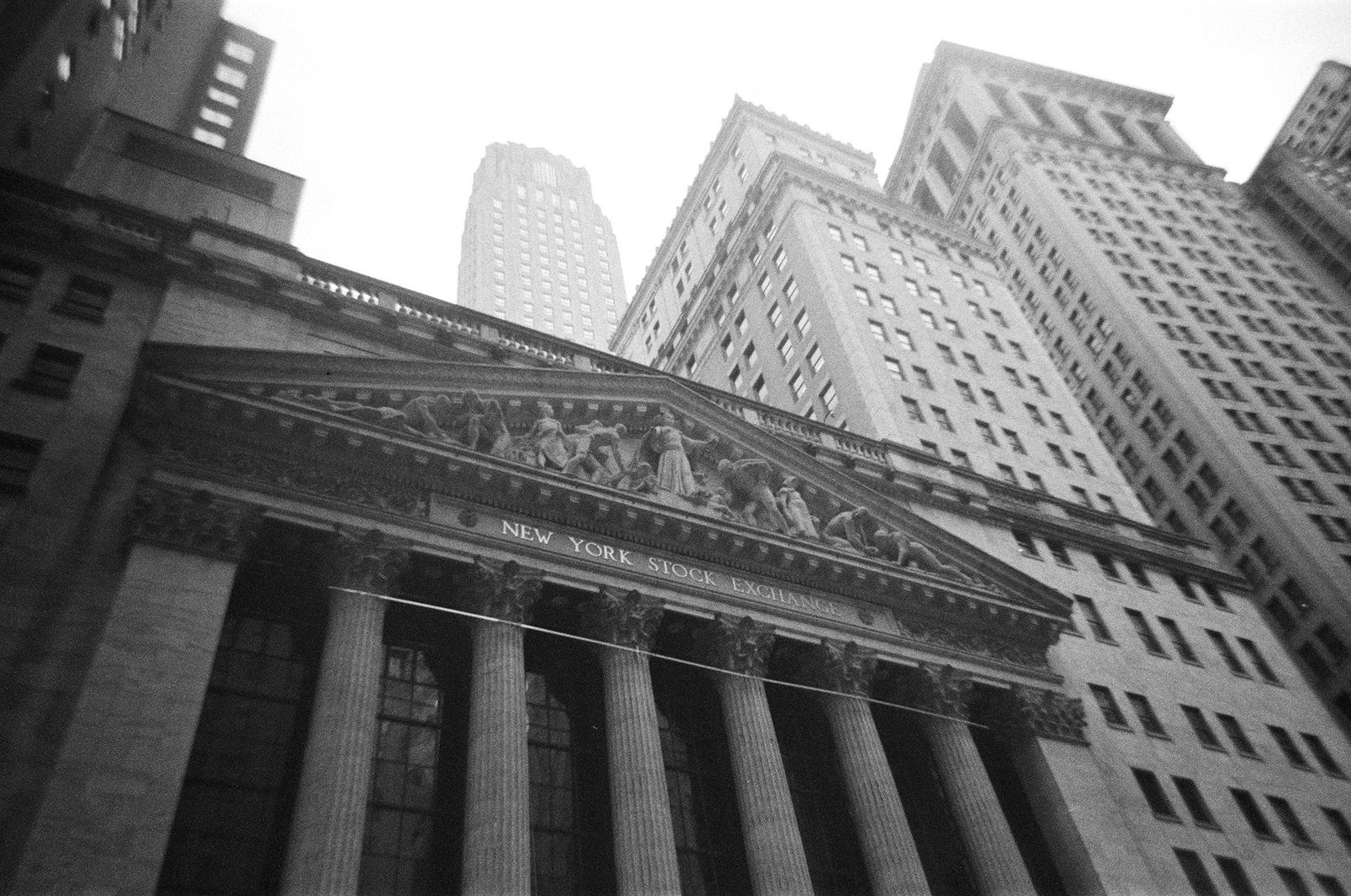
Enforcement of market conduct is where securities law Bangladesh investors notice most directly. Section 17 of the Ordinance prohibits any person, for the purpose of influencing or profiting from the purchase or sale of a security, from using any device or scheme that operates as a fraud, making statements known to be untrue, concealing facts, or inducing others by deception.[1]
What counts as manipulation
Section 17(e) lists the manipulative practices that matter most in securities law Bangladesh enforcement: fictitious quotations; creating a false or misleading appearance of active trading; transactions involving no change in beneficial ownership; matched orders that cancel each other out; and a series of transactions designed to raise or depress the price to induce others to trade. It also catches a director, officer or holder of at least 10 per cent of a listed equity security who trades while failing to disclose material facts in their possession.[1]
Insider dealing rules
The 2022 insider trading rules require listed companies to adopt their own policies on price-sensitive information and insider trading, and they work alongside section 19B of the Ordinance, which makes disclosure of information for the purpose of profiting through insider trading an offence.[1] [5] Under the consolidated text of the Ordinance, that offence and a contravention of section 17 are each punishable with imprisonment of up to five years, a fine of not less than Tk 5 lakh, or both, and where the offender is a company, every director and responsible officer is deemed guilty unless they show lack of knowledge or due diligence.[1]
Enforcement since 2024
The reconstituted Commission has used these powers aggressively. In June 2026 the Finance Minister told parliament that the Commission had imposed fines totalling Tk 14.96 billion on individuals and institutions after inquiries into 12 issues following August 2024, and that by 13 May 2026 it had carried out 114 inquiries, 12 investigations and 64 inspections and taken 675 enforcement actions.[14] For anyone facing an enquiry, the early response, document preservation and the 15 per cent pre-deposit rule for court challenges all deserve immediate attention.[1]
Mutual funds and collective investment schemes
Mutual funds are regulated by the Commission under section 8 of the BSEC Act 1993, and the governing instrument is now the BSEC (Mutual Fund) Rules 2025, one of the main outputs of the reform programme.[2] [10] They mark a decisive shift away from listed closed-end funds that trade persistently below net asset value.
The closed-end fund conversion regime
Under the rules as revised, a closed-end fund trading at a discount of more than 24 per cent to its net asset value, measured on a six-month rolling average, must either convert into an open-end fund or wind up. The six-month window closed on 12 May 2026, and the Commission issued its compliance directive on 7 May 2026.[10] When asset managers and investors obtained status quo orders from the High Court Division, the chamber judge of the Appellate Division stayed them in June 2026, clearing the way for enforcement.[10]
The same order cleared the Commission to act on an enquiry into RACE Asset Management, which found unauthorised block transactions between funds and recommended cancelling the manager's registration.[10]
Bonds, sukuk and other debt securities
Debt capital raising follows its own rulebook. The BSEC (Debt Securities) Rules 2021 apply to debt securities and to Islamic Shariah-based securities, including sukuk, whether issued by private offer or public issue, and issuers of sukuk must also comply with the BSEC (Investment Sukuk) Rules 2019 and relevant Shariah principles.[6] Consent from the Commission is required in each case, and the Commission publishes the consents it has issued.
The market remains dominated by private placements. Commission data show private offer consents of about Tk 6,858.5 crore for 1 July 2025 to 30 June 2026 and no public offers in that period.[6] A private placement is faster, but the investor base is narrower. Trustee appointment, credit rating, security documentation and, for sukuk, the underlying asset structure and Shariah certification should be settled before the application is filed.
BO accounts, the depository and trading
Listed securities in Bangladesh are held in electronic, book-entry form under the Depository Act 1999 (Act No. 6 of 1999), dated 13 April 1999.[4] The Act provides for registration of a depository, the introduction of the depository system, holding securities in immobilised or dematerialised form, and the effectiveness of transfers by book entry, and it sets the responsibilities of the depository, participants, issuers and account holders.[4]
Opening and using a BO account
An investor holds securities through a beneficiary owner (BO) account opened with a depository participant, typically a stockbroker or merchant bank, linked to the Central Depository Bangladesh. Trades, IPO allotments and corporate actions all settle through that account, so accurate KYC, bank and nominee details matter. Trades should run only through genuine accounts in the investor's own name, a point securities law Bangladesh regulators enforce strictly.
Margin accounts
Margin lending by brokers and merchant banks is governed by the BSEC (Margin) Rules 2025, last gazetted on 6 November 2025. As reported in July 2026, the current rules bar homemakers and students from margin loans, restrict loans for B-category shares and cap marginable securities at a price-earnings ratio of 30; the Commission has proposed withdrawing the B-category restriction and the homemaker and student ban while keeping the P/E cap.[9] The Commission has also approved scrip netting for the exchanges, initially for around 30 large stocks.[9]

Foreign portfolio investment
Non-residents may buy shares and other securities listed on Bangladeshi exchanges using freely convertible foreign currency remitted through the banking system. All related transactions run through a Non-resident Investor's Taka Account (NITA) opened with an authorised dealer bank, which handles purchases, dividends, interest and sale proceeds.[7] Repatriation of sale proceeds of listed securities does not need prior Bangladesh Bank approval, but the repatriable amount cannot exceed the market price on the stock exchange on the date of sale.[7]
Bangladesh Bank's procedures reference the Guidelines for Foreign Exchange Transactions 2018 and circulars including FEID Circular No. 02 of 30 July 2018, FE Circular No. 33 of 20 August 2020 and FEID Circular No. 05 of 10 August 2023 on portfolio investment.[7] Foreign investors should also check lock-ins for non-resident allottees and tax on dividends and gains. For repatriation of profits and exit proceeds more generally, see our guide to capital repatriation from Bangladesh, and for entry structures, how to invest in Bangladesh.
Market reform task force outcomes, 2024 to 2026
On 7 October 2024 the Commission formed a five-member capital market reform task force with 17 initial terms of reference.[8] These included explaining why the market is small relative to GDP, raising governance standards for the exchanges, the depository and the central counterparty, strengthening the Commission's capacity, updating rules on private placements, public offers, margin loans and intermediaries, improving disclosure and audit quality, setting penalties for manipulation and insider trading, and requiring Commission approval before court sanction of listed-company mergers.[8]
What has been delivered
Three rule sets have been completed: the Margin Rules 2025, the Mutual Fund Rules 2025 and the Public Offer of Equity Securities Rules 2025.[3] [9] [10] Draft direct listing rules and proposed corporate governance rules followed in 2026.[12] [13] Enforcement has intensified, with the fines and enquiries reported to parliament in June 2026.[14]
What remains open
Still open are the margin relaxation proposals, direct listing, the governance rules and coordination of listed-company merger approvals between the Commission and the courts. For takeovers of listed targets, see our analysis of mergers and acquisitions law in Bangladesh sets out the current takeover rules and court process.
Key instruments compared
The table summarises the main instruments and the rules that govern each under securities law Bangladesh practice in 2026. On a phone, scroll it sideways.
| Instrument | Main rules | Approval | Key point |
|---|---|---|---|
| Equity IPO | Public Offer of Equity Securities Rules 2025 | Exchange recommendation, then BSEC consent | Tk 30 crore pre-IPO capital; fixed price or book building |
| Direct listing | Draft Direct Listing Rules 2026 | Not yet in force | Aimed at established and family-run companies |
| Bonds | Debt Securities Rules 2021 | BSEC consent | Private placements dominate issuance |
| Sukuk | Debt Securities Rules 2021 and Investment Sukuk Rules 2019 | BSEC consent | Shariah compliance required |
| Mutual funds | Mutual Fund Rules 2025 | BSEC registration | Deeply discounted closed-end funds must convert or wind up |
| Margin loans | Margin Rules 2025 | Regulated lenders only | Relaxation proposals under consideration in 2026 |
| Foreign portfolio | Bangladesh Bank FX guidelines and circulars | No prior approval for listed-share exit | Funds routed through a NITA account |
What a capital market lawyer does
Securities work in Bangladesh splits into transactions, compliance and contentious matters. On transactions, a capital market lawyer structures the offer, runs legal due diligence, drafts or reviews the prospectus and the legal sections of the offer document, negotiates issue management, underwriting and trustee agreements, and manages the interaction with the exchange and the Commission. For debt and sukuk, the work extends to trust deeds, security documents and the Shariah structure.
Compliance work is continuous: price-sensitive information protocols, insider lists, related-party approvals, beneficial ownership disclosures and exchange queries. Contentious work covers Commission enquiries, show-cause notices, administrative penalties, writ petitions and defence before the special tribunal. Our guide to writ petitions in Bangladesh explains the constitutional route used to challenge regulatory orders, and shareholder disputes in Bangladesh covers disputes inside the company.
Choosing securities law Bangladesh counsel
Look for current command of the 2025 rules, experience with both the exchanges and the Commission, and the ability to run transactional and contentious work together, because an offer that goes wrong quickly becomes an enforcement file. TRW's capital markets practice advises issuers, sponsors, intermediaries and investors across all three.
Securities law Bangladesh mistakes to avoid
- Relying on the 2015 rules: eligibility, quotas, lock-ins and timelines changed in December 2025, and pending files must be updated.[3]
- Ignoring pre-offer capital history: recent placements and unused earlier proceeds can block eligibility under rule 4.
- Late price-sensitive disclosure: the two-hour window runs from the board decision, not from the press release.[5]
- Trading in closed periods: directors and officers should clear every trade against the company's insider policy while results or other price-sensitive matters are pending.
- Using connected or borrowed BO accounts: coordinated trading across accounts is treated as manipulation under section 17.[1]
- Challenging a penalty without funding the deposit: section 22A requires 15 per cent of the penalty to be deposited before a court challenge.[1]
- Treating draft rules as law: direct listing and the 2026 corporate governance rules remain proposals until gazetted.
What to watch in late 2026
Four developments will shape securities law Bangladesh practice over the next year. First, the final direct listing rules.[13] Second, the BSEC Corporate Governance Rules 2026, which will reset board and audit committee obligations for every listed company.[12] Third, the margin relaxation package and scrip netting.[9] Fourth, the completion of the closed-end fund conversions and the enforcement cases that follow them.[10]
If you are planning an offer, managing a listed company's compliance or responding to a Commission enquiry, the earliest decisions carry the most weight. Contact TRW to discuss your matter.
Frequently asked questions
What are the main securities laws in Bangladesh?
Who regulates the capital market in Bangladesh?
What is the minimum paid-up capital for an IPO?
Under rule 4(1) of the 2025 rules, the issuer needs pre-IPO paid-up capital of at least Tk 30 crore and post-IPO paid-up capital of at least Tk 50 crore, and must offer at least 10 per cent of post-IPO capital, subject to a 5 per cent concession for very large book-building issuers.[3]
How long are sponsors' shares locked in after an IPO?
Sponsors, directors and holders of 5 per cent or more are locked in for three years under rule 17 of the 2025 rules; most other pre-IPO holders face shorter lock-ins.[3]
What is the penalty for market manipulation in Bangladesh?
A contravention of section 17 of the Ordinance is punishable with imprisonment of up to five years, a fine of not less than Tk 5 lakh, or both, under the consolidated text. The Commission can also impose administrative penalties under section 22.[1]
How quickly must a listed company disclose price-sensitive information?
Issuer policies under the 2022 insider trading rules require submission to the Commission and both exchanges within two hours of the board decision, followed by publication.[5]
Can foreigners invest in listed shares in Bangladesh?
Yes. Non-residents invest through a NITA account with an authorised dealer bank, and sale proceeds of listed securities can be repatriated without prior Bangladesh Bank approval, capped at the market price on the date of sale.[7]
Which rules govern sukuk in Bangladesh?
Sukuk fall under the BSEC (Debt Securities) Rules 2021 and the BSEC (Investment Sukuk) Rules 2019, together with relevant Shariah principles.[6]
What happens to closed-end mutual funds under the 2025 rules?
A closed-end fund trading at more than a 24 per cent discount to NAV on a six-month rolling average must convert into an open-end fund or wind up.[10]
Can a company list in Bangladesh without an IPO?
Not yet for most private companies. The draft BSEC (Direct Listing of Securities by Stock Exchange) Rules 2026 went through stakeholder consultation in September 2026 and are not yet final.[13]
Source register
Primary legal and regulatory sources
Materials checked on 20 October 2026. Confirm the current official text before relying on any provision.
- Securities and Exchange Ordinance 1969 (Ordinance No. XVII of 1969) — Laws of Bangladesh
- Bangladesh Securities and Exchange Commission Act 1993 (Act No. 15 of 1993), sections 5 and 8 — Laws of Bangladesh
- BSEC (Public Offer of Equity Securities) Rules 2025, gazetted 30 December 2025 — BSEC
- Depository Act 1999 (Act No. 6 of 1999) — Laws of Bangladesh
- Berger Paints Bangladesh — Principles of Disclosure of Material Information under the BSEC (Prohibition of Insider Trading) Rules 2022 (January 2024)
- BSEC — Sukuk and debt securities: applicable rules and consents issued
- Bangladesh Bank FEID — Procedures of foreign investment and repatriation of share sale proceeds
- The Business Standard, 7 October 2024 — BSEC forms capital market reform taskforce
- Dhaka Tribune, 15 July 2026 — BSEC to relax margin loan restrictions
- The Financial Express, 18 June 2026 — Apex court clears path for mutual fund overhaul, RACE probe enforcement
- The Business Standard, 30 April 2026 — Parliament passes bills to remove age cap for BSEC, IDRA chairmen
- The Financial Express, 25 July 2026 — ICSB calls for stronger governance as BSEC moves new rules
- The Financial Express, 3 September 2026 — BSEC holds stakeholder consultation on draft direct listing rules 2026
- The Financial Express, 9 June 2026 — Tk 14.96 billion fined over stock market scam: Khosru
Related TRW assistance
Move from information to a defined next step
TRW advises issuers, sponsors, intermediaries and investors on public offers, debt and sukuk issues, listed-company compliance, foreign portfolio investment and BSEC enquiries. Explore our capital markets practice or contact TRW to discuss your matter.