
TRW Insight / Bangladesh
Corporate bonds and sukuk in Bangladesh now run on an amended 2021 rulebook, with sustainable bonds, an SME route and stricter trustee independence added in April 2026. Listing, due diligence certificates and broker licensing decide how those securities reach investors.
Bond issuance Bangladesh: how the 2026 rules fit together
Bond issuance Bangladesh companies undertake in 2026 runs on a single rulebook: the Bangladesh Securities and Exchange Commission (Debt Securities) Rules 2021, substantially amended in April 2026 to add sustainable, gender and orange bonds, a lighter route for SMEs and tighter trustee independence. Around that rulebook sit the listing regulations of the Dhaka and Chittagong stock exchanges, the due diligence certificates that issue managers, trustees and underwriters must sign, and the licensing regime for the brokers and dealers who carry securities to investors.
This guide follows the life of a debt security from board resolution to maturity. It explains who may issue bonds and sukuk, how private placements differ from public issues, what the trustee must do when an issuer defaults, how listing on the DSE and CSE works for debt and equity, what securities due diligence involves in practice, and how a firm obtains a TREC and BSEC registration as a stock-broker or stock-dealer. Equity IPOs and the wider securities framework are covered in our separate guides, and this article links to them rather than repeating them.

Summary: Every corporate bond, sukuk and public asset-backed security in Bangladesh needs Commission consent under the Debt Securities Rules 2021, a registered trustee, a credit rating and a registered trust deed. The April 2026 amendments cut costs for sustainable and SME issues, while listing, due diligence certificates and broker licensing decide how the securities reach investors.
Key point: Debt raising in Bangladesh remains a private placement market: the Commission's own data show ten debt consents worth Tk 6,858.5 crore between July 2025 and June 2026, every one of them a private offer. A public bond issue is lawful and workable, but it carries stricter eligibility, underwriting and listing conditions that should be mapped before mandating advisers.
At a glance
One rulebook
The Debt Securities Rules 2021 govern bonds, sukuk and public asset-backed securities, by private offer or public issue.
2026 amendments
Notified on 7 April 2026: sustainable, gender and orange bonds, an SME route and a 0.03 per cent consent fee for sustainable issues.
Trustee at the centre
A registered, independent trustee certifies the issue, holds the security and enforces on default.
Listing
The DSE and CSE Listing Regulations 2015 set listing documents, fees, continuing filings and delisting of matured bonds.
Intermediaries
Brokers need an exchange TREC and BSEC registration; issue managers, trustees and underwriters sign due diligence certificates.
Table of Contents
Bond issuance Bangladesh: the legal framework
The Commission made the Debt Securities Rules under section 33 of the Securities and Exchange Ordinance 1969 by notification dated 31 March 2021, published in the official gazette on 31 May 2021.[1] The rules apply to debt securities issued by private offer or public issue, to Islamic shari'ah based securities including sukuk (called ISBS in the rules), and to asset-backed securities offered to the public.[1] They replaced the Private Placement of Debt Securities Rules 2012 and the debt provisions of the Public Issue Rules 2015.[1]
The definitions are broad. A debt security is any instrument evidencing the issuer's indebtedness to investors, secured or not, and a private offer is any offer to local or foreign persons other than a public issue.[1] That breadth matters: a bank's subordinated bond, a zero-coupon note sold to institutions and a corporate green bond all fall within the same consent regime. For how these rules fit within the Ordinance, the BSEC Act and the wider rulebook, see our overview of securities law in Bangladesh.
Who issues and who approves
Consent comes from the Commission alone, but it is rarely the only approval. The issuer must obtain any permission or no-objection certificate required by its primary regulator before the information memorandum is published, which in practice brings Bangladesh Bank into bank and financial institution issues.[1] Where the securities will be listed, the application goes to the exchange at the same time as the Commission.[1] Trusts, statutory bodies, city corporations, government infrastructure projects and PPP projects may apply for a public issue without being public limited companies.[1]
What the market looks like in 2026
The Commission's published consent register shows ten debt consents for the period from 1 July 2025 to 30 June 2026, totalling Tk 6,858.5 crore, with no public offer among them.[3] The register for 2023 to 2024 lists 25 consents, of which public offers accounted for only Tk 95 crore.[3] Bond issuance Bangladesh practice is therefore a negotiated, institutional market. That shapes everything from documentation, where investors negotiate the trust deed, to timing, since private placement consent is quicker.
The April 2026 amendments to the Debt Securities Rules
The most important change to bond issuance Bangladesh law has seen since 2021 came through an amendment notification dated 7 April 2026, published in the gazette on 5 May 2026 and signed for the Commission by its then chairman, Khondoker Rashed Maqsood.[2] It follows the Commission's 2025 push to build a sustainable bond market and to open debt finance to smaller companies.
New labelled bonds
The amendment adds definitions of gender bond, orange bond, social bond, sustainable bond, sustainability bond and sustainability-linked bond, and replaces the green bond definition so that proceeds must go exclusively to eligible green projects listed in a new Schedule E.[2] A sustainability-linked bond ties its coupon to sustainability targets and, unlike a use-of-proceeds bond, may fund general corporate purposes.[2] New rule 4(3) sets conditions on use of proceeds, project selection, escrow and reporting, including a refinancing look-back of up to three years, and rule 4(3A) provides for external review.[2]
An SME route
For an issuer recognised as an SME by the SME Foundation, the minimum paid-up capital for a public issue becomes Tk 5 crore, the application fee falls to Tk 5,000, and the Commission may accept a rating one notch below investment grade for general eligibility and a BBB rating for a public issue.[2] A new rule 23A lets the Commission relax other provisions for an SME issuer on the SME Foundation's recommendation.[2]
Lower costs and tighter independence
Consent fees are now 0.10 per cent of face value for ordinary issues and 0.03 per cent for sustainable bonds, with a split rate for partly sustainable issues.[2] Appointing an issue manager is optional for private offers up to Tk 100 crore.[2] The trustee and its affiliates must have no relationship with the issuer, issue manager or any adviser to the issue, and the information memorandum must be signed on each page by the relevant executives of the issuer, trustee and issue manager.[2] The application must now carry due diligence certificates from both the trustee and, where appointed, the issue manager.[2]

Eligibility: the conditions bond issuance Bangladesh rules impose
Rule 3 of the Debt Securities Rules sets the conditions that must be met before any application is filed, whether the issue is private or public.[1] Most failed or delayed applications trace back to one of them.
General conditions for all issues
- A track record of profitability and liquidity from net operating cash flows, or, for a new or green-field project, a forecast with a reasonable basis showing the ability to repay.[1]
- A credit rating from a registered rating company, with surveillance ratings until full redemption or conversion, and a minimum of BBB long term or ST-3 short term.[1]
- A valid, enforceable interest in the assets to be charged, a registered trustee, IFRS financial statements audited under ISA (or AAOIFI standards for sukuk) and board approval.[1]
- For a listed issuer, immediate disclosure of the board decision as price-sensitive information, stating that the issue is subject to Commission approval.[1]
- No issuer, director, sponsor or chief executive officer may be a bank defaulter on the latest CIB report.[1]
Rule 3(1)(i) is the condition most often overlooked: proceeds may not be used to lend to, or buy shares in, a parent, subsidiary, associate or sister concern under common control.[1] Group treasury structures that move bond money to affiliates need to be redesigned, and the information memorandum must describe the real use of proceeds, before filing.
Additional conditions for a public issue
A public issue requires a public limited company with existing shareholders' equity, excluding revaluation reserve, of at least Tk 30 crore; total debt including the new issue not exceeding 70 per cent of total tangible assets, a ratio that does not apply to banks, financial institutions, insurers or trusts; use of at least 90 per cent of capital previously raised; a parent guarantee where the issuer is a subsidiary; audit by a Commission-panel auditor; and a rating of at least single A long term or ST-2 short term.[1]
Private placement or public issue: choosing the route
The choice between a private offer and a public issue drives cost, timing and the investor base. The Commission must decide a complete private offer application within 7 working days and a public issue within 17 working days, and it may instead direct the applicant to cure defects within 15 working days or reject the application with reasons.[1]
Private offers are subscribed over 30 to 180 days; public issues over 5 to 15 working days.[1] A public issue needs a registered issue manager, whose fee is capped at 0.50 per cent of the issue, and underwriters committing at least 20 per cent on a firm basis for a fee of no more than 0.10 per cent of the underwritten amount.[1]
At least 30 per cent of a public issue must be taken up by the general public, and the issue is cancelled if it is more than 50 per cent under-subscribed.[1] Consent is valid for six months for a private offer and three months for a public issue unless the consent letter says otherwise.[1] The table compares the two routes.
| Feature | Private offer | Public issue |
|---|---|---|
| BSEC decision | 7 working days after a complete application | 17 working days after a complete application |
| Issuer | Any eligible issuer | Public limited company with Tk 30 crore equity, or a trust or statutory body |
| Minimum rating | BBB long term or ST-3 short term | Single A long term or ST-2 short term |
| Issue manager | Optional up to Tk 100 crore | Mandatory; fee capped at 0.50 per cent |
| Underwriting | Optional, best efforts | At least 20 per cent on a firm commitment basis |
| Subscription period | 30 to 180 days | 5 to 15 working days |
| Consent validity | Six months | Three months |
All securities issued under the rules must be in dematerialised form, whatever the route.[1] A private placement can still be listed on the main board, the alternative trading board or another exchange platform, in which case the approved information memorandum must be posted on the exchange's website within three working days of approval.[1]
Step by step: the bond issuance Bangladesh process in 2026
A well-run debt issue follows a predictable sequence. The legal work is front-loaded: once the application is filed, the timetable is set by the rules, not by the parties.
Test eligibility
Check the rule 3 conditions: cash-flow record, rating floor, CIB status of the issuer and its people, use of proceeds and, for a public issue, equity and debt ratios.
Approve and disclose
Pass the board resolution and, for a listed issuer, disclose it at once as price-sensitive information stating that Commission approval is required.
Appoint the team
Engage an independent registered trustee, a rating company, an issue manager where required, underwriters for a public issue and a shari'ah board for sukuk.
Diligence and draft
Complete legal and title due diligence, then draft the information memorandum, trust deed, subscription agreement and due diligence certificates.
File with BSEC and the exchange
Submit the application and fee to the Commission and, if the securities will be listed, to the exchange at the same time.
Pay and perfect security
Pay the consent fee within five working days, register the trust deed, create the charges and execute any guarantees.
Publish and subscribe
Post the approved information memorandum, publish the newspaper notice and run subscription within the permitted window.
Report to maturity
File half-yearly use-of-proceeds reports, maintain surveillance ratings and support the trustee's quarterly payment reports until redemption.
After consent, the issuer pays the consent fee within five working days, failing which the consent is not issued or is revoked.[1] It then executes the deed of trust in the form approved by the Commission and registers it under the Registration Act 1908, creates the charges for a secured issue, executes any guarantees and places the information memorandum and trust deed on its website and the trustee's until maturity.[1] The trustee reports to the Commission that all charges and guarantees have been properly executed.[1] For the security documents themselves, see our guide to loan security documentation in Bangladesh.
Reporting after the money arrives
Proceeds must be held in a designated bank account and spent from it. The issuer reports on use of proceeds and implementation every half year, within ten days of the half-year end, to the Commission, the trustee, the issue manager and any exchange where the securities are listed, until the money is fully used.[1] For a public issue the issue manager files its own half-yearly compliance report on use of proceeds.[1]
The trustee: registration, duties and default
No person may act as trustee to a debt issue without Commission registration under the Debt Securities Rules.[1] The trustee must be a company, corporation or statutory body with paid-up capital of at least Tk 10 crore, adequate staff and systems, a compliance officer with five years' financial market experience and a clean compliance record, and it may not act as arranger or solicit investors.[1] It pays a Tk 50,000 application fee, a Tk 1 lakh registration fee and an annual fee of Tk 50,000 within a month of the financial year end, with a Tk 25,000 monthly penalty for late payment.[1]
Duties during the life of the bond
The trustee acts for the exclusive interest of investors. It monitors payments, ensures charges are created, enforces collateral, calls investors' meetings, files an annual compliance report, resolves complaints within a month, and may inspect the issuer's books.[1] A payment delay the trustee has not approved is a final default; an approved delay carries interest at 2 per cent a year above the instrument's normal return.[1] If the rating falls below the agreed trigger, the trustee collects the risk premium promised in the trust deed or information memorandum.[1] The annual trustee fee is capped at 0.30 per cent of outstanding securities.[1]
What happens on default
Rule 17 sets a clear clock. The trustee must notify debt holders, each exchange and the Commission within 7 working days of a known event of default; may sue for principal and interest if negotiation fails after 15 working days; and may take control of trust assets if the default continues for 30 working days, liquidating them for holders with Commission approval.[1] The trustee also reports coupon and redemption status quarterly.[1] Holders of two-thirds by value can ask the Commission to replace a negligent trustee, and disputes among issuer, trustee and holders go to arbitration under the Arbitration Act 2001.[1]
Credit ratings, covenants and investor protection
A rating is a condition of consent, not a marketing tool. The issue must carry surveillance ratings until redemption, and a global agency may rate an issue made in foreign currency or offshore.[1] The 2026 amendment confirms that foreign rating agencies may qualify for foreign-currency or offshore issues.[2]
Beyond the statutory minimum, investor protection depends on the documents. The rules require the application to state the default protection mechanism, such as credit enhancement, redemption reserves or sinking funds, the collateral offered and the holders' payment priority.[1] Investors should negotiate financial maintenance covenants, cross-default and change-of-control triggers, and information rights into the trust deed and the information memorandum, because the rules supply the procedure for enforcement but not the commercial protections.
A 2026 stress test
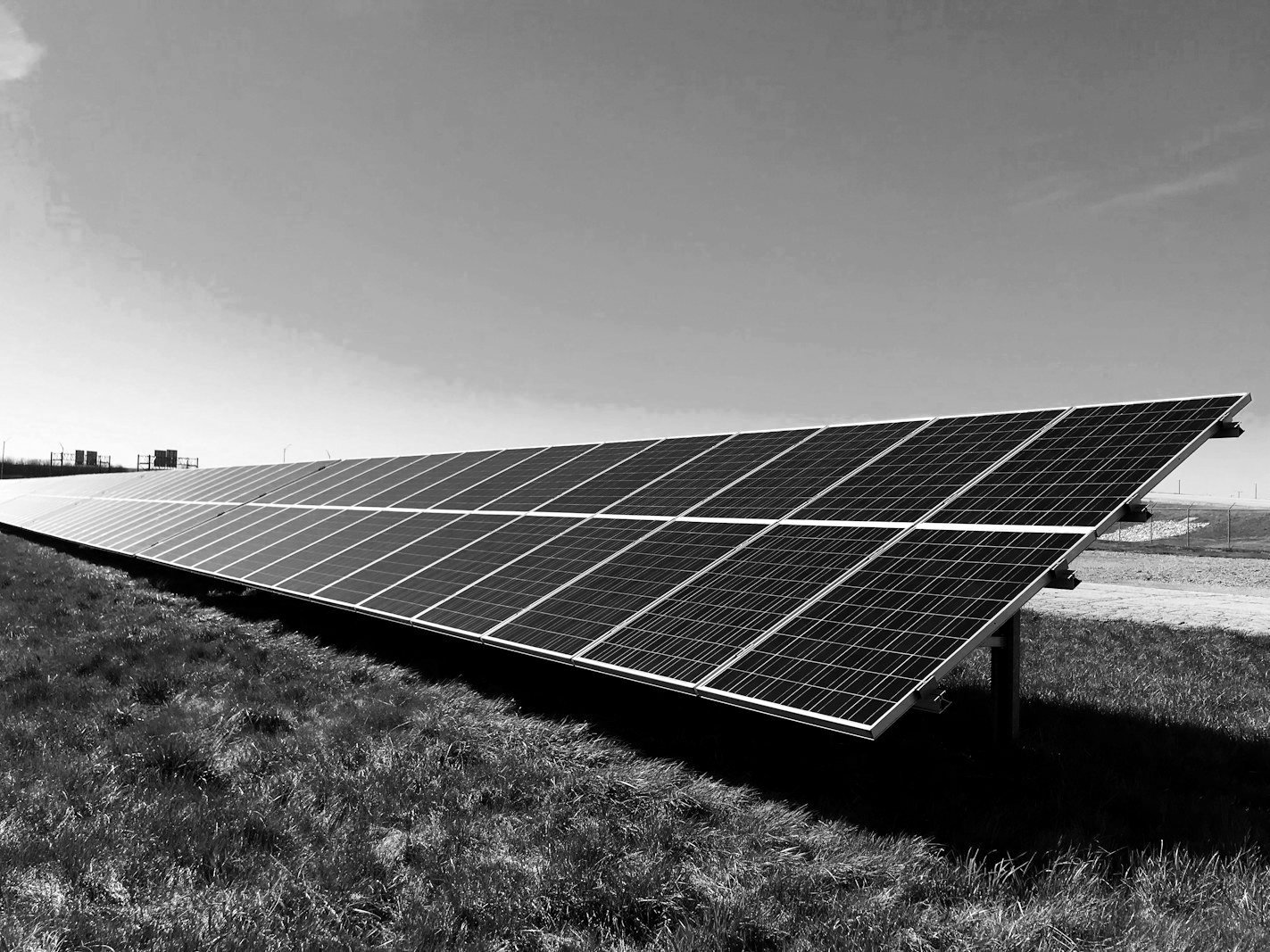
The Beximco Green Sukuk shows why structure matters. Issued in 2021 for Tk 3,000 crore with the Investment Corporation of Bangladesh as trustee, it had about Tk 2,800 crore outstanding in May 2026, when a Bangladesh Bank-led committee proposed extending its December 2026 maturity by six years to 2032 to avert default; the extension still required Commission approval.[14] Repayment hopes rest on the revenue of the underlying solar plant and a sinking fund of about Tk 600 crore.[14] Ring-fenced assets and a funded reserve are what give holders options when the sponsor group falters.
Sukuk and other Islamic securities
Sukuk follow the Debt Securities Rules and, in addition, the Investment Sukuk Rules 2019 and relevant shari'ah principles.[1] [3] The issuer or originator must file a detailed shari'ah pronouncement from its shari'ah supervisory board, preferably in Bengali and signed by each scholar, and the Commission may seek its own shari'ah opinion.[1] Financial statements follow AAOIFI standards.[1]
Sukuk are typically issued through a special purpose vehicle, which the rules define as a trust formed under the Trust Act 1882.[1] The originator must therefore settle the underlying asset, the transfer to the trust and the tradability analysis before filing, because a sukuk structured around receivables or debt may not be tradable at all. Sukuk with a conversion option follow the same conversion rules as conventional bonds. Our guide to Islamic finance in Bangladesh covers sovereign sukuk, Islamic banking and the shari'ah governance framework in more depth.
Green, blue, sustainable and convertible bonds
Green and blue bonds were part of the 2021 rules: proceeds must fund projects generating measurable environmental or blue-economy benefit, assessed by an eligible expert, held in an escrow or specified account, and reported on every half year.[1] The 2026 amendment broadens the labels and moves sustainable bond reporting to quarterly and then annual reports, with disclosure within 15 working days.[2] Issuers should treat the label as a continuing obligation: a green bond whose proceeds drift to general purposes is a disclosure breach.
Conversion and exchange options
A convertible or exchangeable bond may not be converted within two years of issue, and converted shares may not exceed 30 per cent of the issue size in any financial year or 60 per cent of pre-issue paid-up capital in total, unless the Commission relaxes the limit.[1]
For a public issue with a conversion option, shareholders must pass a special resolution by a three-fourths majority in value.[1] A listed issuer must offer at least 40 per cent of a convertible issue to existing shareholders as rights, may place up to 30 per cent privately and must reserve at least 30 per cent for the public.[1] Holders receive at least 30 working days' notice before conversion and must elect at least 10 days before the exercise date.[1]
DSE listing regulations for bonds and shares
Dhaka Stock Exchange made the Dhaka Stock Exchange (Listing) Regulations 2015 on 30 June 2015, with the Commission's prior approval, under section 34 of the Ordinance read with section 23 of the Exchanges Demutualization Act 2013; they were gazetted on 12 July 2015.[5] They apply to every company, entity and security, including mutual fund units, that applies for or holds a listing.[5] The equity listing process and the exchange's new gatekeeping role under the 2025 public offer rules are explained in our guide to the IPO process in Bangladesh; this section concentrates on what the regulations require of bond issuers and on the obligations that follow listing.
Listing debt securities on the DSE
On a public offer, the exchange sends its primary recommendation to the Commission within 20 days of receiving the offer documents, and must complete listing within 30 working days of the close of subscription.[5] A debt issuer files its application with a defined document set: constitutional documents, regulatory approvals, the Commission's consent and approved offer document, five years' audited accounts, the credit rating report, the registered trust deed and guarantees, consents from existing lenders to any second or pari passu charge, its servicing history on existing debt, and a cash-flow projection for the whole tenor certified by auditors or the rating company.[5]
Initial listing fees for fixed income securities are 0.25 per cent of issue size up to Tk 10 crore and 0.15 per cent above, subject to a minimum of Tk 50,000 and a maximum of Tk 1 crore; annual fees are 0.05 per cent up to Tk 100 crore and 0.02 per cent above, capped at Tk 6 lakh and payable by 31 March.[5] Late annual fees attract a surcharge of 1.5 per cent a month.[5] Bonds, debentures and other fixed-term securities are delisted on maturity, after one month's notice in two national dailies, and payment disputes at delisting go to arbitration under the exchange's supervision.[5]
Continuing obligations of listed issuers
Quarterly financial statements are due within 45 days of the first quarter and one month of the second and third, and annual accounts must be audited within 120 days of the year end and filed within 14 days after that, with a penalty of Tk 5,000 a day for late filing.[5]
Price-sensitive information must be reported in writing to the exchange and the Commission within thirty minutes of the decision under the 2015 text, and board meetings on price-sensitive matters should be held after trading hours or on a holiday.[5] Dividends must be paid within 30 days of declaration or approval.[5] Our guide to BSEC compliance for listed companies covers governance, shareholding and the 2022 insider trading rules that now sit alongside these listing regulations.
Halt, suspension and delisting
The exchange may halt trading on unusual market activity and suspend a security for breach of the regulations or where material information is not public; a suspension runs for thirty days and may be extended by up to fifteen days at a time.[5] Grounds for compulsory delisting include five years without a dividend, three consecutive years without an AGM, three years of stopped operations, three years of unpaid listing fees, or an order of the Commission or the exchange, always after a hearing.[5]
CSE listing regulations and how they differ
Chittagong Stock Exchange's Listing Regulations 2015 were notified on 1 July 2015 and gazetted on 14 July 2015, and they mirror the DSE text in structure and substance: nine chapters covering listing, undertakings, direct listing, continuous compliance, fees, suspension and delisting, inspection and miscellaneous matters.[6] The CSE uses the same 20-day recommendation window, 30-working-day listing deadline, quarterly and annual filing deadlines, Tk 5,000 daily penalty, thirty-minute price-sensitive disclosure rule and fee scale.[6]
In practice, an issuer listing on both exchanges deals with two regulatory departments applying near-identical listing regulations, files the same continuing reports with each and pays two sets of listing fees.[5] [6] The real differences are in market structure rather than law. The CSE is building a commodity derivatives market: on 19 October 2026 the Commission approved in principle commodity derivatives broker registration for six brokerage firms, on the CSE's recommendation.[13]
The 2026 overhaul of the listing regulations
Both rulebooks are now under review. In July 2026 the Commission told the DSE and CSE to submit a single, comprehensive amendment proposal to replace piecemeal changes to the 2015 regulations, after the DSE had sent separate proposals including a June 2026 plan to tighten delisting of long-closed, non-dividend-paying companies.[7]
Direct listing, which under the 2015 regulations has been available only to state-owned companies, is also being reopened: the finance ministry revoked the 2010 restriction on 5 October 2026, and the Commission's final direct listing rules were expected to double the turnover or asset threshold for private companies to Tk 1,000 crore, with 10 to 20 per cent of existing shares offloaded on listing.[7] [8] Expect both sets of listing regulations to change during 2027.
Bangladesh Securities and Exchange Commission
Consents to every debt issue and registers trustees, stock-brokers and stock-dealers.
Dhaka Stock Exchange
Lists bonds and shares under its 2015 Listing Regulations and issues TRECs and trader certificates.
Chittagong Stock Exchange
Applies mirror listing regulations and is building a commodity derivatives market.
Registered trustees
Certify the issue, hold the security for holders and enforce on default.
Credit rating companies
Rate the issue at launch and run surveillance ratings until redemption.
SME Foundation
Recognises SME issuers and recommends relaxations under the 2026 amendment.
Securities due diligence in Bangladesh
Securities due diligence in Bangladesh is not a courtesy review. The rules require named intermediaries to certify, in prescribed forms, that they have examined the issuer and that the offer document is true, fair and adequate, and they attach personal regulatory risk to those certificates.
Who must certify what
For debt, the trustee's due diligence certificate confirms that it has examined the draft information memorandum and the legal and title documents, that the charged assets bear the value, title and charge status disclosed, and that the rules have been complied with.[1] Since April 2026 every debt application must also carry the issue manager's certificate where an issue manager is appointed.[2] For equity, the Public Offer of Equity Securities Rules 2025 require due diligence certificates from the issue manager and underwriters, and treat the issue manager, registrar, valuer, auditor and credit rating company as experts under sections 136, 137 and 139 of the Companies Act 1994 and section 34 of the Financial Reporting Act 2015.[4]
The issue manager's equity certificate confirms site visits, interviews with directors and key management, independent verification of the objects of the issue, segregation of proceeds and rule-by-rule compliance, and it must keep its due diligence records for five years after the IPO for Commission inspection.[4] The issue manager, auditors, rating company and other experts have a right to visit premises and inspect books for that purpose.[4] Rule 20 of the 2025 rules prohibits anyone from supplying information, reports or due diligence they know or have reason to believe is false in any material particular.[4]
What legal due diligence covers on a bond issue
- Corporate capacity: objects clause, borrowing powers, board and shareholder approvals, and price-sensitive disclosure for listed issuers.
- Assets and security: title to every asset to be charged, existing charges at the RJSC, negative pledges and the lender consents the exchange will require for a second or pari passu charge.[5]
- Integrity checks: CIB status of the issuer, directors, sponsors and chief executive, and any history of default on existing debt securities.[1] [5]
- Use of proceeds: confirmation that no money will flow to group companies in breach of rule 3(1)(i).[1]
- Regulatory position: primary regulator approvals, licences, tax filings and litigation, fines and penalties that must be disclosed.
Capital market due diligence for investors and acquirers
Investors in listed companies and buyers of listed targets need a different lens: compliance with continuing listing obligations, price-sensitive disclosures, dividend history and category, sponsor shareholding filings and any Commission enquiries. Monthly shareholding statements for sponsors, directors and holders of 10 per cent or more are filed with the exchange and the Commission by the tenth day of each month, so the public record is a good starting point.[5] For the corporate, land, tax and labour side of a transaction, see our guide to M&A due diligence in Bangladesh, and our corporate transaction due diligence practice handles combined capital market and corporate reviews.

BSEC broker-dealer registration in Bangladesh
Since demutualisation, a firm that wants to trade on an exchange needs two things: a Trading Right Entitlement Certificate (TREC) from the exchange and a registration certificate from the Commission as a stock-broker, stock-dealer or both. The DSE's TREC Regulations 2013 bar anyone from offering brokerage services on the exchange without a TREC, and a TREC holder must hold, or be obtaining, Commission registration under the broker-dealer rules, failing which the TREC is cancelled.[9]
Obtaining a TREC
The Commission's Trading Right Entitlement Certificate Rules 2020, gazetted on 12 November 2020, opened new TRECs to local, foreign and joint venture companies, set paid-up capital of Tk 5 crore for local companies with a Tk 3 crore security deposit at the exchange, imposed higher figures for foreign and joint venture holders, and required exchanges to decide applications within 45 days.[11]
A TREC gives trading rights only, not a share in the exchange.[11] Under the exchange regulations, the applicant must be a company under the Companies Act 1994, meet the Commission's fit and proper criteria, and have adequate management, compliance, IT and financial capacity.[9] A TREC is valid for one year and renewable, and may be transferred only as the Demutualization Act permits.[9]
Registration with the Commission
Registration is governed by the Securities and Exchange Commission (Stock-Dealer, Stock-Broker and Authorized Representative) Rules 2000. The Commission's current checklist requires, among other things, exchange membership, corporate status, the minimum paid-up capital and a net worth of at least half of paid-up capital, a clean record for the company and its directors, no bankruptcy or loan default, a clearance that directors were not party to a broker or dealer whose registration was cancelled in the last three years, a graduate compliance authority, the exchange's recommendation and the application fee.[10] Supporting documents include RJSC-attested constitutional and allotment documents, CIB undertakings, director profiles and notarised affidavits on past offences.[10]
Traders, commencement and loss of licence
Individual traders need a Trader Certificate from the exchange: a Bangladeshi citizen aged 21 or more, a graduate, fit and proper, and without a conviction for moral turpitude.[9] A TREC holder must start business within six months of receiving its brokerage registration.[9] In December 2025 the DSE revoked the TREC of SQ Brokerage House for failing to start trading within the required time, years after its 2021 registration.[12]
Broker supervision in 2026
Supervision has sharpened. On 19 October 2026 the Commission directed compensation from the DSE Investors' Protection Fund for verified claims against four brokerages, capped at Tk 5 lakh per investor, and gave several stockbroker and merchant bank subsidiaries of distressed financial institutions until 30 April 2027 to cure net asset deficits.[13] Brokers should treat net capital, client money segregation and complaint handling as licence conditions, not back-office tasks.
Bond issuance Bangladesh mistakes to avoid
- Treating the rating as an afterthought. A public issue below single A, or any issue below BBB outside the SME and offshore relaxations, cannot proceed.[1] [2]
- Using proceeds for group companies. Lending bond proceeds to, or investing them in, affiliates under common control breaches rule 3(1)(i).[1]
- Choosing a conflicted trustee. Since April 2026 any relationship with the issuer, issue manager or advisers disqualifies the trustee.[2]
- Leaving lender consents late. Existing banks must consent to a second or pari passu charge before listing.[5]
- Missing the post-consent clock. The consent fee is due within five working days, and consents lapse after three or six months.[1]
- Forgetting the label. Green and sustainable bonds carry escrow and periodic impact reporting until the proceeds are spent.[1] [2]
On bond issuance Bangladesh mandates, TRW's capital markets practice advises issuers, trustees, arrangers and investors on debt and sukuk issues, listing, due diligence and BSEC licensing, and works with our banking and finance team on security packages and lender consents.
Frequently asked questions
Which law governs bond issuance Bangladesh companies undertake?
What changed in the Debt Securities Rules in 2026?
The April 2026 amendment added gender, orange, social, sustainable and sustainability-linked bonds, an SME route with Tk 5 crore paid-up capital for public issues, a 0.03 per cent consent fee for sustainable bonds, optional issue managers for private offers up to Tk 100 crore and stricter trustee independence.[2]
How long does BSEC take to approve a bond issue?
The rules require a decision within 7 working days of a complete private offer application and 17 working days for a public issue, although requests to cure defects extend the timetable in practice.[1]
Is a trustee mandatory for a private placement?
Yes. Every issue under the rules needs a trustee registered with the Commission, and the trustee must certify its due diligence on the information memorandum and charged assets.[1]
What credit rating does a bond need in Bangladesh?
Can a foreign investor buy a Bangladeshi corporate bond?
Yes. A private offer may be made to local or foreign persons, and an issue in foreign currency or offshore may be rated by a global agency and must disclose foreign exchange risk in the information memorandum.[1]
What are the DSE listing fees for a bond?
Initial listing fees for fixed income securities are 0.25 per cent of issue size up to Tk 10 crore and 0.15 per cent above, between Tk 50,000 and Tk 1 crore; annual fees are 0.05 or 0.02 per cent, capped at Tk 6 lakh.[5]
Are the CSE listing regulations different from the DSE's?
Who must sign due diligence certificates on a securities offer?
Source register
Primary legal and regulatory sources
Materials checked on 21 October 2026. Confirm the current official text before relying on any provision.
- BSEC (Debt Securities) Rules 2021, notification of 31 March 2021, Bangladesh Gazette Extraordinary, 31 May 2021
- BSEC — Amendment to the BSEC (Debt Securities) Rules 2021, notification of 7 April 2026
- BSEC — Debt securities: applicable rules and consent letters issued
- BSEC (Public Offer of Equity Securities) Rules 2025, gazetted 30 December 2025 — BSEC
- Dhaka Stock Exchange (Listing) Regulations 2015, Bangladesh Gazette Extraordinary, 12 July 2015
- Chittagong Stock Exchange (Listing) Regulations 2015 — CSE
- The Business Standard, 18 July 2026 — BSEC pushes bourses for comprehensive direct listing, de-listing roadmap
- The Business Standard, 11 October 2026 — BSEC set to raise direct listing asset threshold for private firms to Tk1,000cr
- Dhaka Stock Exchange (Trading Right Entitlement Certificate) Regulations 2013, Bangladesh Gazette Extraordinary, 1 March 2014
- BSEC — Checklist for stock-dealer and stock-broker registration under the SEC (Stock-Dealer, Stock-Broker and Authorized Representative) Rules 2000
- Dhaka Tribune, 19 November 2020 — New rules to get a brokerage licence (BSEC TREC Rules 2020)
- The Financial Express, 24 December 2025 — SQ Brokerage licence cancelled by DSE
- Outlook Bangla (BSS), 19 October 2026 — BSEC approves registration of 6 commodity derivatives brokers
- The Business Standard, 11 May 2026 — Beximco sukuk's tenure proposed for 6-year extension to avert default
Related TRW assistance
Move from information to a defined next step
TRW advises issuers, trustees, arrangers and investors on bonds, sukuk and asset-backed issues, DSE and CSE listing, securities due diligence and BSEC registration of brokers and dealers. Explore our capital markets practice or contact TRW to discuss your matter.