
TRW Insight / Bangladesh
Every factory in Bangladesh passes through the same core approvals, but garments, food, cosmetics, electronics, leather and glass each add their own regulator, trade body or utility constraint. That sector layer decides when production can actually start.
Manufacturing business registration Bangladesh: the sector map for 2026
Anyone planning manufacturing business registration Bangladesh authorities will accept quickly learns that there is no single licence. Every factory, whatever it makes, passes through the same core sequence of company formation, trade licence, tax registration, investment registration, factory licence, fire licence and environmental clearance. What separates a garment exporter from a biscuit maker, a cosmetics brand, an electronics assembler, a tannery or a glass plant is the sector layer that sits on top of that sequence: the trade body, product regulator, standards regime and utility constraint that decide whether the factory can actually sell.
This guide is built around that sector layer. TRW already publishes detailed guides on factory setup, the DIFE factory licence, the fire licence and BSTI certification, so we summarise the common steps briefly and link to those guides. The rest of the article sets out, for six manufacturing sectors, the approvals that are specific to each, the 2025 and 2026 changes that matter, and the mistakes that delay first production.
Summary: Every manufacturing business in Bangladesh needs the same core approvals: a company or other vehicle, trade licence, TIN and VAT registration, investment registration where it applies, a DIFE factory licence, a fire licence and Department of Environment clearance. Sector rules then add BGMEA or BKMEA membership for garment exporters, BFSA and BSTI approvals for food, DGDA licensing for cosmetics, e-waste duties for electronics, the Savar estate and red-category clearance for tanneries, and gas and energy planning for glass.
Key point: The sector layer, not the company registration, decides most timelines. A food factory now registers with the Bangladesh Food Safety Authority under regulations gazetted on 16 July 2026, cosmetics fall under DGDA rather than BSTI since the Drugs and Cosmetics Act 2023, and industrial gas connections for energy-heavy plants such as glass have been rationed since January 2025.
At a glance
Common spine
Company, trade licence, TIN, VAT, investment registration, factory licence, fire licence and environmental clearance apply to every factory.
Invest Bangladesh
BIDA, BEZA and the PPP Authority merged into Invest Bangladesh, which began operating on 23 August 2026.
Product regulators
BFSA for food businesses, BSTI for listed products and DGDA for cosmetics sit on top of the core approvals.
Environmental category
Tanneries sit in the red category; most garment, food, cosmetics, electronics and glass plants need site and environmental clearance before operating.
Utilities
Gas availability, effluent treatment and estate allocation often decide the start date more than any licence.
Table of Contents
What manufacturing business registration Bangladesh law requires in 2026
There is no single statute called a manufacturing licence. Manufacturing business registration Bangladesh practice is a chain of separate permissions, each issued by a different authority under a different law, and most of them cannot be applied for until the one before it has been granted. The chain begins with the legal entity and ends with the product approval that allows the first consignment to leave the gate.
For most investors the chain divides into two parts. The first is the common spine that applies to any factory: entity, trade licence, tax, investment registration, building and layout approval, the factory licence, the fire licence and environmental clearance. The second is the sector layer, where garments, food, cosmetics, electronics, leather and glass diverge sharply. This guide concentrates on the second part, because that is where most delays and most enforcement action arise.
Who this guide is written for
The readers we advise most often on manufacturing setups are Bangladeshi entrepreneurs expanding from trading into production, family groups adding a new product line, export-oriented garment and leather businesses, and foreign manufacturers relocating capacity into Bangladesh. The legal steps are largely the same for each. The difference lies in structuring, funding and the zone or non-zone location choice, which we address in a separate section below.
The common registration spine for every factory
Before any sector rule applies, the business needs a lawful vehicle and the basic registrations that every industrial undertaking holds. This part of manufacturing business registration Bangladesh work is well trodden, and getting it right early prevents mismatches later, because every subsequent licence must be issued in exactly the same name and address.
Forming the operating vehicle
Most factories are run through a private limited company incorporated with the Registrar of Joint Stock Companies and Firms. A company gives limited liability, makes bank financing and foreign investment easier, and is the form that lenders, buyers and regulators expect. Sole proprietorships and partnerships remain possible for small units, but they become a constraint the moment the business needs a term loan, a foreign shareholder or a bonded warehouse licence. Our guide to company registration in Bangladesh covers name clearance, the memorandum and articles, capital and filings, and our guide to foreign company registration covers the inward-remittance and encashment steps for foreign shareholders.
Trade licence, TIN and VAT registration
Once the company exists, it needs a trade licence from the city corporation, municipality or union parishad where the factory sits, an e-TIN and VAT registration with the National Board of Revenue. Trade licences are local and must match the factory address, not only the head office. A Dhaka head office trade licence does not cover a Gazipur factory. See our guides to the trade licence and VAT registration for the procedure.
Investment registration after Invest Bangladesh
Invest Bangladesh began operating on 23 August 2026 as the country's apex investment promotion agency under the Invest Bangladesh Act 2026, formed by merging the Bangladesh Investment Development Authority, the Bangladesh Economic Zones Authority and the Public-Private Partnership Authority.[1] It continues to run the BanglaBiz digital platform for online, time-bound licences and permits, and is working to implement a 14-day business licensing framework.[1]
Under the regime inherited from BIDA, registration was mandatory for industrial projects outside the jurisdiction of BEZA, BEPZA, the Hi-Tech Park Authority and BSCIC, and was the gateway to incentives and expatriate work permits. Registration fees were scaled by project size, starting at BDT 5,000 for projects up to BDT 100 million, plus 15 per cent VAT.[2] Until Invest Bangladesh publishes its own procedures, treat that framework as the working baseline and confirm the current fee and portal at filing. Our guide to investment approvals through Invest Bangladesh and BEPZA explains the zone alternatives.
Factory licence and fire licence
The Department of Inspection for Factories and Establishments (DIFE) approves the layout plan and issues the factory licence. A recent labour law amendment extended factory licence validity from one year to five years, but as at May 2026 field-level renewals were still being issued for one year, and DIFE said the five-year cycle would be implemented once fees and procedures were finalised.[3] The fire licence from the Fire Service and Civil Defence runs in parallel and is a precondition for the factory licence in practice. Both are covered in detail in our guides to the factory licence and fire licence.
Environmental clearance by category
The Environment Conservation Rules 2023 classify industrial units as green, yellow, orange or red according to pollution risk. Yellow, orange and red units need a site or location clearance before construction and an environmental clearance certificate before operation; orange units need an initial environmental examination and red units a full environmental impact assessment. Tanneries and chemical units are expressly red category.[4] Because the category drives the timetable, confirm it against the schedule to the 2023 Rules before buying land. Our guide to environmental impact assessment sets out the procedure.
Import and export registration
A manufacturer importing machinery and raw materials needs an Import Registration Certificate, and an exporter an Export Registration Certificate, from the Office of the Chief Controller of Imports and Exports. Capital machinery and raw materials have their own customs treatment. Our guide to import and export licensing covers both certificates.

Garments business in Bangladesh: RMG setup and approvals
Ready-made garments remain the largest manufacturing sector in Bangladesh, and the garments business has the most developed private compliance architecture of any industry. On top of the common spine, an RMG exporter needs trade-body membership, a bonded warehouse licence for duty-free inputs and a safety record that satisfies DIFE and international buyers at the same time.
BGMEA and BKMEA membership and the UD certificate
The Bangladesh Garment Manufacturers and Exporters Association (BGMEA) and the Bangladesh Knitwear Manufacturers and Exporters Association (BKMEA) issue Utilization Declaration (UD) certificates to their members against each work order. The UD is the key customs document authorising the use of duty-free imported raw materials for export garments, and it is needed for customs clearance, export processes, trade preferences and cash incentives.[5] From 1 September 2025, BGMEA required member factories to declare the unit price of imported raw materials and of the garments they export in order to receive a UD.[5] In practice, a woven or knit exporter that is not a member of the relevant association cannot run a normal export cycle, so membership should be applied for as soon as the factory licence is in hand.
Bonded warehouse and duty-free inputs
Export-oriented garment factories import fabric, yarn and accessories duty-free under a bonded warehouse licence issued by the customs bond commissionerate. The licence, the general bond and annual entitlement audits are covered in our guide to the bonded warehouse regime. The facility is not static. On 7 September 2026 the National Board of Revenue withdrew bonded warehouse facilities for imports of 10 to 30 count cotton yarn, requiring exporters to import that yarn against a bank guarantee covering duties and taxes, a decision BGMEA and BKMEA have asked the government to reverse.[8]
Safety compliance: DIFE, RSC and buyers
Since the Rana Plaza disaster, garment factories face two parallel safety regimes. DIFE enforces the statutory standard and, in 2026, has tied licence renewals to completion of corrective action plans, which BGMEA reports is complicating renewals for SME factories in rented or older buildings.[3] The RMG Sustainability Council, the tripartite successor to the Accord, oversees 1,885 factories on electrical, fire and structural safety, and on 20 October 2025 its board extended its mandate to labour-rights complaints, including wages, termination and freedom of association, with power to notify buyers of non-compliance.[6] A new factory producing for international brands should design to the RSC standard from the start, not retrofit after the first audit.
Location and wet processing
Cut-and-sew units are comparatively light on environmental approvals, but dyeing, washing and printing units are not. Wet processing generates effluent, needs an effluent treatment plant sized to the water load, and pushes the unit into a higher environmental category. Many export groups therefore locate wet processing inside an economic zone or EPZ with central treatment, and keep cut-and-sew elsewhere. Labour obligations, from wages to union registration, are covered in our guide to labour law compliance.
Food processing business registration in Bangladesh: BFSA and BSTI
Food processing has seen the most significant change in manufacturing business registration Bangladesh rules of the six sectors in 2026. A food factory now answers to two regulators: the Bangladesh Food Safety Authority (BFSA) for food business registration and safety, and the Bangladesh Standards and Testing Institution for the certification mark on listed products.
BFSA registration and licensing under the 2026 Regulations
The Food Safety (Registration and Licensing) Regulations 2026 were published in the official gazette on 16 July 2026. Businesses across the food supply chain, including dairy producers, packaged food manufacturers, bakeries, confectioneries and most food importers, must register with the BFSA, and businesses dealing in specialised products, namely infant formula, fortified foods, organic and genetically modified foods, irradiated products, edible oils and private food warehouses, need a formal licence. Registrations and licences are valid for three years, and the BFSA said enforcement would initially focus on large-scale industrial producers.[7] A new food factory should therefore file its BFSA registration alongside its factory licence, not after commissioning.
BSTI certification mark for listed foods
BFSA registration does not replace BSTI. Many processed foods, beverages, dairy products, edible oils and bakery items sit on BSTI's mandatory certification list, and a listed product cannot lawfully be made or sold without a Certification Mark (CM) licence. The BSTI application is filed online once the factory, label and quality system are ready for inspection and sampling, and the label must be in Bangla with the particulars BSTI prescribes. Run the BFSA and BSTI files together, because each regulator inspects the same premises and expects consistent documents. The mandatory list, documents, timelines, import clearance and penalties are covered in our BSTI certification guide.
Halal, labelling and export markets
Food exporters to Gulf and South-East Asian markets usually need halal certification and buyer-specific certifications such as HACCP or ISO 22000. These are commercial rather than statutory requirements in Bangladesh, but they shape the factory layout, the supplier list and the documentation system, so they belong in the design brief. Brand protection matters too: register product names as trademarks before launch, as explained in our trademark law guide.
Cosmetics business registration in Bangladesh: DGDA after the 2023 Act
Cosmetics and toiletries changed regulator in 2023. Under the Drugs and Cosmetics Act 2023, passed by Parliament in September 2023, a licence from the drug administration is essential for selling, importing and manufacturing cosmetics, and the Directorate General of Drug Administration (DGDA), not BSTI, now handles quality control for cosmetics.[9] That makes cosmetics business registration Bangladesh work closer to pharmaceutical licensing than to ordinary consumer goods.
What the DGDA regime means in practice
A cosmetics manufacturer must plan for a DGDA manufacturing licence covering premises, equipment, qualified personnel and quality systems, and for registration of the products it sells. An importer of finished cosmetics needs its own licence. Contract manufacturing, where a brand owner has products made by a licensed third-party factory, is common, but the brand owner still needs to confirm who holds which licence and whose name appears on the label. Detailed DGDA procedures for drugs, including project approval and product registration, are set out in our guide to pharmaceutical company registration, and the cosmetics process follows the same institutional logic.
Penalties and enforcement
Making, selling, stocking or marketing adulterated cosmetics carries up to five years' rigorous imprisonment, a fine of up to Tk 5 lakh, or both.[9] Mobile courts regularly raid markets selling counterfeit or unregistered beauty products, and liability reaches distributors and retailers as well as manufacturers. A brand that relies on an unlicensed toll manufacturer carries the exposure itself.
Soaps, detergents and the BSTI overlap
Not every personal care or household product moved to DGDA. Soaps, detergents and cleaning products may still fall within BSTI's mandatory list, and some products sit at the borderline between cosmetic and household chemical. Classify each product before applying, because a product filed with the wrong regulator loses months. Where a product is both a cosmetic under the 2023 Act and listed by BSTI, take advice before launch on which approval governs.
Electronics company formation in Bangladesh: manufacturing, assembly and import
Electronics is the sector where the commercial model drives manufacturing business registration Bangladesh requirements most directly. An electronics company in Bangladesh may be a pure importer and distributor, a semi-knocked-down assembler, or a full manufacturer with local component production. Each carries a different set of approvals, tax treatment and environmental duties.
Choosing the operating model
An importer needs the common spine without a factory licence, plus an Import Registration Certificate and any product approvals that attach to the goods. An assembler or manufacturer needs the full factory chain, and usually locates in an economic zone or hi-tech park to secure land, power and incentives. Foreign electronics brands commonly start with a local distributor, then move to a joint venture or subsidiary assembler once volumes justify it; our joint venture guide covers that route. Radio, telecom and connected devices also require equipment approvals from the Bangladesh Telecommunication Regulatory Commission, which should be checked for each product before import or production.
Tax incentives for local manufacturing in 2026
Successive budgets have used VAT and duty concessions to move handset and appliance production onshore. The FY2026–27 budget proposed in June 2026 cut advance income tax on imports of 22 raw materials used in local mobile phone manufacturing to 1 per cent, extended the existing duty exemptions on those materials until 30 June 2030, and extended conditional VAT exemptions for mobile phone manufacturing and assembly to the same date.[11] Conditional exemptions depend on meeting the stated conditions and the final Finance Act text, so verify the enacted position before building a business case on them. Our guide to tax incentives for foreign investors explains the wider incentive regime.
E-waste obligations for manufacturers and importers
The Hazardous Waste (E-waste) Management Rules 2021, made under the Bangladesh Environment Conservation Act 1995, require manufacturers, assemblers and importers of electrical and electronic products to register with the Department of Environment, and manufacturers, assemblers and large importers to meet collection targets rising from 10 per cent in the first year to 50 per cent from the fifth year. Registered manufacturers must also obtain environmental clearance, keep records and file annual reports, and breaches carry up to two years' imprisonment, a fine of up to Tk 200,000, or both.[10] Enforcement has been weak so far, but the obligations are on the statute book and buyers increasingly ask about them in due diligence.
Standards for appliances and cables
BSTI has steadily added household appliances and electrical items to its mandatory list, so an appliance or cable manufacturer should check every model against the list before production. The BSTI guide sets out the current list and the CM licence process.
Leather business registration in Bangladesh: tanneries and leather goods
Leather is two industries with very different regulatory profiles. Tanning raw hides into finished leather is one of the most heavily regulated activities in Bangladesh; making footwear, bags and accessories from finished leather is a comparatively ordinary manufacturing operation.
Tanneries and the Savar Tannery Industrial Estate
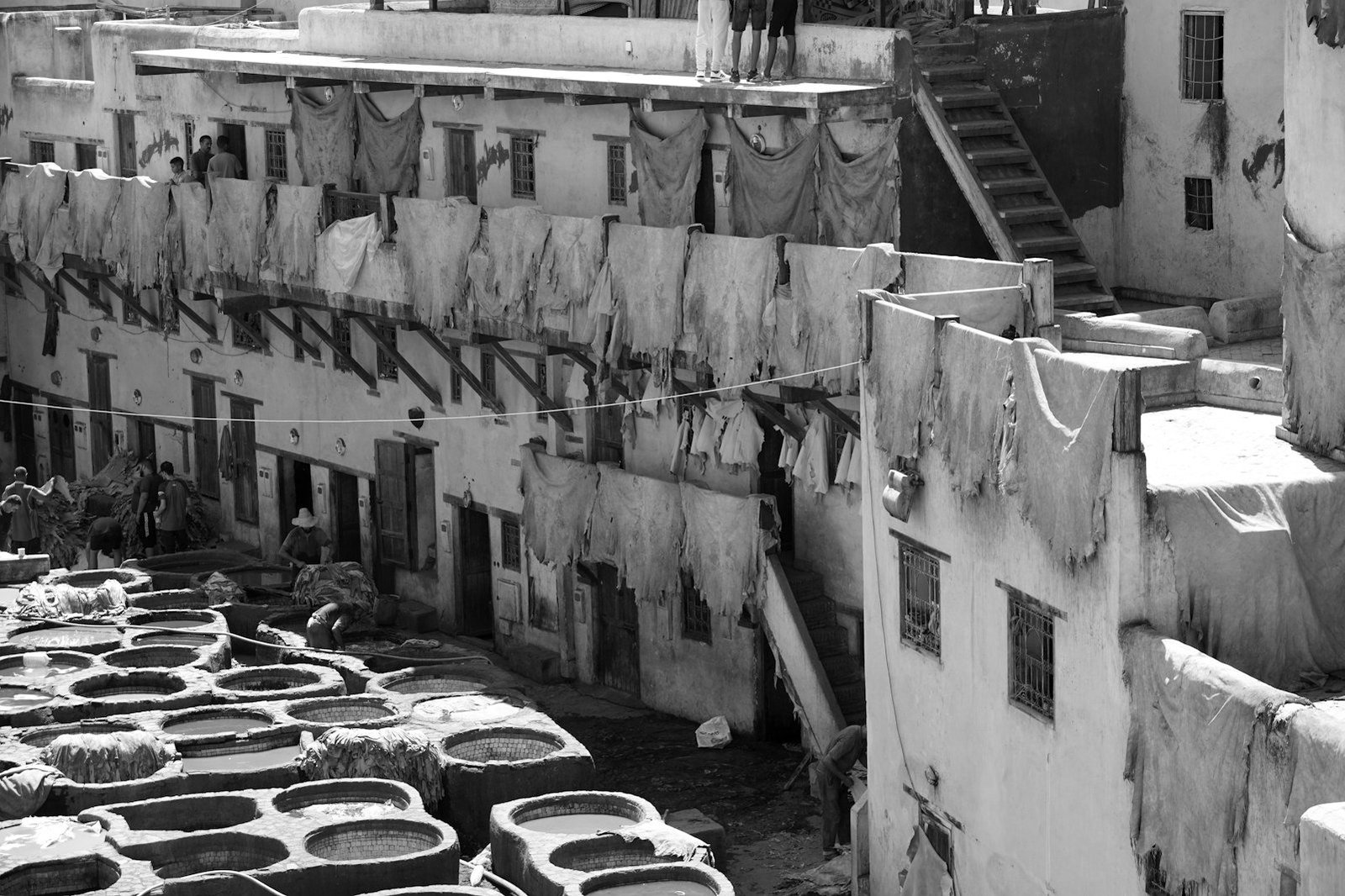
In 2017, 162 tanneries moved from Hazaribagh to the Savar Tannery Industrial Estate at Hemayetpur, a 200-acre estate with a central effluent treatment plant (CETP) on 17 acres beside the Dhaleshwari River.[12] The relocation reflects a clear policy that tanning belongs in designated estates with central treatment, managed by the Bangladesh Small and Cottage Industries Corporation. A tannery investor should therefore start with estate plot allocation and environmental advice, not a stand-alone land purchase.
Red category clearance and effluent compliance
Tanneries are red-category industries, requiring site clearance, a full environmental impact assessment and an environmental clearance certificate.[4] The Savar CETP is officially rated at 25,000 cubic metres a day but independently assessed at 14,000 to 18,000, while around 45,000 cubic metres are generated daily during Eid-ul-Azha, and monitoring has shown BOD and chloride levels far above permissible limits.[12] For an individual tannery, this means environmental clearance renewals and DoE enforcement are live risks that depend partly on infrastructure outside its control. Investors should negotiate estate obligations carefully and consider an individual treatment plant where permitted.
LWG certification and export access
Global brands increasingly buy only from tanneries certified by the Leather Working Group. As of May 2026, only one of the roughly 147 operational Savar tanneries held LWG certification, and eight held it nationwide.[12] That gap is the main reason Bangladeshi leather earns far less per unit than competitors. A new tannery should treat LWG readiness as a design requirement, not an aspiration.
Leather goods and footwear
Leather goods and footwear factories follow the common spine, with environmental clearance in a lower category than tanning, and many export units operate inside EPZs and economic zones under bonded arrangements. Their principal legal risks are traceability of hides, chemical restrictions imposed by buyers and labour compliance rather than effluent.
Glass business registration in Bangladesh: manufacturing and trading
For manufacturing business registration Bangladesh purposes, glass splits into float and sheet glass manufacturing, container and tableware production, processing such as tempering and laminating, and trading in imported glass. The registration steps follow the common spine, but the commercial and infrastructure constraints are unusually severe.
Market and capacity
Installed float glass capacity in Bangladesh has crossed 10 lakh tonnes a year against consumption of about 30,000 tonnes a month, and around 20 per cent of demand is still met through imports, mainly from China and India.[13] Float glass furnaces must run continuously for 10 to 12 years once lit, so manufacturers often keep producing at a loss.[13] A new float line is a long-term, energy-intensive commitment, and lenders now scrutinise utilisation risk closely. Processing and value-added glass businesses are less capital-intensive and face fewer of these constraints.
Gas connections and energy
Glass furnaces depend on reliable gas. Since January 2025 new industrial gas connections have been halted, with only promised connections prioritised; on 13 April 2025 the regulator raised prices by 33 per cent for new connections and load increases, and in June 2025 a five-member committee was formed to evaluate and prioritise pending applications, of which more than 1,000 were reported pending.[14] A glass project should secure written gas allocation, or a costed alternative fuel plan, before committing to land and machinery. Locating in an economic zone with committed utility supply is often the only practical route.
Glass trading and imports
A glass trading business needs the common spine without a factory licence, plus an Import Registration Certificate and customs classification of each product. Domestic producers have called for stronger anti-dumping measures against low-priced imports, and any duty change would directly affect trading margins.[13] Our guide to anti-dumping in Bangladesh explains how trade remedies work.
Authorities in the manufacturing approval chain
The table of authorities below shows which body controls each part of the sector layer. Many applications move through online portals, but each authority still takes its own decision on its own timetable.
Invest Bangladesh
Apex investment agency since 23 August 2026, merging BIDA, BEZA and the PPP Authority; runs BanglaBiz.
DIFE
Approves factory layout plans and issues and renews factory licences under the Labour Act.
Department of Environment
Classifies units green to red and issues site and environmental clearance certificates.
Bangladesh Food Safety Authority
Registers and licenses food businesses under the 2026 Regulations.
BSTI and DGDA
BSTI certifies listed products; DGDA licenses cosmetics under the 2023 Act.
BGMEA and BKMEA
Issue UD certificates that let member exporters use duty-free imported inputs.
Structuring choices for Bangladeshi and foreign investors
For a foreign manufacturer, 100 per cent foreign ownership is permitted in the majority of sectors, with local ownership required only in a few areas such as freight forwarding, shipping agency and for-profit education.[2] None of the six sectors in this guide is in that group, although a project that touches a controlled activity, such as certain chemicals, should check whether an additional no-objection certificate is needed. Expatriate work permit applications must be filed within 15 days of arrival, and permits are usually issued for one year with extensions up to five years.[2]
For Bangladeshi clients, the key structuring questions are different: whether to house the new factory in an existing company or a fresh subsidiary, how to ring-fence bank finance, and whether a zone location justifies the cost. A separate subsidiary protects the existing business from the new factory's liabilities and makes a later joint venture or sale cleaner. Where a factory is bought rather than built, our guide on buying an existing factory explains the liabilities that transfer.
Zone or non-zone location
Economic zones and EPZs offer land with utilities, central effluent treatment and one-stop approvals through the zone authority. Outside the zones, the investor assembles land, utilities and approvals itself. For tanneries, glass and wet processing, the zone choice is often decisive; for food, cosmetics and light assembly, a well-located non-zone site may be faster and cheaper. Our guide on relocating a factory into an economic zone compares the routes.
Step-by-step: manufacturing business registration Bangladesh sequence
The order below reflects the dependencies between approvals. Steps two to four can run in parallel once the company is incorporated, but the factory licence cannot be finalised before fire and environmental clearances are in place.
Map the sector layer
Identify the product regulator, trade body, environmental category and utility needs for each product before choosing a site.
Choose site and route
Decide between an economic zone, EPZ, BSCIC estate or private site, and confirm gas, power and effluent capacity in writing.
Form the company
Incorporate with RJSC, open the bank account and, for foreign shareholders, bring in and encash the share capital.
Register locally and for tax
Obtain the trade licence for the factory address, e-TIN, VAT registration and the import registration certificate.
Register the investment
File investment registration through Invest Bangladesh or the zone authority to unlock incentives and work permits.
Clear building, fire and environment
Obtain layout approval, the fire licence, site clearance and the environmental clearance certificate for the category.
Obtain the factory licence
Apply to DIFE once the premises, fire and environmental approvals are in place, and diarise renewal.
Secure product approvals
File BFSA, BSTI, DGDA, BGMEA or BKMEA and other sector applications before stock is produced.
Sector requirements compared
The comparison below summarises how the sector layer differs across the six industries. It is a planning tool, not a substitute for checking each product and site.
| Sector | Key sector approvals | Environmental profile | Main practical constraint |
|---|---|---|---|
| Garments | BGMEA or BKMEA membership, UD, bonded warehouse licence | Low for cut-and-sew; higher for dyeing and washing | Buyer and RSC safety audits, renewal linked to corrective action |
| Food processing | BFSA registration or licence, BSTI CM licence for listed foods | Moderate; effluent and hygiene controls | Two regulators inspecting the same premises |
| Cosmetics | DGDA licence and product registration; BSTI for some soaps and detergents | Moderate | Classifying each product to the right regulator |
| Electronics | Import registration, BTRC approvals for radio devices, BSTI for listed appliances, DoE e-waste registration | Low for assembly; e-waste duties apply | Conditional VAT and duty concessions |
| Leather | Tannery estate allocation, red-category clearance and EIA, LWG for export | Red category for tanneries | CETP capacity and effluent compliance |
| Glass | Common spine; import registration for traders | Furnace emissions and energy use | Gas allocation and import competition |
Manufacturing business registration Bangladesh mistakes to avoid
The same errors recur across sectors, and most of them are sequencing errors rather than legal misunderstandings.
Buying land before checking the category
A plot that suits a garment cut-and-sew unit may be unusable for a tannery, a dyeing unit or a glass furnace. Confirm the environmental category, gas availability and zoning before signing a land deal.
Treating the product regulator as an afterthought
Factories are often built and commissioned before the BFSA, BSTI or DGDA application is filed, leaving finished stock that cannot be sold. File the product-level application as soon as the premises are ready for inspection.
Mismatched names and addresses
Every licence must match the company name and the factory address exactly. A trade licence issued for the head office, or a VAT registration at a rented warehouse, will stall later approvals and bank documentation.
Assuming renewal is automatic
Factory licence, fire licence, environmental clearance and BSTI licences all expire and have their own renewal conditions. DIFE now links garment factory renewals to corrective action progress.[3] Build a single compliance calendar for all of them.
Relying on unlicensed contract manufacturers
In food and cosmetics especially, brand owners face liability for products made by unlicensed third parties. Verify the manufacturer's licences and product registrations before signing a toll manufacturing agreement.
What to watch for the rest of 2026
Four developments will shape manufacturing business registration Bangladesh practice into 2027. First, Invest Bangladesh will publish its procedures and progress on the 14-day licensing framework, which may consolidate several approvals into BanglaBiz.[1] Second, the BFSA will build its inspection capacity under the 2026 Regulations, starting with large producers and imports at the major ports.[7] Third, DIFE is expected to implement five-year factory licence renewals once fees are fixed.[3] Fourth, the EU-funded technical review of the Savar CETP may lead to new obligations for tanneries.[12] Any of these can change timelines, so confirm the current position at each stage of a project.
Frequently asked questions
What licences does a manufacturing business need in Bangladesh?
Every factory needs a legal vehicle, a trade licence, TIN and VAT registration, investment registration where applicable, a DIFE factory licence, a fire licence and Department of Environment clearance. Sector regulators such as BFSA, BSTI and DGDA then add product-level approvals.
Is BIDA registration still required for a new factory?
Do garment exporters need BGMEA or BKMEA membership?
In practice, yes. BGMEA and BKMEA issue Utilization Declaration certificates to their members, and the UD is needed to use duty-free imported inputs, clear customs and claim incentives.[5]
Which authority licenses food factories in Bangladesh?
The Bangladesh Food Safety Authority registers food businesses under the Food Safety (Registration and Licensing) Regulations 2026, gazetted on 16 July 2026, and BSTI issues CM licences for products on its mandatory list.[7]
How long are BFSA registrations valid?
Registrations and licences under the 2026 Regulations are valid for three years.[7]
Does a cosmetics manufacturer need a BSTI or a DGDA licence?
Since the Drugs and Cosmetics Act 2023, manufacturing, importing and selling cosmetics requires a licence from the drug administration, and DGDA rather than BSTI handles cosmetics quality control. Some soaps and household products may still fall under BSTI.[9]
What e-waste duties apply to electronics manufacturers?
Under the Hazardous Waste (E-waste) Management Rules 2021, manufacturers, assemblers and importers must register with the Department of Environment, and manufacturers and large importers must meet collection targets rising to 50 per cent.[10]
Can a new tannery be set up outside Savar?
Can a glass factory get a new gas connection?
New industrial gas connections have been halted since January 2025, with only promised connections prioritised and a committee reviewing pending applications. Secure written allocation or an alternative fuel plan first.[14]
Can a foreigner own 100 per cent of a manufacturing company in Bangladesh?
Yes. Full foreign ownership is permitted in the majority of sectors, and local ownership is required only in a few areas such as freight forwarding, shipping agency and for-profit education.[2]
Source register
Primary legal and regulatory sources
Materials checked on 21 October 2026. Confirm the current official text before relying on any provision.
- Invest Bangladesh, 23 August 2026 — Invest Bangladesh begins journey as country's apex investment promotion agency
- Bangladesh Investment Development Authority — Frequently asked questions
- BGMEA, 18 May 2026 — BGMEA leaders meet DIFE on factory licence renewal and SME challenges
- LegalSeba — Environmental clearance in Bangladesh under the Environment Conservation Rules 2023
- The Financial Express, 26 August 2025 — BGMEA makes unit price declaration mandatory for UD certificates
- The Business Standard, 8 November 2025 — RMG Sustainability Council can now oversee labour issues too
- The Bangladesh Monitor, 25 July 2026 — All food businesses to require BFSA registration under new rules
- The Business Standard, 8 September 2026 — BGMEA, BKMEA object to withdrawal of bond facility on yarn imports
- The Business Standard, 7 September 2023 — Drugs and Cosmetics Bill passed with provision for life term
- ChemLinked, June 2021 — Bangladesh publishes Hazardous Waste (E-waste) Management Rules 2021
- The Business Standard, 11 June 2026 — Mobile phone prices likely to decline (FY2026–27 budget)
- The Daily Observer, 23 May 2026 — Dhaleshwari near ecological collapse as Savar Tannery CETP falls short
- The Business Standard, 31 January 2026 — Why Bangladesh's float glass industry is facing a severe supply–demand mismatch
- Prothom Alo English, July 2025 — Gas crisis deepens: industries wait indefinitely for connections
Related TRW assistance
Move from information to a defined next step
TRW runs manufacturing setups as a single programme, from company formation and investment registration to DIFE, fire, environmental and sector approvals. Explore our industrial parks, economic zones and manufacturing facilities practice and corporate and commercial advisory practice, or contact TRW to discuss your project.