
Offshore Wind Development, Grid Connection and Supply-Chain Contracting in Bangladesh
Offshore wind advice for developers, investors, lenders, turbine suppliers, marine contractors and port operators looking at Bangladesh, covering seabed and site rights, permits, grid connection and power purchase arrangements, supply-chain and installation contracts, financing and dispute risk on projects in the Bay of Bengal.

- Assess feasibility
- Secure rights and consents
- Contract and finance
- Build and operate
Offshore wind development in Bangladesh: our approach
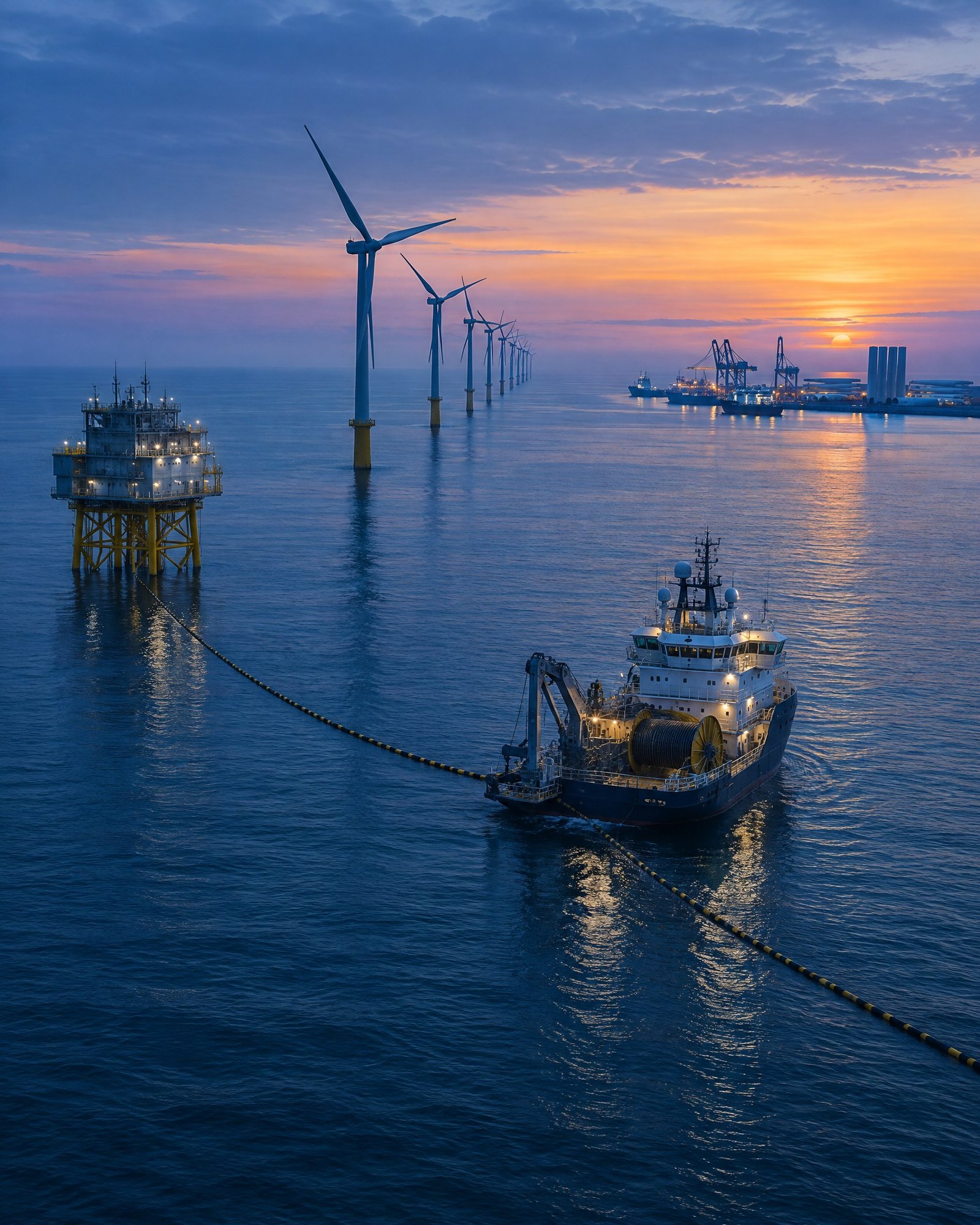
Offshore wind is at an early stage in Bangladesh, but it is increasingly part of the conversation about the country's energy transition, energy security and reliance on imported fuel. Wind resource studies, development partner support and investor interest point to potential in the Bay of Bengal, while cyclones, shallow coastal waters, grid limitations and port capacity present real challenges. We advise developers, investors, lenders and contractors on the legal framework for early-stage offshore wind projects as part of our projects and real estate practice in Bangladesh, helping them assess risk honestly before committing capital.
There is no dedicated offshore wind statute in Bangladesh. A project must instead be assembled from general power sector law, maritime and coastal legislation, environmental regulation, foreign investment rules and contract. The Power Division and the Bangladesh Power Development Board shape procurement and offtake, the Sustainable and Renewable Energy Development Authority promotes renewables, the Bangladesh Energy Regulatory Commission licenses generation and sets tariff frameworks, and the Power Grid Company of Bangladesh operates the transmission system. Invest Bangladesh, which since August 2026 includes the former investment, economic zone and public-private partnership authorities, handles investment registration and partnership projects.
Site and seabed rights need careful attention. Bangladesh's maritime boundaries with Myanmar and India were settled in 2012 and 2014, and the Territorial Waters and Maritime Zones Act 1974, as amended in 2021, governs rights in the territorial sea and exclusive economic zone. However, there is no established leasing round for offshore wind areas, so the route to secure exclusive rights for a site must be agreed with government. Environmental and social impact assessment, fisheries, shipping lanes, naval activity and coastal communities all affect where turbines and export cables can be placed and when works can take place.
Grid connection and offtake are usually the decisive commercial issues. The onshore substation, export cable, transmission reinforcement and responsibility for delays must be allocated clearly between the developer, the transmission company and the buyer. Power purchase agreements must deal with curtailment, deemed energy, tariff currency, payment security and government support. Lenders and development finance institutions will scrutinise each point. We draw on experience with power projects, the 2026 legal reforms and Bangladesh's evolving renewable energy policies to help clients structure bankable offshore wind arrangements that reflect local conditions rather than simply copying templates from European or East Asian markets.
The supply chain runs largely through foreign suppliers: turbines, foundations, cables, installation vessels and specialist crews will mostly come from abroad, while ports such as Mongla, Payra and Matarbari may provide staging and future service bases. We draft and negotiate turbine supply, balance-of-plant, installation, operation and maintenance and port agreements, advise on import duties, work permits and foreign exchange, and work with counsel in Europe, Asia and the Middle East. Where disputes arise, our dispute resolution team handles arbitration and enforcement, including claims involving state-owned counterparties and government guarantees.
Core workstreams
Four clear stages
- 01Assess feasibility
- 02Secure rights and consents
- 03Contract and finance
- 04Build and operate
Talk to a partner
Consultations in Dhaka or by video. Scope, team and fees are agreed in writing first.
Book →Offshore wind work we handle in Bangladesh

Market entry and project structuring
- Assess feasibility
- Secure rights and consents
- Contract and finance
- Build and operate
Site rights and consents
- Assess feasibility
- Secure rights and consents
- Contract and finance
- Build and operate
Grid connection and offtake
- Assess feasibility
- Secure rights and consents
- Contract and finance
- Build and operate
Turbine and supply contracts
- Assess feasibility
- Secure rights and consents
- Contract and finance
- Build and operate
Marine, port and logistics
- Assess feasibility
- Secure rights and consents
- Contract and finance
- Build and operate
Finance, insurance and disputes
- Assess feasibility
- Secure rights and consents
- Contract and finance
- Build and operate
Market entry and project structuring
We advise international developers and investors on entering Bangladesh, including choice of vehicle, joint ventures with local partners, registration with Invest Bangladesh, foreign exchange and repatriation rules, tax incentives and treaty protection. We also explain how unsolicited proposals, competitive tenders and public-private partnership routes may work for an offshore wind project, given the absence of a dedicated leasing regime, and how to protect early development work, survey data and confidential information from competitors.
Site rights and consents
We map the consents an offshore wind project is likely to need, from agreements on exclusive development rights and seabed use to environmental clearance, coastal land for the landfall and substation, navigation, fisheries and defence clearances. We prepare permitting strategies, support stakeholder engagement and help developers document government commitments so that early survey and measurement work is protected if policy, priorities or officials change during the long development period.
Grid connection and offtake
We negotiate grid connection agreements, power purchase agreements and implementation agreements with state counterparties, focusing on export cable responsibility, transmission delays, curtailment, deemed energy payments, tariff indexation, payment security and termination compensation. Where a project sells to corporate buyers or exports power, we also advise on the regulatory route, wheeling arrangements and the documentation needed to support energy attribute certificates or green tariffs that export-oriented buyers increasingly require.
Turbine and supply contracts
We draft and negotiate turbine supply agreements, foundation and cable fabrication contracts, balance-of-plant works and long-term service agreements, whether structured as a single EPC wrap or multiple contracts. Our focus is interface risk, cyclone and weather allowances, delay and performance liquidated damages, warranties, availability guarantees, spare parts, insurance and the practical effect of Bangladeshi import, customs and tax rules on each supplier, including duty exemptions for capital machinery where available.
Marine, port and logistics
We advise on installation vessel charters, marine warranty surveys, port use and staging agreements, heavy-lift logistics, crew transfer arrangements and the regulatory issues of operating foreign-flagged vessels and foreign crews in Bangladeshi waters. We coordinate customs, immigration and work permit steps so that specialist vessels and personnel can arrive when the installation window opens, which is critical given the limited working windows created by the monsoon and cyclone seasons.
Finance, insurance and disputes
We act for sponsors and lenders on project finance, development finance institution and export credit agency debt, security packages, direct agreements and insurance. We advise on construction all risks, marine and delay-in-start-up cover and claims. When disputes arise with contractors, suppliers or state counterparties, we handle negotiation, expert determination, international arbitration and enforcement of awards in Bangladesh, coordinating with foreign counsel where assets are located abroad.
Partner-led, on every matter.
Projects & Real Estate matters at TRW are led by partners, supported by associates, with one responsible lawyer from first advice to final outcome.
Meet the firm →



01Is there a legal framework for offshore wind projects in Bangladesh?
There is no specific offshore wind law or seabed leasing system yet. Projects would rely on the general power sector framework, including generation licensing by the Bangladesh Energy Regulatory Commission, procurement and offtake through the Power Division and the Bangladesh Power Development Board, maritime zone legislation, environmental law and the investment regime administered by Invest Bangladesh. This means more of the project's protection must come from negotiated agreements with government. We help developers identify the gaps and propose practical contractual solutions that lenders are likely to accept, rather than assuming a European-style framework already exists in Bangladesh.
02How can a developer secure exclusive rights to an offshore wind site?
Without a leasing round, exclusivity usually depends on an agreement or letter from the relevant ministry or authority, sometimes linked to a feasibility study, memorandum of understanding or unsolicited proposal process. The strength of that right depends on the authority's legal power to grant it, its duration, conditions and the consequences of policy change. We review the legal basis carefully, negotiate clear exclusivity, data ownership and cost recovery terms, and advise on whether the arrangement would survive scrutiny by lenders, future governments and competing offshore wind bidders who may later challenge it.
03Who is responsible for the grid connection and export cable?
That is a matter for negotiation and is often the most important commercial point. In some markets the transmission operator builds the offshore or onshore connection, while in others the developer builds and may transfer it. In Bangladesh, the capacity and timing of the Power Grid Company of Bangladesh's network reinforcement will be critical. The power purchase agreement and grid connection agreement should clearly state who builds what, by when, and what compensation is paid if the grid is not ready. Without that clarity, an offshore wind project may be completed but unable to sell its power, leaving investors exposed.
04How should cyclone and monsoon risk be handled in offshore wind contracts?
The Bay of Bengal has a recognised cyclone season and a monsoon that restricts marine works for part of the year. Contracts should define weather windows, weather downtime allowances, design standards for extreme wind and waves, and the boundary between force majeure and risks that contractors are expected to price. Insurance terms must be consistent with those definitions. We work with technical advisers to align the turbine supply, installation and service contracts so that the same event does not leave the developer exposed under one contract while contractors are excused from liability under another.
05What approvals are needed for foreign workers and vessels?
Specialist crews will usually need visas and work permits, which are processed through the relevant investment authority or ministry depending on the project and employer. Foreign-flagged installation and survey vessels may need permissions relating to cabotage, port entry, navigation and security, and equipment may require temporary import arrangements to limit customs duty. These steps take time, and a missed installation window can be very expensive. We plan the immigration, customs and maritime approvals with contractors early and build realistic timelines into the offshore wind construction schedule.
06Can offshore wind power be sold to private buyers rather than the state?
Most power in Bangladesh is sold to the Bangladesh Power Development Board under long-term agreements, and that remains the likely route for a first utility-scale project. Arrangements for private sales, wheeling through the national grid and corporate renewable power purchases have been developing, but any such model must be checked against current licensing and tariff rules. Export-oriented manufacturers with renewable energy targets are potential buyers. We advise on whether a private offtake model is legally available for a particular offshore wind project and how to document it with the buyer and the grid operator.
07How will lenders view an offshore wind project in Bangladesh?
Lenders will look closely at the strength of the site rights, the creditworthiness and payment security of the offtaker, currency and convertibility risk, termination compensation, government support, grid risk, insurance and contractor quality. Development finance institutions and export credit agencies are likely to be involved in early projects and will apply environmental and social standards. We prepare legal due diligence, advise on security over project assets and contracts in Bangladesh, and negotiate direct agreements, helping sponsors present a project that lenders can realistically finance on acceptable terms.
08How are disputes on offshore wind projects usually resolved?
Supply and installation contracts with international contractors typically provide for international arbitration, often in Singapore or London, with technical disputes referred first to an expert or dispute board. Agreements with state entities may provide for arbitration under institutional rules or domestic arbitration, and investment treaties may offer further protection for foreign investors. Bangladesh is a party to the New York Convention, and foreign awards are enforced under the Arbitration Act 2001. We advise on dispute clauses at the outset and act in proceedings and enforcement when offshore wind disputes cannot be settled by negotiation.
From first call to resolution.
- 01
Assess feasibility
We review the legal and regulatory route for the proposed offshore wind site, government counterparties, investment structure, permitting needs, grid options and offtake, and identify the risks that could prevent financing or delay the project, with practical options for addressing each one.
- 02
Secure rights and consents
We negotiate exclusivity, survey and data arrangements, then manage the approvals, environmental assessment, landfall land rights and government agreements needed to move from early development into procurement, competitive supplier selection and financing.
- 03
Contract and finance
We negotiate the power purchase, grid, turbine, installation, port and service contracts, align their risk allocation, and support financing documentation, direct agreements and conditions precedent until financial close and the first drawdown of funds.
- 04
Build and operate
During construction and operation we advise on variations, delays, weather claims, insurance, compliance and disputes, helping the project reach commercial operation and perform reliably and profitably over its operating life.

“Demonstrates an extraordinary command over both domestic litigation and international arbitration.”
The Legal 500 Asia Pacific, Bangladesh: Dispute resolution, client feedback
Related reading.
Renewable Energy Law in Bangladesh 2026: Solar Projects, Tenders, Net Metering and Approvals
Energy Transition in Bangladesh 2026: Legal Framework, Power Projects and Carbon Markets
Power and Energy Law in Bangladesh 2026: BERC, Power Contracts and Energy Deals
Energy Arbitration in Bangladesh 2026: Power, Gas and LNG Disputes, Price Reviews and Enforcement
All insights →
Has any offshore wind farm been built in Bangladesh?
Which authority would buy power from an offshore wind project?
Does the Invest Bangladesh Act 2026 affect offshore wind investment?
Are there tax incentives for renewable energy projects?
What environmental assessment does an offshore wind project need?
Can foreign investors own 100 percent of an offshore wind project company?
How do local content expectations affect offshore wind supply chains?
How can TRW support an offshore wind project?
Plan your offshore wind project with clarity
Speak with the partners about offshore wind in Bangladesh or across borders.
Book a consultation →