
TRW Insight / Bangladesh
Bangladesh's Supreme Court has struck down constitutional amendments, revived the caretaker system and rewritten the rules on arrest and sentencing. These judgments, not the bare text, decide what the Constitution means in 2026.
Constitutional law cases Bangladesh courts have decided: the 2026 casebook
The constitutional law cases Bangladesh courts have decided since 1972 do more than interpret the text: they have rewritten it. The Supreme Court has struck down three constitutional amendments outright, revived a caretaker system that Parliament abolished, separated the lower judiciary from the executive, rewritten the rules on arrest and remand, and in July 2026 confirmed that the referendum requirement for certain amendments is back in Article 142.[3] [9]
This casebook explains the judgments that matter most, what each decided and how it still operates. It also gives a dated table of all seventeen amendments, explains how to challenge a law's constitutionality, and covers Article 32, human rights institutions and legal aid. The Constitution's structure, writ procedure and judicial review grounds are covered in companion TRW guides, linked rather than repeated.
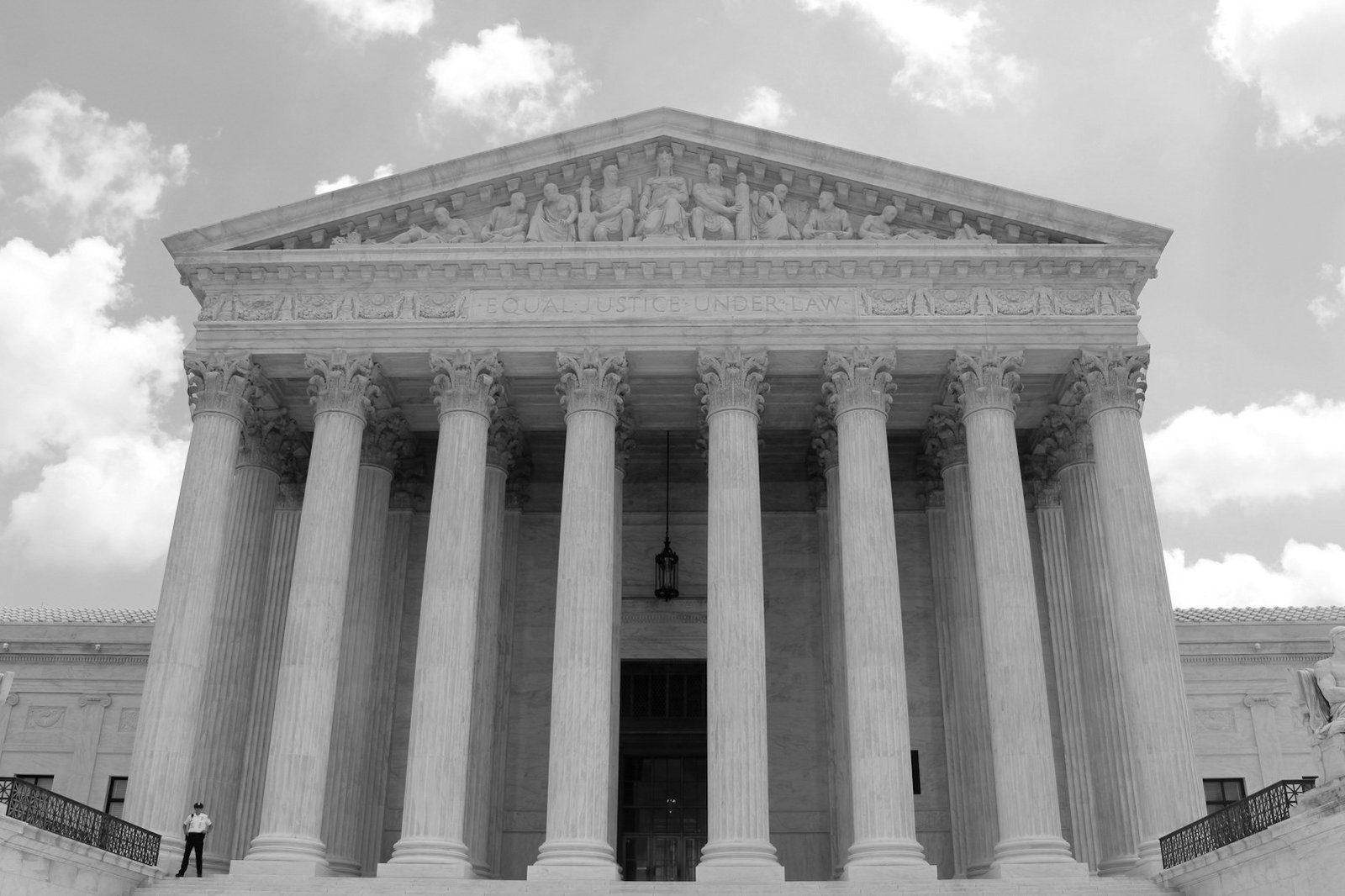
Summary: Bangladesh's Supreme Court enforces the Constitution through Article 102 and treats any law inconsistent with fundamental rights as void under Article 26. Its leading judgments established that Parliament cannot destroy the basic structure, that the judiciary must be independent of the executive, that arrest and remand powers are subject to binding safeguards, and that mandatory death sentences are unconstitutional. Between 2024 and 2026 the courts revived the caretaker system, struck down parts of the Fifteenth Amendment and restored the referendum requirement, while Parliament prepares the first new amendment since 2018.
Key point: The 2024 to 2026 judgments did not simply return the Constitution to an earlier version. The High Court Division voided only selected parts of the Fifteenth Amendment and left the rest to Parliament, and the Appellate Division's 2025 caretaker judgment operates only prospectively. Anyone relying on a provision touched by these cases should check its judicial history, not only the online text.[7] [8]
At a glance
Basic structure
Since the Eighth Amendment case of 1989, a two-thirds majority cannot alter the Constitution's essential features.
Three amendments voided
The Fifth, Seventh and Sixteenth Amendments were struck down; the Eighth and Fifteenth were voided in part.
Caretaker revived
The Appellate Division restored Chapter IIA on 20 November 2025, with prospective effect only.
Arrest safeguards
The 2016 BLAST judgment set ten guidelines for police and nine for magistrates on arrest and remand.
Amendment pending
A special committee aims to report by December 2026, with a bill expected in January 2027.
Table of Contents
How constitutional law cases Bangladesh courts hear reach the Supreme Court
Almost every case in this guide began as a writ petition in the High Court Division. Article 102(1) empowers that Division, on the application of any person aggrieved, to give directions to any person or authority to enforce the fundamental rights in Part III. Article 102(2) adds the judicial review jurisdiction, available where no other equally efficacious remedy exists: orders requiring a public functionary to do what the law requires or refrain from what it forbids, declarations that an act was done without lawful authority and is of no legal effect, habeas corpus and quo warranto.[2] Article 44 guarantees the right to move the High Court Division under Article 102(1).[1]
Article 26: the rule that makes inconsistent laws void
Article 26 is what gives these petitions teeth. Existing law inconsistent with Part III became void on commencement to the extent of the inconsistency, and the State may not make any law inconsistent with Part III; any such law is void to that extent.[1] The Second Amendment of 1973 added that Article 26 does not apply to amendments made under Article 142.[3] That exclusion is why challenges to constitutional amendments are argued on the basic structure doctrine rather than on Article 26.
Standing after the Flood Action Plan case
The phrase "person aggrieved" once confined standing to those personally affected. In Dr Mohiuddin Farooque v Bangladesh, decided on 25 July 1996, the Appellate Division held that the Bangladesh Environmental Lawyers Association qualified as a person aggrieved and sent its challenge back for a hearing on the merits. Justice Mustafa Kamal explained that a person espousing a public cause "need not be personally affected", while the court warned against "busybodies" and "interlopers".[13] Most of the public interest cases below depend on that reading of Article 102. The procedure from filing to rule nisi is explained in our guide to the writ petition in Bangladesh.
Anwar Hossain Chowdhury (1989): the basic structure doctrine
The Eighth Amendment of 1988 did two things: it made Islam the state religion through Article 2A, and it amended Article 100 to create six permanent benches of the High Court Division outside Dhaka, at Barishal, Chattogram, Cumilla, Jashore, Rangpur and Sylhet.[3] [4] Lawyers challenged the bench provisions. In Anwar Hossain Chowdhury v Bangladesh, 41 DLR (AD) 165, the Appellate Division held the Article 100 amendment unconstitutional.[3]
What the court decided
The majority reasoned that permanent benches with full jurisdiction would operate as rival courts to the High Court Division, destroying its oneness, particularly because the amendment made no provision for transferring cases between them. It identified features the amending power cannot alter, among them the supremacy of the Constitution, separation of powers, independence of the judiciary and the oneness of the High Court Division. It was the first time an amendment passed by Parliament had been invalidated in Bangladesh.[4]
Why it still matters in 2026
Every later amendment case among the constitutional law cases Bangladesh lawyers cite builds on this judgment, and it constrains current reform. In early July 2025 political parties reached consensus before the National Consensus Commission on permanent High Court benches in divisional headquarters, which would require amending Article 100. Both the Judiciary Reform Commission and the Constitution Reform Commission proposed versions of the idea. Any such amendment will have to be drafted so that the benches remain part of a single High Court Division, or it risks the same fate as the 1988 provisions.[4]

Masdar Hossain (1999): separating the judiciary from the executive
Judicial independence was a constitutional promise long before it was a working reality, and no other entry in the constitutional law cases Bangladesh has produced did more to change that. In Secretary, Ministry of Finance v Md Masdar Hossain, decided by the Appellate Division on 2 December 1999 and reported at 52 DLR (AD) 82, the court required judicial magistrates to be separated from the administrative cadre and the lower judiciary to be separated from the executive.[5]
What the directions required
The judgment placed recruitment, pay and postings of judicial officers under arrangements controlled by the Supreme Court. Among its directions were a separate Judicial Service Commission, a Judicial Pay Commission and the amendments to existing laws needed to give effect to separation.[5]
Implementation in 2007
Implementation took almost eight years. The caretaker government that took office on 11 January 2007 finally acted: it issued the Code of Criminal Procedure (Amendment) Ordinance 2007, reframed the Judicial Service Commission and Pay Commission rules and the judicial service rules, and separation took effect through a notification dated 1 November 2007. Parliament enacted the amending ordinance as an Act in 2009.[5]
The unfinished business: Article 116
Article 116 still left control and discipline of subordinate judges with the President. On 2 September 2025 a High Court Division bench of Justices Ahmed Sohel and Debasish Roy Chowdhury struck down the amended Article 116, restored its original 1972 wording and directed the government to establish a separate secretariat for the Supreme Court within three months. On 9 June 2026 a four-member Appellate Division bench led by Chief Justice Zubayer Rahman Chowdhury stayed that judgment pending the state's appeal.[24] Until the appeal is decided, the Masdar Hossain principles operate within the existing Article 116 framework.
The Fifth and Seventh Amendment cases: martial law on trial
The Fifth Amendment of 1979 validated changes made under martial law between 15 August 1975 and 9 April 1979; the Seventh Amendment of 1986 did the same for the period from 24 March 1982 to 11 November 1986, placing those measures beyond challenge in any court.[3] Both amendments were struck down more than two decades later.
Bangladesh Italian Marble Works (Fifth Amendment)
In Bangladesh Italian Marble Works Ltd v Bangladesh, reported at BLT (Special) (HCD) 1, the High Court Division declared the Fifth Amendment unconstitutional in 2005. The Appellate Division upheld that ruling, with some exceptions, in Khondker Delwar Hossain v Bangladesh Italian Marble Works Ltd, 62 DLR (AD) 298, in February 2010.[3] [21]
Siddique Ahmed (Seventh Amendment)
In Siddique Ahmed v Bangladesh, 33 BLD (HCD) 84, the High Court Division declared the Seventh Amendment unconstitutional.[3] The Appellate Division upheld that ruling on 15 May 2011. It declared martial law proclamations and orders issued between 24 March 1982 and 10 November 1986 void from the start, described the seizure of power by unconstitutional means as high treason, and cancelled paragraph 19 of the Fourth Schedule. To avoid chaos, it saved treaties, contracts and transactions and provisionally condoned past and closed actions, while warning that such condonation might not be repeated.[21]
Anyone whose title or rights trace back to a martial law instrument should check whether it falls within the condoned category.
The caretaker cases: the Thirteenth Amendment from 2011 to 2025
The Thirteenth Amendment of 1996 inserted Chapter IIA into Part IV, providing a non-party caretaker government to help the Election Commission hold general elections.[3] [7] The High Court Division upheld it in Saleem Ullah v Bangladesh, 57 DLR (HCD) 171. On appeal, in Abdul Mannan Khan v Bangladesh, 64 DLR (AD) 1, the Appellate Division by a four to three majority declared the amendment unconstitutional with prospective effect.[3] The Fifteenth Amendment then removed the chapter in 2011.
The 2025 review
Four review petitions followed the 2024 change of government, filed by the BNP and Jamaat-e-Islami secretaries general, by five citizens including Dr Badiul Alam Majumdar of SUJAN, and by one other petitioner. The Appellate Division granted leave on 27 August 2025 and heard the matters together over ten consecutive days.[7]
On 20 November 2025 a full bench headed by Chief Justice Syed Refaat Ahmed unanimously allowed the civil appeals, set aside the 2011 judgment in its entirety for errors apparent on the face of the record, and restored Chapter IIA. The court directed that the revived provisions operate only prospectively, subject to the revived Articles 58B(1) and 58C(2).[7] The February 2026 election was therefore not held under a caretaker government, and the mechanics of forming one remain under discussion in Parliament.[20]
The Sixteenth Amendment and the removal of judges
The Sixteenth Amendment of 2014 transferred the power to remove Supreme Court judges for misconduct or incapacity from the Supreme Judicial Council to Parliament.[3] In Asaduzzaman Siddiqui v Bangladesh, Writ Petition No 9989 of 2014, the High Court Division declared it unconstitutional on 5 May 2016. The Appellate Division upheld that decision in Government of Bangladesh v Advocate Asaduzzaman Siddiqui, reported at 71 DLR (AD) 52, and the government sought review.[3]
The review stayed pending for years. On 20 October 2024 a six-member bench led by Chief Justice Syed Refaat Ahmed disposed of the state's review petition, leaving the 2017 judgment intact. Lawyers confirmed that the power to remove higher court judges has returned to the Supreme Judicial Council, which can now inquire into allegations of incapacity or misconduct.[6] Among constitutional law cases Bangladesh practitioners rely on, it is the clearest application of the Anwar Hossain principle that judicial independence is part of the basic structure.
The Fifteenth Amendment judgments of 2024 and 2026
The Fifteenth Amendment of 2011 changed 54 areas of the Constitution. Among other things it abolished the caretaker system, removed the referendum requirement from Article 142, inserted Articles 7A and 7B, restored secularism, and increased reserved seats for women from 45 to 50.[3] [8] Two fundamental rights and constitutional writ petitions challenged it in 2024: one by five citizens including Badiul Alam Majumdar, and one by freedom fighter Md Mofazzal Hossain. BNP, Jamaat-e-Islami, Gano Forum and others joined as interveners.[8]
What the High Court Division decided
On 17 December 2024 a bench of Justices Farah Mahbub and Debashish Roy Chowdhury declared sections 20 and 21 of the amending Act void because abolishing the caretaker system destroyed democracy as part of the basic structure. It declared section 47 void and restored Article 142 to its form after the Twelfth Amendment of 1991, including the referendum requirement, and it annulled Articles 7A, 7B and 44(2). It did not strike down the amendment as a whole, leaving the remaining changes to Parliament.[8] The full judgment was released in July 2025; its treatment of Article 44(2) reaffirmed the oneness of the High Court Division.[4]
The Appellate Division in July 2026
Unusually for constitutional law cases Bangladesh courts hear, the appeals were brought by the petitioners themselves, who wanted more of the amendment struck down. On 9 July 2026 a four-member bench headed by Chief Justice Md Zubayer Rahman Chowdhury dismissed all three appeals, leaving the High Court Division judgment intact.[9] The official online text of Article 142 still shows the version substituted in 2011, without a referendum clause, so the judgments must be read alongside it.[23] The interaction with the wider review of legislation is analysed in our guide to judicial review in Bangladesh.

Arrest, remand and sentencing: BLAST and Shukur Ali
Two constitutional law cases Bangladesh Legal Aid and Services Trust brought show how fundamental rights litigation changes criminal procedure. Both turned on Articles 31, 32, 33 and 35 rather than on the Code of Criminal Procedure alone.
Bangladesh v BLAST (2016): arrest and remand guidelines
BLAST's challenge to arrest without warrant under section 54 and police remand under section 167 succeeded in the High Court Division on 7 April 2003, in Writ Petition No 3806 of 1998. The government appealed. On 24 May 2016, in Civil Appeal No 53 of 2004, an Appellate Division bench headed by Chief Justice Surendra Kumar Sinha issued ten guidelines for law enforcement agencies and nine for magistrates, judges and tribunals.[10]
The guidelines require a memorandum of arrest, notice to a relative within 12 hours, disclosure of the officer's identity and medical examination, and they require a magistrate to be satisfied that the accusation is well founded before authorising custody. The court called the section 54 phrases "credible information" and "reasonable suspicion" so vague that "there is chance for misuse", held that "on the plea of terrorism we cannot give a blank cheque to the law enforcing agencies", and confirmed that a magistrate "is not bound to accept the police report".[10] How these rules now work alongside the 2026 amendments to the Code is covered in our guide to police remand in Bangladesh.
BLAST v Bangladesh (2015): the Shukur Ali case
Shukur Ali was sentenced to death under section 6(2) of the Nari-O-Shishu Nirjatan (Bishesh Bidhan) Ain 1995, which allowed no other punishment. On 5 May 2015, in Civil Appeal No 116 of 2010, the Appellate Division declared sections 6(2) and 6(4) of the 1995 Act, sections 34(2) and (3) of the Nari-O-Shishu Nirjatan Daman Ain 2000 and section 303 of the Penal Code ultra vires the Constitution.[11]
The court held that a mandatory death sentence removes the court's discretion to weigh mitigating circumstances and reduces the judge to "a simple rubberstamp of the legislature". It read Articles 27, 31 and 32 together with Article 35(5) as protecting a right to be treated in accordance with law, akin to due process, and held that fixing punishment is a judicial function. It did not abolish the death penalty, and on the facts it maintained Shukur Ali's sentence.[11] The case is the leading authority that Article 32 constrains Parliament's choice of penalty, not only executive action.
The 2024 quota reform case
The fundamental rights dispute that preceded the July 2024 uprising concerned Article 29, equality of opportunity in public employment. A government circular of 4 October 2018 had abolished the freedom fighter quota for first- and second-class government posts. In Ohidul Islam v Government of Bangladesh, Writ Petition No 6063 of 2021, a High Court Division bench of Justices K M Kamrul Kader and Khizir Hayat declared the circular invalid on 5 June 2024, effectively reinstating the quota.[12]
On 21 July 2024 the Appellate Division set aside that judgment and, invoking Article 104, directed that recruitment be 93 per cent on merit, 5 per cent for children and grandchildren of freedom fighters, martyred freedom fighters and Birangonas, 1 per cent for ethnic minorities and 1 per cent for persons with disabilities and third-gender persons.[12] The seven-member full bench, led by Chief Justice Obaidul Hassan, was unanimous. It provided that unfilled quota posts go to the merit list and that the government "can cancel, amend or reform quota if it feels necessary".[22]
The judgment is unusual among constitutional law cases Bangladesh courts have decided because the Appellate Division fixed numbers itself while expressly leaving future policy to the executive. The practical lesson is that the level of any reservation in public employment is a policy choice the courts will scrutinise, not an entitlement fixed for all time.
Article 32: the expanding right to life and personal liberty
Article 32 reads in full: "No person shall be deprived of life or personal liberty save in accordance with law."[1] It applies to every person, not only citizens. Read with Article 31, which guarantees the protection of law and treatment only in accordance with law, Article 32 has become the most productive source of fundamental rights in Part III. The overview in our guide to fundamental rights in Bangladesh introduces the provision; the cases below show how far the courts have taken it.
Article 32 beyond survival: environment and health
In the Flood Action Plan case Justice B B Roy Choudhury stated that the right to life under Articles 31 and 32 "encompasses within its ambit, the protection and preservation of the environment".[13] Four years later, in Professor Nurul Islam v Bangladesh, 52 DLR (2000) 413, the High Court Division held that the right to life includes the right to a sound mind and health, treated tobacco advertising as violating that right, and directed the government to stop further advertisements once existing contracts expired, ban smoking in public places and require bold Bengali health warnings.[14]
Dignity, equality and the use of international law
Where Parliament has not legislated, the courts have used fundamental rights to fill the gap. In BNWLA v Government of Bangladesh, decided on 14 May 2009 in Writ Petition No 5916 of 2008, the High Court Division relied on Articles 19(1), 26, 29 and 31 read with CEDAW to define sexual harassment and issue binding guidelines for workplaces and educational institutions, to be observed until adequate legislation is made.[15] The same reasoning on dignity underlies Article 32 cases on custody, detention and punishment.
Article 32 and the limits of "in accordance with law"
The phrase "in accordance with law" in Article 32 is not satisfied by any statute at all. Shukur Ali shows that a law depriving a person of life must itself be fair and leave sentencing to the court, and BLAST shows that a power of arrest must be exercised within judicially defined safeguards.[10] [11] The limits are equally real. Article 47(3) protects laws on the prosecution of genocide, crimes against humanity and war crimes from being declared void, and Article 47A disapplies Articles 31, 35(1), 35(3) and 44 for persons covered by those laws.[1] During an emergency, enforcement of specified rights can be suspended, as the Second Amendment provided.[3]
Constitutional amendments 1 to 17: a dated record
Many constitutional law cases Bangladesh courts have heard concern amendments, and the Constitution has been amended seventeen times. The table below gives the year of each amendment, its main effect and what the courts later did with it, drawing on the Daily Star's consolidated record and the judgments discussed above.[3] [6] [7] [8] On a phone, scroll the table sideways.
| Amendment | Year | Main effect | Court outcome |
|---|---|---|---|
| First | 1973 | Protected laws on genocide, crimes against humanity and war crimes (Articles 47(3) and 47A) | In force |
| Second | 1973 | Emergency provisions (Part IXA); preventive detention in Article 33; Article 26 excluded for amendments | In force |
| Third | 1974 | Article 2 amended to implement the land boundary agreement with India | Challenge held premature, Kazi Mukhlesur Rahman (1974) |
| Fourth | 1975 | Presidential, one-party system; Article 44 enforcement right removed | Superseded by later amendments |
| Fifth | 1979 | Validated martial law changes of 1975 to 1979 | Struck down: HCD 2005, AD 2010 |
| Sixth | 1981 | Vice-President elected President vacates office | — |
| Seventh | 1986 | Validated martial law measures of 1982 to 1986 | Struck down: HCD 2010, AD 2011 |
| Eighth | 1988 | Islam as state religion (Article 2A); six permanent High Court benches | Bench provisions struck down, Anwar Hossain Chowdhury (1989) |
| Ninth | 1989 | Direct election of Vice-President; two-term limit for President | — |
| Tenth | 1990 | 30 reserved seats for women for ten years | — |
| Eleventh | 1991 | Validated Acting President Shahabuddin Ahmed's tenure and return as Chief Justice | — |
| Twelfth | 1991 | Restored parliamentary government | Its Article 142 restored by HCD in 2024 |
| Thirteenth | 1996 | Non-party caretaker government | Upheld HCD; struck down AD 2011; revived AD 20 Nov 2025 |
| Fourteenth | 2004 | 45 reserved seats; judges' retirement age raised to 67 | — |
| Fifteenth | 2011 | Abolished caretaker system; Articles 7A and 7B; 50 reserved seats | Parts void: HCD 17 Dec 2024; appeals dismissed 9 Jul 2026 |
| Sixteenth | 2014 | Parliament to remove Supreme Court judges | Struck down: HCD 2016, AD upheld; review disposed 20 Oct 2024 |
| Seventeenth | 2018 | Reserved seats for women extended by 25 years | — |
How an amendment is made under Article 142
Article 142 allows any provision to be amended by addition, alteration, substitution or repeal by Act of Parliament. The bill's long title must expressly state that it amends the Constitution, it must be passed by at least two-thirds of the total membership of Parliament, and the President must assent within seven days, failing which assent is deemed given.[23] After the 2024 judgment, amendments to the provisions specified in the restored referendum clause also require approval at a referendum before assent.[8] The parliamentary stages for ordinary bills are explained in our guide on how to pass a law in Bangladesh.
The 2026 referendum and the July Charter
On 13 November 2025 the President issued the July National Charter (Constitution Reform) Implementation Order 2025, and a referendum was held with the general election on 12 February 2026. Yes won 68.26 per cent of valid votes on a turnout of 60 per cent; the Election Commission published a corrected gazette on 26 February 2026. The Order envisaged a Constitution Reform Council completing amendments within 180 working days, but the referendum result is a political mandate and does not itself amend the Constitution.[19]
The route chosen in Parliament is an ordinary amendment. A 12-member Special Committee on Constitutional Amendment, formed on 13 July 2026 and chaired by Home Minister Salahuddin Ahmed, aims to report in December 2026; a bill may follow in the January 2027 session. Changes to the Preamble and Articles 8, 48, 56 and 142 would go to a referendum before assent, and the ruling party has proposed that future changes to the caretaker provisions should also require one.[20] As at 20 October 2026 no Eighteenth Amendment has been passed.
How to challenge the constitutionality of a law in Bangladesh
The constitutional law cases Bangladesh lawyers cite most often share a method. A challenge to a statute is brought as a writ petition in the High Court Division, usually under Article 102(1) for breach of a Part III right, combined with Article 102(2) where the petitioner also attacks action taken under the law.[2] The relief sought is a declaration that the provision is void under Article 26 to the extent of its inconsistency with Part III.[1] Shukur Ali illustrates the remedy: the court declared particular subsections ultra vires and gave directions on sentencing until Parliament legislated, rather than striking down the whole Act.[11]
Who can bring the challenge
A person whose own rights are affected has standing without difficulty. An organisation or citizen acting for a public cause can qualify as a person aggrieved if acting in good faith and not as an interloper, following the Flood Action Plan case.[13] The 2024 quota and Fifteenth Amendment challenges were brought by individuals and civic groups, and both were heard on the merits.[8] [12]
Bars and limits to check first
Some laws cannot be challenged under Article 102 in this way. Article 102(3) prevents the High Court Division from making any interim or other order in respect of a law to which Article 47 applies, and Article 102(4) restricts interim orders that would prejudice a development programme or the public interest unless the Attorney-General has had notice and a hearing.[2] A challenge to a constitutional amendment cannot rely on Article 26 and must instead show damage to the basic structure, as the 1989 and 2024 judgments did.[3] [4]
The sequence we follow in a constitutional challenge is set out below.
Identify the provision
Pin down the exact section, rule or order under challenge and obtain its current official text and amendment history.
Map the right
Identify the Part III right engaged, such as Articles 27, 31, 32 or 39, and how the provision infringes it.
Check the bars
Confirm that Article 47, Article 102(3) or an emergency suspension does not exclude the challenge.
Establish standing
Show personal harm, or a bona fide public cause under the Flood Action Plan test.
Build the record
Gather evidence of how the law operates in practice, including official data, orders and affidavits.
Frame the remedy
Ask for a declaration under Article 26 and, where useful, guidelines or reading down rather than total invalidity.
File and seek a rule
Move the writ petition in the High Court Division and seek a rule nisi and any interim relief, with notice to the Attorney-General.
Plan for the Appellate Division
Prepare for an appeal or leave petition, since constitutional questions are usually settled at the apex court.
What makes a challenge succeed
Successful challenges identify a precise provision, right and harm, as Shukur Ali and BLAST did, and propose a workable remedy such as guidelines or partial invalidity.[10] [11] Grounds of review for administrative action, as opposed to legislation, are explained in our guide to judicial review.
Human rights in the Constitution: fundamental rights, treaties and the NHRC
The Constitution protects human rights mainly through Part III, Articles 26 to 47A. It covers equality and non-discrimination, protection of law, life and personal liberty, safeguards on arrest and detention, the ban on forced labour, fair trial and freedom from torture, and the freedoms of movement, assembly, association, thought, speech, profession and religion, together with property, home and correspondence.[1] Article 35(5) states that no person shall be subjected to torture or cruel, inhuman or degrading punishment or treatment.[1]
International treaties and domestic effect
Bangladesh follows a dualist approach: a ratified treaty does not of itself create rights enforceable in court unless incorporated into domestic law, a position associated with the Appellate Division's 2001 judgment in the H M Ershad case. Courts nevertheless look to international conventions when interpreting Part III, a trend described as "creeping monism".[16] The BNWLA guidelines, built on CEDAW and the CEDAW Committee's General Recommendation No 19, are the clearest example.[15] In practice, a treaty argument works best as an aid to interpreting a constitutional right, not as a freestanding cause of action.
High Court Division
Enforces Part III rights and reviews public action and legislation under Article 102.
Appellate Division
Hears appeals and reviews; it revived the caretaker system in 2025 and decided the 15th Amendment appeals in 2026.
Supreme Judicial Council
Inquires into removal of Supreme Court judges again after the 16th Amendment review in 2024.
National Human Rights Commission
Receives complaints and can issue interim protection orders under the law passed in September 2026.
Supreme Court Committee
Organises State legal aid for cases before the Supreme Court under the Legal Aid Services Act 2000.
Special Committee on Constitutional Amendment
Twelve-member parliamentary committee preparing proposals, due to report in December 2026.
The National Human Rights Commission after September 2026
The statutory framework for the National Human Rights Commission changed in 2026. On 6 September 2026 Parliament passed the National Human Rights Commission Bill 2026 by voice vote, repealing the NHRC Act 2009. The Commission has a chairman and four commissioners, including at least one woman and one member from a small ethnic group or disadvantaged community, recommended by a ten-member selection committee headed by the Speaker. It may issue interim orders to protect victims during an investigation.[17]
For allegations against disciplined forces, the Commission may seek a report from the organisation concerned, which then has 45 days to report action taken on its recommendations. The same sitting passed the Enforced Disappearance Prevention and Redress Bill 2026, which makes enforced disappearance punishable by death or life imprisonment, requires investigation and trial within 120 days and bars an accused force from investigating itself.[17] Opposition members walked out before the vote, arguing that the Commission can investigate ordinary people directly but must refer allegations against law enforcement to the agency concerned, and that the new laws are weaker than the lapsed 2025 ordinances.[17]
Legal aid as a tool for enforcing fundamental rights
Several of the Article 102 cases above exist only because legal aid organisations brought them. BLAST was the petitioner in both the remand and mandatory death sentence cases, and BNWLA brought the sexual harassment case.[10] [11] [15] For individuals, the State scheme under the Legal Aid Services Act 2000 is the principal route to a lawyer at no cost.
The State scheme after the 2026 amendment
The Act, as amended, establishes a Bangladesh Legal Aid Directorate and a National Advisory Council, with district, metropolitan, upazila, union and special committees. Sections 8A to 8C provide for a Supreme Court Committee with its own functions, which deals with legal aid in cases before the Supreme Court. Applications are made under section 16, panel lawyers are listed under section 15, and section 14A requires NGOs providing legal aid to notify their working areas.[18] The Legal Aid Services (Amendment) Act 2026, Act No 45 of 2026, dated 10 April 2026, replaced most of the institutional provisions and inserted sections 21B to 21E.[25] Eligibility, application and mediation are explained in our guide to legal aid in Bangladesh.
Rights awareness and public interest litigation
NGO programmes identify patterns of violation that individual clients cannot litigate alone and bring test cases whose guidelines then bind public authorities nationally. Before filing, check whether the issue is already being litigated: supporting an existing petition is often more effective than starting afresh.

How constitutional law cases Bangladesh courts decide shape rights today
Three practical consequences follow. First, the text of the Constitution is not enough: the caretaker chapter, Article 142 and Articles 7A, 7B and 44(2) all have a judicial history that changes their effect.[7] [8] Second, judicial guidelines operate as law until Parliament acts, as the BLAST and BNWLA judgments show.[10] [15] Third, the basic structure doctrine applies to every amendment, including those Parliament is now preparing.
What to watch in late 2026 and 2027
- The amendment bill: whether the committee reports in December 2026 and how the bill handles the caretaker provisions, the Preamble and Article 142.[20]
- Basic structure review: whether any new amendment is challenged under the Anwar Hossain line, particularly on High Court benches.[4]
- Judicial independence: the Appellate Division's decision on Article 116 and the Supreme Court secretariat.[24]
- Article 32 in custody cases: how courts apply the 2026 enforced disappearance law alongside Article 32 and the BLAST guidelines.[17]
- Human rights institutions: how the 2026 NHRC law and the enforced disappearance law operate in their first complaints.[17]
The structure of the Constitution and the reform debate are covered in our guide to constitutional law in Bangladesh. TRW advises on rights claims, challenges to legislation and constitutional points arising in commercial and regulatory disputes. Our constitutional and writ litigation practice can assess whether a law or decision is open to challenge, or you can contact TRW directly.
Frequently asked questions
What are the most important constitutional law cases in Bangladesh?
The constitutional law cases Bangladesh lawyers cite most are Anwar Hossain Chowdhury (1989) on the basic structure, Masdar Hossain (1999) on judicial separation, the Fifth, Seventh, Thirteenth, Sixteenth and Fifteenth Amendment cases, Bangladesh v BLAST (2016) on arrest and remand, and the Shukur Ali case (2015) on mandatory death sentences.[3] [10] [11]
What is the basic structure doctrine in Bangladesh?
It is the principle, settled in Anwar Hossain Chowdhury, that Parliament's amending power cannot destroy essential features such as the supremacy of the Constitution, separation of powers, judicial independence and the oneness of the High Court Division.[4]
Has the caretaker government system been restored?
Does a constitutional amendment now need a referendum?
How many times has the Constitution been amended?
How do I challenge a law as unconstitutional?
What does Article 32 protect?
Can I enforce an international human rights treaty in a Bangladeshi court?
Can the National Human Rights Commission investigate the police?
Under the law passed in September 2026 it can seek a report from the force concerned and make recommendations, and the force has 45 days to report the action taken.[17]
Can I get free legal help for a fundamental rights case?
Eligible applicants can apply under the Legal Aid Services Act 2000, which provides a Supreme Court Committee for cases in the Supreme Court, and NGOs such as BLAST also take rights cases.[18]
Source register
Primary legal and regulatory sources
Materials checked on 20 October 2026. Confirm the current official text before relying on any provision.
- Constitution of the People's Republic of Bangladesh, Part III: Fundamental Rights (Articles 26 to 47A) — Laws of Bangladesh
- Constitution of Bangladesh, Article 102 — Laws of Bangladesh
- The Daily Star, Law & Our Rights — 50 years of Bangladesh Constitution in a nutshell (amendments and cases)
- The Daily Star, 19 August 2025 — Decentralising the High Court: between consensus and constitutional constraints
- Banglapedia — Separation of the Judiciary (Masdar Hossain and the 2007 implementation)
- Dhaka Tribune, 20 October 2024 — Appellate Division disposes of review on the Sixteenth Amendment verdict
- BSS, 20 November 2025 — Timeline of the caretaker government verdict
- Prothom Alo, 17 December 2024 — Caretaker govt reinstated as some provisions of the 15th Amendment scrapped
- Dhaka Tribune, 9 July 2026 — SC clears way for caretaker government provisions (15th Amendment appeals)
- Appellate Division, Bangladesh v BLAST, Civil Appeal No 53 of 2004 (24 May 2016), 8 SCOB [2016] AD 1
- Appellate Division, BLAST v Bangladesh (Shukur Ali), Civil Appeal No 116 of 2010 (5 May 2015)
- 2024 Bangladesh quota reform case (Ohidul Islam v Government of Bangladesh) — case summary
- Appellate Division, Dr Mohiuddin Farooque v Bangladesh (Flood Action Plan case), Civil Appeal No 24 of 1995 (25 July 1996) — ELAW
- High Court Division, Prof Nurul Islam v Government of Bangladesh, 52 DLR (2000) 413 — Global Health and Human Rights Database
- High Court Division, BNWLA v Government of Bangladesh, Writ Petition No 5916 of 2008 (14 May 2009) — ILO Compendium
- Dhaka Law Review — Use of international law in interpreting the constitutional rights in Bangladesh
- The Daily Ittefaq, 7 September 2026 — NHRC and enforced disappearance bills passed amid opposition walkout
- Legal Aid Services Act 2000 (Act No 6 of 2000), as amended — Laws of Bangladesh
- 2026 Bangladeshi constitutional referendum — question, results and Implementation Order
- The Financial Express, 28 September 2026 — Constitution amendment bill in new year's first session of JS
- The Daily Star — Martial law stays illegal for good (Seventh Amendment judgment)
- Prothom Alo, 23 July 2024 — Appellate Division quota verdict: 93 per cent merit
- Constitution of Bangladesh, Article 142 — Laws of Bangladesh
- BSS, 9 June 2026 — Appellate Division stays HC verdict on separate Supreme Court secretariat (Article 116)
- Legal Aid Services (Amendment) Act 2026 (Act No 45 of 2026) — Laws of Bangladesh
Related TRW assistance
Move from information to a defined next step
TRW brings and defends constitutional challenges, fundamental rights petitions and appeals before the High Court Division and the Appellate Division. Explore our constitutional and writ litigation practice or contact TRW to have a law or decision assessed for challenge.