
Construction & real estate development / Approvals, contracts and claims
Build with clear title, sound contracts and fewer disputes on site.
TRW advises developers, landowners, contractors, lenders and investors on construction law in Bangladesh, from title checks and RAJUK approvals to EPC contracts, guarantees, delay claims and arbitration, so projects move from land to handover with fewer surprises.

We verify land records, mutation and encumbrances before money moves, because most project failures in Bangladesh start with a defective chain of title.
We draft joint venture, EPC and subcontract terms that allocate design, delay and ground risk clearly under construction law in Bangladesh.
We run variation, delay and defect claims, guarantee injunctions and arbitrations, coordinating local courts with international seats where the contract requires it.
Developers, contractors and project investors work with TRW to secure approvals, close contracts and protect their position when disputes arise.
Structuring developer and landowner ventures
Most urban residential and mixed-use projects in Dhaka are built on land contributed by owners in exchange for a share of the finished flats. We draft and review joint venture agreements and the registered powers of attorney that accompany them, setting out allocation ratios, handover timelines, signing money, delay compensation and exit rights. When relationships break down, we use the remedies construction law in Bangladesh offers, seeking cancellation, specific performance or injunctions, and negotiate settlements that let work resume.
- Title and mutation verified
- Allocation ratios fixed clearly
- Power of attorney limited
- Delay compensation agreed
Negotiating EPC and public works contracts
Foreign and local contractors bidding for power, industrial and infrastructure work need contracts that reflect how projects are actually delivered in Bangladesh. We advise on FIDIC-based and bespoke EPC terms, G2G contracts, e-GP tender documentation, back-to-back subcontracts, tax clauses and the dispute resolution clause. Our aim is a contract that is bankable, enforceable under construction law in Bangladesh and realistic about approvals, customs and site access.
- Risk allocation mapped
- Tax clauses tested
- Payment security confirmed
- Dispute clause enforceable
Securing planning, building and safety approvals
Approvals shape what can be built, how high and how fast. We map the land use clearance, building permission, fire safety, environmental and utility approvals a project needs, identify the authority responsible in each location and flag where the Detailed Area Plan or building code limits density or use. Where an approval is refused or delayed, we seek review or challenge the decision in court.
- Zoning position confirmed
- Approval sequence planned
- Fire clearance addressed
- Environmental category assessed
Resolving construction claims and guarantee disputes
When a project runs late or over budget, the outcome usually depends on notices, records and the speed of the first response. We advise employers and contractors on variation, extension of time, prolongation and defect claims, and on calls under performance and advance payment guarantees. We act in court proceedings, including urgent injunction applications, and in domestic and international arbitration, keeping local enforcement in view.
- Notice deadlines tracked
- Records preserved early
- Guarantee exposure assessed
- Enforcement route planned
“The dispute resolution team is, in our experience, the most strategically agile and intellectually robust legal team in Bangladesh.”
The Legal 500 Asia Pacific, Bangladesh: Dispute resolution, client feedback
Read the Legal 500 profile ↗Explore related practices
The practice areas that matter most for construction law in Bangladesh.
Construction Business & Project Delivery
Contract structuring, procurement and delivery advice on construction law in Bangladesh for contractors, employers and developers.
Construction Claims & Project Disputes
Delay, variation, defect and guarantee disputes in the courts and in domestic and international arbitration.
 Property Development Planning & Approvals
Land use clearance, building permission and the wider approvals needed before and during construction.
Real Estate Transactions in Bangladesh
Title due diligence, sale deeds, registration and conveyancing for land and completed development projects.
Read before you decide.
Further reading on construction law in Bangladesh, updated for 2026.

Real Estate and Construction Law in Bangladesh: 2026 Guide

Construction Arbitration in Bangladesh 2026: Claims, Dispute Boards, Public Contracts and Plant Disputes
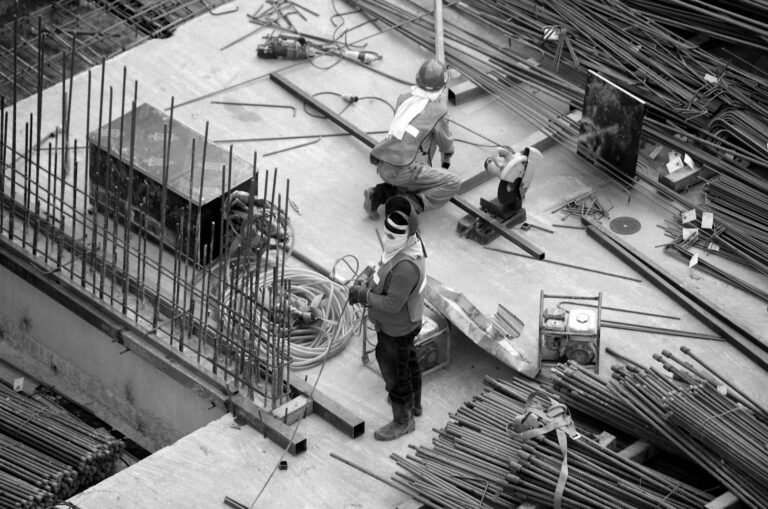
EPC Contracts in Bangladesh (2026): FIDIC, O&M, G2G Projects and Contractor Debarment

Developer–Landowner Disputes in Bangladesh 2026: Joint Venture Agreements, Power of Attorney and Remedies
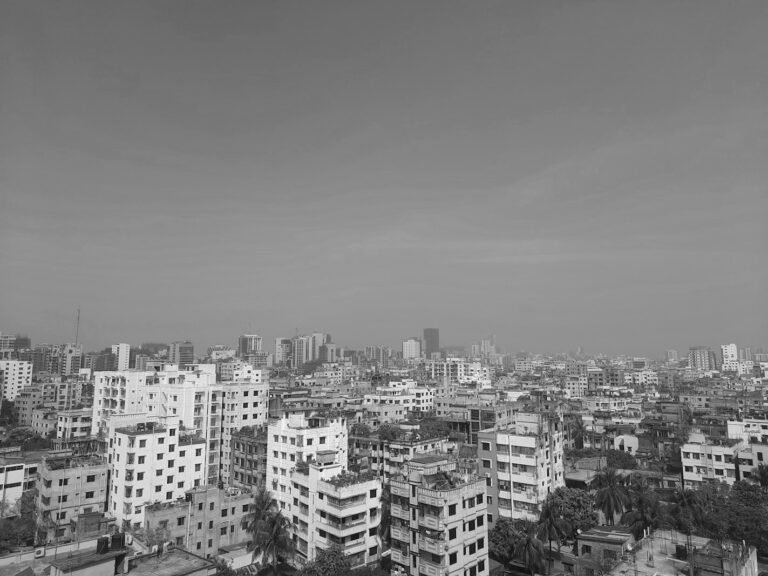
Buying an Apartment in Dhaka in 2026: Developer Law, RAJUK Approvals, Due Diligence and Disputes

Land Use Regulations in Bangladesh 2026: Zoning, Land Surveys and Buying Property With a Pending Case

Infrastructure Projects in Bangladesh: G2G, PPP and Project Development Law

PPP Projects in Bangladesh: a legal and commercial guide

Land Acquisition in Bangladesh: 2026 Guide

Fire License in Bangladesh: Fire Service Licence Process, Building Clearance and Penalties in 2026
All insights →
01Construction law in Bangladesh: the framework at a glance
Construction law in Bangladesh is not found in a single code. It sits across land and registration statutes, planning and building legislation, the general law of contract, labour and safety rules, tax law and the public procurement regime. The practical question is which layers apply to a given site and contract, and in what order approvals, agreements and registrations must happen.
The core private law remains the Contract Act 1872, the Transfer of Property Act 1882, the Registration Act 1908 and the Specific Relief Act 1877. Building control rests on the Building Construction Act 1952, the rules made under it for each development authority area and the Bangladesh National Building Code 2020. Real estate developers are also regulated by the Real Estate Development and Management Act 2010, and disputes are commonly referred to arbitration under the Arbitration Act 2001.
02Who regulates building and development
In Dhaka, RAJUK is the principal planning and building control authority. Chattogram, Khulna, Rajshahi and certain other areas have their own development authorities, while city corporations and municipalities handle approvals elsewhere. The Department of Environment issues environmental clearance, the Fire Service and Civil Defence Directorate deals with fire safety approvals for larger and higher-risk buildings, and the Civil Aviation Authority may need to clear building height near airports.
Utility connections bring further counterparties, each with its own process. Projects in economic zones, now administered by Invest Bangladesh (formerly BIDA and BEZA), or in export processing zones run through a separate, largely one-stop approvals system. A building approved by the wrong body, or on the wrong land use, risks demolition and is hard to finance or sell.
03Land title and due diligence before you build
Under construction law in Bangladesh, every project depends on the land beneath it, and title is often fragmented. Ownership is traced through registered deeds, survey records of rights (khatians) from successive surveys, mutation records and land development tax receipts. Inherited land is frequently held by many co-sharers, some living abroad, and a single missing signature can undermine an entire development agreement or sale. Khas land, vested property claims and acquisition notices can also affect apparently clean title.
Our due diligence for clients normally covers a chain of title going back several decades, a search of the sub-registry for encumbrances and mortgages, checks for pending civil suits and land survey tribunal cases, physical possession and boundary verification, and confirmation of land use under the current plan. Defects can often be cured by rectification, a corrective deed or a price adjustment.
04Planning permission, the Detailed Area Plan and building approval
A central planning question under construction law in Bangladesh is zoning. In the Dhaka area, development is shaped by the Detailed Area Plan, which allocates land uses and sets density controls such as floor area ratio. The plan has been revised in recent years and further amendments have been under discussion, so the position for a particular plot should always be checked against the current gazetted version and any RAJUK circulars rather than an older planning assumption.
The usual sequence is land use clearance, followed by building construction approval, with additional clearances for large, high-rise or special projects. Fire safety, environmental and, in some locations, aviation clearances may be preconditions. Once construction starts, the building must follow the approved drawings, and occupancy should be supported by the appropriate completion or occupancy certification. Unauthorised extra floors remain a common source of enforcement action.
05Real estate developers and the 2010 Act
The Real Estate Development and Management Act 2010 requires real estate developers to register and regulates how they deal with landowners and purchasers. It addresses the content of agreements, the handover of flats and plots in line with approved plans, the allocation of units and the consequences of delay or deviation. It also creates offences and a dispute resolution route.
For purchasers, the Act sits alongside the rest of construction law in Bangladesh and ordinary property law. An allotment letter or booking agreement is not a transfer of title; ownership passes only on a registered deed. Buyers should insist on seeing the approved plan, the land documents and the joint venture agreement with the landowner. Selling units beyond the approved floor area invites regulatory and civil liability.
06Joint venture agreements between landowners and developers
The landowner and developer joint venture is the most common vehicle for urban residential building. The owner contributes land, the developer finances and builds, and the finished units are divided in agreed proportions, often with signing money and a monthly rent or compensation for delay. The agreement must deal clearly with approvals, design changes, cost overruns, defaults, death of an owner and termination.
These agreements are usually accompanied by a registered power of attorney allowing the developer to obtain approvals and sell the developer's allocation. Under the Power of Attorney Act 2012, a power affecting immovable property must be registered, and its scope should match the commercial deal. We advise landowners to tie the developer's sale rights to progress milestones and advise developers to secure enforceable protection for their investment if owners attempt to withdraw.
07Construction contracts: FIDIC, EPC and local forms
Larger projects, especially those funded by development partners or built by international contractors, commonly use FIDIC forms or bespoke engineering, procurement and construction contracts. Domestic private projects often rely on shorter local forms with limited provisions on variations, time extensions and dispute resolution. Whatever the form, construction law in Bangladesh means courts and tribunals will read the contract through the Contract Act 1872, including its rules on penalties and liquidated damages, frustration and implied terms.
Points that deserve specific attention include ground conditions and land handover, import and customs risk on plant and materials, foreign exchange availability for offshore payments, change in law and tax, the effect of approvals on programme, and the interaction between the main contract and subcontracts. Notice provisions should be workable, because strict time bars are often decisive.
08Public works, procurement and PPP projects
Construction for government ministries, statutory bodies and state-owned enterprises is generally procured under the Public Procurement Act 2006 and the Public Procurement Rules 2008, with most tenders run through the e-GP system administered by the Bangladesh Public Procurement Authority. The framework has been amended, including recent changes, so bidders should check the current rules on procurement methods, eligibility, securities and complaints for each tender rather than relying on past practice.
Larger infrastructure may be delivered through government to government arrangements or public private partnerships under the PPP Act 2015, now handled by Invest Bangladesh, which bring negotiated concession terms, government support and lender requirements. Contractors on public projects should pay close attention to variation procedures, the approval chain for extensions and additional payment, and debarment risk. Tender complaints follow a tiered process with short deadlines.
09Construction law in Bangladesh for foreign contractors and investors
A foreign contractor will usually need a local presence to perform work, whether a subsidiary, a branch or a project office approved by Invest Bangladesh, together with trade licence, tax and VAT registration. Expatriate engineers and managers require work permits and suitable visas. Construction law in Bangladesh also interacts with foreign exchange control: remitting contract payments, profits or retention monies abroad depends on documentation that satisfies the bank and Bangladesh Bank requirements.
Tax planning should start at bid stage. Payments to contractors are generally subject to withholding of income tax at source and VAT under the Value Added Tax and Supplementary Duty Act 2012, and the Income Tax Act 2023 governs whether offshore supply and onshore services create a taxable presence. Rates change through annual finance legislation and NBR orders, so tax clauses need change in law protection.
10Safety, labour and environmental obligations on site
The Bangladesh Labour Act 2006 and the rules made under it apply to construction workers and set requirements on safety, working hours, wages, compensation for injury and record keeping. The Act has been amended, including recently, so employers and principal contractors should review current obligations rather than older checklists. The Department of Inspection for Factories and Establishments enforces labour standards, and serious site accidents can bring regulatory, civil and criminal consequences.
Environmental obligations arise under the Environment Conservation Act 1995 and the current rules made under it, which classify projects and determine whether an environmental clearance certificate and impact assessment are needed. International lenders often add their own standards. Compliance with these rules is part of construction law in Bangladesh, so contractors should allocate the obligations clearly in subcontracts, because the main contractor will usually remain answerable to the employer and the regulator for failures further down the chain.
11Bonds, guarantees and security
Bank guarantees are central to construction law in Bangladesh: bid security, performance security, advance payment guarantees and retention guarantees are standard on both public and private projects. Most are drafted as on demand instruments. Courts in Bangladesh, consistent with the approach across South Asia, will generally restrain payment under an unconditional guarantee only in narrow circumstances, such as established fraud or a risk of irretrievable injustice, so an injunction application needs strong evidence and quick action.
On the financing side, lenders typically take mortgages over project land, assignments of receivables and charges over plant, registered with the sub-registrar and, for companies, with the Registrar of Joint Stock Companies and Firms. Recovery against defaulting developers may involve the Artha Rin Adalat Ain 2003 where a financial institution is the claimant.
12Resolving disputes under construction law in Bangladesh
Disputes under construction law in Bangladesh follow three main routes. Civil courts hear suits for money, specific performance, declarations and injunctions, but full trials can take years. Arbitration under the Arbitration Act 2001 is common for commercial and public contracts and allows parties to choose technical arbitrators. International contracts often select an overseas seat such as Singapore or London, with enforcement in Bangladesh under the New York Convention.
Practical success depends on early steps: issuing contractual notices on time, preserving programmes, site diaries, correspondence and payment records, and seeking interim relief before assets or guarantees disappear. We advise clients to decide the forum and enforcement strategy when the contract is signed, because a poorly drafted dispute clause can add years to the life of an otherwise straightforward construction claim.
FAQ
What are the main sources of construction law in Bangladesh?
Which authority approves building plans in Dhaka?
Can a foreign contractor work on projects under construction law in Bangladesh?
Is a landowner and developer joint venture enforceable under construction law in Bangladesh?
Can a performance guarantee be stopped by a court in Bangladesh?
Is arbitration common under construction law in Bangladesh?
How does TRW help clients with construction law in Bangladesh?
How do I get advice on construction law in Bangladesh from TRW?
Ready to move with confidence?
Speak with the partners about construction law in Bangladesh and your matter, in Dhaka or across borders.
Book a consultation →