
TRW Insight / Bangladesh
Every Muslim marriage must be registered with a licensed kazi, Hindu registration is optional and interfaith couples need the Special Marriage Act. The kabin nama signed on the day decides how easily dower, maintenance, inheritance and visa claims can be proved for decades afterwards.
Marriage registration Bangladesh law: the 2026 position
Marriage registration Bangladesh law is not one system but several, and the one that applies depends on the religion of the parties. A Muslim marriage must be registered by a licensed Nikah Registrar, the kazi. A Hindu marriage may be registered, and the choice is optional. Interfaith and civil marriages go through a Registrar under the Special Marriage Act 1872. Over all of these sits the Child Marriage Restraint Act 2017, which makes registering an underage marriage a criminal offence for the registrar as well as the parties.
The paperwork matters more than most couples expect. The kabin nama is the document that later proves the marriage, records the dower and any delegated right of divorce, and is demanded by banks, inheritance courts, passport offices and foreign embassies. Since 2025 the process has also begun moving online, with amended registration rules, a High Court direction to digitise every marriage and divorce record, and a government pilot to link registrations to the National ID and passport databases. This guide sets out how each regime works in 2026, what it costs, what goes wrong and how to obtain copies that will be accepted abroad.
Summary: Every Muslim marriage in Bangladesh must be registered with the licensed Nikah Registrar for the area, either at the ceremony or, if someone else solemnises it, within 30 days; failure is an offence. Hindu registration is optional, interfaith couples use the Special Marriage Act 1872, and no registrar may register a marriage where the man is under 21 or the woman under 18. The registration fee is calculated on the dower, the first attested copy of the register entry is free, and an e-Apostille has been available for documents going abroad since March 2025.
Key point: Registration does not create a Muslim marriage, but without it the marriage is far harder to prove, the bridegroom risks up to two years' simple imprisonment or a fine, and the wife's claims to dower, maintenance and inheritance become disputes about facts rather than law. Register on the day, check every entry in the kabin nama before signing and keep the attested copy safe.
At a glance
Muslim marriages
Compulsory registration with a licensed Nikah Registrar under the Muslim Marriages and Divorces (Registration) Act 1974.
Hindu marriages
Optional registration under the Hindu Marriage Registration Act 2012; an unregistered Hindu marriage remains valid.
Interfaith and civil
The Special Marriage Act 1872 requires 14 days' notice, a declaration and three witnesses before the Registrar.
Age floor
The Child Marriage Restraint Act 2017 sets 21 for men and 18 for women and punishes registrars who register child marriages.
Going digital
Amended rules allow online registration, and the High Court has ordered every marriage and divorce record to be digitised.
Table of Contents
Which marriage registration Bangladesh regime applies to you
Bangladesh has no single civil marriage code, so getting marriage registration Bangladesh rules right starts with the parties' religion. Family law follows the personal law of each community, and so does registration. Before anything else, identify which statute governs the marriage, because the registrar, the documents, the consequences of not registering and the route to divorce all follow from that choice.
| Regime | Who it covers | Registration | Registrar | Key point |
|---|---|---|---|---|
| Muslim Marriages and Divorces (Registration) Act 1974 | Muslims | Compulsory | Licensed Nikah Registrar (kazi) | Failure is punishable by up to two years or a Tk 3,000 fine |
| Hindu Marriage Registration Act 2012 | Hindus | Optional | Hindu Marriage Registrar | Unregistered marriage remains valid; no registration below 21/18 |
| Special Marriage Act 1872 | Interfaith couples and those professing no listed religion | Solemnised and certified by Registrar | Registrar under Act III of 1872 | 14 days' notice, declaration and three witnesses |
| Christian Marriage Act 1872 | Christians | Under the Act's own procedure | Registrars under the Act | Registrars liable for registering child marriages |
| Child Marriage Restraint Act 2017 | All communities | Sets the age floor | Applies to every registrar | 21 for men, 18 for women |
Four points cut across every regime. First, the minimum ages in the Child Marriage Restraint Act 2017 apply to every registrar, whatever the community.[11] Second, registration is primarily evidence: it records a marriage that has been validly contracted under the relevant law rather than creating it. Third, the registrar is a licensed or appointed official whose entries carry legal weight, so errors in the register are hard to correct later. Fourth, a document that will be used abroad must be obtained in the right form at the outset, not reconstructed years later.
Why the choice of regime matters later
The regime decides what happens if the marriage breaks down. A Muslim divorce is registered with the Nikah Registrar and is governed by the Muslim Family Laws Ordinance 1961. A marriage under the Special Marriage Act 1872 is dissolved under the Divorce Act 1869.[10] Hindu law in Bangladesh offers no general divorce mechanism at all.[13] Couples from different communities should therefore take advice before the ceremony, not after it. Our guide to the divorce procedure in Bangladesh sets out what follows for each community.
The Muslim Marriages and Divorces (Registration) Act 1974
The central statute is the Muslim Marriages and Divorces (Registration) Act 1974 (Act No. LII of 1974). Section 3 is categorical: notwithstanding any other law, custom or usage, every marriage solemnised under Muslim law shall be registered in accordance with the Act.[1] The 1974 Act replaced the registration provision in section 5 of the Muslim Family Laws Ordinance 1961, which it expressly omitted.[2]
Who the Nikah Registrar is
Under section 4, the Government licenses Nikah Registrars for defined areas, and only one Nikah Registrar is licensed for any one area.[1] In everyday speech the Nikah Registrar is the kazi, and the office is the kazi office. Each Nikah Registrar works under the superintendence and control of the district Registrar, and the Inspector-General of Registration exercises general superintendence over all Nikah Registrars' offices.[1] That chain of supervision is where a complaint about refusal, delay or overcharging should go.
The duty to register and the 30-day rule
Section 5 splits the duty in two. Where the Nikah Registrar solemnises the marriage himself, he must register it at once. Where someone else solemnises it, typically an imam or family elder, the bridegroom must report the marriage to the Nikah Registrar of the area within 30 days, and the kazi must then register it immediately.[1] The legal burden of reporting falls on the bridegroom, not the bride or her family, although in practice both families should insist on it.
Discipline of Nikah Registrars
Under section 11, the Government may revoke a Nikah Registrar's licence or suspend it for up to two years for misconduct, unfitness or physical incapacity, after giving him a reasonable opportunity to show cause.[1] Section 12 requires the registrar to keep each register safely until it is full and to hand it to the Registrar if he leaves the district or loses his licence.[1] Those custody rules are what make a later search for an old entry possible.
The kazi process: how a Muslim marriage is registered
The registration itself is short. The preparation is where couples protect themselves. The kabin nama, printed on the government form widely known by its form number 1601, records the identity of the parties, the witnesses and any vakils, the amount of dower and how much of it is prompt or deferred, any special conditions, and whether the husband has delegated a right of divorce to the wife.[8] [13]
Confirm eligibility
Check that the man is at least 21 and the woman at least 18, and that any existing marriage has ended or Arbitration Council permission has been obtained.
Find the right registrar
Use the licensed Nikah Registrar for the area, a Hindu Marriage Registrar, or a Special Marriage Act Registrar, as the parties' religion requires.
Agree the terms
Settle the dower, its prompt and deferred parts, any special conditions and whether a right of divorce is delegated to the wife.
Assemble documents
Bring National ID or birth certificates, passports for foreign parties, photographs and the identity documents of witnesses and vakils.
Check the draft entry
Read every field of the kabin nama against the passports and National ID before anyone signs.
Sign and register
The Nikah Registrar registers at once; if someone else solemnised the marriage, the bridegroom reports it within 30 days.
Pay and collect
Pay only the scheduled fee, take a receipt and collect the free attested copy of the register entry.
Prepare for use abroad
Request the marriage certificate, arrange a notarised translation and apply for an e-Apostille if the record will be used overseas.
Documents the Nikah Registrar will ask for
Proof of age is the first requirement. The Child Marriage Restraint Act 2017 treats a birth registration certificate, National ID card, secondary or junior school certificate, primary school certificate or equivalent, or a passport as legal proof of age.[11] The 2025 amendment to the registration rules gives priority to the National ID for verifying age, with a birth registration certificate, school certificate or guardian's affidavit as fallbacks, and makes passport-size photographs of the bride and groom mandatory on the kabin nama.[5] In practice the Nikah Registrar will also want the identity documents of the witnesses and any vakil.
The polygamy check
Section 6 of the Muslim Family Laws Ordinance 1961 prohibits a man from contracting another marriage during an existing marriage without the prior written permission of the Arbitration Council, and it bars registration of a marriage contracted without that permission.[2] A man who marries without permission must pay the existing wife's entire dower immediately, prompt and deferred, and is liable on conviction to simple imprisonment of up to one year, a fine of up to Tk 10,000, or both.[2] Under the amended rules, the kabin nama must now state, where the groom was previously married, whether Arbitration Council permission was obtained.[5]
Clauses worth negotiating before the day
The kabin nama is a contract as well as a register entry. The dower figure, the split between prompt and deferred dower, any condition on residence or a second marriage and the delegated right of divorce, talaq-e-tafweez, are all set at this stage. A delegated divorce can later be registered only on production of the registered instrument of delegation or an attested copy of the register entry recording it.[1] If the wife is to have that right, it must be written into the kabin nama in clear terms. Our guide to dower recovery in Bangladesh explains how these entries are enforced.
Marriage registration Bangladesh fees: what the kazi may charge
The official fee is fixed by the Muslim Marriages and Divorces (Registration) Rules 2009, which section 14 of the 1974 Act authorises.[1] A Law and Justice Division notification of 21 December 2022 raised the schedule. The fee is now Tk 14 for every Tk 1,000 of dower, or part of it, up to a dower of Tk 5 lakh, and Tk 100 for each further Tk 1 lakh, or part of it, above that, with a minimum fee of Tk 200. The fee for registering a divorce rose from Tk 500 to Tk 1,000.[3] The amended rules of 2025 keep the same dower-based scale and allow the fee to be paid digitally.[5]
Worked examples
For a dower of Tk 3 lakh, the fee is 300 units of Tk 1,000 at Tk 14, or Tk 4,200. For a dower of Tk 10 lakh, the first Tk 5 lakh attracts Tk 7,000 and the remaining Tk 5 lakh attracts five units of Tk 100, giving Tk 7,500. For a small dower, the Tk 200 minimum applies. These are the government fees only; travel to a home or community centre is a matter of agreement and should be fixed in writing in advance.[3]
Licence and annual fees paid by registrars
The same 2022 notification doubled the licence and annual fees that Nikah Registrars pay the state. The licence fee in a city corporation area rose from Tk 10,000 to Tk 20,000, and the annual fee, payable by 31 March, from Tk 5,000 to Tk 10,000, with lower tiers for district-town municipalities, other municipalities and union parishads.[3] Those costs explain some of the pressure on registrars to charge more than the schedule, but they do not justify it. Ask for a receipt showing the dower figure and the fee charged.
Why under-declaring the dower is a false economy
Because the fee rises with the dower, families sometimes agree a high dower orally and write a lower one into the kabin nama. That saves a few thousand taka at registration and can cost the wife lakhs later, because the registered figure is the starting point for any dower claim and for the immediate-payment rule on an unauthorised second marriage.[2] The opposite manoeuvre, inflating the dower for status with no intention of paying, creates a real debt. Record the figure the parties actually intend.
Penalties and the consequences of an unregistered marriage
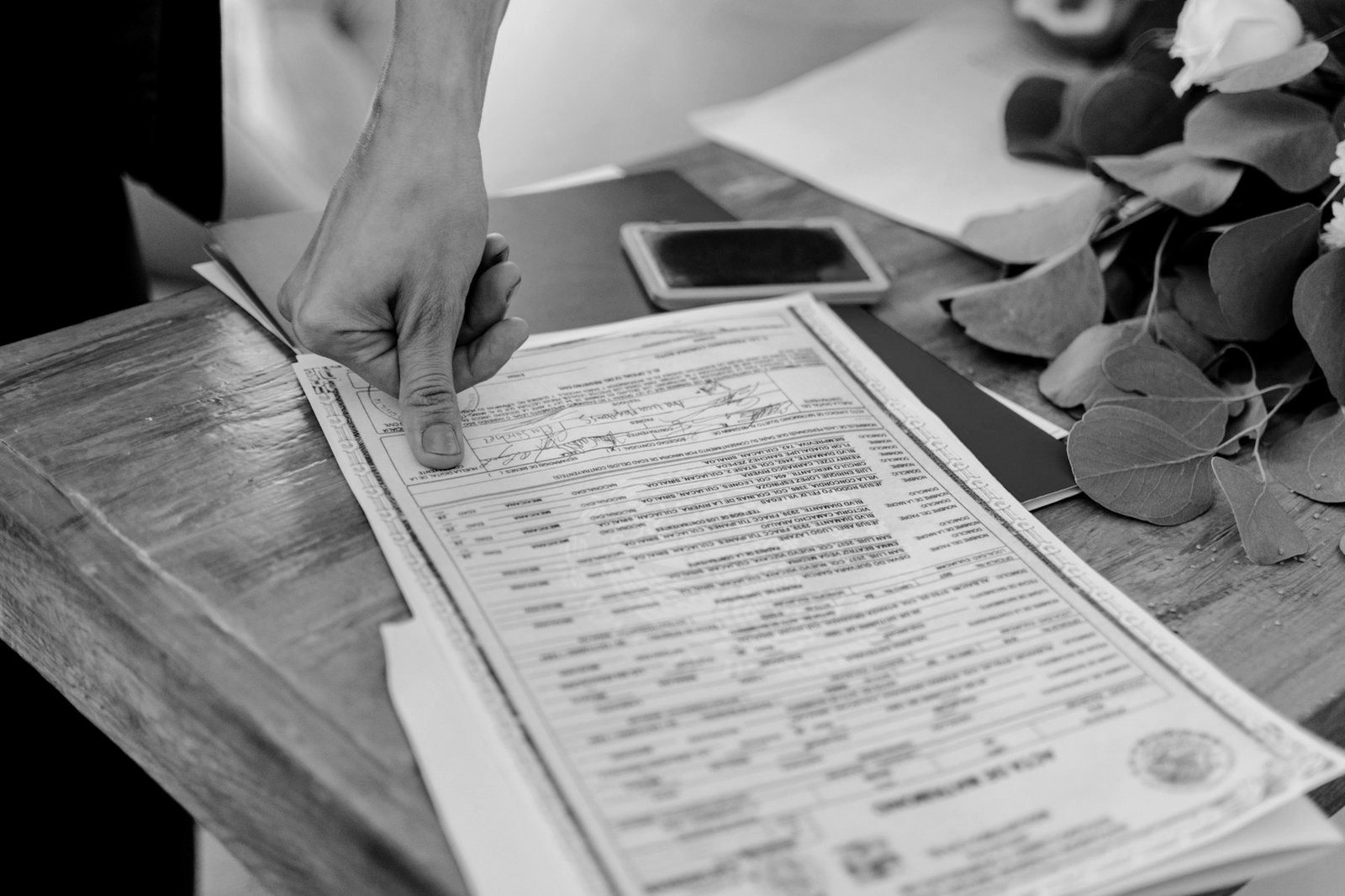
Failure to register is a crime. Section 5(4) of the 1974 Act, as amended in 2005, makes a contravention of the registration and reporting duties punishable with simple imprisonment of up to two years, a fine of up to Tk 3,000, or both.[1] The penalty falls on whoever breaches the duty: the Nikah Registrar who solemnises but does not register, or the bridegroom who does not report a marriage solemnised by someone else.
Is an unregistered Muslim marriage valid?
The 1974 Act makes registration compulsory and penalises its absence, but it does not declare an unregistered marriage void. A Muslim marriage validly contracted, with offer and acceptance before witnesses, remains a marriage even if it was never entered in the register.[1] The Hindu Marriage Registration Act 2012 says the same expressly for Hindu marriages.[9] Validity is therefore rarely the real problem. Proof is.
What goes wrong in practice
Without a registered kabin nama, a wife claiming dower or maintenance must first prove that the marriage took place, through witnesses whose memories fade and who may be relatives of the husband. A widow or child claiming inheritance faces the same hurdle against other heirs. Passport offices, banks and foreign embassies typically decline to act on an affidavit of marriage; the US State Department, for example, lists the Nikah Nama as the document it expects for Muslim marriages.[13] Secret or unregistered marriages are also the usual vehicle for concealing an existing marriage, which is why the courts and the government have focused on digital records since 2025.[6]
Registering late
If a Muslim marriage was solemnised without registration, the bridegroom should report it to the Nikah Registrar of the area as soon as possible, accepting that a report outside the 30-day window is itself a breach. Where the husband refuses, the wife's remedy is usually a declaratory suit or a claim in the family court in which the marriage is proved by evidence. Mandatory pre-case mediation now applies to family disputes in a growing number of districts, so the first step may be the district legal aid office. Our family mediation and settlement practice handles these cases.
Hindu Marriage Registration Act 2012
Hindu marriages were historically not registered at all. The Hindu Marriage Registration Act 2012 (Act No. 40 of 2012), enacted on 24 September 2012, introduced a registration system to protect documentary proof of Hindu marriages solemnised according to Hindu rites.[9]
Optional, not compulsory
Section 3 provides that a Hindu marriage may be registered in the prescribed manner, and that the failure to register a marriage performed according to Hindu scripture does not affect its validity.[9] This is the key difference from the Muslim regime. There is no criminal penalty for not registering, and a Hindu couple who did not register can still prove the marriage by other evidence. In practice, however, registration is increasingly expected by embassies, employers and banks, and it is the simplest protection for a Hindu wife whose husband later denies the marriage.
Hindu Marriage Registrars and the process
Section 4 requires the Government to appoint a Hindu Marriage Registrar for each upazila outside city corporations, and for areas fixed by the Government inside city corporations.[9] Under section 6, either party may apply after the marriage has been performed according to Hindu religion, custom and ritual, and marriages performed before the Act came into force can also be registered.[9] Fees for registration, inspection of registers and copies are set by rules under section 7, and section 12 entitles the parties or their nominee to a copy of the registration on payment of the prescribed fee.[9]
The age bar
Section 5 is absolute: notwithstanding any other law, a marriage in which the Hindu man is under 21 or the Hindu woman under 18 cannot be registered under the Act.[9] A Hindu Marriage Registrar who registers such a marriage in breach of the Hindu Marriage Registration Act 2012 is also exposed to the penalties in the Child Marriage Restraint Act 2017.[11]
What registration does not change
The Hindu Marriage Registration Act 2012 is a registration statute only. It does not reform Hindu marriage law, introduce divorce or alter succession. Hindu and Buddhist couples in Bangladesh still have no general statutory route to divorce.[13] For Buddhist marriages, receiving authorities commonly accept a certificate from the temple or priest who solemnised the marriage.[13]
The Special Marriage Act 1872 and interfaith marriages
The Special Marriage Act 1872 (Act No. III of 1872) provides a civil form of marriage. Under section 2 it is available to persons neither of whom professes the Christian, Jewish, Hindu, Muslim, Parsi, Buddhist, Sikh or Jaina religion, and to persons each of whom professes one of the Hindu, Buddhist, Sikh or Jaina religions.[10] In practice it is the route for interfaith couples, and the US State Department notes that a Special Marriage Act certificate is generally required for mixed-religion couples, although a Nikah Nama may be issued where a Muslim man marries a Christian or Jewish woman.[13]
Conditions and the notice period
Neither party may have a living spouse, a party under 21 needs the consent of a father or guardian, and the parties must not be within prohibited degrees of relationship. The Act's own age thresholds are lower than modern law, but a registrar under the Act who registers a marriage below 21 for a man or 18 for a woman commits an offence under the 2017 Act, so those thresholds now apply in practice.[10] [11]
One party gives written notice to the Registrar of a district in which at least one of them has lived for 14 days. The notice is entered in the Marriage Notice Book, open to public inspection, and the marriage may be solemnised 14 days later unless someone objects.[10]
Declaration, solemnisation and certificate
Before the marriage the parties and three witnesses sign a declaration in the Registrar's presence. The marriage is solemnised before the Registrar and the same witnesses, in any form, provided each party says to the other, in their hearing, that they take the other as lawful wife or husband. The Registrar then enters a certificate in the Marriage Certificate Book, signed by the parties and witnesses; that book is admissible as evidence of its contents, and certified extracts are available on payment of a fee.[10] A false statement in the declaration is treated as an offence under section 199 of the Penal Code.[10]
Consequences couples must understand
A marriage under the Act is strictly monogamous: a married person who marries under it commits bigamy and the marriage is void, and a person married under it who later marries again faces the bigamy penalties whatever religion he or she then professes.[10] Divorce is governed by the Divorce Act 1869. For a Hindu, Buddhist, Sikh or Jaina party, the marriage severs him or her from an undivided family and subjects succession to the Succession Act 1925.[10] These are significant effects on property and inheritance, and they should be weighed before notice is given.
Christian marriages and other communities
Christian marriages are governed by the Christian Marriage Act 1872, which has its own system of solemnisation and registration. The Child Marriage Restraint Act 2017 names registrars under the Christian Marriage Act alongside Nikah Registrars, Special Marriage Act registrars and Hindu Marriage Registrars as persons liable if they register a child marriage.[11] For immigration purposes, Christian, Hindu and Buddhist couples may receive a marriage certificate, an extract from the marriage register or a certificate from the church or temple.[13] Whichever document is issued, obtain the original with the officiant's name, the date and place of the ceremony and the full names of both parties exactly as they appear in their passports.
Marrying a foreign national in Bangladesh
For foreign nationals, marriage registration Bangladesh procedure is the same as for citizens: there is no separate statute for marriages involving foreigners. The applicable regime follows the religion of the parties, exactly as it would for two Bangladeshi citizens. A foreign Muslim marrying a Bangladeshi Muslim registers with the Nikah Registrar under the 1974 Act. A foreign national of a different religion, or one who professes none, will usually marry under the Special Marriage Act 1872, which requires one of the parties to have resided in the Registrar's district for 14 days before notice.[10]
Documents a foreign party should bring
Registrars and the destination country's authorities will want a valid passport and visa, evidence of age, and evidence that the foreign party is free to marry, such as a certificate of no impediment or a divorce decree or death certificate ending any previous marriage. Documents issued abroad should be legalised or apostilled in the issuing country and translated where necessary. Where the foreign party converts to Islam to marry under Muslim law, keep the certificate of conversion with the marriage papers, because it will be asked for when the marriage is relied on abroad.
Thinking ahead to the spouse visa
Most foreign marriages are followed by a visa or immigration application, and the receiving state's rules decide what document it accepts. The US State Department, for instance, accepts a Nikah Nama in English or in Bengali with a notarised English translation, and treats the Talaknama as the corresponding divorce document for Muslims.[13] Spelling of names, dates of birth and passport numbers should be checked against the passports at the time of registration; a mismatch is the single most common reason for a later refusal. Our guides to US green cards from Bangladesh and our cross-border family matters practice cover the next stage.
Child marriage and the Child Marriage Restraint Act 2017
The Child Marriage Restraint Act 2017 (Act No. 6 of 2017) came into force on 11 March 2017. It defines a minor, for the purpose of marriage, as a man who has not completed 21 years or a woman who has not completed 18, and a child marriage as one in which either or both parties is a minor.[11]
Who is liable and for what
An adult who contracts a child marriage faces up to two years' imprisonment, a fine of up to Tk 1 lakh, or both. A minor who marries may face up to one month's detention or a fine of up to Tk 50,000, though not where a parent or guardian is prosecuted. Parents, guardians or others who arrange or permit a child marriage, or negligently fail to stop it, face six months to two years' imprisonment, a fine of up to Tk 50,000, or both, and the same penalty applies to anyone who solemnises or conducts it.[11]
Registrar liability
Section 11 is directed squarely at registrars. A marriage registrar who registers a child marriage faces six months to two years' imprisonment, a fine of up to Tk 50,000, or both, and his licence or appointment is cancelled. The section covers Nikah Registrars under the 1974 Act and registrars under the Christian Marriage Act 1872, the Special Marriage Act 1872 and the Hindu Marriage Registration Act 2012.[11] That is why a careful kazi will refuse to proceed without a reliable age document, and why families should not ask him to.
The special provision and reform
Section 19 provides that a marriage solemnised in special circumstances prescribed by rules, in the best interests of the minor, with a court direction and parental or guardian consent and following the prescribed procedure, is not an offence under the Act.[11] The provision has been controversial since enactment. In June 2026 the government was reported to be drafting an amendment that would require a digital birth registration certificate for every marriage registration and address loopholes linked to the special provision.[12] Until it is enacted, the 2017 text applies.
Certified kabin nama copies and attestation for foreign use
A question we are asked constantly is how to obtain a copy of a kabin nama that a foreign embassy, university or employer will accept. In marriage registration Bangladesh practice the answer has three parts: the copy from the registrar, verification within Bangladesh, and the apostille or legalisation that makes it usable abroad.
The free attested copy
Section 9 of the 1974 Act requires the Nikah Registrar, once a marriage is registered, to give the parties an attested copy of the register entry, and no charge may be made for it.[1] Couples whose kazi asked them to pay for this first copy were overcharged. Under section 13, any person may inspect the registers and obtain copies of entries on payment of the prescribed fee, which is how a later or additional certified copy is obtained.[1] If the original Nikah Registrar has retired or died, the register will have passed to the district Registrar under section 12, and the search should start there.[1]
The new marriage certificate
The 2025 amendment to the 2009 Rules allows the Nikah Registrar, on request, to issue a marriage certificate in Form Gha-1 and a divorce certificate in Form Chha-1, carrying the parties' photographs, personal details and registration particulars.[5] For foreign use, ask for both the certified copy of the kabin nama and the certificate, because receiving authorities vary in which one they treat as primary.
Translation and the e-Apostille
Bangladesh's e-Apostille service went live on 30 March 2025 and is available online through the MyGov platform; by September 2026 the Ministry of Foreign Affairs had issued more than 2.9 million apostille certificates, and marriage and birth certificates are among the documents covered.[14] The system depends on verification of the original document by the authority that issued it, so an entry with errors will stall at verification. For a country that does not accept the apostille from Bangladesh, the document is still attested by the Ministry of Foreign Affairs and then legalised by that country's embassy. Translate the kabin nama into English through a notarised translation where the receiving authority asks for one.[13]

Digital marriage registration Bangladesh reforms in 2025 and 2026
For decades the system has rested on handwritten registers held by individual kazis, each kazi keeping his own books. That is changing, through rule amendments, litigation and a government pilot, and the direction of travel is now clear even if the national database is not yet complete.
Online registration under the amended rules
On 4 September 2025 the government announced that marriage and divorce could be registered online, alongside amendments removing gender-discriminatory provisions from the registration system.[4] The amended Muslim Marriages and Divorces (Registration) Rules, published in a Law Ministry gazette reported in December 2025, allow online registration in addition to the manual process, digital or in-person signatures with thumb impressions for those who cannot sign, automatic generation of the register on successful online registration, digital payment of fees, mandatory photographs on the kabin nama, and replacement of the word "kumari" (virgin) with "unmarried" in the description of the bride.[5]
The High Court's December 2025 judgment
On 11 December 2025, a High Court Division bench of Justice Fahmida Quader and Justice Md Asif Hasan disposed of a 2021 writ petition by directing that all marriage and divorce information be registered through a digital system, that the records be secured within government systems, that the database be fully functional, and that citizens, especially women, be able to verify records easily and obtain digital copies.[6] The petition had argued that the absence of a digital archive enables concealment of existing marriages and disputes over paternity.[6]
Disclosure of previous marriages: the September 2026 rule
On 14 September 2026, a bench of Justice Ahmed Sohel and Justice SM Iftekhar Uddin Mahmud issued a rule asking why the authorities' failure to update the kabin nama form should not be declared unlawful, and why the form should not be amended to require both parties to disclose and verify previous and existing marriages, children, continuing maintenance and guardianship obligations and their birth registration, National ID or passport numbers.[8] The respondents, including the Law and Justice Division and the Inspector General of Registration, were given four weeks to reply. The rule is pending; until it is decided, parties should volunteer this information in the special conditions of the kabin nama.
The government's NID-linked database
On 3 October 2026, opening a training course for Nikah Registrars in Dhaka, Law Minister Md Asaduzzaman said marriage and divorce registration would move online and be linked to the National ID and passport databases, creating a central record that would expose concealed earlier marriages and child marriages, reduce false inheritance claims and allow foreign authorities to verify a marriage online.[7] No national launch date has been given, so for now the paper kabin nama and the registrar's register remain the primary evidence.
Marriage registration Bangladesh mistakes to avoid
The same errors appear again and again in the family disputes we handle. Most are made on the wedding day, under social pressure and in a hurry, and almost all are avoidable.
Ten practical rules
Use only the licensed kazi for the area and check his licence. Never sign a blank or partly completed kabin nama. Record the dower actually agreed and its prompt and deferred parts. Decide the delegated right of divorce before the day and write it out in full. Match every name, date and number to the passport and National ID. Make sure the age documents are genuine; a forged birth certificate exposes everyone, including the registrar. Ask about previous marriages and, where relevant, see the Arbitration Council permission. Pay only the scheduled fee and take a receipt. Collect the free attested copy from the kazi the same day. Store a scanned copy and the original separately.
Where the registration links to other rights
Registration is the foundation for everything that follows in family law. A wife claiming maintenance relies on it; see our guide to maintenance cases in Bangladesh. A Muslim divorce must be notified and registered; see our guides to the Muslim divorce procedure and mutual divorce in Bangladesh. Children's status and custody depend on proof of the marriage; see child custody and guardianship in Bangladesh. Inheritance claims by a spouse turn on it; see inheritance law in Bangladesh. Our Islamic family law practice advises on drafting the kabin nama and on disputes that follow.
What to watch in marriage registration Bangladesh practice
Three developments will shape the system over the next year. First, the High Court's September 2026 rule on disclosure of previous marriages may lead to a revised kabin nama form.[8] Second, the government's NID-linked database is moving from pilot to wider rollout, which will make concealed marriages easier to detect and records easier to verify from abroad.[7] Third, the proposed amendment to the Child Marriage Restraint Act 2017 would tie every registration to a digital birth certificate.[12] Couples registering now should assume their records will be searchable in future and draft accordingly.
If you need a kabin nama reviewed before the ceremony, a late registration arranged, a certified copy traced or a marriage document prepared for use abroad, contact TRW.
Frequently asked questions
Is marriage registration compulsory in Bangladesh?
How long do I have to register a Muslim marriage?
If the Nikah Registrar solemnises it, he must register it immediately. If someone else solemnises it, the bridegroom must report it to the Nikah Registrar of the area within 30 days.[1]
What is the penalty for not registering a Muslim marriage?
Up to two years' simple imprisonment, a fine of up to Tk 3,000, or both, under section 5(4) of the 1974 Act as amended in 2005.[1]
How much does the kazi charge to register a marriage?
The official fee is Tk 14 per Tk 1,000 of dower up to Tk 5 lakh, plus Tk 100 for each further Tk 1 lakh, with a minimum of Tk 200. Divorce registration costs Tk 1,000.[3]
Is an unregistered marriage valid in Bangladesh?
Can a Muslim and a non-Muslim marry in Bangladesh?
What is the legal age of marriage in Bangladesh?
21 for men and 18 for women under the Child Marriage Restraint Act 2017. A registrar who registers a marriage below those ages faces imprisonment, a fine and cancellation of his licence.[11]
How do I get a certified copy of my kabin nama?
The Nikah Registrar must give the parties a free attested copy at registration. Later copies can be obtained on payment of the prescribed fee; if the registrar has left office, the register is held by the district Registrar.[1]
Can a Bangladeshi marriage certificate be apostilled?
Yes. The Ministry of Foreign Affairs has issued e-Apostilles through the MyGov platform since 30 March 2025, and marriage certificates are among the documents covered.[14]
Can I register my marriage online in Bangladesh?
Source register
Primary legal and regulatory sources
Materials checked on 20 October 2026. Confirm the current official text before relying on any provision.
- Muslim Marriages and Divorces (Registration) Act 1974 — Laws of Bangladesh
- Muslim Family Laws Ordinance 1961 (sections 5 to 7) — Laws of Bangladesh
- The Daily Ittefaq, 3 January 2023 — Marriage and divorce registration fees raised (Law and Justice Division notification of 21 December)
- The Daily Star, 4 September 2025 — Bangladesh goes online with marriage registration
- BD Service Rules, 19 December 2025 — Summary of gazette amending the Muslim Marriages and Divorces (Registration) Rules 2009
- Prothom Alo, 11 December 2025 — High Court makes digital registration of marriage and divorce mandatory
- The Daily Star Bangla, 3 October 2026 — Law Minister: marriage and divorce registration to go online, linked to NID and passport
- Dhaka Tribune, September 2026 — HC seeks mandatory disclosure of marital history in Kabin Nama
- Hindu Marriage Registration Act 2012 (Act No. 40 of 2012) — Laws of Bangladesh
- Special Marriage Act 1872 — Laws of Bangladesh
- Child Marriage Restraint Act 2017 (Act No. 6 of 2017) — Laws of Bangladesh
- UNESCAP CRVS, 30 June 2026 — Bangladesh to make digital birth certificates mandatory for marriage registration
- US Department of State — Bangladesh reciprocity and civil documents (marriage and divorce)
- Dhaka Tribune, 15 September 2026 — Bangladesh moves to ensure global acceptance of documents (e-Apostille)
Related TRW assistance
Move from information to a defined next step
TRW advises on kabin nama drafting, late and disputed registrations, interfaith and foreign marriages, certified copies and attestation for use abroad. Explore our Islamic family law practice and cross-border family matters practice, or contact TRW to discuss your marriage registration.