

Life Sciences Collaboration & Licensing Agreements in Bangladesh
Life sciences collaboration and licensing agreements for Bangladeshi pharmaceutical manufacturers, foreign innovators, biotech companies, diagnostics businesses and investors: we structure research, in-licensing, technology transfer, manufacturing and commercialisation deals that protect intellectual property and work under Bangladesh's regulatory and foreign exchange rules.

- Understand the assets
- Agree the term sheet
- Draft the agreement suite
- Manage the relationship
How we structure life sciences deals in Bangladesh
Bangladesh has one of the largest pharmaceutical manufacturing bases among developing economies, supplying most domestic demand and exporting to many markets. That makes the country an active participant in life sciences collaborations: foreign innovators license products to local manufacturers, Bangladeshi companies in-license technology to move into biologics, vaccines or complex generics, and research partners co-develop formulations and diagnostics. Each deal turns on how rights, know-how, regulatory files and revenue are divided. We draft and negotiate these agreements as part of our technology and IP practice in Bangladesh, with a clear focus on what each party contributes and receives.
IP is the foundation of every life sciences agreement. The Patent Act 2023 modernised Bangladesh's patent regime, alongside the Trademarks Act 2009 and the Industrial Design Act 2023, administered by the Department of Patents, Designs and Trademarks. Pharmaceutical patent protection has also been shaped by the transition rules available to least developed countries under the WTO TRIPS Agreement, and the position is changing as Bangladesh moves through LDC graduation. A licence or collaboration should therefore be clear about which patents, applications, trade marks, data and know-how are covered, in which territory, and what happens if protection changes during the term.
Regulatory rights matter as much as patents. A product cannot be sold in Bangladesh without registration with the Directorate General of Drug Administration under the Drugs and Cosmetics Act 2023 and related rules, and manufacturing sites must hold the necessary licences and meet good manufacturing practice standards. Agreements must state who holds the marketing authorisation, who owns the dossier, who handles pharmacovigilance and who manages recalls and price approvals. For export-focused deals, the parties also need clarity on registrations in other markets and on which party controls submissions to foreign regulators and the data generated through them.
Commercial structures vary widely. Some life sciences deals are pure licences with upfront payments, milestones and royalties; others are co-development collaborations with joint steering committees, shared budgets and options; others combine technology transfer with contract manufacturing or supply. Payments abroad must work within Bangladesh's foreign exchange rules and tax withholding, and royalty and technical fee remittances may need documentation or approvals. We coordinate with our life sciences regulatory team and tax advisers so the agreed economics can actually be paid and recorded properly. We also plan how payments are documented.
Governance and exit often decide whether a collaboration succeeds. Joint committees need clear decision rules and deadlock procedures, and the agreement must say who owns improvements, how data is shared and what happens to product rights and supply if a party is acquired, misses milestones or wants to leave. Barrister Tahmidur Rahman leads our life sciences transaction work, drawing on investment and finance experience, and Barrister Remura Meheruba Mahbub advises on cross-border structuring and arbitration clauses. We work with counsel in the UK, US, UAE, Singapore, China and India, which are frequent partner jurisdictions for Bangladeshi manufacturers.
Core workstreams
Four clear stages
- 01Understand the assets
- 02Agree the term sheet
- 03Draft the agreement suite
- 04Manage the relationship
Talk to a partner
Consultations in Dhaka or by video. Scope, team and fees are agreed in writing first.
Book →What our life sciences agreement work covers

Collaboration scope and contributions
- Understand the assets
- Agree the term sheet
- Draft the agreement suite
- Manage the relationship
Licences, options and commercialisation
- Understand the assets
- Agree the term sheet
- Draft the agreement suite
- Manage the relationship
Background IP, results and improvements
- Understand the assets
- Agree the term sheet
- Draft the agreement suite
- Manage the relationship
Technology transfer and manufacturing
- Understand the assets
- Agree the term sheet
- Draft the agreement suite
- Manage the relationship
Regulatory files and pharmacovigilance
- Understand the assets
- Agree the term sheet
- Draft the agreement suite
- Manage the relationship
Governance, disputes and separation
- Understand the assets
- Agree the term sheet
- Draft the agreement suite
- Manage the relationship
Collaboration scope and contributions
We define the purpose, field, territory and phases of the collaboration, and record what each party contributes: compounds, cell lines, formulations, know-how, data, facilities, staff and funding. A clear contribution map reduces later arguments over ownership and costs, and helps both sides explain the collaboration to boards, investors and regulators in Bangladesh and abroad when approvals or funding are needed. We record these in a schedule.
Licences, options and commercialisation
We draft exclusive and non-exclusive licences, sublicensing rights, options to license future products, co-promotion and distribution terms. We cover upfront fees, milestones, royalties, royalty stacking, minimum sales and audit rights, and align the structure with tax and foreign exchange requirements so that payments to a foreign licensor or from a foreign licensee can be made lawfully and on time. Each payment trigger is clearly defined.
Background IP, results and improvements
We separate each party's background IP from project results and improvements, and set rules on ownership, joint inventions, patent prosecution and maintenance, enforcement against infringers and defence of challenges. For life sciences collaborations involving biological materials or genetic resources, we also address material transfer terms and any access and benefit-sharing requirements that apply in Bangladesh. Patent strategy is agreed early.
Technology transfer and manufacturing
We structure technology transfer packages, training, validation batches and site qualification, and draft contract manufacturing, toll manufacturing and supply agreements with quality agreements attached. We cover forecasts, capacity reservation, pricing, active ingredient sourcing, batch release, specification changes, supply failure remedies and the regulatory steps needed to add or change a manufacturing site for the product. Each life sciences transfer stage has clear acceptance criteria.
Regulatory files and pharmacovigilance
We allocate ownership and use of dossiers, clinical and stability data, and marketing authorisations, and set responsibilities for DGDA filings, variations, renewals, pricing, safety reporting and recalls. We also address export registrations and the cooperation needed when a regulator inspects a site or raises questions, so obligations are clear before a product is launched in any market. Responsibilities are set out in a life sciences compliance matrix.
Governance, disputes and separation
We design steering committees, decision rights, escalation and deadlock mechanisms, and draft change-of-control, termination and transition provisions. These cover reversion of licensed rights, transfer of regulatory files, sell-off periods, continuity of supply for patients and treatment of jointly owned IP, together with governing law and arbitration clauses suited to the parties' home jurisdictions and enforcement needs. Exit plans protect patient supply. Wind-down timelines should leave enough time for regulatory transfers and uninterrupted supply.
Partner-led, on every matter.
Technology, IP & Data matters at TRW are led by partners, supported by associates, with one responsible lawyer from first advice to final outcome.
Meet the firm →



01Is a life sciences collaboration agreement the same as a licence?
Not quite. A licence grants permission to use defined intellectual property, data or know-how, usually in return for payments. A collaboration agreement governs joint work, such as research, development or clinical studies, with shared governance, budgets and outputs. Many life sciences deals combine both: the parties collaborate during development and then one party receives a licence to commercialise. The documents should be drafted together so that ownership of results, licence scope and payment triggers fit with each other. We help clients choose and structure the right combination for their goals and stage.
02How do Bangladesh's patent rules affect pharmaceutical licensing deals?
The Patent Act 2023 governs patent protection in Bangladesh, and pharmaceutical patents have historically been affected by the TRIPS transition period for least developed countries. As Bangladesh moves through LDC graduation, the protection available for pharmaceutical inventions and the value of licences may change. Licence agreements should identify the relevant patents and applications, address what happens if protection is granted, refused or challenged, and allow royalty adjustments where appropriate. We review the patent position and draft provisions that remain workable as the legal landscape changes over the term of the licence. Royalty review clauses are common in life sciences licences.
03Who should hold the marketing authorisation for a licensed product?
It depends on the commercial model. A local manufacturer that in-licenses a product usually holds the DGDA registration in its own name, while a foreign company distributing through a local partner may want registrations held in a way that lets them move if the relationship ends. The agreement should state who owns the dossier, who files variations and renewals, who handles pharmacovigilance and how the registration is transferred or withdrawn on termination. We advise on the structure that best protects each party's investment while meeting DGDA requirements for life sciences products in Bangladesh. Registration transfer terms should be tested early.
04Can royalties be paid from Bangladesh to a foreign licensor?
Yes, but royalty and technical fee remittances must comply with Bangladesh's foreign exchange rules, documentation requirements and tax withholding, and some arrangements may need registration or approval. The agreement, invoices and supporting documents should be prepared in a form that the remitting bank will accept. We structure payment terms, tax gross-up provisions and supporting documentation, and coordinate with tax advisers, so that royalties under a life sciences licence can be paid on schedule. Where approvals are needed, we advise on timing and build conditions into the agreement so neither party is left in breach. Records help in tax audits.
05What should be agreed before sharing biological materials or know-how?
Before any material or know-how changes hands, the parties should sign a confidentiality agreement and, for biological materials, a material transfer agreement that defines permitted uses, restrictions on reverse engineering or transfer to others, ownership of results and return or destruction. Where genetic resources or traditional knowledge from Bangladesh are involved, access and benefit-sharing rules may apply. We draft these early-stage documents so they protect each party without blocking the later collaboration or licence, and so that any rights granted early are consistent with the main life sciences agreement. Early documents often bind the later deal.
06How are improvements and new inventions handled in a collaboration?
The agreement should define improvements and set rules on who owns inventions made by one party, the other party or both. Common approaches include ownership following inventorship, ownership by the party controlling the underlying product, or joint ownership with licences back. Each affects patent filing, enforcement and commercialisation. We draft invention disclosure, filing and cost-sharing procedures so that life sciences collaborations do not end with disputed ownership. We also address employee and consultant inventions, since ownership depends on contracts with the inventors. Contracts should also require prompt reporting of new inventions so that filing deadlines are not missed.
07What happens to supply if a licensing partner is acquired?
Without specific provisions, a change of control can leave the other party with an unwilling or competing partner. Agreements often include change-of-control notice requirements, termination rights, restrictions on assignment and protection for continuity of supply. Where patients depend on a product, transition provisions are particularly important. We draft change-of-control and transition clauses that protect the licensed business and the patients relying on it, while preserving flexibility for the parties to pursue mergers, acquisitions or investment. Merger control under the Competition Act 2012 may also need to be considered for larger transactions. Early planning protects both parties and patients.
08How are disputes in life sciences collaborations usually resolved?
Most cross-border agreements provide for escalation to senior executives, expert determination for technical or accounting questions and international arbitration for wider disputes. Seats such as Singapore or London are common, and awards can be enforced in Bangladesh under the Arbitration Act 2001. Domestic deals may use Dhaka arbitration or the courts, including under the Commercial Courts Act 2026. We advise on dispute clauses at the drafting stage and, through our dispute resolution practice, on interim relief to protect confidential information, materials and regulatory files. Clear clauses keep the relationship workable.
From first call to resolution.
- 01
Understand the assets
We review the patents, data, regulatory files, know-how and facilities each party brings, and identify Bangladesh-specific issues on registration, manufacturing, remittance and IP protection before the life sciences deal structure is agreed. We also review existing agreements.
- 02
Agree the term sheet
We help the parties agree scope, territory, exclusivity, governance, economics, regulatory responsibilities and exit principles in a term sheet, so detailed drafting starts from a shared understanding and avoids repeated renegotiation. Key risks are flagged early. Commercial priorities are agreed first.
- 03
Draft the agreement suite
We prepare the collaboration, licence, technology transfer, supply and quality agreements, coordinating with regulatory, tax and foreign counsel so that each document is consistent and workable in every relevant jurisdiction. Each life sciences document has one responsible lead.
- 04
Manage the relationship
We support committee governance, milestone disputes, amendments, new territories and products, and transition on termination, keeping the life sciences documentation aligned with the collaboration as it develops over time. Periodic reviews keep terms current. We also handle renewals and extensions.

“Demonstrates an extraordinary command over both domestic litigation and international arbitration.”
The Legal 500 Asia Pacific, Bangladesh: Dispute resolution, client feedback
Related reading.
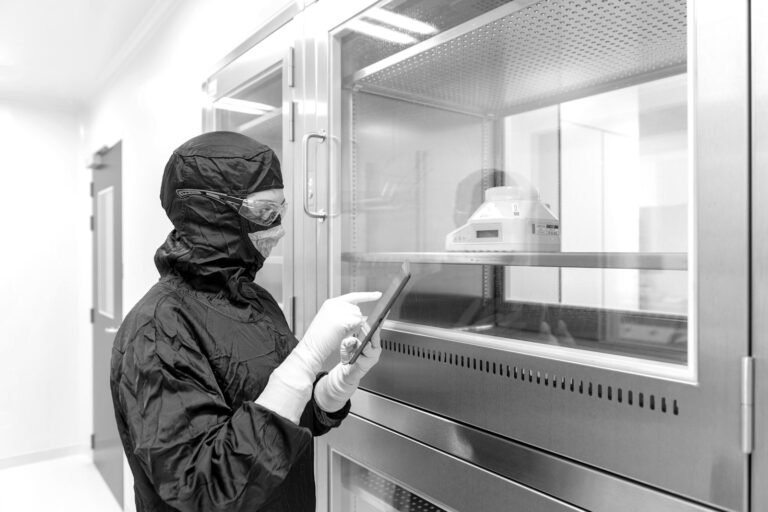
Pharmaceutical Company Registration in Bangladesh 2026: DGDA Licences, Product Registration, Pricing and LDC Graduation
Patent Registration in Bangladesh: Application Requirements and Process
Intellectual Property Law in Bangladesh: Legal Framework, Enforcement and Strategy for Businesses in 2026

Outward Remittance Rules in Bangladesh 2026: Permitted Heads, Approvals, Accounts and Offshore Banking
All insights →
What types of life sciences agreements does TRW advise on?
Can a foreign company license a product to a Bangladeshi manufacturer?
Do life sciences licences need to be registered in Bangladesh?
What is a quality agreement and why is it needed?
How does LDC graduation affect life sciences businesses in Bangladesh?
Can a life sciences collaboration include exclusivity?
What due diligence should be done before signing a licence?
How can we start a life sciences project with TRW?
Build life sciences partnerships on clear legal foundations
Speak with the partners about Life sciences in Bangladesh or across borders.
Book a consultation →