
TRW Insight / Bangladesh
Bangladesh's road transport law now has teeth: five-figure fines, a 12-point licence that BRTA started deducting in 2026, non-bailable liability for fatal crashes and a statutory compensation fund for victims. Drivers, fleet operators and expatriates need to know where each rule bites.
Traffic laws Bangladesh drivers must know in 2026
Traffic laws Bangladesh drivers face in 2026 are stricter on paper and, for the first time, stricter in practice. The Road Transport Act 2018 has been in force since 1 November 2019, the Road Transport Rules 2022 have filled most of its gaps, and in 2026 the Bangladesh Road Transport Authority began deducting demerit points from driving licences through a dedicated enforcement app. Fines that once cost a few hundred taka now run to tens of thousands, a fatal crash can lead to five years in prison, and the families of people killed on the road can claim Tk 5 lakh from a statutory fund.
This guide is written for private drivers, fleet operators, employers who provide company cars, and expatriates. It covers licensing and registration, the fines table, the 12-point licence, criminal liability for fatal accidents, victim compensation, BRTA online services, motorcycles and ride-sharing, foreign drivers, and the reforms and enforcement drives of 2024 to 2026. For criminal procedure and bail, it links to our dedicated guides rather than repeating them.
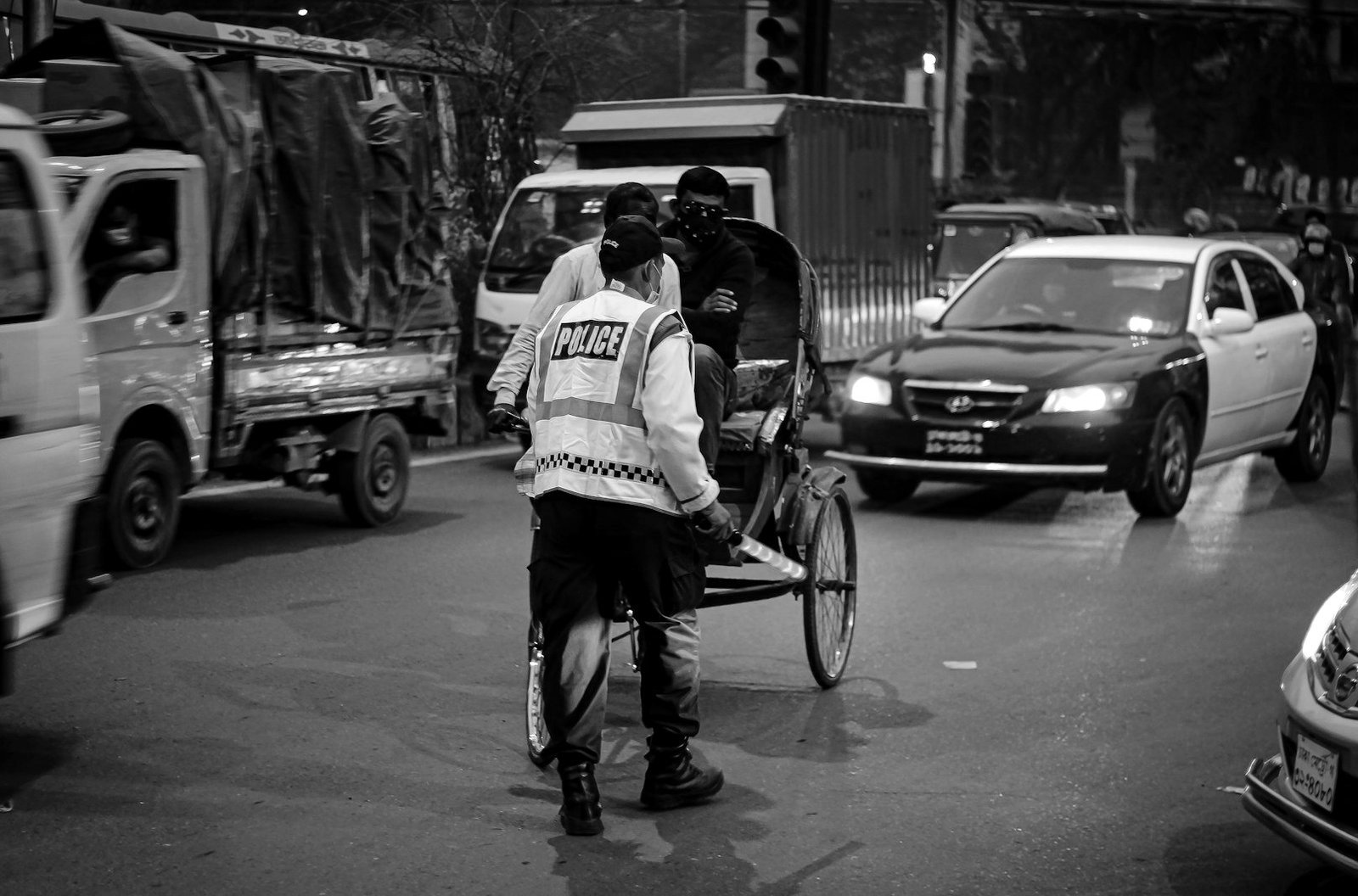
Summary: The Road Transport Act 2018 and the Road Transport Rules 2022 govern licensing, registration, fitness, route permits, driving conduct, accident liability and victim compensation in Bangladesh. Most driving offences carry fines of Tk 5,000 to Tk 50,000 with short prison terms, serious offences carry up to Tk 5 lakh and two to five years, and every licence carries 12 demerit points that BRTA has been deducting since 2026. Compensation of Tk 5 lakh for a death and Tk 1 lakh to Tk 3 lakh for injury is claimed from the BRTA trustee board within 30 days of the crash.
Key point: Section 105 of the Road Transport Act 2018 makes reckless or negligent driving that kills or seriously injures someone punishable by up to five years' imprisonment, a fine of up to Tk 5 lakh, or both, and the offence is non-bailable. Where investigation shows the death was intended, the case moves to the murder and culpable homicide provisions of the Penal Code. A fatal crash is therefore a criminal matter from the first hour, not merely an insurance claim.
At a glance
One Act, one set of Rules
The Road Transport Act 2018 (Act No. 47 of 2018) and the Road Transport Rules 2022 replaced the old motor vehicles regime.
Heavier fines
Driving without a licence costs up to Tk 25,000 or six months; a fake licence or number plate up to Tk 5 lakh or two years.
12-point licence
Every licence starts with 12 points. BRTA began deducting points through the RSPS app in 2026, and a licence with no points left is cancelled.
Fatal accidents
Section 105 carries up to five years and Tk 5 lakh for reckless or negligent driving causing death or serious injury, and it is non-bailable.
Victim compensation
Tk 5 lakh for a death and Tk 1 lakh to Tk 3 lakh for injury, claimed from the BRTA trustee board within 30 days of the crash.
Table of Contents
The legal framework: the traffic laws Bangladesh adopted in 2018
The Road Transport Act 2018 is Act No. 47 of 2018 and contains 126 sections, running from licensing and registration through traffic control, accident compensation, offences, police powers and rule-making.[1] Parliament passed it on 19 September 2018 after the student road-safety protests of that summer, but it took effect nationwide only on 1 November 2019.[2] Section 125 deals with repeal and savings of the earlier regime.[1]
For three years the Act operated without implementing rules, which left several of its most important mechanisms on paper, including the victim compensation fund and the demerit-point system. The Road Transport Rules 2022 were published in the gazette on 27 December 2022 and supplied the procedures, forms, amounts and schedules the Act depends on.[6] Schedule 4 of the Rules sets out which offences lead to point deductions.[9]
Who administers and enforces the law
BRTA issues each driving licence, registers vehicles, certifies fitness, grants route permits and runs the compensation trustee board. Traffic and highway police enforce on the road, mobile courts try compoundable offences on the spot, and the road transport and highways division issues policy instruments such as speed-limit and ride-sharing guidelines.
Bangladesh Road Transport Authority
Issues licences, registers vehicles, certifies fitness, grants route permits and chairs the compensation trustee board.
Traffic and highway police
Stop vehicles, inspect papers, file cases, seize documents and detain vehicles under the Act.
Mobile courts
Try compoundable traffic offences on the spot and feed point deductions into BRTA records.
BRTA trustee board
Twelve-member board that decides victim claims and pays assistance from the financial assistance fund.
Insurance Development and Regulatory Authority
Supervises insurers and runs the voluntary motor liability insurance pilot launched in 2025.
Automobile Association of Bangladesh
The only authorised issuer of international driving permits for Bangladeshi licence holders.
How the Act is structured
Sections 4 to 15 cover licences and conductors, sections 16 to 39 registration, fitness, permits, fares and working hours, sections 40 to 51 driving conduct, and sections 52 to 62 compensation and insurance. Sections 66 to 106 set out the penalties, each tied to the duty it enforces, and sections 107 to 117 deal with police powers, on-the-spot fines and the classification of offences.[1]
Offences and fines under the Road Transport Act
The single most common question about traffic laws Bangladesh enforces is simply what a given offence costs. The table below brings together the maximum penalties for the offences drivers, owners and operators meet most often. Each figure is a ceiling: the court or mobile court may impose less, and many offences allow imprisonment, a fine, or both. On a phone, scroll the table sideways.
| Offence | Maximum prison term | Maximum fine | Points (where listed) | Note |
|---|---|---|---|---|
| Driving without a licence | 6 months | Tk 25,000 | — | Driving licence duty, sections 4 and 5 |
| Fake driving licence | 6 months to 2 years | Tk 1 lakh to Tk 5 lakh | — | Minimum and maximum both apply |
| Unregistered vehicle | 6 months | Tk 50,000 | — | Owner liability |
| Fake number plate | 6 months to 2 years | Tk 1 lakh to Tk 5 lakh | — | Owner liability |
| No valid fitness certificate | 6 months | Tk 25,000 | — | Section 25 duty |
| Expired tax token | None | Tk 10,000 | — | Section 26 duty |
| No route permit | 6 months | Tk 20,000 | — | Transport vehicles |
| Speeding | 3 months | Tk 10,000 | 1 | Section 87 |
| Drunk driving | 3 months | Tk 10,000 | — | Also conductors and helpers who drive |
| Riding without a helmet | 3 months | Tk 10,000 | — | Also more than two on a motorcycle |
| Mobile phone while driving | 1 month | Tk 10,000 | — | General driving directions |
| Disobeying signs and signals | 1 month | Tk 10,000 | 1 | Section 85 |
| Overloading | 1 year | Tk 1 lakh | 2 | Section 86 |
| Illegal vehicle modification | — | Tk 3 lakh | — | Section 84, non-bailable |
| Overloading or uncontrolled driving causing an accident | 3 years | Tk 3 lakh | — | Section 98, non-bailable |
| Reckless or negligent driving causing death or serious injury | 5 years | Tk 5 lakh | — | Section 105, non-bailable |
Licence and document offences
Driving a motor vehicle or a public transport vehicle without a licence, in breach of sections 4 and 5, carries up to six months' imprisonment, a fine of up to Tk 25,000, or both.[2] [3] Using a fake licence is treated far more seriously, with a fine of Tk 1 lakh to Tk 5 lakh, six months to two years in prison, or both.[3] A bus conductor working without a conductor licence faces up to one month or Tk 5,000.[3]
For owners, operating an unregistered vehicle carries up to six months or Tk 50,000; a fake number plate up to two years or Tk 5 lakh; running without a route permit up to six months or Tk 20,000; an unfit vehicle without a valid fitness certificate up to six months or Tk 25,000; and an expired tax token a fine of Tk 10,000.[3]
Speeding, drunk driving, helmets and mobile phones
Speeding is punished under section 87 with up to three months' imprisonment, a fine of up to Tk 10,000, or both.[21] The same ceiling applies to reckless driving and risky overtaking, to driving on the wrong side of the road, to riding a motorcycle without a helmet, to carrying more than two people on a motorcycle, and to driving under the influence of alcohol or while otherwise intoxicated.[2] Using a mobile phone while driving carries up to one month's imprisonment, a fine of up to Tk 10,000, or both.[4]
The fines are only part of the cost. A repeat offence attracts enhanced punishment under section 100, and a speeding or drink-driving incident that ends in a collision moves into the far heavier accident provisions discussed below.[1]
Overloading and vehicle modification
Exceeding a vehicle's approved laden weight, counting the vehicle, passengers, goods and fuel together, carries a fine of up to Tk 1 lakh, a year in prison, or both. Illegally modifying a vehicle, for example by altering its length, width, seats, wheels, brakes, horn, indicators or exhaust, or by using a left-hand-drive vehicle without permission, carries a fine of up to Tk 3 lakh.[2] Where overloading or uncontrolled driving causes an accident that damages life or property, section 98 raises the penalty to up to three years, Tk 3 lakh, or both.[3] Sections 84 and 98 are currently non-bailable.[16]
Signals, noise, pollution, parking and fares
Disobeying traffic signs and signals carries up to one month or Tk 10,000.[16] An illegal hydraulic horn costs up to three months or Tk 10,000; a vehicle emitting black smoke up to three months or Tk 25,000; and parking or loading outside designated places a fine of up to Tk 5,000.[3] For public transport, failing to display the fare chart carries up to one month or Tk 10,000 and the loss of a point, while tampering with a taxi or CNG meter or refusing a trip carries up to six months or Tk 50,000.[3]
Demerit points: how the 12-point licence now works
The demerit system is the most significant practical change to the traffic laws Bangladesh drivers live with. Section 11 of the Road Transport Act provides for points to be allocated to and deducted from driving licences.[1] Under section 11(1) each licence starts with 12 points, and Schedule 4 of the Road Transport Rules 2022 lists the offences that lead to deductions.[9] For years the scheme existed only on paper. That has now changed.
Implementation in 2026
On 5 May 2026 BRTA announced the Road Safety Penalty System (RSPS), an app for recording traffic penalties and deducting points nationwide.[9] By June 2026 deductions were being made in practice: BRTA reported that it had deducted 78 points from 75 licences that month, based on mobile court operations.[10] The demerit system is therefore no longer theoretical, and a licence record now follows a driver from one mobile court to the next.
Which offences cost points
One point is deducted for each of the following: ignoring traffic signals, breaching commercial-use rules, failing to display fare charts or overcharging, illegally altering a taximeter, speeding, excessive noise, driving a polluting vehicle, illegal parking, picking up or dropping off passengers or goods outside designated places, breaking highway rules, disobeying general driving directions, and breaching the rules on treating road-accident victims. Two points are deducted for overloading and for deliberately obstructing traffic.[10]
When the points run out
When all 12 points are gone the licence is cancelled.[10] Repeating the same type of offence, or exhausting the allocated points, can also lead to suspension, withdrawal or cancellation under section 12.[1] [9] Driving after a driving licence has been suspended, withdrawn or cancelled is a separate offence under section 70.[1] For professional drivers, losing a licence means losing a livelihood; for fleet operators, it means a driver who can no longer lawfully be put behind the wheel.
Road accidents causing death: section 105 and the Penal Code
Section 105 of the Road Transport Act is headed simply "offences relating to accidents".[1] It brings deaths and serious injuries caused in motor vehicle accidents within the relevant provisions of the Penal Code 1860, but makes special provision for reckless or negligent driving. Where a person dies or is seriously injured in an accident caused by reckless or negligent driving, the driver faces up to five years' imprisonment, a fine of up to Tk 5 lakh, or both.[3] [5] The offence is non-bailable, and the 2024 reform proposals expressly left that position unchanged.[16]
How section 105 interacts with section 304B
Before the 2018 Act, fatal crashes were usually prosecuted under section 304B of the Penal Code, which deals with causing death by rash or negligent driving not amounting to culpable homicide and carries a maximum of three years' imprisonment, with or without a fine.[5] Section 105 now supplies the dedicated, higher penalty for reckless and negligent driving. Where investigation shows that a death was deliberate, the case moves to section 302 of the Penal Code, which carries the death penalty, or to section 304 on culpable homicide.[3] [5] The charging decision therefore turns on evidence of intention and knowledge, not simply on the fact of a death.
What this means for drivers and employers
A fatal accident triggers a police case, and because section 105 is non-bailable the driver should expect arrest and an application for bail before the magistrate or, if refused, before the Sessions Judge and the High Court Division. Our guides to the criminal case process in Bangladesh and to bail law and criminal defence explain those stages, and our overview of criminal offences and penalties sets out the wider Penal Code framework. Section 106 adds that where an offence is committed by a company, its owners, directors, managers and responsible officers can also face action.[1]
Victims and families who are not satisfied with police action can lodge a complaint directly with the court. Our guide to the difference between a GD and an FIR explains which record to make first.
Compensation for road accident victims
For victims, the compensation scheme is the most useful feature of the traffic laws Bangladesh adopted in 2018. Section 52 provides for compensation to injured persons or their families, section 53 establishes a financial assistance fund, sections 54 to 58 create and govern a trustee board to manage it, and section 59 governs applications for assistance.[1] The trustee board was formed in 2021 but could not function until the Rules were made, and the government formally launched the scheme on 19 October 2023.[7]
How much is paid
Under the Road Transport Rules 2022, the family of a person killed in a road accident, including a person who later dies of injuries, receives Tk 5 lakh. A person who loses a limb or suffers serious injury receives Tk 3 lakh. A person left permanently disabled receives Tk 3 lakh if there is no realistic prospect of returning to normal life after treatment, and Tk 1 lakh if there is.[6] The board may change these amounts with prior government approval.[6]
The amounts remained the same in 2026. In June 2026, at a single disbursement in Mymensingh, 34 families of people killed received Tk 5 lakh each and 16 injured victims or their families received between Tk 1 lakh and Tk 3 lakh, and BRTA reported that Tk 8.30 crore had been paid in that district alone since 2024.[8] By 30 September 2023, before the formal launch, BRTA had received 396 applications and paid Tk 7.08 crore to 162 victims and families.[7]
The claim procedure and deadlines
The application must reach the chairman of the trustee board within 30 days of the accident. The chairman must form an inquiry committee within 10 days of receiving it, the committee has 30 days to assess the loss and report, and the board must approve the claim and arrange payment within 30 working days of receiving the report. Payment is made by account-payee cheque into the applicant's bank account.[6] The 12-member board is chaired by the BRTA chairman.[7]
The 30-day deadline is where most claims are lost. File first and perfect later: lodge the application with the documents available, such as the case or GD number, hospital records and the death certificate, and follow up with the rest.
Who funds the scheme
Vehicle owners pay contributions to the fund: Tk 1,000 once for a motorcycle, and annual contributions of Tk 1,500 for buses, trucks, covered vans and prime movers, Tk 750 for minibuses, mini trucks and pickups, Tk 500 for cars, jeeps and microbuses, and Tk 300 for three-wheelers and others, with a late fee of Tk 50 a month for non-motorcycle owners.[6] Failing to pay the contribution is itself an offence under section 94.[1]
Compensation is not the end of the claim
Payment from the fund is statutory financial assistance, not a full measure of loss. It does not by itself prevent a criminal prosecution, and where a vehicle defect contributed to the crash the injured party may also have a claim against the manufacturer or seller. Our guide to product liability law in Bangladesh covers that route.
Driving licences: classes, eligibility and the BRTA process
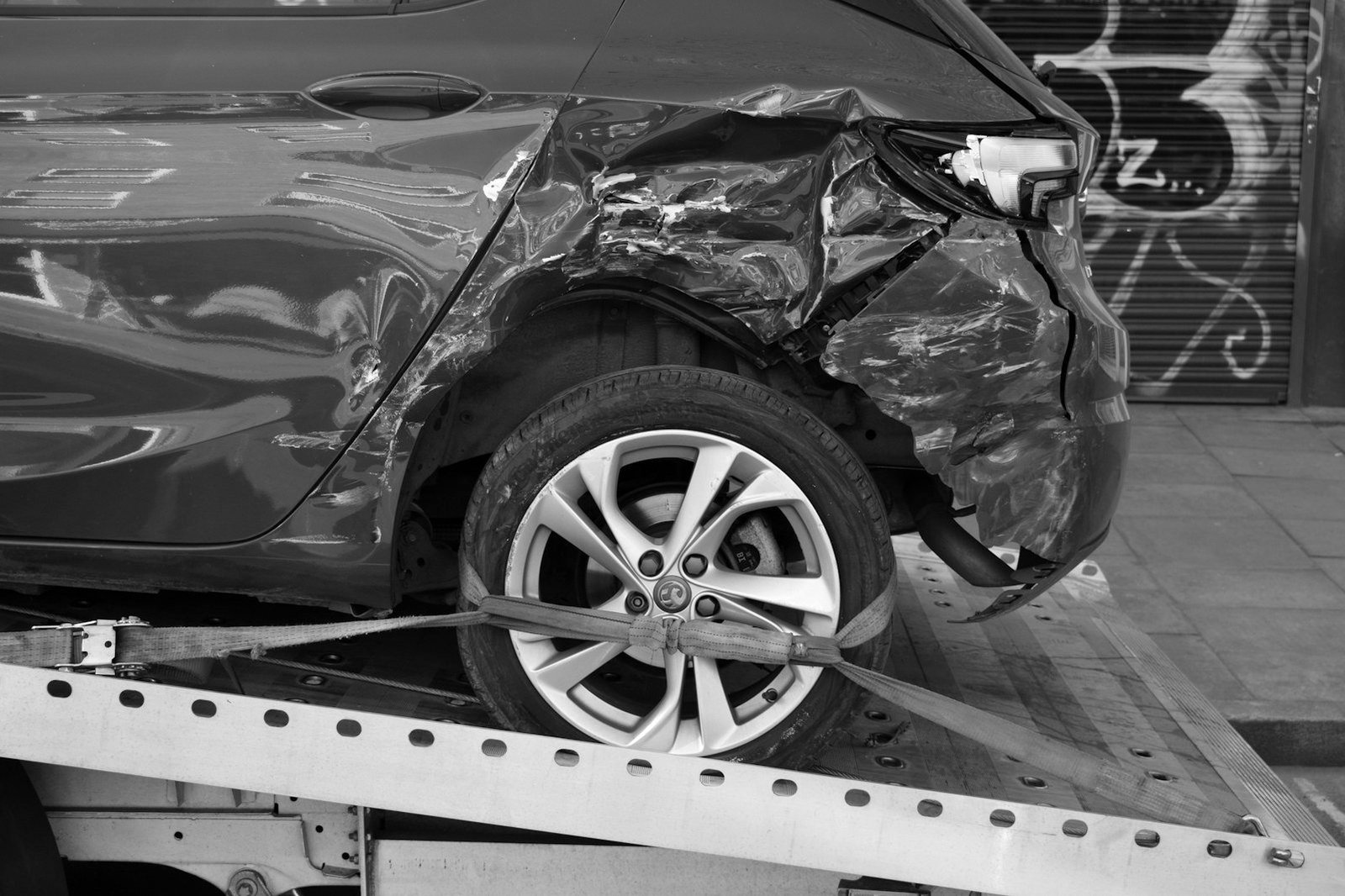
Every obligation in the traffic laws Bangladesh imposes on drivers starts with the licence. Section 4 prohibits driving a motor vehicle without a licence, section 6 governs issue, renewal and change of address, section 7 makes special provision for drivers with physical disabilities, and section 9 deals with foreign nationals.[1] Applicants must have studied to at least Class 8 and meet physical and mental fitness requirements. The minimum age is 18 for a non-professional licence and 21 for a professional licence.[12]
Validity and fees
A non-professional licence is valid for 10 years and a professional licence for five years. When reported in 2023, the fee was Tk 4,557 for a non-professional licence and Tk 2,832 for a professional licence, with a learner licence costing Tk 518 for one vehicle class or Tk 748 for two.[12] Check the current fee on the BRTA portal before applying.
The application process on the BSP portal
Applications are made through the BRTA Service Portal (BSP). The applicant registers with a national identity number, date of birth and mobile number, applies for a learner licence with a medical certificate, attends a single test session for biometrics and the written, oral and practical tests, and, after passing, uploads the result and pays the smart card fee. Once BRTA approves the application, the applicant can print an e-paper licence from the portal dashboard, which is valid until the smart card arrives by post.[12]
In practice the e-paper licence is the document many drivers carry. Make sure the licence appears correctly in BRTA's records: the points system and the international driving permit process both depend on it.
Employers: hiring and conductor licences
Section 13 sets conditions for employing drivers, and sections 14 and 15 require bus conductors to hold a conductor licence and to be appointed by the owner.[1] An owner who puts an unlicensed driver on the road is exposed under these provisions and under section 106 if the owner is a company.
Vehicle registration, fitness, tax token and route permits
Every motor vehicle used in a public place must be registered under section 16, with temporary registration available under section 18 and transfer of ownership governed by section 21. Section 17 prohibits fake registration numbers, section 25 requires a fitness certificate, section 26 a tax token, and section 28 a route permit for transport vehicles. Section 36 lets the government fix the economic life of vehicle classes, after which they may not be used.[1]
Practical points on registration and transfer
Registration, fitness, tax token and ownership transfer applications are handled by BRTA's circle offices and its online services. When a vehicle is sold, the buyer must register the transfer under section 21; failure to do so is an offence under section 74.[1] For the seller the practical risk is the reverse: until the transfer is recorded, the registered owner remains the first person police and the trustee board will look to after an accident. Complete the transfer at the time of sale, not afterwards.
What happens to a vehicle without papers
Section 112 sets out the consequences of driving without registration, a fitness certificate or a route permit, section 111 lets police seize vehicle documents, and section 115 allows the vehicle itself to be detained.[1] In September 2026 the Dhaka Metropolitan Police reported filing 3,206 cases in two days of drives, with 878 vehicles sent to dumping yards and 501 towed.[20] For a fleet, a detained vehicle is usually more expensive than the fine.
Insurance after the Road Transport Act
A point that surprises many expatriates and foreign-owned businesses is that third-party motor insurance is not compulsory in Bangladesh. The 2018 Act removed the mandatory requirement, and compulsory third-party cover was abolished in December 2020. The Insurance Development and Regulatory Authority relaunched cover as "Motor Liability Insurance" on a one-year pilot in August 2025, but six months later uptake was minimal.[13]
Under the pilot, annual premiums were about Tk 2,070 for a 1,300cc private car and Tk 1,006 for a 150cc motorcycle, with cover limits of Tk 2 lakh for death or permanent total disability and Tk 60,000 for property damage.[13] Section 60 of the Act deals with passenger and vehicle insurance, and the 2024 reform draft proposed making insurance compulsory again.[1] [16] Until that happens, comprehensive voluntary cover is the only real protection against third-party claims, and for any fleet it should be treated as mandatory as a matter of internal policy.
Obligations for fleet operators and employers
Most compliance failures under traffic laws Bangladesh businesses face are not dramatic. They are an expired fitness certificate, an unpaid fund contribution, a driver working too many hours, or a vehicle carrying more than its permitted weight. Each one creates liability, and in a serious accident they compound.
Working hours
Section 39 empowers the government to fix working hours.[1] In May 2026 BRTA warned that drivers may drive for up to five consecutive hours, must then take a break of at least 30 minutes, may drive up to three more hours for a daily limit of eight hours, and may not exceed 48 hours a week. It warned that driving licences and vehicle registrations may be cancelled for breaches.[18] Long-haul and night operations should be scheduled with relief drivers; rosters are the first documents investigators ask for after a fatal crash.
Weight, construction and commercial use
Section 43 controls axle weight and weight limits, section 40 the construction and maintenance of vehicles, and section 31 commercial use.[1] Overloading costs two demerit points as well as a fine, and section 98 converts an overloading accident into a non-bailable offence.[10] [16] Load documentation and weighbridge records protect both the driver and the operator.
Corporate liability
Where the vehicle owner is a company, section 106 extends liability to owners, directors, managers, secretaries and other officers.[1] Documented driver vetting, licence and points checks, fitness tracking, rest-period rosters and incident reporting procedures are the best evidence that management took its obligations seriously. Employers of expatriate drivers should align these controls with the employment terms discussed in our guide to employment law for expatriates in Bangladesh.
Motorcycles, ride-sharing and battery-run three-wheelers
Motorcycles
Motorcycles attract more day-to-day enforcement than any other vehicle class. Riding without a helmet and carrying more than two people on a motorcycle each carry up to three months' imprisonment, a fine of up to Tk 10,000, or both.[2] Under the Motor Vehicle Speed Limit Guideline 2024, motorcycles are limited to 30 km/h inside cities, 60 km/h on expressways and 50 km/h on other national highways and district roads.[11] Motorcycle owners pay a one-time Tk 1,000 contribution to the compensation fund rather than an annual one.[6]
Ride-sharing: the 2017 Guidelines in 2026
Within the traffic laws Bangladesh applies to passenger transport, app-based services remain governed by the Ride-sharing Service Guidelines 2017. Operators must obtain a BRTA licence, set up a local office, use registered vehicles and licensed drivers, and provide GPS tracking, digital payments, SOS facilities, driver training, online complaints handling, trip-record retention, integration with BRTA's database and communication with the police control room. The Guidelines also contemplate a tripartite agreement between the platform, the vehicle owner and the driver.[14]
Enforcement remains partial. As at August 2026, 19 companies were registered but only three or four were actively operating, about 35,000 vehicles were registered under the system, and drivers switching off the app to negotiate fares directly remained a common problem. A senior official of the road transport and highways division said the government is revising the Guidelines to strengthen regulation and enforcement.[14] No revised guideline had been published when this article was updated, so the 2017 text continues to apply. Passengers can take complaints to the Directorate of National Consumer Rights Protection, which can impose administrative penalties; our consumer protection practice advises both platforms and users.[14]
Battery-run three-wheelers
Battery-run autorickshaws remain largely outside the registration system. In Parliament on 7 September 2026 the Home Minister said the government will bring them under registration so they can be tracked by traffic authorities. The draft Electric Three-Wheeler Management Policy 2025, which would require BRTA registration, licensed drivers, designated routes and exclusion from national highways except service lanes, had not yet been approved.[17] Battery-run autorickshaws were involved in 13.54 per cent of the 6,729 road accidents recorded in 2025, which killed 9,111 people.[17]
Foreign drivers, expats and international driving permits
The traffic laws Bangladesh applies to its own citizens apply equally to foreign drivers, and the Act addresses them directly. Section 9 governs driving licences for foreign nationals, and section 68 penalises a foreign national who breaches the Act, the Rules or the conditions of a licence. Sections 29 and 78 deal with route permits for vehicles entering Bangladesh from abroad.[1]
Driving on a foreign licence
UK government guidance states that a visitor can drive in Bangladesh for up to 12 months using an international driving permit together with a valid UK driving licence, and must apply to BRTA for a Bangladeshi licence to continue driving after that.[15] Expatriates of other nationalities should follow the same approach: carry the permit and the national licence together, and plan for a local licence well before the twelve months run out, since processing involves biometrics and testing.
Many expatriate executives use a professional driver instead. That removes personal licence risk but not the employer's or owner's liability. Expatriates planning a longer stay should coordinate driving arrangements with work permit and residence planning through our global mobility and business immigration practice.
Bangladeshi licence holders travelling abroad
For Bangladeshi licence holders who need a permit to drive abroad, the Automobile Association of Bangladesh is the only authorised issuer of international driving permits. The permit is valid for 12 months from issue and cannot be renewed. The applicant needs a valid national licence with at least one month left to run that appears in BRTA's online licence checker, and fees in 2025 started at Tk 3,700 for the regular 20-working-day service for a motorcycle class.[19]
If an expatriate is involved in an accident
A foreign national arrested after a fatal accident faces the same non-bailable regime under section 105. Take legal advice before giving any written statement, and contact the employer's counsel and the embassy at once.
Police powers, arrest and on-the-spot fines
Police powers under the traffic laws Bangladesh enforces are broad. Section 109 lets police stop a vehicle and inspect its documents, section 110 gives a power of arrest without warrant, section 111 lets police seize documents, and section 113 empowers authorised officers to impose fines on the spot for certain classes of offence.[1] Section 117 classifies each offence as cognisable or not, bailable or not, and compoundable or not, and section 108 provides a special procedure for trying certain offences.[1]
In practice this produces two very different experiences. Minor compoundable offences such as illegal parking or a helmet violation are usually dealt with by a case slip or a mobile court fine and, increasingly, a point deduction. Serious offences, including fatal accidents under section 105 and overloading accidents under section 98, lead to a police case, arrest and a bail hearing. Where a prosecution is plainly misconceived, our section 561A quashment practice considers whether the High Court Division should end it.
What to do after a road accident
The first hours after a crash decide both the criminal exposure and the compensation claim. The steps below reflect the duties the Act imposes and the deadlines that follow.
Help the injured
Arrange treatment for anyone hurt at once; section 62 makes this a legal duty and section 95 penalises a breach.
Inform police and fire service
Report the accident to the nearest police station and the fire service, and note the officer's name and case or GD number.
Stay safe
If a crowd turns hostile, go directly to the nearest police station rather than remaining at the scene.
Preserve evidence
Photograph the vehicles, road, signals and injuries, collect witness details and keep dashcam, GPS and trip records.
Secure the documents
Gather the licence, registration, fitness certificate, tax token, route permit and any insurance policy for the vehicle.
Take legal advice early
Before any statement, take advice on section 105 exposure, arrest and bail, especially for professional and expatriate drivers.
File the compensation claim
Victims and families should lodge the trustee board application within 30 days, filing first and adding documents later.
Review the fleet
Operators should audit driver hours, load records and vehicle papers, and notify insurers in writing.
Two duties deserve emphasis. Section 62 requires an injured person to be taken for treatment, and section 95 penalises a breach of that duty; failing to send the injured to hospital, or failing to inform the nearest police station and fire service, can cost up to one month in prison or Tk 20,000.[1] [2] Leaving the scene to avoid a crowd may be understandable, but leaving the victim without help is never defensible. Section 119 addresses aggressive behaviour and mob reaction, and drivers who fear for their safety should go directly to the nearest police station.[1]
2024 to 2026: amendments, enforcement drives and what changed
The 2024 amendment draft
On 13 March 2024 the cabinet approved a draft Road Transport (Amendment) Act 2024 that would have changed at least 12 sections, mostly by reducing penalties. It proposed making sections 84 and 98 bailable while keeping section 105 non-bailable, cutting the fine for driving on a suspended or cancelled licence from Tk 25,000 to Tk 15,000, cutting the fine for disobeying traffic signs from Tk 10,000 to Tk 2,000, and requiring vehicle owners to insure their vehicles.[16]
The draft was not enacted before Parliament was dissolved in August 2024, and we have found no amending Act in force. The penalties in the 2018 Act therefore continue to apply, and any figure quoted from the 2024 draft should be treated as a proposal only.
Enforcement in 2026
The enforcement picture changed more than the statute. RSPS-based point deductions began in 2026, BRTA reported its first monthly figures in July, the working-hours warning followed in May, and the Dhaka Metropolitan Police ran large-scale drives in September.[9] [10] [18] [20] The compensation fund continued to pay families at district-level ceremonies.[8] With 9,111 deaths on the roads in 2025, pressure for stronger enforcement is unlikely to ease.[13]
What to watch
Watch for a revised ride-sharing guideline, a final policy on battery-run three-wheelers, and any renewed attempt to amend the 2018 Act or restore compulsory third-party insurance.[13] [14] [17] Review fleet policies when any of them is published.
Managing risk under the traffic laws Bangladesh enforces in 2026
For a private driver, compliance is simple: a valid licence in BRTA's records, current registration, fitness and tax token, respect for speed limits, no drinking, a helmet on a motorcycle and the phone out of reach. For a fleet operator it is a system: driver vetting and points checks, document calendars, fund contributions, voluntary insurance, rest-period rosters, load records and an accident response plan.
When something goes wrong, the questions arrive quickly: arrest, bail, what the family can claim and by when, and whether the company is exposed. For advice on a pending case or a compliance review, contact TRW.
Frequently asked questions
What is the main traffic law in Bangladesh?
What is the fine for driving without a licence in Bangladesh?
What is the penalty for drunk driving or riding without a helmet?
Each carries up to three months' imprisonment, a fine of up to Tk 10,000, or both.[2]
Is the demerit point system actually in use?
What is the punishment for causing death in a road accident?
How much compensation do road accident victims receive?
The BRTA trustee board pays Tk 5 lakh for a death, Tk 3 lakh for loss of a limb, serious injury or disability without prospect of recovery, and Tk 1 lakh where the victim can return to normal life.[6]
What is the deadline for a compensation claim?
The application must reach the chairman of the BRTA trustee board within 30 days of the accident. Payment is due within 30 working days of the inquiry committee's report.[6]
Is motor insurance compulsory in Bangladesh?
No. Compulsory third-party cover ended after the 2018 Act, and a voluntary motor liability pilot launched in August 2025 has seen low uptake.[13]
Can a foreigner drive in Bangladesh on a foreign licence?
UK guidance states that a visitor can drive for up to 12 months with an international driving permit and a valid UK licence, and must obtain a BRTA licence after that.[15]
Which rules govern Uber, Pathao and other ride-sharing apps?
The Ride-sharing Service Guidelines 2017 continue to apply. The government said in August 2026 that it is revising them, but no revised text had been published at the time of writing.[14]
Source register
Primary legal and regulatory sources
Materials checked on 20 October 2026. Confirm the current official text before relying on any provision.
- Road Transport Act 2018 (Act No. 47 of 2018) — Laws of Bangladesh
- The Business Standard, 4 November 2019 — Penalties for violating rules under the new Road Transport Act
- Prothom Alo, November 2019 — Road Transport Act: offences and penalties take effect (Bangla)
- BenarNews, 1 November 2019 — Bangladesh implements traffic law passed following deaths of two students
- Daily Observer, 19 December 2022 — Death by reckless driving: section 105 and Penal Code section 304B
- Prothom Alo, 2 January 2023 — Road accident death compensation Tk 5 lakh under the Road Transport Rules 2022 (Bangla)
- The Daily Star, 22 October 2023 — Road crash victims deserve a better compensation scheme
- Daily Observer, 22 June 2026 — BRTA trustee board compensation cheques distributed in Mymensingh
- The Daily Ittefaq (English), 5 May 2026 — BRTA launches RSPS to enforce traffic laws
- Bangla Tribune, 2 July 2026 — BRTA deducts driving licence points in June (Bangla)
- The Business Standard, 10 May 2024 — Motor Vehicle Speed Limit Guideline 2024 to be implemented gradually
- UNB, September 2023 — How to get a BRTA smart card driving licence
- The Business Standard, 10 February 2026 — IDRA motor insurance sees low response amid non-compulsory rules
- Daily Observer, 2 August 2026 — Ride-sharing rules on paper, gaps persist on roads
- GOV.UK — Living in Bangladesh: driving
- Prothom Alo, 13 March 2024 — Road Transport (Amendment) Act 2024 draft: penalties cut, bail widened (Bangla)
- BSS, 7 September 2026 — Parliament: battery-run autorickshaws to be brought under registration
- Dhaka Tribune, 23 May 2026 — BRTA warns overworked drivers face licence cancellation
- Automobile Association of Bangladesh — International Driving Permit FAQ (2025)
- Dhaka Tribune, 5 September 2026 — DMP files 3,206 cases for traffic violations
- Dhaka Tribune, 8 May 2024 — New speed limit policy for all types of vehicles
Related TRW assistance
Move from information to a defined next step
TRW advises drivers, transport and logistics operators, ride-sharing platforms, employers and expatriates on road transport compliance, accident cases, bail and victim compensation claims. Explore our consumer protection and regulatory practice or contact TRW to discuss your matter.