
TRW Insight / Bangladesh
Murder, rape, dowry violence, kidnapping and firearms charges sit at the hardest end of Bangladesh bail law. Release turns on the right court, the right provision and a record that answers the reasonable-grounds test head on.
Bail in murder cases Bangladesh: the serious-offence framework in 2026
Bail in murder cases Bangladesh courts decide is governed by a deliberately narrow gate. Murder, rape, dowry violence, kidnapping and firearms offences are all non-bailable, most are triable by a Sessions Court, a special tribunal or a Special Tribunal, and several are governed by special statutes that tighten the ordinary test in the Code of Criminal Procedure. Release is still possible, often at the first serious attempt, but only where the application is aimed at the right court, under the right provision, with a record that answers the question the law actually asks.
This guide brings those offences together: the reasonable-grounds test in section 497 and its proviso, section 498, the bail bar in section 19 of the Women and Children Repression Prevention Act 2000 as amended in 2025 and 2026, the Dowry Prohibition Act 2018, kidnapping, and arms cases under the Arms Act 1878 and the Special Powers Act 1974, with the factors courts weigh and a practical sequence for families.
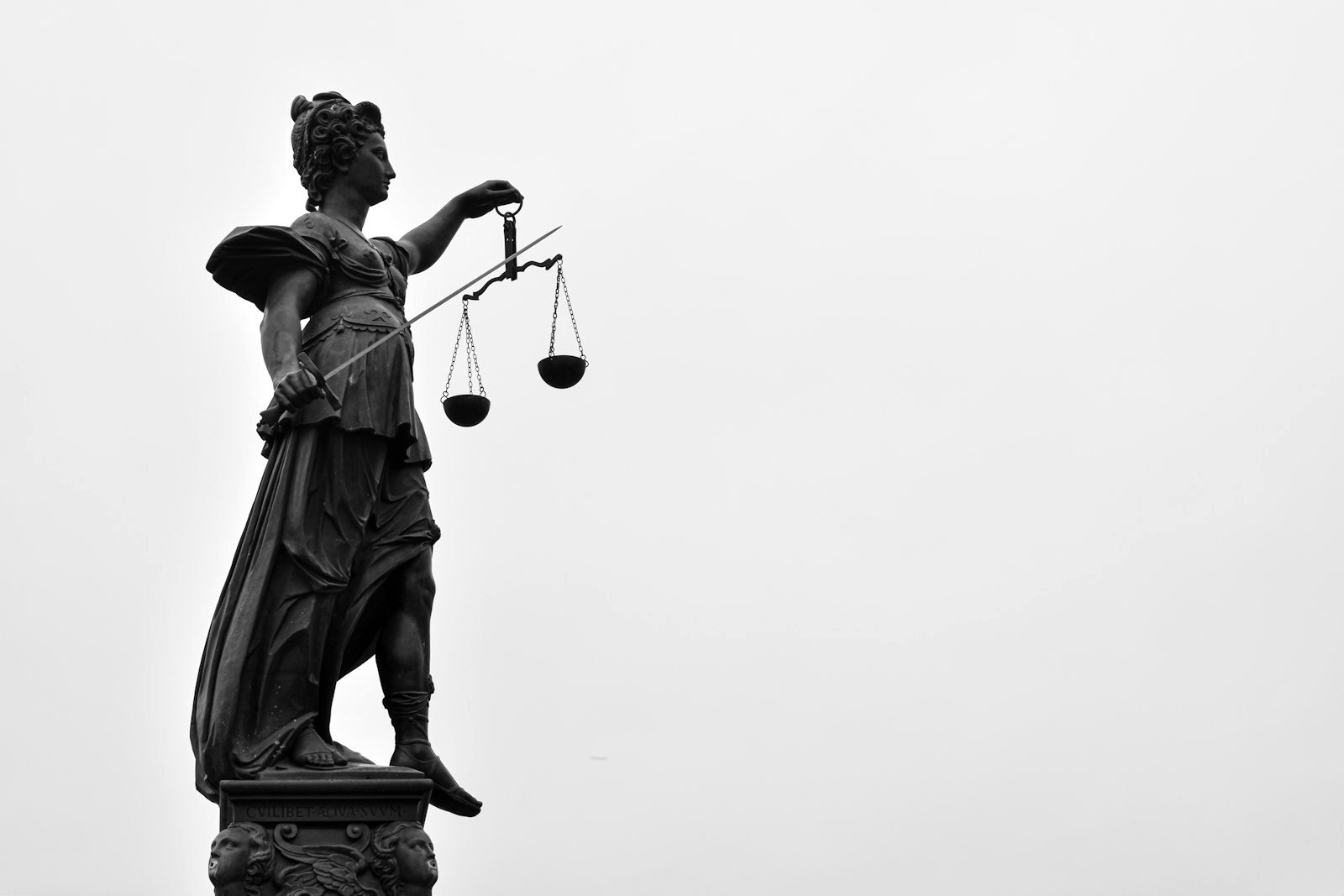
Summary: Murder, attempt to murder, rape, dowry violence, kidnapping and arms offences are non-bailable. Under section 497 of the Code of Criminal Procedure a court may not grant bail where there appear reasonable grounds to believe the accused guilty of an offence punishable with death or imprisonment for life, unless the accused is a woman, a child or sick or infirm, or the case calls for further inquiry. Special laws, above all section 19 of the Women and Children Repression Prevention Act 2000, add their own conditions. The decisive work is in the record: the FIR, the role alleged, the medical and forensic evidence, custody time and trial delay.
Key point: The Women and Children Repression Prevention (Amendment) Act 2026, Act No. 85 of 2026, replaced the March 2025 ordinance and is treated as effective from 25 March 2025. Section 19 still requires the complainant to be heard before a principal accused is bailed, and now applies the same bail tests to a "competent court" as well as the tribunal.
At a glance
Murder and attempt
Section 497 bars bail where there are reasonable grounds to believe the accused guilty of an offence punishable with death or life imprisonment, subject to its proviso.
Rape and repression
Section 19 of the 2000 Act requires the complainant to be heard and the tribunal to weigh the reasonable-grounds test for a principal accused.
Dowry
Dowry demands are non-bailable but compoundable; dowry violence falls under section 11 of the 2000 Act with stricter bail.
Kidnapping
Penal Code sections 363 to 369 and section 7 of the 2000 Act range from seven years to death, which shapes the bail test.
Arms
Firearms cases under sections 19(f) and 19A of the Arms Act are tried by Special Tribunals under the Special Powers Act 1974.
Table of Contents
Why bail in murder cases Bangladesh law treats differently
The Code of Criminal Procedure divides offences into bailable and non-bailable. In a bailable case release is a right; in a non-bailable case it is a matter of judicial discretion structured by section 497.[1] Every offence covered here is non-bailable, and most carry death or imprisonment for life, which triggers the strictest part of the regime.
The distinction is not that bail is forbidden. The Appellate Division made the point plainly in Captain (Retd) Nurul Huda v State, decided on 1 December 2002: the gravity of the offence alone does not justify refusal, discretion must be exercised case by case, and the High Court Division's power under section 498 is not confined by the limits in section 497.[2] The practical consequence is that the law on bail in murder cases Bangladesh judges apply is a law of evidence and timing, not a blanket prohibition.
What this guide covers, and what it does not
The general principles are set out in our overview of bail law and criminal defence in Bangladesh, first production, bonds and sureties in the CMM court bail guide, and Rules and stays in our analysis of High Court bail. Anticipatory bail, which is exceptional in murder and rape cases, is covered in our guide to anticipatory bail in Bangladesh. This article concentrates on what changes when the charge is murder, rape, dowry violence, kidnapping or arms.
Which court decides
Serious cases usually begin before a Magistrate, who is bound by the section 497 limits. Once a case reaches the Court of Session, a Women and Children Repression Prevention Tribunal or a Special Tribunal, that court hears bail; the Sessions Judge also holds a concurrent section 498 power, and the High Court Division sits above both. Each refusal becomes part of the record for the next application. Our guide to the criminal case process in Bangladesh maps the stages from FIR to trial.
Section 497 CrPC: the reasonable-grounds test
Section 497(1) allows a court to release a person accused of a non-bailable offence, but provides that the person shall not be released if there appear reasonable grounds for believing that the person has been guilty of an offence punishable with death or imprisonment for life.[1] [2] Murder, rape, kidnapping of a child, dowry death and firearms offences under section 19A of the Arms Act all fall within that band.
What "reasonable grounds" means in practice
The question is not whether guilt can be proved at trial, but whether the material at the bail stage, taken at face value, gives reasonable grounds to believe the accused committed the offence charged. Defence counsel therefore focus on the FIR, the inquest and post-mortem reports, section 164 statements, the seizure list and any charge sheet. If they attribute no specific, fatal role to the accused, or contradict each other on it, the bar is not engaged as the prosecution claims.
The proviso: women, children, the sick and the infirm
The proviso to section 497(1) allows the court to release a person under the age of sixteen, a woman, or a sick or infirm person even where the reasonable-grounds bar would otherwise apply.[1] It is discretionary, but often decisive for women accused, especially mothers of young children. Illness must be supported by jail or government hospital records.
Further inquiry under section 497(2)
Section 497(2) is the counterweight. If at any stage of investigation, inquiry or trial the court finds that there are no reasonable grounds to believe the accused committed a non-bailable offence, but there are sufficient grounds for further inquiry into guilt, the accused must be released on bail or, at the court's discretion, on a bond without sureties.[1] In murder cases this argument most often turns on a charge sheet that drops the accused's role, a post-mortem that is inconsistent with the alleged weapon, or an FIR that names a large group without attributing a blow to anyone in particular.
Reasons, conditions and cancellation
Bail under section 497 must be supported by reasons recorded in writing, and under section 497(5) the High Court Division, the Court of Session or the court that granted bail may later order the person to be arrested and committed to custody.[1] Since the Code of Criminal Procedure (Amendment) Act 2026, Act No. 11 of 2026, any court releasing an accused may also impose reasonable and fair conditions to prevent abscondence or ensure good behaviour, and sureties are verified through their National Identification Number.[3] In serious cases, proposing sensible conditions in advance can tip a borderline application.
Bail in murder cases Bangladesh: murder and attempt to murder
Murder under section 302 of the Penal Code carries the death penalty, so the section 497(1) bar is engaged in every case. Attempt to murder under section 307 is graded by result, and where hurt is caused it too can reach imprisonment for life. In practice, bail in murder cases Bangladesh courts grant tends to follow one of five patterns, and an application should identify which one it relies on.
The five arguments that succeed
- No specific role: the FIR names the accused among many, but attributes no blow, weapon or act of common intention.
- The evidence has moved: the charge sheet, post-mortem report or inquest report is inconsistent with the FIR, opening the further-inquiry route under section 497(2).
- The proviso: the accused is a woman, under sixteen, or demonstrably sick or infirm.
- Delay: the accused has been in custody for a long period, the investigation or trial has stalled, and the prosecution cannot explain why.
- Collateral motive: the case appears to have been filed to settle a land, family or political dispute, and the documentary record supports that inference.
Attempt to murder
Applications under section 307 turn on the medical certificate. Where it records simple injuries, or the weapon and wound do not match, bail is far more often granted at the Sessions Court stage. Where the injury is grievous and attributed to the accused, focus instead on custody time, health and the identification evidence.
Mass-accused cases after August 2024
A large share of current work on bail in murder cases Bangladesh lawyers handle arises from cases filed after the July 2024 uprising. A March 2026 investigation by Prothom Alo reported 1,841 July-related cases, including 791 murder cases, and found complainants who admitted naming people they did not know; interim reports in 638 cases had cleared 4,285 people. Police superintendents were told to submit interim reports on their own initiative where no involvement is found.[15]
The new section 173A of the Code allows an interim investigation report and, where it shows insufficient evidence, the discharge of an individual accused while the investigation continues against others.[3] [15] The usual strategy is two-track: press for an interim report and, in parallel, apply for bail on the absence of any specific role.
How the higher courts are dealing with murder bail in 2026
The High Court Division continues to grant bail in murder cases where the record supports it, and the State continues to challenge those orders before the Appellate Division. In May 2026 the Appellate Division, headed by the Chief Justice, rejected the State's appeals and upheld High Court Division bail orders in ten cases against a former Narayanganj mayor, four of them murder cases arising from the July uprising.[14] A High Court Division order in a murder case should be expected to attract a stay petition, and the defence should be ready to defend it from the day it is granted.

Rape and Women and Children Repression Prevention Act cases
Rape, dowry violence, kidnapping of women and children, sexual harassment and related offences are prosecuted under the Women and Children Repression Prevention Act 2000, the Nari-o-Shishu Nirjatan Daman Ain, before a dedicated tribunal. The Act overrides the Code where it makes its own provision, and its bail section is stricter than section 497.
Section 19: the bail bar
Section 19(2) provides that a person who is the principal accused and directly charged with an offence under the Act shall not be released on bail unless the complainant has been given an opportunity to be heard on the application, and the tribunal, or the competent court, has considered whether there are reasonable grounds to believe the accused guilty.[5] Section 19(3) allows bail for a woman, a child or a physically sick or infirm accused if the tribunal is satisfied that release will not impair justice. Section 19(4) allows any other accused to be bailed where the tribunal considers it justified, with reasons recorded in writing.[5]
An application for a principal accused not served on the complainant invites refusal. Co-accused not alleged to be principal and directly involved, such as relatives named for abetment, fall under the more flexible sub-section (4).
The 2025 ordinance and Act No. 85 of 2026
After nationwide protests in March 2025, the interim government issued the Women and Children Repression Prevention (Amendment) Ordinance 2025, Ordinance No. 11 of 2025, dated 25 March 2025.[6] The elected Parliament replaced it with the Women and Children Repression Prevention (Amendment) Act 2026, Act No. 85 of 2026, which repeals the ordinance; the official text of section 19 records the Act's amendments as effective from 25 March 2025.[5] [6] The changes that matter for bail are these.
- Competent court: sections 19(2), (3) and (4) now apply to a "competent court" as well as the tribunal, reflecting the transfer of some dowry-hurt cases to Magistrates.[5]
- Compounding removed from section 19: Act No. 85 deleted the words in section 19(1) that had made a dowry-related offence under section 11 compoundable.[5]
- Promise of marriage: new section 9B makes sexual intercourse with a woman over sixteen, without force, on a promise of marriage within a relationship of trust, a separate offence punishable with up to seven years' rigorous imprisonment and a fine, rather than rape.[4]
- Child Violence Prevention Tribunals: new section 26A allows the government to establish tribunals for child rape offences in each district and metropolitan area; until they are set up, the existing tribunal acts.[4]
- Faster timelines: investigation must be completed within 15 working days of arrest where the accused is caught in the act and otherwise within 30 working days, and a rape trial under section 9 must be concluded within 90 working days of framing charges.[4]
Rape case bail in practice
Rape under section 9(1) is punishable with death or imprisonment for life, and attempted rape under section 9(4)(b) with five to ten years' rigorous imprisonment.[4] The charge section therefore changes the bail analysis completely. Where a case filed as rape is, on the evidence, a promise-of-marriage allegation, the application should say so, because section 9B carries a seven-year ceiling. The medical report, the timing of the complaint, the section 164 statement and any DNA report matter most.
The shorter statutory deadlines also strengthen delay arguments. Where the investigation or trial has plainly overrun the statute, that failure belongs at the front of the application for rape case bail.
Bail in dowry cases
Dowry allegations come in two distinct forms, and the bail position differs sharply between them.
Dowry Prohibition Act 2018
Demanding dowry, and giving, taking or agreeing to give or take dowry, are each punishable under sections 3 and 4 of the Dowry Prohibition Act 2018 with one to five years' imprisonment, a fine of up to Tk 50,000, or both. Section 7 makes these offences cognizable, non-bailable and compoundable, and section 8 applies the Code of Criminal Procedure to investigation and trial.[8] Bail is discretionary, but the maximum is well below the death-or-life band, the offence can be compounded, and section 6 punishes filing a dowry case knowing there is no lawful ground.[8] An accused who surrenders in such a case is commonly bailed.
Dowry violence under section 11 of the 2000 Act
Where the allegation is death, attempted killing, grievous hurt or simple hurt for dowry, the case falls under section 11 of the Women and Children Repression Prevention Act 2000. Causing death for dowry is punishable with death or imprisonment for life; attempted killing with imprisonment for life or up to twelve years; grievous hurt with imprisonment for life or five to twelve years; and simple hurt with two to five years' rigorous imprisonment.[4] Section 19 then governs bail, so the complainant must be heard for a principal accused.
The High Court Division's judgment of 12 June 2024 in Md Aslam v State shows how these cases are argued. The FIR alleged grievous hurt under section 11(b), but police charge-sheeted the accused under section 11(c), the simple-hurt offence; a judicial inquiry ordered on the complainant's objection had not been completed in time; and the accused had been in custody for over a year. The Division Bench made the Rule absolute and granted bail until the case was disposed of.[12]
Simple hurt for dowry: mediation and the Magistrate's court
The 2025 reforms moved simple-hurt dowry cases under section 11(c) away from the tribunal. New section 35, introduced by the March 2025 ordinance, sends these cases to Magistrates of the first class, while pending cases continue under the old procedure; and from 1 July 2025 the amended Legal Aid Services Act requires a woman alleging simple hurt for dowry to try mediation through the district legal aid office before filing.[7] Where family settlement is realistic, our family mediation and settlement practice advises both sides.
Bail in kidnapping cases
Kidnapping charges arise under two statutes, and the punishment band again drives the bail test.
Penal Code sections 363 to 369
Kidnapping under section 363 of the Penal Code is punishable with imprisonment of up to seven years and a fine, as is kidnapping or abduction with intent secretly and wrongfully to confine a person under section 365. Kidnapping or abducting in order to murder under section 364 carries imprisonment for life or rigorous imprisonment of up to ten years. Kidnapping or abducting a person under the age of ten under section 364A carries death, imprisonment for life, or rigorous imprisonment of seven to fourteen years.[9] Sections 366 to 369 address kidnapping a woman to compel marriage, procuration of minor girls, kidnapping for grievous hurt or slavery, wrongful concealment of a kidnapped person and kidnapping a child to steal from it.
For section 363 and section 365 charges, the section 497(1) bar does not apply because the maximum is seven years, and bail is decided on ordinary discretionary factors. Under sections 364 and 364A the bar is engaged and the application must meet it.
Section 7 of the 2000 Act and ransom cases
Kidnapping of a woman or child, other than for trafficking purposes covered by the Prevention and Suppression of Human Trafficking Act 2012, is punishable under section 7 of the Women and Children Repression Prevention Act 2000 with imprisonment for life or rigorous imprisonment of not less than fourteen years and a fine. Detaining a woman or child for ransom under section 8 carries death or imprisonment for life.[4] Both are tribunal offences subject to the section 19 bail bar.
The elopement problem
Many section 7 cases are filed by a family after a young woman leaves home voluntarily, often to marry. The application should centre on her section 164 statement, proof of age and the marriage record. Where she is an adult who left of her own will, the reasonable-grounds bar is hard for the prosecution to sustain; where she is a minor, the analysis is far less favourable.

Arms case bail in Dhaka and elsewhere
Arms prosecutions combine the Arms Act 1878, which defines the offence, with the Special Powers Act 1974, which supplies the forum.
Sections 19(f) and 19A of the Arms Act
Section 19(f) of the Arms Act covers possession or control of arms, ammunition or military stores in breach of the licensing provisions. Section 19A then provides that where an offence under clause (a), (c), (e) or (f) of section 19 involves a pistol, revolver, rifle, shot gun or other firearm, the punishment is imprisonment for life or rigorous imprisonment of not less than ten years.[10] That is why FIRs for an unlicensed firearm almost always cite both provisions, and why the section 497 bar is engaged in firearms cases.
Special Tribunals under the Special Powers Act 1974
Arms Act offences listed in the Schedule to the Special Powers Act are triable exclusively by Special Tribunals, which are constituted from Sessions, Additional Sessions and Assistant Sessions Judges. In Dhaka these are the Metropolitan Special Tribunals. Section 32 of the Special Powers Act makes offences under that Act non-bailable and, for a person in custody, requires the prosecution to be heard and, where it opposes bail, the court to be satisfied that there are reasonable grounds for believing the accused not guilty.[11] Whether and how far section 32 extends to scheduled Arms Act offences is argued case by case, so the application should meet both the section 497 test and the section 32 standard.
Challenging a Special Tribunal's refusal
Two routes to the High Court Division are used in practice. One is a section 498 application. The other is an appeal under section 30 of the Special Powers Act against the Special Tribunal's order: in Nirmal Sangma v State, decided on 10 January 2024, the High Court Division allowed such an appeal in a section 19A case and granted the bail the Special Tribunal in Sherpur had refused.[13] Choose the route deliberately; the record, timing and listing differ.
What decides arms bail
Arms cases are won and lost on the recovery: exclusive possession, independent seizure-list witnesses, expert examination of the weapon, and consistency between the FIR, seizure list and statements. Where the item is a dao, knife or other blade, the first question is whether it is an "arm" within the Act at all. In Dhaka, arms bail is sought before the Metropolitan Special Tribunal first and then, if refused, in the High Court Division.
Factors courts weigh in serious-offence bail
Whatever the statute, bail in murder cases Bangladesh judges hear, and in the other grave offences covered here, turns on a recognisable set of factors. Strong applications address each one with evidence, not assertion.
- Role alleged: the maximum punishment, and whether the accused struck the fatal blow or was merely present.
- Evidence at this stage: the FIR, medical reports, section 164 statements, seizure list and charge sheet.
- Custody and delay: time in detention, progress of investigation and trial, and missed statutory deadlines.
- Personal circumstances: sex, age, health and dependants, especially under the proviso to section 497(1) or section 19(3).
- Risk factors: previous convictions, other pending cases, flight risk and any threats to witnesses.
- FIR delay and motive: unexplained delay or an evident collateral dispute undermines the inference of guilt.
- Parity: whether co-accused with the same or a graver role have been bailed.
Bail routes compared across serious offences
The main offences compare as follows; on a phone, scroll sideways.
| Offence | Main provision | Usual forum | Bail test | Key point |
|---|---|---|---|---|
| Murder and attempt | Penal Code ss 302 and 307 | Sessions Court | CrPC s 497 reasonable-grounds bar | Role alleged, proviso and delay decide most cases |
| Rape | 2000 Act s 9 | Repression tribunal; child tribunal where set up | 2000 Act s 19 | Complainant must be heard for a principal accused |
| Promise of marriage | 2000 Act s 9B | Repression tribunal | 2000 Act s 19 | Seven-year ceiling, outside the death-or-life band |
| Dowry demand | Dowry Prohibition Act 2018 ss 3 and 4 | Magistrate | CrPC s 497 | Non-bailable but compoundable |
| Dowry violence | 2000 Act s 11 | Tribunal; Magistrate for simple hurt | 2000 Act s 19 | Simple hurt goes to legal aid mediation first |
| Kidnapping | Penal Code ss 363 to 369; 2000 Act s 7 | Magistrate, Sessions Court or tribunal | CrPC s 497 or 2000 Act s 19 | Punishment band drives the test |
| Firearms | Arms Act ss 19(f) and 19A | Special Tribunal | CrPC s 497; SPA s 32 argued | Recovery evidence is decisive |
Narcotics prosecutions follow their own bail section in the Narcotics Control Act 2018 and are covered separately in our guide to narcotics case bail in Bangladesh.
Step-by-step: a serious-offence bail application
The sequence below reflects how we prepare applications for bail in murder cases Bangladesh courts hear, and in rape, dowry, kidnapping and arms cases.
Identify the statute
Confirm whether the case runs under the Penal Code, the 2000 Act, the Dowry Prohibition Act or the Arms Act, and which court or tribunal holds it.
Collect the record
Obtain certified copies of the FIR, inquest and post-mortem or medical reports, seizure list, section 164 statements, remand orders and any charge sheet.
Map the role alleged
Set out exactly what each document says the accused did, and where the documents conflict or attribute no specific act.
Build the personal case
Document age, sex, health, dependants, residence and record, with jail or government hospital reports for any medical ground.
Serve and file below
File before the trial court or tribunal first and, in a section 19 case, serve the complainant before the hearing.
Propose conditions
Offer reporting, passport surrender and no-contact conditions under section 498(2), with NID-verified sureties ready.
Move the higher court
If refused, apply to the Sessions Judge or the High Court Division under section 498, or appeal a Special Tribunal refusal under section 30.
Protect the order
Prepare for a State stay petition, file the bond promptly and clear every other case so release actually follows.
Never file in a section 19 case without serving the complainant, and never leave a High Court Division order unprotected against a State stay petition.

Mistakes to avoid
Most refused applications for bail in murder cases Bangladesh courts see fail for avoidable reasons.
- Applying under the wrong provision: a section 497 application in a tribunal case that ignores section 19 is likely to fail.
- Skipping the court below: the High Court Division expects the trial court or tribunal to have been moved first, with certified copies of the refusal.
- Ignoring the charge sheet: a change in charge section, for example from rape to section 9B or from section 11(b) to 11(c), often changes the bail test entirely.
- Weak medical evidence: illness relied on under the proviso must be documented by the jail or a government hospital.
- Overlooking other cases: an accused bailed in one case can be held in another; list every case before release is expected.
- Breaching conditions: missing a date or contacting witnesses gives the prosecution a ready ground for cancellation under section 497(5).
Bail in murder cases Bangladesh: what to watch in 2026
Three developments will shape bail in murder cases Bangladesh courts decide, and in other serious offences, over the coming year. First, the review of mass-accused cases filed after August 2024, together with interim reports under section 173A, will continue to separate those with a real role from those named for collateral reasons.[3] [15] Second, as Child Violence Prevention Tribunals are established and the shorter statutory deadlines under the 2000 Act bite, delay will become a sharper argument in repression cases.[4] Third, the Appellate Division's willingness to uphold well-reasoned High Court Division bail orders in murder cases signals that a strong record still prevails over the gravity of the charge alone.[14]
TRW's criminal defence and quashment practice acts in bail applications from the Magistrate's court to the Appellate Division. To discuss a case, contact TRW.
Frequently asked questions
Is bail possible in a murder case in Bangladesh?
Yes. Murder is non-bailable and section 497(1) bars bail where there are reasonable grounds to believe the accused guilty, but the Appellate Division has held that gravity alone does not justify refusal, and courts grant bail where the role alleged is weak, the evidence has changed, the proviso applies or custody has been long.[1] [2]
Can a woman accused of murder get bail?
The proviso to section 497(1) allows the court to bail a woman, a person under sixteen, or a sick or infirm person even in an offence punishable with death or life imprisonment. It is discretionary, but often decisive.[1]
Is attempt to murder bailable?
No, but bail is often granted where the medical certificate shows simple injuries or the wound does not match the alleged weapon.
What does section 19 of the Women and Children Repression Prevention Act require?
For a principal, directly accused person, the complainant must be heard and the tribunal or competent court must consider whether there are reasonable grounds to believe the accused guilty. Women, children and the sick may be bailed if justice will not be impaired.[5]
What changed in the rape law in 2025 and 2026?
Is a dowry case bailable in Bangladesh?
Must a dowry hurt complaint go to mediation first?
For simple hurt for dowry under section 11(c), the 2025 legal aid reforms require mediation through the district legal aid office before a case is filed; if it fails, either side may go to court.[7]
Is kidnapping bailable?
Which court hears bail in an arms case in Dhaka?
Can the State challenge High Court bail in a murder case?
Yes, usually by seeking a stay from the Appellate Division chamber judge. In May 2026 the Appellate Division rejected the State's appeals and upheld High Court Division bail in ten cases, four of them murder cases.[14]
Source register
Primary legal and regulatory sources
Materials checked on 20 October 2026. Confirm the current official text before relying on any provision.
- Code of Criminal Procedure 1898, section 497 — Laws of Bangladesh
- The Daily Star, 13 July 2003 — Captain (Retd) Nurul Huda v State, Appellate Division (judgment of 1 December 2002)
- Code of Criminal Procedure (Amendment) Act 2026 (Act No. 11 of 2026) — Laws of Bangladesh
- Women and Children Repression Prevention Act 2000 (Act No. 8 of 2000), current text — Laws of Bangladesh
- Women and Children Repression Prevention Act 2000, section 19, with amendments by Act No. 85 of 2026 — Laws of Bangladesh
- Women and Children Repression Prevention (Amendment) Ordinance 2025 (Ordinance No. 11 of 2025), repealed by Act No. 85 of 2026 — Laws of Bangladesh
- Prothom Alo, 5 July 2025 — Mediation required before filing dowry simple-hurt cases; section 35 moves cases to Magistrates (Bangla)
- Dowry Prohibition Act 2018 (Act No. XXXIX of 2018), authentic English text — Bangladesh Government Press
- Penal Code 1860 (Bangladesh), sections 363 to 365 — UNODC SHERLOC
- Arms Act 1878, section 19A — Laws of Bangladesh
- Special Powers Act 1974 — Laws of Bangladesh
- Supreme Court of Bangladesh, High Court Division — Md Aslam v State, Criminal Miscellaneous Case No. 28051 of 2023 (12 June 2024)
- Supreme Court of Bangladesh, High Court Division — Nirmal Sangma v State, Criminal Appeal No. 5396 of 2023 (10 January 2024)
- The Financial Express, 11 May 2026 — Appellate Division upholds High Court bail in 10 cases
- Prothom Alo English, 16 March 2026 — July uprising lawsuits and arbitrary implication of accused
Related TRW assistance
Move from information to a defined next step
TRW acts for accused persons and their families in murder, rape, dowry, kidnapping and arms cases, from first production and tribunal bail to the High Court Division and the Appellate Division. Explore our criminal quashment and defence practice or contact TRW to discuss a case.