
TRW Insight / Bangladesh
Title to land in Bangladesh holds only when the registered deed, the khatian and the land tax receipts tell the same story. The 2023 and 2026 statutes have tied those records together, capped farm holdings and made land fraud a crime.
Land law in Bangladesh: the 2026 framework at a glance
Land law in Bangladesh is not one code but a layered system. A tenancy statute from 1950 decides who holds land under the State and how the record of rights is kept. Colonial statutes from 1877, 1882 and 1908 decide how an interest passes and when a document must be registered. A package of 2023 Acts added a holding ceiling, a modern land tax regime and a criminal code for land fraud, and in 2026 Parliament added national control over land use, a registration amendment and compulsory mediation for partition and pre-emption disputes in notified districts.
This guide is the map: how ownership is recorded, the limits on holding land, how it is transferred, registration and mutation, pre-emption, khas and vested property, acquisition, dispute forums and foreign ownership. Where TRW has a deeper guide on a step, we link to it.
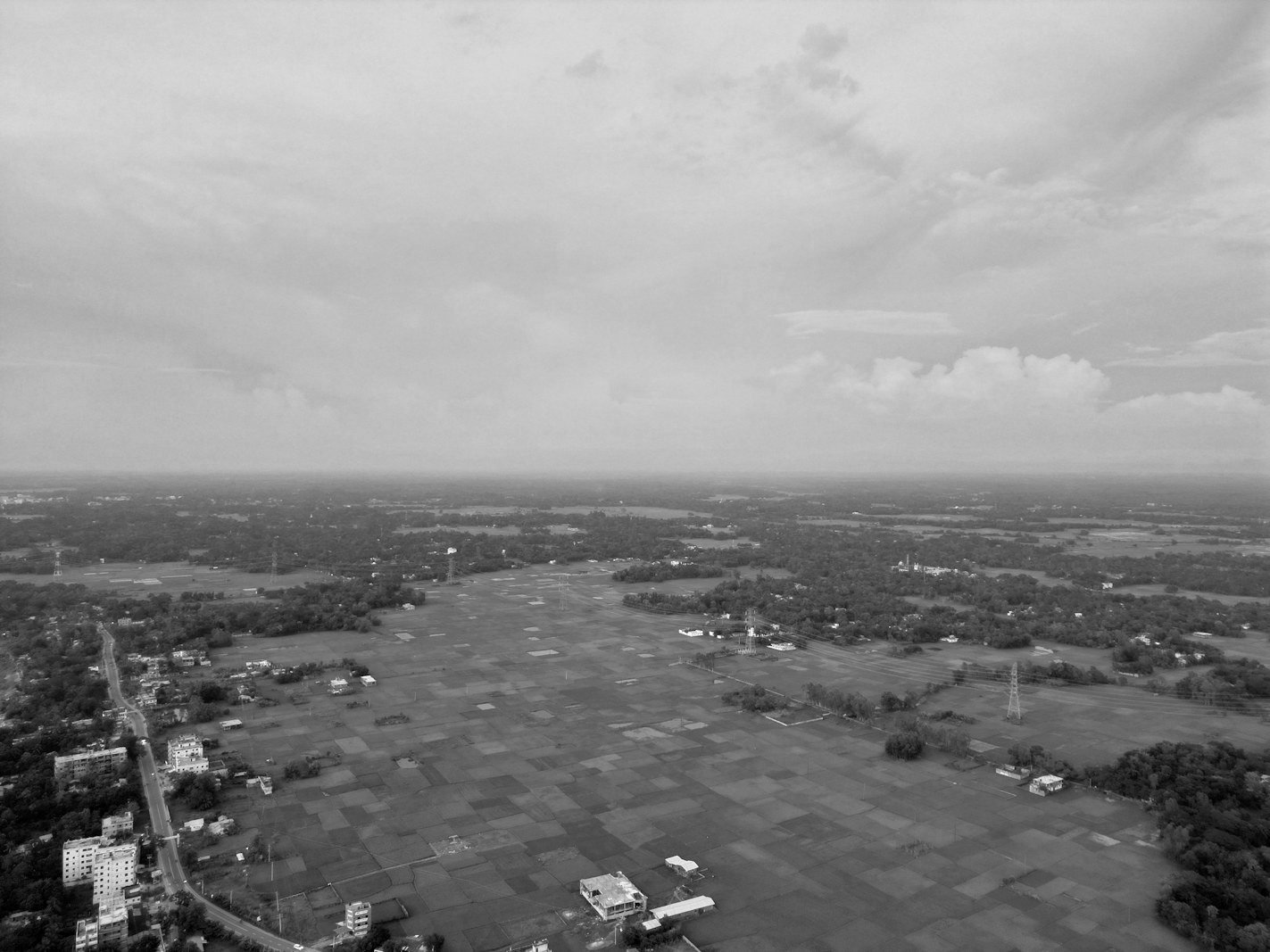
Summary: Title to land in Bangladesh rests on three records that must agree: a registered instrument, a current khatian in the owner's name and up-to-date land development tax. The State Acquisition and Tenancy Act 1950 governs the record of rights, the Transfer of Property Act 1882 and the Registration Act 1908 govern transfers, and the 2023 and 2026 statutes add a 60-bigha ceiling, criminal liability for land fraud, land-use control and mandatory pre-case mediation.
Key point: A sale by a person whose name, or whose predecessor's name, is missing from the latest khatian is void under section 53C of the Transfer of Property Act 1882, and section 6(3) of the Land Crime Prevention and Remedy Act 2023 bars anyone without that khatian and proof of current land tax from selling, gifting, giving a power of attorney or registering a deed. The record of rights is now the gateway to every transaction.
At a glance
Record first
The khatian prepared under the 1950 Act decides who may sell; a sale by someone missing from the latest khatian is void.
Register to transfer
Sales, contracts for sale, gifts and heba declarations pass nothing until registered with the particulars section 52A demands.
Holding ceiling
The Land Reforms Act 2023 caps agricultural land at 60 bighas per person, with exemptions for plantations and certain industries.
State land
Khas land, vested property and land under compulsory acquisition each follow their own statute and forum.
Foreign owners
Foreigners cannot hold land directly; they hold through a Bangladesh company, a lease or an approved flat purchase.
Table of Contents
How land law in Bangladesh is built: the statutes that matter
Every land question sits in one of four layers: tenure, transfer, administration (survey, record, mutation and tax) and protection (criminal offences, mediation and limits on use). A transaction can fail at any layer, so each must be checked.
Tenure: the State Acquisition and Tenancy Act 1950
The State Acquisition and Tenancy Act 1950 was passed to acquire for the State the interests of rent-receivers in land and to define the tenancies held directly under the State afterwards.[1] It ended the zamindari system and still governs the record of rights, mutation, survey, diluvion, pre-emption and transfers by listed indigenous communities. Non-agricultural land is governed alongside it by the Non-Agricultural Tenancy Act 1949.
Transfer: the Transfer of Property Act, Registration Act and Specific Relief Act
The Transfer of Property Act 1882 defines sale, mortgage, lease, exchange and gift. Section 54 provides that a sale of tangible immovable property can be made only by a registered instrument, and section 54A requires a contract for sale to be in writing and registered, whether or not the buyer has taken possession.[2] The Registration Act 1908 sets the registration procedure and the particulars a deed must carry.[3] The Specific Relief Act 1877 supplies the civil remedies: recovery of possession, declarations of title and specific performance.[4]
The 2023 package
Three statutes passed in 2023 reshaped land administration. The Land Development Tax Act 2023 (Act No. 31 of 2023) replaced the 1976 Ordinance on land tax.[6] The Land Crime Prevention and Remedy Act 2023 (Act No. 36 of 2023), dated 18 September 2023, created specific offences for land fraud, forgery and unlawful occupation.[5] The Land Reforms Act 2023 (Act No. 37 of 2023) regulates the ownership and lease of agricultural land, including a holding ceiling, a ban on benami transactions and rules for sharecropping.[7]
The 2026 statutes
The elected Parliament has since added three more layers. The Registration (Amendment) Act 2026 (Act No. 14 of 2026), effective from 1 January 2026, extended the section 52A checks to gifts and heba declarations.[3] The Land Use Control and Agricultural Land Protection Act 2026 (Act No. 50 of 2026), dated 10 April 2026, introduced national land-use zoning and protection of farmland.[8] The Legal Aid Services (Amendment) Act 2026 (Act No. 45 of 2026), of the same date, made pre-case mediation compulsory for partition and pre-emption disputes in notified areas.[9] For the transactional side of this framework, our guide to real estate law in Bangladesh covers flats, developers and joint ventures.
Ownership and the record of rights
Under land law in Bangladesh, a registered deed shows that an interest was transferred; the record of rights shows who the State recognises as holding the land. The khatian identifies the holder, the plot (dag) numbers within the mouza, the share and the recorded class, and the statutes now make it a condition of every sale.
How the record is made
Section 144 of the 1950 Act allows the Government to order a record of rights to be prepared or revised for any district or local area. The revenue officer publishes a draft, hears objections to any entry or omission, and an aggrieved person may appeal to a revenue authority not below the rank of Assistant Settlement Officer. Once objections and appeals are resolved, the officer publishes the final record, and that publication is conclusive evidence that the record has been duly prepared or revised.[1]
Successive surveys and why older khatians still matter
A title chain usually passes through several khatians: the colonial cadastral survey, the State Acquisition survey after the 1950 Act, the revisional survey and, in cities, later city surveys, with a digital survey now under way. Discrepancies between surveys are where most title disputes begin. Our land ownership verification guide explains how to trace the chain.
Correcting a wrong entry
Mistakes in the record are corrected in the forum the statute assigns, not by a general civil suit. While a survey is open, the remedy is an objection or appeal under section 144. After final publication, an aggrieved person may sue in the Land Survey Tribunal, presided over by a Joint District Judge, within one year of publication or of the tribunal's establishment, with a further year available if the tribunal accepts the reasons for delay.[1] The detailed procedure, including corrections by the Assistant Commissioner (Land), is in our guide to khatian correction in Bangladesh.
Classes of land and limits on holding it
Land law in Bangladesh treats agricultural and non-agricultural land differently, and the recorded class of a plot affects tax, use, transfer and conversion.
The 60-bigha ceiling under the Land Reforms Act 2023
The 1950 Act originally capped acquisitions at 375 standard bighas per person and family.[1] The Land Reforms Act 2023 now restricts ownership of agricultural land beyond 60 bighas, however acquired, whether by transfer, inheritance, gift or otherwise. The ceiling is relaxed for land used for tea, coffee, rubber and similar plantations, for export-oriented agricultural produce and in other situations the Act specifies.[7] Anyone assembling or inheriting large agricultural holdings should check the ceiling first.
Benami transactions and sharecropping
The same Act prohibits benami transactions, meaning the purchase of immovable property in another person's name for the buyer's own benefit. It also bars letting another person cultivate one's land without a prescribed written contract with the bargadar, recognises the bargadar's rights and a right of purchase, and sends disputes to a prescribed authority with an appeal. Contravention is an offence punishable by fine, imprisonment or both.[7]
Land-use control from April 2026
The Land Use Control and Agricultural Land Protection Act 2026 took effect immediately and applies across Bangladesh except the Rangamati, Bandarban and Khagrachari hill districts.[8] It classifies agricultural land by cropping intensity, from single-crop to four or more crops a year, and provides that, notwithstanding section 83 of the 1950 Act, the recorded class of any land may not be changed without approval under the rules. Offences prescribed by rules may carry up to two years' imprisonment or a fine of up to Tk 2 lakh, and equipment used in the offence can be seized.[8] Zoning and permitted use are covered in our guide to land use regulations in Bangladesh.
Indigenous communities and the Chittagong Hill Tracts
Section 97 of the 1950 Act allows the Government to apply a protective regime to listed indigenous communities, under which, except as the section itself provides, a transfer of a holding by an aboriginal raiyat is valid only if made to another aboriginal domiciled or permanently residing in Bangladesh.[1] The three hill districts have their own land administration and dispute machinery and are excluded from the 2026 land-use statute.[8]
How land is transferred in Bangladesh
Land changes hands by sale, gift, heba, inheritance, partition, lease and mortgage. The common thread in land law in Bangladesh is that the instrument must be registered and the record of rights then brought into line.
Sale and the contract for sale
A sale passes title only by a registered instrument. A contract for sale must itself be registered: section 17A of the Registration Act requires it to be presented within sixty days of execution, and section 54A of the Transfer of Property Act requires it to fix a time for executing and registering the sale deed, failing which six months is deemed to apply.[2] [3] A buyer cannot obtain specific performance of an unregistered contract, and must deposit the balance of the price in court when suing.[4] See our guides to the bayna deed and the sale deed in Bangladesh.
Gift and heba
Gifts of immovable property and declarations of heba under Muslim personal law must be registered, and since 1 January 2026 the registering officer must apply the same section 52A checks to them as to a sale, including the latest khatian in the donor's or predecessor's name.[3] Every instrument of sale, gift, mortgage or heba must also carry the executant's affidavit of lawful title.[2] Our heba and gift registration guide covers the family-transfer route.
Inheritance and partition among heirs
Inheritance follows the personal law of the deceased, but land law in Bangladesh adds a record step. Section 143B of the 1950 Act requires heirs to partition the inherited property amicably, sign a partition instrument and register it, after which the revenue officer revises the khatian accordingly.[1] Where heirs cannot agree, the remedy is a partition suit, now preceded by mandatory mediation in notified districts.[9] Shares under each personal law are explained in our guide to inheritance law in Bangladesh.
Mortgages, powers of attorney and pending litigation
Property under a registered mortgage cannot be re-mortgaged or sold without the mortgagee's written consent, and a transaction made otherwise is void.[2] A power of attorney to deal with land cannot be executed by a person who lacks the latest khatian and proof of current land tax.[5] While a suit directly concerning the land is pending, a party cannot transfer it so as to defeat the other party's rights under the eventual decree.[2] Our power of attorney guide explains registration for agents and non-resident owners.
Registration: what the sub-registrar checks
A document other than a will must generally be presented for registration within three months of execution.[3] For a sale, gift or heba, section 52A then sets a hard gate. The registering officer must refuse the instrument unless it includes or attaches the latest khatian in the name of the seller or donor, or of the predecessor where the property was inherited; the nature and price of the property; a map with boundaries; a brief history of ownership for the last 25 years; and the executant's affidavit that the property has not already been transferred and that the executant has lawful title.[3]
This is a documentary check, not a guarantee: a forged khatian or false affidavit can still pass the counter, which is why the 2023 Act makes both criminal. The costs of registration, including stamp duty and source tax, are set out in our guide to property registration fees in Bangladesh.
Mutation and land development tax
Mutation, or namjari, records the new holder in the khatian. Section 143C of the 1950 Act requires the revenue officer, on receiving notice of a transfer, to open a mutation file, notify the co-sharers and fix a date for objections. If none is raised the record is corrected; if an objection is filed, the officer hears both sides and passes a reasoned order.[1] Applications are now made online, and the process, fees and appeals are covered in our guide to land mutation in Bangladesh.
Land development tax keeps the record live. Under the 2023 Act, each year's tax is payable by 30 June without penalty, and an owner may pay up to three years in advance. If tax remains unpaid for three consecutive years, it becomes recoverable with an annual penalty of 6.25% and, after the third year, through a certificate case under the Public Demands Recovery Act 1913. A land development tax claim is never time-barred.[6]
Agricultural land of up to 8.25 acres, or 25 bighas, held by a person or family dependent on agriculture is exempt, but if the holding exceeds that size, tax is payable on the whole of it.[6] Because section 6(3) of the Land Crime Act ties every transfer to proof of current tax, arrears now block a sale as effectively as a defect in title.[5]
Pre-emption: the co-sharer's right to buy back
Pre-emption allows a co-sharer to take over a share sold to an outsider. Under section 96 of the 1950 Act, where a portion or share of a raiyat's holding is sold to a person who is not a co-sharer tenant, a co-sharer tenant by inheritance may apply to court within two months of service of the statutory notice or, where no notice was served, within two months of knowledge of the sale, and never later than three years from registration of the sale deed.[1]
The application must be dismissed unless, at filing, the applicant deposits the consideration stated in the notice or deed, compensation of 25% of that amount, and simple interest at 8% a year from the date of the sale deed to the date of filing.[1] Non-agricultural land has a parallel right under section 24 of the Non-Agricultural Tenancy Act 1949, and in notified districts both kinds of pre-emption dispute must first go to legal aid mediation.[9] Our pre-emption guide covers the case law on deposits and limitation.
Khas land and vested property
Two categories of land sit in the State's hands for historical reasons, and both generate steady disputes with private claimants.
Khas land
Khas land is land vested in and managed by the Government. Section 86 of the 1950 Act protects the original tenant where land lost by diluvion re-appears in its original place within thirty years, although the Collector exercises the first right to immediate possession of the re-appeared land.[1] The Land Reforms Act 2023 provides for rural khas land to be settled for homesteads of landless freedom fighters or their families and of landless farmers and labourers.[7] Settlement, recovery and wrongful recording of private land as khas are covered in our guide to khas land in Bangladesh.
Vested property
Vested property is land that the State took over under the enemy property regime of the 1960s and continued to hold after independence. The Vested Property Return Act 2001 was enacted to return listed property to original owners or their successors, with tribunals created to hear release applications and a gazette list of properties to be released.[11] Property listed in the Kha schedule, which was not in Government possession, was released by an amendment passed on 8 October 2013, under which the listed property is deemed never to have been vested; owners must still pay outstanding tax and complete mutation to bring the record into their names.[12]
For property still in the Ka schedule, a February 2026 High Court Division judgment confirms an important route. In Most. Poly v Secretary, Ministry of Land (Writ Petition No. 11222 of 2025), the court held that property cannot validly be listed as vested after the 1974 repeal date, that such a listing is treated as mala fide, and that an owner may come directly to the High Court Division under its writ jurisdiction even where a tribunal remedy exists. Relief depends on a post-1974 listing, no Government possession, a registered title chain and continuous possession.[11]
Compulsory acquisition by the State
The Acquisition and Requisition of Immovable Property Act 2017 (Act No. 21 of 2017) governs compulsory acquisition and replaced the 1982 Ordinance.[10] The core of land law in Bangladesh on compensation is section 9: for acquisition by the Government, the owner receives the market value plus an additional 200%; where land is acquired for a private institution, the additional amount is 300%; and losses such as crops, severance and relocation attract a 100% addition.[10]
An owner who does not accept the Deputy Commissioner's award may apply to the arbitrator, a judicial officer not below Joint District Judge, within 45 working days of notice of the award. The arbitrator cannot award more than 10% above the Deputy Commissioner's figure, and an appeal lies to an Arbitration Appellate Tribunal whose decision, due within 60 working days, is final.[10] The full procedure, from notice to payment, is set out in our guide to land acquisition in Bangladesh, and our land acquisition practice acts for affected owners.
Where land disputes are decided
A single land dispute can involve a land office, a survey tribunal, a civil court, a magistrate and a legal aid office at once. Each answers a different question.
Assistant Commissioner (Land)
Hears mutation applications and objections and keeps the khatian current under section 143C.
Land Survey Tribunal
A Joint District Judge hears suits against the final publication of a revised record of rights.
Civil courts
Decide declarations of title, recovery of possession, partition, pre-emption and deed cancellation.
Executive Magistrate
Restores possession to a person evicted without lawful order, within three months under the 2023 Act.
Judicial and metropolitan magistrates
Try land fraud, forgery and unlawful occupation offences, with a 180-day trial limit.
District legal aid offices
Run compulsory pre-case mediation for partition and pre-emption disputes in notified districts.
Civil courts: title, possession and partition
A person whose title is denied may sue for a declaration under section 42 of the Specific Relief Act, but the court will not grant a bare declaration where the plaintiff could have claimed further relief, such as possession, and did not.[4] A person dispossessed without consent and otherwise than in due course of law may recover possession under section 9 regardless of any title the other side sets up; no such suit lies against the Government, and no appeal or review lies from the decree.[4] Our guides to the title suit, deed cancellation suit and partition suit explain each action.
Executive Magistrates and criminal courts
A person evicted without an order of a competent court or authority may apply to the Executive Magistrate, who must hear both sides, inquire on the spot and dispose of the application, restoring possession where appropriate, within three months.[5] Land fraud, including presenting another's land as one's own or transferring land while concealing information, carries up to seven years' imprisonment and a fine; holding land without a lawful basis or dispossessing a lawful occupant carries up to two years.[5] Trials before first-class judicial or metropolitan magistrates must finish within 180 days, and the most serious offences are non-bailable.[5] See our guide to land grabbing cases.
Mediation before filing
The schedule to the Legal Aid Services Act 2000, inserted in 2026, lists partition disputes within the jurisdiction of civil judge courts, pre-emption claims under section 96 of the 1950 Act and section 24 of the 1949 Act, and house rent disputes among the matters that must go to pre-case mediation in areas the Government notifies.[9] Before filing anywhere, confirm whether the district is covered. Our guide on how to resolve land disputes in Bangladesh walks through the order of steps.
| Question | Forum | Legal basis | Key time limit |
|---|---|---|---|
| Wrong entry after final survey publication | Land Survey Tribunal | SAT Act 1950, s 145A | One year, extendable by one more |
| Mutation after a sale or inheritance | AC (Land) | SAT Act 1950, s 143C | Objections on the date fixed |
| Co-sharer buying back a share | Civil court, after mediation where notified | SAT Act 1950, s 96 | Two months; three years outer limit |
| Unlawful eviction | Executive Magistrate | Land Crime Act 2023, s 8 | Decision within three months |
| Title denied or clouded | Civil court | Specific Relief Act 1877, s 42 | Claim all available relief |
| Acquisition compensation | Arbitrator, then appellate tribunal | Acquisition Act 2017, ss 30 and 36 | 45 working days to object |
| Post-1974 vested listing | High Court Division (writ) or tribunal | Vested Property Return Act 2001 | Act promptly on discovery |

Foreign ownership of land in Bangladesh
Foreign ownership is one of the least codified parts of land law in Bangladesh. Foreign persons and entities cannot directly own land in Bangladesh. They can take a lease, not a perpetual one, or rent land, and they can hold freehold or leasehold title indirectly through a wholly or partly foreign-owned Bangladesh company, or by owning shares in a local company that owns land.[13]
Individuals are in a narrower position. According to the Directorate of Registration, foreign individuals have been permitted to buy only flats since 1996, not land or houses, and the process involves the investment authority, Bangladesh Bank, the National Board of Revenue and the Directorate of Registration. A foreign company permitted to operate in Bangladesh may buy land and buildings in its own name, and industry sources report that payment must be made in foreign currency.[14] The investment-authority role formerly held by BIDA now sits with Invest Bangladesh under the Invest Bangladesh Act 2026.
The practical route is usually a Bangladesh company that acquires or leases land, or a zone lease, with inward remittance documented from the first payment. Non-resident Bangladeshis buy as citizens; their usual risk is an agent acting under a power of attorney executed abroad. Structures, approvals and exit are analysed in our guide to foreign investment in Bangladesh real estate, and our real estate investment practice advises on them.
Checking title under land law in Bangladesh: a working sequence
Most failed purchases fail before registration, when a buyer pays an advance against photocopies. The sequence below follows the order in which the statutes bite.
Read the latest khatian
Confirm the seller, or the seller's predecessor for inherited land, appears in the latest operative khatian for every plot and share being sold.
Trace the chain of title
Read the deeds and survey khatians back at least 25 years, matching names, plots, areas and the recorded class of land.
Check tax, mortgages and cases
Obtain current land development tax receipts, search for registered mortgages and court cases, and confirm no acquisition, khas or vested listing.
Account for every heir
For inherited land, make sure all heirs join or a registered partition exists, and identify co-sharers who could pre-empt.
Register the contract for sale
Put the bayna in writing, fix a completion date and present it for registration within sixty days.
Register the sale deed
Execute the deed with the section 52A particulars and affidavit, pay the transfer charges and present it within three months.
Mutate and pay tax
Apply for mutation immediately after registration and start paying land development tax in the buyer's own name.
Inspect the land and speak to occupiers, because possession often tells a different story from the record. A full buyer's roadmap is in our guide to buying property in Bangladesh.
Common mistakes to avoid
- Paying against an unregistered bayna: an unregistered contract for sale cannot be specifically enforced, leaving only a money claim against a seller who may already have sold to someone else.[4]
- Buying from a seller missing from the latest khatian: the sale is void under section 53C, whatever the deed says.[2]
- Registering but never mutating: the seller stays on the record, the buyer cannot pay tax in their own name, and the next sale stalls at the section 6(3) gate.[5]
- Buying inherited land from some heirs only: without a registered partition among all heirs, the buyer inherits a co-ownership dispute and possible pre-emption claims.[1]
- Holding land in a nominee's name: benami transactions are now prohibited and punishable.[7]
What changed in 2026 and what to watch
Land law in Bangladesh moved in one direction in 2026: tighter links between the record, tax, registration and use. Gifts and heba now face the same khatian and title-history checks as sales, the recorded class of land is a regulated attribute, and mediation stands in front of partition and pre-emption litigation wherever coverage is notified.[3] [8] [9]
Three things deserve attention over the next year: the rules under the 2026 land-use statute; the extension of mandatory mediation to further districts; and the integrated land database the 2023 Act requires, covering Government land, land under litigation, mortgaged land and transfer, survey and registration data, which will make inconsistent records easier to detect.[5] When the record is wrong, our land records, mutation and khatian correction practice and real estate disputes practice can help; contact TRW to discuss your matter.
Frequently asked questions
What are the main statutes of land law in Bangladesh?
The State Acquisition and Tenancy Act 1950 for tenure and the record of rights; the Transfer of Property Act 1882, Registration Act 1908 and Specific Relief Act 1877 for transfers and remedies; the Land Development Tax, Land Crime Prevention and Remedy and Land Reforms Acts of 2023; and the 2026 statutes on registration, land use and mediation.[1] [8]
What is a khatian and why does it matter?
The khatian is the record of rights prepared under the 1950 Act. It names the holder, the plots and the share. A sale by someone whose name, or whose predecessor's name, is not in the latest khatian is void.[2]
Is a sale of land valid without registration?
What is the difference between registration and mutation?
Registration transfers the interest between the parties; mutation records the new holder in the khatian so that the State recognises them and they can pay land tax and sell later.[1]
How much agricultural land can one person own in Bangladesh?
The Land Reforms Act 2023 restricts ownership of agricultural land beyond 60 bighas, with exemptions for plantations, export-oriented agricultural production and other listed cases.[7]
How long does a co-sharer have to claim pre-emption?
Two months from service of the statutory notice or, without notice, from knowledge of the sale, and never more than three years from registration. The price, 25% compensation and 8% interest must be deposited at filing.[1]
Can a foreigner buy land in Bangladesh?
How can vested property be released?
Through the tribunals under the Vested Property Return Act 2001, or, where land was listed after the 1974 cut-off and never taken into Government possession, directly by writ petition in the High Court Division.[11]
What compensation is paid when the Government acquires land?
Market value plus an additional 200% for Government acquisition, or 300% where the land is acquired for a private institution, with further additions for crops and other losses.[10]
Source register
Primary legal and regulatory sources
Materials checked on 21 October 2026. Confirm the current official text before relying on any provision.
- State Acquisition and Tenancy Act 1950 (sections 86, 90, 96, 97, 143B, 143C, 144 and 145A) — Laws of Bangladesh
- Transfer of Property Act 1882 (sections 52, 53C, 53D, 53E, 54 and 54A) — Laws of Bangladesh
- Registration Act 1908 (sections 17A, 23 and 52A), as amended by the Registration (Amendment) Act 2026 (Act No. 14 of 2026) — Laws of Bangladesh
- Specific Relief Act 1877 (sections 9, 21A and 42) — Laws of Bangladesh
- Land Crime Prevention and Remedy Act 2023 (Act No. 36 of 2023), sections 4 to 8, 19 and 23 — Laws of Bangladesh (Bangla)
- Land Development Tax Act 2023 (Act No. 31 of 2023), sections 3, 6, 7 and 9 — Laws of Bangladesh (Bangla)
- UNEP Law and Environment Assistance Platform — Land Reforms Act 2023 (Act No. 37 of 2023), Bangladesh
- Land Use Control and Agricultural Land Protection Act 2026 (Act No. 50 of 2026), sections 1, 2, 7 and 14 — Laws of Bangladesh (Bangla)
- Legal Aid Services (Amendment) Act 2026 (Act No. 45 of 2026), sections 1, 30 and 34 (schedule to section 21B) — Laws of Bangladesh (Bangla)
- Acquisition and Requisition of Immovable Property Act 2017 (Act No. 21 of 2017), sections 9, 29 to 36 — FAOLEX (Bangla)
- High Court Division, Most. Poly v Secretary, Ministry of Land, Writ Petition No. 11222 of 2025 (25 February 2026)
- ALRD — Repeal of the Kha schedule of the Vested Property Return Act and its effect on owners
- Chambers Global Practice Guides — Investing In 2026: Bangladesh
- The Business Standard, 12 August 2023 — How foreign buyers are boosting real estate
Related TRW assistance
Move from information to a defined next step
TRW advises owners, buyers, heirs, developers and foreign investors on title, registration, mutation, acquisition and land disputes across Bangladesh. Explore our land records, mutation and khatian correction practice and real estate disputes practice, or contact TRW to discuss your matter.