
TRW Insight / Bangladesh
A trade licence lets a business exist; the sector licence lets it serve customers. Hotels, clinics, pharmacies, software houses and car dealers each answer to a different regulator, and the order of approvals decides how fast they open.
Service business registration Bangladesh: the 2026 licensing stack
Service business registration Bangladesh rules are not one procedure but a stack of approvals that changes with the service you sell. A hotel answers to the district commissioner and the tourism ministry, a clinic to the Directorate General of Health Services, a pharmacy to the Directorate General of Drug Administration, a software house to its trade association and the tax office, and a car importer to the import policy and the customs house. The company and the trade licence are only the first two floors of the building.
This guide covers six sectors: hotels and hospitality, tour operators and travel agencies, private clinics and hospitals, retail pharmacies, software and IT-enabled services, and car dealerships. For each it sets out the controlling sector licence, the approvals around it, the 2026 tax and policy rules, and the mistakes that delay a launch. Where TRW has already published a guide on a foundation step, we link to it rather than repeat it.

Summary: Every service business in Bangladesh starts with an entity, a trade licence, an e-TIN and a VAT registration. What decides whether it may lawfully trade is the sector licence: registration and a licence under the Bangladesh Hotels and Restaurants Act 2014 for hotels, Bangladesh Tourism Board registration for tour operators, a DGHS licence for clinics and diagnostic centres, a DGDA drug licence for pharmacies, BASIS membership and an annual tax exemption certificate for software firms, and import registration plus compliance with the Import Policy Order 2026-2029 for car traders.
Key point: The sector licence, not the trade licence, is what regulators enforce. In June 2026 the DGHS cancelled a private hospital's licence after an inquiry under the 1982 clinics ordinance, and selling medicines without a DGDA licence carries up to five years' imprisonment. Plan the sector approval first and build the corporate set-up around it.
At a glance
Common foundation
Company or other entity, trade licence, e-TIN, VAT registration and a bank account, increasingly processed through BanglaBiz under Invest Bangladesh.
Hotels and tourism
Registration and a three-year licence under the Hotels and Restaurants Act 2014; separate regimes for tour operators and travel agencies.
Clinics and hospitals
A DGHS licence under the Medical Practice and Private Clinics and Laboratories (Regulation) Ordinance 1982, applied for online.
Pharmacies and software
A premises-specific DGDA drug licence with pharmacist supervision; for software firms, BASIS membership and the ITES exemption to June 2027.
Car trade
Import registration, the Import Policy Order 2026-2029, valuation and duty planning, and BRTA registration for every vehicle sold.
Table of Contents
How service business registration Bangladesh works in 2026
Bangladeshi law does not have a single "service business licence". Instead, three layers apply to almost every service venture. The first gives the business a legal identity and a tax identity. The second authorises it to trade from particular premises. The third, the sector layer, authorises the regulated activity itself. Our overview of business licenses in Bangladesh maps all three layers across the economy; this guide goes deeper into the sector layer for six service industries.
The foundation every service business needs
Most investors choose a private limited company registered with the RJSC, although sole proprietorships and partnerships remain common for small pharmacies and travel agencies. The order matters: name clearance and incorporation, then the trade licence from the city corporation or municipality, then e-TIN and VAT registration, then the bank account. TRW's guides on company registration in Bangladesh, the trade licence and VAT registration for companies cover each step. The point to keep in mind here is that the objects clause, registered address and trade licence category must match the sector licence you will apply for, or the sector regulator will send the file back.
Invest Bangladesh and the one-stop route
Invest Bangladesh began operating on 23 August 2026, the first working day after the Invest Bangladesh Act 2026 was gazetted. It combines BIDA, BEZA and the Public-Private Partnership Authority under the Prime Minister's Office, and the Act provides for investment and business services to be delivered on a single digital platform, with BanglaBiz continuing as that platform for time-bound licences and permits.[14] For service businesses this helps with the foundation layer and with foreign-investment registration. It does not replace the sector regulators: the DGHS, the DGDA, the district commissioner and the Bangladesh Tourism Board still decide their own licences.
Foreign-owned service businesses
Foreign shareholders add investment registration, inward remittance of capital, encashment certificates and expatriate work permits; our guides to foreign company registration and investment approvals explain the sequence. For service business registration Bangladesh projects with foreign capital, make the sector licence a condition precedent in the joint-venture or share subscription agreement.
Hotel and tourism business: the licences that control it
Hospitality is the clearest example of why service business registration Bangladesh planning must start with the sector statute. The Bangladesh Hotels and Restaurants Act 2014 replaced the 1982 ordinance after the Appellate Division's decision in Civil Appeal No. 48 of 2011 left the old law without force. The Act treats an establishment with at least ten guest rooms as a hotel and one that can serve food to thirty or more people as a restaurant.[4]
Registration and licence under the Hotels and Restaurants Act 2014
Operating a hotel or restaurant without both registration and a licence is unlawful. The controller is the district commissioner or another officer the government notifies. A registered hotel must start operating within two years of registration, and a restaurant within one year. The licence is valid for three years and must then be renewed, and any change of owner must be notified to the controller.[4] The practical consequence for developers is that registration should not be taken too early: a hotel project that slips past the two-year window risks having to begin again.
Star classification and the three-star threshold
A hotel planned at three stars or above needs a government no-objection certificate before construction starts.[4] Star licences are issued by the Hotel and Restaurant Cell of the Ministry of Civil Aviation and Tourism under the Act and the Bangladesh Hotel and Restaurant Rules 2016. A recent example shows the timetable: a Dhaka hotel that applied on 22 March 2025 received its three-star licence by a notice of 1 January 2026, valid for three years, subject to periodic inspection and cancellation for breach.[5] Build nine to twelve months into the opening plan for classification, and design to the rated standard from the outset rather than retrofitting.
Tour operators and tour guides
Inbound and domestic tour companies have their own regime under the Bangladesh Tour Operators and Tour Guides (Registration and Operation) Act 2021. Its rules were published on 28 March 2024, and licensing is handled by the Bangladesh Tourism Board. Applicants must provide an application fee, a security deposit and a bank solvency certificate of Tk 10 lakh; the industry association has protested that the conditions are unrealistic, and an eleven-member expert committee was formed on 26 May 2025 to review the rules.[6] Until revised rules are issued, operators should comply with the current text rather than wait for reform.
Travel agencies
Selling air tickets and packages requires a registration certificate under the Bangladesh Travel Agency (Registration and Control) Act 2013, as amended in 2021, and its 2022 regulations. On 31 March 2026 the ministry gave unregistered and lapsed agencies fifteen working days to apply or renew through the online portal, warning that operating without a valid certificate is punishable and can lead to closure.[7] A company that runs tours and sells tickets therefore needs two separate approvals, and neither authorises recruitment for overseas jobs.

Hospitality law in Bangladesh beyond the licence
A licence lets a hotel open; it does not answer the commercial questions that decide whether the project is bankable. Hotels, hospitality and leisure clients usually need advice across five areas at once, and the legal documents should be negotiated together rather than in sequence.
- Land and development: title checks, long leases or joint-venture development agreements, building approvals and, in coastal or protected areas, development authority and environmental consents under the Environment Conservation Act.
- Brand and operator agreements: hotel management, franchise and technical services agreements, with attention to termination rights, performance tests and fees remitted abroad.
- Food, beverage and alcohol: the restaurant licence under the same Act (see our restaurant business registration guide), food safety and, for bars, the regime in our liquor licence guide.
- Safety and premises: the fire licence, lift and generator safety and building-use approvals.
- People and tax: employment contracts for a shift-based workforce, service charge policy, VAT on room and food sales, and withholding on foreign management fees.
Hotels also inherit licensing risk from partners. A resort that sells excursions through an unregistered tour operator, or hosts an unregistered travel desk, can be drawn into enforcement, so partner contracts should require proof of current registration and a regulatory indemnity.
Healthcare business: clinic, hospital and diagnostic centre licensing
In service business registration Bangladesh terms, healthcare is the most tightly policed sector. For a private hospital, clinic, diagnostic centre or blood bank, the controlling licence comes from the Directorate General of Health Services under the Medical Practice and Private Clinics and Laboratories (Regulation) Ordinance 1982. Any private healthcare provider must hold a DGHS licence, and the DGHS has repeatedly ordered closure of facilities that never applied, that operate after applying but before approval, or whose licences have expired without a renewal application.[3]
Online registration and the scale of the sector
Applications have been made through an online registration system since 2018. DGHS data compiled in November 2021 counted 16,444 private hospitals, clinics, diagnostic centres and blood banks, of which 10,892 were licensed out of 16,132 that had applied online.[3] That gap explains why enforcement drives recur and why investors acquiring an existing clinic must verify the licence status of every unit, including branch collection points, before signing.
Inspection, cancellation and appeal
The 2026 enforcement record shows how the ordinance works. After six newborn deaths at a private hospital on 27 May 2026, the DGHS formed an investigation committee under section 11(1), issued a show-cause notice on 4 June, found the response unsatisfactory and cancelled the licence under section 11(2)(b) on 11 June 2026. Under section 12 the hospital could appeal to the government or seek reconsideration within thirty days.[2] A clinic that receives a show-cause notice should treat the response as litigation: documented staffing, equipment, records and clinical protocols, filed on time, are the only real defence.
Permits around the DGHS licence
A healthcare business in Bangladesh also needs the ordinary trade licence, fire safety clearance, environmental clearance for the facility, arrangements for medical waste, and, where it stocks controlled medicines, a DGDA drug licence and any narcotics-related permits. Each has its own renewal cycle, so a single compliance calendar is essential.
Telemedicine and digital health
Many new healthcare ventures are digital first. Platforms that connect patients with doctors raise questions of professional registration, prescription rules and patient data that the 1982 ordinance never anticipated. Our analyses of launching a telemedicine platform in Bangladesh and health apps giving medical advice cover these issues; a platform that also operates a physical diagnostic centre or pharmacy will need the DGHS and DGDA licences described here.
Pharmacy business licence: retail drug licensing under the 2023 Act
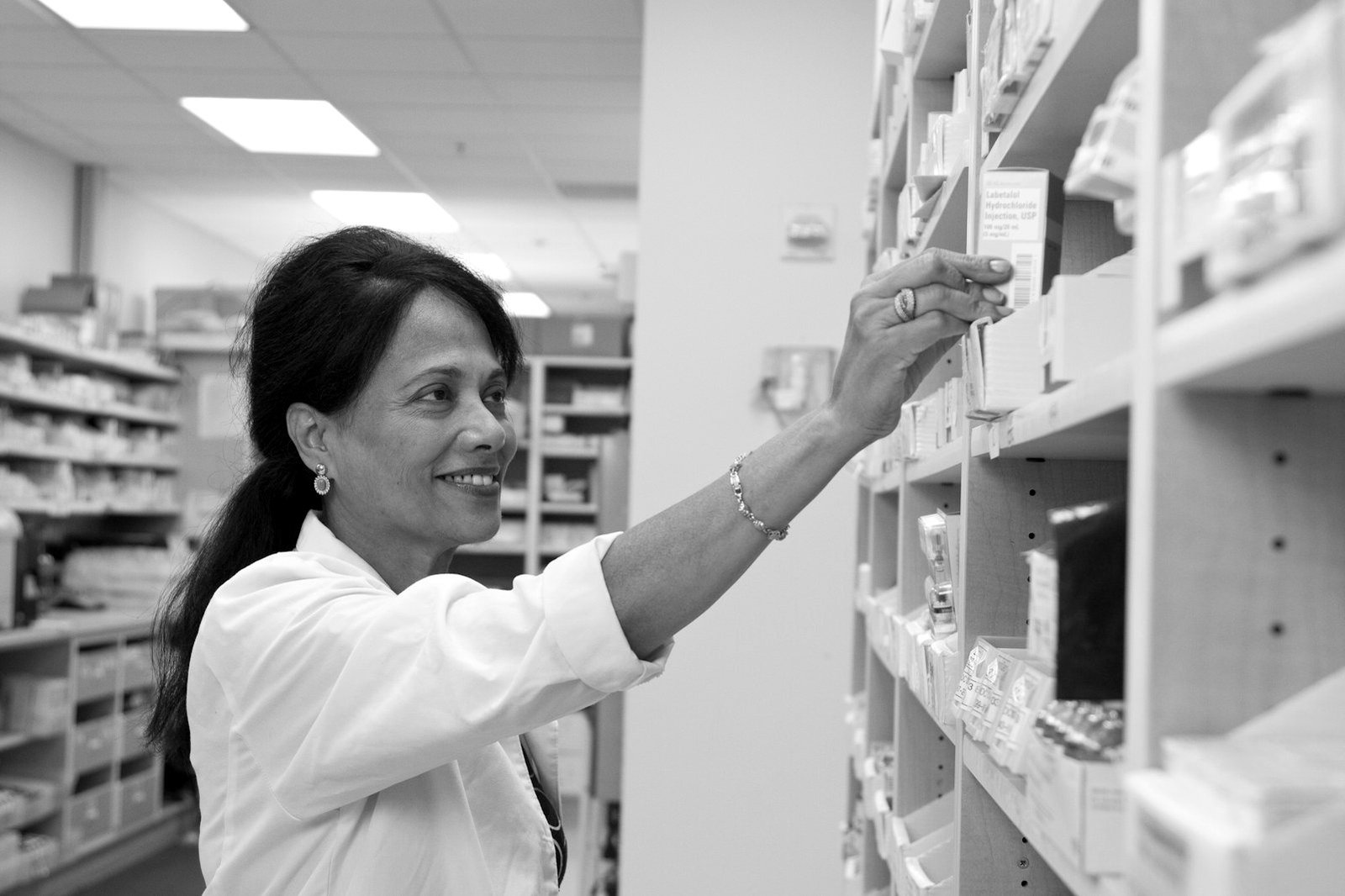
For service business registration Bangladesh purposes, a pharmacy is a regulated drug establishment, not merely a shop. Section 14(1) of the Drugs and Cosmetics Act 2023 prohibits any person from manufacturing, selling, storing, distributing or displaying medicines for sale without a licence from the licensing authority, or in breach of its conditions. Section 14(2) separately prohibits selling or distributing medicines through internet or web-based processes without a licence, and section 14(4) leaves eligibility, applications, fees and renewal to rules.[1] In practice the licence is issued by the DGDA and is specific to the premises, so a chain needs one licence per outlet.
Pharmacist supervision
Section 45(1) allows a retailer to sell allopathic medicines only under the personal supervision of a pharmacist, a diploma pharmacist or a pharmacy technician. The Act defines a diploma pharmacist as one registered in category B, and a pharmacy technician as one registered in category C, of the Bangladesh Pharmacy Council register. Parallel rules apply to Unani, Ayurvedic, herbal and homeopathic medicines, and section 45(4) removes the supervision requirement for wholesale sale.[1] The qualified person is therefore part of the licence, not an optional hire; if that person leaves, the outlet should stop allopathic sales until a replacement is in place.
What a pharmacy may not sell
Section 40 prohibits selling, or storing or displaying for sale, government-supplied medicines, expired or banned medicines and physician samples, and selling antibiotics or any other non-OTC medicine without a registered physician's prescription.[1] The schedule to the Act sets the penalties: selling, storing or distributing medicines without a licence carries up to five years' imprisonment, a fine of up to Tk 5 lakh, or both; selling expired or banned medicines up to one year or Tk 50,000; and selling antibiotics or non-OTC medicines without a prescription a fine of up to Tk 20,000.[1]
Model pharmacies and online sales
The DGDA also promotes "model pharmacy" and "model medicine shop" standards with better storage, stock control and a more senior qualified person; a chain should adopt them from the start. Online pharmacies need a licence covering internet sale and a checkout that enforces the prescription rules in section 40. Manufacturers, importers and distributors face a wider regime, covered in our guides to pharmaceutical company registration and drug laws in Bangladesh.
Software business: company setup, BASIS and ITES tax benefits
Software is the least licence-heavy of the six sectors, yet it is where service business registration Bangladesh choices most directly affect tax. A software business in Bangladesh usually operates as a private limited company with a trade licence in the IT category, an e-TIN, VAT registration and a bank account able to receive export proceeds. Our guide to receiving foreign currency in Bangladesh explains how export receipts must be repatriated and documented.
BASIS membership
Membership of the Bangladesh Association of Software and Information Services is not a formality. In September 2019 the Department of Trade Organisation under the Ministry of Commerce issued a circular, under the trade organisation law of 1963 and on BASIS's appeal, requiring every software company to hold BASIS membership to do business in the country.[8] BASIS documentation is also routinely requested when a company claims tax exemption or export incentives, so membership should be obtained as soon as the company is incorporated.
The ITES income tax exemption to June 2027
The Finance Act 2024 amended the Sixth Schedule to the Income Tax Act 2023 so that income from listed IT-enabled services is exempt from 1 July 2024 to 30 June 2027. The listed activities include AI-based solutions, blockchain, robotic process outsourcing, software-as-a-service, cyber security, data analytics, mobile and web development, software development and customisation, IT support, digital animation and graphics, data entry and processing, e-learning, IT freelancing, call centres and document digitisation.[9] Two conditions are critical. The exemption applies only if all the business's activities are cashless, and the business must file returns and obtain a tax exemption certificate, which must be applied for afresh each year.[9] [10]
Planning for the end of the tax holiday
Industry bodies have asked for the exemption to run beyond 30 June 2027, but in July 2026 industry leaders noted that the current budget gave no indication of an extension.[11] Software groups should model their post-2027 tax position now and keep non-listed revenue separable in the accounts. The same budget introduced measures for startups, including a uniform nine-year growth period, zero turnover tax and VAT exemptions on local sales and imported services until 2035.[11] See our guide to startup law in Bangladesh.
Contracts, IP and data
For a software house the main legal risks sit in contracts: ownership of code written by employees and freelancers, licence terms with overseas clients, liability caps and governing law. New personal data protection legislation also imposes consent and security duties, and its data residency rules have been revised, so confirm the current text before choosing hosting. Online sellers should read our guide to e-commerce company formation.
Car business registration: dealership and import set-up
A car business in Bangladesh is, legally, an import and trading business. The entity needs a trade licence for vehicle trading, an import registration certificate from the import-export controller, VAT registration and a bank relationship for letters of credit. TRW's guide to import and export licensing explains the IRC. Reconditioned car dealers commonly join the Bangladesh Reconditioned Vehicles Importers and Dealers Association, BARVIDA, which lobbies on import policy and duty.[12]
The Import Policy Order 2026-2029
The Import Policy Order 2026-2029 was published on 24 August 2026. It bans the import of reconditioned or used electric vehicles, which the previous order allowed, and BARVIDA has asked for the ban to be withdrawn.[12] Under the previous policy, reconditioned cars could be imported only up to five years old, a limit BARVIDA asked in May 2025 to be raised to ten years.[13] Before opening a letter of credit, a dealer should check the vehicle against the age, type and condition rules in the current order, because a non-compliant vehicle can be held at the port at the importer's cost.
Valuation, duties and pricing
Import duty, supplementary duty and VAT on cars vary sharply by engine capacity and fuel type, and the assessed value of reconditioned vehicles is a frequent source of dispute with customs. Duty rates change in most budgets, so a dealership's pricing model should be updated each July. Our guide to import duty in Bangladesh explains how the rates are structured and challenged.
New-car franchises and after-sales
Authorised new-car dealers operate under dealership agreements that deserve as much attention as the licences: territory, targets, stock financing, warranty, parts supply and termination compensation. Each vehicle sold must be registered with the Bangladesh Road Transport Authority, and buyers expect the dealer to manage the paperwork, so service business registration Bangladesh planning for a car dealer should cover that documentation workflow too.
Comparing the six service sectors
The table summarises the controlling licence for each sector. On a phone, scroll it sideways.
| Sector | Controlling law | Regulator | Licence basis | Key point |
|---|---|---|---|---|
| Hotel or restaurant | Bangladesh Hotels and Restaurants Act 2014 | District commissioner; tourism ministry for stars | Registration and three-year licence | NOC before building a three-star or higher hotel |
| Tour operator | Tour Operators and Tour Guides Act 2021; Rules 2024 | Bangladesh Tourism Board | Registration licence | Fee, deposit and Tk 10 lakh solvency proof |
| Travel agency | Travel Agency (Registration and Control) Act 2013 | Ministry of Civil Aviation and Tourism | Registration certificate | Online renewal; closure risk if lapsed |
| Clinic or diagnostic centre | Private Clinics and Laboratories Ordinance 1982 | DGHS | Facility licence | Cancellation under section 11; 30-day appeal |
| Retail pharmacy | Drugs and Cosmetics Act 2023 | DGDA | Premises drug licence | Pharmacist supervision under section 45 |
| Software or ITES | Income Tax Act 2023, Sixth Schedule | BASIS; NBR | Membership and annual exemption certificate | Exemption to 30 June 2027 if cashless |
| Car dealer or importer | Import Policy Order 2026-2029 | Import controller; customs; BRTA | IRC and vehicle registration | Used EV imports banned |
Hotels, clinics and pharmacies are licensed per premises, so expansion means new licences. Software and car trading are licensed largely at entity level, so the risks shift to tax, import policy and contracts.
Step-by-step: from idea to first customer
The sequence below reflects how TRW sequences service business registration Bangladesh projects across these sectors.
Identify the controlling licence
Name the sector regulator and statute first: DC and tourism ministry, Tourism Board, DGHS, DGDA, BASIS and NBR, or the import controller.
Design the entity around it
Draft objects, ownership and registered address so they match the sector licence, and make that licence a condition in any investor agreement.
Incorporate and register for tax
Clear the name, incorporate with the RJSC, then obtain the trade licence, e-TIN and VAT registration in the right category.
Secure premises and safety approvals
Confirm land use, building approval, fire safety and environmental clearance for the actual premises before fit-out.
Apply for the sector licence
File the DGHS, DGDA, hotel, tour operator, travel agency or import application with qualified staff and documents in place.
Set up tax and incentive files
For software firms, join BASIS, keep all dealings cashless and apply each year for the ITES exemption certificate.
Launch with a renewal calendar
Track every licence, renewal date, inspection and change-of-owner notice in one calendar from day one.
Where a sector rule is under review, as with the tour operator rules, comply with the version in force and build flexibility into investor documents.
Mistakes to avoid in service business registration Bangladesh
- Treating the trade licence as the licence: it authorises a trade at premises, not a regulated activity. Clinics, pharmacies, hotels and tour operators need their sector licence before they serve customers.
- Registering a hotel too early: the two-year window to start operations can expire before construction ends.[4]
- Building to the wrong star standard: a three-star or higher hotel needs its no-objection certificate before construction, not at opening.[4]
- Losing the qualified person: a pharmacy without a registered pharmacist or technician on site cannot lawfully sell allopathic medicines.[1]
- Accepting cash in a software business: cash dealings can cost the ITES exemption for the year.[10]
- Shipping before checking the import order: vehicles that breach the 2026-2029 order, such as used EVs, may be refused clearance.[12]
- Buying a business without auditing its licences: DGHS, DGDA and hotel licences do not transfer automatically, and lapsed renewals become the buyer's problem.
What to watch in 2026 and 2027
Four developments will shape service business registration Bangladesh decisions over the next year. First, Invest Bangladesh is moving more licences onto BanglaBiz, which should shorten the foundation layer, though sector regulators will keep their own decisions.[14] Second, the ITES tax exemption ends on 30 June 2027 unless the next budget extends it.[9] Third, the tour operator rules are under review, and travel agency enforcement continues.[6] [7] Fourth, the EV ban in the new import order is contested and may be revisited.[12]
TRW's corporate and commercial advisory practice handles incorporation, sector licensing and the commercial contracts that sit around them, and our tax incentives practice advises on the ITES exemption. To plan your launch, contact TRW.
Frequently asked questions
Is a trade licence enough to run a service business in Bangladesh?
Only for unregulated services. Hotels, restaurants, clinics, diagnostic centres, pharmacies, tour operators and travel agencies each need a separate sector licence in addition to the trade licence, e-TIN and VAT registration.
Who licenses hotels in Bangladesh?
What counts as a hotel under the 2014 Act?
An establishment with at least ten guest rooms and related facilities. A restaurant is one that can serve food to thirty or more people.[4]
Do tour operators need a licence in Bangladesh?
Yes. The Tour Operators and Tour Guides (Registration and Operation) Act 2021 and its 2024 rules require registration with the Bangladesh Tourism Board, including a fee, a security deposit and a Tk 10 lakh bank solvency certificate.[6]
Which law governs private clinic and hospital licences?
Does a pharmacy need a pharmacist on site?
Yes for retail allopathic sales. Section 45 of the Drugs and Cosmetics Act 2023 requires the personal supervision of a pharmacist, a category B diploma pharmacist or a category C pharmacy technician.[1]
What is the penalty for running a pharmacy without a drug licence?
Selling, storing or distributing medicines without a licence carries up to five years' imprisonment, a fine of up to Tk 5 lakh, or both.[1]
Is BASIS membership compulsory for software companies?
A 2019 Ministry of Commerce circular made BASIS membership mandatory for software companies doing business in Bangladesh.[8]
How long does the ITES tax exemption last?
Can a dealer import used electric cars in 2026?
No. The Import Policy Order 2026-2029, published on 24 August 2026, bans imports of reconditioned or used electric vehicles.[12]
Source register
Primary legal and regulatory sources
Materials checked on 21 October 2026. Confirm the current official text before relying on any provision.
- Drugs and Cosmetics Act 2023 (Act No. 29 of 2023), Bangladesh Gazette Extraordinary, 18 September 2023 — sections 14, 40 and 45 and Schedule
- Prothom Alo English, 11 June 2026 — DGHS cancels private hospital licence under the 1982 Ordinance
- The Daily Star, 26 May 2022 — All unregistered hospitals to be shut in 72 hours
- OGR Legal — Bangladesh Hotels and Restaurants Act 2014: summary of key provisions
- Bangladesh Monitor, 6 January 2026 — The Empyrean Hotel granted three-star licence
- The Business Standard, 30 July 2025 — TOAB demands revision of tour operators and guides rules
- Bangladesh Monitor, 31 March 2026 — Travel agencies given 15-day ultimatum to complete registration
- The Financial Express, September 2019 — BASIS membership made compulsory for software firms
- LegalSeba — Tax exemption for IT-enabled services in Bangladesh under the Finance Act 2024
- The Daily Star, 6 June 2024 — National Budget FY25: three-year tax exemption for cashless tech jobs
- The Daily Star, 2 July 2026 — IT sector experts call for extended tax holiday
- Dhaka Tribune, 10 September 2026 — Barvida demands lifting import ban on reconditioned EVs (Import Policy Order 2026-2029)
- The Financial Express, 9 May 2025 — Allow import of cars older than five years: Barvida
- Invest Bangladesh, August 2026 — Invest Bangladesh begins journey as country's apex investment promotion agency
Related TRW assistance
Move from information to a defined next step
TRW advises hotels, clinics, pharmacies, software companies and vehicle traders on incorporation, sector licensing, tax incentives and commercial contracts. Explore our corporate and commercial advisory practice or contact TRW to plan your launch.