
TRW Insight / Bangladesh
A wilful default finding turns a bad loan into a personal status: travel and licence restrictions, lost directorships and a criminal case. The 14-day response and 30-day appeal decide most cases.
Wilful defaulter in Bangladesh: the 2026 legal framework
Being labelled a wilful defaulter in Bangladesh is a different order of problem from owing a bank money. An ordinary default is a credit event: the loan is classified, the borrower appears on the Credit Information Bureau report and the bank sues in the Artha Rin Adalat. A wilful default finding is a status. It can lead to a request to stop the borrower leaving the country, a block on new trade licences and company registrations, loss of any bank or finance company directorship, a statutory notice demanding full repayment within two months and, if that is not met, a criminal case filed on the lender's board resolution.
This guide explains how the regime works in 2026: the four-limb statutory definition inserted into the Bank Company Act 1991 in 2023, the identification and finalisation procedure in Bangladesh Bank's March 2024 circular, the hearing and appeal rights that decide most cases, the consequences listed in section 27Kha, the conflicting High Court Division decisions on travel restrictions, the link with rescheduling and money-loan suits, and the reform debate that has, so far, left the regime standing. It is written for borrowers, sponsors, guarantors, bank directors and lenders who need to know where the real decision points lie.
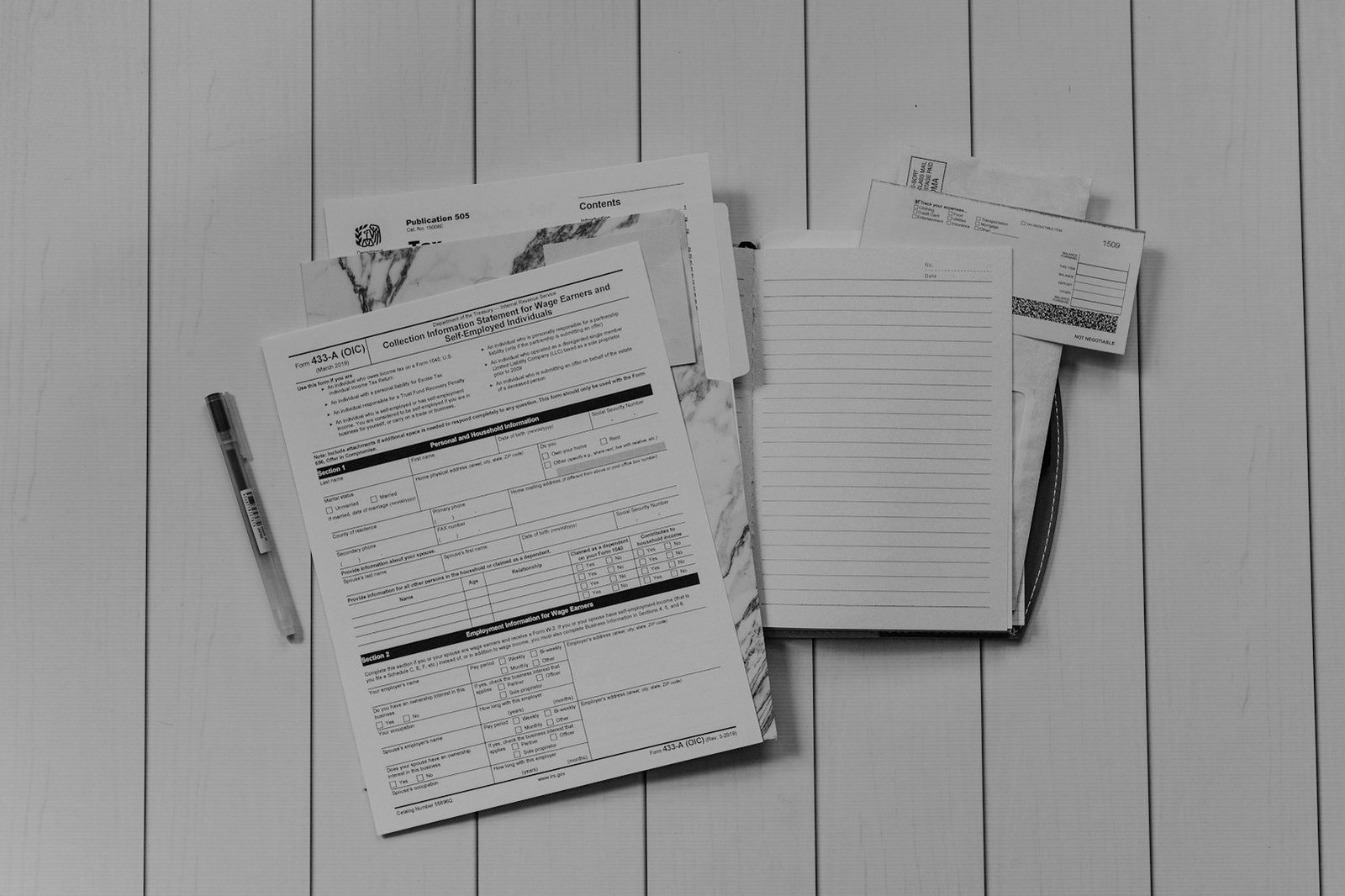
Summary: Section 27Kha of the Bank Company Act 1991, in force since 26 June 2023, requires every bank and financial institution to identify and list wilful defaulters: borrowers who can repay but do not, who obtained credit by fraud or false information, who diverted funds, or who transferred security without consent. The borrower must be heard before finalisation, told within 7 working days and may appeal to Bangladesh Bank within 30 days. Listing can trigger travel, trade licence and company registration restrictions, directorship bars and a criminal case.
Key point: Most wilful default cases are won or lost in the 14 working days a borrower has to answer the bank's identification notice. The statute leaves the judgement of "ability to repay" to the lender, so the written response, supported by accounts, cash-flow evidence and proof of how the funds were used, is the record Bangladesh Bank will see on appeal.
At a glance
Statutory basis
Section 5 defines the wilful defaulter and section 27Kha of the Bank Company Act 1991 sets out listing, appeal and consequences, both added in 2023.
Bank-level decision
Each bank's identification unit decides within 30 days of default, extendable by 30 days, after giving the borrower a chance to respond.
Appeal
A listed borrower may appeal to Bangladesh Bank within 30 days of being told. Bangladesh Bank's decision is final under the Act.
Consequences
Travel, trade licence and company registration restrictions on request, directorship bars, no rescheduling and a two-month demand followed by a criminal case.
Reform
Bangladesh Bank proposed scrapping the category in 2025; the October 2026 draft amendment remains under review and the regime is still in force.
Table of Contents
Wilful defaulter in Bangladesh: the 2026 legal framework
The legal architecture is compact. The Bank Company (Amendment) Act 2023 inserted a definition of the wilful defaulting borrower into section 5 of the Bank Company Act 1991 and a new section 27Kha on the list of wilful defaulters, effective from 26 June 2023.[2] Section 27Kha(3) then left the mechanics of identification and finalisation to Bangladesh Bank, which issued them through BRPD Circular No. 6 of 12 March 2024, with its directives taking effect from July 2024.[2] [4]
Finance companies run a parallel regime. Bangladesh Bank told non-bank financial institutions in April 2024 to set up their own wilful defaulter identification units by 30 April 2024, with the same 30-day decision window and a 14-working-day response period for the borrower under the Finance Company Act 2023 framework.[5] In practice, a borrower with facilities from both a bank and a finance company may face two separate identification processes on the same facts, and should answer both consistently.
The scale of the problem explains the political energy behind the regime. The Finance Minister told parliament in April 2026 that defaulted loans in the banking sector stood at about Tk 5,44,832 crore as of 31 December 2025.[12] Against that backdrop, the wilful defaulter label is intended to separate borrowers who cannot pay from those who will not, and to aim the hardest sanctions at the second group.
Who is a wilful defaulter under the Bank Company Act
The statutory definition has four limbs. A defaulting borrower is treated as a wilful defaulter in Bangladesh if, for itself, a family member, or a related person or company, it fails to repay a loan, advance, investment or other financial facility despite having the ability to pay; obtains the facility by fraud, deception or false information; uses the facility for a purpose other than the one for which it was sanctioned; or transfers the security pledged or mortgaged for the facility without the lender's prior written consent.[3] [7]
The "ability to repay" limb
The first limb causes most disputes, because ability to pay is a judgement, not a fact on the face of the loan file. Bangladesh Bank's circular directs banks to examine the balance sheets of the borrower's companies, and favourable earnings combined with non-payment can support a finding of wilful default.[3] That test is blunt. Accounting profit is not liquidity; a group can report profits while its cash is locked in receivables, stock or foreign-currency losses. A borrower facing this limb should answer with cash-flow evidence, not just audited accounts.
Fraud, diversion and transfer of security
The other three limbs are more objective and harder to defend once the evidence exists. A loan obtained on a false valuation or fabricated documents, working capital moved into land or an unrelated venture, or a mortgaged property sold or remortgaged without written consent will usually be treated as wilful default on the documents alone. Here the defence is factual precision: showing that the use of funds was within the sanction letter, that the bank knew of and accepted the change, or that consent was given, even informally, before the transfer.
Wilful defaulter versus ordinary defaulter
The distinction matters because the Act runs two separate lists. An ordinary defaulter is a borrower whose facility has been overdue for six months under Bangladesh Bank's definition, and lenders must report such borrowers so that Bangladesh Bank can circulate their names and stop further lending to them.[7] A wilful defaulter in Bangladesh is first a defaulter and then something more: the extra element is culpability. Being sued in the Artha Rin Adalat does not of itself make anyone a wilful defaulter; the legislature left that classification to the bank and Bangladesh Bank, not the money-loan court.[2]
Group companies are treated differently under each list. Under current law the sister companies of a defaulting borrower can still obtain credit in some circumstances, and the 2025 reform proposals would have ended that by barring other members of a conglomerate when one unit defaults.[9] A wilful default finding against one group entity makes any such application for sister-company credit much harder to sustain.
How banks identify a wilful defaulter in Bangladesh
The process set out in BRPD Circular No. 6 is a structured, internal administrative procedure with short deadlines. Each scheduled bank must form a dedicated wilful loan defaulter identification unit, headed by an official no more than two ranks below the managing director, and the units were to be in place by 9 April 2024.[3]
The 30-day window and approvals
Once a borrower becomes a defaulter, the unit has 30 days to determine whether the default is wilful, and the managing director can extend that period by up to 30 days.[3] For larger exposures the decision is escalated: the bank's Executive Committee must approve a wilful default finding for large industry loans of Tk 75 crore or more and medium industry loans of Tk 10 crore or more.[3] Borrowers in that bracket should expect the file to be reviewed by senior management and should pitch their response to that audience.
The borrower's right to be heard
Section 27Kha(4) requires the bank to give the borrower an opportunity to present its case before finalising the name.[1] Under the circular, an identified borrower has 14 working days to submit a defence, and silence results in listing.[3] This is the single most important deadline in the regime. A borrower who ignores the notice because a settlement is being discussed with the relationship manager is likely to find itself finalised before the talks conclude.
Finalisation, notice and reporting
Once a name is finalised, the bank must tell the borrower within 7 working days.[1] The bank then reports the finalised case to Bangladesh Bank's Credit Information Bureau, where the borrower is marked as a wilful defaulter.[4] Since an April 2025 circular, banks must submit cumulative quarterly statements, with supporting documents, by the 10th of the month after each quarter ends, including the borrower's name, National ID number, date of birth, the branch and the date of final listing, together with the names and contact details of the identification unit's members.[6]

The appeal to Bangladesh Bank
A person or institution aggrieved by being listed may appeal to Bangladesh Bank within 30 days, and Bangladesh Bank's decision on the appeal is final under section 27Kha(5).[1] If no appeal is filed, the bank's decision stands.[3] Several of the most serious consequences are expressly made subject to sub-section (5), including circulation of the list to other lenders and the power to vacate a bank directorship, which is why the appeal window deserves the same urgency as a court limitation date.[1]
Appeals do succeed
The appeal is not a formality. In the Bank Asia litigation, the High Court Division recorded that a borrower listed after the bank filed its money-loan suit had appealed under section 27Kha(5), and that Bangladesh Bank allowed the appeal on 8 December 2025, leaving him no longer a wilful defaulter.[1] The practical lesson is that Bangladesh Bank will look at the record rather than defer automatically to the lender, provided the borrower puts a real record in front of it.
Building the appeal file
Because the appeal is decided on paper, its strength depends on what was said at the bank stage. An effective appeal file usually contains the identification notice and the borrower's response, audited and management accounts, bank statements showing where the facility money went, evidence of external shocks such as foreign-exchange losses, energy shortages or cancelled orders, correspondence showing the bank's knowledge of any change in use or security, and any rescheduling or settlement proposals made. Where the bank failed to give a proper hearing or missed its own procedural steps, that should be pleaded expressly.
Beyond the appeal: writ jurisdiction
Bangladesh Bank's decision is final under the Act, but statutory finality does not exclude the High Court Division's constitutional review under article 102 for want of jurisdiction, procedural unfairness or a decision no reasonable authority could reach. The courts already supervise this area closely, as the conflicting travel-restriction decisions discussed below show. A writ is best treated as a backstop for a genuinely flawed process, not as a substitute for a full answer at the bank stage.
Consequences of being listed as a wilful defaulter in Bangladesh
The statute and the circular together produce a layered set of consequences, some automatic, some dependent on a request by Bangladesh Bank to another authority, and some turning on the borrower's response to a later demand.
Requests to other authorities
Under section 27Kha(6), Bangladesh Bank may send the list to the relevant authorities and request a ban on foreign travel, a ban on issuing trade licences, and a ban on company registration with the Bangladesh Securities and Exchange Commission and the Registrar of Joint Stock Companies and Firms, and the government authority concerned must take the necessary steps.[1] The circular extends the reach: lists go to authorities that register vehicles, land, houses and flats so they can act under their own laws, and wilful defaulters become ineligible for state awards and honours.[4] [5]
Directorships
If a director of a bank or financial institution is listed, Bangladesh Bank may declare the seat vacant, subject to the appeal.[1] Even after removal from the list, the person cannot become a director of any bank or financial institution until a period fixed by Bangladesh Bank has passed, which may not exceed five years.[1] For sponsors of financial institutions, a wilful default finding against an affiliated trading company can therefore cost a board seat in the institution itself.
Loan treatment
The circular closes the usual exits. Interest on a wilful defaulter's loan cannot be waived, the loan cannot be rescheduled and it cannot be transferred to another bank, and removal from the list requires full repayment.[3] The September 2025 rescheduling scheme for distressed businesses, which allowed up to ten years with a 2 per cent down payment, expressly excluded wilful defaulters and illegally obtained loans.[8]
The two-month demand and the criminal case
Where a borrower is listed and either does not appeal or loses the appeal, the bank must serve a notice demanding the full amount due within two months. If the borrower fails to pay within two months of that notice, the bank, with its board's approval, must file a criminal case, and that case does not interrupt the Artha Rin proceedings for recovery.[1] The sequence matters for planning: the criminal exposure is triggered not by the listing itself but by non-payment after a specific statutory notice, which leaves a defined window for settlement.
Penalties on lenders
The regime governing a wilful defaulter in Bangladesh also bites on lenders. A bank or financial institution that breaches section 27Kha, or that Bangladesh Bank considers has knowingly or wilfully done so, faces a fine of Tk 50 lakh to Tk 1 crore, with an additional fine of at least Tk 1 lakh for each day a breach continues.[1] That exposure pushes banks towards listing borderline cases rather than leaving them, which is one more reason borrowers must engage early.

Travel restrictions and the courts
Travel bans are the consequence a wilful defaulter in Bangladesh fears most, and the law here is unsettled. The question is whether only the government authority acting on Bangladesh Bank's request under section 27Kha(6) can stop a borrower leaving, or whether an Artha Rin Adalat can do so under its inherent power in section 57 of the Artha Rin Adalat Ain 2003.
The larger bench decision of January 2025
On 16 January 2025 a three-judge bench of the High Court Division upheld travel restrictions imposed by an Artha Rin Adalat in Chattogram, holding that the court acted within its authority and that its use of the term wilful defaulter did not conflict with the Bank Company Act.[2] The bench directed money-loan courts to consider a list of factors before imposing a restriction, including whether the loan is inadequately secured, whether the defendants are already identified and listed as wilful defaulters under section 27Kha, whether funds were diverted, whether assets are being moved abroad and whether the defendant has a history of frivolous litigation, and allowed the court to lift the restriction on substantial payment or security.[2]
The Bank Asia decision of January 2026
A year later, on 22 January 2026, a Division Bench refused a bank's request to restrict borrowers' travel. Relying on article 36 of the Constitution and the Appellate Division's decision in 74 DLR (AD) 1, it held that section 57 gives no power to seize passports or restrain travel, that under section 27Kha only the authority to which Bangladesh Bank refers a listed wilful defaulter may impose the restriction, and that the larger bench ruling did not bind it in the face of the Appellate Division's ratio.[1] The bench also criticised the bank for seeking the restriction on the day it filed suit, before the defendants had any chance to file a written statement.[1]
What this means in practice
Until the Appellate Division resolves the conflict, lenders and borrowers will each cite the decision that suits them. Two points are safe. First, a formal wilful default listing strengthens any travel restriction application, under either line of authority. Second, a borrower who has successfully appealed to Bangladesh Bank has a strong answer to a restriction request, as the Bank Asia case showed. Foreign directors of Bangladeshi borrowers face similar questions, discussed in our note on travel restrictions on foreign directors in Bangladesh.
CIB reporting, rescheduling and Artha Rin suits
A wilful defaulter in Bangladesh sits at the intersection of three systems that run on different timetables: the CIB database, Bangladesh Bank's rescheduling policies and the money-loan courts. Strategy has to account for all three.
The CIB marking
A finalised case is entered in the CIB database with a wilful defaulter marking.[4] [6] Every lender pulls a CIB report before sanctioning credit, so the marking travels across the whole banking system. CIB status also has political consequences: under the Representation of the People Order 1972, a bank borrower in default at the time of filing nomination papers cannot be elected to parliament, and the CIB supplies defaulter information on candidates to the Election Commission on request.[7]
Rescheduling and settlement
Because a listed wilful defaulter cannot reschedule, the moment to negotiate is before finalisation. A borrower that can show genuine distress, propose a down payment and demonstrate a working business has a realistic chance of rescheduling under the prevailing policy, and a rescheduled account is far easier to defend against a wilful default finding than one that has simply stopped paying. Our guide to the position of a loan defaulter in Bangladesh sets out the ordinary classification and rescheduling rules.
The Artha Rin Adalat
The money-loan suit runs in parallel and is not stayed by the criminal case under section 27Kha(10).[1] Banks were also directed to strengthen their legal departments and to recover at least 1 per cent of defaulted loans in cash by 30 June 2026 through alternative dispute resolution.[12] The settlement and mediation stages of the Artha Rin process are therefore a genuine opportunity, discussed in our guides to the Artha Rin Adalat in Bangladesh and to defending a bank suit in Bangladesh.
Cheque cases
Many lenders also prosecute dishonoured security cheques under section 138 of the Negotiable Instruments Act 1881 alongside the suit, as the bank did in the Bank Asia matter.[1] A borrower can therefore face a money-loan suit, a cheque prosecution, a wilful default listing and a later criminal case under section 27Kha at the same time. Coordinated defence across all of them is essential; see our analysis of cheque dishonour in Bangladesh.
Institutions involved
Responsibility for the regime is spread across several bodies, and knowing which one holds the decision at each stage avoids wasted representations.
Bangladesh Bank (BRPD)
Issues identification directions, decides appeals under section 27Kha(5) and refers listed names to other authorities.
Credit Information Bureau
Records finalised wilful defaulters with a separate marking visible to every lender.
Bank identification units
Decide within 30 days of default, extendable by 30 days, after hearing the borrower.
Artha Rin Adalat and High Court Division
Hear recovery suits, travel-restriction applications and writ challenges.
RJSC and BSEC
May be asked to refuse company registrations for listed wilful defaulters.
Trade licence and property registration authorities
Receive lists and act under their own laws on Bangladesh Bank's request.
How a borrower should respond: step by step
The following sequence reflects how we approach an identification notice for a client facing classification as a wilful defaulter in Bangladesh. The steps compress into a few weeks, so the work starts the day the notice arrives.
Diarise the deadlines
Record the 14-working-day defence period, the 7-working-day finalisation notice, the 30-day appeal window and any two-month repayment demand.
Obtain the bank's case
Ask in writing for the grounds relied on, the limb of the definition alleged and the documents the identification unit has reviewed.
Assemble the evidence
Collect accounts, cash-flow statements, bank statements tracing the use of funds, collateral consents and evidence of external shocks.
Answer every limb
Address ability to repay with liquidity evidence, and rebut any allegation of fraud, diversion or unauthorised transfer of security point by point.
Put a proposal on the table
Where possible, offer a down payment, rescheduling or settlement framework that demonstrates good faith without conceding capacity.
Appeal promptly if listed
File the appeal to Bangladesh Bank within 30 days with the full bank-stage record and any procedural failures pleaded expressly.
Coordinate parallel cases
Align positions across the Artha Rin suit, cheque prosecutions, finance company processes and any travel-restriction application.
Protect directors and guarantors
Check the CIB status of every interested concern and plan for board seats, guarantees and group credit lines.
Two disciplines run through the whole process. Every communication with the bank should be in writing and copied to the identification unit, not just the branch. And any settlement offer should be framed so that it supports the borrower's case on ability to pay rather than undermining it.
Ordinary and wilful default compared
The table below summarises the main differences between the two statutory categories. On a phone, scroll it sideways.
| Issue | Ordinary defaulter | Wilful defaulter |
|---|---|---|
| Trigger | Facility overdue for six months under Bangladesh Bank's definition | Default plus capacity to pay, fraud, diversion or unauthorised transfer of security |
| Who decides | Classification rules applied by the lender | Bank identification unit, with Executive Committee approval for large exposures |
| Hearing | No specific statutory hearing | Opportunity to respond before finalisation; 14 working days under the circular |
| Appeal | Ordinary review and court routes | Appeal to Bangladesh Bank within 30 days |
| Rescheduling | Available under prevailing policy | Barred, with no interest waiver or transfer |
| Other sanctions | No new credit; CIB listing | Travel, trade licence and registration requests; directorship bars; criminal case after two-month demand |
Common mistakes borrowers and lenders make
Mistakes by borrowers
- Treating the notice as a negotiation letter. The 14-working-day defence period runs regardless of informal talks with the branch.[3]
- Relying on profit figures. Audited profits invite the ability-to-pay inference; the answer is cash flow, debt service capacity and evidence of external shocks.
- Missing the appeal window. The 30-day appeal to Bangladesh Bank is the only statutory route to reverse a listing.[1]
- Moving collateral or assets. Any transfer of security without written consent is itself a ground of wilful default, and asset transfers abroad feature in the travel-restriction factors.[2]
- Ignoring the two-month demand. Criminal proceedings follow non-payment after that specific notice.[1]
Mistakes by lenders
- Using the label as leverage. The High Court Division has shown little patience with banks that seek drastic relief before borrowers have had a chance to defend.[1]
- Skipping the hearing. A finalisation without a genuine opportunity to respond is vulnerable on appeal and on writ.
- Weak evidence of capacity. A finding based only on a balance sheet, without analysing liquidity, invites reversal.
- Late or inaccurate reporting. Fines of Tk 50 lakh to Tk 1 crore apply to breaches of the section.[1]
Reforms in 2025 and 2026: will the regime for a wilful defaulter in Bangladesh survive?
The future of the category has been genuinely uncertain since 2025. In August 2025 the government planned to amend the Bank Company Act to remove the wilful defaulter provision, keeping only a single defaulter list, because Bangladesh Bank officials considered the category subjective, burdensome and open to abuse.[9] By November 2025 Bangladesh Bank had drafted 45 amendments, approved by its board and sent to the finance ministry, including removal of the wilful defaulter classification.[10]
The banking industry pushed back. The Association of Bankers Bangladesh asked Bangladesh Bank to keep and toughen the regime, warning that removing it would weaken control over defaulted loans, and the Governor said he would review the matter.[11] The interim government left office without issuing the amendment as an ordinance, and in October 2026 the Financial Institutions Division said nothing had been finalised; the draft was to return to Bangladesh Bank and then go to the Cabinet.[14]
What the current draft would change
The October 2026 draft, as reported, would bar directors of a borrowing company from resigning, being released or transferring their shares without the lender's approval, and would let Bangladesh Bank stop banks lending to their subsidiaries.[14] The government also told parliament in April 2026 that it planned to publish lists of defaulters and wilful defaulters and to reform the law so that some measures now reserved for wilful defaulters could apply to ordinary defaulters in certain cases.[12] Either way, the direction of travel is towards more personal exposure for sponsors and directors, not less.
The Bank Resolution Act 2026
Separately, parliament passed the Bank Resolution Bill on 10 April 2026, giving Bangladesh Bank powers to limit shareholder rights, appoint administrators, dissolve boards and transfer or merge failing banks, and providing for personal liability of individuals for a bank's failure, with fines of up to Tk 50 lakh and daily penalties.[13] For sponsors whose companies borrowed heavily from banks they controlled, the resolution regime and the wilful defaulter regime can now operate on the same facts. Our bank resolution and creditor safeguards practice follows these developments.
Practical judgement for sponsors, guarantors and directors
For anyone at risk of classification as a wilful defaulter in Bangladesh, three situations deserve particular care. The first is the family or group guarantee. The definition reaches facilities taken for family members and related companies, so a sponsor whose personal accounts are healthy can still be exposed through a group entity's default.[3] Guarantees and cross-collateral arrangements should be mapped before any default notice arrives.
The second is the bank director who is also a borrower. A wilful default finding against any entity for which the director is responsible can cost the seat and bar reappointment for up to five years.[1] Directors should monitor the CIB status of every interested concern, not just their own.
The third is the foreign investor or joint-venture partner. CIB status of a local partner, its sponsors and its group is now a core due-diligence item, because a later wilful default listing can restrict the partner's ability to register new companies, renew trade licences or travel. Our banking and finance litigation team and banking and finance practice advise on both sides of these questions, and our guide to the Bank Company Act 1991 places section 27Kha in its wider statutory context.
The common thread is timing. The regime gives a borrower a short, structured opportunity to make its case and then hardens quickly. Treat the identification notice as the start of litigation, assemble the evidence immediately and keep settlement and defence moving together. If you have received a notice or expect one, contact TRW to discuss the position.
Frequently asked questions
What is a wilful defaulter in Bangladesh?
A defaulting borrower who fails to repay despite being able to, obtained credit by fraud or false information, used the funds for an unapproved purpose, or transferred security without the lender's written consent, including where the facility was taken for a family member or related company.[3]
Which law governs wilful defaulters?
Section 5 and section 27Kha of the Bank Company Act 1991, inserted by the 2023 amendment and effective from 26 June 2023, together with Bangladesh Bank's BRPD Circular No. 6 of 12 March 2024.[2]
How long does a borrower have to respond to a wilful default notice?
Under the circular, 14 working days from the bank's identification notice. If no response is given, the borrower is placed on the list.[3]
Can I appeal against being listed as a wilful defaulter?
Yes. An appeal lies to Bangladesh Bank within 30 days, and its decision is final under the Act. Bangladesh Bank has allowed such appeals in practice.[1]
Can a wilful defaulter travel abroad?
Can a wilful defaulter get a trade licence or register a company?
Bangladesh Bank may request a ban on issuing trade licences and on company registration with the RJSC and the BSEC, and the authority concerned must act on that request.[1]
Can a wilful defaulter's loan be rescheduled?
When can a bank file a criminal case against a wilful defaulter?
After the listing becomes final, the bank must serve a two-month demand for full repayment. If the borrower does not pay within two months, the bank files a criminal case with board approval, without affecting the Artha Rin suit.[1]
How does a borrower get off the wilful defaulter list?
Source register
Primary legal and regulatory sources
Materials checked on 23 October 2026. Confirm the current official text before relying on any provision.
- Supreme Court of Bangladesh, High Court Division — Writ Petition No. 8149 of 2025 (Bank Asia PLC), judgment of 22 January 2026, reproducing section 27Kha of the Bank Company Act 1991
- Supreme Court of Bangladesh, High Court Division (larger bench) — Writ Petition No. 6234 of 2024 with No. 6083 of 2024, judgment of 16 January 2025
- The Business Standard, 12 March 2024 — Wilful defaulters now to face music as BB asks banks to send their names
- Dhaka Tribune, 13 March 2024 — Banks instructed to identify wilful loan defaulters
- The Financial Express, 3 April 2024 — NBFIs asked to set up wilful defaulter units by April 30
- bdnews24.com (Bangla), 16 April 2025 — Bangladesh Bank circular on reporting wilful defaulters to the CIB
- The Daily Star, Law and Our Rights — How our law holds loan defaulters accountable
- The Daily Star, 16 September 2025 — Fresh loan rescheduling policy for troubled businesses
- The Daily Star, 19 August 2025 — Govt to drop wilful defaulter tag
- The Daily Star, 15 November 2025 — Bangladesh Bank proposes 45 amendments to banking law
- The Daily Observer, 11 February 2026 — Bankers urge strict action against wilful defaulters
- bdnews24.com (Bangla), 6 April 2026 — Finance Minister's written reply in parliament on defaulted loans and recovery measures
- The Business Standard, 10 April 2026 — Bank Resolution Bill passed in parliament
- Prothom Alo, 15 October 2026 — New draft law retains scope for family control of banks
Related TRW assistance
Move from information to a defined next step
TRW acts for borrowers, sponsors, guarantors and lenders on wilful default notices, Bangladesh Bank appeals, travel-restriction applications and parallel Artha Rin and cheque proceedings. Explore our banking and finance litigation practice or contact TRW to discuss your matter.