
Banking & financial services / Lending, regulation and recovery
Clear, enforceable finance for lenders, borrowers and regulated institutions.
TRW & Co acts as banking lawyers in Bangladesh for banks, finance companies, foreign lenders and corporate borrowers, covering facility documentation, Bangladesh Bank approvals, security, regulatory compliance and the recovery of defaulted debt.

Term loans, syndicated and foreign currency facilities documented so that security perfects, approvals are in place and the loan can be enforced.
Licensing, prudential compliance, anti-money laundering controls and responses to Bangladesh Bank inspections, directions and show-cause notices for regulated institutions.
Artha Rin Adalat suits, enforcement of mortgages and guarantees, writ challenges and arbitration of finance disputes where the documents allow it.
Banks and lenders work with TRW to close faster and recover with confidence.
Loan and security documentation
We draft and review term loan, working capital and syndicated facility agreements, together with the mortgages, hypothecations, pledges, guarantees and assignments that support them. As banking lawyers in Bangladesh, we focus on what a Bangladeshi court will later need to see: correct execution, stamping and registration, board authority, and security that is properly perfected with the relevant registry. We also align intercreditor terms where several banks share collateral, so that priorities are clear before the first drawdown.
- Facility agreement drafting and review
- Mortgage and hypothecation perfection
- Corporate guarantees and authority
- Intercreditor and security sharing
Licensing and regulatory compliance
Banks, finance companies, payment providers and microfinance institutions operate under close supervision by Bangladesh Bank and, for some activities, other regulators. We advise on licence applications, changes in shareholding and board composition, fit and proper requirements, single borrower and related party limits, and the circulars that govern classification and provisioning. When an inspection report, direction or show-cause notice arrives, we help institutions respond accurately and on time.
- Licence and approval applications
- Board and shareholder changes
- Circular and prudential compliance
- Inspection and notice responses
Recovery, enforcement and bank litigation
When a borrower defaults, the order of steps matters. As banking lawyers in Bangladesh, we advise lenders on demand notices, CIB reporting, the sale of mortgaged property, suits in the Artha Rin Adalat and execution proceedings, and we defend institutions in writ petitions and counterclaims brought by borrowers. For borrowers and guarantors facing proceedings, we review the documents, the limitation position and available defences, and look for a negotiated rescheduling where that serves the client better than a contested suit.
- Demand and default strategy
- Artha Rin Adalat suits
- Execution and auction sales
- Borrower and guarantor defence
Cross-border lending and foreign loans
Foreign currency borrowing by Bangladeshi companies requires approvals under the foreign exchange framework, and the approval route changed during 2026. We advise offshore lenders, development finance institutions and local borrowers on eligibility, pricing limits, registration, repayment remittances and the enforceability of foreign law facility agreements and offshore guarantees. We coordinate with lenders' counsel in the UK, US, UAE, Singapore and elsewhere so that the Bangladesh legal opinion and conditions precedent are ready together.
- Foreign loan approval route
- Offshore guarantee and SBLC checks
- Bangladesh law legal opinions
- Repayment and remittance mechanics
“The dispute resolution team is, in our experience, the most strategically agile and intellectually robust legal team in Bangladesh.”
The Legal 500 Asia Pacific, Bangladesh: Dispute resolution, client feedback
Read the Legal 500 profile ↗Explore related practices
The practice areas our banking lawyers in Bangladesh draw on most often for this sector.
Banking and Finance in Bangladesh
Facility documentation, security, regulatory approvals and transactional advice for lenders and borrowers across Bangladesh.
Banking & Finance Litigation
Loan recovery, Artha Rin Adalat suits, writ petitions, guarantee disputes and appeals before the High Court Division.
 NBFI Licensing & Compliance
Licensing, governance and ongoing compliance for finance companies supervised by Bangladesh Bank under the current framework.
Fintech, Payments and PSP Licensing in Bangladesh
Payment service licences, mobile financial services, e-money and bank partnership arrangements for fintech businesses.
Read before you decide.
Further reading from our banking lawyers in Bangladesh, updated for 2026.

Banking Law in Bangladesh: Statutes, Regulators and Key Legal Issues (2026)

Bank Company Act 1991 Bangladesh: Key Provisions, 2023 Amendments and the 2026 Draft

Bank Loan Laws in Bangladesh: Legal Requirements for Borrowers and Lenders (2026)

Secured Transactions in Bangladesh: Movable Collateral, Syndication, Receivables and Securitisation (2026)

Banking Arbitration in Bangladesh 2026: Loan Disputes, Artha Rin Limits and Foreign Facilities

Anti Money Laundering Law in Bangladesh: MLPA 2012, BFIU Reporting and Compliance in 2026

Islamic Finance in Bangladesh: Shariah Banking, Sukuk, Takaful and Microfinance Law (2026)
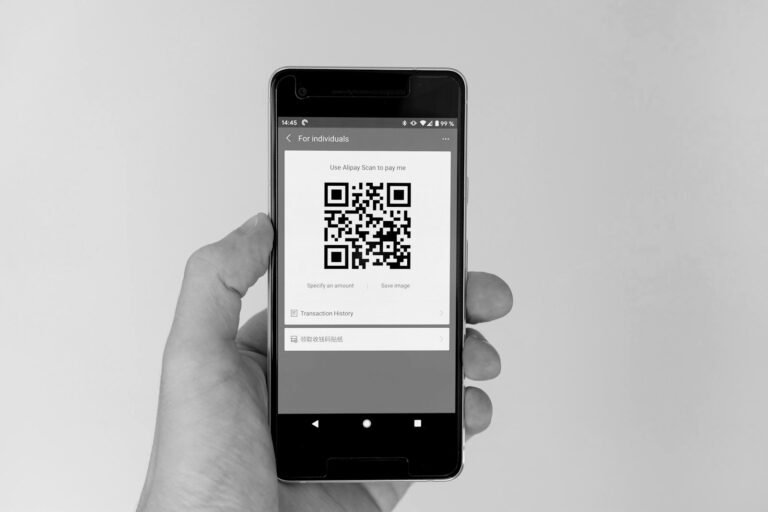
PSO and PSP Licence in Bangladesh 2026: Payment Licensing, E-Money, Digital Banks and the Financial Regulators

NBFI and Finance Company Licence in Bangladesh: Step-by-Step Process (2026)

Bank Guarantees in Bangladesh: A Practical 2026 Guide
All insights →
01What banking lawyers in Bangladesh actually do
Banking lawyers in Bangladesh work at the meeting point of contract, security and regulation. A typical mandate might involve documenting a syndicated facility for a manufacturing group, confirming that a foreign bank's guarantee can support local lending, advising a finance company on a Bangladesh Bank direction, or recovering a defaulted loan through the courts. The common thread is enforceability: each document and approval must work not only on signing day but years later, when a judge or regulator examines it.
Clients include domestic commercial banks, foreign bank branches, finance companies, development finance institutions, offshore lenders, payment businesses and the corporate borrowers on the other side of the table. Sound advice on either side starts from the same place: an accurate reading of the statute, the relevant circulars and how courts in Dhaka actually treat finance documents. For that reason, banking lawyers in Bangladesh are best instructed before terms are agreed.
02The legal framework banking lawyers in Bangladesh work within
The core statute for scheduled banks is the Bank Company Act 1991, which governs licensing, capital, ownership limits, board composition, lending restrictions and the supervisory powers of Bangladesh Bank. The Act has been amended several times, most significantly in 2023, and further reform proposals have been discussed in 2026, so any analysis should be checked against the current text. Finance companies are regulated under a separate statute, the Financial Institutions Act 2023, which replaced the earlier 1993 legislation.
Alongside these statutes sit the Bangladesh Bank Order 1972, the Foreign Exchange Regulation Act 1947, the Money Laundering Prevention Act 2012 and a large body of circulars on classification, provisioning, rescheduling, credit risk and foreign exchange. In practice, the circulars often determine outcomes more directly than the statutes, and they change frequently, so banking lawyers in Bangladesh track circular updates as closely as legislative change. Specialist rules also apply to Islamic banking, mobile financial services and payment systems.
03Bangladesh Bank and the other regulators
Bangladesh Bank is the central bank and the primary supervisor of banks and finance companies. It issues licences, approves appointments of directors and chief executives, inspects institutions, issues directions and imposes penalties. The Bangladesh Financial Intelligence Unit, which operates within the central bank, receives suspicious transaction reports and supervises anti-money laundering compliance.
Other regulators become relevant depending on the activity. The Bangladesh Securities and Exchange Commission (BSEC) oversees listed banks, bond issues and capital market intermediaries. The Insurance Development and Regulatory Authority supervises insurers and bancassurance arrangements, and the Microcredit Regulatory Authority licenses microfinance institutions. The National Board of Revenue (NBR) administers tax, including withholding on interest and stamp duty consequences of finance documents. Banking lawyers in Bangladesh need to map which of these bodies has a say before a transaction is structured.
04Licensing and market entry for financial institutions
Establishing a bank, finance company, digital bank or payment business requires a licence from Bangladesh Bank, preceded by detailed application materials: a business plan, sponsor information, source of funds, capital evidence and governance arrangements. Foreign sponsors face additional scrutiny on ownership and control. Acquiring a significant stake in an existing institution, or changing its board, usually needs prior central bank approval as well.
Licensing timelines are rarely fixed, and policy on new licences shifts with the economic cycle. Sponsors should therefore treat regulatory engagement as part of the project plan, not a formality. As banking lawyers in Bangladesh, we prepare applications, respond to queries and advise on conditions attached to in-principle approvals, coordinating with corporate and tax advisers so that the holding structure, capitalisation and future exit are considered from the outset.
05Loan documentation and security under Bangladeshi law
Most domestic lending is documented using bank-standard sanction letters and charge documents, while larger and cross-border deals use negotiated facility agreements. Whatever the form, enforceability depends on details: proper corporate authority, correct stamp duty, registration of mortgages with the sub-registry and of company charges with the Registrar of Joint Stock Companies and Firms under the Companies Act 1994. A missed registration can leave a lender unsecured against a liquidator or competing creditor.
Common security packages combine registered mortgages over land and buildings, hypothecation of stock, receivables and machinery, pledges of shares, assignment of contract proceeds and personal or corporate guarantees. Where several lenders share collateral, pari passu and intercreditor arrangements need careful drafting because Bangladeshi courts look closely at the documents actually registered. Banking lawyers in Bangladesh should also check land title thoroughly, since defective title is a frequent cause of failed enforcement.
06Foreign currency lending and exchange controls
Borrowing from abroad is controlled under the foreign exchange framework administered by Bangladesh Bank, with Invest Bangladesh (formerly BIDA and BEZA), Bangladesh Bank and a scrutiny committee involved in approvals. The approval process was revised during 2026, so lenders and borrowers should ask their banking lawyers in Bangladesh to confirm the current route, documentation and pricing caps before signing a term sheet rather than relying on older guidance.
Offshore lenders also need comfort on governing law, submission to jurisdiction, the recognition of foreign judgments and arbitral awards, and the tax treatment of interest, including withholding and any treaty relief. Guarantees and standby letters of credit from overseas banks supporting local facilities raise their own questions about enforceability and regulatory approval. Banking lawyers in Bangladesh routinely provide capacity and enforceability opinions for these transactions, working alongside counsel in London, New York, Dubai or Singapore.
07Compliance, anti-money laundering and financial crime
Financial institutions must maintain know-your-customer procedures, transaction monitoring, sanctions screening and suspicious transaction reporting under the Money Laundering Prevention Act 2012, the anti-terrorism financing legislation and BFIU instructions. Trade-based money laundering, particularly over-invoicing and under-invoicing in import and export transactions, receives close attention from regulators, as do cross-border payment channels.
Since 2024, Bangladesh has seen heightened scrutiny of past lending practices, asset recovery initiatives and investigations by the Anti-Corruption Commission and other agencies involving bank directors and large borrowers. Institutions facing an investigation need a coordinated response that protects privilege where possible, preserves records and manages communications with regulators. Banking lawyers in Bangladesh who handle these matters work closely with litigation and white-collar specialists from the first notice onward.
08Distressed banks, resolution and reform
Weaknesses in parts of the banking sector have led Bangladesh Bank to take a more interventionist approach, including board reconstitutions, mergers of weak institutions and new bank resolution powers introduced in 2025. These measures affect depositors, shareholders, counterparties and borrowers, and they raise novel questions about contract continuity, set-off and the treatment of security in a resolution scenario.
Because this area is changing quickly, any advice must rest on the current legislation and the latest central bank instructions rather than general assumptions. Counterparties dealing with an institution under resolution or administration should check who has authority to sign, whether existing facilities remain available and how claims will rank. Banking lawyers in Bangladesh can help creditors and investors assess these risks and protect their positions.
09Recovering defaulted loans through the courts
Recovery suits by financial institutions are heard by the Artha Rin Adalat under the Artha Rin Adalat Ain 2003, a specialised regime intended to accelerate bank recoveries. The Act allows lenders, subject to conditions, to sell mortgaged or pledged property without a court order and requires mediation in certain cases. Execution proceedings, auction sales and civil imprisonment of defaulting borrowers follow judgment.
In practice, recovery is often slowed by writ petitions in the High Court Division, interim stays, disputes over valuation and title, and appeals. A lender's strategy should therefore consider the strength of its documents, the borrower's likely challenges and the value of a negotiated rescheduling under applicable central bank rules. Banking lawyers in Bangladesh must also manage CIB reporting carefully, since classification and defaulter status carry significant consequences for borrowers and directors.
10Arbitration, writs and other finance disputes
Not every finance dispute belongs in the Artha Rin Adalat. Disputes under foreign law facilities, letters of credit, bank guarantees, derivatives and treasury products, and disputes between institutions, may be resolved by arbitration under the Arbitration Act 2001 or by proceedings abroad. Bangladesh is a party to the New York Convention, so foreign arbitral awards can be enforced locally, subject to the grounds for refusal in the Act. The forum should be chosen when the facility is drafted, not when a default occurs.
Borrowers and institutions also turn to the writ jurisdiction to challenge regulatory decisions, CIB classifications or actions by state-owned banks. Guarantee encashment disputes frequently involve urgent injunction applications. TRW's dispute resolution practice, which The Legal 500 Asia Pacific ranks for dispute resolution in Bangladesh, works with our finance team so that transactional documents are drafted with eventual disputes in mind.
11Employment, tax and outsourcing issues for financial institutions
Banks and finance companies employ large workforces and must comply with the Bangladesh Labour Act 2006, subject to the exemptions and service rules that apply to particular categories of staff. Senior appointments, including chief executives and directors, need regulatory approval, and the removal of key officers can require central bank involvement. Disputes with former staff often reach the labour courts or the writ bench.
Tax is equally important. Interest, fees and commissions attract withholding under the Income Tax Act 2023, financial services are subject to the VAT and Supplementary Duty Act 2012, and finance documents carry stamp duty. Outsourcing of technology, cards and collections must satisfy central bank guidance and data protection expectations under the current legal framework, which is itself evolving. Banking lawyers in Bangladesh should review these obligations alongside the commercial terms of any outsourcing arrangement.
12Choosing banking lawyers in Bangladesh
When selecting banking lawyers in Bangladesh, clients should look for a team that combines transactional drafting, regulatory knowledge and courtroom experience, because a finance relationship can move from documentation to dispute quickly. Ask how the team keeps track of Bangladesh Bank circulars, how it handles legal opinions for foreign lenders, and whether litigators are involved in reviewing security before closing.
At TRW & Co, banking and finance work is led by Barrister Tahmidur Rahman and Barrister Remura Meheruba Mahbub, with Adv Syed Wahid leading litigation and recovery. We work with counsel in the UK, US, UAE, China, India and Singapore on cross-border matters, and we give clear, written advice on risk so that boards and credit committees can make decisions with confidence.
FAQ
When do I need banking lawyers in Bangladesh for a loan?
Can a foreign bank lend directly to a Bangladeshi company?
How long does an Artha Rin Adalat recovery suit take?
Is an arbitration clause enforceable in a Bangladeshi loan agreement?
What do banking lawyers in Bangladesh advise on for fintech businesses?
How should a lender respond to a writ petition by a defaulting borrower?
Does TRW act for borrowers as well as lenders?
How do I instruct TRW’s banking lawyers in Bangladesh?
Ready to move with confidence?
Speak with our banking lawyers in Bangladesh about your matter, in Dhaka or across borders.
Book a consultation →