
Writ petition process in Bangladesh: the full journey, step by step
The writ petition process in Bangladesh begins in the High Court Division under Article 102 of the Constitution, which can quash unlawful acts of public authorities, compel them to perform legal duties, release people held unlawfully and test the right to public office.
After a motion hearing the bench either summarily rejects the petition or issues a Rule Nisi, often with an interim stay, and the Rule is later made absolute or discharged. The losing side goes to the Appellate Division by leave, and non-compliance is met with contempt proceedings.
- Where it starts
- High Court Division of the Supreme Court (special original jurisdiction), before a bench assigned by the Chief Justice…
- Main law
- Constitution of Bangladesh, Articles 44, 102, 103, 104, 105, 107, 108, 111 and 112; Supreme Court of Bangladesh (High Court…
- Typical duration
- Motion and Rule Nisi: days to weeks. Final hearing of the Rule: about 1-5 years (habeas corpus much faster). Appellate…
- Who can file
- Any person aggrieved, including a company; for habeas corpus and quo warranto, any person; for public interest…
Writ petition process in Bangladesh: walk through every stage
Press next, use your arrow keys or tap a court on the map. The gold marker shows where your case is, and the green trail shows the route it has taken. For the immersive version, play it full screen.
Read every step as text
 Step 1 · Before filing
Test whether a writ is the right remedy
Not every grievance against the state belongs in a writ. The lawyer checks four threshold points. Is the respondent a person performing functions in connection with the affairs of the Republic or a local authority, or a statutory public body? Is the client a person aggrieved? Is there another equally efficacious remedy, such as a statutory appeal, which would normally have to be used first? And has there been unexplained delay? Service matters of public servants generally go to the Administrative Tribunal instead.
Getting this right at the start is the most important part of the writ petition process in Bangladesh.
Where: Lawyer's chamber · Time: 1-7 days · Law: Article 102(1), (2) and (5) Constitution of Bangladesh; Article 117 Constitution (Administrative Tribunals); Dr Mohiuddin Farooque v Bangladesh, 17 BLD (AD) 1 (standing) · Documents: Impugned order, notice or letter, Timeline of events
Tip: There is no fixed limitation period, but the court refuses relief to 'the tardy and the indolent'. Move within weeks of the impugned act.
 Step 2 · Before filing
Demand justice from the authority
Where the complaint is inaction, such as a licence, refund or representation left undecided, a writ of mandamus usually requires the petitioner to show that the duty was demanded and refused or ignored. The lawyer therefore sends a written representation or notice demanding justice, setting out the legal duty and a reasonable deadline, and keeps proof of delivery. Where an order has already been made, this step is often skipped, but any statutory appeal or review available should be considered first.
Where: Public authority (ministry, regulator, local body) · Time: 1-4 weeks · Law: Article 102(2)(a)(i) Constitution of Bangladesh · Documents: Notice demanding justice, Proof of delivery, Any reply or acknowledgment
Tip: Address the notice to the officer with the statutory power, not just the ministry. That officer must be named as a respondent later.
 Step 3 · Before filing
Collect certified copies and annexures
The High Court Division decides writs on affidavit evidence, so every material fact must be supported by a document annexed to the petition. The lawyer gathers the impugned order, the statute or rule relied on, correspondence, gazette notifications and any earlier court orders, and obtains certified or attested copies. Writ jurisdiction is a poor fit for disputed questions of fact, such as title to land, so the documents must show the illegality on their face.
Where: Lawyer's chamber · Time: 1-2 weeks · Law: Article 102(2) Constitution of Bangladesh; Chapter XIA Supreme Court of Bangladesh (High Court Division) Rules 1973 · Documents: Impugned order, Relevant statute, rules and gazette notifications, Correspondence with the authority, Company documents and board resolution (for a company petitioner)
Tip: A company petitioner should pass a board resolution authorising the deponent, and annex it.
- Step 4 · Filing and motion hearing
Draft the writ petition
The petition sets out the parties, the facts in numbered paragraphs, the impugned act, the grounds (lack of jurisdiction, mala fides, violation of natural justice, no evidence, error on the face of the record, breach of fundamental rights) and the precise relief: the form of Rule Nisi sought and any interim order. Respondents usually include the Secretary of the responsible ministry or division on behalf of the Government, and each official whose act is challenged. The petition explains why any alternative remedy is not equally efficacious.
Where: Lawyer's chamber · Time: 3-10 days · Law: Article 102(1) and (2) Constitution of Bangladesh; Chapter XIA Supreme Court of Bangladesh (High Court Division) Rules 1973 (relief to be specifically stated); Mosarrof Hosen v Artha Rin Adalat No. 1, 19 SCOB [2024] HCD 126 (exceptions to the alternative remedy rule) · Documents: Draft petition, Index of annexures, Draft interim relief prayer
Tip: Plead the exact words of the Rule you want. Benches often issue the Rule in the terms the petitioner proposes.
 Step 5 · Filing and motion hearing
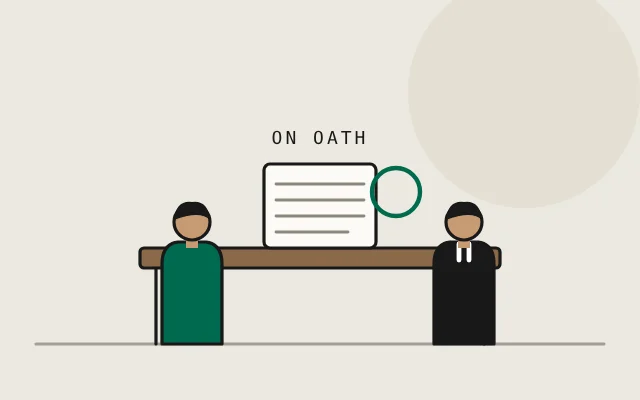
Swear the affidavit at the Supreme Court
The petition must be verified by an affidavit sworn by the petitioner or an authorised representative before a Commissioner of Affidavits at the Supreme Court. The deponent identifies which statements are true to personal knowledge, which are from records and which are legal submissions. The lawyer then files the petition with the annexures, the affidavit, the court fee and copies at the writ filing section, where it is checked, numbered and made ready for listing before a bench.
Where: Supreme Court affidavit and filing sections · Time: 1-3 days · Law: Chapter XIA Supreme Court of Bangladesh (High Court Division) Rules 1973 · Documents: Sworn affidavit, Petition and annexures, Court fee, Vakalatnama, Copies for service
Tip: The deponent must attend in person with a national ID card. A false statement in the affidavit can lead to contempt or prosecution.
 Step 6 · Filing and motion hearing
Serve the Attorney General's office and list the matter
Before the motion, a copy of the petition is served on the Attorney General's office so that a Deputy or Assistant Attorney General can appear for the Government. The matter is then mentioned or listed before the Division Bench that the Chief Justice has assigned to hear that class of writ, such as tax, land, service-related or general matters. Where the petitioner wants an interim order that could affect a development project or the public interest, Article 102(4) requires reasonable notice to the Attorney General.
Where: High Court Division · Time: 1-14 days · Law: Article 102(4) Constitution of Bangladesh; Article 107(3) Constitution of Bangladesh (Chief Justice determines benches) · Documents: Service copy and receipt from the Attorney General's office, Cause list entry
Tip: Check the current bench list before filing. Moving the wrong bench wastes days, and urgent matters are lost on such delays.
 Step 7 · Filing and motion hearing
Motion hearing
At the motion hearing the petitioner's advocate explains, usually in a few minutes, why there is an arguable case of illegality and why the court should intervene. The Government's law officer may oppose. The bench decides only whether the petition deserves a full hearing. It may summarily reject it, for example where an alternative remedy exists, or issue a Rule Nisi. In urgent cases, such as imminent demolition or detention, the motion can be heard the same or the next day.
Where: High Court Division · Time: 1 day hearing, after 1-21 days in the list · Law: Article 102 Constitution of Bangladesh · Documents: Petition and affidavit, Short brief of key annexures
Tip: Lead with the single strongest point of illegality. Motion benches hear many matters and decide quickly.
 Step 8 · Rule Nisi, service and affidavits
Rule Nisi issued
If persuaded, the bench issues a Rule Nisi calling on the respondents to show cause, usually within four weeks, why the impugned act should not be declared to have been done without lawful authority and to be of no legal effect, or why they should not be directed to perform a duty. The Rule frames the dispute for the rest of the writ petition process in Bangladesh: the final hearing is confined to the questions in it. The order records the Rule's terms and any interim direction.
Where: High Court Division · Time: Same day as the motion · Law: Article 102(2)(a)(i) and (ii) Constitution of Bangladesh; Bangladesh v Sk. Md. Abdullah Faruque, 18 SCOB AD 54 (relief confined to the terms of the Rule) · Documents: Order issuing Rule Nisi
Tip: Obtain the signed order quickly. Authorities will not act on an oral report of a stay.
- Step 9 · Rule Nisi, service and affidavits
Interim stay or direction
Often the most valuable result of the motion is the interim order: a stay of the impugned order, a direction to maintain status quo, or a direction to release goods or allow a candidate to sit an exam pending the hearing. Stays are usually granted for a fixed period, such as three or six months, and must be extended on application before they lapse. Under Article 102(4), the court cannot grant an interim order that would harm a development programme or the public interest without hearing the Attorney General.
No interim order can be passed in relation to a law protected by Article 47.
Where: High Court Division · Time: Same day; extensions every 3-6 months · Law: Article 102(3) and (4) Constitution of Bangladesh · Documents: Interim relief application, Order with stay period
Tip: Diarise the expiry of the stay. A lapsed stay lets the authority act, and an extension after expiry is harder to obtain.
 Step 10 · Rule Nisi, service and affidavits
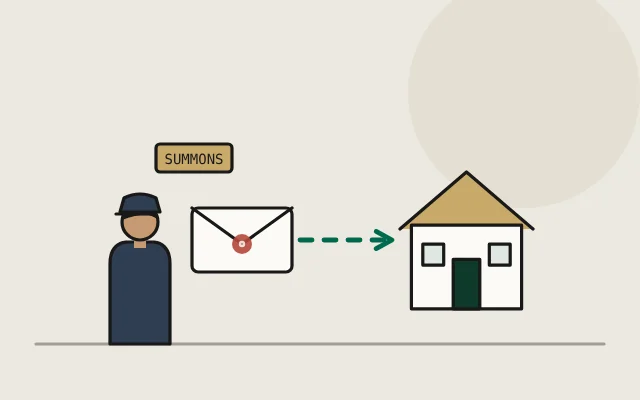
Rule and stay served on the respondents
The office of the High Court Division issues notice of the Rule to each respondent, and the petitioner files the requisites and postal costs promptly. In practice the petitioner's lawyer also sends a certified copy of the order directly to the respondents, so that the stay is known and obeyed at once. Service must be proved by an affidavit of service or the office report before the Rule can be heard. A Rule left unserved can be discharged for non-prosecution.
Where: Public authority (ministry, regulator, local body) · Time: 2-8 weeks · Law: Chapter XIA Supreme Court of Bangladesh (High Court Division) Rules 1973; Article 112 Constitution of Bangladesh · Documents: Notice of the Rule, Requisites and postal costs, Certified copy of the order, Affidavit of service
Tip: Hand-deliver the certified order to the officer who must act and take a receiving stamp. That receipt is the foundation of any later contempt petition.
- Step 11 · Rule Nisi, service and affidavits
Affidavit-in-opposition and reply
The respondents answer the Rule by an affidavit-in-opposition, setting out their facts, documents and legal justification for the impugned act. The petitioner may file an affidavit-in-reply, and either side may file supplementary affidavits with leave to bring later events or documents on record. Added respondents, such as a third party who benefits from the impugned order, may also file. The respondents may apply to vacate the stay at this stage.
Where: High Court Division · Time: 1-6 months · Law: Article 102 Constitution of Bangladesh; Chapter XIA Supreme Court of Bangladesh (High Court Division) Rules 1973 · Documents: Affidavit-in-opposition, Affidavit-in-reply, Supplementary affidavits, Application to vacate stay (if any)
Tip: Answer every factual assertion in the opposition. Unchallenged statements on affidavit are usually accepted as true.
 Step 12 · Final hearing and judgment
Rule appears in the hearing list
Once pleadings are complete, the Rule waits to appear in the daily cause list of the bench with jurisdiction. Writ benches change periodically when the Chief Justice reconstitutes them, so a Rule may have to be relisted before a new bench. A party may apply for early hearing if the stay is causing serious harm or the matter is time-sensitive. Habeas corpus and urgent public matters are heard within weeks; ordinary Rules can wait years.
Where: High Court Division · Time: 6 months-5 years · Law: Article 107(3) Constitution of Bangladesh · Documents: Application for early hearing (if needed), Paper book or compiled annexures
Tip: Keep the stay alive throughout. Many petitioners lose a commercially decisive stay by missing an extension date while waiting for the hearing.
- Step 13 · Final hearing and judgment
Final hearing: Rule made absolute or discharged
At the final hearing both sides argue on the affidavits and annexures. The bench then delivers judgment: it makes the Rule absolute, declaring the act unlawful and of no legal effect or directing the authority to act, sometimes with directions on how to reconsider the matter; or it discharges the Rule, at which point any interim order is vacated. A Rule may also be discharged as infructuous if events overtake it. Costs are usually not awarded.
Where: High Court Division · Time: 1-3 hearing days; judgment the same day or within weeks · Law: Article 102(2) Constitution of Bangladesh; Article 111 Constitution of Bangladesh (binding effect) · Documents: Written submissions and case law, Judgment
Tip: Apply for a certified copy immediately. Time for going to the Appellate Division runs from the judgment date.
 Step 14 · Compliance
Compliance by the authority
The successful petitioner serves a certified copy of the judgment on the respondents and asks them to comply. Article 112 requires all executive and judicial authorities to act in aid of the Supreme Court, so a ministry or regulator must give effect to the judgment unless the Appellate Division stays it. Where the court directed reconsideration, the authority must decide afresh within any time set. This final stage of the writ petition process in Bangladesh often needs follow-up letters and, if ignored, a contempt petition.
Where: Public authority (ministry, regulator, local body) · Time: 1-6 months · Law: Article 112 Constitution of Bangladesh; Article 108 Constitution of Bangladesh · Documents: Certified copy of the judgment, Covering letter demanding compliance, Proof of delivery
Tip: Write to the authority within days of the judgment, with a clear deadline, and keep the receipt.
What if…? How the writ petition process in Bangladesh can change course
Choose a scenario. The map animates the route up the hierarchy and, where a case is sent back, down to the lower court and up again.
What if the losing side goes to the Appellate Division?
- 1Chamber Judge, Appellate Division
Stay application before the Chamber Judge
The losing side, often the Government, first files an application for stay of the High Court Division's judgment, which is heard by the Chamber Judge of the Appellate Division. The Chamber Judge may stay the judgment, decline, or refer the matter to the full bench. A stay order usually lasts until the petition for leave is heard. The Chamber Judge can also stay interim orders passed at the motion stage.
1-8 weeksArticle 103 Constitution of BangladeshSupreme Court of Bangladesh (Appellate Division) Rules 1988 (Chamber Judge) - 2Appellate Division of the Supreme Court
Civil Petition for Leave to Appeal and civil appeal
Unless the High Court Division has certified that the case involves a substantial question of constitutional interpretation, which gives an appeal as of right within thirty days, the losing party files a civil petition for leave to appeal within sixty days of the judgment, or within thirty days of a refusal of a certificate. Leave is granted on points of law of public importance or serious error. If leave is granted, the case is heard as a civil appeal, and the Appellate Division can do complete justice under Article 104.
1-3 yearsArticle 103(2) and (3) Constitution of BangladeshOrder XII rule 3 and Order XIII rule 1 Appellate Division Rules 1988Article 104 Constitution of Bangladesh
Where it ends up: The Appellate Division affirms, varies or reverses the High Court Division, and its judgment binds every court under Article 111.
Can the Appellate Division reconsider its own judgment?
- 1Appellate Division of the Supreme Court
Review petition under Article 105
A party may ask the Appellate Division to review its judgment within thirty days, on grounds similar to Order XLVII rule 1 of the Code, such as an error apparent on the face of the record or new evidence that could not be produced earlier. The petition must be signed by a Senior Advocate who certifies, in a reasoned opinion, that review is justified, and a cash security of Tk 10,000 is deposited, forfeitable if the review is dismissed. Only one review is allowed.
3-12 monthsArticle 105 Constitution of BangladeshOrder XXVI rules 1, 2, 4, 5, 8 and 9 Appellate Division Rules 1988
Where it ends up: The review is dismissed, or the judgment is recalled or modified on the specific error.
What if the two judges of the bench disagree?
- 1High Court Division
Reference to a third judge
Writ benches usually sit as two judges. Where they deliver differing judgments, the matter is placed before the Chief Justice, who refers it to a third judge, and the majority view prevails. That happened, for example, in Shakwat Hossain Bhuiyan v Bangladesh, 12 SCOB [2019] HCD 39. The third judge's judgment, read with the concurring one, becomes the decision of the High Court Division, and the losing side can then seek leave from the Appellate Division.
3-12 monthsArticle 107(3) Constitution of BangladeshShakwat Hossain Bhuiyan v Bangladesh, 12 SCOB [2019] HCD 39
Where it ends up: The third judge breaks the tie, and the case continues to the Appellate Division if either side seeks leave.
What if the Appellate Division sends the case back?
- 1Appellate Division of the Supreme Court
Remand to the High Court Division
Where the High Court Division rejected a petition on a threshold point, such as standing or maintainability, without deciding the merits, the Appellate Division can set that aside and send the case back for hearing on the merits. In the Flood Action Plan case it did exactly that after holding that a public interest petitioner had standing. The remand order states what the High Court Division must decide.
Order with the appeal judgmentArticle 104 Constitution of BangladeshDr Mohiuddin Farooque v Bangladesh, 17 BLD (AD) 1 - 2High Court Division
Rehearing and possible return to the Appellate Division
The High Court Division restores the writ petition, hears it on the merits and delivers a fresh judgment, making the Rule absolute or discharging it. Any interim stay may be revived or extended pending the rehearing. Either side may again seek leave to appeal, so the case can climb back to the Appellate Division, this time on the merits rather than on the threshold point.
6-24 monthsArticle 102 Constitution of BangladeshArticle 103 Constitution of Bangladesh
Where it ends up: The petition is decided on the merits in the High Court Division and may return to the Appellate Division on leave.
Is there a revision or intra-court appeal against a writ judgment?
- 1Appellate Division of the Supreme Court
No revision; the Appellate Division is the only route
Civil revision under section 115 of the Code lies against subordinate courts, not against the High Court Division itself, and there is no appeal from one writ bench to another. A party aggrieved by a writ judgment therefore cannot seek revision. The only routes are a petition for leave to the Appellate Division, or, for a narrow error on the face of the record, a review application to the same High Court Division bench.
Immediately after judgments.115 Code of Civil Procedure 1908Article 103 Constitution of BangladeshOrder XLVII rule 1 Code of Civil Procedure 1908
Where it ends up: Challenges go upward to the Appellate Division, not sideways within the High Court Division.
What if the authority ignores the judgment?
- 1High Court Division
Contempt petition
If the authority does not comply, the petitioner files a contempt petition in the High Court Division, annexing the judgment and proof that it was served and ignored. The court issues a contempt Rule asking the named officers to explain. Officers usually comply or apologise before the hearing; if not, the court can punish them. A finding of contempt by the High Court Division is appealable to the Appellate Division as of right.
2-12 monthsArticle 108 Constitution of BangladeshContempt of Courts Act 1926Article 103(2)(c) Constitution of Bangladesh
Where it ends up: The authority complies, or the officers responsible face punishment for contempt.
How the writ petition process in Bangladesh moves up the court hierarchy
The writ petition process in Bangladesh skips the lower courts entirely. Article 102 jurisdiction belongs only to the High Court Division, sitting in its special original jurisdiction, so the case starts at tier one of the hierarchy. There are no pecuniary thresholds. What decides whether the case may proceed is subject matter: the respondent must be a public authority or a person acting in connection with the affairs of the Republic, there must usually be no equally efficacious statutory remedy, and service matters go to the Administrative Tribunal instead.
The High Court Division decides on affidavits, not oral evidence, and reviews legality rather than rehearing facts. From its judgment there is no revision and no intra-court appeal. An appeal lies to the Appellate Division as of right only where the High Court Division certifies a substantial constitutional question; otherwise the losing side needs leave. The Appellate Division rehears points of law, can do complete justice under Article 104, and can review its own judgment under Article 105.
- Appellate DivisionChamber Judge, Appellate Division · Appellate Division of the Supreme Court
- High Court DivisionHigh Court Division
- Start · outside courtLawyer's chamber · Public authority (ministry, regulator, local body) · Supreme Court affidavit and filing sections
Where your case is heard
Addresses are for Dhaka. Every district has equivalent courts at its own district judgeship.
Supreme Court of Bangladesh (Appellate Division and High Court Division)
Supreme Court of Bangladesh, Shahbag, Ramna, Dhaka-1000Hears appeals, revisions, references, writ petitions under Article 102, company matters and death references (High Court Division), and appeals by leave from the High Court Division (Appellate Division).
Both Divisions sit in the Supreme Court complex; many High Court Division benches sit in the Annex Building. Check the daily cause list for the bench and court room. Postal contact is the Registrar General, Supreme Court of Bangladesh, Ramna, Dhaka-1000.
Lawyer's chamber
Where this happens depends on your district or the office concerned. Ask us for the exact courtroom and address.
Public authority (ministry, regulator, local body)
Where this happens depends on your district or the office concerned. Ask us for the exact courtroom and address.
How long each stage takes
These are indicative ranges based on typical Dhaka practice. Adjournments, case backlogs and appeals can stretch them.
Documents checklist and key terms
Tick off what you have. Your ticks stay saved in this browser. Bring the list to your first meeting with your lawyer.
- Writ
- An order of the High Court Division under Article 102 directing or restraining a public authority, or testing the legality of custody or of a person's right to public office.
- Rule Nisi
- An order calling on the respondents to show cause why the relief sought should not be granted; it opens the full hearing.
- Rule absolute
- The final order granting the relief after hearing the respondents.
- Certiorari
- A declaration that an act or proceeding of a public authority was done without lawful authority and is of no legal effect.
- Mandamus
- A direction to a public authority to do what the law requires it to do.
- Affidavit-in-opposition
- The respondents' sworn answer to the Rule, with their documents.
- CPLA
- Civil Petition for Leave to Appeal, the usual way to take a High Court Division judgment to the Appellate Division.
- Chamber Judge
- A judge of the Appellate Division who hears urgent stay applications against High Court Division orders.
- Laches
- Unreasonable delay in seeking relief, which can lead the court to refuse a writ even without a fixed limitation period.
Writ petition process in Bangladesh: common questions
Who can file a writ petition in Bangladesh?
How long does the writ petition process in Bangladesh take?
Is there a time limit for filing a writ?
What is a Rule Nisi?
Will the court stop the authority from acting while the case is pending?
Can I appeal against a High Court Division writ judgment?
What happens if the government ignores the judgment?
Can a writ be filed instead of a statutory appeal?
Law and sources
- Constitution of Bangladesh, Article 102 — Laws of Bangladesh
- Constitution of Bangladesh, Article 103 — Laws of Bangladesh
- Constitution of Bangladesh (Articles 44, 104, 105, 107, 108, 111 and 112) — Laws of Bangladesh
- Appellate Division, Dr Mohiuddin Farooque v Bangladesh (Flood Action Plan case), 17 BLD (AD) 1 — ELAW
- High Court Division, Msaharaf Hossain v Dhaka City Corporation, 2 SCOB [2015] HCD 70 (delay)
- High Court Division, Mosarrof Hosen v Artha Rin Adalat No. 1, Dhaka, 19 SCOB [2024] HCD 126
- High Court Division, A A M Jakaria v Government of Bangladesh, Writ Petition No. 15837 of 2024 (24 June 2026)
- High Court Division, Asmaul Husna v Government of Bangladesh, Writ Petition No. 912 of 2026 (26 February 2026)
- The Financial Express, 9 June 2026 — HC verdict on SC Secretariat stayed, appeal hearing on 16 June
This Case Journey is a general guide to procedure in Bangladesh as of October 2026. It is not legal advice. Procedure, fees and time limits change, and every case turns on its own facts. Timelines are indicative. Speak to a lawyer about your own matter.
Run this case from outside Bangladesh
You can usually start and run this case without travelling. You sign a power of attorney abroad, the Bangladesh High Commission or Embassy attests it, and your attorney and lawyer act for you in Dhaka. Some steps, such as giving evidence in person, may still need you or a commission. See how a case runs through a power of attorney →
Want to know where your case stands?
Book a consultation. A TRW lawyer will place your matter on this map, explain the next step and the realistic timeline, and tell you what to prepare.