
Case from abroad power of attorney: running a Bangladesh case from overseas, step by step
A case from abroad power of attorney lets a Bangladeshi or foreign national living overseas start or defend a case in Bangladesh through a trusted attorney and a Dhaka advocate, without travelling for every hearing.
The document must be signed before the Bangladesh mission (or a notary, with apostille or legalisation), sent to Bangladesh, attested by the Ministry of Foreign Affairs, stamped by the Collector and, where land is involved, registered, each within the time limits of the Power of Attorney Rules 2015.
The attorney then files, verifies and gives evidence on matters within the attorney's own knowledge, while the client can swear affidavits at the mission, join video hearings where the court allows, or be examined on commission.
- Where it starts
- The client's video consultation with a Dhaka advocate; then the Bangladesh embassy, high commission or consulate where…
- Main law
- Power of Attorney Act 2012 (Act 35 of 2012) ss.2, 4, 6, 7, 11 and 13; Power of Attorney Rules 2015 (as amended February 2025)…
- Typical duration
- drafting and signing at the mission 1-4 weeks; courier, attestation, stamping and any registration 1-4 months; the case…
- Who can file
- Any Bangladeshi citizen, person of Bangladeshi origin holding a foreign passport with a No Visa Required endorsement…
Case from abroad power of attorney: walk through every stage
Press next, use your arrow keys or tap a court on the map. The gold marker shows where your case is, and the green trail shows the route it has taken. For the immersive version, play it full screen.
Read every step as text
 Step 1 · Planning from abroad
Engage a Dhaka advocate remotely
Most overseas clients first meet their Bangladeshi advocate by video call. The advocate checks the facts, the documents, any limitation deadline and which court has jurisdiction, and agrees fees and reporting in a written engagement letter. The client sends scans of the key papers and an identity document. The advocate is formally appointed by a vakalatnama filed in court, which the client can sign abroad and courier, or which the attorney can sign under the power of attorney. Choose an advocate before drafting the power, so that its wording fits the case.
Where: Advocate's chamber in Dhaka · Time: 1-2 weeks · Law: Order III rules 1 and 4 Code of Civil Procedure 1908 · Documents: Engagement letter, Scanned passport or NID, Copies of deeds, contracts or court papers
Tip: Ask the advocate to draft the power of attorney; generic templates often omit litigation powers that a court later insists on.
 Step 2 · Planning from abroad
Choose the type and scope of the power
The Act and the 2015 Rules recognise a general power, a special power for a specific task, and an irrevocable power for sale, mortgage or development of land. For litigation, a special power naming the case, or a general power to sue and defend, is usual. The scope of a case from abroad power of attorney should list each act: instituting or defending suits, signing and verifying pleadings, appointing advocates, giving evidence, compromising, appealing, executing decrees and receiving money.
In Dhaka, appointing or cancelling an attorney for a RAJUK plot or flat also needs RAJUK's prior approval.
Where: Advocate's chamber in Dhaka · Time: 3-7 days · Law: s.2(1), (4) and (7) Power of Attorney Act 2012; Rules 7-9 Power of Attorney Rules 2015 (special, general and irrevocable powers); Order III rule 2(a) Code of Civil Procedure 1908; Order XXIII rule 3 Code of Civil Procedure 1908 (compromise) · Documents: Draft power of attorney, List of properties or cases covered
Tip: Spell out 'to file and prosecute appeals, revisions and reviews'; an attorney without that power cannot take the case up the hierarchy.
- Step 3 · Planning from abroad
Prepare it in Form 3 with photographs and ID
A power executed abroad must be prepared in Form 3 of the Rules, in two parts: an original and a copy. It carries photographs of the principal and the attorney and their identity details. Since a February 2025 amendment, the principal may use a Bangladeshi passport, a national ID card, a birth registration certificate, or a foreign passport with a No Visa Required endorsement. The principal signs and gives a thumb impression across both attached photographs, identifying the attorney. Names, addresses and property schedules must match the official records exactly.
Where: Advocate's chamber in Dhaka · Time: 2-5 days · Law: Rule 10(1)-(2) and Form 3 Power of Attorney Rules 2015 (as amended February 2025); s.6(3) and (5) Power of Attorney Act 2012 · Documents: Form 3 original and copy, Photographs of principal and attorney, Passport, NID or birth certificate copies, Attorney's NID copy
Tip: Use the attorney's name exactly as on the NID; a one-letter mismatch can lead the sub-registry or court to reject the power.
 Step 4 · Signing abroad
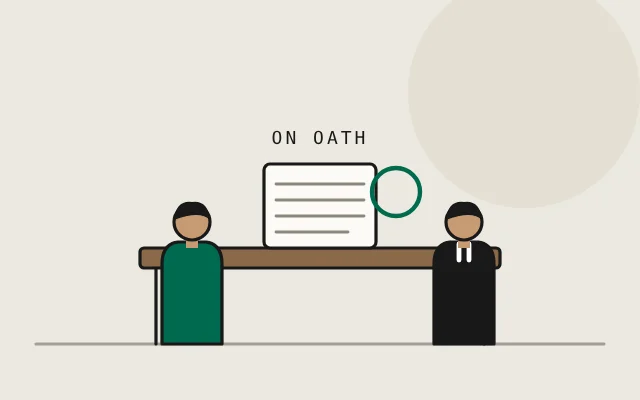
Sign before the Bangladesh mission
The safest route is to sign in person before the consular officer at the Bangladesh embassy, high commission or consulate for the country where the client lives. The officer checks identity, watches the signature and thumb impression, and attests the original and copy. Missions usually ask for an application form, photographs, identity copies of the principal and attorney and, for land, proof of title; some also ask for witnesses. Fees and appointment systems vary.
A Bangladeshi consular officer's attestation is treated as if done by an authority in Bangladesh, and courts presume a power so authenticated was properly executed.
Where: Bangladesh embassy, high commission or consulate · Time: 1-10 days · Law: s.33(1)(c) and (4) Registration Act 1908; s.3 Diplomatic and Consular Officers (Oaths and Fees) Act 1948; s.85 Evidence Act 1872 · Documents: Mission application form, Form 3 original and copy, Identity documents, Property papers, where relevant
Tip: Book early and check your mission's own checklist; some missions attest only on fixed days or by appointment.
 Step 5 · Signing abroad
Alternative: local notary with apostille or legalisation
Where travelling to the mission is impractical, the Registration Act also recognises a power executed before and authenticated by a notary public abroad. That notarisation must then be made acceptable in Bangladesh. Bangladesh acceded to the Apostille Convention on 29 July 2024, with effect from 30 March 2025, so a notarised power from another member country can usually be apostilled locally. A few existing members objected to Bangladesh's accession; for them, and for non-members, legalisation by that country's foreign ministry and the Bangladesh mission is still required.
Acceptance of apostilled documents is still uneven: in August 2026 the High Court Division issued a Rule on a writ seeking uniform acceptance by Bangladesh missions.
Where: Bangladesh embassy, high commission or consulate · Time: 1-4 weeks · Law: s.33(1)(c) Registration Act 1908; Hague Apostille Convention 1961 (Bangladesh acceded 29 July 2024; in force 30 March 2025) · Documents: Notarised power of attorney, Apostille certificate or legalisation stamps
Tip: For land or bank matters, prefer mission attestation; sub-registries and banks question notarised powers far more often.
 Step 6 · Signing abroad
Send the original to Bangladesh in time
After attestation, the original and its copy must be sent to Bangladesh within six months, under a sub-rule added in 2025. The clock for every later step runs from the date the document is received in Bangladesh, so a courier receipt or envelope showing that date is valuable evidence. The client should keep certified scans in case the courier loses the original. For a case from abroad power of attorney, the attorney or advocate in Dhaka should diarise the two-, three- and four-month deadlines as soon as the parcel arrives.
Where: Client living abroad · Time: 3-10 days by courier · Law: Rule 10(4ka) Power of Attorney Rules 2015 (inserted February 2025); s.18(1) Stamp Act 1899 (time runs from first receipt in Bangladesh) · Documents: Courier receipt, Arrival record, Scanned copy of the attested power
Tip: Send the original by tracked international courier, not ordinary post, and keep the tracking record.
 Step 7 · Validating it in Bangladesh
Attestation by the Ministry of Foreign Affairs
Within two months of receipt in Bangladesh, the attorney files the original and copy with the Ministry of Foreign Affairs, through its Consular and Welfare Wing in Dhaka, or another officer the Government appoints, which verifies the Bangladesh mission's seal and signature and attests both. For an irrevocable power, the Act itself requires this authentication on first arrival before stamping. The High Court Division has held that the Rule 10(5) steps apply to every power executed abroad, whether special, general or irrevocable.
Where: Ministry of Foreign Affairs, Consular and Welfare Wing, Dhaka · Time: 1-10 days · Law: Rule 10(5)(ka) Power of Attorney Rules 2015 (two months); s.6(6) Power of Attorney Act 2012; Writ Petition No. 12985 of 2021 (HCD, 22 May 2022) · Documents: Original and copy of the power, Attorney's NID, Application or token
Tip: Do not skip this step for a 'simple' general power; the High Court Division has refused to hear a writ sworn on a power that missed it.
- Step 8 · Validating it in Bangladesh
Stamping by the Collector
Within three months of receipt, the power must be stamped with the correct duty. Because an instrument executed abroad cannot usually be stamped by a private person, it is taken to the Collector, which in practice means the Deputy Commissioner's office and the district treasury, which affix special adhesive stamps or record payment under the 1974 Act. A power that is not duly stamped cannot be admitted in evidence, acted upon or registered. After an irrevocable power is stamped, the Collector sends a copy to the sub-registrar to be filed in Book 1.
Where: Deputy Commissioner's office (Collector) and sub-registry · Time: 1-6 weeks · Law: s.18 Stamp Act 1899 (three months); Rule 10(5)(kha) Power of Attorney Rules 2015; Stamp Duties (Additional Modes of Payment) Act 1974; s.35 Stamp Act 1899; s.6(6)-(7) Power of Attorney Act 2012 · Documents: MoFA-attested power, Stamp duty payment, Application to the Collector
Tip: Keep written proof of every submission date; in 2025 the High Court Division held that delay caused by the treasury could not be held against the attorney.
 Step 9 · Validating it in Bangladesh
Registration where land is involved
An irrevocable power for sale, mortgage or development of land must be registered. The Rules also require a power executed abroad to be filed for registration with the sub-registrar, where registration applies, within four months of receipt; in practice this covers any power dealing with immovable property. Since January 2026 the Registration Act allows a document executed abroad to be presented within six months of its arrival, but the safer course is to meet the four-month rule.
Whether a purely litigation power must also be filed is unsettled, so the cautious course is to file it too.
Where: Deputy Commissioner's office (Collector) and sub-registry · Time: 1-4 weeks · Law: s.6(1) Power of Attorney Act 2012; Rule 10(5)(ga) Power of Attorney Rules 2015 (four months); s.26 Registration Act 1908 (six months, as amended by Act 14 of 2026); Writ Petition No. 3890 of 2025 (HCD, 7 December 2025) · Documents: Stamped power, Registration fees, Property schedule and khatian
Tip: If the sub-registrar refuses registration as time-barred because of an official delay, the High Court Division can direct registration by writ.
 Step 10 · Running the case
Attorney signs, verifies and files
With a valid power, the attorney acts as the client's recognised agent. The attorney signs the vakalatnama appointing the advocate, signs the plaint or written statement, and verifies it on the facts the attorney knows personally or from records. The power, or a certified copy, is filed with the pleading so the court can see the authority. A company abroad acts through an officer or attorney authorised by board resolution. A defective case from abroad power of attorney is one of the commonest objections the other side raises at this stage.
Where: Civil court of first instance (Civil Judge, Senior Civil Judge or Joint District Judge) · Time: 1-4 weeks · Law: Order III rules 1, 2 and 4 Code of Civil Procedure 1908; Order VI rules 14 and 15 Code of Civil Procedure 1908; Order XXIX rule 1 Code of Civil Procedure 1908 · Documents: Stamped (and, if needed, registered) power, Vakalatnama, Plaint or written statement with verification
Tip: File a certified copy and keep the original safe; produce the original only when the court asks to see it.
 Step 11 · Running the case
Defending a case served abroad
A defendant who lives abroad and has no agent in Bangladesh may be served by summons sent to the foreign address by post, and by electronic means, which since the 2026 amendment expressly include SMS, voice calls and instant messaging services. Once served, the time for a written statement starts to run whether or not the defendant is in Bangladesh. The client should instruct a Dhaka advocate at once, sign a vakalatnama or power, and file the defence through the attorney.
Ignoring a summons risks an ex parte decree that can later be executed against property in Bangladesh.
Where: Civil court of first instance (Civil Judge, Senior Civil Judge or Joint District Judge) · Time: 30-60 days to respond · Law: Order V rule 9(3) (as amended 2026) and rule 25 Code of Civil Procedure 1908; Order VIII rule 1 Code of Civil Procedure 1908; Order IX rule 13 Code of Civil Procedure 1908 (as amended 2026: a decree may be set aside only once at the same defendant's instance) · Documents: Summons and plaint copy, Vakalatnama or power, Written statement
Tip: Keep your Bangladesh e-mail and phone details up to date with your lawyer; electronic service now counts.
- Step 12 · Running the case
Swearing affidavits at the mission
Many applications, such as for injunctions or attachment, need a supporting affidavit. A Bangladeshi diplomatic or consular officer abroad may administer oaths and take affidavits, and an affidavit sworn before them is as effectual as one sworn in Bangladesh and admissible without proof of the seal. Alternatively the attorney swears in Dhaka on facts within the attorney's knowledge. For writ petitions in the High Court Division, the deponent normally swears before a Supreme Court Commissioner of Affidavits, so check the registry's current practice before relying on a mission affidavit.
Where: Bangladesh embassy, high commission or consulate · Time: 1-10 days · Law: s.3(1)-(2) Diplomatic and Consular Officers (Oaths and Fees) Act 1948; s.139 Code of Civil Procedure 1908; Chapter XIA Supreme Court of Bangladesh (High Court Division) Rules 1973 · Documents: Draft affidavit from the advocate, Identity documents, Annexures initialled by the deponent
Tip: Have the advocate send the final text for swearing; changing an affidavit after it is sworn means swearing it again.
 Step 13 · Evidence, judgment and after
Evidence: what the attorney can prove
Examination-in-chief is now given on affidavit, followed by cross-examination. The attorney can give evidence of acts the attorney personally did, such as managing the property, receiving rent or dealing with the defendant, and can prove documents in the attorney's custody. Oral evidence must be direct, so the attorney cannot testify in place of the principal about facts only the principal knows, such as what was said at a meeting the attorney did not attend. Where the client's own knowledge is essential, plan for the client's evidence by video, on commission or in person.
Where: Civil court of first instance (Civil Judge, Senior Civil Judge or Joint District Judge) · Time: Several hearings over 6-24 months · Law: Order XVIII rule 4A Code of Civil Procedure 1908 (inserted 2026); s.60 Evidence Act 1872 · Documents: Affidavit in chief, Documents to be exhibited
Tip: Choose an attorney who actually handled the property or transaction; a relative with no first-hand knowledge makes a weak witness.
 Step 14 · Evidence, judgment and after
Video hearings and virtual evidence
The Use of Information Technology by Courts Act 2020 allows courts to hold hearings and take evidence by video, and treats a party's virtual presence as personal presence in court. Whether a particular judge allows it is a matter for that court, subject to Supreme Court practice directions. On 3 May 2026 the Chief Justice suspended the Wednesday and Thursday virtual sittings of both Divisions of the Supreme Court until further notice, so hearings there are in person; the Act itself remains in force.
The advocate can apply, with reasons such as distance or health, for the client to attend or testify by video from a suitable location.
Where: Civil court of first instance (Civil Judge, Senior Civil Judge or Joint District Judge) · Time: Per hearing · Law: ss.3, 4 and 5 Use of Information Technology by Courts Act 2020 (Act 11 of 2020); Supreme Court practice directions on virtual courts · Documents: Application for virtual attendance, Identity proof, Technical details of the link
Tip: Test the connection with the court's IT staff before the date; a dropped link usually means an adjournment.
 Step 15 · Evidence, judgment and after
Commission to examine the client abroad
Where the client's evidence is necessary but travel is not possible, the court may issue a commission to examine a person resident beyond its jurisdiction, and for a person outside Bangladesh it may issue a commission or a letter of request to a foreign court. The commission may be executed by a court, an advocate or another person the court appoints, who records the evidence and returns it. Evidence taken on commission can be read at trial where the witness remains beyond the court's jurisdiction.
Where: Civil court of first instance (Civil Judge, Senior Civil Judge or Joint District Judge) · Time: 3-12 months · Law: Order XXVI rules 2, 4(1)(a) and 5 Code of Civil Procedure 1908; Order XXVI rules 7-8 Code of Civil Procedure 1908 · Documents: Application with affidavit, Interrogatories or questions, Commissioner's fees deposit
Tip: Commissions are slow and costly; where the judge permits, video evidence is usually quicker.
 Step 16 · Evidence, judgment and after
Judgment, decree and execution through the attorney
After judgment the attorney obtains certified copies, reports the result and, if the client wins, applies for execution, which since 2026 can be done in the record of the original suit itself. If the power expressly allows it, the attorney can receive money paid into court and give receipts, after which the client arranges remittance abroad through a bank. If the client loses, the appeal deadline usually starts from the decree, so instructions must be quick. A well-drafted case from abroad power of attorney carries the client through these final steps without new paperwork.
Where: Civil court of first instance (Civil Judge, Senior Civil Judge or Joint District Judge) · Time: 1-3 months after judgment · Law: Order XX rules 6-7 Code of Civil Procedure 1908; Order XXI rules 10 and 104 Code of Civil Procedure 1908 (as amended 2026); s.7 Power of Attorney Act 2012 · Documents: Certified copy of judgment and decree, Execution application, Receipts for money paid out
Tip: Ask the advocate to send the judgment the day it is signed; the 30-day (District Judge) or 90-day (High Court Division) appeal period passes quickly from abroad.
What if…? How the case from abroad power of attorney can change course
Choose a scenario. The map animates the route up the hierarchy and, where a case is sent back, down to the lower court and up again.
When must the client appear in person, and what replaces it?
- 1Civil court of first instance (Civil Judge, Senior Civil Judge or Joint District Judge)
Court-ordered personal appearance
Usually a party may appear through an attorney or advocate. But the court can direct a party to appear in person, examine a party to clarify the pleadings, or require the party's own evidence where only the party knows the facts. Criminal cases are different: an accused normally attends personally, although a magistrate may dispense with attendance in some cases. Family matters and settlement meetings may also call for the client.
As orderedOrder III rule 1 Code of Civil Procedure 1908Order V rule 3 and Order X rule 2 Code of Civil Procedure 1908s.205 Code of Criminal Procedure 1898 - 2Bangladesh embassy, high commission or consulate
Alternatives to travelling
Where personal appearance is required, the advocate can ask the court to accept a video appearance, issue a commission for examination abroad, or receive an affidavit sworn at the Bangladesh mission. The court decides. If the court insists on attendance and the client cannot come, the claim may fail for want of proof, so raise the issue early.
Weeks to monthsOrder XXVI rules 4-5 Code of Civil Procedure 1908s.3 Diplomatic and Consular Officers (Oaths and Fees) Act 1948ss.3-4 Use of Information Technology by Courts Act 2020
Where it ends up: The client either testifies by video, on commission or in person, or the case proceeds on the attorney's evidence alone.
How do I revoke or replace the power of attorney?
- 1Bangladesh embassy, high commission or consulate
Revocation notice
A general power can be revoked by thirty days' notice to the attorney by registered post; acts done before the notice remain valid. An irrevocable land power can be ended only if its purpose is frustrated or a party suffers loss, again by thirty days' registered notice, with a copy to the sub-registry, and disputes go to compromise, a mediator and then court. A power also ends on the principal's death or insanity, except an irrevocable one.
30 days' notices.11(1)(d), (2) and (3) Power of Attorney Act 2012s.4(3) and s.13 Power of Attorney Act 2012 - 2Civil court of first instance (Civil Judge, Senior Civil Judge or Joint District Judge)
Telling the court and the registry
Execute the revocation, ideally before the Bangladesh mission, and send it through the same attestation and stamping steps. File it in every pending case with a fresh power or vakalatnama in favour of the new attorney, and send a copy to the sub-registry and to banks. For RAJUK plots and flats, revocation also needs RAJUK's consent.
1-3 monthsOrder III rule 4(2) Code of Civil Procedure 1908Rule 10(5) Power of Attorney Rules 2015
Where it ends up: The old attorney's authority ends and the case continues through the new attorney or the client directly.
What if we lose and want to appeal from abroad?
- 1District Judge's Court
First appeal through the attorney
An appeal from a Civil Judge or Senior Civil Judge goes to the District Judge within thirty days, as does an appeal from a Joint District Judge in a suit valued up to Tk 5 crore. Above that, it goes to the High Court Division within ninety days. The attorney can sign the memorandum of appeal only if the power covers appeals, otherwise a new power is needed, which takes weeks from abroad. A first appeal rehears facts and law, usually without fresh evidence, so the client rarely needs to attend.
30-90 days to file; 1-4 yearss.96 Code of Civil Procedure 1908s.21 Civil Courts Act 1887 (as amended 2021; courts renamed 2026)Articles 152 and 156 Limitation Act 1908
Where it ends up: The appellate court affirms, varies or reverses the decree; the next step is revision or leave.
Can the High Court Division and Appellate Division step in?
- 1High Court Division
Civil revision under section 115
There is no second appeal. Against the District Judge's appellate decree, the attorney applies to the High Court Division in civil revision on an error of law causing a failure of justice. The supporting affidavit is usually sworn by the attorney in Dhaka on the record, so the client need not travel. Interim orders of the trial court go first to the District Judge, then to the High Court Division only with leave.
1-3 yearss.115(1), (2) and (4) Code of Civil Procedure 1908 - 2Appellate Division of the Supreme Court
Leave to appeal to the Appellate Division
Against the High Court Division's judgment, a civil petition for leave to appeal is filed within sixty days. Leave is granted on a substantial question of law, such as the validity of a power executed abroad. The Appellate Division can review its own judgment under Article 105. An authenticated power covering Supreme Court proceedings avoids delay at this stage.
1-3 yearsArticle 103 Constitution of BangladeshArticle 105 Constitution of BangladeshSupreme Court of Bangladesh (Appellate Division) Rules 1988
Where it ends up: The Appellate Division's decision is final and binds all courts below.
Can the same court reconsider its decision?
- 1Civil court of first instance (Civil Judge, Senior Civil Judge or Joint District Judge)
Review under Order XLVII
A party who has not appealed can ask the same court to review its decree within ninety days, on new and important evidence that could not be produced despite due diligence, a mistake apparent on the record, or another sufficient reason. An overseas client who learns of a document abroad after judgment may use review, but must explain why it could not be produced earlier. Review is not a rehearing.
90 days to file; 2-6 monthss.114 and Order XLVII rule 1 Code of Civil Procedure 1908Article 173 Limitation Act 1908
Where it ends up: The decree is corrected, or the review fails and the appeal route remains open.
What if the court is unsure about a point of law?
- 1High Court Division
Reference to the High Court Division
If the trial court has a real doubt on a question of law, for example whether an apostilled notarised power satisfies the Rules without mission attestation, it may state a case and refer the question to the High Court Division. References are rare, and the court usually decides the point itself and leaves it to appeal.
6-18 monthss.113 Code of Civil Procedure 1908Order XLVI rules 1-3 Code of Civil Procedure 1908 - 2Civil court of first instance (Civil Judge, Senior Civil Judge or Joint District Judge)
Case decided in line with the answer
Once the High Court Division answers, the trial court decides the objection or the suit in conformity with the opinion. If the power is held defective, the court usually allows time for a fresh, properly authenticated power rather than dismissing the case outright, but the delay from abroad can be several months.
1-3 monthsOrder XLVI rule 3 Code of Civil Procedure 1908
Where it ends up: The question is settled and the case continues below on that basis.
What if the case is sent back to the lower court?
- 1District Judge's Court
Remand for fresh evidence
If the trial court shut out the client's evidence, for instance by refusing a commission or video examination without proper reasons, the appellate court may set the decree aside and remand. Since 2026 it must decide the case itself where the record is sufficient, so remand is for real gaps. A remand order is challenged by civil revision under section 115(1), not by appeal.
With the appellate judgmentOrder XLI rules 23-25 Code of Civil Procedure 1908 (rule 24 as amended 2026)s.115(1) Code of Civil Procedure 1908 - 2Civil court of first instance (Civil Judge, Senior Civil Judge or Joint District Judge)
Retrial and a fresh decree
The trial court takes the missing evidence, often by commission or video, and passes a fresh decree. That decree can again be appealed to the District Judge and then taken to the High Court Division in revision. Check that the power of attorney is still valid before retrial begins; an expired or revoked power will need replacing.
6-18 monthsOrder XLI rule 23 Code of Civil Procedure 1908Order XXVI rule 5 Code of Civil Procedure 1908s.96 Code of Civil Procedure 1908
Where it ends up: A fresh decree is passed below and may climb back up through appeal and revision.
How the case from abroad power of attorney moves up the court hierarchy
A case from abroad power of attorney first travels through offices, not courts: the Bangladesh mission abroad, then the Ministry of Foreign Affairs, the Collector at the Deputy Commissioner's office and, for land, the sub-registry. None of these decides the dispute, but a mistake there can make every later filing invalid, and an unlawful refusal by an office can be challenged by writ in the High Court Division. The case itself starts in the court that the subject and value select.
Under the Civil Courts Act 1887 as amended in 2021 (pecuniary limits) and 2026 (renaming Assistant Judges as Civil Judges), a Civil Judge hears suits up to Tk 15 lakh, a Senior Civil Judge up to Tk 25 lakh and a Joint District Judge above that. Appeals go to the District Judge, except Joint District Judge decrees above Tk 5 crore, which go to the High Court Division. A first appeal rehears facts and law on the record, so the overseas client seldom needs to travel.
The High Court Division otherwise sits in revision on errors of law, and the Appellate Division hears the case last, by leave.
- Appellate DivisionAppellate Division of the Supreme Court
- High Court DivisionHigh Court Division
- Appellate levelDistrict Judge's Court
- First instanceCivil court of first instance (Civil Judge, Senior Civil Judge or Joint District Judge)
- Start · outside courtClient living abroad · Bangladesh embassy, high commission or consulate · Advocate's chamber in Dhaka · Ministry of Foreign Affairs, Consular and Welfare Wing, Dhaka · Deputy Commissioner's office (Collector) and sub-registry
Where your case is heard
Addresses are for Dhaka. Every district has equivalent courts at its own district judgeship.
Supreme Court of Bangladesh (Appellate Division and High Court Division)
Supreme Court of Bangladesh, Shahbag, Ramna, Dhaka-1000Hears appeals, revisions, references, writ petitions under Article 102, company matters and death references (High Court Division), and appeals by leave from the High Court Division (Appellate Division).
Both Divisions sit in the Supreme Court complex; many High Court Division benches sit in the Annex Building. Check the daily cause list for the bench and court room. Postal contact is the Registrar General, Supreme Court of Bangladesh, Ramna, Dhaka-1000.
Court of the District and Sessions Judge, Dhaka (Dhaka Judge Court)
Dhaka Judge Court premises, 16 Johnson Road, Sadarghat, DhakaSeat of the Dhaka District Judge and Additional District Judges (civil appeals, probate, district-level civil and sessions work outside the metropolitan area) and the civil courts of first instance (Joint District Judge, Senior Civil/Assistant Judge courts).
Official judiciary portal gives '16 Johnson Road, Sadarghat, Dhaka'. Many civil courts (Additional District Judge courts, Joint District Judge and Senior Assistant Judge courts, Artha Rin Adalat No.1, insolvency court) are in the new 8-storey District Judge Court building in the same premises. The 2026 judgeship list names the first-instance civil courts 'Senior Civil Judge' / 'Civil Judge' (formerly Senior Assistant Judge / Assistant Judge); some pages still use the old names. Every district has an equivalent court at its district judgeship.
Client living abroad
Where this happens depends on your district or the office concerned. Ask us for the exact courtroom and address.
Bangladesh High Commissions, Embassies and Consulates abroad
Bangladesh mission for the country where you live (no single address)Attest powers of attorney, affidavits and other documents signed abroad so that they can be used in a Bangladeshi court or office.
Use the mission that covers the country where you sign the document; the list of missions is on the Ministry of Foreign Affairs website. A power of attorney attested abroad usually has to be stamped and authenticated in Bangladesh (within the period the law allows) before it can be used. Check the mission's own website for appointments, fees and documents required.
Advocate's chamber in Dhaka
Where this happens depends on your district or the office concerned. Ask us for the exact courtroom and address.
Ministry of Foreign Affairs, Consular and Welfare Wing (Attestation)
Segunbagicha, DhakaAttests Bangladeshi documents (certificates, deeds, court papers) for use abroad and authenticates documents attested by foreign missions in Bangladesh.
The current location of the attestation counter could not be verified from an official source. Check the MoFA website for the counter's location, hours, and any online appointment system before visiting.
Office of the Deputy Commissioner (District Magistrate), Dhaka
Dhaka (exact address not confirmed)District administration: land revenue and record-correction appeals, certificate cases, acquisition, executive magistracy and mobile courts for Dhaka district.
The official street address could not be read from dhaka.gov.bd (its contact pages did not load); the judiciary portal confirms office phone 02-223389786. Confirm the address before visiting. Every district has a Deputy Commissioner's office at the district headquarters.
How long each stage takes
These are indicative ranges based on typical Dhaka practice. Adjournments, case backlogs and appeals can stretch them.
Documents checklist and key terms
Tick off what you have. Your ticks stay saved in this browser. Bring the list to your first meeting with your lawyer.
- Power of attorney
- A document by which a person (the principal) lawfully authorises another (the attorney) to act on their behalf (s.2(1) Power of Attorney Act 2012).
- General power of attorney
- Any power other than an irrevocable one; it can be revoked by thirty days' registered notice.
- Irrevocable power of attorney
- A power for sale, agreement for sale or mortgage of immovable property, or land development against consideration; registration is compulsory.
- Recognised agent
- Under Order III CPC, a person holding a power of attorney who may appear, apply and act in court for a party.
- Consular attestation
- Authentication of a signature or document by a Bangladeshi diplomatic or consular officer abroad.
- Apostille
- A certificate under the 1961 Hague Convention, issued in the country of origin, that replaces consular legalisation of a public document.
- Collector
- The revenue officer, in practice the Deputy Commissioner's office, who stamps instruments executed abroad under s.18 Stamp Act 1899.
- Commission
- A court order under Order XXVI CPC appointing someone to take the evidence of a witness who cannot attend court.
- Vakalatnama
- The written authority appointing an advocate to act in a particular case.
Case from abroad power of attorney: common questions
Can I run my whole case from abroad?
Must I sign at the Bangladesh embassy, or will a local notary do?
What are the deadlines once the power reaches Bangladesh?
Does a general power for a court case need registration?
Can my attorney give evidence for me?
Can I swear an affidavit outside Bangladesh?
Are video hearings available?
How do I cancel the power if I lose trust in my attorney?
Law and sources
- Power of Attorney Act 2012 (Act 35 of 2012), Bangla text
- Registration Act 1908 (ss.26 and 33, as amended by Act 14 of 2026)
- Stamp Act 1899 (ss.18 and 35)
- Diplomatic and Consular Officers (Oaths and Fees) Act 1948
- High Court Division, Writ Petition No. 12985 of 2021 (Rule 10(5), Power of Attorney Rules 2015, applies to every power executed abroad)
- High Court Division, Writ Petition No. 3890 of 2025 (registration of a power executed in the USA directed despite official delay)
- bdnews24.com: Revised Power of Attorney rules let overseas Bangladeshis act without a passport
- Prothom Alo: High Court Rule on uniform attestation of expatriates' documents (August 2026)
- HCCH status table, Apostille Convention (Bangladesh in force 30 March 2025)
- bdnews24.com: Supreme Court suspends virtual sittings, hearings in person on all working days (May 2026)
This Case Journey is a general guide to procedure in Bangladesh as of October 2026. It is not legal advice. Procedure, fees and time limits change, and every case turns on its own facts. Timelines are indicative. Speak to a lawyer about your own matter.
Want to know where your case stands?
Book a consultation. A TRW lawyer will place your matter on this map, explain the next step and the realistic timeline, and tell you what to prepare.