
Saudi Arabia–Bangladesh legal desk: Bangladesh law, explained for clients in Saudi Arabia
This Bangladesh legal desk for clients in Saudi Arabia explains the Bangladesh law that matters most to them. This desk is for Saudi companies, investors and suppliers dealing with Bangladesh, and for Bangladeshis working there with family, land or disputes at home.
It covers the 2011 double tax convention, the absence of a bilateral investment treaty, how Saudi judgments and arbitral awards are enforced in Dhaka, the apostille route, and how to sign a power of attorney at the Embassy in Riyadh or the Consulate General in Jeddah. TRW advises Saudi-connected clients from Dhaka and its Dubai office (uae.trw.co); it has no office in Saudi Arabia.
The TRW network
Eleven offices and sites, one firm.
Dhaka is the head office. Our offices in London, Dubai, Singapore, Mumbai and Bengaluru and our country sites work with the Dhaka team on matters that cross borders.
Saudi Arabia and Bangladesh: the legal links
No Bangladesh–Saudi Arabia BIT is listed by UNCTAD
Source ↗Convention signed Riyadh 4 January 2011; caps: dividends 10%, income from debt-claims 7.5%, royalties 10%; NBR certificate needed
Source ↗No s.44A CPC notification confirmed; sue on the Saudi judgment in Bangladesh within six years
Source ↗Both New York Convention parties; Saudi awards enforced in Dhaka under Arbitration Act 2001 s.45
Source ↗Apostille Convention applies between Saudi Arabia and Bangladesh from 30 March 2025 (Saudi MOFA apostille)
Source ↗Embassy, Riyadh; Consulate General, Jeddah
Source ↗Royal Embassy of Saudi Arabia, Dhaka
Source ↗Largest source in 2025-26: USD 5.85 billion of USD 35.58 billion (Bangladesh Bank, reported)
Source ↗TRW & Co advises from Dhaka. This desk explains Bangladesh law for clients in Saudi Arabia; it does not describe an office there.
What matters to you
Investors and companies
- With no BIT, build protection into contracts and consider the holding structure.
- Apply for the NBR certificate to use the 10% dividend and 7.5% interest caps.
- Saudi-seated awards are enforced in Dhaka under section 45, within three years.
Bangladeshis working in Saudi Arabia
- Sign land and bank powers at the Riyadh Embassy or Jeddah Consulate; call first for the checklist.
- Saudi certificates now need only a Saudi MOFA apostille; ask the receiving office first.
- Keep recruitment and payment records for any claim against an agent at home.
Suppliers and contractors
- A Saudi court judgment must normally be sued on in Bangladesh.
- Use letters of credit or bank guarantees for payment security.
- Write the governing law and dispute forum into every contract.
Saudi Arabia–Bangladesh legal desk: the detail
Saudi Arabia and Bangladesh in brief
Saudi Arabia was the largest single source of remittances to Bangladesh in 2025-26: Bangladesh Bank figures reported by the Dhaka Tribune show USD 5.85 billion out of USD 35.58 billion. Most Saudi-related matters in Bangladesh are family and property matters for workers and their relatives, recruitment disputes, and commercial matters for Saudi investors, buyers and suppliers.
The Apostille Convention has applied to Saudi Arabia since 7 December 2022, and it did not object to Bangladesh's accession, so documents have been simpler since 30 March 2025 than with the UAE, Qatar or Kuwait, which are not parties.
There is no bilateral investment treaty between the two countries on UNCTAD's list, but there is a 2011 double tax convention. Both are parties to the New York Convention, so arbitration remains the most reliable way to resolve cross-border commercial disputes.
Investing from Saudi Arabia: protection and money flows
UNCTAD lists no bilateral investment treaty between Bangladesh and Saudi Arabia. A Saudi investor therefore relies on Bangladesh's Foreign Private Investment (Promotion and Protection) Act 1980, which promises fair treatment, compensation for expropriation and transfer of capital and returns but gives no consent to international arbitration, and on its own contracts.
Bangladesh is a party to the ICSID Convention, so an ICSID clause in a contract with a state entity can give a route to international arbitration. Some groups invest through a company in a country that does have a treaty with Bangladesh; whether that works depends on the treaty's definitions and must be decided before the investment, not after a dispute.
The Invest Bangladesh Act 2026 (Act No. 104 of 2026), in force from 20 August 2026, merged BIDA, BEZA and the PPP Authority into Invest Bangladesh; industrial projects register under section 28. Authorised dealer banks remit dividends to non-resident shareholders without prior Bangladesh Bank approval.
FEID Circular No. 01 of 8 March 2026 lets share-sale proceeds leave without approval in set cases, but real estate and liquidation proceeds still need approval.
Tax: the 2011 double taxation convention
The Bangladesh–Saudi Arabia convention was signed in Riyadh on 4 January 2011 and is on the National Board of Revenue's list of agreements. Its text caps Bangladesh tax on dividends paid to a Saudi resident beneficial owner at 10 per cent, on income from debt-claims (interest) at 7.5 per cent, and on royalties at 10 per cent.
Relief is not automatic. A Bangladeshi payer withholds at the domestic rate under section 119 of the Income Tax Act 2023 unless the NBR issues a certificate under section 119(2) for the treaty rate, so apply before the first payment and check the current domestic rates in the Finance Act 2026.
Contracts and arbitration
Saudi Arabia and Bangladesh are both parties to the 1958 New York Convention, which has been in force for Bangladesh since 4 August 1992 without reservations. An award made in Saudi Arabia is a foreign award in Bangladesh.
It is enforced under section 45 of the Arbitration Act 2001 on an application to the District Judge's court in Dhaka, wherever the assets are, with the authenticated award, the arbitration agreement and certified translations (s.45(2)-(3)).
Enforcement can be refused only on the section 46 grounds, which follow Article V of the Convention. In July 2026 the High Court Division confirmed that the enforcing court cannot review the merits, and in February 2026 it held that the application must be filed within three years of the award (Limitation Act 1908, article 182).
Since the Commercial Courts Act 2026, arbitration applications go to a commercial court where one has been set up, so check which court applies.
A Saudi seat such as Riyadh has one cost at home. Under the Larger Bench decision in Accom, a Bangladeshi court cannot grant interim relief under section 7A while a foreign-seated arbitration is running; relief comes only at enforcement. Where the Bangladeshi party's assets are the real target, consider a Dhaka seat, emergency arbitration, or security such as a bank guarantee before the dispute starts.
Enforcing Saudi court judgments
A money judgment from Saudi Arabia is not directly enforceable in Bangladesh. Section 44A of the Code of Civil Procedure 1908 allows direct execution only of money decrees from the superior courts of a reciprocating territory notified in the Gazette, and no notification covering Saudi Arabia has been confirmed. The usual route is a fresh suit in Bangladesh on the judgment, brought within six years (Limitation Act 1908, article 117).
Enforcing a Bangladeshi judgment in Saudi Arabia is a question of Saudi law, so take local advice there.
In that suit the foreign judgment is conclusive on matters it directly decided between the same parties, unless a section 13 exception applies: the court lacked jurisdiction, the judgment was not on the merits, it rested on an incorrect view of international law or refused to recognise Bangladeshi law where applicable, the proceedings breached natural justice, it was obtained by fraud, or it upholds a claim founded on a breach of Bangladeshi law.
A certified copy raises a presumption of jurisdiction (s.14).
Where the defendant's assets are in Bangladesh, suing here from the start, or agreeing arbitration, is often quicker than winning abroad and suing again. Commercial disputes listed in section 2 of the Commercial Courts Act 2026 go to the commercial courts.
Each party may ask for time at most three times before the final hearing (s.9(5)), and an appeal to the High Court Division lies only against the final judgment, within 60 days (s.6).
Documents and powers of attorney from Saudi Arabia
Saudi Arabia has been a party to the Apostille Convention since 7 December 2022 and did not object to Bangladesh's accession. Since 30 March 2025, Saudi birth, marriage and divorce certificates and notarised documents need only an apostille from the Saudi Ministry of Foreign Affairs, plus an English translation. Acceptance is still uneven in Bangladesh, so ask the receiving office first.
Sign a power of attorney in two sets before the consular officer at the Embassy in Riyadh or the Consulate General in Jeddah, whichever covers your area. Bring your passport or a foreign passport with a No Visa Required endorsement, an iqama copy, photographs of you and the attorney, the attorney's NID and the property papers.
Neither mission website showed a checklist in October 2026, so call the consular wing first.
A power signed before a Saudi notary and apostilled is recognised by section 33(1)(c) of the Registration Act 1908, but it is untested whether the Ministry of Foreign Affairs in Dhaka will complete its attestation on an apostille alone. For land, bank or court use, sign at the mission.
A power signed abroad follows Form 3 of the Power of Attorney Rules 2015 and must be sent to Bangladesh within six months of attestation (rule 10(4ka), from February 2025). After arrival, the Ministry of Foreign Affairs in Dhaka must attest it within two months and the Collector must stamp it within three (rule 10(5); Stamp Act 1899, s.18).
An irrevocable power to sell, mortgage or develop land must be registered (Power of Attorney Act 2012, s.6(1)); rule 10(5)(ga) allows four months from arrival to file it.
Workers, families and property
Disputes with an employer in the Gulf are governed by local law and decided there. Bangladeshi law helps with matters at home: claims against a recruiting agent, which the Overseas Employment and Migrants Act 2013 (amended in 2026) regulates, money sent to relatives, and family land. Keep copies of the contract, visa, payment receipts and messages, because these decide most claims.
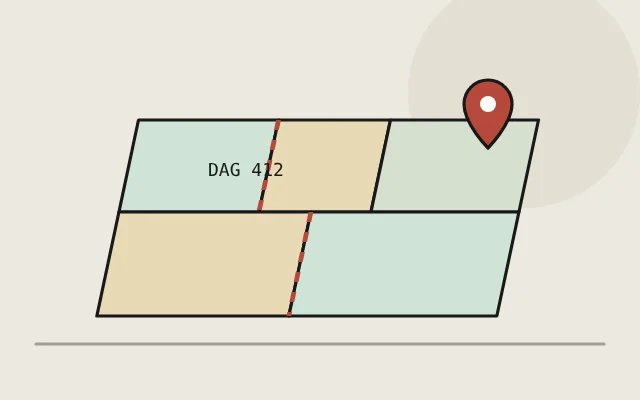
Bangladeshis in Saudi Arabia who remain Bangladeshi citizens buy, inherit and sell land in Bangladesh as residents do, usually through a relative or agent holding a power of attorney. Before any purchase, check the record of rights (khatian) in each survey series, mutation into the seller's name, land development tax receipts, the chain of registered deeds and any pending suits.
A sale takes effect only by a deed registered under the Registration Act 1908.
On a death, banks and companies usually ask for a succession certificate before releasing deposits, shares or other debts, and land passes under the personal law of the deceased. Co-owners who cannot agree can bring a partition suit. If someone occupies family land without right, the remedies are a suit for recovery of possession or an injunction, and sometimes a criminal complaint.
Act early: limitation periods and delay can weaken a claim.
Related TRW tools and guides


Sources
- UNCTAD Investment Policy Hub: Bangladesh international investment agreements
- NBR: Bangladesh–Saudi Arabia double taxation convention (text, signed 4 January 2011)
- NBR: Double Taxation Avoidance Agreements (list and treaty texts)
- UNCITRAL: status of the New York Convention 1958
- HCCH: Apostille Convention status table
- Arbitration Act 2001
- Code of Civil Procedure 1908
- Commercial Courts Act 2026 (Act No. 23 of 2026)
- Supreme Court of Bangladesh: Arbitration Appeal No. 24 of 2024 (three-year limit for enforcing a foreign award)
- Invest Bangladesh: Invest Bangladesh begins journey as country's apex investment promotion agency (23 August 2026)
- Bangladesh Bank FEID Circular No. 01 (8 March 2026): share transfers and repatriation
- Dhaka Tribune: FY26, 62% of remittances came from just 5 countries (9 August 2026, Bangladesh Bank data)
- Embassy of Bangladesh, Riyadh
- Consulate General of Bangladesh, Jeddah
- Royal Embassy of Saudi Arabia in Bangladesh
Saudi Arabia–Bangladesh legal desk: common questions
Is there an investment treaty between Saudi Arabia and Bangladesh?
What tax does Bangladesh withhold on interest paid to a Saudi lender?
Can a Saudi court judgment be enforced in Bangladesh?
Do Saudi documents still need attestation by the Bangladesh Embassy?
How do I sign a power of attorney in Saudi Arabia for my land at home?
My family member died while working in Saudi Arabia. Who can claim the money owed?
General information as of 24 October 2026, not legal advice. Treaty rates and procedures change; confirm before you act.
Speak to a Bangladesh lawyer
Book a video consultation with TRW in Dhaka. We work across time zones, in English and Bangla.











