
Criminal case process in Bangladesh: from FIR to verdict, appeal and the Appellate Division
The criminal case process in Bangladesh for a police case (a GR case) begins with an FIR at the police station under section 154 of the Code of Criminal Procedure and ends with a judgment of the trial court, followed by appeals that can reach the Appellate Division.
In between come arrest and remand, investigation, a charge sheet or final report, cognizance by the Magistrate, transfer to the Sessions Court, charge, evidence and verdict. This journey reflects the CrPC (Amendment) Act 2026 (Act XI of 2026, in force from 10 August 2025), including the new 60-working-day investigation timeline in section 173B.
- Where it starts
- Police station with territorial jurisdiction (FIR); then the Chief Metropolitan Magistrate (Dhaka city) or Chief…
- Main law
- Code of Criminal Procedure 1898 ss.46A, 54, 61, 154-173B, 190, 205C, 265A-265L, 339C, 342, 374-376, 410, 417, 420-423, 435-439A…
- Typical duration
- Indicative 3-12 months for investigation, then 2-6 years for a Sessions trial in Dhaka; appeals in the High Court…
- Who can file
- Anyone, whether victim, relative, witness or a police officer, can give information of a cognizable offence; the State…
Criminal case process in Bangladesh: walk through every stage
Press next, use your arrow keys or tap a court on the map. The gold marker shows where your case is, and the green trail shows the route it has taken. For the immersive version, play it full screen.
Read every step as text
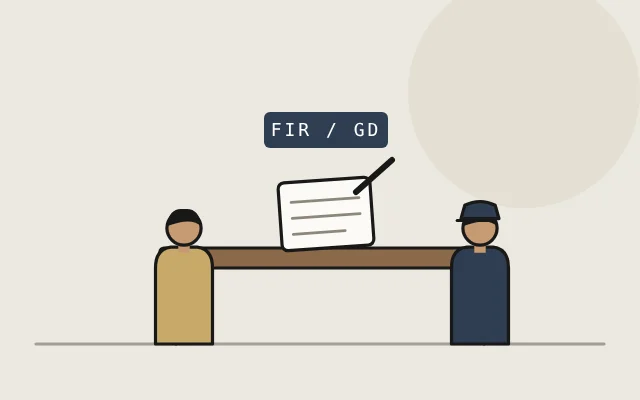 Step 1 · FIR, arrest and remand
Lodge the FIR at the police station
The criminal case process in Bangladesh for a police case begins when the informant gives information of a cognizable offence to the officer in charge of the police station where it happened. The officer must reduce it to writing, read it over, have the informant sign it and enter it in the register. This is the First Information Report under section 154, and the informant gets a free copy. For a non-cognizable offence the police only make a General Diary entry and refer the informant to a Magistrate (s.155).
An FIR should give the time, place, names of the accused, the role each played and the witnesses. Later changes to the story are attacked at trial.
Where: Police station (Officer-in-Charge and Investigating Officer) · Time: Same day · Law: s.154 CrPC 1898; s.155 CrPC 1898; s.4(1)(f) CrPC 1898 (cognizable offence) · Documents: Written ejahar (FIR) signed by informant, National ID of informant, Medical certificate or photos if available
Tip: Lodge the FIR without delay; unexplained delay is one of the most common grounds on which the defence attacks a prosecution.
 Step 2 · FIR, arrest and remand
Arrest and production before a Magistrate
Police may arrest without warrant in the circumstances set out in the substituted section 54. Since August 2025, section 46A requires the arresting officer to wear clear identification and show an identity card on request. The officer must prepare an arrest memorandum attested by a family member or local witness and inform a relative within 24 hours. The person arrested must be allowed to consult a lawyer.
The arrested person must be told the grounds of arrest and produced before the nearest Magistrate within 24 hours, excluding travel time, under section 61 and Article 33 of the Constitution.
Where: Police station (Officer-in-Charge and Investigating Officer) · Time: Within 24 hours · Law: ss.46A-46E CrPC 1898 (inserted by Act XI of 2026); s.54 CrPC 1898 (substituted by Act XI of 2026); s.61 CrPC 1898; Art.33 Constitution · Documents: Memorandum of arrest, Forwarding report, Injury or medical note if any
Tip: Family members should ask for a copy of the arrest memorandum; it is now a legal requirement and fixes the time of arrest.
 Step 3 · FIR, arrest and remand
Remand hearing: police or judicial custody
If the investigation cannot finish within 24 hours, the investigating officer forwards the accused with the case diary entries and may pray for police remand under section 167. The Magistrate can authorise detention for up to 15 days in the whole, but police custody can never exceed 15 days in total in any case. Any further detention must be in jail as judicial custody. Reasons must be recorded. The Magistrate may order a medical examination before handover and must order one if the accused alleges torture on return.
The defence lawyer opposes remand and applies for bail at the same hearing.
Where: Chief Metropolitan Magistrate Court, Dhaka · Time: Same day; remand of 1-7 days is common · Law: s.167(1)-(3) CrPC 1898; s.167(2) (substituted) and s.167(2A) (inserted) CrPC 1898, Act XI of 2026; Blast v Bangladesh, 55 DLR 363 and 69 DLR (AD) 63 (remand guidelines) · Documents: Forwarding report and remand prayer, Case diary extract, Bail petition, Medical report
Tip: Ask the Magistrate to record any injury at first production; it is the strongest protection against abuse during remand.
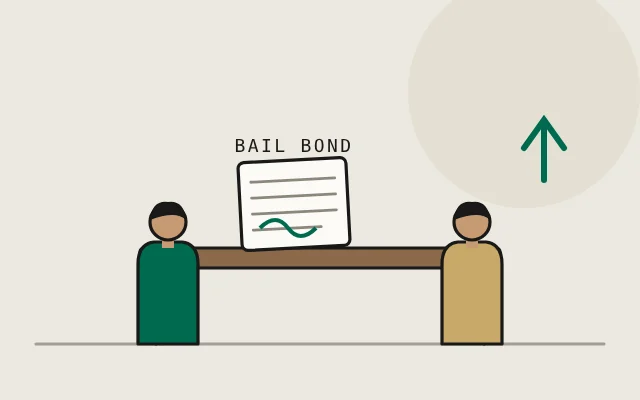 Step 4 · FIR, arrest and remand
Bail before the Magistrate
For bailable offences, bail is a right. For non-bailable offences, section 497 bars bail where there are reasonable grounds to believe the accused committed an offence punishable with death or life imprisonment. The court may still release a person under sixteen, a woman, or someone sick or infirm. If bail is refused, the accused can apply to the Sessions Judge and then the High Court Division under section 498.
Separately, the long-standing section 167(5) (dating from 1992, not the 2026 amendment) lets the Magistrate, or the Sessions Court for offences punishable with death, life or over ten years, release the accused on bail if the investigation is not concluded within 120 days. This is discretionary, not automatic.
Where: Chief Metropolitan Magistrate Court, Dhaka · Time: Days to months · Law: ss.496-498 CrPC 1898; s.167(5) CrPC 1898 (as substituted by Act XLII of 1992); s.498(2) and s.499(3) CrPC 1898 (bail conditions and online bonds, Act XI of 2026) · Documents: Bail petition, Surety bonds with NID, Medical papers if relying on illness
Tip: Prepare sureties with NID cards in advance; delays in verifying sureties often keep people in jail after bail is granted.
 Step 5 · Investigation and police report
Investigation by the police
The investigating officer visits the scene, prepares a sketch map and seizure lists, and sends exhibits to forensic labs. He records witness statements under section 161 and gathers medical, post-mortem and digital evidence. A Magistrate may record a confession or a witness statement under section 164, with strict safeguards. Since 2025, section 173B requires every investigation to finish within 60 working days of the information. The officer can obtain extensions from the Magistrate for recorded reasons, and unjustified delay can be noted as misconduct.
Where: Police station (Officer-in-Charge and Investigating Officer) · Time: 60 working days, often extended to 6-12 months · Law: ss.156-161 CrPC 1898; s.164 CrPC 1898; s.173B CrPC 1898 (inserted by Act XI of 2026) · Documents: Seizure lists, Section 161 statements, Post-mortem or medical report, Forensic reports, Section 164 statement
Tip: A s.164 confession must be voluntary and recorded after warning; any retraction should be filed promptly with reasons.
 Step 6 · Investigation and police report
Interim report and early discharge of an accused
Under the new section 173A, the supervising Police Commissioner or Superintendent may ask the investigating officer for an interim investigation report. If it shows insufficient evidence against a particular accused, the report can go to the Magistrate, who may discharge that person while the investigation continues against the others. Discharge is not final. If sufficient evidence later emerges, the person can still be named in the final police report. This gives wrongly named people a route out of a case without waiting years for a charge sheet.
Where: Chief Metropolitan Magistrate Court, Dhaka · Time: 1-3 months · Law: s.173A CrPC 1898 (inserted by Act XI of 2026, effective 10 July 2025) · Documents: Interim investigation report, Application for discharge
Tip: An accused named in a long FIR can write to the supervising officer seeking an interim report on his role.
 Step 7 · Investigation and police report
Police report: charge sheet or final report
When investigation ends, the officer in charge submits a police report under section 173 to the Magistrate. A charge sheet names the accused to be tried, lists the witnesses and attaches the documents relied on. A final report says the allegation is true but undetected, mistaken in fact or false. The informant must be told of the action taken. The police may continue investigating after submitting the report and file a supplementary report (s.173(3B)). In serious cases the investigation may be transferred to the PBI or CID.
Where: Chief Metropolitan Magistrate Court, Dhaka · Time: 3-12 months after FIR · Law: s.173(1), (3B) CrPC 1898 · Documents: Charge sheet or final report, Witness list, Documents and exhibits, Supplementary report (if any)
Tip: Collect a certified copy of the charge sheet or final report as soon as it is filed; deadlines for objections start running in practice from that date.
 Step 8 · Investigation and police report
Naraji petition against a final report
If the police submit a final report, or drop some accused from a charge sheet, the informant can file a naraji (objection) petition. The Magistrate hears it with the case diary. He may accept the final report and discharge the accused under section 202(2B). He may order further investigation by the same or another agency, or a judicial inquiry. Or he may treat the naraji as a complaint and take cognizance himself. A Magistrate is not bound by the police opinion and can take cognizance against people the police exonerated if the materials justify it.
Where: Chief Metropolitan Magistrate Court, Dhaka · Time: 1-4 months · Law: s.173(3B) CrPC 1898; s.190(1)(a)-(b) CrPC 1898; s.202(2B) CrPC 1898 · Documents: Naraji petition, Affidavits of witnesses, Certified copy of the final report
Tip: Back the naraji with sworn statements from witnesses the police ignored; a general complaint about bias rarely succeeds.
- Step 9 · Cognizance and transfer
Cognizance by the Magistrate
Cognizance is the point at which the criminal case process in Bangladesh moves from the police to the courts. On a charge sheet, the Chief Metropolitan Magistrate or Chief Judicial Magistrate takes cognizance under section 190(1)(b) of the offences disclosed. He issues process against accused who are not yet before the court, usually a warrant of arrest, and may order attachment if an accused absconds. Accused on bail are directed to appear. If the offence can be tried by a Magistrate, the case is transferred to a Metropolitan or Judicial Magistrate for trial.
If it can only be tried by a Court of Session, the next step is transfer.
Where: Chief Metropolitan Magistrate Court, Dhaka · Time: 1-6 months after the report · Law: s.190(1)(b) CrPC 1898; ss.87-88 CrPC 1898 (proclamation and attachment) · Documents: Order taking cognizance, Warrant of arrest or proclamation, Copies of police report for accused
Tip: An accused named in a fresh charge sheet should move for bail or surrender quickly; a warrant usually follows cognizance.
 Step 10 · Cognizance and transfer
Sending the case to the Sessions Court
Where the offence is triable exclusively by a Court of Session (for example murder, culpable homicide, robbery with grievous hurt or dacoity), the Magistrate sends the case under section 205C. He forwards the record, the documents and exhibits, and keeps the accused in custody or on bail. The Metropolitan Sessions Judge registers it as a sessions case and may keep it or transfer it to an Additional or Joint Metropolitan Sessions Judge. The 360-day trial limit under section 339C runs from the date the case is received for trial.
Where: Metropolitan Sessions Judge's Court, Dhaka · Time: 1-3 months · Law: s.205C CrPC 1898; s.193 CrPC 1898; s.339C(2) CrPC 1898 · Documents: Record sent under s.205C, Sessions case number, Transfer order
Tip: Check that all seized exhibits actually reached the Sessions Court; missing exhibits cause long adjournments.
- Step 11 · Sessions trial
Discharge hearing and framing of charge
The Public Prosecutor opens the case and describes the evidence. The court considers the record and hears both sides. If there is no sufficient ground, it discharges the accused under section 265C and records reasons. Otherwise it frames a written charge under section 265D, reads it out and asks each accused whether he pleads guilty. On a guilty plea, the court may convict. A charge can be altered later, but the accused must then have a fair chance to meet the new charge.
Where: Metropolitan Sessions Judge's Court, Dhaka · Time: 2-6 months · Law: ss.265A-265E CrPC 1898; ss.221-231 CrPC 1898 (form and alteration of charge) · Documents: Discharge application, Framed charge, Record of plea
Tip: Many accused file revision against charge framing; do so only on clear legal grounds, because the High Court Division rarely interferes at this stage.
 Step 12 · Sessions trial
Prosecution witnesses and cross-examination
The Public Prosecutor calls the informant, eyewitnesses, the doctor, forensic experts, the seizure-list witnesses and the investigating officer. The victim's private lawyer may assist. Each witness is examined in chief, cross-examined by every accused, and re-examined. Witness absence is the main cause of delay. Courts issue summons, then warrants, and may close the prosecution case if witnesses repeatedly fail to appear. Since 2025, the court can make orders to protect complainants, victims and witnesses, and to pay their expenses.
Where: Metropolitan Sessions Judge's Court, Dhaka · Time: 1-4 years · Law: s.265F CrPC 1898; s.544 CrPC 1898 (expenses and protection, amended by Act XI of 2026); Evidence Act 1872 ss.137-138; s.493 CrPC 1898 (private pleader under the Public Prosecutor) · Documents: Witness summons and warrants, Exhibits and seizure lists, Deposition sheets
Tip: The defence should get certified copies of every s.161 statement early; contradictions with the deposition are proved through the investigating officer.
 Step 13 · Sessions trial
Examination under section 342 and defence case
After the prosecution closes, the judge examines each accused under section 342. He puts every incriminating piece of evidence to the accused personally, so that he can explain it. The accused is not on oath and may submit a written statement. If there is no evidence that the accused committed the offence, the court acquits under section 265H. Otherwise the accused enters on his defence, may call witnesses and produce documents (s.265-I), and arguments follow (s.265J).
Where: Metropolitan Sessions Judge's Court, Dhaka · Time: 2-6 months · Law: s.342 CrPC 1898; ss.265G-265J CrPC 1898 · Documents: Record of s.342 examination, Written statement of accused, Defence exhibits
Tip: A failure to put a key circumstance to the accused under s.342 is a frequent ground for the High Court Division to set aside a conviction.
 Step 14 · Verdict and sentence
Judgment: conviction or acquittal
The judge gives a written judgment under section 265K, stating the points for decision, the findings and the reasons, and, on conviction, the section and the sentence. On acquittal, an accused in custody is released. On conviction, the accused is sent to jail with a conviction warrant unless the sentence is short and bail is granted. If the trial overran the 360-day limit, an accused facing a non-bailable charge could have applied for bail under section 339C(4) while it was pending. This is the end of the first-instance criminal case process in Bangladesh.
Where: Metropolitan Sessions Judge's Court, Dhaka · Time: 1-3 months after arguments · Law: s.265K CrPC 1898; ss.366-367 CrPC 1898; s.339C(4) CrPC 1898 · Documents: Judgment and order of sentence, Conviction warrant, Certified copy application
Tip: Apply for the certified copy immediately; the appeal period is counted from the date of sentence.
 Step 15 · Verdict and sentence
Death sentence triggers a reference
If the Sessions Court imposes the death sentence, it cannot be executed unless the High Court Division confirms it. The court must tell the convict that he can appeal within seven days and send the entire record to the High Court Division as a death reference. The convict is held in the condemned cell while the reference is pending. For all other sentences, the convict's own appeal is the next step.
Where: Metropolitan Sessions Judge's Court, Dhaka · Time: Immediately after sentence · Law: s.374 CrPC 1898; s.371(3) CrPC 1898; Art.150 Limitation Act 1908 · Documents: Death reference with full record, Warrant of commitment under sentence of death
Tip: Even where a death reference goes automatically, file a regular appeal as well, through a lawyer or from jail, to make sure every ground is argued.
- Step 16 · Verdict and sentence
Serving the sentence and filing from jail
A convict in custody can present a petition of appeal through the officer in charge of the jail, who forwards it to the appellate court. This is the jail appeal under section 420. Fines are recovered under sections 386-389, and imprisonment in default runs if a fine is unpaid. Time spent in custody before conviction is set off against the sentence under section 35A. The appellate court can suspend the sentence and grant bail pending appeal under section 426.
Where: Dhaka Central Jail (custody) · Time: Ongoing · Law: s.420 CrPC 1898; s.426 CrPC 1898; s.35A CrPC 1898; ss.386-389 CrPC 1898 · Documents: Jail appeal petition, Copy of judgment, Custody certificate
Tip: Families should confirm with the jail office that a jail appeal was actually forwarded and obtain its number.
What if…? How the criminal case process in Bangladesh can change course
Choose a scenario. The map animates the route up the hierarchy and, where a case is sent back, down to the lower court and up again.
What if the convicted accused or the State appeals?
- 1High Court Division
Criminal appeal to the High Court Division
A person convicted by a Sessions Judge or Additional Sessions Judge appeals to the High Court Division within 60 days of the sentence. A Joint Sessions Judge's sentence of more than five years goes there as well. Smaller cases go to the Sessions Judge within 30 days. The Government may appeal an acquittal within six months. Only in a complaint case may the complainant appeal an acquittal, within 60 days and only on an error of law causing a failure of justice.
The appeal rehears facts and law on the record, and the court may admit additional evidence under section 428.
3-8 years in Dhakass.408, 410 CrPC 1898ss.417, 417A CrPC 1898ss.423, 428 CrPC 1898Arts 154, 155, 157 Limitation Act 1908
Where it ends up: The High Court Division confirms, alters or reverses the conviction, or orders a retrial.
What if a party challenges an interim order, such as charge framing or rejection of a naraji?
- 1High Court Division
Criminal revision or s.561A
Interim orders, such as framing of charge, refusal to discharge, rejection of a naraji or a remand order, can be challenged by criminal revision. Orders of a Magistrate go to the Sessions Judge or the High Court Division, and orders of a Sessions Court go to the High Court Division. Revision examines legality and propriety, not a rehearing of evidence. Where no other remedy fits, the High Court Division may quash a proceeding under section 561A to prevent abuse of process.
6-24 monthsss.435, 439, 439A CrPC 1898s.561A CrPC 1898
Where it ends up: The order is upheld, or set aside and the trial resumes on corrected lines.
Can a court review its own criminal judgment?
- 1Metropolitan Sessions Judge's Court, Dhaka
Trial and High Court judgments cannot be reviewed
Section 369 CrPC prevents any criminal court from altering or reviewing its judgment once signed, except to correct a clerical error. This applies to the Sessions Court and to the High Court Division. A party who believes the judgment is wrong must appeal or seek revision before a higher court within time.
Not applicables.369 CrPC 1898 - 2Appellate Division of the Supreme Court
Review in the Appellate Division
The Appellate Division alone may review its criminal judgments under Article 105 of the Constitution, on the ground of an error apparent on the face of the record. The petition must be filed within 30 days. This step is often the last legal remedy in death sentence cases before a mercy petition.
3-12 monthsArt.105 ConstitutionOrder XXVI Supreme Court (Appellate Division) Rules 1988
Where it ends up: The Appellate Division's review decision is final; no further review lies.
How does a death reference work?
- 1High Court Division
Death reference heard with the appeal
A Division Bench of the High Court Division hears the death reference under section 374 together with any criminal appeal or jail appeal. It must examine the whole evidence independently, whether or not the convict is represented. The court may confirm the death sentence, pass any other sentence, acquit, or order further inquiry, additional evidence or a new trial. A confirmation needs the signature of at least two judges.
4-8 years in Dhakass.374-377 CrPC 1898s.420 CrPC 1898 - 2Dhaka Central Jail (custody)
Outcome sent to the jail
The High Court Division's order is sent down to the Sessions Court, which issues the appropriate warrant to the jail authority under section 381. If the sentence is commuted to life imprisonment, the convict leaves the condemned cell. If it is confirmed, the convict may appeal to the Appellate Division as of right within 30 days.
1-2 monthss.381 CrPC 1898Art.103(2)(b) Constitution
Where it ends up: The death sentence is confirmed or commuted, or a new trial is ordered.
What if the High Court Division orders a retrial?
- 1High Court Division
Conviction set aside and case sent back
If the trial was defective, the High Court Division can set the conviction aside and send the case back to the Sessions Court for a fresh trial or for specific steps. Typical defects are a charge that did not match the offence, incriminating evidence not put to the accused under s.342, or a key witness wrongly refused. The record goes back down to the Sessions Court.
Order on appeals.423(1)(b) CrPC 1898s.376(b) CrPC 1898 - 2Metropolitan Sessions Judge's Court, Dhaka
Retrial in the Sessions Court
The Sessions Court follows the remand directions. Depending on the order, it may frame a fresh or amended charge, recall particular witnesses for further cross-examination, or re-examine the accused under section 342. It then hears arguments again and delivers a new judgment. Evidence already recorded may stand if the remand order allows it, which keeps the retrial shorter than the original trial.
1-3 yearsss.265D-265K CrPC 1898 - 3High Court Division
Fresh appeal back up
The new judgment can be appealed to the High Court Division again within 60 days of the new sentence, with a fresh certified copy. If a death sentence is passed again, a fresh death reference must be made under section 374. The case therefore climbs the hierarchy a second time, and the High Court Division checks whether its earlier remand directions were properly followed.
2-6 yearss.410 CrPC 1898s.374 CrPC 1898Art.155 Limitation Act 1908
Where it ends up: The case returns to the Sessions Court for retrial and then comes back to the High Court Division on a new appeal.
How does the case reach the Appellate Division?
- 1Appellate Division of the Supreme Court
Appeal as of right or by leave
An appeal lies as of right to the Appellate Division if the High Court Division has confirmed a death sentence, or has sentenced a person to death or life imprisonment, for example on reversing an acquittal. It must be filed within 30 days. In other cases the party files a criminal petition for leave to appeal within 30 days, or 60 days for the Government against an acquittal. A convict in jail can file a jail petition.
2-5 yearsArt.103(2)(b), (3) ConstitutionOrder XXIII r.1 and Order XXIV rr.2-3 Supreme Court (Appellate Division) Rules 1988
Where it ends up: The Appellate Division's judgment ends the litigation, subject only to review.
Is there anything after the Appellate Division in a death case?
- 1Dhaka Central Jail (custody)
Mercy petition to the President
After the Appellate Division has dismissed the appeal and any review, a convict under sentence of death can petition the President for mercy under Article 49 of the Constitution. The President may grant a pardon, reprieve or respite, or remit, suspend or commute the sentence. This is an executive power, not a court proceeding, and the jail authority forwards the petition.
Weeks to monthsArt.49 ConstitutionJail Code (mercy petition procedure)
Where it ends up: The sentence is executed, or it is commuted or remitted by the President.
How the criminal case process in Bangladesh moves up the court hierarchy
The criminal case process in Bangladesh climbs a fixed ladder. A police case starts at the police station, and the first judicial forum is the Chief Metropolitan Magistrate in Dhaka city or the Chief Judicial Magistrate in a district. The Magistrate handles remand, bail, the police report and cognizance. The Second Schedule to the CrPC fixes the trial court for each offence. Lesser offences stay with a Metropolitan or Judicial Magistrate.
Murder, dacoity and other grave offences go to the Court of Session, where the Metropolitan Sessions Judge or an Additional or Joint Sessions Judge presides. Appeals follow the trial court. A Magistrate's conviction goes to the Sessions Judge within 30 days. A Sessions Judge's conviction, or a Joint Sessions Judge's sentence of more than five years, goes to the High Court Division within 60 days. Every death sentence also goes up as a reference. The High Court Division rehears facts and law, and in death references it weighs the evidence afresh.
The Appellate Division hears appeals as of right in death and life-imprisonment cases and otherwise by leave, mainly on questions of law.
- Appellate DivisionAppellate Division of the Supreme Court
- High Court DivisionHigh Court Division
- Appellate levelMetropolitan Sessions Judge's Court, Dhaka
- First instanceChief Metropolitan Magistrate Court, Dhaka
- Start · outside courtPolice station (Officer-in-Charge and Investigating Officer) · Dhaka Central Jail (custody)
Where your case is heard
Addresses are for Dhaka. Every district has equivalent courts at its own district judgeship.
Supreme Court of Bangladesh (Appellate Division and High Court Division)
Supreme Court of Bangladesh, Shahbag, Ramna, Dhaka-1000Hears appeals, revisions, references, writ petitions under Article 102, company matters and death references (High Court Division), and appeals by leave from the High Court Division (Appellate Division).
Both Divisions sit in the Supreme Court complex; many High Court Division benches sit in the Annex Building. Check the daily cause list for the bench and court room. Postal contact is the Registrar General, Supreme Court of Bangladesh, Ramna, Dhaka-1000.
Court of the Metropolitan Sessions Judge, Dhaka
40-45 Johnson Road, Dhaka-1100Tries sessions-triable offences from Dhaka metropolitan police stations and hears criminal appeals and revisions from Metropolitan Magistrates; Additional and Joint Metropolitan Sessions Judges also sit as Metropolitan Special Tribunals.
The Metropolitan Sessions Judge sits on the 2nd floor of the main building; Additional and Joint Metropolitan Sessions Judge courts are in the main building and the tin-shed building in the same compound. The Metropolitan Sessions Judge, Dhaka also holds the post of Senior Special Judge, Dhaka. Help line published by the court: 01335-145002.
Chief Metropolitan Magistrate Court, Dhaka
19 Johnson Road, Dhaka-1100Takes cognisance of and tries criminal cases arising in Dhaka Metropolitan Police areas (Metropolitan Magistrate courts), hears bail, remand and FIR/complaint matters, and sends sessions-triable cases to the Metropolitan Sessions Judge.
Metropolitan Magistrate courts are spread over the CMM court main building (floors 2-9) and the CJM court building (courts 29-37 on the 8th and 9th floors). Check the court number on the cause list. Each metropolitan city (Chattogram, Khulna, Rajshahi, Sylhet, Barishal, Rangpur, Gazipur) has its own CMM court.
Dhaka Metropolitan Police (DMP) Headquarters
36 Minto Road, DhakaHeadquarters of the Dhaka Metropolitan Police; FIRs are lodged at the local police station, not here.
Emergency: 999. For a case, go to the police station with jurisdiction over the place of occurrence.
Dhaka Central Jail (custody)
Where this happens depends on your district or the office concerned. Ask us for the exact courtroom and address.
How long each stage takes
These are indicative ranges based on typical Dhaka practice. Adjournments, case backlogs and appeals can stretch them.
Documents checklist and key terms
Tick off what you have. Your ticks stay saved in this browser. Bring the list to your first meeting with your lawyer.
- GR case
- A general register case started by an FIR and investigated by the police, as opposed to a complaint (CR) case.
- FIR (ejahar)
- The first information of a cognizable offence recorded by the officer in charge under section 154 CrPC.
- Police remand
- Detention in police custody for interrogation, authorised by a Magistrate under section 167 and capped at 15 days in total.
- Charge sheet
- The police report under section 173 recommending trial of named accused.
- Final report
- The police report saying the case is false, mistaken in fact or true but undetected, recommending discharge.
- Naraji petition
- The informant's objection to a final report or to the dropping of accused from a charge sheet.
- Section 342 examination
- The court's questioning of the accused on each incriminating circumstance after the prosecution evidence.
- Death reference
- The mandatory submission of a death sentence to the High Court Division for confirmation under section 374.
- Jail appeal
- An appeal presented through the jail authority by a convict in custody under section 420.
Criminal case process in Bangladesh: common questions
What if the police refuse to record my FIR?
How long can police keep someone on remand?
How long does the criminal case process in Bangladesh take?
What is the difference between a charge sheet and a final report?
Can the victim have their own lawyer?
What is a death reference?
Can a criminal case be withdrawn or settled?
Who should we contact first in the criminal case process in Bangladesh?
Law and sources
- The Code of Criminal Procedure, 1898 (as amended by Act XI of 2026)
- The Penal Code, 1860
- The Limitation Act, 1908
- The Constitution of the People's Republic of Bangladesh
- Code of Criminal Procedure (Amendment) Act, 2026 (Act No. XI of 2026)
- The Daily Star: BLAST welcomes safeguards on arrest introduced in the Code of Criminal Procedure
This Case Journey is a general guide to procedure in Bangladesh as of October 2026. It is not legal advice. Procedure, fees and time limits change, and every case turns on its own facts. Timelines are indicative. Speak to a lawyer about your own matter.
Run this case from outside Bangladesh
You can usually start and run this case without travelling. You sign a power of attorney abroad, the Bangladesh High Commission or Embassy attests it, and your attorney and lawyer act for you in Dhaka. Some steps, such as giving evidence in person, may still need you or a commission. See how a case runs through a power of attorney →
Want to know where your case stands?
Book a consultation. A TRW lawyer will place your matter on this map, explain the next step and the realistic timeline, and tell you what to prepare.