
Land acquisition compensation case in Bangladesh: from the s.4 notice to arbitration, writ and the Appellate Division
A land acquisition compensation case in Bangladesh runs under the Acquisition and Requisition of Immovable Property Act 2017. The Deputy Commissioner notifies, decides and values the acquisition, and pays market value plus a 200% (or 300%) premium. An owner who disputes the award must accept the money under protest and apply within 45 working days to a statutory Arbitrator, then appeal to the Arbitration Appellate Tribunal.
Ordinary civil suits are barred, so the only further route is a writ in the High Court Division and then the Appellate Division.
- Where it starts
- A preliminary notice under s.4 issued by the Deputy Commissioner (L.A. Branch) on or near the land
- Main law
- Acquisition and Requisition of Immovable Property Act 2017 (ARIPA); rules made under s.49; Article 42 and Article 102 of the…
- Typical duration
- notice to payment 8 to 24 months; arbitration and appeal a further 6 to 24 months; any writ 1 to 3 years
- Who can file
- Any 'interested person' entitled to compensation or rehabilitation: owners, lawful occupiers, co-sharers, mortgagees…
Land acquisition compensation: walk through every stage
Press next, use your arrow keys or tap a court on the map. The gold marker shows where your case is, and the green trail shows the route it has taken. For the immersive version, play it full screen.
Read every step as text
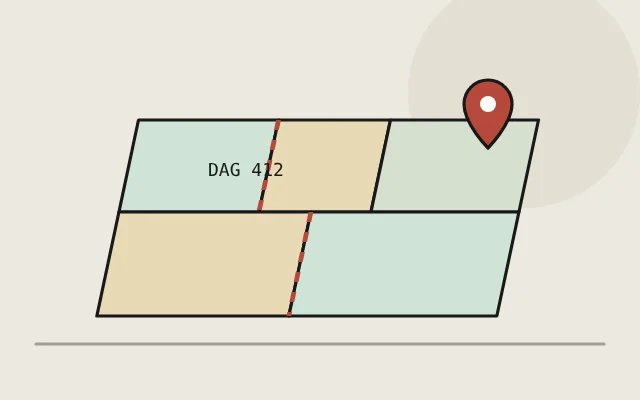 Step 1 · Proposal, s.4 notice and joint list
Video record of the land before notice
When a ministry, authority or approved private body (the requiring body) needs land, the Deputy Commissioner first records the land's actual state before issuing any notice. This means video and still images of buildings, crops and trees, and a written description. This record later fixes what can be compensated. For a project declared nationally important, the Deputy Commissioner may restrict sales and new construction in the area once the site is chosen.
Land used as a place of worship, graveyard or cremation ground is normally not acquired, unless it is indispensable and relocated at the requiring body's cost.
Where: The land being acquired (field survey and possession) · Time: 1-3 months · Law: s.4(3)(a) ARIPA 2017; s.4(12)-(13) ARIPA 2017; s.2(4) and (8) ARIPA 2017 · Documents: Requiring body's proposal, Video and photographic record, Mouza map and latest survey khatian
Tip: Take your own dated photos and video of every structure, tree and crop as soon as you hear of a project. This will be your evidence if the official record is incomplete.
 Step 2 · Proposal, s.4 notice and joint list
Preliminary notice under s.4
If the land appears to be needed for a public purpose or in the public interest, the Deputy Commissioner issues a notice in the prescribed form on or near the land, saying that acquisition is proposed. If the land is for a private person or body, the government's prior approval is needed before the process starts, whatever the area. The date of this notice matters most in a land acquisition compensation case in Bangladesh. Market value is fixed as at that date, and the 15-working-day window for objections starts running from it.
Where: Deputy Commissioner's Office, Land Acquisition Branch · Time: Notice served in a day; posted on site · Law: s.4(1)-(2) ARIPA 2017; s.9(1)(a) ARIPA 2017 · Documents: Notice under s.4, Government approval (private acquisitions), L.A. case number
Tip: Write down the date the notice was posted and photograph it. Many deadlines that follow run in working days from that date.
 Step 3 · Proposal, s.4 notice and joint list
Joint list (joint survey) of land, structures and crops
After the notice, the Deputy Commissioner prepares a joint list with the requiring body and the interested persons. It records rights in the land and every structure, crop and tree on it. If the land's recorded class has changed in reality, for example from agricultural to homestead, the Deputy Commissioner decides that while preparing the list. Structures built in bad faith after the video record are not included. Such a decision can be appealed to the Commissioner within seven working days, and the Commissioner's decision, given within 15 working days, is final.
Where: The land being acquired (field survey and possession) · Time: 1-2 months; appeal decided within 15 working days · Law: s.4(3)(b) and (4)-(11) ARIPA 2017; s.2(10) ARIPA 2017 · Documents: Joint list, Your title deeds and khatian, Building plan or approval, Evidence of land class change
Tip: Attend the joint survey in person. Items left off the joint list are very hard to add later.
 Step 4 · Objections and decision to acquire
Objection to the acquisition
Any interested person may file a written objection with the Deputy Commissioner within 15 working days of the s.4 notice. Typical objections are that the land is not needed, that other land is more suitable, that it is a homestead or place of worship, or that the area taken is excessive. The Deputy Commissioner hears the objector or their representative promptly, makes further inquiry if needed, and prepares a report with his opinion. This must be done within 30 working days after the objection period ends, or 15 for a nationally important project.
Where: Deputy Commissioner's Office, Land Acquisition Branch · Time: Objection within 15 working days; report within 30 (or 15) working days · Law: s.5(1)-(2) ARIPA 2017 · Documents: Written objection, Title documents, Site sketch showing alternatives, Hearing notice
Tip: Object to the acquisition itself here. Disputes about the amount of compensation come later, after the award.
 Step 5 · Objections and decision to acquire
Decision to acquire: Commissioner or Ministry of Land
The Deputy Commissioner sends the file with his report to the decision-maker according to area. Land up to 50 bighas (16.50 acres) goes to the Divisional Commissioner, who decides within 15 working days, or within 30 for recorded reasons. Larger areas go to the Ministry of Land, which decides within 60 working days. If no objection was filed, the Deputy Commissioner decides himself, normally within 10 working days, and that decision is final. A decision to acquire is deemed to be for a public purpose or in the public interest.
Where: Divisional Commissioner · Time: 10-60 working days depending on the route · Law: s.5(3) ARIPA 2017; s.6(1)-(2) ARIPA 2017; s.2(3) ARIPA 2017 · Documents: DC's report and opinion, Decision (approval) order
Tip: Request a certified copy of the approval. A writ challenging the acquisition itself must usually be filed soon after this decision.
 Step 6 · Award, payment and possession
Notice under s.7 to state your claim
Once acquisition is approved, the Deputy Commissioner posts a general notice on or near the land of the intention to take possession. Notices in the prescribed form are also served on occupiers and all known interested persons. They must appear before the Deputy Commissioner after 15 working days, or 7 for a nationally important project, and state their claim and share. The Deputy Commissioner can require written statements of co-sharers, mortgagees and other claims, and anyone so required is legally bound to provide them.
Where: Deputy Commissioner's Office, Land Acquisition Branch · Time: Appear after 15 (or 7) working days · Law: s.7(1)-(5) ARIPA 2017 · Documents: Notice under s.7, Written claim with share, Succession certificate or warish certificate, Mortgage papers
Tip: Co-heirs should agree their shares and file one consistent claim. Disputed shares lead the Deputy Commissioner to deposit the money in a government account instead of paying it.
 Step 7 · Award, payment and possession
Award (rowedad) by the Deputy Commissioner
After inquiry, the Deputy Commissioner makes an award stating the total compensation and each known lawful claimant's share, based on the latest survey record and the information received. The award is final subject to the Act. Within seven working days, the Deputy Commissioner must give notice of the award to interested persons and send the estimate to the requiring body. The estimate itself must be ready within 30 working days of the s.7 notice, or 15 for a nationally important project.
In a land acquisition compensation case in Bangladesh, the award notice also starts the 45-day clock for arbitration.
Where: Deputy Commissioner's Office, Land Acquisition Branch · Time: Within 30 (or 15) working days of the s.7 notice · Law: s.8(1)-(3) and (5) ARIPA 2017 · Documents: Award (rowedad), Notice of award, Compensation estimate (prakkalan)
Tip: Collect the award notice in person and note the date. The 45-working-day limit to apply to the Arbitrator runs from it.
 Step 8 · Award, payment and possession
How compensation is calculated
Market value is the average price of similar land with similar advantages nearby over the 12 months before the s.4 notice. On top of that, the government must pay an extra 200% for its own projects, or 300% for a private body. Losses from standing crops and trees, severance, damage to other property or earnings, and the cost of moving home or business attract an extra 100%. Families displaced may also be resettled.
The award ignores how urgently the land is needed, the owner's reluctance, and changes or sales after the notice without the Deputy Commissioner's approval.
Where: Deputy Commissioner's Office, Land Acquisition Branch · Time: Part of the award stage · Law: s.9(1)-(4) ARIPA 2017; s.10 ARIPA 2017; s.12 ARIPA 2017 (bargadars) · Documents: Sale deeds of nearby similar land (12 months), Sub-registry mouza rate, Crop and tree valuation, Business income records
Tip: Many awards are low because under-valued deed prices were used. Gather genuine comparable sale deeds and valuation evidence early.
 Step 9 · Award, payment and possession
Deposit by the requiring body, or lapse
The requiring body must deposit the estimated compensation with the Deputy Commissioner within 120 working days of receiving the estimate. If it does not, the whole acquisition lapses at the end of that period, and the Deputy Commissioner must publish a declaration in the Gazette. With government approval, the Deputy Commissioner may also cancel an acquisition at any time before compensation is paid. In either case, owners are entitled to compensation for losses and reasonable costs caused by the aborted process, recovered from the requiring body.
Where: Deputy Commissioner's Office, Land Acquisition Branch · Time: 120 working days (about 6 months) · Law: s.8(4) ARIPA 2017; s.14(1)-(3) ARIPA 2017 · Documents: Deposit challan, Gazette notice of lapse or withdrawal, Claim for losses on withdrawal
Tip: If the deposit deadline passes and nothing happens, the High Court Division can be asked by writ to declare the lapse or to order payment.
 Step 10 · Award, payment and possession
Payment, deposit and accepting under protest
The Deputy Commissioner must pay compensation within 60 working days of the requiring body's deposit and before taking possession. If a claimant refuses payment, cannot be found, or there is a dispute over title or shares, the money is deposited in a government account and treated as paid. A claimant may accept the money while recording an objection to the amount, which keeps open the right to arbitration. Anyone who accepts without objection loses that right. A person paid by mistake must refund the money to the lawful claimant.
Where: Deputy Commissioner's Office, Land Acquisition Branch · Time: Within 60 working days of deposit · Law: s.11(1)-(3) ARIPA 2017; s.45 ARIPA 2017 · Documents: Payment cheque or EFT, Written protest on receipt, NID, title papers and bank details, Deposit record (for disputed claims)
Tip: Always write 'received under protest as to the amount' on the receipt and keep a copy. Without it you cannot go to the Arbitrator.
 Step 11 · Award, payment and possession
Vesting, possession and Gazette notification
Once compensation is paid or treated as paid, the land vests absolutely in the government free from all encumbrances, and the Deputy Commissioner takes possession. Within 90 working days, he publishes a notification in the Gazette. If anyone refuses or obstructs handover, the Deputy Commissioner may compel it and use force if necessary. An owner can insist that a house, factory or building is taken whole rather than in part. The acquired land may be used only for the stated purpose, unless the Ministry of Land approves otherwise.
Where: The land being acquired (field survey and possession) · Time: Possession after payment; Gazette within 90 working days · Law: s.13(1)-(2) ARIPA 2017; s.44 ARIPA 2017; s.15 ARIPA 2017; s.19 ARIPA 2017 · Documents: Possession handover record, Gazette notification, Written demand for whole-building acquisition (if any)
Tip: Remove valuables and keep evidence of moving costs. Relocation costs are compensable, but only if they are proved.
 Step 12 · Arbitration and appeal
Application to the Arbitrator within 45 working days
An interested person who does not accept the award may apply to the Arbitrator to revise it within 45 working days of the award notice. The Arbitrator is a judicial officer of at least Joint District Judge rank, appointed by Gazette notification for the area. The application must give the grounds of objection, and both the Deputy Commissioner and the requiring body must be made parties. The Arbitration Act 2001 does not apply. In a land acquisition compensation case in Bangladesh, this application replaces any civil suit.
Where: Arbitrator (Joint District Judge rank or above) · Time: File within 45 working days of the award notice · Law: s.29 ARIPA 2017; s.30(1)-(3) ARIPA 2017; s.38 ARIPA 2017; s.11(2) proviso ARIPA 2017 · Documents: Arbitration application with grounds, Certified copy of award and notice, Proof of acceptance under protest, Comparable sale deeds and valuation report
Tip: Missing the 45-working-day limit is the most common fatal mistake. Count working days, not calendar days.
- Step 13 · Arbitration and appeal
Arbitration hearing and award
The Arbitrator gives notice to the applicant, the other interested persons, the Deputy Commissioner and the requiring body, and must decide within 90 working days. The inquiry is limited to the objections raised. The Arbitrator can summon witnesses, take evidence on oath or affidavit, call for records and appoint commissions. Compensation is decided under the same rules as the Deputy Commissioner's award, but cannot exceed it by more than 10% for any owner. Any increase carries an extra 10% a year until paid.
The written award with reasons counts as a civil court decree and judgment, and must state who pays the costs.
Where: Arbitrator (Joint District Judge rank or above) · Time: Within 90 working days of the application · Law: s.31(1)-(2) ARIPA 2017; ss.32-35 ARIPA 2017; s.39 ARIPA 2017 · Documents: Witness statements and valuer's evidence, Arbitrator's award with reasons
Tip: Because of the 10% cap, arbitration is most worthwhile where the award is clearly below market value or omits structures, crops or trees altogether.
 Step 14 · Arbitration and appeal
Appeal to the Arbitration Appellate Tribunal
An appeal against the Arbitrator's award lies to the Arbitration Appellate Tribunal. This is a single member, appointed by the government from serving or former District Judges, for a specified area. It must decide within 60 working days and inform the Deputy Commissioner in writing. It cannot raise any owner's compensation by more than 10% above the Arbitrator's award, and any increase carries 10% a year from its judgment until payment. The Act declares the Tribunal's decision final. Check the rules for the time limit for filing the appeal and file promptly.
Where: Arbitration Appellate Tribunal (serving or former District Judge) · Time: Decided within 60 working days of filing · Law: s.36(1)-(6) ARIPA 2017; s.49(2)(kha) ARIPA 2017 (rules on procedure) · Documents: Memorandum of appeal, Certified copy of the Arbitrator's award, Record of the arbitration
Tip: Either side can appeal. Requiring bodies often appeal increased awards, so prepare to defend the Arbitrator's reasoning as well as attack it.
 Step 15 · Enhanced payment and court challenges
Payment of the enhanced compensation
If the Arbitrator or Appellate Tribunal increases the compensation, the Deputy Commissioner must issue a notice to the requiring body within one month. The requiring body must deposit the extra amount within one month of the notice or the award, whichever is earlier, and is liable for it. The Deputy Commissioner pays the claimant immediately after the deposit. Interest at 10% a year runs on the increase until it is paid or offered. Delays here are the commonest reason owners go to the High Court Division.
Where: Deputy Commissioner's Office, Land Acquisition Branch · Time: About 2 months in law; often 3-12 months in practice · Law: s.37(1)-(3) ARIPA 2017; s.34(2) and s.36(5) ARIPA 2017 · Documents: Final award (Arbitrator or Tribunal), DC's demand notice to the requiring body, Payment record
Tip: Write to the Deputy Commissioner with a certified copy of the final award as soon as it is made. If payment stalls, a writ of mandamus can compel it.
What if…? How the land acquisition compensation can change course
Choose a scenario. The map animates the route up the hierarchy and, where a case is sent back, down to the lower court and up again.
What if the Arbitrator's award is appealed?
- 1Arbitration Appellate Tribunal (serving or former District Judge)
Appeal by the owner, the Deputy Commissioner or the requiring body
The appeal against the Arbitrator's award goes to the Arbitration Appellate Tribunal, not the District Judge's civil appellate court or the High Court Division. Either side may appeal. The Tribunal reconsiders the valuation on the record and must decide within 60 working days, subject to the 10% cap on any further increase. Its decision is final under the Act, so there is no second appeal to the High Court Division.
Decided within 60 working dayss.36(1)-(6) ARIPA 2017
Where it ends up: The Tribunal's decision fixes the compensation, subject only to a writ in the High Court Division.
Is a civil revision available against the Tribunal?
- 1High Court Division
No civil revision: writ under Article 102 instead
The Act provides no revision. It declares the Appellate Tribunal's decision final and bars any suit, application or injunction in any other court against orders under the Act. In practice, a party cannot use a civil revision under s.115 CPC. The remedy is a writ petition under Article 102. It can be used where the Tribunal or Deputy Commissioner acted without jurisdiction, ignored the statutory formula, or refused to pay.
Rule within weeks; disposal 1-3 yearss.36(4) ARIPA 2017s.47 ARIPA 2017Article 102 Constitutions.115 CPC
Where it ends up: The case reaches the High Court Division only by writ, which reviews legality rather than rehearing the valuation.
Can the acquisition itself be challenged by writ?
- 1High Court Division
Writ against the acquisition or for payment
Despite the s.47 bar, the High Court Division's constitutional jurisdiction remains. An owner may challenge an acquisition made without lawful authority, without following the notice, objection or approval stages, or in bad faith. An owner may also seek mandamus where compensation is unpaid. In W.P. No. 4959 of 2022 the High Court Division directed the Deputy Commissioner, Dhaka to pay affected owners within three months. Article 42(2) bars challenges to the law on the ground that its compensation is inadequate.
Rule and interim order within weeks; disposal 1-3 yearsArticle 102 ConstitutionArticle 42(2) Constitutions.47 ARIPA 201713 SCOB [2020] HCD 40
Where it ends up: The acquisition is upheld or quashed, or payment is ordered, and the losing side may seek leave in the Appellate Division.
Can the Deputy Commissioner, Arbitrator or a court review its decision?
- 1Appellate Division of the Supreme Court
No statutory review below; review in the Appellate Division
The Act gives no power of review against a Deputy Commissioner's award, which it declares final, or against an Arbitrator's or Tribunal's award. The Arbitrator has only the specific civil court powers listed in s.39. Errors must be corrected through arbitration, appeal or writ. After a writ is finally decided, the Appellate Division can review its own judgment under Article 105, on grounds similar to Order XLVII CPC, if a petition is filed within 30 days.
AD review petition within 30 dayss.8(2) ARIPA 2017s.39 ARIPA 2017Article 105 ConstitutionOrder XXVI rules 1-2, AD Rules 1988
Where it ends up: Only the Appellate Division can review its own final judgment; below it, the remedies are arbitration, appeal and writ.
Is there a reference to a civil court, as under the old law?
- 1Arbitrator (Joint District Judge rank or above)
Reference replaced by statutory arbitration
Under the old Land Acquisition Act 1894, a dissatisfied owner could ask the Collector to refer the award to a civil court. Bangladesh replaced that with statutory arbitration in the 1982 Ordinance, and the 2017 Act keeps this model. There is no reference to a civil court or to the High Court Division. The Arbitration Act 2001 is excluded. The disputed amount goes to the Arbitrator, provided the money was accepted under protest or never accepted.
Application within 45 working days of the award notices.30 ARIPA 2017s.38 ARIPA 2017s.50 ARIPA 2017 (repeal of the 1982 Ordinance)
Where it ends up: The compensation dispute is decided by the Arbitrator and the Arbitration Appellate Tribunal, not by reference to a court.
What if the High Court Division sends the case back?
- 1High Court Division
Tribunal decision quashed and remitted
In a writ, the High Court Division does not usually fix compensation itself. If the Appellate Tribunal or Arbitrator ignored the 12-month average rule, left out the statutory premium, or refused to consider evidence, the High Court Division quashes the decision. It sends the matter back with directions to decide afresh, often within a fixed time.
At the end of the writ hearingArticle 102(2)(a)(ii) Constitutions.9 ARIPA 2017 - 2Arbitration Appellate Tribunal (serving or former District Judge)
Fresh decision by the Tribunal
The Arbitration Appellate Tribunal, or the Arbitrator if the case was sent back that far, rehears the parties on the points identified. It applies the High Court Division's directions and the statutory formula, and gives a new reasoned decision. The 10% caps still apply, and interest on any increase continues to run.
Usually 2-6 monthss.36(5)-(6) ARIPA 2017s.33 ARIPA 2017 - 3High Court Division
Back up to the High Court Division if needed
If either side says the fresh decision still breaches the law or the directions, it may file a new writ petition, or apply in the original writ if the court kept it open. From the High Court Division's final judgment, a civil petition for leave to appeal lies to the Appellate Division.
1-2 yearsArticle 102 ConstitutionArticle 103 Constitution
Where it ends up: The case returns to the Tribunal for a fresh decision and may climb back to the High Court Division and the Appellate Division.
How does the case reach the Appellate Division?
- 1Appellate Division of the Supreme Court
Civil petition for leave to appeal
The side that loses the writ, whether the owner, the Deputy Commissioner or the requiring body, may file a civil petition for leave to appeal in the Appellate Division within 60 days of the High Court Division's judgment. If leave is granted, the civil appeal is heard on questions of law. In Civil Appeals 171-174 of 2015, decided in 2025, the Appellate Division set aside a High Court Division judgment that had quashed a Chattogram acquisition, because it relied on a fictitious document.
File within 60 days; leave 6-18 months; appeal 1-3 yearsArticle 103 ConstitutionOrder XIII rule 1, AD Rules 1988Article 111 Constitution
Where it ends up: The Appellate Division's judgment finally settles the acquisition or compensation dispute.
How the land acquisition compensation moves up the court hierarchy
A land acquisition compensation case in Bangladesh climbs two separate ladders. Whether land is acquired is decided administratively. The Deputy Commissioner hears objections. The Divisional Commissioner decides acquisitions up to 50 bighas (16.50 acres), the Ministry of Land decides larger ones, and the Deputy Commissioner alone decides where nobody objects. How much is paid starts with the Deputy Commissioner's award. It then goes to a statutory Arbitrator of at least Joint District Judge rank and to a one-member Arbitration Appellate Tribunal drawn from District Judges, which rehear the valuation on facts within strict time limits.
The thresholds that matter are not money values but the land area and the 10% caps: neither the Arbitrator nor the Tribunal can raise any owner's compensation by more than 10% at each level. The Tribunal's decision is final, and s.47 bars civil suits and injunctions. So the High Court Division is reached only by writ under Article 102, which tests legality, jurisdiction and fairness rather than rehearing values. The Appellate Division hears appeals only with leave.
- Appellate DivisionAppellate Division of the Supreme Court
- High Court DivisionHigh Court Division
- Appellate levelDivisional Commissioner · Ministry of Land (Government) · Arbitration Appellate Tribunal (serving or former District Judge)
- First instanceArbitrator (Joint District Judge rank or above)
- Start · outside courtThe land being acquired (field survey and possession) · Deputy Commissioner's Office, Land Acquisition Branch
Where your case is heard
Addresses are for Dhaka. Every district has equivalent courts at its own district judgeship.
Supreme Court of Bangladesh (Appellate Division and High Court Division)
Supreme Court of Bangladesh, Shahbag, Ramna, Dhaka-1000Hears appeals, revisions, references, writ petitions under Article 102, company matters and death references (High Court Division), and appeals by leave from the High Court Division (Appellate Division).
Both Divisions sit in the Supreme Court complex; many High Court Division benches sit in the Annex Building. Check the daily cause list for the bench and court room. Postal contact is the Registrar General, Supreme Court of Bangladesh, Ramna, Dhaka-1000.
Office of the Divisional Commissioner, Dhaka
Dhaka (exact address not confirmed)Hears appeals and revisions in land-revenue matters (e.g. mutation and record appeals from the Additional Deputy Commissioner (Revenue)) and supervises district administrations in Dhaka Division.
The official site (dhakadiv.gov.bd) could not be fetched; address not confirmed. Each of the eight divisions has a Divisional Commissioner's office.
Ministry of Land (Government)
Where this happens depends on your district or the office concerned. Ask us for the exact courtroom and address.
Court of the District and Sessions Judge, Dhaka (Dhaka Judge Court)
Dhaka Judge Court premises, 16 Johnson Road, Sadarghat, DhakaSeat of the Dhaka District Judge and Additional District Judges (civil appeals, probate, district-level civil and sessions work outside the metropolitan area) and the civil courts of first instance (Joint District Judge, Senior Civil/Assistant Judge courts).
Official judiciary portal gives '16 Johnson Road, Sadarghat, Dhaka'. Many civil courts (Additional District Judge courts, Joint District Judge and Senior Assistant Judge courts, Artha Rin Adalat No.1, insolvency court) are in the new 8-storey District Judge Court building in the same premises. The 2026 judgeship list names the first-instance civil courts 'Senior Civil Judge' / 'Civil Judge' (formerly Senior Assistant Judge / Assistant Judge); some pages still use the old names. Every district has an equivalent court at its district judgeship.
The land being acquired (field survey and possession)
Where this happens depends on your district or the office concerned. Ask us for the exact courtroom and address.
Office of the Deputy Commissioner (District Magistrate), Dhaka
Dhaka (exact address not confirmed)District administration: land revenue and record-correction appeals, certificate cases, acquisition, executive magistracy and mobile courts for Dhaka district.
The official street address could not be read from dhaka.gov.bd (its contact pages did not load); the judiciary portal confirms office phone 02-223389786. Confirm the address before visiting. Every district has a Deputy Commissioner's office at the district headquarters.
How long each stage takes
These are indicative ranges based on typical Dhaka practice. Adjournments, case backlogs and appeals can stretch them.
Documents checklist and key terms
Tick off what you have. Your ticks stay saved in this browser. Bring the list to your first meeting with your lawyer.
- Requiring body (prottashi sangstha)
- The government or private body for which the land is acquired, and which pays the compensation.
- Interested person
- Anyone entitled to claim compensation or rehabilitation because of the acquisition (s.2(12)).
- Joint list (joutho talika)
- The joint survey record of rights, structures, crops and trees on the land.
- Award (rowedad)
- The Deputy Commissioner's written decision on the total compensation and each claimant's share (s.8).
- Accepting under protest
- Taking the award money while objecting in writing to the amount, which keeps open the right to arbitration (s.11(2)).
- Arbitrator
- A judicial officer of at least Joint District Judge rank appointed under s.29 to revise disputed awards.
- Arbitration Appellate Tribunal
- A one-member appellate forum drawn from serving or former District Judges, whose decision is final (s.36).
- Nationally important project
- A project declared as such by the government, for which the Act's time limits are shorter.
- Requisition (hukum dakhal)
- Temporary taking of property for public purposes under Chapter III, with its own compensation rules.
Land acquisition compensation: common questions
How is compensation calculated?
How long do I have to object to the acquisition?
Should I accept the compensation cheque?
Can I file a civil suit or get an injunction to stop the acquisition?
How much more can the Arbitrator award?
What if the requiring body never deposits the money?
Who decides whether my land is acquired?
How long does a land acquisition compensation case in Bangladesh take?
Law and sources
- Acquisition and Requisition of Immovable Property Act 2017 (Laws of Bangladesh)
- Acquisition and Requisition of Immovable Property Act 2017 (mirror text)
- Acquisition and Requisition of Immovable Property Ordinance 1982 (repealed)
- W.P. No. 4959 of 2022 (HCD): direction to pay compensation, Gulshan-Banani-Baridhara Lake project
- Civil Appeal Nos. 171-174 of 2015 (AD, 21 May 2025): Deputy Commissioner, Chittagong v Interbulk Overseas SA
- Constitution of the People's Republic of Bangladesh (Articles 42, 102, 103 and 105)
- Ministry of Land, Bangladesh
- Supreme Court of Bangladesh (Appellate Division) Rules 1988
This Case Journey is a general guide to procedure in Bangladesh as of October 2026. It is not legal advice. Procedure, fees and time limits change, and every case turns on its own facts. Timelines are indicative. Speak to a lawyer about your own matter.
Run this case from outside Bangladesh
You can usually start and run this case without travelling. You sign a power of attorney abroad, the Bangladesh High Commission or Embassy attests it, and your attorney and lawyer act for you in Dhaka. Some steps, such as giving evidence in person, may still need you or a commission. See how a case runs through a power of attorney →
Want to know where your case stands?
Book a consultation. A TRW lawyer will place your matter on this map, explain the next step and the realistic timeline, and tell you what to prepare.