
Trademark rectification in the High Court of Bangladesh: the full journey, step by step
A trademark rectification in High Court proceedings asks the High Court Division to remove, cancel or vary an entry in the trademark register under sections 42 and 51 of the Trademarks Act 2009, for example for five years' non-use, for a registration obtained in bad faith, or for a mark that conflicts with a well-known mark.
An aggrieved person can choose between the Registrar at the Department of Patents, Designs and Trademarks and the High Court Division, but once validity is raised in an infringement suit, section 98 sends the question to the High Court Division. The Registrar then corrects the register to give effect to the judgment, and the losing side can seek leave from the Appellate Division.
- Where it starts
- High Court Division (special statutory jurisdiction), as a Trade Mark Application under ss.42, 51, 98 and 99 Trademarks…
- Main law
- Trademarks Act 2009 (ss.8, 10, 28, 29, 42, 43, 51, 52, 91, 93, 98-105), as amended in 2015 and by s.36 of the Industrial Designs…
- Typical duration
- about 1-4 years in the High Court Division; Registrar proceedings 1-3 years plus any appeal; a further 1-3 years if…
- Who can file
- Any 'aggrieved person', typically a trader whose own application is blocked by the registered mark, who is sued for…
Trademark rectification in High Court: walk through every stage
Press next, use your arrow keys or tap a court on the map. The gold marker shows where your case is, and the green trail shows the route it has taken. For the immersive version, play it full screen.
Read every step as text
 Step 1 · Building the case
Identify the ground for rectification
The lawyer matches the facts to a statutory ground. Section 42 allows removal for non-use: either the mark was registered without a bona fide intention to use it and was not used in good faith up to one month before the application, or it has not been used in good faith for five years or more since registration. Section 51 allows cancellation for breach of a registered condition, and correction of an entry made without sufficient cause or wrongly remaining on the register.
That covers marks barred by section 8, including applications made in bad faith, and marks conflicting with earlier or well-known marks under section 10.
Where: Applicant's lawyer · Time: 1-2 weeks · Law: s.42(1)(a) and (b) Trademarks Act 2009; s.51(1) and (2) Trademarks Act 2009; s.8 Trademarks Act 2009; s.10(1), (4)-(6) Trademarks Act 2009 · Documents: Registration certificate of the target mark, Applicant's own applications or registrations, Timeline of use of both marks
Tip: Check the registration date first. After seven years, s.29 makes the registration valid unless it was obtained by fraud or bad faith, breaches s.8, or the mark was not distinctive when proceedings began.
 Step 2 · Building the case
Search the register and obtain certified extracts
The applicant's lawyer searches the register and obtains certified extracts of the entry, the application history, the advertisement in the Trademarks Journal, any oppositions and any assignments or registered users. The file often shows that an earlier application was overlooked, or that the mark was assigned without the goodwill. Registered users must later be made parties to the proceedings under section 105, so the extracts should be complete. Section 28 makes the registration prima facie evidence of validity, so the applicant needs the documents to rebut it.
Where: Registrar (Director General), Department of Patents, Designs and Trademarks · Time: 2-6 weeks · Law: s.28 Trademarks Act 2009; s.105 Trademarks Act 2009 · Documents: Certified extract of the register, Copy of the application file and Journal advertisement, Assignment and registered user records
 Step 3 · Building the case
Gather evidence of non-use, bad faith or reputation
For non-use, the applicant gathers market surveys, investigator reports, trade inquiries and searches of import, BSTI and advertising records showing no genuine use in Bangladesh during the period. For bad faith, it collects evidence that the proprietor knew of the applicant's mark, such as past dealings or copying of get-up. For a well-known mark, section 10(6) looks at knowledge of the mark among the relevant sector of the public, including through promotion in Bangladesh.
The burden is on the applicant: in Danish Foods v Rani Food Industries the High Court Division presumed a registered mark was meant for use until disproved.
Where: Applicant's lawyer · Time: 1-3 months · Law: s.42(1) and (4) Trademarks Act 2009; s.10(6) Trademarks Act 2009; Danish Foods Ltd v Rani Food Industries Ltd, 19 SCOB [2024] HCD 104 · Documents: Investigator's affidavit, Market survey, Advertising and sales records, Evidence of the proprietor's knowledge
 Step 4 · Building the case
Ask the proprietor to surrender the entry
Before litigating, it is often worth writing to the registered proprietor asking it to cancel the registration or remove some goods from it voluntarily. Section 52(1) lets the proprietor itself apply to the Registrar to cancel an entry or strike out goods or services. A dormant proprietor sometimes agrees, which saves years. The letter also tests the proprietor's position, because a reply claiming use without any evidence can later support the applicant's case on non-use.
Where: Applicant's lawyer · Time: 2-4 weeks · Law: s.52(1)(c) and (d) Trademarks Act 2009 · Documents: Letter before action, Draft request for voluntary cancellation
- Step 5 · Choosing the forum
Choose between the Registrar and the High Court Division
Sections 42 and 51 allow an aggrieved person to apply either to the Registrar or to the High Court Division. The Registrar's route uses prescribed forms and evidence by affidavit, and is usually cheaper, but its decision can be appealed to the High Court Division, adding a layer. Filing a trademark rectification in High Court proceedings goes straight to the court whose decision is final subject only to leave to the Appellate Division.
Where an infringement suit is already pending and validity is in issue, section 98 makes the High Court Division the only forum, and the Registrar can send an application filed with it to the High Court Division.
Where: Applicant's lawyer · Time: 1 week · Law: s.42(1) Trademarks Act 2009; s.51(1)-(2) Trademarks Act 2009; s.98(1)-(3) Trademarks Act 2009 · Documents: Forum strategy note
 Step 6 · Choosing the forum
If an infringement suit is pending: raise validity
Infringement suits are filed in a court not below the District Judge, now a Commercial Court where one is operating. If the defendant pleads that the plaintiff's registration is invalid, or the plaintiff attacks the defendant's registration, section 102 applies. If rectification proceedings are already pending, the suit court may stay the suit until they are finally decided. If not, and the plea is prima facie tenable, the court frames an issue and adjourns the suit for three months so the party can apply to the High Court Division.
A party who fails to apply within that time, or any extra time the court allows, is treated as having abandoned the plea.
Where: Commercial Court or District Judge's Court (infringement suit) · Time: Three-month window from the issue being framed · Law: s.96 Trademarks Act 2009; s.102(1)-(3) and (5) Trademarks Act 2009; s.98 Trademarks Act 2009; s.2(gha)(16) Commercial Courts Act 2026 · Documents: Written statement raising invalidity, Order framing the issue and adjourning the suit
Tip: Diarise the three months from the date the issue is framed. Missing it can cost the validity point altogether.
 Step 7 · Filing and Rule
Draft the application in the prescribed form
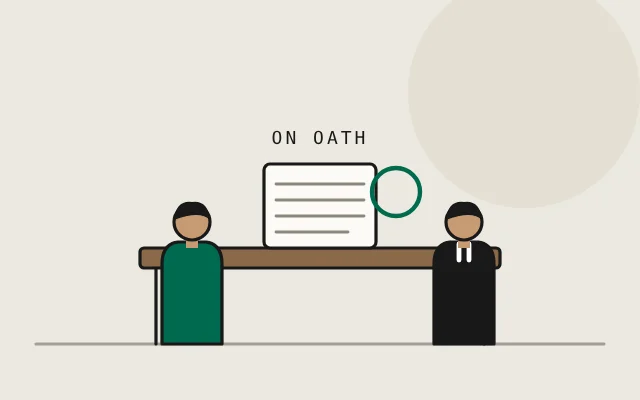
Under section 99(1), the application to the High Court Division must be in the prescribed form with the relevant particulars. It names the registered proprietor, the Registrar and any registered users as respondents, sets out the grounds, and asks for the entry to be removed, cancelled, varied or limited. It is verified by affidavit and attaches the certified extracts and the evidence. Where the application follows a section 102 adjournment, it should attach the suit court's order to show that it was filed in time.
Where: Applicant's lawyer · Time: 2-4 weeks · Law: s.99(1) Trademarks Act 2009; s.105(1) Trademarks Act 2009 · Documents: Trade Mark Application under ss.42, 51 and 99, Supporting affidavit, Certified register extracts, Evidence bundle, Vakalatnama or power of attorney
 Step 8 · Filing and Rule
File and move for a Rule
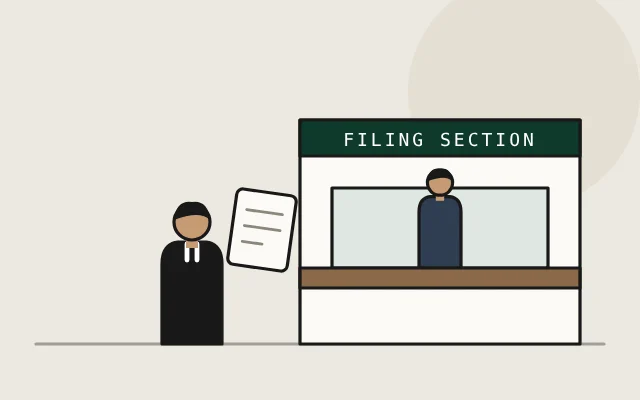
The application is filed in the High Court Division in its special statutory jurisdiction and moved before the bench the Chief Justice has assigned to trademark matters. If the bench is satisfied that there is an arguable case, it issues a Rule asking the respondents to show cause why the entry should not be removed and the register rectified, as it did in Danish Foods v Rani Food Industries. Rectification is excluded from the Commercial Courts Act 2026 because that Act does not cover matters within the High Court Division's original jurisdiction.
Where: High Court Division · Time: 1-6 weeks to the Rule · Law: s.99(1) Trademarks Act 2009; s.2(gha) Commercial Courts Act 2026; Article 107(3) Constitution of Bangladesh · Documents: Filed application, Court fee receipt, Order issuing the Rule
 Step 9 · Filing and Rule
Service on the proprietor and the Registrar
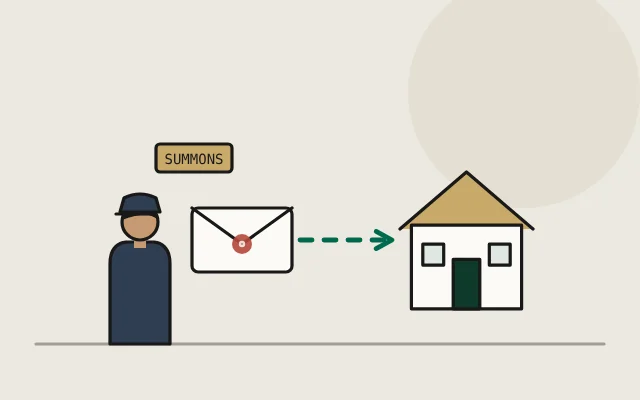
The Rule is served on the registered proprietor, any registered users and the Registrar. Under section 103, the Registrar has the right to appear and be heard in any proceedings seeking rectification of the register. Unless the court directs otherwise, the Registrar may instead file a signed statement on the issues, the practice of the registry or the reasons for the original registration, and that statement forms part of the evidence. The court can fix the Registrar's costs under section 104, but cannot order the Registrar to pay another party's costs.
Where: Registrar (Director General), Department of Patents, Designs and Trademarks · Time: 1-3 months · Law: s.103(1) and (3) Trademarks Act 2009; s.104 Trademarks Act 2009; s.105 Trademarks Act 2009 · Documents: Affidavit of service, Registrar's statement, if filed
- Step 10 · Evidence and hearing
Affidavit-in-opposition and reply
The proprietor files an affidavit-in-opposition, usually producing invoices, advertisements and BSTI or import records to prove use, or arguing that non-use was due to special circumstances. Section 42(4) protects a proprietor whose non-use was caused by special circumstances of the trade and not by any intention to abandon the mark. The proprietor may also argue that the applicant is not an aggrieved person. The applicant then replies. Section 99(2) applies the Code of Civil Procedure, so the court can allow interrogatories, discovery or oral evidence where facts are disputed.
Where: High Court Division · Time: 2-6 months · Law: s.42(4) Trademarks Act 2009; s.99(2) Trademarks Act 2009 · Documents: Affidavit-in-opposition, Evidence of use, Affidavit-in-reply
- Step 11 · Evidence and hearing
Final hearing of the Rule
At the hearing, the court decides whether the applicant is an aggrieved person and whether a ground is proved. On non-use, the High Court Division in Danish Foods held that the two conditions in section 42(1)(a), lack of bona fide intention and actual non-use up to a month before the application, are cumulative. The person seeking removal bears the burden of proof.
On wrongful entry under section 51, the court looks at whether the registration should have been refused at the time, for example because of an earlier conflicting application, a well-known mark or bad faith.
Where: High Court Division · Time: 1-4 hearing days; often 1-3 years after filing · Law: s.42(1)(a) Trademarks Act 2009; s.51(2)-(3) Trademarks Act 2009; Danish Foods Ltd v Rani Food Industries Ltd, 19 SCOB [2024] HCD 104 · Documents: Written submissions, Authorities, Paper book of evidence
 Step 12 · Evidence and hearing
Judgment: Rule made absolute or discharged
If the applicant succeeds, the Rule is made absolute and the court orders the entry removed, cancelled or varied, or, under section 42(3), imposes a limitation, for example so that the registration no longer covers a place or export market where the mark was never used. Section 51(3) lets the court decide any related question needed to rectify the register properly. If the applicant fails, the Rule is discharged and the registration stands; in Danish Foods the court found section 51 inapplicable and section 42 unproved, and rejected the application.
Under section 51(5), an order rectifying the register must direct that notice of it be served on the Registrar.
Where: High Court Division · Time: Judgment day; certified copy 1-4 weeks · Law: s.42(3) Trademarks Act 2009; s.51(3) and (5) Trademarks Act 2009 · Documents: Judgment and order, Certified copy
 Step 13 · Correcting the register
File the judgment with the Registrar
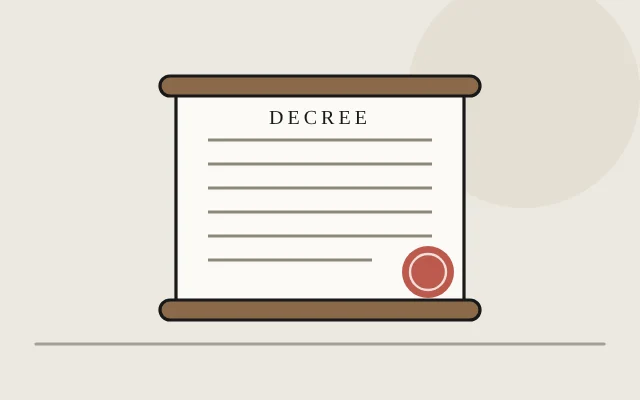
Section 99(3) requires a certified copy of the judgment of the High Court Division or the Appellate Division to be sent to the Registrar, who must rectify the register to give effect to it. Under rule 51 of the Trademarks Rules 2015, the party in whose favour the order was made files a copy with the Registrar, with the prescribed fee and form where the register needs to be changed. The applicant should obtain an updated certified extract to confirm the change has been made.
Where: Registrar (Director General), Department of Patents, Designs and Trademarks · Time: 1-3 months · Law: s.99(3) Trademarks Act 2009; s.51(5) Trademarks Act 2009; Rule 51 Trademarks Rules 2015 · Documents: Certified copy of the judgment, Prescribed form and fee, Updated register extract
 Step 14 · Correcting the register
The infringement suit resumes
Where the rectification was filed after a section 102 adjournment, the suit court resumes the infringement suit once the High Court Division's decision is final, and decides the validity issue in line with it. If the plaintiff's registration was removed, its infringement claim usually fails, although a passing-off claim may survive. If the defendant's challenge failed, the suit proceeds on the footing that the registration is valid. The suit court cannot re-decide the validity point.
Where: Commercial Court or District Judge's Court (infringement suit) · Time: 1-3 months to restore · Law: s.102(2) and (4) Trademarks Act 2009; s.97 Trademarks Act 2009 · Documents: Certified copy of the rectification judgment, Application to restore the suit to the list
 Step 15 · Correcting the register
Pursue the applicant's own registration
A removal often clears the way for the applicant's own application that the old mark had blocked under section 10(1). The applicant asks the Registrar to proceed with the pending application, or files a new one, which is then examined and advertised in the Trademarks Journal and is open to opposition like any other. Where the court only limited the earlier registration, the applicant's mark may proceed for the goods no longer covered. The applicant should also update its watch services and customs recordal.
Where: Registrar (Director General), Department of Patents, Designs and Trademarks · Time: 6-18 months · Law: s.10(1) Trademarks Act 2009; s.18 Trademarks Act 2009 · Documents: Request to proceed with the pending application, New application, if needed
 Step 16 · Correcting the register
Watch the leave deadline
The losing party has sixty days from the High Court Division's judgment to file a civil petition for leave to appeal in the Appellate Division. Until then, the successful party should not assume the register change is permanent, and it should not launch a large rebrand or enforcement campaign on the strength of it. If a leave petition is filed with a stay application, the Chamber Judge may suspend the rectification. Only when no challenge is pending is a trademark rectification in High Court finally complete.
Where: High Court Division · Time: 60 days · Law: Article 103 Constitution of Bangladesh; Order XIII rule 1 Supreme Court of Bangladesh (Appellate Division) Rules 1988 · Documents: Calendar of deadlines, Any notice of a leave petition
What if…? How the trademark rectification in High Court can change course
Choose a scenario. The map animates the route up the hierarchy and, where a case is sent back, down to the lower court and up again.
What if you start at the Registrar and lose?
- 1Registrar (Director General), Department of Patents, Designs and Trademarks
Rectification before the Registrar
Under rule 48 of the Trademarks Rules 2015, an application to the Registrar is made on form TM-26, TM-27 or TM-29 with the prescribed fee, and the opposition procedure in rules 18 to 23 then applies. Evidence is by affidavit under section 91(2), and the Registrar must hear the parties before deciding. The Registrar has a civil court's powers over witnesses and documents, and the decision is enforceable like a decree.
1-3 yearsRule 48 Trademarks Rules 2015s.91(1)-(4) Trademarks Act 2009 - 2High Court Division
Appeal to the High Court Division
A final order of the Registrar can be appealed to the High Court Division under section 100(2). In Kazi Md. Kamrul Islam v Registrar (2022), the High Court Division held that the appeal must be filed within two months of receiving the certified copy, under rule 50(1), and that section 5 of the Limitation Act cannot extend it. The court applies the Code of Civil Procedure and can make any order the Registrar could have made.
2 months to file; 1-3 years to decides.100(2), (4) and (6) Trademarks Act 2009Rule 50(1) Trademarks Rules 2015Kazi Md. Kamrul Islam v Registrar, DPDT, 18 SCOB [2023] HCD 1
Where it ends up: The High Court Division confirms, reverses or varies the Registrar's decision, and the register is corrected accordingly.
Can the case go to the Appellate Division?
- 1Appellate Division of the Supreme Court
Civil petition for leave to appeal
The Trademarks Act gives no further appeal from the High Court Division's own rectification judgment, or from its decision on an appeal from the Registrar. The losing side files a civil petition for leave to appeal in the Appellate Division under Article 103 within sixty days, and can ask the Chamber Judge to stay the rectification meanwhile. Leave is granted on a substantial question of law, such as the meaning of 'aggrieved person' or bona fide use.
60 days to file; 6-18 months to decide leaveArticle 103(3) Constitution of BangladeshOrder XIII rule 1 Appellate Division Rules 1988 - 2Appellate Division of the Supreme Court
Civil appeal and the final word
If leave is granted, the Appellate Division hears the civil appeal and affirms, reverses or varies the order. Section 99(3) requires its judgment, like the High Court Division's, to be sent to the Registrar, who corrects the register to match. A review lies only under Article 105, within thirty days, on narrow grounds.
1-3 years; review 30 dayss.99(3) Trademarks Act 2009Article 105 Constitution of BangladeshArticle 111 Constitution of Bangladesh
Where it ends up: The Appellate Division's decision is final and is entered on the register.
What if the suit court refuses to stay or adjourn the infringement suit?
- 1High Court Division
Civil revision against the suit court's order
An order of the suit court refusing to stay the suit under section 102, or refusing to frame the validity issue, is an interlocutory order. From a Commercial Court, section 6 of the 2026 Act allows only revision or review of such orders, filed in the High Court Division within sixty days. From an ordinary District Judge, civil revision under section 115(1) of the Code applies. Revision does not lie against the Registrar, who is not a court, or against the High Court Division itself.
60 days to file (Commercial Court); 3-18 months to decides.102 Trademarks Act 2009s.6 Commercial Courts Act 2026s.115(1) Code of Civil Procedure 1908 - 2Commercial Court or District Judge's Court (infringement suit)
Suit continues on the High Court Division's terms
If the revision succeeds, the High Court Division directs the suit court to frame the issue and adjourn, or to stay the suit pending rectification. The suit court then follows that direction, and the infringement suit waits for the rectification result before going on to judgment. Any interim injunction already granted in the suit normally stays in force meanwhile unless varied.
As directeds.102(1) Trademarks Act 2009
Where it ends up: The infringement suit is stayed or adjourned until validity is decided in the rectification proceedings.
Can the decision be reconsidered by the same authority?
- 1Registrar (Director General), Department of Patents, Designs and Trademarks
Registrar's review or reconsideration
The Registrar can review a decision where new and important evidence comes to light or there is an error in the evidence, on application or of the Registrar's own motion, under section 91(5). Section 93(2) also lets an aggrieved party ask the Registrar to reconsider a decision, and no appeal lies against an order under section 93. In Danish Foods, the Registrar had cancelled an earlier order under section 91(5).
1-6 monthss.91(5) Trademarks Act 2009s.93(2)-(3) Trademarks Act 2009 - 2High Court Division
Review in the High Court Division
Because section 99(2) applies the Code of Civil Procedure to rectification applications and appeals, a party can ask the High Court Division to review its judgment under section 114 and Order XLVII, on new evidence, an error apparent on the face of the record or another sufficient reason. A review does not extend the sixty days for a leave petition, so both should be considered together.
File promptly; 2-8 monthss.99(2) Trademarks Act 2009s.114 and Order XLVII rule 1 Code of Civil Procedure 1908
Where it ends up: The Registrar or the High Court Division confirms or corrects its own decision.
What if the application was filed with the Registrar but a suit is pending?
- 1Registrar (Director General), Department of Patents, Designs and Trademarks
Registrar refers the application to the High Court Division
Section 98(2) requires every rectification application arising from a validity challenge in an infringement suit to be made to the High Court Division. If such an application has instead been filed with the Registrar under section 42, 43(4) or 51, section 98(3) lets the Registrar send it to the High Court Division. The application then proceeds there as a trademark rectification in High Court, on the same evidence, with the Registrar entitled to appear.
1-3 months to transfers.98(2)-(3) Trademarks Act 2009s.103 Trademarks Act 2009
Where it ends up: The validity question is decided once, by the High Court Division, and binds the suit court.
What if the High Court Division sends a Registrar's decision back?
- 1High Court Division
Decision set aside and sent back
On an appeal under section 100, the High Court Division applies the Code of Civil Procedure. Where the Registrar refused to consider evidence, decided without a proper hearing or wrongly treated the application as abandoned, the court can set the decision aside and remand the matter for a fresh decision, often with a time limit, instead of deciding it itself.
On judgments.100(4) and (6) Trademarks Act 2009Order XLI rules 23 and 25 Code of Civil Procedure 1908s.91(3) Trademarks Act 2009 - 2Registrar (Director General), Department of Patents, Designs and Trademarks
Fresh hearing before the Registrar
The Registrar restores the rectification proceeding, takes any further affidavits the court has directed, hears both sides and gives a fresh reasoned decision. The Registrar must follow the High Court Division's view of the law, for example on the test for non-use or bad faith, and must keep to any time limit the court has set.
3-12 monthss.91(2)-(3) Trademarks Act 2009Rule 48 Trademarks Rules 2015 - 3High Court Division
Back up on a fresh appeal
The fresh decision can again be appealed to the High Court Division within two months of receiving the certified copy, and from there the case can go to the Appellate Division by leave. A remand therefore adds time, which is why applicants often prefer to start in the High Court Division.
2 months to files.100(2) Trademarks Act 2009Rule 50(1) Trademarks Rules 2015Article 103 Constitution of Bangladesh
Where it ends up: The Registrar decides again, subject to a further appeal to the High Court Division.
How the trademark rectification in High Court moves up the court hierarchy
A trademark rectification in High Court proceedings starts at tier one. Sections 42 and 51 of the Trademarks Act 2009 give an aggrieved person a choice: the Registrar at the Department of Patents, Designs and Trademarks, or the High Court Division directly. Where an infringement suit is pending before a District Judge or Commercial Court and validity is challenged, section 98 makes the High Court Division the only forum, and the suit waits under section 102. There are no value thresholds; the subject matter decides the forum.
The Commercial Courts Act 2026 covers trademark suits but not rectification, which is within the High Court Division's original jurisdiction. A final order of the Registrar goes to the High Court Division on appeal under section 100 within two months. The court rehears facts and law and can make any order the Registrar could have made. From the High Court Division, whether deciding the application itself or an appeal, the only route is a civil petition for leave to the Appellate Division under Article 103.
That court decides mainly questions of law, and its judgment is entered on the register.
- Appellate DivisionAppellate Division of the Supreme Court
- High Court DivisionHigh Court Division
- Appellate levelCommercial Court or District Judge's Court (infringement suit)
- Start · outside courtApplicant's lawyer · Registrar (Director General), Department of Patents, Designs and Trademarks
Where your case is heard
Addresses are for Dhaka. Every district has equivalent courts at its own district judgeship.
Supreme Court of Bangladesh (Appellate Division and High Court Division)
Supreme Court of Bangladesh, Shahbag, Ramna, Dhaka-1000Hears appeals, revisions, references, writ petitions under Article 102, company matters and death references (High Court Division), and appeals by leave from the High Court Division (Appellate Division).
Both Divisions sit in the Supreme Court complex; many High Court Division benches sit in the Annex Building. Check the daily cause list for the bench and court room. Postal contact is the Registrar General, Supreme Court of Bangladesh, Ramna, Dhaka-1000.
Court of the District and Sessions Judge, Dhaka (Dhaka Judge Court)
Dhaka Judge Court premises, 16 Johnson Road, Sadarghat, DhakaSeat of the Dhaka District Judge and Additional District Judges (civil appeals, probate, district-level civil and sessions work outside the metropolitan area) and the civil courts of first instance (Joint District Judge, Senior Civil/Assistant Judge courts).
Official judiciary portal gives '16 Johnson Road, Sadarghat, Dhaka'. Many civil courts (Additional District Judge courts, Joint District Judge and Senior Assistant Judge courts, Artha Rin Adalat No.1, insolvency court) are in the new 8-storey District Judge Court building in the same premises. The 2026 judgeship list names the first-instance civil courts 'Senior Civil Judge' / 'Civil Judge' (formerly Senior Assistant Judge / Assistant Judge); some pages still use the old names. Every district has an equivalent court at its district judgeship.
Applicant's lawyer
Where this happens depends on your district or the office concerned. Ask us for the exact courtroom and address.
Department of Patents, Designs and Trademarks (DPDT)
Shilpa Bhaban (5th floor), 91 Motijheel Commercial Area, Dhaka-1000Examines and registers trademarks, patents, designs and geographical indications, and hears oppositions and rectification applications before the Registrar.
Address from WIPO's official IP-office directory; dpdt.gov.bd did not publish a street address in a readable form.
How long each stage takes
These are indicative ranges based on typical Dhaka practice. Adjournments, case backlogs and appeals can stretch them.
Documents checklist and key terms
Tick off what you have. Your ticks stay saved in this browser. Bring the list to your first meeting with your lawyer.
- Rectification
- Correcting the trademark register by removing, cancelling, varying or limiting an entry under ss.42 and 51 of the Trademarks Act 2009.
- Aggrieved person
- Someone whose commercial interests are genuinely affected by the entry, and who therefore has standing to apply for rectification.
- Non-use
- Failure to use a registered mark in good faith, for example for five years or more after registration (s.42(1)(b)).
- Bad faith
- Applying for a mark dishonestly or by unfair means, which s.8 bars and which defeats the seven-year protection in s.29.
- Well-known mark
- A mark known to the relevant sector of the public in Bangladesh, protected against similar marks under s.10(4)-(6).
- Registrar
- The head of the Department of Patents, Designs and Trademarks, who keeps the register and can decide rectification applications. Since the Industrial Designs Act 2023 the Act calls this office the Director General.
- Rule
- An order of the High Court Division calling on the respondents to show cause why the relief sought should not be granted.
- Civil petition for leave to appeal
- The application to the Appellate Division for permission to appeal a High Court Division judgment, filed within sixty days.
Trademark rectification in High Court: common questions
Should I apply to the Registrar or to the High Court Division?
How long must a mark go unused before it can be removed?
Who has to prove non-use?
Can a registration more than seven years old still be attacked?
Can I use trademark rectification in High Court against a copy of my well-known foreign mark?
What happens to my infringement suit while rectification is pending?
How long do I have to appeal against the Registrar?
How long does trademark rectification in High Court take?
Law and sources
- Trademarks Act 2009 (Act XIX of 2009), as amended, Bangla text (mirror)
- Industrial Designs Act 2023 (Act 22 of 2023), s.36 (Registrar renamed Director General), Bangla text (mirror)
- Trademarks Act 2009, Laws of Bangladesh
- Danish Foods Ltd v Rani Food Industries Ltd, 19 SCOB [2024] HCD 104
- Kazi Md. Kamrul Islam v Registrar, Department of Patents, Designs and Trade Marks, 18 SCOB [2023] HCD 1
- Commercial Courts Act 2026 (Act 23 of 2026), Bangla text (mirror)
- Code of Civil Procedure 1908, Laws of Bangladesh
- Constitution of the People's Republic of Bangladesh, Laws of Bangladesh
This Case Journey is a general guide to procedure in Bangladesh as of October 2026. It is not legal advice. Procedure, fees and time limits change, and every case turns on its own facts. Timelines are indicative. Speak to a lawyer about your own matter.
Run this case from outside Bangladesh
You can usually start and run this case without travelling. You sign a power of attorney abroad, the Bangladesh High Commission or Embassy attests it, and your attorney and lawyer act for you in Dhaka. Some steps, such as giving evidence in person, may still need you or a commission. See how a case runs through a power of attorney →
Want to know where your case stands?
Book a consultation. A TRW lawyer will place your matter on this map, explain the next step and the realistic timeline, and tell you what to prepare.