
TRW Insight / Bangladesh
Article 102 reaches the State and statutory public authorities as of course, but a private company only in limited cases. Knowing when a private body is amenable, and which public authority to sue instead, decides whether a petition survives.
Writ against private company Bangladesh: the 2026 position
A writ against private company Bangladesh clients are considering usually starts with a simple frustration: a bank, school, developer, trade body or employer has acted unfairly and the ordinary courts look slow. Whether the High Court Division can help depends on a precise constitutional question. Article 102 reaches the State, local authorities and statutory public authorities as of course; it reaches a purely private company only in limited situations, mainly where fundamental rights are directly at stake, where the company performs a public function under statute, or where the real decision-maker is a regulator whose act can be challenged instead.
This guide explains the text of Article 102, the meaning of "statutory public authority", the general rule that ordinary companies are outside certiorari and mandamus, the 2018 decisions extending fundamental rights enforcement to private actors, and how the courts have dealt with private schools, trade bodies such as BGMEA, banks and state-linked companies. It ends with a practical test for framing a petition so that the right respondent is before the court.

Summary: Certiorari, mandamus and prohibition under Article 102(2)(a) lie against persons performing functions in connection with the affairs of the Republic or of a local authority, including statutory public authorities. An ordinary private company is generally not amenable, and its contracts are enforced in the civil courts. A private body can be reached where it infringes fundamental rights under Article 102(1), where it exercises statutory or public functions, or indirectly through the regulator or public authority whose order it is implementing.
Key point: Ask who really made the decision. If a private company acted under a ministry circular, a regulator's direction or a statutory licence condition, challenge that public act and join the company as a respondent. If the dispute is purely contractual, a writ will usually fail.
At a glance
The text
Article 102(2)(a) targets persons performing functions connected with the affairs of the Republic or a local authority.
Statutory public authority
Article 102(5) brings in any authority, corporation or body whose principal activities are authorised by law.
Ordinary companies
A company acting in its private capacity, and its officers, are generally outside certiorari and mandamus.
Fundamental rights
Since 2018 the High Court Division has held that Article 102(1) relief can reach private persons who violate fundamental rights.
Through the regulator
Private schools, trade bodies and banks are most often reached through the public authority whose act they implement.
Table of Contents
Writ against private company Bangladesh law: the constitutional text
Article 102 has two different respondent clauses. Article 102(1) allows the High Court Division to give directions or orders "to any person or authority, including any person performing any function in connection with the affairs of the Republic", for the enforcement of fundamental rights. Article 102(2)(a), the source of mandamus, prohibition and certiorari, is narrower: it applies to "a person performing functions in connection with the affairs of the Republic or of a local authority".[1]
Article 102(5) then provides that, unless the context otherwise requires, "person" includes a statutory public authority and any court or tribunal, other than defence-service tribunals and tribunals to which Article 117 applies. Article 152 defines a statutory public authority as "any authority, corporation or body the activities or the principal activities of which are authorised by any Act, ordinance, order or instrument having the force of law in Bangladesh".[1] Habeas corpus under Article 102(2)(b) is different again: it is available against detention by anyone, public or private.[1]
Why the distinction matters
The difference between the two clauses explains most outcomes. A petitioner seeking to quash a company's decision as "without lawful authority" under Article 102(2)(a) must show that the company is a public functionary or statutory public authority. A petitioner seeking to enforce a fundamental right under Article 102(1) faces a wider respondent clause but must show a genuine infringement of a Part III right, not merely a commercial grievance. For the overall procedure, see our guide to the writ petition in Bangladesh.
Statutory public authorities and public corporations
Bodies created by or under statute to perform public functions are the core of the writ jurisdiction beyond government itself. In B S I Corporation v Mahbub Hossain, 29 DLR (SC) 41, Mahmud Hussain CJ held that a public corporation entrusted with a portion of the sovereign function of government, to be performed for the benefit of the public, is "undoubtedly a person performing functions in relation to the affairs of the Republic" under Article 102.[2] The same analysis drew on the General Clauses Act definition of "local authority", which includes any corporation or body constituted or established by the government under any law.[2]
Regulators such as Bangladesh Bank, the Bangladesh Securities and Exchange Commission, the National Board of Revenue and city corporations are therefore squarely amenable. So are statutory corporations created by their own Acts. The difficult cases are companies incorporated under the Companies Act, whatever their ownership, and private bodies that carry out functions the State would otherwise perform.
Ordinary companies: the general rule on a writ against private company Bangladesh
The general rule on a writ against private company Bangladesh courts apply is that a company acting in its private capacity is not a person performing functions in connection with the affairs of the Republic. In Abdur Rahman v Bangladesh, 48 DLR (HCD) 431, Kazi Ebadul Haque J held that no writ petition lies against the officer of a company because he was not performing such functions.[2] Employment, supply, tenancy and shareholder disputes with a private company belong in the civil courts, the labour courts, the company bench or arbitration.

Private contracts, even with state-linked companies
Ownership does not settle the question; the nature of the act does.
On 27 August 2025, in Writ Petition No 10567 of 2024, the High Court Division (Fatema Najib and Md Hamidur Rahman JJ) discharged a Rule brought by shop tenants of Dhaka Steel Works Ltd against notices requiring them to sign leases at a higher rent. The petitioners said the leases had been granted under the industrial enterprises nationalisation law.
The court found that no statute conferred power on the company to make the tenancy agreement, which was "private in nature", and applied the Appellate Division's tests in Superintendent Engineer, RHD v Md Emas and Brothers (Pvt) Ltd, 31 BLD (AD) 1, under which a writ lies for breach of contract only where the contract is statutory, sovereign or entered into in exercise of statutory power.[6]
The lesson for any writ against private company Bangladesh petitioners contemplate is to identify the source of the power exercised. A state-owned company implementing a statutory scheme may be amenable for that act; the same company renting shops, buying supplies or hiring staff on ordinary terms usually is not. Our guide to writs in contractual matters develops the contract tests.
Fundamental rights and Article 102(1): reaching private actors
The respondent clause in Article 102(1), "any person or authority", has been read to include private actors. The Daily Star's Law Desk reports that in 2018 the High Court Division, in Moulana Md Abdul Hakim, held that relief under Article 102(1) extends to private persons and entities, and that in Liberty Fashion it held, following that decision, that the remedy applies whether the violator serves the Republic, a local authority or a statutory body, or acts in a private capacity.[3]
This route is powerful but narrow. It requires a real infringement of a Part III right such as life, liberty, equality or protection of law, and the court will still ask whether the dispute is better resolved by a suit with evidence. It is best suited to serious harms, such as unsafe workplaces, unlawful confinement or discriminatory exclusion, rather than to unpaid invoices or boardroom disputes. Our guide to fundamental rights in Bangladesh explains which rights belong to whom.
Reaching private bodies through the regulator
In practice the most reliable way to bring a writ against private company Bangladesh conduct is to identify the public act behind it. Long-standing practice guidance on public interest litigation makes the same point: such a petition lies against the State or public authorities, and a private party is joined as a respondent once the relevant state authority is made a party.[4]
Non-government schools
The approach is illustrated by Writ Petition No 3883 of 2023. Parents challenged a Ministry of Education memo of 16 January 2023 retrospectively amending the admission guidelines to limit sibling admissions at Viqarunnisa Noon School and College. The school argued that it was a non-government institution, "neither a statutory body nor a local authority", so that the writ was not maintainable. On 6 December 2023 the High Court Division (K M Kamrul Kader and Khizir Hayat JJ) held the petition maintainable because the school had acted on the Ministry's amended rule, and made the Rule absolute.[5]
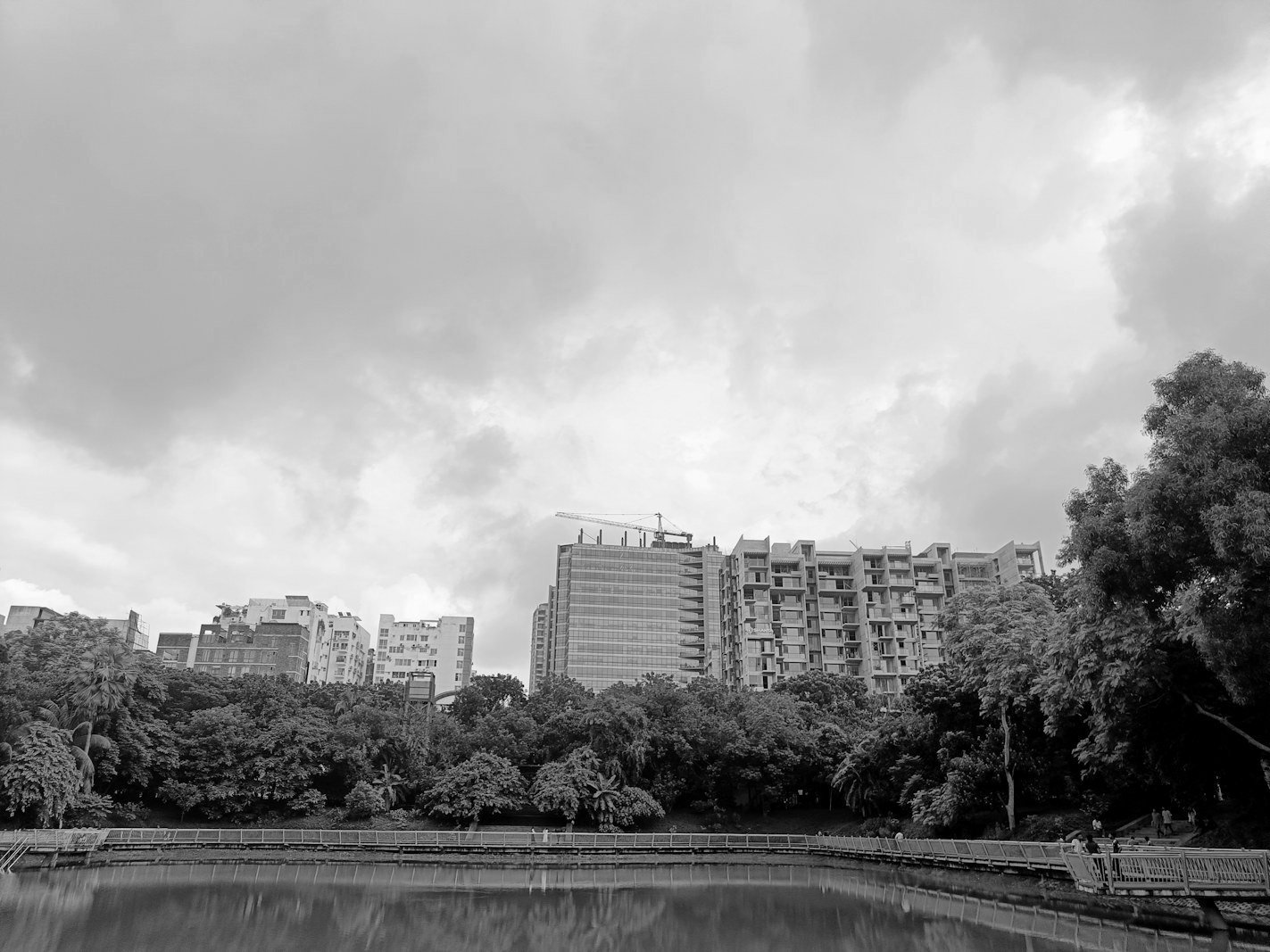
Trade bodies: the BGMEA building
Trade associations are private bodies, but their conduct can still come before the writ court through the public authorities that regulate land, building and the environment.
The BGMEA headquarters on the Begunbari canal and Hatirjheel lake was the subject of Suo Moto Rule No 19 of 2010. The High Court Division's judgment of 3 April 2011 was upheld when the Appellate Division dismissed BGMEA's leave petition, describing the building as "wholly a commercial establishment for the benefit of the BGMEA, a private body" built on a natural waterbody in breach of the Joladhar Ain 2000 and the Environment Conservation Act 1995. BGMEA was directed to demolish the building at its own cost, failing which RAJUK was to do so within 90 days.[7]
The respondents in such cases are the ministries, RAJUK and the environmental authorities whose permissions were in issue; the private body is joined because the relief directly affects it. That structure is the template for most successful petitions touching private conduct.
Banks, payment providers and borrowers
For a writ against private company Bangladesh banking disputes generate, the starting point is that private commercial banks are companies, and disputes between a bank and its customer over a loan, account or guarantee are ordinarily for the Artha Rin Adalat or the civil courts. Writ petitions in banking matters are therefore usually directed at Bangladesh Bank or at a court order. Borrowers, for example, obtain High Court stays on their Credit Information Bureau records, which are maintained by the central bank; the Daily Star reported on 28 July 2026 that loans under court stay orders reached Tk 182,419 crore at the end of 2025.[8] See our guide to a writ against Bangladesh Bank.
The same pattern runs the other way. When Bangladesh Bank appointed an administrator to the mobile financial service provider Nagad in August 2024, two Nagad directors challenged the regulator's decision by writ; on 16 February 2025 a Division Bench of Farah Mahbub and Debashish Roy Chowdhury JJ discharged the Rules, and the petitioners' lawyer said the court had found they lacked standing.[9] Writs against court orders in bank recovery cases carry their own risk: in January 2024 the High Court Division discharged a borrower's Rules against interlocutory Artha Rin Adalat orders, with Sonali Bank as a respondent, and imposed costs of Tk 10 lakh for repeated filings.[10]
Government and ministries
Persons performing functions in connection with the affairs of the Republic.
Statutory public authorities
Regulators and corporations whose principal activities are authorised by law, under Articles 102(5) and 152.
Bodies applying public rules
Private schools or institutions implementing a ministry or regulator's instrument, joined with that authority.
Private companies and trade bodies
Reachable under Article 102(1) for fundamental rights, or through the public authority that regulates them.
State-linked companies acting privately
Tenancy, supply and staff contracts made without statutory power are for the civil courts.
Anyone detaining a person
Habeas corpus under Article 102(2)(b) runs against private as well as public detention.
Private universities, hospitals and other licensed bodies
Private universities, hospitals, clinics and schools operate under statutory permissions and regulators. The test that emerges from the cases is functional. Where the institution applies a rule, circular or condition made by a public authority, as in the Viqarunnisa case, the petitioner can challenge that public instrument and seek directions that bind the institution as a respondent.[5] Where the institution acts under its own internal rules or contract, for example in a dispute over fees or a staff contract, the writ jurisdiction is unlikely to be available unless a fundamental right is directly infringed or the body's principal activities are authorised by law so as to make it a statutory public authority within Article 152.[1]
Whether a particular licensed body meets the Article 152 definition depends on its constituting instrument, and the answer should be checked before filing. Where in doubt, frame the petition against the regulator's act or omission, such as a failure to enforce its own rules, and join the private body.
Defending a writ against private company Bangladesh respondents
Private companies are increasingly joined to writ petitions, and the defence starts with maintainability. A company served with a Rule should first ask whether any relief is actually sought against it, or whether it has been joined only as a proforma respondent to a challenge against a public authority. If relief is sought directly, the affidavit-in-opposition should set out why the company is not a statutory public authority within Article 152, identifying its incorporation under the Companies Act, the absence of any statute authorising its principal activities and the private source of the power it exercised.[1]
The company should then identify the forum that the dispute really belongs to, such as a civil suit, the Artha Rin Adalat, the labour court or an arbitration agreement, and show that disputed facts need evidence rather than affidavits. Where a stay has been granted against the company, it should apply promptly to vacate it with evidence of the commercial harm. And where a petitioner has filed repeatedly on the same dispute, it should ask for costs; the High Court Division imposed Tk 10 lakh in the Taipei Bangla Fabrics case.[10] A private body is entitled to insist that a writ against private company Bangladesh petitioners file meets the constitutional test, not just a sense of grievance.
Habeas corpus against private persons
Habeas corpus is the clearest exception. Because Article 102(2)(b) allows "any person" to apply and asks only whether a person is held without lawful authority, the writ runs against private detention. In Ayesha Khatun v Major Shabbir Ahmed, the High Court Division entertained a habeas petition against a father who had forcibly taken a child from her mother, holding it maintainable without first exhausting family court or guardianship remedies.[2] See our guide to habeas corpus in Bangladesh.
Framing the petition: a practical sequence
The steps below reflect how we test a proposed writ against private company Bangladesh conduct before filing.
Identify the decision
Pin down exactly what the company did and the document by which it did it.
Trace the power
Ask whether the company acted under a statute, licence condition, regulator's direction or ministry circular, or purely under contract.
Check Article 152
Read the company's constituting instrument to see whether its principal activities are authorised by law.
Test for a fundamental right
Consider whether a Part III right is directly infringed so that Article 102(1) relief is realistic.
Choose the public respondent
Name the ministry, regulator or statutory body whose act or omission caused the harm as the principal respondent.
Join the private body
Add the company as a respondent so that any direction binds it and it can be heard.
Check the specialist forum
Rule out the Artha Rin Adalat, labour court, company bench or arbitration as the proper route.
Amenability at a glance
The table summarises how the High Court Division usually treats different respondents. On a phone, scroll it sideways.
| Respondent | Certiorari or mandamus | Article 102(1) rights | Practical route |
|---|---|---|---|
| Ministry or regulator | Yes | Yes | Direct challenge |
| Statutory corporation | Yes | Yes | Direct challenge |
| State-owned company acting under statute | Often | Yes | Identify the statutory power |
| State-owned company acting by contract | Generally no | Rarely | Civil suit or arbitration |
| Private school applying ministry rules | Through the ministry | Possible | Challenge the rule; join the school |
| Private bank | Generally no | Rarely | Challenge Bangladesh Bank or the court order |
| Trade body such as BGMEA | Through regulators | Possible | Join with RAJUK, environment or other authorities |
| Private detainer | Not applicable | Not applicable | Habeas corpus |

Common mistakes to avoid
- Suing the company alone: without a public authority respondent, most petitions fail on maintainability.
- Relabelling a contract dispute: breach of a private contract is not made public by calling the respondent arbitrary.
- Assuming state ownership is enough: the courts look at the source and nature of the power exercised, not the shareholding.
- Overusing Article 102(1): fundamental rights relief against private actors needs a real Part III infringement.
- Ignoring the statutory forum: bank, labour and company disputes have specialist courts that the writ court will expect you to use.
- Forgetting costs: repeated or abusive writs against private parties can attract heavy costs.
A writ against private company Bangladesh conduct succeeds when it is really a challenge to public power. Identify that power, sue the authority that holds it, and join the company whose conduct you need to change. TRW's constitutional and writ litigation team advises petitioners and private respondents on these questions; contact us in Dhaka.
Frequently asked questions
Can a writ be filed against a private company in Bangladesh?
What is a statutory public authority?
Under Article 152, any authority, corporation or body whose activities or principal activities are authorised by an Act, ordinance, order or instrument having the force of law. Article 102(5) includes such bodies as "persons" for writ purposes.[1]
Is a state-owned company always amenable to writ?
No. The court looks at the power exercised. A state-linked company's private tenancy was held outside writ jurisdiction in 2025.[6]
Can fundamental rights be enforced against a private company?
Yes, in principle. High Court Division decisions in 2018 held that Article 102(1) relief can reach private persons and entities that violate fundamental rights.[3]
Can I file a writ against a private school's admission decision?
Where the school applied a ministry rule or circular, yes: the High Court Division held such a petition maintainable in the Viqarunnisa case and made the Rule absolute.[5]
Can a writ be filed against a private bank?
Was the BGMEA building case a writ against a private body?
It began as a suo motu Rule, with government authorities as respondents. The Appellate Division upheld the order requiring BGMEA, which it called a private body, to demolish the building.[7]
Does habeas corpus lie against a private person?
Can a company's officers be named as writ respondents?
Not merely as officers of a private company; the High Court Division has held that no writ lies against a company officer who is not performing public functions.[2]
Who should be the main respondent?
The ministry, regulator or statutory body whose act or omission caused the harm, with the private company joined so that any direction binds it.[4]
Source register
Primary legal and regulatory sources
Materials checked on 23 October 2026. Confirm the current official text before relying on any provision.
- Constitution of the People's Republic of Bangladesh, Articles 102 and 152 — Laws of Bangladesh
- Md Abdur Rob Howlader, 'Writ Jurisdiction of the Supreme Court of Bangladesh', Bangladesh Journal of Law (BILIA)
- The Daily Star, Law & Our Rights, 6 November 2023 — Who can get fundamental rights enforced against whom?
- The Daily Star, Law & Our Rights, 27 May 2006 — Public interest litigation: an outline
- Mohammad Mahbub Alam v Bangladesh, Writ Petition No 3883 of 2023 (High Court Division, 6 December 2023)
- Abul Kashem v Bangladesh, Writ Petition No 10567 of 2024 (High Court Division, 27 August 2025)
- BGMEA v Bangladesh, CPLA No 1162 of 2013, 9 SCOB [2017] AD 70
- The Daily Star, 28 July 2026 — Loans under court stay jump eightfold in three years
- Dhaka Tribune, 16 February 2025 — High Court upholds appointment of administrator to Nagad
- Taipei Bangla Fabrics Ltd v Artha Rin Adalat No 1, Dhaka, Writ Petition Nos 8750 and 11383 of 2023 (High Court Division, 31 January 2024)
Related TRW assistance
Move from information to a defined next step
TRW advises petitioners and private respondents on whether a writ lies, which public authority to sue and how to defend private bodies joined to writ petitions. Explore our constitutional and writ litigation practice or contact TRW in Dhaka to discuss your matter.