
Criminal revision in High Court: from the order below to the Rule, the judgment and the Appellate Division, step by step
A criminal revision in High Court is the way to ask the High Court Division to correct an illegal, improper or incorrect order of a criminal court below, under sections 435 and 439 of the Code of Criminal Procedure 1898. It lies where no appeal is available, for example against a Sessions Judge's appellate judgment or an order framing charge, and it usually begins with a Rule and a stay.
The 2026 CrPC amendment left the revision sections unchanged but raised the fine limits in ss.413 and 414, so revision is now the only challenge to a fine-only sentence of up to Tk 5,000.
- Where it starts
- An order, sentence or appellate judgment of a Magistrate, Special Judge or Sessions Judge; the revision itself is filed…
- Main law
- Code of Criminal Procedure 1898 ss.369, 429, 430, 435, 439, 439A, 440, 442 and 442A (not changed by the CrPC (Amendment) Act…
- Typical duration
- Filing and motion hearing: 2 weeks to 2 months. Hearing of the Rule: about 1 to 3 years in typical Dhaka practice.…
- Who can file
- The convict or accused, the complainant or informant, or the State through the Public Prosecutor or the Attorney…
Criminal revision in High Court: walk through every stage
Press next, use your arrow keys or tap a court on the map. The gold marker shows where your case is, and the green trail shows the route it has taken. For the immersive version, play it full screen.
Read every step as text
 Step 1 · The order and the choice of remedy
The order or sentence below
Revision starts with a finding, sentence or order of a criminal court below. Common examples are a Magistrate's order taking cognizance, refusing to discharge the accused, cancelling bail or deciding a land dispute under s.145, and a conviction carrying only a small fine. Since the 2026 amendment, no appeal lies where a Court of Session or first-class Magistrate imposes only a fine of up to Tk 5,000, or where a summary trial ends in a fine of up to that amount. For those cases revision is the only challenge.
Apply for a certified copy of the order and the order sheet at once, because every later step depends on them.
Where: Chief Metropolitan Magistrate's Court · Time: Same day to 2 weeks for certified copies · Law: s.435(1) CrPC; ss.413-414 CrPC (as amended by Act XI of 2026); s.145 CrPC · Documents: Impugned order, Order sheet of the case, Application for certified copies
Tip: Note the date of the order and the date you applied for copies. Both will be needed to explain any delay later.
 Step 2 · The order and the choice of remedy
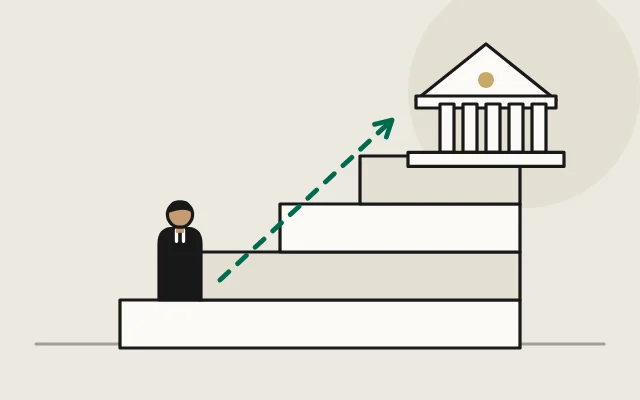
Appeal decided by the Sessions Judge
Many revisions in the High Court Division challenge a Sessions Judge's appellate judgment. A person convicted by a Magistrate, or by a Joint Sessions Judge with a sentence of five years or less, appeals to the Sessions Judge under s.408. Under s.430 that appellate judgment is final except for the revision powers in Chapter XXXII, so there is no further appeal. The convict who lost the appeal, the State or the complainant then goes to the High Court Division in revision.
Orders the Sessions Judge passes during a sessions trial, such as framing charge or refusing to recall a witness, can also be revised.
Where: Metropolitan Sessions Judge's Court · Time: Judgment date; copies within 1-3 weeks · Law: s.408 CrPC; s.409 CrPC; s.430 CrPC; s.435(1) CrPC · Documents: Certified copy of the appellate judgment, Trial court judgment, Memorandum of appeal
 Step 3 · The order and the choice of remedy
Check that revision is the right remedy
The lawyer first asks whether an appeal lies. Under s.439(5), where an appeal lies and none is brought, the party who could have appealed cannot use revision instead. Revision is also not a rehearing of the evidence. The court examines the correctness, legality or propriety of a finding, sentence or order, and the regularity of the proceedings. Typical grounds are want of jurisdiction, misreading or ignoring material evidence, breach of a mandatory procedure, or an order without reasons.
Unlike the Indian Code, the Bangladesh Code has no bar on revising interlocutory orders, but the High Court Division interferes with them sparingly.
Where: Advocate's chamber · Time: 1-7 days · Law: s.404 CrPC; s.435(1) CrPC; s.439(5) CrPC · Documents: Certified copies of the orders below, Case chronology
Tip: Do not file a revision where an appeal lies. It will be rejected under s.439(5), and the appeal period may run out meanwhile.
- Step 4 · The order and the choice of remedy
Choose the forum
The High Court Division and the Sessions Judge share revisional power over inferior criminal courts in the district under s.435, and every Magistrate counts as inferior to the Sessions Judge. The choice matters. If the applicant goes to the Sessions Judge, that decision is final for the applicant under s.439A(2), and s.439(4) bars the High Court Division from revising it. A Sessions Judge's own orders can be revised only by the High Court Division, as can a Special Judge's orders in corruption cases, under s.10(1A) of the Criminal Law Amendment Act 1958.
A criminal revision in High Court is therefore chosen where the order is a Sessions Judge's or Special Judge's, or the issue is serious.
Where: Advocate's chamber · Time: 1-7 days · Law: s.435(1) CrPC; s.439(4) CrPC; s.439A(2) CrPC; s.10(1)-(1A) Criminal Law Amendment Act 1958 · Documents: Note of the court that passed the order, Any earlier revision orders
 Step 5 · Preparing and filing
Collect certified copies and watch the time
The petition must annex certified copies of the impugned order and the relevant order sheet, the FIR or complaint, the police report, the charge, the evidence and any judgments below. No statute fixes a limitation period for a criminal revision. In practice the High Court Division expects filing within about 60 days, the period for an appeal to it under Article 155 of the Limitation Act, and wants any longer delay explained on affidavit with dates. Time spent waiting for certified copies is usually accepted as an explanation.
A convict who has surrendered or is in custody should say so, because the Bench will ask.
Where: Advocate's chamber · Time: 1-4 weeks · Law: Article 155 Limitation Act 1908 (by analogy); s.435 CrPC · Documents: Certified copies of all orders and judgments, FIR or complaint petition, Police report or charge sheet, Depositions, if relevant
Tip: Unexplained delay is one of the commonest reasons for summary rejection. Keep the receipts for every copy application.
 Step 6 · Preparing and filing
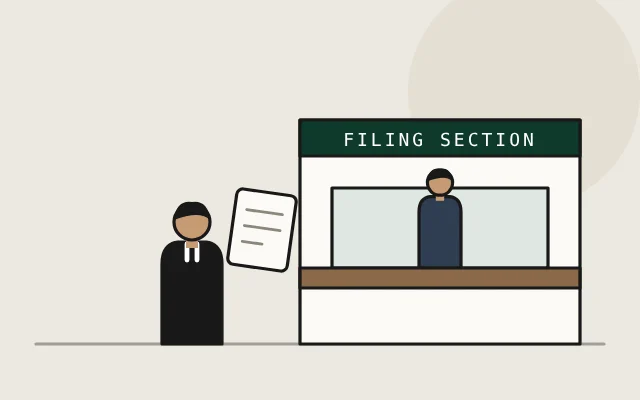
Draft and file the revision petition
The petition is headed as an application under s.439 read with s.435 CrPC. It names the petitioner and the opposite parties, usually the State and the complainant or informant. It sets out the facts and numbered grounds, and asks for a Rule and any interim order such as a stay, bail or suspension of sentence. It is verified by affidavit, signed by an Advocate of the High Court Division and filed with the vakalatnama in the criminal section of the Supreme Court registry.
A copy goes to the Attorney General's office, whose Deputy or Assistant Attorneys General represent the State.
Where: High Court Division · Time: 1-2 weeks · Law: s.435 CrPC; s.439 CrPC; Supreme Court of Bangladesh (High Court Division) Rules 1973 · Documents: Revision petition with grounds, Affidavit, Vakalatnama, Annexed certified copies, Application for stay or bail
 Step 7 · Motion: Rule and stay
Motion hearing before the Bench
The petition is listed for motion before a Bench, single or Division as the Chief Justice's assignment provides, that has jurisdiction to hear criminal revisions under Article 107(3). The petitioner's lawyer briefly argues why the order below is wrong, and the State's law officer may respond. No party has a right to be heard in revision, but in practice the Bench hears counsel.
It can reject the petition summarily, or issue a Rule calling on the opposite parties to show cause why the order should not be set aside, and it usually calls for the lower court records. A criminal revision in High Court is won or lost at this stage more often than clients expect.
Where: High Court Division · Time: 1-6 weeks from filing · Law: s.435(1) CrPC; s.439(1) CrPC; s.440 CrPC; Article 107(3) Constitution · Documents: Revision petition, Cause list entry, Brief note of submissions
 Step 8 · Motion: Rule and stay
Stay, bail and the lower court record
When issuing the Rule, the Bench may stay further proceedings in the lower court, or suspend a sentence and release a convict on bail or on his own bond while the Rule is pending. Stays are normally granted for a fixed period, often six months, and lapse unless extended. The order is sent to the lower court, which must stop the proceedings for that period and send its records to the High Court Division.
If the petitioner does not take steps to serve the Rule, the stay may be vacated or the Rule discharged for default.
Where: Chief Metropolitan Magistrate's Court · Time: 1-4 weeks for the order to reach the lower court · Law: s.435(1) CrPC; s.439(1) CrPC; s.426 CrPC · Documents: Certified copy of the stay or bail order, Bail bond, if released, Requisites for service
Tip: Diary the expiry date of the stay. Apply to extend it a few weeks before it lapses, not after.
 Step 9 · Hearing of the Rule and judgment
Service of the Rule and reply
The Rule is served on the opposite parties through the lower court and, for the State, on the Attorney General's office. The complainant or informant may file an affidavit-in-opposition with documents, and the petitioner may answer with an affidavit-in-reply. No order adverse to the accused, such as an enhanced sentence, can be made unless the accused has had an opportunity to be heard in person or through a lawyer. If enhancement is in issue, the convict may also argue against the conviction itself.
Where: High Court Division · Time: 1-6 months · Law: s.439(2) CrPC; s.439(6) CrPC · Documents: Affidavit-in-opposition, Affidavit-in-reply, Service return
- Step 10 · Hearing of the Rule and judgment
Waiting for the hearing
Once the Rule is ready, it waits to appear in the daily cause list of a Bench with the right jurisdiction. Section 442A says a revision should be disposed of within 90 working days from service of notice on the parties. In practice the High Court Division treats this limit as directory, and many Rules wait one to three years. The lawyer can apply to have the matter listed out of turn where the petitioner is in custody or a trial has been stayed for a long time.
The stay must be kept alive by applying to extend it before it expires.
Where: High Court Division · Time: 6 months to 3 years · Law: s.442A(2)-(3) CrPC · Documents: Application for extension of stay, Application for early hearing
- Step 11 · Hearing of the Rule and judgment
Hearing of the Rule
At the hearing both sides argue from the lower court records. In revision the High Court Division can use an appellate court's powers under ss.423, 426, 427 and 428. These include ordering a retrial, taking additional evidence, and reducing or enhancing a sentence. Two limits apply. It cannot convert an acquittal into a conviction. Where a Magistrate passed the sentence, it cannot impose more than a Metropolitan or first-class Magistrate could. It does not reassess the evidence unless the court below misread or ignored material evidence, causing a failure of justice.
Where: High Court Division · Time: 1-3 hearing days · Law: s.439(1) CrPC; s.439(3)-(4) CrPC; ss.423 and 428 CrPC · Documents: Lower court records, Compilation of authorities, Written submissions, if asked
- Step 12 · Hearing of the Rule and judgment
Judgment: Rule absolute or discharged
The Bench delivers judgment either making the Rule absolute, which sets aside or modifies the order below, or discharging it, which leaves the order standing and vacates any stay. It may also dispose of the Rule with directions, for example that the trial court conclude a trial within a fixed time. If the two judges are equally divided, the case goes to a third judge under s.429, and the judgment follows that judge's opinion. A certified copy of the signed judgment can then be obtained from the registry.
Where: High Court Division · Time: Same day to a few months after hearing · Law: s.439(1) CrPC; s.429 CrPC · Documents: Signed judgment, Certified copy of the judgment
 Step 13 · Back in the lower court
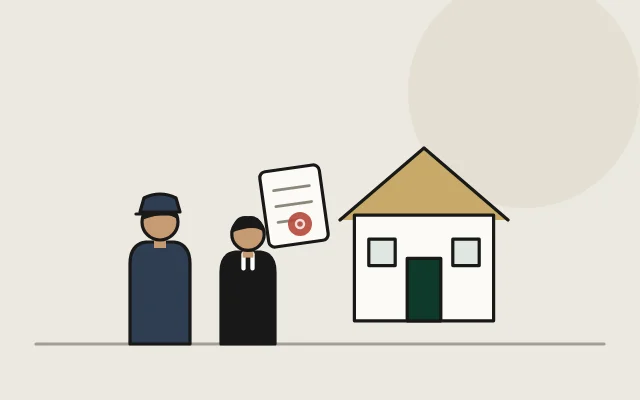
Certified to the lower court and complied with
The High Court Division certifies its decision to the court that passed the order. Where a subordinate Magistrate is involved, it goes through the Chief Metropolitan or Chief Judicial Magistrate. The lower court must then make orders that conform to the decision and amend its record. That can mean restarting a stayed trial, discharging the accused, recalling a warrant or carrying out a modified sentence. The successful party should file a copy of the judgment in the court below promptly, because lower courts often wait for the official copy before acting.
Where: Chief Metropolitan Magistrate's Court · Time: 2 weeks to 3 months · Law: s.442 CrPC; s.425 CrPC · Documents: Certified copy of the High Court Division judgment, Application to the lower court to act on it
What if…? How the criminal revision in High Court can change course
Choose a scenario. The map animates the route up the hierarchy and, where a case is sent back, down to the lower court and up again.
What if an appeal lies instead of revision?
- 1Metropolitan Sessions Judge's Court
Appeal first, then revision
Where the order is an appealable conviction, the convict must appeal: to the Sessions Judge from a Magistrate under s.408, or to the High Court Division from a Sessions Judge under s.410. A revision filed instead will be refused under s.439(5). The appeal to the Sessions Judge must be filed within 30 days. Once the Sessions Judge decides it, a criminal revision in High Court is the next step, because s.430 makes that appellate judgment final subject only to revision.
30 days to appeal; 6-18 months for the appeals.408 CrPCs.410 CrPCs.430 CrPCs.439(5) CrPCArticle 154 Limitation Act 1908
Where it ends up: The case reaches the High Court Division in revision only after the appeal below has been decided.
What if the revision is filed before the Sessions Judge?
- 1Metropolitan Sessions Judge's Court
Revision before the Sessions Judge
The Sessions Judge, or an Additional Sessions Judge to whom the case is transferred, can use all the High Court Division's revisional powers under s.439A over a Magistrate's order. The process is similar: a petition, notice, calling for the records and a hearing. Disposal is usually faster, often within a few months. The decision is final as regards the person who applied.
2-6 monthss.439A(1)-(3) CrPCs.435(1) CrPC - 2High Court Division
Only the inherent power afterwards
Section 439(4) bars the High Court Division from entertaining a further revision against the Sessions Judge's revisional order. A party who still alleges an abuse of process or a plain illegality can apply under s.561A, the High Court Division's inherent power to prevent abuse of the process of any court and to secure the ends of justice. It is used sparingly and is not a second revision.
3-12 monthss.439(4) CrPCs.561A CrPC
Where it ends up: The Sessions Judge's revisional order normally ends the matter, with s.561A as a narrow exception.
Can the High Court Division review its own revision judgment?
- 1High Court Division
No review, only clerical correction
Under s.369 CrPC, once a criminal court has signed its judgment it cannot alter or review it, except to correct a clerical error. That bar applies to the High Court Division's judgment in a criminal revision. A party who says the Bench was wrong must go to the Appellate Division. Only the Appellate Division has a power of review, under Article 105, and in criminal cases only for an error apparent on the face of the record.
Not applicables.369 CrPCArticle 105 ConstitutionOrder XXVI rule 1 Appellate Division Rules 1988
Where it ends up: The High Court Division's judgment stands unless the Appellate Division interferes.
Can a Sessions Judge refer a case to the High Court Division?
- 1Metropolitan Sessions Judge's Court
The old reference route has gone
Section 438 once let a Sessions Judge report a Magistrate's order to the High Court Division with a recommendation. It was omitted by the CrPC (Amendment) Act 2009, with effect from 1 November 2007, because the Sessions Judge now decides such revisions himself under s.439A. The High Court Division can still act on a matter reported for orders or that otherwise comes to its knowledge, and can call for records on its own motion. A death sentence reaches it separately, as a death reference under s.374.
Not applicables.438 CrPC (omitted by Act XXXII of 2009)s.439(1) CrPCs.374 CrPC
Where it ends up: There is no routine reference; the High Court Division is reached by revision or acts on its own motion.
What if the High Court Division sends the case back?
- 1High Court Division
Order sending the matter back
Where the court below decided without hearing a party or skipped a mandatory step, the High Court Division often sets the order aside and sends the matter back for a fresh decision. In Criminal Revision No. 347 of 2021, a Sessions Judge had reversed an acquittal without giving the accused the notice that s.422 requires. The High Court Division set that order aside and directed the Sessions Judge to rehear the appeal after notice.
With the judgments.439(1) CrPCs.423(1) CrPCs.422 CrPC - 2Metropolitan Sessions Judge's Court
Fresh hearing below, and the way back up
The lower court gets the record back under s.442, rehears the matter in line with the directions and passes a fresh reasoned order. That order is a new decision. The losing party can bring a new criminal revision in High Court against it, now on a fuller record, or appeal where the new order is appealable.
2-12 monthss.442 CrPCs.435 CrPC
Where it ends up: The case goes down for a fresh decision and can return to the High Court Division in a new revision.
What is the final route to the Appellate Division?
- 1Appellate Division
Criminal petition for leave to appeal
The losing party files a criminal petition for leave to appeal under Article 103(3) within 30 days of the judgment. The Government has 60 days against an acquittal. A convict sentenced to imprisonment must first surrender, or the petition will not be entertained. A Chamber Judge may stay the High Court Division's order meanwhile. If leave is granted, the petition becomes a criminal appeal before a full Bench, whose decision binds all courts.
6-18 monthsArticle 103(3) ConstitutionOrder XXIV rules 1, 2 and 8 Appellate Division Rules 1988Article 111 Constitution - 2Appellate Division
Review in the Appellate Division
After the Appellate Division decides, a review under Article 105 can be filed within 30 days, but in a criminal case only for an error apparent on the face of the record. The application must be signed by a Senior Advocate with a reasoned certificate that a review is justified. A cash security of Tk 10,000 must be deposited, and only one review application is allowed.
2-12 monthsArticle 105 ConstitutionOrder XXVI rules 1, 2, 4, 5, 8 and 9 Appellate Division Rules 1988
Where it ends up: The Appellate Division's decision ends the case.
How the criminal revision in High Court moves up the court hierarchy
A criminal revision in High Court moves along a short ladder. At the bottom are the Magistrates' courts and, for corruption cases, the Special Judge. Above them sits the Sessions Judge or Metropolitan Sessions Judge, who hears appeals from Magistrates and Joint Sessions Judges and has revisional power over every Magistrate. The High Court Division has revisional power over every criminal court below it, including the Sessions Judge, and the Appellate Division sits at the top. Money value plays no part.
The forum depends on which court passed the order, whether an appeal lies, and whether the applicant has already used the Sessions Judge's revision, which closes the High Court Division route for that applicant. Revision is not a rehearing of the facts. The High Court Division asks whether the order is legal, proper and correct, and interferes with findings of fact only where evidence was misread or ignored. From the High Court Division the only further step is a petition for leave to the Appellate Division, which deals mainly with questions of law.
- Appellate DivisionAppellate Division
- High Court DivisionHigh Court Division
- Appellate levelMetropolitan Sessions Judge's Court
- First instanceChief Metropolitan Magistrate's Court · Special Judge's Court
- Start · outside courtAdvocate's chamber
Where your case is heard
Addresses are for Dhaka. Every district has equivalent courts at its own district judgeship.
Supreme Court of Bangladesh (Appellate Division and High Court Division)
Supreme Court of Bangladesh, Shahbag, Ramna, Dhaka-1000Hears appeals, revisions, references, writ petitions under Article 102, company matters and death references (High Court Division), and appeals by leave from the High Court Division (Appellate Division).
Both Divisions sit in the Supreme Court complex; many High Court Division benches sit in the Annex Building. Check the daily cause list for the bench and court room. Postal contact is the Registrar General, Supreme Court of Bangladesh, Ramna, Dhaka-1000.
Court of the Metropolitan Sessions Judge, Dhaka
40-45 Johnson Road, Dhaka-1100Tries sessions-triable offences from Dhaka metropolitan police stations and hears criminal appeals and revisions from Metropolitan Magistrates; Additional and Joint Metropolitan Sessions Judges also sit as Metropolitan Special Tribunals.
The Metropolitan Sessions Judge sits on the 2nd floor of the main building; Additional and Joint Metropolitan Sessions Judge courts are in the main building and the tin-shed building in the same compound. The Metropolitan Sessions Judge, Dhaka also holds the post of Senior Special Judge, Dhaka. Help line published by the court: 01335-145002.
Chief Metropolitan Magistrate Court, Dhaka
19 Johnson Road, Dhaka-1100Takes cognisance of and tries criminal cases arising in Dhaka Metropolitan Police areas (Metropolitan Magistrate courts), hears bail, remand and FIR/complaint matters, and sends sessions-triable cases to the Metropolitan Sessions Judge.
Metropolitan Magistrate courts are spread over the CMM court main building (floors 2-9) and the CJM court building (courts 29-37 on the 8th and 9th floors). Check the court number on the cause list. Each metropolitan city (Chattogram, Khulna, Rajshahi, Sylhet, Barishal, Rangpur, Gazipur) has its own CMM court.
Special Judge Courts, Dhaka
Dhaka court area, Johnson Road, Dhaka-1100Try corruption and money-laundering cases brought by the Anti-Corruption Commission under the Criminal Law Amendment Act 1958, the ACC Act 2004 and the Money Laundering Prevention Act 2012.
The Metropolitan Sessions Judge, Dhaka holds the post of Senior Special Judge, Dhaka (main building, 40-45 Johnson Road). Courtroom locations of the numbered Special Judge courts are not published, and temporary courts have sat elsewhere in high-profile cases; check the cause list. Every district has a Senior Special Judge (the Sessions Judge) and Special Judges.
Advocate's chamber
Where this happens depends on your district or the office concerned. Ask us for the exact courtroom and address.
How long each stage takes
These are indicative ranges based on typical Dhaka practice. Adjournments, case backlogs and appeals can stretch them.
Documents checklist and key terms
Tick off what you have. Your ticks stay saved in this browser. Bring the list to your first meeting with your lawyer.
- Revisional jurisdiction
- A higher court's power to examine the record of a lower court and correct an illegal, improper or incorrect order, without a full rehearing.
- Rule
- An order of the High Court Division calling on the opposite parties to show cause why the order below should not be set aside.
- Rule absolute
- The outcome where the High Court Division allows the revision and sets aside or modifies the order below.
- Rule discharged
- The outcome where the revision fails, the order below stands and any stay ends.
- Lower court records
- The original case file of the court below, sent to the High Court Division when it calls for the record.
- Opposite party
- The respondent in a revision, usually the State and the complainant or informant.
- Inferior criminal court
- A court subordinate to the revising court; all Magistrates are inferior to the Sessions Judge for revision.
- Criminal petition for leave to appeal
- The application to the Appellate Division asking permission to appeal against a High Court Division judgment.
Criminal revision in High Court: common questions
What is a criminal revision in High Court?
Is there a deadline for filing?
Should I go to the Sessions Judge or the High Court Division?
Can I challenge an order framing charge?
Can the High Court Division convict someone who was acquitted below?
Will the trial stop while my revision is pending?
What did the 2026 CrPC amendment change?
How long does a criminal revision in High Court take?
Law and sources
- Code of Criminal Procedure 1898, ss.435-442A, as amended (Laws of Bangladesh)
- Code of Criminal Procedure (Amendment) Act 2026 (Act No. XI of 2026)
- Code of Criminal Procedure 1898, mirror text with amendment footnotes
- Criminal Law Amendment Act 1958, s.10 (Laws of Bangladesh)
- Limitation Act 1908, First Schedule (Laws of Bangladesh)
- Constitution of the People's Republic of Bangladesh (Articles 103, 105, 107, 111)
- Supreme Court of Bangladesh (Appellate Division) Rules 1988
- Md. Nazmul Islam v State, HCD, Criminal Revision No. 347 of 2021 (remand for want of s.422 notice)
- Mirza Abbas v State, HCD, Criminal Revision No. 2792 of 2016 (revision of a Special Judge's charge order under s.10(1A) CLA 1958)
This Case Journey is a general guide to procedure in Bangladesh as of October 2026. It is not legal advice. Procedure, fees and time limits change, and every case turns on its own facts. Timelines are indicative. Speak to a lawyer about your own matter.
Run this case from outside Bangladesh
You can usually start and run this case without travelling. You sign a power of attorney abroad, the Bangladesh High Commission or Embassy attests it, and your attorney and lawyer act for you in Dhaka. Some steps, such as giving evidence in person, may still need you or a commission. See how a case runs through a power of attorney →
Want to know where your case stands?
Book a consultation. A TRW lawyer will place your matter on this map, explain the next step and the realistic timeline, and tell you what to prepare.