
Cancellation of deed suit in Bangladesh: the full journey, step by step
A cancellation of deed suit in Bangladesh asks a civil court to declare a forged, fraudulent or otherwise void or voidable registered deed invalid and order it cancelled under section 39 of the Specific Relief Act 1877. The court sends its decree to the sub-registry, which notes the cancellation in the registration books, so the deed can no longer be used against the owner.
This journey follows the case from discovering the deed, through records, expert evidence and trial, to the decree reaching the registration office and the routes of appeal and revision.
- Where it starts
- Civil court of first instance where the land lies: Civil Judge (up to Tk 15 lakh), Senior Civil Judge (up to Tk 25…
- Main law
- Specific Relief Act 1877 (ss.39-42); Registration Act 1908 (ss.52A, 60); Evidence Act 1872 (ss.45, 47, 73)
- Typical duration
- 2-5 years at trial; 6-12 years or more with appeal, revision and the Appellate Division
- Who can file
- Any person against whom the deed is void or voidable and who reasonably fears serious injury if it is left outstanding…
Cancellation of deed suit in Bangladesh: walk through every stage
Press next, use your arrow keys or tap a court on the map. The gold marker shows where your case is, and the green trail shows the route it has taken. For the immersive version, play it full screen.
Read every step as text
 Step 1 · Before filing
Classify the deed and check limitation
The lawyer first decides whether the deed is void or voidable. A forged deed, or one executed by someone with no title, is void; a deed you actually signed but under fraud, coercion or undue influence is voidable and must be set aside by you or your heirs. This drives the reliefs and the clock. Article 91 gives three years from when you learned the facts; articles 92 and 93 give three years to declare a forged deed, from learning of its registration or from an attempt to use it against you.
Where: Lawyer's chamber · Time: 1-2 weeks · Law: s.39 Specific Relief Act 1877; Limitation Act 1908, Sch. I arts. 91, 92 and 93 · Documents: Copy of the disputed deed (if any), Your title deeds, Khatian and mutation records
Tip: Courts test the date of knowledge against your own evidence. Pleading a late date you cannot defend in cross-examination loses the case.
 Step 2 · Before filing
Obtain the registry record
The lawyer's clerk applies to the sub-registry for a certified copy of the disputed deed and searches the indexes and volume books. The key items are the volume entry, the sub-registrar's endorsements on presentation, admission of execution and identification, the thumb impression register, and the particulars a sale deed must carry, such as the seller's khatian, a twenty-five-year ownership history and the seller's affidavit. Gaps or irregularities here are often the first evidence of forgery or impersonation.
Where: Sub-registry and district registrar's record room · Time: 2-6 weeks · Law: ss.52A, 57 and 60 Registration Act 1908 · Documents: Certified copy of the deed, Volume and index extracts, Copy of the thumb impression register page
Tip: Ask for the TI register entry early; record rooms can take weeks to trace older volumes.
 Step 3 · Before filing
Frame the reliefs, value the suit and pick the court
The plaint usually seeks a declaration that the deed is void, illegal and not binding, with consequential relief that it be cancelled under section 39, plus possession or an injunction if needed. A declaration with consequential relief is stamped ad valorem on the plaintiff's own valuation of that relief. The suit value decides the court: a Civil Judge up to Tk 15 lakh, a Senior Civil Judge up to Tk 25 lakh, a Joint District Judge above. Valuation is a frequent battleground in a cancellation of deed suit in Bangladesh.
Where: Lawyer's chamber · Time: 1 week · Law: ss.39 and 42 Specific Relief Act 1877; Court-fees Act 1870, s.7(iv)(c) and Sch. II art. 12(iii); s.8 Suits Valuation Act 1887; ss.18-19 Civil Courts Act 1887 · Documents: Valuation statement, Court fee
Tip: If you are out of possession, add recovery of possession. A declaration alone can fail under the s.42 proviso.
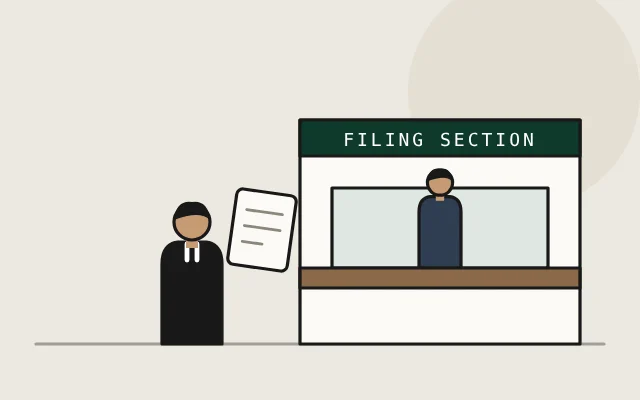 Step 4 · Filing and pleadings
File the plaint
The plaint is filed with a precise schedule of the land and of the disputed deed by its number, date, volume and sub-registry. It pleads the plaintiff's title, how and when the plaintiff learned of the deed, and the particulars of forgery, fraud or coercion, since general allegations are not enough. Every person claiming under the deed, including later buyers, must be joined. The court checks court fee and jurisdiction and issues summons.
Where: Civil court of first instance (Civil Judge / Senior Civil Judge / Joint District Judge) · Time: 1 day to file; 1-3 months for service · Law: Order VI rule 4 CPC; Order VII rules 1 and 14 CPC; Order V CPC (as amended 2026) · Documents: Plaint with schedules, Certified copy of the disputed deed, Vakalatnama, Court fee
Tip: Plead the particulars of fraud: who did what, when and where. Order VI rule 4 requires it.
 Step 5 · Filing and pleadings
Temporary injunction against further dealing
A forged deed is often followed quickly by a resale or mortgage to a bank. The plaintiff can apply for a temporary injunction restraining the defendants from transferring, mortgaging or changing the character of the land while the suit is pending. The court looks for a prima facie case, balance of convenience and irreparable loss, and may order the status quo instead. Transfers made during the suit remain subject to the decree under the doctrine of lis pendens.
Where: Civil court of first instance (Civil Judge / Senior Civil Judge / Joint District Judge) · Time: 2 weeks to 3 months · Law: Order XXXIX rules 1-4 CPC; s.52 Transfer of Property Act 1882 · Documents: Injunction application with affidavit
Tip: Serve a copy of any injunction on the sub-registry and the AC Land to discourage further dealings.
- Step 6 · Filing and pleadings
Written statement and issues
The defendant files a written statement within thirty working days of service, normally relying on the registered deed and the presumption that the registration was regular. Common defences are that the suit is barred by limitation, that the plaintiff actually signed, that consideration was paid, and that a later buyer took in good faith. The court frames issues on the genuineness of the deed, fraud or forgery, limitation under articles 91 to 93, title and maintainability, and then refers the parties to mediation under section 89A.
Where: Civil court of first instance (Civil Judge / Senior Civil Judge / Joint District Judge) · Time: 3-8 months · Law: Order VIII rule 1 CPC; Order XIV rule 1 CPC; s.89A CPC · Documents: Written statement, Order framing issues, Mediation report
Tip: Family disputes over heba or sale deeds between relatives settle in mediation more often than outsiders expect.
 Step 7 · Records and expert evidence
Summon the volume book and registry officials
Certified copies alone rarely win a forgery case. The plaintiff applies for the original volume book, thumb impression register and related records to be produced in court, and may summon the sub-registrar's office staff or the deed writer as witnesses. The court compares what the registry recorded with the deed relied on. The sub-registrar's endorsements carry a strong presumption of regularity, which can be displaced only by strong evidence that a fraud was practised on the registering officer.
Where: Sub-registry and district registrar's record room · Time: 1-4 months · Law: Order XIII rule 10 CPC; Order XVI rule 1 CPC; s.60 Registration Act 1908; s.114(e) Evidence Act 1872 · Documents: Application to call for records, Summons to registry witnesses
Tip: Plead specifically how the registration process was abused. Without that, the s.60 presumption usually prevails.
 Step 8 · Records and expert evidence
Handwriting and thumb impression examination
Where signature or thumb impression is denied, the plaintiff asks the court to send the disputed deed, the registry's thumb impression register and admitted specimen signatures to a handwriting and fingerprint expert, commonly the CID examiner. The court may also take fresh specimens in court. The expert's report and reasons are filed, and the expert can be cross-examined. The court must weigh the opinion with other evidence and may compare writing itself, but appellate courts discourage judges from replacing expert analysis with a glance.
Where: Handwriting and fingerprint examiner (CID or other expert) · Time: 2-8 months · Law: ss.45, 47 and 73 Evidence Act 1872 · Documents: Application for expert examination, Admitted specimen signatures, Expert report
Tip: Supply plenty of admitted signatures from around the date of the deed; specimens from years apart weaken comparison.
 Step 9 · Trial and decree
Evidence of the parties
The plaintiff gives examination-in-chief on affidavit, as required since the 2026 amendments, and is cross-examined on title, the date of knowledge and the alleged fraud. Witnesses may include family members, neighbours, the expert and registry staff. The defendant then proves execution, typically through an attesting witness, the deed writer and the identifier. No more than four adjournments can be granted at either party's request before the peremptory hearing; further adjournments carry costs and are strictly limited. The burden of proving forgery or fraud lies on the plaintiff who alleges it.
Where: Civil court of first instance (Civil Judge / Senior Civil Judge / Joint District Judge) · Time: 1-2 years · Law: Order XVIII rules 1-4 CPC; Order XVIII rule 4A CPC (inserted by Act XXXVI of 2026, in force from 8 May 2025); Order XVII rule 1(3) CPC (as amended 2026); ss.101-103 Evidence Act 1872 · Documents: Affidavits in chief, Exhibits, Expert report
Tip: Your own date-of-knowledge evidence must match the plaint exactly; inconsistencies are fatal on limitation.
- Step 10 · Trial and decree
Arguments
Lawyers argue the issues on the record: whether the deed is genuine, whether fraud or forgery is proved with particulars, whether the plaintiff is within the three-year limitation, whether the plaintiff is a person against whom the deed is void or voidable, and whether a later buyer is protected. The plaintiff's lawyer ties the expert report and registry anomalies together; the defendant leans on the registration presumption. Written arguments and cited decisions of the Appellate Division and High Court Division are usually filed.
Where: Civil court of first instance (Civil Judge / Senior Civil Judge / Joint District Judge) · Time: 1-3 months · Law: Order XVIII rule 2 CPC · Documents: Written arguments, Cited judgments
Tip: Address limitation head-on in argument; it is the defence most often accepted in these suits.
 Step 11 · Trial and decree
Judgment
The court pronounces judgment within seven days of the hearing. If the plaintiff succeeds in this cancellation of deed suit in Bangladesh, the court adjudges the deed void or voidable and orders it to be delivered up and cancelled. Where a deed records several transactions, the court may cancel part and leave the rest. The court may require the successful party to compensate the other, for example by returning money actually received under a voidable sale. Cancellation is discretionary, so delay and conduct matter.
Where: Civil court of first instance (Civil Judge / Senior Civil Judge / Joint District Judge) · Time: Same day to a few weeks · Law: ss.39, 40 and 41 Specific Relief Act 1877; Order XX rules 1 and 4 CPC · Documents: Judgment
Tip: If you received consideration under a voidable deed, be ready to repay it; s.41 lets the court impose that condition.
 Step 12 · Trial and decree
Decree drawn up
The decree sets out the cancelled deed by number, date, volume and sub-registry, the land schedule and any further reliefs such as possession or injunction. It must agree with the judgment, and clerical errors can be corrected. The decree-holder obtains certified copies. Where possession was also decreed, execution follows under Order XXI rule 35, which since 2026 can proceed within the original suit, with police help available on the court's direction.
Where: Civil court of first instance (Civil Judge / Senior Civil Judge / Joint District Judge) · Time: 2-6 weeks · Law: Order XX rules 6 and 7 CPC; s.152 CPC; Order XXI rule 35 CPC; Order XXI rule 104 CPC (inserted 2026); s.94A CPC (inserted 2026) · Documents: Certified decree, Certified judgment
Tip: Check that the deed number and volume in the decree exactly match the registry; a typo can stall the registry note.
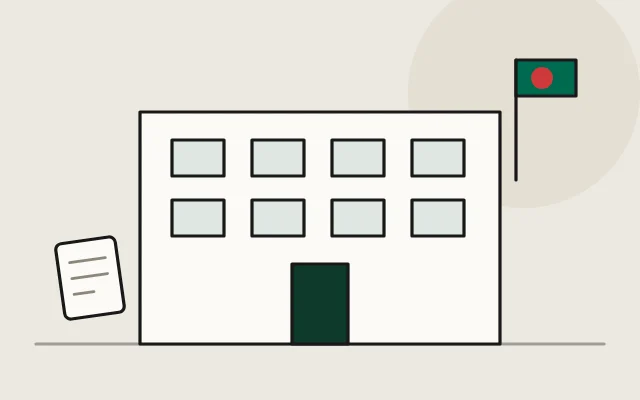 Step 13 · Registry and records update
Decree sent to the registration office
Because the deed was registered, the court itself sends a copy of the decree to the sub-registry or registrar where it was registered. That officer notes the cancellation on the copy of the deed in the registration books. This is the practical value of a cancellation of deed suit in Bangladesh: anyone who later inspects the volume will see the deed has been cancelled. The decree-holder should follow up and obtain a certified copy showing the note.
Where: Sub-registry and district registrar's record room · Time: 1-3 months · Law: s.39 Specific Relief Act 1877 (second paragraph) · Documents: Copy of decree forwarded by court, Certified copy of the noted volume entry
Tip: Courts and registries are both busy. A polite written follow-up with the decree number speeds the registry note.
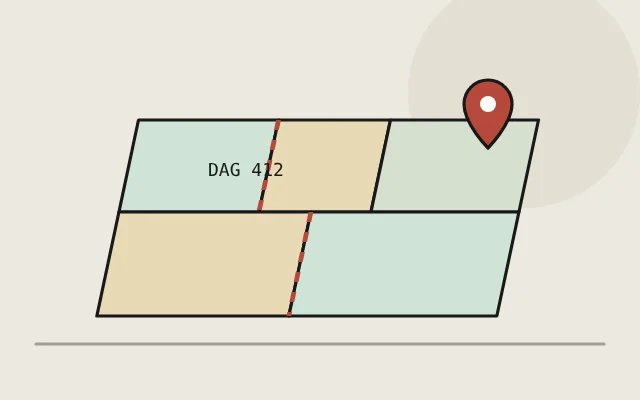 Step 14 · Registry and records update
Correct the land records
If the defendant had obtained mutation on the strength of the cancelled deed, the decree-holder applies to the AC Land to cancel that mutation and restore the khatian, attaching the certified decree, and keeps paying land development tax. Criminal prosecution for forgery and use of forged documents is a separate route, under the Penal Code and the Land Crime Prevention and Remedy Act 2023, and does not itself correct the records.
Where: Lawyer's chamber · Time: 1-4 months · Law: s.143 State Acquisition and Tenancy Act 1950; Land Crime Prevention and Remedy Act 2023; ss.467, 468 and 471 Penal Code 1860 · Documents: Certified decree, Mutation cancellation application, DCR receipts
Tip: Wait for the appeal period to expire before relying on the decree for mutation.
What if…? How the cancellation of deed suit in Bangladesh can change course
Choose a scenario. The map animates the route up the hierarchy and, where a case is sent back, down to the lower court and up again.
What if the losing side appeals?
- 1District Judge's Court (or Additional District Judge)
First appeal
The losing party files a memorandum of appeal within thirty days with a certified copy of the decree. From a Civil Judge or Senior Civil Judge the appeal goes to the District Judge; from a Joint District Judge it goes to the District Judge if the suit is valued up to Tk 5 crore, and otherwise to the High Court Division within ninety days. The District Judge may transfer it to an Additional District Judge.
File within 30 dayss.96 CPCs.21 Civil Courts Act 1887Limitation Act 1908, arts. 152 and 156 - 2District Judge's Court (or Additional District Judge)
Rehearing on facts and law
The appellate court rehears the evidence, including the expert report and registry records, and can reverse findings of fact. It must decide the case itself where the record is sufficient, and may admit additional evidence only in limited cases. The registry note is usually not made until the time for appeal has passed or the appeal ends.
1-4 yearsOrder XLI rules 24, 27 and 31 CPCs.107 CPC
Where it ends up: The appellate court confirms, varies or reverses the cancellation decree.
Can the High Court Division revise the appellate decree?
- 1High Court Division
Civil revision under section 115(1)
There is no second appeal in Bangladesh. The party aggrieved by the appellate decree applies to the High Court Division in civil revision; no statute fixes a period, but the High Court Division generally expects filing within about ninety days. The court issues a Rule where an error of law appears, such as misapplying limitation or ignoring the registration presumption or the expert evidence, and may stay the decree. It interferes only where that error caused a failure of justice.
File within about 90 days; 1-5 yearss.115(1) CPC
Where it ends up: The High Court Division makes the Rule absolute, discharges it, or sends the case back.
Can the same court review its decree?
- 1Civil court of first instance (Civil Judge / Senior Civil Judge / Joint District Judge)
Review application
A party who has not appealed may ask the court that passed the decree to review it within ninety days, on new and important evidence not available earlier despite diligence, such as a registry record traced after the trial, on an error apparent on the record, or for another sufficient reason. Review cannot be used to reargue the case. An order rejecting review is not appealable.
File within 90 dayss.114 CPCOrder XLVII rules 1 and 7 CPCLimitation Act 1908, art. 173
Where it ends up: The decree stands or the court reopens and rehears the suit.
Can a question of law be referred to the High Court Division?
- 1High Court Division
Reference under section 113
Rare in cancellation suits, a reference arises where the trial court has reasonable doubt on a question of law, particularly the validity of a statute the case depends on, for example a registration or land law provision. The court states the case for the High Court Division's opinion and stays the suit. When the answer returns, the trial court decides the suit in line with it.
6 months to 2 yearss.113 CPCOrder XLVI rules 1-3 CPC
Where it ends up: The trial court decides the suit applying the High Court Division's opinion.
What if the appellate court sends the case back?
- 1District Judge's Court (or Additional District Judge)
Remand for fresh findings
Where the trial court dismissed the suit on a preliminary point such as limitation and the appeal reverses it, or failed to try a key issue like the expert evidence, the appellate court may remand the suit or remit specific issues. Since 2026 it must decide the case itself when the record suffices, so remand is limited to genuine gaps.
A District Judge's remand order cannot be appealed, because Order XLIII rule 1(u) allows an appeal only where the appellate decree itself is appealable; it is challenged in civil revision before the High Court Division instead.
1-3 monthsOrder XLI rules 23-25 CPC (r.24 as amended 2026)s.115(1) CPC - 2Civil court of first instance (Civil Judge / Senior Civil Judge / Joint District Judge)
Retrial and new decree
The trial court restores the suit under its original number, takes any additional evidence directed, such as a fresh expert examination, and decides the remanded issues. Its new decree can again be appealed to the District Judge, and from there taken to the High Court Division in revision, so the case climbs back up the same hierarchy it came down.
6-18 monthsOrder XLI rule 23 CPCs.96 CPC
Where it ends up: A fresh decree is passed, which can again be appealed to the District Judge.
Can the case reach the Appellate Division?
- 1Appellate Division of the Supreme Court
Civil petition for leave to appeal
Against the High Court Division's judgment, the losing party files a civil petition for leave to appeal, normally within sixty days. The Appellate Division grants leave only on a substantial question of law, such as how far the registration presumption can be rebutted. If leave is granted, a civil appeal is heard on the record.
File within 60 days; 1-4 yearsArticle 103 ConstitutionAppellate Division Rules 1988, Order XIII - 2Appellate Division of the Supreme Court
Final judgment
The Appellate Division's decision binds all courts. A review petition may be filed within thirty days for an error apparent on the record. Once the decision is final, the decree returns to the trial court, which forwards a copy to the sub-registry or registrar so the cancellation is noted against the deed in the volume book.
Review within 30 daysArticles 105 and 111 ConstitutionAppellate Division Rules 1988, Order XXVI
Where it ends up: The Appellate Division's decision is final and the registry is updated accordingly.
How the cancellation of deed suit in Bangladesh moves up the court hierarchy
A cancellation of deed suit in Bangladesh starts in the civil court whose pecuniary limit fits the suit valuation: a Civil Judge up to Tk 15 lakh, a Senior Civil Judge up to Tk 25 lakh, and a Joint District Judge above that, under the Civil Courts Act 1887 as renamed in 2026. The first appeal lies to the District Judge, who often transfers it to an Additional District Judge, except that a Joint District Judge's decree in a suit valued above Tk 5 crore goes directly to the High Court Division.
The first appeal is a rehearing on both facts and law, including the expert and registry evidence. There is no second appeal; the High Court Division's civil revision under section 115(1) is limited to errors of law that caused a failure of justice. The Appellate Division hears the case last, only with leave, and its decision goes back down to the trial court for the registry to note the cancellation.
- Appellate DivisionAppellate Division of the Supreme Court
- High Court DivisionHigh Court Division
- Appellate levelDistrict Judge's Court (or Additional District Judge)
- First instanceCivil court of first instance (Civil Judge / Senior Civil Judge / Joint District Judge)
- Start · outside courtLawyer's chamber · Sub-registry and district registrar's record room · Handwriting and fingerprint examiner (CID or other expert)
Where your case is heard
Addresses are for Dhaka. Every district has equivalent courts at its own district judgeship.
Supreme Court of Bangladesh (Appellate Division and High Court Division)
Supreme Court of Bangladesh, Shahbag, Ramna, Dhaka-1000Hears appeals, revisions, references, writ petitions under Article 102, company matters and death references (High Court Division), and appeals by leave from the High Court Division (Appellate Division).
Both Divisions sit in the Supreme Court complex; many High Court Division benches sit in the Annex Building. Check the daily cause list for the bench and court room. Postal contact is the Registrar General, Supreme Court of Bangladesh, Ramna, Dhaka-1000.
Court of the District and Sessions Judge, Dhaka (Dhaka Judge Court)
Dhaka Judge Court premises, 16 Johnson Road, Sadarghat, DhakaSeat of the Dhaka District Judge and Additional District Judges (civil appeals, probate, district-level civil and sessions work outside the metropolitan area) and the civil courts of first instance (Joint District Judge, Senior Civil/Assistant Judge courts).
Official judiciary portal gives '16 Johnson Road, Sadarghat, Dhaka'. Many civil courts (Additional District Judge courts, Joint District Judge and Senior Assistant Judge courts, Artha Rin Adalat No.1, insolvency court) are in the new 8-storey District Judge Court building in the same premises. The 2026 judgeship list names the first-instance civil courts 'Senior Civil Judge' / 'Civil Judge' (formerly Senior Assistant Judge / Assistant Judge); some pages still use the old names. Every district has an equivalent court at its district judgeship.
Lawyer's chamber
Where this happens depends on your district or the office concerned. Ask us for the exact courtroom and address.
Sub-registry and district registrar's record room
Where this happens depends on your district or the office concerned. Ask us for the exact courtroom and address.
Handwriting and fingerprint examiner (CID or other expert)
Where this happens depends on your district or the office concerned. Ask us for the exact courtroom and address.
How long each stage takes
These are indicative ranges based on typical Dhaka practice. Adjournments, case backlogs and appeals can stretch them.
Documents checklist and key terms
Tick off what you have. Your ticks stay saved in this browser. Bring the list to your first meeting with your lawyer.
- Void deed
- A deed with no legal effect at all, such as a forgery or a transfer by someone with no title.
- Voidable deed
- A deed actually executed but valid only until set aside, because consent was obtained by fraud, coercion or undue influence.
- Volume book
- The sub-registry's bound register in which registered deeds are copied; the official record of what was registered.
- TI register
- The thumb impression register kept at the sub-registry recording executants' fingerprints at registration.
- Registration presumption
- The presumption that the sub-registrar's endorsements and the registration were regular, rebuttable only by strong evidence (s.60 Registration Act).
- Date of knowledge
- The date the plaintiff learned the facts justifying cancellation, from which the three-year limitation under Article 91 runs.
- Partial cancellation
- Cancelling part of an instrument and leaving the rest standing (s.40 Specific Relief Act).
- Lis pendens
- The rule that a transfer made during a pending suit is subject to the final decree (s.52 Transfer of Property Act).
Cancellation of deed suit in Bangladesh: common questions
When should I file a cancellation of deed suit in Bangladesh?
Do I have to cancel a forged deed I never signed?
What court fee is payable?
How is forgery proved?
What does the court do with the decree?
Can I also file a criminal case?
How long does a cancellation of deed suit in Bangladesh take?
What if the forger has already sold the land to someone else?
Law and sources
- Specific Relief Act 1877
- Registration Act 1908
- Limitation Act 1908
- Evidence Act 1872
- Court-fees Act 1870
- Code of Civil Procedure 1908
- Civil Courts Act 1887
- High Court Division, Civil Revision No. 5822 of 2022 (declaration that sale deeds are void)
- High Court Division, First Appeal No. 149 of 2020 (limitation in fraud-based suits)
This Case Journey is a general guide to procedure in Bangladesh as of October 2026. It is not legal advice. Procedure, fees and time limits change, and every case turns on its own facts. Timelines are indicative. Speak to a lawyer about your own matter.
Run this case from outside Bangladesh
You can usually start and run this case without travelling. You sign a power of attorney abroad, the Bangladesh High Commission or Embassy attests it, and your attorney and lawyer act for you in Dhaka. Some steps, such as giving evidence in person, may still need you or a commission. See how a case runs through a power of attorney →
Want to know where your case stands?
Book a consultation. A TRW lawyer will place your matter on this map, explain the next step and the realistic timeline, and tell you what to prepare.