
Cyber Tribunal case process in Bangladesh: the full journey, step by step
The cyber tribunal case process in Bangladesh now runs under the Cyber Protection Act 2026, which re-enacted the Cyber Protection Ordinance 2025 with effect from 21 May 2025 and repealed the Cyber Security Act 2023. A case starts with an FIR or a complaint by the aggrieved person, is investigated by the police with digital forensic support, and is tried by a Cyber Tribunal of Sessions Judge rank.
Most old speech cases under the Digital Security Act 2018 and the Cyber Security Act 2023 were cancelled by the repeal, and appeals from the Cyber Tribunal currently go to the High Court Division.
- Where it starts
- Police station or police cyber unit (FIR), or the Cyber Tribunal itself (complaint with affidavit after police refusal)
- Main law
- Cyber Protection Act 2026 (Act 81 of 2026, as amended by Act 99 of 2026); Information and Communication Technology Act 2006…
- Typical duration
- Indicative 1.5 to 4 years for the trial in Dhaka, plus 2 to 5 years for an appeal in the High Court Division
- Who can file
- Only the aggrieved person, a person authorised by them in writing, or a member of a law enforcement agency (s.40(1)…
Cyber tribunal case process in Bangladesh: walk through every stage
Press next, use your arrow keys or tap a court on the map. The gold marker shows where your case is, and the green trail shows the route it has taken. For the immersive version, play it full screen.
Read every step as text
 Step 1 · Before filing
Check which law applies
The first question in the cyber tribunal case process in Bangladesh is which law governs the facts. Conduct after 21 May 2025 falls under the Cyber Protection Act 2026, which covers hacking, attacks on critical information infrastructure, malware, cyber forgery and fraud, cyber terrorism, illegal e-transactions, online blackmail, sexual harassment, revenge porn and child sexual abuse material, and online religious or ethnic hate speech that incites violence. Online defamation and most other speech offences of the old laws no longer exist.
Ordinary cheating or defamation without a cyber element is dealt with under the Penal Code in the Magistrate's courts.
Where: Lawyer's chamber · Time: 1-3 days · Law: ss.17-27 Cyber Protection Act 2026; s.50 Cyber Protection Act 2026; s.51 Cyber Protection Act 2026 · Documents: Dates of the posts or incidents, Earlier GD or case papers, if any
Tip: Online gambling, once s.20 of the Act, was removed in July 2026 by Act 99 of 2026, so do not frame a new case under it.
 Step 2 · Before filing
Preserve the digital evidence
Digital evidence disappears quickly. The victim should take full-screen screenshots showing the URL, account name, date and time, save the links, keep the original device, and avoid deleting chats even if they are distressing. Content involving intimate images or children should not be forwarded to anyone except the police. The Director General of the National Cyber Protection Agency can order a service provider to preserve data for up to 90 days, which the Tribunal can extend to 180 days.
Harmful content can be removed or blocked through BTRC, but the Tribunal must approve any removal within three days.
Where: National Cyber Protection Agency and digital forensic lab · Time: Immediately; 1-7 days · Law: s.8 Cyber Protection Act 2026; s.36 Cyber Protection Act 2026; s.65B Evidence Act 1872 · Documents: Screenshots with URL and time, Original phone or computer, Platform report reference numbers
Tip: Report the account to the platform as well. A platform reference number helps the police trace the content later.
 Step 3 · Filing and 24-hour screening
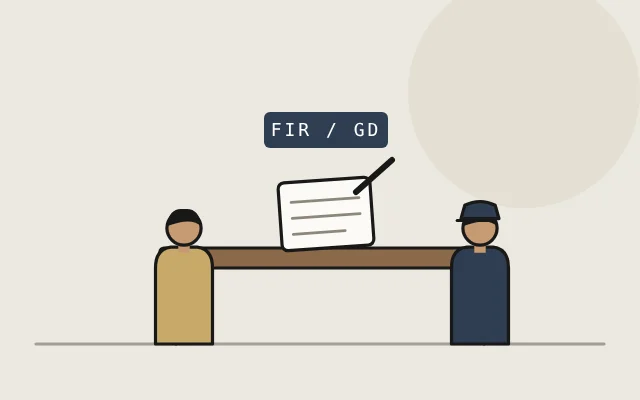
Lodge an FIR with the police
Only the aggrieved person, someone they authorise in writing, or a law enforcement officer can start a case. This rule was designed to stop third parties from filing cases over other people's speech. Offences under ss.17, 18(1)(c), 19, 21, 22, 23 and 25 are cognizable, so the officer in charge records an FIR and starts the investigation. For non-cognizable offences, such as online hate speech under s.26, the police need a Magistrate's order to investigate.
In Dhaka, complaints are often handled by the DMP's specialised cyber crime units after the FIR is recorded at the local police station.
Where: Police station or DMP cyber crime unit · Time: Same day to 1 week · Law: s.40(1) Cyber Protection Act 2026; s.46(1) Cyber Protection Act 2026; s.154 CrPC; s.155 CrPC · Documents: Written FIR, Authorisation letter if filed by a representative, Evidence printouts, National ID
Tip: A relative or organisation cannot file on the victim's behalf without a written authorisation. Without one, the case can be thrown out.
 Step 4 · Filing and 24-hour screening
Or complain directly to the Cyber Tribunal
If the police refuse to record the case, the aggrieved person can file a written complaint with the Cyber Tribunal, with an affidavit stating that they asked the police and were refused. The Tribunal examines the complainant. If satisfied, it directs a police officer to investigate; if not, it rejects the complaint at once. The Tribunal can also act on information about an offence within its jurisdiction and ask the police to inquire. However, it cannot take cognizance without a written police or joint investigation team report.
Where: Cyber Tribunal, Dhaka · Time: 1 day to file; 1-4 weeks for the order · Law: s.40(2)-(4) Cyber Protection Act 2026; s.68 ICT Act 2006 · Documents: Complaint petition, Affidavit of police refusal, Evidence bundle
Tip: Attach proof that you actually went to the police, such as a GD number or a dated letter. The affidavit is examined closely.
 Step 5 · Filing and 24-hour screening
24-hour screening by the Magistrate
For cases of cyber forgery (s.21), online blackmail and sexual harassment (s.25) and online hate speech (s.26), the police must send the case record, and any person arrested, to the cognizance Magistrate within 24 hours of filing. Within the next 24 hours the Magistrate reviews the allegation and the surrounding facts, hearing the aggrieved person or their lawyer if present. If there is a basis, the Magistrate orders investigation. If not, the Magistrate dismisses the case with reasons and releases anyone detained at once.
This safeguard is new in the cyber tribunal case process in Bangladesh.
Where: Chief Metropolitan Magistrate Court, Dhaka (cognizance Magistrate) · Time: Within 48 hours of filing · Law: s.31(3)-(4) Cyber Protection Act 2026 · Documents: Case record, Forwarding report, Evidence summary
Tip: Defence lawyers should attend this first hearing with a short written note. It is the earliest chance to have a weak case dismissed.
 Step 6 · Arrest, bail and investigation
Arrest, production and remand
Police may arrest for cognizable offences, and in hacking or attacks on critical infrastructure they can search, seize and arrest without a warrant if evidence may be lost, recording their reasons. The arrested person must be produced before a Magistrate or the Tribunal within 24 hours. Police remand needs a reasoned application, and since the 2025 amendment to s.167 CrPC, confirmed in 2026, total police custody cannot exceed fifteen days. In other cases a search warrant is obtained from the Tribunal, the Chief Metropolitan Magistrate or the Chief Judicial Magistrate.
Where: Chief Metropolitan Magistrate Court, Dhaka (cognizance Magistrate) · Time: Within 24 hours of arrest · Law: s.34 Cyber Protection Act 2026; s.35 Cyber Protection Act 2026; s.167 CrPC (as amended 2026); Article 33 Constitution · Documents: Seizure list, Forwarding report, Remand petition
Tip: Ask for a copy of the seizure list for every phone or laptop taken. Devices that are not listed are hard to recover later.
 Step 7 · Arrest, bail and investigation
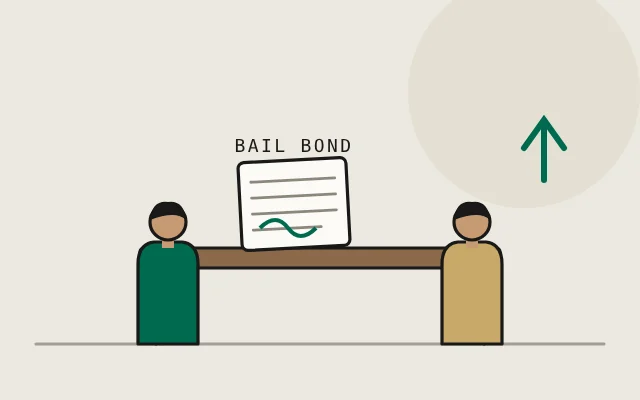
Bail
The 2026 Act sets bail status offence by offence. Hacking critical infrastructure, hacking under s.18(1)(c), malware and data offences, cyber fraud and cyber terrorism are non-bailable. Simple unauthorised access, cyber forgery, illegal e-transactions, online blackmail and sexual harassment, and online hate speech are bailable, so bail is a right on furnishing bond. For non-bailable offences the Magistrate or the Cyber Tribunal decides under s.497 CrPC. If the Magistrate refuses, the application can be renewed before the Cyber Tribunal, which has the powers of a Court of Session, and then before the High Court Division.
Anticipatory bail is available from the High Court Division in suitable cases.
Where: Cyber Tribunal, Dhaka · Time: 1 day to 6 weeks · Law: s.46(2) Cyber Protection Act 2026; s.496 CrPC; s.497 CrPC; s.498 CrPC; s.42(2) Cyber Protection Act 2026 · Documents: Bail petition, FIR copy, Bail bond and surety NIDs
Tip: Check the exact sub-section charged. Under the 2026 Act the same section can contain both bailable and non-bailable limbs.
 Step 8 · Arrest, bail and investigation
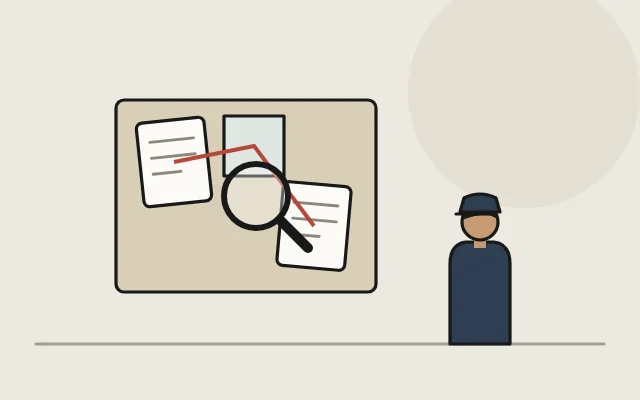
Investigation
In the cyber tribunal case process in Bangladesh, a police officer investigates. Where needed, the Tribunal can form a joint investigation team of police, other law enforcement and the National Cyber Protection Agency. The investigating officer can take control of devices and data, request traffic data from service providers, and use certified experts. Service providers must cooperate. The investigation must finish within 90 days of the officer taking charge. That can be extended by 15 days with a supervisor's approval, and by a further 30 days with the Tribunal's permission.
The Tribunal can allow more time only for technical reasons.
Where: Police station or DMP cyber crime unit · Time: 3-6 months in practice · Law: s.31(1)-(2) Cyber Protection Act 2026; s.32 Cyber Protection Act 2026; s.33 Cyber Protection Act 2026; s.38 Cyber Protection Act 2026 · Documents: Case diary, Data requests to platforms, Expert reports
Tip: Requests to foreign platforms often take months. Ask the investigating officer early whether a mutual legal assistance request is needed.
 Step 9 · Arrest, bail and investigation
Digital forensic examination
Seized devices are sent to a digital forensic lab, where an image of the data is made and analysed for messages, uploads, login records and deleted files. Forensic evidence collected under the Act is admissible as evidence, and digital forensic evidence prepared in the lab must be preserved. The investigating officer must tell the court promptly what has been seized. Defence lawyers commonly test the chain of custody: when the device was seized and sealed, who handled it, and whether the hash values match.
Gaps in the chain are one of the strongest defence points in a Cyber Tribunal trial.
Where: National Cyber Protection Agency and digital forensic lab · Time: 1-4 months · Law: s.33(4) Cyber Protection Act 2026; s.43 Cyber Protection Act 2026; s.45 Evidence Act 1872 · Documents: Forensic report, Hash value records, Chain-of-custody forms
Tip: Victims should hand over the original device, not only screenshots, so the lab can verify the source.
- Step 10 · Arrest, bail and investigation
Police report: charge sheet or final report
The investigating officer files a charge sheet naming the accused and the sections, or a final report where the allegation is not proved. The Cyber Tribunal cannot take cognizance of any offence without this written police or joint team report. A complainant who disagrees with a final report can file a naraji petition, and the Tribunal may then order further investigation. An accused against whom an interim report finds no evidence can be discharged early.
Where the report shows the case was knowingly false, the person who filed it faces the same punishment as the offence they alleged.
Where: Cyber Tribunal, Dhaka · Time: Hearing: 1-3 months · Law: s.40(4) Cyber Protection Act 2026; s.173 CrPC; s.173A CrPC; s.28 Cyber Protection Act 2026 · Documents: Charge sheet or final report, Naraji petition, Forensic report
Tip: Read the charge sheet against the forensic report. Charges that go beyond what the lab actually found are a common weakness.
- Step 11 · Charge and trial at the Cyber Tribunal
Cognizance, discharge or charge framing
The Cyber Tribunal is presided over by a Sessions Judge or Additional Sessions Judge and follows the Sessions trial procedure in Chapter XXIII CrPC. After cognizance, the public prosecutor opens the case and the defence may argue for discharge. If there is no sufficient ground, the Tribunal discharges the accused with reasons. Otherwise it frames a charge in writing, reads it out and records the plea. The 180-working-day time limit for disposal starts from the date the charge is framed.
Where: Cyber Tribunal, Dhaka · Time: 2-6 months after cognizance · Law: s.40(5) Cyber Protection Act 2026; s.42(2) Cyber Protection Act 2026; s.265C CrPC; s.265D CrPC · Documents: Discharge petition, Charge, Copies of police papers
Tip: Raise any problem with the complainant's standing under s.40(1) at this hearing.
 Step 12 · Charge and trial at the Cyber Tribunal
Prosecution evidence
The prosecution calls the victim, the investigating officer, seizure-list witnesses and the forensic examiner, and proves screenshots, platform records and lab reports. The defence cross-examines each witness, focusing on authorship of the account, the chain of custody and whether the content meets the legal definition of the offence. The Tribunal can take expert opinion on computer science, digital forensics or data protection.
The Act requires disposal within 180 working days of the charge, which the judge may extend by up to 90 working days, after which the judge must report the delay to the High Court Division.
Where: Cyber Tribunal, Dhaka · Time: 6-24 months · Law: s.265F CrPC; s.44 Cyber Protection Act 2026; s.45 Cyber Protection Act 2026 · Documents: Summons, Exhibits, Expert report
Tip: The account's owner is not always its author. Evidence linking the accused to the device and login is what matters.
- Step 13 · Charge and trial at the Cyber Tribunal
Examination of the accused and defence case
After the prosecution closes, the Tribunal questions the accused under s.342 about the evidence against them. If there is no evidence that the accused committed the offence, the Tribunal records an acquittal at this stage. Otherwise the accused is called on to enter a defence and may produce witnesses or documents, such as proof that an account was hacked or cloned, or a defence forensic report. Both sides then argue the case, and the public prosecutor sums up.
Where: Cyber Tribunal, Dhaka · Time: 1-4 months · Law: s.342 CrPC; s.265H CrPC; s.265J CrPC · Documents: Defence evidence, Written arguments
Tip: If you claim your account was hacked, show when you reported it. A report made before the case began carries far more weight.
 Step 14 · Judgment and after
Judgment, compensation and confiscation
The Tribunal delivers a reasoned judgment of acquittal or conviction. Sentences depend on the offence: for example up to two years or Tk 10 lakh for online sexual harassment, rising to five years or Tk 20 lakh where the victim is a woman or a child, and up to ten years or Tk 1 crore for cyber terrorism. The Tribunal can order compensation to the victim from or in addition to the fine. It can also confiscate devices used in the offence, unless their owner was not responsible.
A knowingly false complaint can be tried by the same Tribunal under s.28.
Where: Cyber Tribunal, Dhaka · Time: Judgment usually 2-6 weeks after arguments · Law: s.265K CrPC; s.367 CrPC; s.25 Cyber Protection Act 2026; s.30 Cyber Protection Act 2026; s.47 Cyber Protection Act 2026 · Documents: Judgment, Certified copy application
Tip: Apply for the certified copy at once. The 60-day appeal period runs from the judgment date.
 Step 15 · Judgment and after
Compromise with the court's consent
Some offences can be compounded, but only with the Tribunal's consent. These are simple and criminal unauthorised access under s.18(1)(a) and (b), malware and data offences (s.19), cyber forgery (s.21), cyber fraud (s.22), illegal e-transactions (s.24) and online blackmail or sexual harassment (s.25). Hacking under s.18(1)(c), attacks on critical infrastructure, cyber terrorism and online hate speech cannot be compounded. The parties file a joint petition and the victim confirms the settlement in person. The Tribunal checks it was voluntary, particularly in harassment cases.
Where: Cyber Tribunal, Dhaka · Time: 1-4 weeks · Law: s.46(3) Cyber Protection Act 2026; s.345 CrPC · Documents: Joint compromise petition, Settlement terms, Undertaking to remove content
Tip: Make deletion of the content and a no-repost undertaking a written term of the settlement.
 Step 16 · Judgment and after
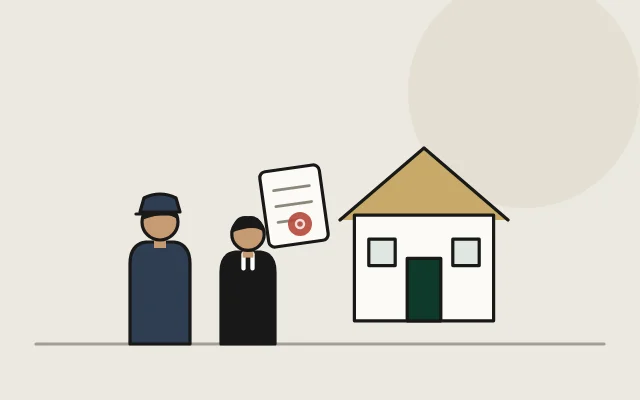
Sentence, fine and recovery
If there is no appeal, or the appeal fails, a convicted person is committed to jail under a warrant and fines are recovered under the CrPC, with imprisonment in default. The compensation part of the fine is paid to the victim. Confiscated devices are disposed of as the Tribunal orders. Where a sentence was passed in an old speech case that has since been cancelled under s.50(4) or (5), that sentence and fine are treated as void by law.
Where: Cyber Tribunal, Dhaka · Time: Immediate to a few months · Law: s.383 CrPC; s.386 CrPC; s.30 Cyber Protection Act 2026; s.50(4)-(5) Cyber Protection Act 2026 · Documents: Warrant of commitment, Fine and compensation receipts
Tip: Anyone still facing an old Digital Security Act speech case should ask the court for a formal order recording that the case abated under s.50.
What if…? How the cyber tribunal case process in Bangladesh can change course
Choose a scenario. The map animates the route up the hierarchy and, where a case is sent back, down to the lower court and up again.
What if the losing side appeals?
- 1High Court Division
Criminal appeal to the High Court Division
The 2026 Act gives an appeal to the Cyber Appellate Tribunal under s.82 of the ICT Act 2006. Until that Tribunal is constituted, s.84 of the ICT Act sends appeals to the High Court Division, and that is the route in practice; check whether it has since been set up. The appeal is a full rehearing on facts and law, filed within 60 days under Article 155 of the Limitation Act, as the High Court Division has confirmed. Bail pending appeal can be sought at once.
2-5 yearss.41(2) Cyber Protection Act 2026ss.82-84 ICT Act 2006Article 155 Limitation Act 1908s.426 CrPC - 2High Court Division
Appeal against acquittal
The State can appeal an acquittal by the Cyber Tribunal to the High Court Division. A complainant can appeal only where the acquittal involves an error of law causing a failure of justice, within sixty days. Late appeals need a separate application to condone the delay under s.5 of the Limitation Act with a convincing explanation.
2-5 yearss.417 CrPCs.5 Limitation Act 1908
Where it ends up: The High Court Division confirms, alters or reverses the Tribunal's judgment, and the case can go further only with leave of the Appellate Division.
What if a party challenges a charge, bail or interim order?
- 1High Court Division
Criminal revision or quashing in the High Court Division
Interim orders of the Cyber Tribunal, such as framing a charge or refusing discharge, cannot be appealed. Because the Tribunal sits at Sessions level, the Sessions Judge cannot revise it, so the challenge goes to the High Court Division by criminal revision or by an application to quash the proceedings for abuse of process. The court checks legality and propriety, not the facts in detail, and may stay the trial meanwhile.
6-24 monthss.435 CrPCs.439 CrPCs.561A CrPC - 2Cyber Tribunal, Dhaka
Trial resumes or ends
If the High Court Division refuses the revision, the trial resumes before the Cyber Tribunal from where it stopped. If it quashes the charge or the proceedings, the case ends for that accused, and the Tribunal records the order. A partial order can direct the Tribunal to reframe the charge under a different section.
1-3 monthss.442 CrPCs.227 CrPC
Where it ends up: The case returns to the Cyber Tribunal to continue, or ends for the accused who succeeded.
Can the Cyber Tribunal review its own judgment?
- 1Cyber Tribunal, Dhaka
No review at the Tribunal
Once the Cyber Tribunal has signed its judgment, it cannot review or alter it except to correct a clerical error. A party who thinks the judgment is wrong must appeal. A petition described as a review will be rejected, and time spent on it is not excluded from the 60-day appeal period, so it should not be used as a substitute.
Not applicables.369 CrPCs.42(1) Cyber Protection Act 2026 - 2Appellate Division of the Supreme Court
Review in the Appellate Division
A review exists only in the Appellate Division, against its own judgment or order. In criminal matters the ground is an error apparent on the face of the record. The petition must be filed within thirty days with a certified copy of the judgment. A review is not a rehearing, and such petitions very rarely succeed.
3-12 monthsArticle 105 ConstitutionOrder XXVI rules 1-2 Supreme Court (Appellate Division) Rules 1988
Where it ends up: Errors are corrected on appeal; a true review exists only at the top of the hierarchy.
Is there a reference stage in cyber cases?
- 1Cyber Tribunal, Dhaka
No death reference: the maximum sentence is ten years
A reference to the High Court Division for confirmation applies only to death sentences, and no offence under the Cyber Protection Act 2026 carries death. The CrPC route for a Sessions Judge to report a case to the High Court Division has also been removed. So there is no reference stage in a cyber case. What replaces it is the Act's delay-reporting duty and the High Court Division's supervision.
Not applicables.374 CrPCs.45 Cyber Protection Act 2026 - 2High Court Division
Delay report and transfer powers
If a trial is not finished within 180 working days plus a 90-day extension, the Tribunal judge must report the reasons in writing to the High Court Division and may continue. Where a fair trial cannot be had, or the case raises an unusually difficult question of law, a party can ask the High Court Division to transfer it to another court.
1-6 monthss.45(3) Cyber Protection Act 2026s.526 CrPC
Where it ends up: The trial continues in the Cyber Tribunal under the High Court Division's supervision, or moves to another Tribunal on transfer.
What if the High Court Division orders a retrial?
- 1High Court Division
Conviction set aside and case sent back
If the High Court Division finds a serious procedural defect, for example a forensic report admitted without calling its author, or an accused not properly examined under s.342, it can set aside the conviction and order a retrial by the Cyber Tribunal. The judgment explains which stages must be repeated.
Within the appeals.423(1)(b) CrPCs.537 CrPC - 2Cyber Tribunal, Dhaka
Retrial at the Cyber Tribunal
The record returns to the Cyber Tribunal, which retries the case from the stage fixed by the High Court Division. That may mean recalling the forensic examiner, admitting the original device or taking fresh defence evidence. The accused usually remains on the same bail. The Tribunal then gives a fresh, reasoned judgment.
6-18 monthss.423 CrPCs.540 CrPC - 3High Court Division
Fresh appeal
The losing side can appeal the new judgment to the High Court Division within 60 days. Only the retrial judgment is in issue now. Because remands add years, both sides should ask the appeal court to take any missing evidence itself under s.428 where possible, rather than sending the case back.
2-4 yearss.84 ICT Act 2006s.428 CrPCArticle 155 Limitation Act 1908
Where it ends up: After the retrial, the case returns to the High Court Division on a fresh appeal.
How does a cyber case reach the Appellate Division?
- 1Appellate Division of the Supreme Court
Criminal petition for leave to appeal
A party who loses in the High Court Division files a criminal petition for leave to appeal in the Appellate Division within thirty days of the judgment. The Attorney-General has sixty days against an acquittal. The petition must show a substantial question of law, such as the meaning of the new offences or the effect of the repeal on pending cases.
1-3 yearsArticle 103 ConstitutionOrder XXIV rule 2 Supreme Court (Appellate Division) Rules 1988 - 2Appellate Division of the Supreme Court
Appeal heard or leave refused
If leave is granted, the appeal is heard on the points allowed, and the Appellate Division's judgment binds all courts below it. If leave is refused, the High Court Division's judgment becomes final. Bail or a stay of sentence pending the leave petition can be sought from the Chamber Judge of the Appellate Division.
1-3 yearsArticle 111 ConstitutionOrder XXIV Supreme Court (Appellate Division) Rules 1988
Where it ends up: The Appellate Division's decision is final, subject only to review under Article 105.
How the cyber tribunal case process in Bangladesh moves up the court hierarchy
Every offence under the Cyber Protection Act 2026 is tried only by a Cyber Tribunal, whatever the sentence. There is no lower Magistrate trial and no value threshold. The Magistrate's role is limited to the start: screening s.21, s.25 and s.26 cases within 24 hours, authorising detention and remand, and issuing search warrants. The Cyber Tribunal is constituted under s.68 of the ICT Act 2006 and is presided over by a Sessions Judge or Additional Sessions Judge with the powers of a Court of Session.
On paper, appeals go to a Cyber Appellate Tribunal chaired by a person qualified to be a Supreme Court judge. Because that body has not been constituted, s.84 of the ICT Act sends appeals to the High Court Division, which rehears the case on both facts and law. Interim orders are challenged in the High Court Division by revision or quashing. The final step in the cyber tribunal case process in Bangladesh is the Appellate Division, which hears a case only if it grants leave under Article 103.
- Appellate DivisionAppellate Division of the Supreme Court
- High Court DivisionHigh Court Division
- First instanceChief Metropolitan Magistrate Court, Dhaka (cognizance Magistrate) · Cyber Tribunal, Dhaka
- Start · outside courtLawyer's chamber · Police station or DMP cyber crime unit · National Cyber Protection Agency and digital forensic lab
Where your case is heard
Addresses are for Dhaka. Every district has equivalent courts at its own district judgeship.
Supreme Court of Bangladesh (Appellate Division and High Court Division)
Supreme Court of Bangladesh, Shahbag, Ramna, Dhaka-1000Hears appeals, revisions, references, writ petitions under Article 102, company matters and death references (High Court Division), and appeals by leave from the High Court Division (Appellate Division).
Both Divisions sit in the Supreme Court complex; many High Court Division benches sit in the Annex Building. Check the daily cause list for the bench and court room. Postal contact is the Registrar General, Supreme Court of Bangladesh, Ramna, Dhaka-1000.
Chief Metropolitan Magistrate Court, Dhaka
19 Johnson Road, Dhaka-1100Takes cognisance of and tries criminal cases arising in Dhaka Metropolitan Police areas (Metropolitan Magistrate courts), hears bail, remand and FIR/complaint matters, and sends sessions-triable cases to the Metropolitan Sessions Judge.
Metropolitan Magistrate courts are spread over the CMM court main building (floors 2-9) and the CJM court building (courts 29-37 on the 8th and 9th floors). Check the court number on the cause list. Each metropolitan city (Chattogram, Khulna, Rajshahi, Sylhet, Barishal, Rangpur, Gazipur) has its own CMM court.
Cyber Tribunal, Dhaka
Dhaka Judge Court premises, 16 Johnson Road, Sadarghat, DhakaTries offences under Bangladesh's cyber-security law (the Cyber Security Ordinance 2025, which replaced the Cyber Security Act 2023; check whether it has since been re-enacted as an Act) and pending ICT Act, Digital Security Act and Cyber Security Act cases.
Listed under the Dhaka District and Sessions Judgeship with a District and Sessions Judge presiding; exact building not published. Divisional cyber tribunals also exist outside Dhaka. Check the current cyber law before citing the governing statute.
Lawyer's chamber
Where this happens depends on your district or the office concerned. Ask us for the exact courtroom and address.
Dhaka Metropolitan Police (DMP) Headquarters
36 Minto Road, DhakaHeadquarters of the Dhaka Metropolitan Police; FIRs are lodged at the local police station, not here.
Emergency: 999. For a case, go to the police station with jurisdiction over the place of occurrence.
National Cyber Protection Agency and digital forensic lab
Where this happens depends on your district or the office concerned. Ask us for the exact courtroom and address.
How long each stage takes
These are indicative ranges based on typical Dhaka practice. Adjournments, case backlogs and appeals can stretch them.
Documents checklist and key terms
Tick off what you have. Your ticks stay saved in this browser. Bring the list to your first meeting with your lawyer.
- Cyber Tribunal
- A special court under s.68 of the ICT Act 2006, presided over by a Sessions or Additional Sessions Judge, that alone tries offences under the Cyber Protection Act 2026.
- Cyber Appellate Tribunal
- An appeal body provided for by s.82 of the ICT Act 2006; until it is constituted, appeals go to the High Court Division.
- Aggrieved person
- The person directly harmed by the offence; with written authorisation or law enforcement, the only people who can start a case.
- Critical information infrastructure
- Computer systems declared vital to the state or the public, where unauthorised access attracts the heaviest penalties.
- Chain of custody
- The documented record of who seized, sealed, handled and examined a digital device, used to show the evidence was not altered.
- Hash value
- A digital fingerprint of a file or disk image that shows whether data has changed since it was copied.
- Abatement under s.50
- The automatic cancellation by the 2026 Act of pending speech-related cases and sentences under the repealed 2018 and 2023 Acts.
- Joint investigation team
- A team of police, other law enforcement and the National Cyber Protection Agency formed by the Tribunal for complex cases.
Cyber tribunal case process in Bangladesh: common questions
Which law governs the cyber tribunal case process in Bangladesh in 2026?
What happened to my old case under the Digital Security Act or Cyber Security Act?
Can anyone file a cyber case against me for a Facebook post?
Is bail available in cyber cases?
How long does the cyber tribunal case process in Bangladesh take?
Where do I appeal against a Cyber Tribunal judgment?
What if someone files a false cyber case?
Can a cyber case be settled out of court?
Law and sources
- Cyber Protection Act 2026 (Act 81 of 2026), Laws of Bangladesh mirror
- Cyber Protection (Amendment) Act 2026 (Act 99 of 2026)
- Cyber Protection Ordinance 2025 (Ordinance 25 of 2025)
- Information and Communication Technology Act 2006, Bangladesh Laws
- Code of Criminal Procedure 1898, Bangladesh Laws
- Code of Criminal Procedure (Amendment) Act 2026 (Act 11 of 2026)
- High Court Division, Criminal Rule No. 101 (con/A) of 2024: appeals from the Cyber Tribunal under s.84 ICT Act and Article 155 Limitation Act
- Supreme Court of Bangladesh
This Case Journey is a general guide to procedure in Bangladesh as of October 2026. It is not legal advice. Procedure, fees and time limits change, and every case turns on its own facts. Timelines are indicative. Speak to a lawyer about your own matter.
Run this case from outside Bangladesh
You can usually start and run this case without travelling. You sign a power of attorney abroad, the Bangladesh High Commission or Embassy attests it, and your attorney and lawyer act for you in Dhaka. Some steps, such as giving evidence in person, may still need you or a commission. See how a case runs through a power of attorney →
Want to know where your case stands?
Book a consultation. A TRW lawyer will place your matter on this map, explain the next step and the realistic timeline, and tell you what to prepare.