
Land mutation case in Bangladesh: the full journey, step by step
A land mutation case in Bangladesh (namjari o jamabhag) is the process by which the Assistant Commissioner (Land) corrects the record of rights after a sale, gift, inheritance, partition or decree, so that the new owner appears in the mutation khatian and pays land development tax. Applications are made online, the Union Land Office reports, any co-sharer's objection is heard, and a reasoned order is passed.
That order can be reviewed, appealed or revised up the revenue ladder to the Land Appeal Board and then challenged by writ, but mutation records title and never creates it.
- Where it starts
- Online e-mutation application to the Assistant Commissioner (Land) of the upazila or circle where the land lies…
- Main law
- State Acquisition and Tenancy Act 1950 ss.89, 143, 143B, 143C and 146-151; Land Appeal Board Act 1989; Land Development Tax Act…
- Typical duration
- Indicative 1 to 3 months for an uncontested application; 3 to 12 months if contested; each revenue appeal adds roughly…
- Who can file
- The buyer, donee, heir, decree-holder or auction purchaser whose name should be recorded, or a person authorised by…
Land mutation case in Bangladesh: walk through every stage
Press next, use your arrow keys or tap a court on the map. The gold marker shows where your case is, and the green trail shows the route it has taken. For the immersive version, play it full screen.
Read every step as text
 Step 1 · Before applying
Understand what mutation does and does not do
Mutation corrects the government record of rights so that it shows the current owner. The Collector, acting through the Assistant Commissioner (Land) as Revenue Officer, has a legal duty to keep that record up to date on every transfer or inheritance. A land mutation case in Bangladesh does not create or decide ownership. Title comes from a registered deed, inheritance or a court decree, and a wrong mutation does not defeat the true owner.
But the record matters in practice: without the latest khatian in your name and proof of current land development tax, you cannot lawfully sell, gift, mortgage or register a deed for the land.
Where: Lawyer's chamber · Time: 1-2 days · Law: s.143 State Acquisition and Tenancy Act 1950; s.6(3) Land Crime Prevention and Remedy Act 2023 · Documents: Deed, inheritance certificate or decree, Latest khatian
Tip: Apply for mutation as soon as the deed is registered or the owner dies. Delay lets the old owner stay on the record and invites a second sale.
 Step 2 · Before applying
Assemble the documents and check the chain
The core documents are the applicant's photograph and signature, National ID card or birth registration certificate, and the latest land development tax receipt. Then add the source document: the registered sale or gift deed, the inheritance (warish) certificate from the Union Parishad chairman, mayor or ward councillor, a registered partition or distribution deed, or a certified decree. The khatian relied on must show the seller or deceased as the recorded owner. If it does not, the chain of deeds and earlier mutations linking the recorded owner to the seller must be filed too.
Names and areas should match across the CS, SA, RS and city survey records.
Where: Lawyer's chamber · Time: 1-3 weeks · Law: s.143 State Acquisition and Tenancy Act 1950; s.143B State Acquisition and Tenancy Act 1950 · Documents: NID or birth certificate, Photograph and signature, Deed or warish certificate or decree, Latest khatian, Chain deeds, Land development tax receipt
Tip: Check the area in the deed against the seller's recorded share before filing. Mismatches are the most common reason for refusal.
 Step 3 · Application and field report
Registration notice to the AC Land
When a deed of transfer is registered, the sub-registrar must not accept it without a notice of transfer in the prescribed form, and must send that notice to the Revenue Officer. Similar notices go to the land office when probate is granted for a bequest or a court confirms an execution sale. On receiving the notice, the AC Land opens a mutation file. In practice the buyer should still file an online application at once rather than wait for the notice, because the online file is what the land office actually processes.
Where: Assistant Commissioner (Land) office · Time: Days to weeks after registration · Law: s.89 State Acquisition and Tenancy Act 1950; s.143C(1) State Acquisition and Tenancy Act 1950 · Documents: Notice of transfer (L.T. notice), Registered deed
Tip: Keep the deed's registration number and date handy. The online form asks for them, and errors delay the file.
 Step 4 · Application and field report
File the e-mutation application
A land mutation case in Bangladesh is now started online: the applicant files at mutation.land.gov.bd or through the Bhumi app, selecting the division, district, upazila and mouza and entering the khatian and dag numbers and the area claimed. Documents are uploaded and the Tk 20 court fee and Tk 50 notice fee are paid online. Land offices do not accept cash. The system issues a tracking number and sends SMS updates. Authorised service centres can help applicants who are not comfortable with the portal.
Heirs abroad can apply through a properly executed and authenticated power of attorney.
Where: Assistant Commissioner (Land) office · Time: 1 day · Law: s.143 State Acquisition and Tenancy Act 1950; Ministry of Land e-mutation instructions · Documents: Online application, Uploaded documents, Online fee receipt
Tip: Save the tracking number and a PDF of the application. You will need them for any complaint, review or appeal.
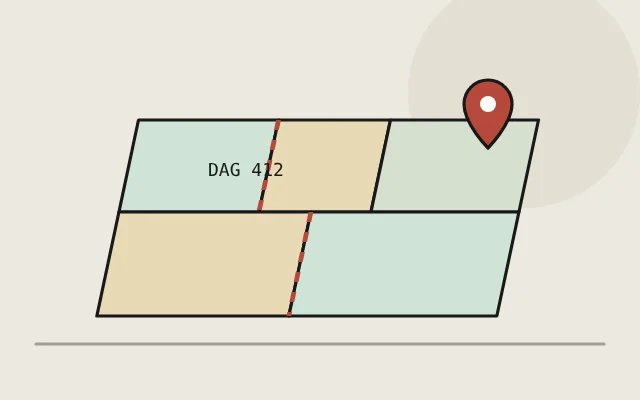 Step 5 · Application and field report
Union Land Office inspection and report
The AC Land sends the file to the Union or Municipal Land Office. The Union Land Assistant Officer checks the khatian and the chain of title, confirms the land development tax position, and where needed visits the land to see who is in possession and what the land is actually used for. The officer may also check the actual use and class of the land so that the mutation khatian records it correctly. The report goes back to the AC Land with a recommendation.
Most delays, and most informal demands for money, arise at this stage.
Where: Union or Municipal Land Office (tahsil) · Time: 1-3 weeks · Law: s.143 State Acquisition and Tenancy Act 1950; Ministry of Land e-mutation instructions · Documents: Field inspection report, Tax ledger extract
Tip: Report any demand for unofficial payment to the Ministry of Land's 16122 hotline. Officials can be held accountable for unexplained delay.
- Step 6 · Objections, hearing and order
Notice to co-sharers and objections
The AC Land issues notice to the co-sharers of the holding and fixes a date for objections. A co-sharer, heir or earlier buyer who disputes the application must file a written objection by that date, identifying the plot, the share and the document relied on. A general allegation without supporting papers rarely stops a mutation. If no objection is filed within the time fixed, the record is corrected without a contested hearing.
Where: Assistant Commissioner (Land) office · Time: 1-3 weeks · Law: s.143C(1)-(2) State Acquisition and Tenancy Act 1950 · Documents: Notice to co-sharers, Written objection with documents
Tip: Objectors should attach their own deed or inheritance certificate. An objection without documents is often treated as delaying tactics.
- Step 7 · Objections, hearing and order
Shortfall notice for missing documents
Ministry of Land circulars on e-mutation tell AC Land offices not to reject an application merely because a document is missing. Instead, the first order should list what is missing and allow the applicant a short period, reported as normally seven working days, to supply it. Rejection on grounds such as a name on the deed differing from the NID, a wrong mobile number, or a pending court case is also discouraged. If the documents arrive after a rejection, the file can usually be reactivated. Resubmitting a rejected application may attract the fee again.
Where: Assistant Commissioner (Land) office · Time: About 7 working days · Law: Ministry of Land e-mutation circulars; s.143C State Acquisition and Tenancy Act 1950 · Documents: Shortfall order, Supplementary documents
Tip: Answer a shortfall order immediately and in full. A partial response is the most common reason a file is rejected.
 Step 8 · Objections, hearing and order
Hearing before the AC Land
If a co-sharer objects, the AC Land must fix a date, hear both parties and then pass an order stating reasons. Non-complex files can be heard online through the land office hearing platform. The applicant should bring originals of every deed, certified copies of each survey khatian for the plot, the inheritance certificate, tax receipts and any court orders, with a one-page chronology linking the recorded owner to the applicant.
Where the real dispute is about title, the parties should ask the AC Land to record that, because a land mutation case in Bangladesh cannot finally decide ownership.
Where: Assistant Commissioner (Land) office · Time: 1-3 months if contested · Law: s.143C(3) State Acquisition and Tenancy Act 1950 · Documents: Original deeds, Survey khatians, Chronology, Written submissions
Tip: Keep the argument to the record and the documents. Long arguments about who really owns the land belong in a civil suit.
 Step 9 · Objections, hearing and order
Reasoned order: approval or rejection
The AC Land passes a written order approving the mutation, in full or in part, or rejecting it. A contested order must give reasons. The order appears on the portal, and the date of the order matters because every challenge period runs from it, not from the date the applicant finds out. Typical grounds for refusal include a broken chain of title, a deed conveying more land than the seller's recorded share, government khas, acquired or vested land, or a suspected forgery.
Where: Assistant Commissioner (Land) office · Time: Service target of about 28 days for uncontested files; longer if contested · Law: s.143C(3) State Acquisition and Tenancy Act 1950; s.148 State Acquisition and Tenancy Act 1950 · Documents: Mutation order
Tip: Download the order and note its date the day it appears. Review and the first appeal both have thirty-day limits.
 Step 10 · Fee, DCR, khatian and tax
Pay the balance of the fee
Once the mutation is approved, the applicant pays the remaining Tk 1,100, made up of the Tk 1,000 record-correction fee and the Tk 100 khatian fee. Payment is made online through mobile financial services, cards or internet banking. No other fee is officially chargeable for the mutation itself. Until the balance is paid, the new mutation khatian and the DCR are not released, and unpaid approved files are one of the main reasons cases stay pending.
Where: Assistant Commissioner (Land) office · Time: 1-3 days · Law: Ministry of Land e-mutation fee schedule · Documents: Online payment receipt
Tip: Pay the balance promptly. An approved file left unpaid can be treated as incomplete.
 Step 11 · Fee, DCR, khatian and tax
Download the mutation khatian and DCR
After payment, the applicant downloads and prints the new mutation khatian and the duplicate carbon receipt (DCR), which now carries a QR code. The Ministry of Land treats the QR-coded online DCR as equivalent to a manual one. Check every entry: the names and parents' or husbands' names, the dag numbers, the area and the share. Correcting an error in the DCR or khatian carries no fee, but it is much easier to fix in the days after issue than years later in a sale.
Under the current automated system the land moves between khatians automatically.
Where: Assistant Commissioner (Land) office · Time: Same day as payment · Law: s.143 State Acquisition and Tenancy Act 1950; Ministry of Land instructions on online DCR · Documents: Mutation khatian, QR-coded DCR
Tip: Verify the QR code and keep printed and digital copies with the deed. Buyers and banks will ask for both.
 Step 12 · Fee, DCR, khatian and tax
Open the tax holding and pay land development tax
A completed mutation creates a land development tax holding in the new owner's name. The owner should pay the tax online for the current year straight away and keep the electronic dakhila (receipt). Land held by one owner under several khatians in the same mouza is combined into a single mouza-wise jamabandi for assessment, and the owner's mobile number and NID are linked to it. Proof of up-to-date tax is required, together with the latest khatian, before the land can be transferred or a deed registered.
Where: Union or Municipal Land Office (tahsil) · Time: 1-7 days · Law: ss.7-8 Land Development Tax Act 2023; s.10 Land Development Tax Act 2023; s.6(3) Land Crime Prevention and Remedy Act 2023 · Documents: Online dakhila, Holding number
Tip: Arrears follow the land, so check the seller's tax position before buying and pay the first year's tax as soon as the holding opens.
 Step 13 · After mutation
Inherited land: joint or separate mutation
Heirs can apply jointly on an inheritance certificate, with each heir's share of the whole recorded in one khatian. If the heirs have divided the land, each can obtain a separate mutation and tax holding on the distribution document, and a registered instrument of partition must be used to revise the khatian. Omitted daughters, widows, second spouses or children of a predeceased child are the classic defects. Shares must follow the correct personal law, or the mutation invites a later objection, appeal or suit.
Where: Assistant Commissioner (Land) office · Time: 1-3 months · Law: s.143B State Acquisition and Tenancy Act 1950; Ministry of Land e-mutation instructions on inheritance · Documents: Warish certificate, Registered partition or distribution deed, Death certificate
Tip: Families planning to sell or develop should partition and mutate separately. Joint mutation ties every sale to every heir.
- Step 14 · After mutation
When the real dispute is title or the survey record
Because mutation does not decide ownership, a party who loses on title should not keep appealing in the revenue hierarchy. The proper remedy is a civil suit for declaration of title and, if needed, recovery of possession, filed before a Civil Judge (formerly Assistant Judge), Senior Civil Judge (formerly Senior Assistant Judge) or Joint District Judge according to value. Errors in a finally published survey khatian (record of rights prepared in a survey) go to the Land Survey Tribunal, not to the AC Land.
A decree from the civil court is then itself recorded by fresh mutation.
Where: Dhaka Judge Court (civil and criminal courts) · Time: 2-6 years · Law: s.42 Specific Relief Act 1877; s.145A State Acquisition and Tenancy Act 1950; ss.18-19 Civil Courts Act 1887 (as amended 2021 and 2026) · Documents: Plaint, Certified copy of the mutation order
Tip: Courts treat a mutation khatian and DCR as evidence of possession and title, but not as proof that defeats a better registered title.
What if…? How the land mutation case in Bangladesh can change course
Choose a scenario. The map animates the route up the hierarchy and, where a case is sent back, down to the lower court and up again.
What if the AC Land's order is wrong?
- 1Additional Deputy Commissioner (Revenue), Deputy Commissioner's Office, Dhaka
First appeal to the Collector (ADC Revenue)
An appeal lies from every original order of a Revenue Officer subordinate to the Collector. In practice the Collector's appellate power is exercised by the Additional Deputy Commissioner (Revenue), and the appeal is registered as a miscellaneous appeal. It must be filed within thirty days of the order, with a certified copy and grounds. The appellate officer can rehear the facts and documents, and can confirm, modify or set aside the order.
3-9 monthss.147(a) State Acquisition and Tenancy Act 1950s.148(a) State Acquisition and Tenancy Act 1950s.151 State Acquisition and Tenancy Act 1950 - 2Divisional Commissioner's Office, Dhaka
Second appeal to the Divisional Commissioner
From the Collector's appellate order, a further appeal lies to the Commissioner of the division, in practice heard by the Additional Divisional Commissioner (Revenue). The limit is sixty days from the date of the order. The appeal deals with errors in the Collector's decision on the record and the documents, and the parties can file written arguments.
3-12 monthss.147(aa) State Acquisition and Tenancy Act 1950s.148(b) State Acquisition and Tenancy Act 1950 - 3Land Appeal Board
Final appeal to the Land Appeal Board
From the Commissioner's order, a final appeal lies to the Land Appeal Board within ninety days of the order. The Board replaced the old Board of Land Administration under the Land Appeal Board Act 1989, and exercises the powers given to it by law. Its decision ends the revenue ladder, subject to its own power of reconsideration.
6-18 monthss.147(c) State Acquisition and Tenancy Act 1950s.148(bb) State Acquisition and Tenancy Act 1950ss.4-5 Land Appeal Board Act 1989
Where it ends up: The Land Appeal Board's order is final within the revenue hierarchy and can then be challenged only by writ in the High Court Division.
Can a higher revenue officer revise the order instead?
- 1Additional Deputy Commissioner (Revenue), Deputy Commissioner's Office, Dhaka
Revision by the Collector
The Collector may revise an order of a subordinate Revenue Officer, either of his own motion or on an application made within one month of the order. Revision suits clear legal or procedural errors, such as an order passed without notice to a co-sharer. No order can be revised if an appeal has already been filed against it, so the party must choose one route.
2-6 monthss.149(1) State Acquisition and Tenancy Act 1950s.149 proviso State Acquisition and Tenancy Act 1950 - 2Divisional Commissioner's Office, Dhaka
Revision by the Commissioner and the Board
The Divisional Commissioner may revise a Collector's order within three months, and the Land Appeal Board may revise a Commissioner's order within six months. The Board can also, at any time, order correction of an entry in the record of rights that it is satisfied was made through a bona fide mistake, after notice to the parties.
3-12 monthss.149(1a) State Acquisition and Tenancy Act 1950s.149(3)-(4) State Acquisition and Tenancy Act 1950
Where it ends up: The order is confirmed or corrected, and the record of rights is amended to match.
Can the same officer review the order?
- 1Assistant Commissioner (Land) office
Review by the AC Land
A Revenue Officer can review an order made by himself or a predecessor, on application or of his own motion, and confirm, modify or reverse it. The application must be made within thirty days unless sufficient cause for delay is shown. No review lies once an appeal or revision has been filed. No order can be changed without notice to the parties, and no appeal lies from an order rejecting a review.
1-3 monthss.150(1) State Acquisition and Tenancy Act 1950s.150(2) State Acquisition and Tenancy Act 1950 - 2Land Appeal Board
Reconsideration by the Land Appeal Board
A person aggrieved by an order of the Land Appeal Board can apply to the Board for reconsideration within sixty days, in the manner set by its rules. The Board may stay implementation of its decision while the application is pending. Reconsideration is used for clear errors, not to reargue the case.
3-9 monthss.6 Land Appeal Board Act 1989
Where it ends up: Clear errors are corrected by the officer or the Board without a further appeal.
What if a deed in the file looks forged?
- 1Dhaka Judge Court (civil and criminal courts)
Referral of suspected forgery to the criminal court
If an authority dealing with land transfer, survey, registration or record updating has reasonable grounds to believe that a document or information produced is fraudulent or forged, it must send the matter, with details, to the appropriate criminal court for trial. The AC Land therefore refers a suspect deed or heirship document rather than deciding the forgery question in the mutation case. The mutation usually waits for the outcome.
1-3 yearss.6(2) Land Crime Prevention and Remedy Act 2023s.19 Land Crime Prevention and Remedy Act 2023 - 2Assistant Commissioner (Land) office
Court finding sent back to the record
Where a court in any case finds that a document was created by fraud or forgery, it sends a copy of its judgment to the Deputy Commissioner and other authorities, ordering the document to be noted as forged in the relevant records. The AC Land then corrects or refuses the mutation accordingly.
1-3 monthss.6(1) Land Crime Prevention and Remedy Act 2023s.143 State Acquisition and Tenancy Act 1950
Where it ends up: The forgery question is decided by the criminal court, and the mutation record is corrected to follow its finding.
What if the appeal officer sends the file back?
- 1Additional Deputy Commissioner (Revenue), Deputy Commissioner's Office, Dhaka
Order set aside and file sent back
If the ADC (Revenue) finds that the AC Land decided without notice to a co-sharer, ignored a document, or gave no reasons, the usual course is to set the order aside and send the file back for a fresh hearing. The appellate order explains what the AC Land must consider and may direct a new field report.
Within the appeals.147(a) State Acquisition and Tenancy Act 1950s.143C(3) State Acquisition and Tenancy Act 1950 - 2Assistant Commissioner (Land) office
Fresh hearing and new order
The AC Land reopens the file, obtains any new report from the Union Land Office, hears the parties again and passes a fresh reasoned order. The parties should file any additional documents at this stage rather than waiting for a further appeal, because new evidence is harder to introduce higher up.
1-4 monthss.143C(2)-(3) State Acquisition and Tenancy Act 1950 - 3Additional Deputy Commissioner (Revenue), Deputy Commissioner's Office, Dhaka
Back up on appeal
The party who loses after the remand can appeal again to the ADC (Revenue) within thirty days of the new order. From there the ordinary ladder continues to the Divisional Commissioner and then the Land Appeal Board, each with its own time limit, so the date of every order should be diarised.
3-9 monthss.147 State Acquisition and Tenancy Act 1950s.148 State Acquisition and Tenancy Act 1950
Where it ends up: After the fresh order, the case climbs again through the revenue appeal ladder.
Can a mutation dispute reach the Supreme Court?
- 1High Court Division
Writ petition in the High Court Division
There is no appeal from the Land Appeal Board to any court. A party can file a writ petition under Article 102, for example where revenue officers refuse to record a final civil decree. In Md Nazmul Haque v Government of Bangladesh, decided on 21 November 2024, the High Court Division held that refusing mutation despite civil court declarations was unlawful and directed mutation within 60 days.
1-3 yearsArticle 102 ConstitutionWrit Petition No. 13337 of 2022 (HCD, 21 November 2024) - 2Appellate Division of the Supreme Court
Civil petition for leave to appeal
A party who loses the writ can file a civil petition for leave to appeal in the Appellate Division within sixty days of the High Court Division's judgment. Leave is granted only where a substantial question of law arises. The Appellate Division's decision is final, subject to review under Article 105 within thirty days.
1-3 yearsArticle 103 ConstitutionOrder XIII rule 1 Supreme Court (Appellate Division) Rules 1988Article 105 Constitution
Where it ends up: The Supreme Court can direct the revenue authorities to correct the record, but questions of title still belong to the civil courts.
How the land mutation case in Bangladesh moves up the court hierarchy
A land mutation case in Bangladesh moves through the revenue hierarchy, not the courts. It starts with the Assistant Commissioner (Land), who acts as Revenue Officer for the Collector, on a report from the Union Land Office. There is no value threshold: every mutation, large or small, begins there. An appeal lies to the Collector, exercised by the Additional Deputy Commissioner (Revenue), within thirty days. From there it goes to the Divisional Commissioner within sixty days, and finally to the Land Appeal Board within ninety days.
Each appeal can look again at the documents and facts of the record, and each level can also revise a lower order within set periods instead of hearing an appeal. The AC Land and the Board can review their own orders. Above the Land Appeal Board there is no appeal. The High Court Division can intervene only by writ under Article 102 on grounds of illegality, unfairness or refusal to follow a decree, with leave to the Appellate Division after that. Ownership itself is decided separately by the civil courts.
- Appellate DivisionAppellate Division of the Supreme Court
- High Court DivisionHigh Court Division
- Appellate levelDivisional Commissioner's Office, Dhaka · Land Appeal Board
- First instanceAdditional Deputy Commissioner (Revenue), Deputy Commissioner's Office, Dhaka · Dhaka Judge Court (civil and criminal courts)
- Start · outside courtLawyer's chamber · Union or Municipal Land Office (tahsil) · Assistant Commissioner (Land) office
Where your case is heard
Addresses are for Dhaka. Every district has equivalent courts at its own district judgeship.
Supreme Court of Bangladesh (Appellate Division and High Court Division)
Supreme Court of Bangladesh, Shahbag, Ramna, Dhaka-1000Hears appeals, revisions, references, writ petitions under Article 102, company matters and death references (High Court Division), and appeals by leave from the High Court Division (Appellate Division).
Both Divisions sit in the Supreme Court complex; many High Court Division benches sit in the Annex Building. Check the daily cause list for the bench and court room. Postal contact is the Registrar General, Supreme Court of Bangladesh, Ramna, Dhaka-1000.
Office of the Divisional Commissioner, Dhaka
Dhaka (exact address not confirmed)Hears appeals and revisions in land-revenue matters (e.g. mutation and record appeals from the Additional Deputy Commissioner (Revenue)) and supervises district administrations in Dhaka Division.
The official site (dhakadiv.gov.bd) could not be fetched; address not confirmed. Each of the eight divisions has a Divisional Commissioner's office.
Land Appeal Board
Bhumi Bhaban, Tejgaon, DhakaHears appeals and revisions from Divisional Commissioners in land administration matters (mutation, khas land, record and revenue matters) under the Land Appeal Board Act 1989.
Financial Express/BSS (2021) reported that the Land Appeal Board would be housed in the new Bhumi Bhaban in Tejgaon; the board's own site did not publish a street address. Confirm before visiting.
Office of the Deputy Commissioner (District Magistrate), Dhaka
Dhaka (exact address not confirmed)District administration: land revenue and record-correction appeals, certificate cases, acquisition, executive magistracy and mobile courts for Dhaka district.
The official street address could not be read from dhaka.gov.bd (its contact pages did not load); the judiciary portal confirms office phone 02-223389786. Confirm the address before visiting. Every district has a Deputy Commissioner's office at the district headquarters.
Court of the District and Sessions Judge, Dhaka (Dhaka Judge Court)
Dhaka Judge Court premises, 16 Johnson Road, Sadarghat, DhakaSeat of the Dhaka District Judge and Additional District Judges (civil appeals, probate, district-level civil and sessions work outside the metropolitan area) and the civil courts of first instance (Joint District Judge, Senior Civil/Assistant Judge courts).
Official judiciary portal gives '16 Johnson Road, Sadarghat, Dhaka'. Many civil courts (Additional District Judge courts, Joint District Judge and Senior Assistant Judge courts, Artha Rin Adalat No.1, insolvency court) are in the new 8-storey District Judge Court building in the same premises. The 2026 judgeship list names the first-instance civil courts 'Senior Civil Judge' / 'Civil Judge' (formerly Senior Assistant Judge / Assistant Judge); some pages still use the old names. Every district has an equivalent court at its district judgeship.
Lawyer's chamber
Where this happens depends on your district or the office concerned. Ask us for the exact courtroom and address.
Union or Municipal Land Office (tahsil)
Where this happens depends on your district or the office concerned. Ask us for the exact courtroom and address.
Assistant Commissioner (Land) offices, Dhaka
Upazila or revenue circle land office for the area where the land lies, Dhaka (no single address)Hears mutation (namjari) applications, issues mutation records (DCR), collects land development tax and corrects records for land in its upazila or circle.
Go to the AC Land office for the upazila or revenue circle where the land is, not where you live. Mutation applications are filed online through the Ministry of Land's e-mutation system, with a hearing at the AC Land office. Appeals go to the Additional Deputy Commissioner (Revenue) at the Dhaka DC Office.
How long each stage takes
These are indicative ranges based on typical Dhaka practice. Adjournments, case backlogs and appeals can stretch them.
Documents checklist and key terms
Tick off what you have. Your ticks stay saved in this browser. Bring the list to your first meeting with your lawyer.
- Namjari o jamabhag
- Mutation of names and division of the rent or tax holding in the record of rights.
- Mutation khatian
- The khatian issued in the new owner's name after mutation, showing mouza, dag numbers, area and share.
- DCR
- Duplicate carbon receipt: the official receipt for the mutation fee, now issued online with a QR code.
- AC Land
- The Assistant Commissioner (Land), the Revenue Officer who decides mutation applications for an upazila or circle.
- Record of rights
- The government land record (khatian) showing who holds each plot and in what share.
- Warish certificate
- An inheritance certificate listing the heirs, issued by the Union Parishad chairman, mayor or ward councillor.
- Land Appeal Board
- The top revenue appellate body under the Land Appeal Board Act 1989, which replaced the Board of Land Administration.
- Land development tax
- The annual tax on land under the Land Development Tax Act 2023, paid online against the holding created by mutation.
Land mutation case in Bangladesh: common questions
Does a land mutation case in Bangladesh decide who owns the land?
How much does e-mutation cost?
How long does mutation take?
Can I sell land that has not been mutated in my name?
What if my application is rejected?
Do heirs need a partition deed for inherited land?
Where does a land mutation case in Bangladesh end?
What mistakes should I avoid?
Law and sources
- State Acquisition and Tenancy Act 1950, Bangladesh Laws
- Land Appeal Board Act 1989, Laws of Bangladesh mirror
- Land Crime Prevention and Remedy Act 2023, Laws of Bangladesh mirror
- Land Development Tax Act 2023, Bangladesh Laws
- e-Mutation portal, Ministry of Land
- Ministry of Land
- Financial Express: Bangladesh mandates online payment of land mutation fees
- Supreme Court of Bangladesh (Md Nazmul Haque v Government of Bangladesh, Writ Petition No. 13337 of 2022)
This Case Journey is a general guide to procedure in Bangladesh as of October 2026. It is not legal advice. Procedure, fees and time limits change, and every case turns on its own facts. Timelines are indicative. Speak to a lawyer about your own matter.
Run this case from outside Bangladesh
You can usually start and run this case without travelling. You sign a power of attorney abroad, the Bangladesh High Commission or Embassy attests it, and your attorney and lawyer act for you in Dhaka. Some steps, such as giving evidence in person, may still need you or a commission. See how a case runs through a power of attorney →
Want to know where your case stands?
Book a consultation. A TRW lawyer will place your matter on this map, explain the next step and the realistic timeline, and tell you what to prepare.