
Permanent injunction suit in Bangladesh: the full journey, step by step
A permanent injunction suit in Bangladesh asks a civil court to forbid the defendant, for good, from interfering with your land or other right, under sections 53 to 56 of the Specific Relief Act 1877. Because the suit takes years, the real early battle is the temporary injunction under Order XXXIX of the Code of Civil Procedure, with its ad interim orders, status quo directions and miscellaneous appeals.
This journey follows both tracks, from the first threat to the final decree, its enforcement and the routes up to the Appellate Division.
- Where it starts
- Civil court of first instance where the property lies: Civil Judge, Senior Civil Judge or Joint District Judge…
- Main law
- Specific Relief Act 1877 (ss.53-56); Code of Civil Procedure 1908 (Order XXXIX, Order XLIII rule 1(r), s.115, Order XXI rule 32)…
- Typical duration
- temporary injunction decided in 2 weeks to 4 months; trial 2-5 years; 5-10 years or more with appeals
- Who can file
- A person in possession of, or holding a legal right in, property or some other protected right that the defendant…
Permanent injunction suit in Bangladesh: walk through every stage
Press next, use your arrow keys or tap a court on the map. The gold marker shows where your case is, and the green trail shows the route it has taken. For the immersive version, play it full screen.
Read every step as text
 Step 1 · Before filing
Assess title, possession and the threat
The lawyer first checks whether a permanent injunction suit in Bangladesh is the right remedy at all. A perpetual injunction protects an existing right, so the plaintiff must show at least a prima facie title and, for land, present possession. The lawyer also checks the bars in section 56: no injunction to stop a pending court case, to interfere with public duties of government, to prevent breach of a contract that could not be specifically enforced, or where another equally effective remedy exists.
If you have already been dispossessed, a permanent injunction suit in Bangladesh is the wrong tool; you need possession relief instead.
Where: Lawyer's chamber · Time: 1-2 weeks · Law: ss.52-56 Specific Relief Act 1877; s.9 Specific Relief Act 1877 · Documents: Title deeds, Khatian, Photographs of the threatened act
Tip: If you were dispossessed within the last six months, a quick suit under s.9 Specific Relief Act may restore possession without proving title.
 Step 2 · Before filing
Record the threat at the police station
Where the defendant threatens to enter the land, cut trees, build a wall or evict you, the owner commonly records a general diary entry at the local police station. A GD is not a case and does not decide title, but it is dated, contemporaneous evidence of the threat that the civil court can later see. If there is a risk of violence, the Executive Magistrate may also be approached under section 145 CrPC, but that is a separate criminal-side process about peaceful possession.
Where: Local police station · Time: Same day · Law: Police Regulations, Bengal 1943 (general diary); ss.144-145 Code of Criminal Procedure 1898 · Documents: GD application and GD number, Names of witnesses to the threat
Tip: Keep the GD factual and short. Exaggerated statements are put to you in cross-examination years later.
 Step 3 · Before filing
Gather proof of title and possession
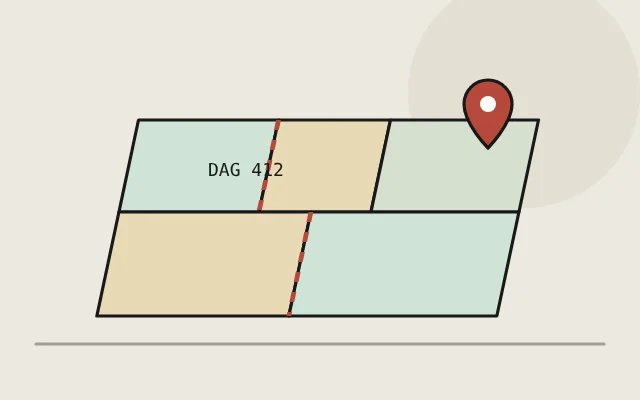
The lawyer collects certified copies of the khatians, deeds and mutation records, and the plaintiff gathers proof of present possession: land development tax receipts, utility bills, tenant rent receipts, photographs and the names of neighbours who can testify. Courts in Bangladesh repeatedly hold that a plaintiff seeking injunction over land must prove specific possession of a clearly identified plot. A vague or mismatched schedule is fatal, so the plot is identified on the mouza map by dag number and boundaries.
Where: Record room, AC Land office and sub-registry · Time: 2-4 weeks · Law: s.144A State Acquisition and Tenancy Act 1950; ss.74-77 Evidence Act 1872 · Documents: Certified khatian copies, Mouza map extract, DCR receipts, Utility bills and photographs
Tip: Describe the land by four boundaries as well as dag numbers; boundaries usually prevail when the two conflict.
 Step 4 · Filing and urgent interim relief
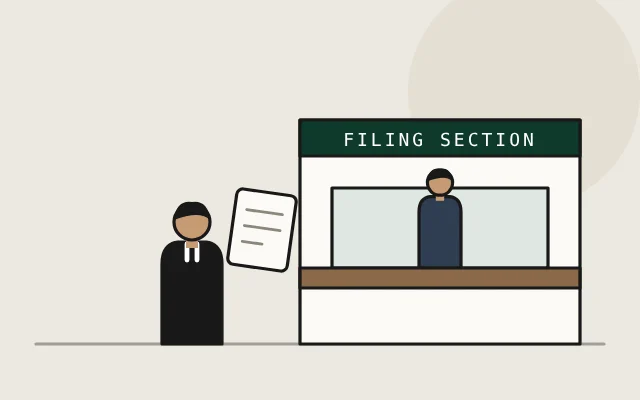
File the plaint with an injunction application
The lawyer files the plaint for a permanent injunction, valued at the amount the plaintiff puts on the relief, with the ad valorem court fee. That valuation also decides the forum: a Civil Judge up to Tk 15 lakh, a Senior Civil Judge up to Tk 25 lakh and a Joint District Judge above. On the same day the lawyer files a separate application for a temporary injunction, supported by affidavit, asking the court to restrain the defendant until the suit is decided.
Where: Civil court of first instance (Civil Judge / Senior Civil Judge / Joint District Judge) · Time: 1 day · Law: s.26 CPC; Order VII rule 1 CPC; Court-fees Act 1870, s.7(iv)(d); s.8 Suits Valuation Act 1887; ss.18-19 Civil Courts Act 1887 · Documents: Plaint with land schedule, Temporary injunction application with affidavit, Court fee, Vakalatnama
Tip: Valuing the relief artificially low to pay less fee can backfire: the court can call for proper valuation and the defendant will raise it.
 Step 5 · Filing and urgent interim relief
Ad interim order or show cause
The court must normally give notice of the temporary injunction application to the defendant before granting it. Where delay would defeat the purpose, for example a building about to go up, the court may grant an ad interim injunction or a status quo order straight away, usually for a short period, and call on the defendant to show cause. Unserved notices must be returned within seven days and re-served. Against a government office, ad interim relief needs notice to the Government Pleader first.
Where: Civil court of first instance (Civil Judge / Senior Civil Judge / Joint District Judge) · Time: Same day to 2 weeks · Law: Order XXXIX rules 3, 3A and 5A CPC; s.151 CPC · Documents: Order sheet, Notice to the defendant, Show cause order
Tip: An ex parte order is temporary. Expect the court to hear the defendant within days and vacate it if the urgency was overstated.
- Step 6 · Filing and urgent interim relief
Hearing of the temporary injunction
After the defendant files a written objection with affidavit, the court hears both sides. It asks three questions: is there a prima facie case of title and possession, does the balance of convenience favour an injunction, and would the plaintiff suffer irreparable loss without one. It may grant the injunction, refuse it, or order both parties to keep the status quo. Either side can later apply to vary or vacate the order if circumstances change.
Where: Civil court of first instance (Civil Judge / Senior Civil Judge / Joint District Judge) · Time: 1-4 months · Law: Order XXXIX rules 1, 2 and 4 CPC · Documents: Written objection with affidavit, Supplementary affidavits, Order on the injunction application
Tip: Possession is the heart of this hearing. Documents showing recent, physical possession usually decide it.
 Step 7 · Filing and urgent interim relief
Act on a breach of the temporary injunction
If the defendant disobeys the temporary injunction, for example by continuing construction, the plaintiff files a petition under Order XXXIX rule 2(3) with photographs and witnesses. The court may order attachment of the defendant's property and his detention in civil prison for up to six months. The court can also direct restoration of the earlier position. Breach must be proved with clear evidence, and the court will hear the defendant before acting.
Where: Civil court of first instance (Civil Judge / Senior Civil Judge / Joint District Judge) · Time: 1-6 months · Law: Order XXXIX rule 2(3) and (4) CPC; s.94(c) CPC · Documents: Violation petition with affidavit, Photographs and witness statements
Tip: Report a breach immediately. Waiting months suggests acquiescence and weakens the petition.
- Step 8 · Pleadings and mediation
Written statement and framing of issues
The defendant files a written statement to the suit within thirty working days of service, or later with the court's leave on reasonable grounds. He usually pleads his own title or possession, challenges the identity of the land, and argues that the suit is barred by section 56 or that a mere injunction is not maintainable because the plaintiff's title is clouded. The court then frames issues, typically on title, possession, identity of the land and maintainability.
Where: Civil court of first instance (Civil Judge / Senior Civil Judge / Joint District Judge) · Time: 2-6 months · Law: Order VIII rule 1 CPC; Order XIV rule 1 CPC · Documents: Written statement, Defendant's documents, Order framing issues
Tip: Where the defendant raises a serious title dispute, consider amending the plaint to add a declaration of title.
 Step 9 · Pleadings and mediation
Court-annexed mediation
After the written statement, the court must attempt mediation or refer the parties to a mediator, their lawyers or the legal aid officer. Neighbour boundary disputes and family land disputes often settle at this stage, for example by agreeing a demarcation line or access route. Mediation must end within sixty days unless extended by thirty. A settlement becomes a compromise decree and the court fee is refunded; a failure leaves the suit to continue without prejudice.
Where: Civil court of first instance (Civil Judge / Senior Civil Judge / Joint District Judge) · Time: 2-3 months · Law: s.89A CPC; Order XXIII rule 3 CPC · Documents: Mediation report, Compromise petition (if settled)
Tip: A clear sketch map attached to the compromise avoids a second dispute about where the agreed line runs.
 Step 10 · Trial
Local investigation by commissioner
If the parties dispute which plot is which, or who is in possession, the court appoints an advocate commissioner, often with a surveyor, to measure the land against the mouza map and report on boundaries, structures and possession. Notice of the inspection goes to both sides. The report and sketch map become part of the record and objections may be filed. In many injunction cases the commission report is the most important single piece of evidence.
Where: Record room, AC Land office and sub-registry · Time: 1-3 months · Law: Order XXVI rules 9-10 CPC; Order XXXIX rule 7 CPC · Documents: Commission application, Report and sketch map, Objections
Tip: Be present at the inspection with your own surveyor and point out the boundary marks yourself.
 Step 11 · Trial
Evidence and arguments
The plaintiff gives examination-in-chief on affidavit, as required since the 2026 amendments, and is cross-examined; neighbours and the commissioner may also testify. The defendant then leads evidence. No more than four adjournments can be granted at either party's request before the peremptory hearing; further adjournments carry costs and are strictly limited. In the permanent injunction suit in Bangladesh courts, the decisive question is usually whether the plaintiff proved exclusive possession of a specifically identified plot on the date of filing. Lawyers then argue on the evidence and case law.
Where: Civil court of first instance (Civil Judge / Senior Civil Judge / Joint District Judge) · Time: 1-3 years · Law: Order XVIII rules 2-4 CPC; Order XVIII rule 4A CPC (inserted by Act XXXVI of 2026, in force from 8 May 2025); Order XVII rule 1(3) CPC (as amended 2026); ss.101-103 Evidence Act 1872 · Documents: Affidavits in chief, Exhibits, Written arguments
Tip: Joint possession with co-sharers usually defeats an injunction against another co-sharer; partition is the proper remedy.
 Step 12 · Decree and enforcement
Judgment and decree
The court pronounces judgment in open court, at once or within seven days of the hearing, and draws up a decree. If the plaintiff succeeds, the decree perpetually restrains the defendant and those claiming under him from the specified acts, such as entering, building on or transferring the land. Where an obligation can only be protected by positive action, the court may add a mandatory injunction, for example ordering removal of a wall built on the plaintiff's land. A temporary injunction ends with the decree.
Where: Civil court of first instance (Civil Judge / Senior Civil Judge / Joint District Judge) · Time: 1 day to a few weeks · Law: ss.53-55 Specific Relief Act 1877; Order XX rules 1, 6 and 7 CPC · Documents: Judgment, Decree, Certified copies
Tip: Read the operative part closely: an injunction only stops the acts it names.
- Step 13 · Decree and enforcement
Enforcing the decree
If the defendant wilfully disobeys the decree, the decree-holder applies for execution, which since the 2026 amendments can proceed within the original suit. The court can order the defendant's detention in civil prison, attachment of his property, or both; attached property may be sold if disobedience continues for a year. For a mandatory injunction the court can have the act done by another person at the defendant's cost. The court may direct police to help. A violation is enforced by execution, not by filing a fresh suit.
Where: Civil court of first instance (Civil Judge / Senior Civil Judge / Joint District Judge) · Time: 3 months to 2 years · Law: Order XXI rule 32 CPC; Order XXI rule 104 CPC (inserted 2026); s.94A CPC (inserted 2026); Limitation Act 1908, Sch. I art. 182 · Documents: Execution petition, Evidence of the breach
Tip: Collect dated photographs and independent witnesses of each breach; courts require cogent proof of wilful disobedience.
- Step 14 · Decree and enforcement
Update records and protect the land
An injunction decree does not change ownership records, but it is strong evidence of possession. The decree-holder keeps paying land development tax, applies to the AC Land for mutation if the records are not already in his name, and keeps certified copies of the decree ready for any police complaint or future dispute. If the defendant tries to sell the land in breach of the decree, the buyer takes subject to it, and the decree can be produced to the sub-registry and to the buyer.
Where: Record room, AC Land office and sub-registry · Time: 1-3 months · Law: s.146 CPC; s.52 Transfer of Property Act 1882 (transfers while the suit or appeal is pending); s.143 State Acquisition and Tenancy Act 1950 · Documents: Certified decree, DCR receipts, Mutation application (if needed)
Tip: Keep a certified copy of the decree with your title deeds; you will need it in any future sale.
What if…? How the permanent injunction suit in Bangladesh can change course
Choose a scenario. The map animates the route up the hierarchy and, where a case is sent back, down to the lower court and up again.
What if the injunction order or the final decree is appealed?
- 1District Judge's Court (or Additional District Judge)
Miscellaneous appeal against the injunction order
An order granting or refusing a temporary injunction is appealable. The aggrieved party files a miscellaneous appeal to the District Judge within thirty days, or to the High Court Division within ninety days where the suit is before a Joint District Judge and valued above Tk 5 crore. The appellate court can stay, vary or reverse the order, and often hears the appeal quickly because the suit is waiting.
File within 30 days; decided in 2-12 monthsOrder XLIII rule 1(r) CPCs.104 CPCs.21 Civil Courts Act 1887Limitation Act 1908, arts. 152 and 156 - 2District Judge's Court (or Additional District Judge)
Title appeal against the final decree
After the final decree, the losing party may file a regular appeal within thirty days. This is a full rehearing of facts and law, normally before the District Judge or an Additional District Judge. The appellate court must decide the case itself where the evidence is sufficient, and it may stay execution of the decree pending appeal on terms such as security.
1-4 yearss.96 CPCOrder XLI rules 1, 5 and 24 CPC
Where it ends up: The District Judge or Additional District Judge confirms, varies or sets aside the order or decree.
Can the High Court Division revise an injunction order?
- 1District Judge's Court (or Additional District Judge)
Revision of non-appealable orders
Some interlocutory orders, such as a status quo order under section 151, are not appealable. These can be challenged in revision before the District Judge, which can call for the record and correct an error of law. From the District Judge's revisional order, a further revision lies to the High Court Division only with its leave, on an important question of law.
1-6 monthss.115(2) and (4) CPC - 2High Court Division
Civil revision after the miscellaneous appeal
No further appeal lies from an order passed in miscellaneous appeal, so the losing side moves the High Court Division in civil revision under section 115(1). The Bench may issue a Rule with an interim stay or status quo. It interferes only for an error of law causing failure of justice. The same route applies to the appellate decree after the title appeal, since there is no second appeal.
File within about 90 days; 6 months to 3 yearss.115(1) CPCs.104(2) CPC
Where it ends up: The High Court Division makes the Rule absolute or discharges it, and the suit continues on that footing.
Can the court review its own injunction order or decree?
- 1Civil court of first instance (Civil Judge / Senior Civil Judge / Joint District Judge)
Review by the same court
A party who has not appealed can apply to the same court for review on new and important evidence not available earlier despite diligence, an error apparent on the face of the record, or another sufficient reason. Review must be sought within ninety days of the decree or order. For temporary injunctions, an application to vary or vacate under Order XXXIX rule 4 is usually the more practical route.
File within 90 dayss.114 CPCOrder XLVII rule 1 CPCOrder XXXIX rule 4 CPCLimitation Act 1908, art. 173
Where it ends up: The court refuses review or reopens the matter and rehears it.
Can the trial court refer a legal question to the High Court Division?
- 1High Court Division
Reference under section 113
A reference is unusual in injunction suits. It arises where the case depends on a question of law on which the court has reasonable doubt, especially the validity of a statute or ordinance, for example one under which a public body claims the right to take the land. The court states the case, the High Court Division answers it, and the trial court decides the suit accordingly.
6 months to 2 yearss.113 CPCOrder XLVI rules 1-3 CPC
Where it ends up: The trial court receives the answer and decides the suit in conformity with it.
What if the injunction matter is sent back down?
- 1District Judge's Court (or Additional District Judge)
Appellate court sends it back
If the trial court disposed of the injunction application without considering the three tests, or dismissed the suit on a preliminary point that the appellate court rejects, the appellate court may send the matter back for fresh hearing on specified points. Since 2026 it must decide the case itself where the record is enough, so remand is reserved for real gaps. A District Judge's remand order is not itself appealable and is challenged in civil revision.
1-3 monthsOrder XLI rules 23-25 CPC (r.24 as amended 2026)s.115(1) CPC - 2Civil court of first instance (Civil Judge / Senior Civil Judge / Joint District Judge)
Fresh decision and renewed appeal
The trial court rehears the application or the remanded issues, keeping earlier evidence on record, and passes a new order or decree. That new decision can again be taken to the District Judge by appeal, and from there to the High Court Division in revision, so the case moves back up the same ladder it came down.
2-12 monthsOrder XLI rule 23 CPCOrder XLIII rule 1(r) CPC
Where it ends up: The trial court passes a fresh order or decree, which is again open to appeal.
Can the dispute reach the Appellate Division?
- 1Appellate Division of the Supreme Court
Leave to appeal
A party aggrieved by the High Court Division's judgment in revision or first appeal files a civil petition for leave to appeal, normally within sixty days. Interim orders on injunctions also reach the Appellate Division this way, often with an urgent application to the Chamber Judge. Leave is granted only where a substantial question of law arises.
File within 60 days; 6 months to 3 yearsArticle 103 ConstitutionAppellate Division Rules 1988, Order XIII - 2Appellate Division of the Supreme Court
Final decision
If leave is granted, the civil appeal is heard and decided, and the decision binds all courts. A review petition may be filed within thirty days for an error apparent on the record. The case then returns to the trial court, which continues the trial or executes the decree in line with the Appellate Division's judgment.
Review within 30 daysArticles 105 and 111 ConstitutionAppellate Division Rules 1988, Order XXVI
Where it ends up: The Appellate Division's order is final, and the trial court proceeds in line with it.
How the permanent injunction suit in Bangladesh moves up the court hierarchy
Every permanent injunction suit in Bangladesh begins in the civil court whose pecuniary limit matches the plaintiff's valuation of the relief: a Civil Judge up to Tk 15 lakh, a Senior Civil Judge up to Tk 25 lakh, and a Joint District Judge above that. Two tracks then run in parallel. Orders on the temporary injunction go by miscellaneous appeal under Order XLIII rule 1(r) to the District Judge, or to the High Court Division where a Joint District Judge's suit exceeds Tk 5 crore.
The final decree goes by regular appeal along the same value-based route. Both kinds of appeal rehear facts and law. Since there is no second appeal, the next step is civil revision in the High Court Division, limited to errors of law causing failure of justice. The Appellate Division sits at the top and hears matters only by leave.
- Appellate DivisionAppellate Division of the Supreme Court
- High Court DivisionHigh Court Division
- Appellate levelDistrict Judge's Court (or Additional District Judge)
- First instanceCivil court of first instance (Civil Judge / Senior Civil Judge / Joint District Judge)
- Start · outside courtLawyer's chamber · Local police station · Record room, AC Land office and sub-registry
Where your case is heard
Addresses are for Dhaka. Every district has equivalent courts at its own district judgeship.
Supreme Court of Bangladesh (Appellate Division and High Court Division)
Supreme Court of Bangladesh, Shahbag, Ramna, Dhaka-1000Hears appeals, revisions, references, writ petitions under Article 102, company matters and death references (High Court Division), and appeals by leave from the High Court Division (Appellate Division).
Both Divisions sit in the Supreme Court complex; many High Court Division benches sit in the Annex Building. Check the daily cause list for the bench and court room. Postal contact is the Registrar General, Supreme Court of Bangladesh, Ramna, Dhaka-1000.
Court of the District and Sessions Judge, Dhaka (Dhaka Judge Court)
Dhaka Judge Court premises, 16 Johnson Road, Sadarghat, DhakaSeat of the Dhaka District Judge and Additional District Judges (civil appeals, probate, district-level civil and sessions work outside the metropolitan area) and the civil courts of first instance (Joint District Judge, Senior Civil/Assistant Judge courts).
Official judiciary portal gives '16 Johnson Road, Sadarghat, Dhaka'. Many civil courts (Additional District Judge courts, Joint District Judge and Senior Assistant Judge courts, Artha Rin Adalat No.1, insolvency court) are in the new 8-storey District Judge Court building in the same premises. The 2026 judgeship list names the first-instance civil courts 'Senior Civil Judge' / 'Civil Judge' (formerly Senior Assistant Judge / Assistant Judge); some pages still use the old names. Every district has an equivalent court at its district judgeship.
Lawyer's chamber
Where this happens depends on your district or the office concerned. Ask us for the exact courtroom and address.
Dhaka Metropolitan Police (DMP) Headquarters
36 Minto Road, DhakaHeadquarters of the Dhaka Metropolitan Police; FIRs are lodged at the local police station, not here.
Emergency: 999. For a case, go to the police station with jurisdiction over the place of occurrence.
Office of the Deputy Commissioner (District Magistrate), Dhaka
Dhaka (exact address not confirmed)District administration: land revenue and record-correction appeals, certificate cases, acquisition, executive magistracy and mobile courts for Dhaka district.
The official street address could not be read from dhaka.gov.bd (its contact pages did not load); the judiciary portal confirms office phone 02-223389786. Confirm the address before visiting. Every district has a Deputy Commissioner's office at the district headquarters.
How long each stage takes
These are indicative ranges based on typical Dhaka practice. Adjournments, case backlogs and appeals can stretch them.
Documents checklist and key terms
Tick off what you have. Your ticks stay saved in this browser. Bring the list to your first meeting with your lawyer.
- Perpetual (permanent) injunction
- A final order in the decree permanently forbidding the defendant from doing specified acts (s.53-54 Specific Relief Act).
- Temporary injunction
- An interim order under Order XXXIX CPC that lasts until the suit is decided or the court orders otherwise.
- Ad interim injunction
- A short-term order made before the defendant is heard, pending the hearing of the temporary injunction application.
- Status quo
- An order that both sides keep the property as it is, without changing possession or character, until further order.
- Mandatory injunction
- An order compelling a positive act, such as removing a structure, to undo a breach (s.55 Specific Relief Act).
- Miscellaneous appeal
- An appeal against an order, rather than a decree, such as one granting or refusing a temporary injunction (Order XLIII CPC).
- Prima facie case
- A case that, on first look at the papers, raises a serious question worth trying.
- Civil revision
- A High Court Division proceeding under s.115 CPC correcting errors of law in lower court decisions where no appeal lies.
Permanent injunction suit in Bangladesh: common questions
What does a permanent injunction suit in Bangladesh protect?
What is the difference between a temporary and a permanent injunction?
Can I get an injunction the same day I file?
What if the defendant ignores the injunction?
Can I appeal if the temporary injunction is refused?
Do I need to prove title in an injunction suit?
How long does a permanent injunction suit in Bangladesh take?
Can a co-sharer get an injunction against another co-sharer?
Law and sources
- Specific Relief Act 1877
- Code of Civil Procedure 1908
- Civil Courts Act 1887
- Court-fees Act 1870
- Limitation Act 1908
- High Court Division, Civil Revision No. 3084 of 2024 (enforcing a permanent injunction decree under Order XXI rule 32)
- High Court Division, Civil Revision No. 6554 of 2023 (title and possession in injunction suits)
- High Court Division, Civil Revision No. 2271 of 2023 (temporary injunction)
- UNB: Govt moves to fast-track lower court cases (CPC Amendment Act 2026)
This Case Journey is a general guide to procedure in Bangladesh as of October 2026. It is not legal advice. Procedure, fees and time limits change, and every case turns on its own facts. Timelines are indicative. Speak to a lawyer about your own matter.
Run this case from outside Bangladesh
You can usually start and run this case without travelling. You sign a power of attorney abroad, the Bangladesh High Commission or Embassy attests it, and your attorney and lawyer act for you in Dhaka. Some steps, such as giving evidence in person, may still need you or a commission. See how a case runs through a power of attorney →
Want to know where your case stands?
Book a consultation. A TRW lawyer will place your matter on this map, explain the next step and the realistic timeline, and tell you what to prepare.