
TRW Insight / Bangladesh
Article 102 lets the High Court order a prisoner's release, correct unlawful jail practices and award compensation. With prisons at almost three times capacity in 2026, knowing when a writ beats a bail application matters.
Prisoners rights writ: the constitutional basis in 2026
A prisoners rights writ is the fastest constitutional tool available to a person held in a Bangladeshi jail, or to the family trying to get them out. When a prisoner is kept beyond the end of a sentence, held for years without trial, chained to attend a funeral, or confined in conditions the law does not allow, Article 102 of the Constitution lets the High Court Division examine the detention, order release and, in the right case, award compensation against the State.
That remedy matters more in 2026 than at any point in recent memory. Prisons that were built for about 45,000 people held more than 130,000 in October 2026, most of them awaiting trial.[12] This guide explains the legal framework under the Prisons Act 1894 and the Jail Code, the main grounds on which the High Court intervenes, the leading orders on release after sentence, under-trial detention, condemned cells and compensation, and the practical steps that decide whether a petition succeeds.
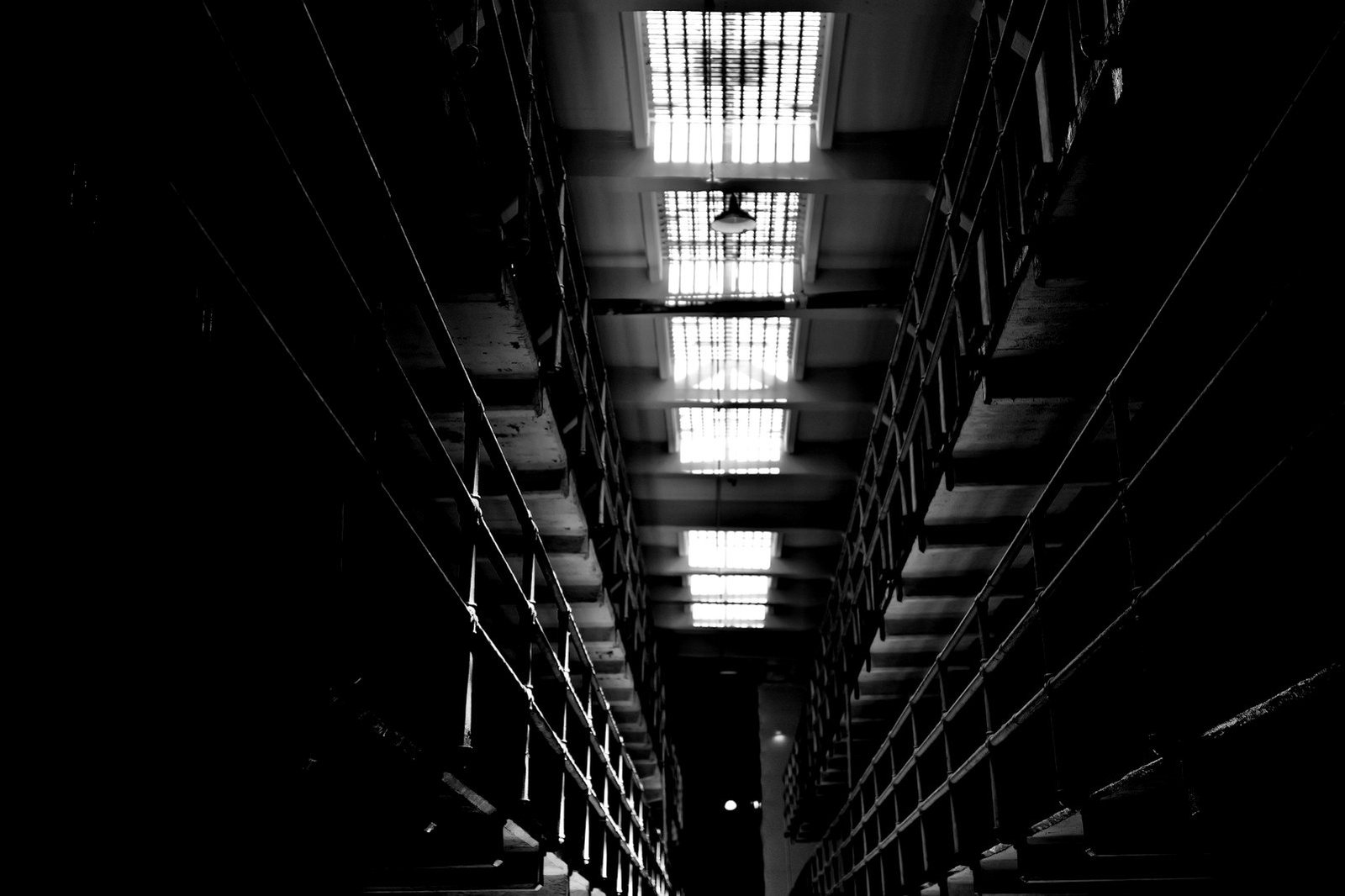
Summary: A prisoner in Bangladesh keeps every fundamental right that imprisonment does not necessarily take away. Where jail or police authorities detain someone without lawful authority, ignore the Prisons Act 1894 or the Jail Code, or treat a prisoner in a cruel or degrading way, the High Court Division can declare the act unlawful under Article 102, order immediate release and direct the State to pay compensation.
Key point: Continued detention after a sentence has been served is detention without lawful authority. The High Court has ordered immediate release in such cases, and the Appellate Division has directed the prison department to apply section 35A of the Code of Criminal Procedure so that time spent in custody during trial is deducted from the sentence.
At a glance
Legal basis
Article 102 of the Constitution, read with the fundamental rights to life, liberty and freedom from cruel or degrading treatment.
Governing rules
The Prisons Act 1894 and the Jail Code made under it regulate separation, medical care, visits, discipline and death-row confinement.
Common grounds
Detention after sentence, prolonged under-trial custody, unlawful restraints, overlapping preventive detention and denial of medical care.
Remedies
Immediate release, production before the court, declarations, directions to jail authorities and monetary compensation.
2026 context
Severe overcrowding, a draft Correction Services Act and continuing litigation over death-row confinement.
Table of Contents
Prisoners rights writ: the constitutional basis in 2026
The starting point is simple. Imprisonment takes away liberty of movement; it does not take away the protection of law. Articles 31 and 32 of the Constitution guarantee that no person shall be deprived of life or personal liberty save in accordance with law, Article 35 protects against cruel, inhuman or degrading punishment or treatment, and Article 36 protects freedom of movement. When the Ain o Salish Kendra challenged the continued detention of prisoners who had already served their sentences, the High Court framed its rule around exactly these provisions.[2]
Article 102 converts those guarantees into enforceable orders. The High Court Division can direct any person performing functions in connection with the affairs of the Republic to act in accordance with law, declare an act done without lawful authority, and order that a person held in custody be brought before it so the court can satisfy itself that the detention is lawful. Jail superintendents, the Inspector General of Prisons, the Ministry of Home Affairs and the police all fall within that jurisdiction. For a general overview of the procedure, see our guide to the writ petition in Bangladesh.
Who can file
The petition is usually filed by the prisoner through a relative, because the prisoner cannot easily swear an affidavit from inside a jail. Rights organisations have also brought public interest petitions on behalf of groups of prisoners, and the High Court has acted on its own motion after media reports. In the Arman case, for example, the petition was filed by a legal aid organisation relying on a national newspaper report, and the court issued a rule within days of the filing.[4]
How it differs from bail
A prisoners rights writ does not ask the court to weigh the evidence in a criminal case. Bail is decided by the criminal courts under the Code of Criminal Procedure, and a petitioner who simply wants bail should pursue that route, including before the High Court on bail. The writ jurisdiction is reserved for detention or treatment that has no lawful basis at all, or that breaches a statutory or constitutional duty owed by the jail or the executive.
The Prisons Act 1894 and the Jail Code
The statutory framework is old. The Prisons Act 1894 remains the principal statute, and the government is empowered by section 59 to make rules on matters from prison offences to the classification of prisoners.[1] The detailed rules, together with administrative instructions, are compiled in the Jail Code, which jail authorities follow on everything from diet and clothing to interviews and discipline. A breach of either can found a writ, because both bind the officers who run the prisons.
Duties the Prisons Act imposes
Several provisions are regularly relied on in litigation. Section 27 requires women to be held separately from men, young male prisoners to be separated from adults, unconvicted prisoners to be kept apart from convicted prisoners, and civil prisoners apart from criminal prisoners.[1] Section 29 forbids the use of a cell for solitary confinement unless the prisoner can communicate with an officer at any time, and requires a daily medical visit for anyone held alone for more than twenty-four hours. Section 40 requires proper provision for under-trial prisoners to meet their lawyers without others present.[1]
Medical care and deaths in custody
The Medical Officer has charge of sanitary administration under section 13, must report in writing where a prisoner's mind is likely to be injured by the discipline or treatment imposed, and must record specified particulars in a register whenever a prisoner dies.[1] Those records are often the most important evidence in a later petition. A family pursuing a claim after a death in jail should demand them early, and our sibling guide on custodial death compensation in Bangladesh explains the separate remedies available after a death.
Reform in progress
In August 2025 the Inspector General of Prisons announced plans to rename Bangladesh Jail as Correction Services Bangladesh and said a draft Correction Services Act 2025 had been finalised and sent for government approval.[11] We have not seen that draft enacted. Until a new statute is passed and brought into force, the Prisons Act 1894 and the Jail Code remain the law that writ petitions must be built on.

Release after sentence: detention without lawful authority
The clearest ground for a prisoners rights writ is continued detention after the lawful term has ended. Once a sentence expires, the jail has no authority to hold the prisoner, and every further day is detention outside the law. The problem is usually administrative rather than deliberate: warrants that never reach the jail, release orders that are not communicated, or custody periods that are not credited.
The issue reached the High Court in 2005. Ain o Salish Kendra challenged the detention in Dhaka Central Jail of prisoners who had served their sentences but were not released because conviction warrants had not reached the jail through the negligence of court staff and jail authorities. On 16 April 2005 the court issued a rule asking why the continued detention should not be declared without lawful authority, why an independent inquiry commission should not be appointed, and directed the respondents to produce a list of the affected prisoners.[2]
The Rezaul Kabir Sweet order
A more recent illustration shows how quickly the court acts when the facts are stark. Rezaul Kabir Sweet was arrested in August 2015 in a cheque dishonour case. In September 2018 a Dhaka special judge sentenced him to one year, recording him as a fugitive although he had never been granted bail and had never left custody. A letter sent through the jail in August 2019 produced no action. In March 2020 a High Court bench ordered his immediate release, called for the lower court records and issued a rule against the home secretary, the Inspector General of Prisons and the jail superintendents.[3]
Crediting time spent in custody
Section 35A of the Code of Criminal Procedure requires the period a convict spent in custody during the trial to be deducted from the sentence. In November 2021 the Appellate Division, hearing a life-sentence appeal, asked the Ministry of Home Affairs and the prison department to comply strictly with section 35A and directed the jail authorities to apply it to the appellant's imprisonment.[5] A sentence calculation that ignores pre-trial custody is one of the most common reasons a prisoner is held too long, and it is one of the easiest errors to prove from the case records.
Under-trial detention and the right to a speedy trial
Most people in Bangladeshi jails have not been convicted. According to figures reported in October 2026, more than 75,000 of the 130,128 inmates held on 14 October 2026 were awaiting trial, against an official capacity of 45,186.[12] Prolonged under-trial detention is therefore the largest single source of rights complaints, and the writ jurisdiction has been used to force the system to look again at forgotten cases.
In one widely reported matter, a High Court bench acted on its own motion after a television report about four under-trial prisoners in Kashimpur jail who had reportedly been held for between sixteen and eighteen years in murder cases. The court issued a rule asking why they should not be granted bail, ordered the jail authorities to produce them in court and called for the records of the pending cases.[9] The value of the order lay less in any final declaration than in the immediate pressure it placed on the trial courts.
When the writ route is right
Where an under-trial prisoner is lawfully remanded by a court, the first remedy is a bail application and, if trial delay is the problem, an application to the trial court or the High Court for directions. A writ becomes appropriate where the detention has lost its legal footing: the case has been disposed of but the prisoner remains in jail, the person is held without any production warrant, or the State has layered an executive detention order on top of a pending criminal case.
Preventive detention of a person already in custody
That last situation was examined in February 2026. In Umme Habiba v Government of Bangladesh, the detenu had been arrested in October 2025 under anti-terrorism and explosives laws and refused bail, after which the Ministry of Home Affairs issued a ninety-day order under section 3(1) of the Special Powers Act 1974 and later extended it. The High Court held that issuing a preventive detention order against someone already in custody in a specific criminal case was a colourable use of power, punitive rather than preventive, and set the order and its extension aside.[10]

Conditions, restraints and death-row confinement
A prisoners rights writ can also target how a prisoner is treated, not merely whether they should be held. The court has been willing to examine restraints, segregation and the conditions in which particular classes of prisoner are kept, measuring them against the Prisons Act, the Jail Code and the constitutional bar on cruel, inhuman or degrading treatment.
Handcuffs and bar fetters
In January 2023 a High Court bench issued a public interest rule after two under-trial prisoners, released on parole to attend their mothers' funeral prayers, were made to do so in handcuffs and bar fetters. The rule asked why the arbitrary and unreasonable imposition of these restraints on general prisoners should not be declared illegal, why a high-powered committee should not be formed to recommend guidelines, and why the two men should not receive reasonable compensation. The petitioner relied on Article 35(5).[8]
Condemned cells before a death sentence is final
Section 30(2) of the Prisons Act requires every prisoner under sentence of death to be confined in a cell apart from all other prisoners and placed under guard by day and night.[1] The practical question is when that regime may begin. A writ filed in 2021 on behalf of three death-row convicts held in Chattogram, Sylhet and Cumilla jails led the High Court to call for a report on facilities for 1,987 death-row convicts nationwide and then to issue a rule in 2022.[6]
On 13 May 2024 a bench of Justices Sheikh Hassan Arif and Md Bazlur Rahman disposed of the rule, barring the authorities from keeping people sentenced to death in condemned cells until their sentences are final. According to the petitioners' counsel, the judgment allows solitary confinement only after all appeals, including mercy petitions, are disposed of.[6] Two days later the Appellate Division chamber judge stayed the judgment on the State's application and directed the State to file a regular petition.[7] Check the current status of that appeal before relying on the High Court's reasoning.
Compensation in a prisoners rights writ
Release ends the wrong; compensation addresses what it cost. The High Court has treated monetary compensation as a public law remedy that it can grant directly under Article 102 where a fundamental right has been violated by State agents. The general principles are discussed in our sibling guide on compensation in a writ petition.
The Arman case is the clearest recent example. Md Arman was reportedly arrested by mistake in place of a convicted drug offender with a similar father's name and spent nearly five years in jail. On 31 December 2020 the High Court ordered his immediate release, directed the Dhaka Metropolitan Police Commissioner to pay him Tk 20 lakh within thirty days and sought departmental action against four police officers.[4] On 12 January 2021 the Appellate Division chamber judge stayed the compensation order for eight weeks on the State's application.[4]
Two lessons follow. First, the State will often seek a stay of a monetary award even where it does not contest release, so petitioners should press for release orders to be implemented immediately and treat compensation as a separate battle. Second, compensation claims depend on proof of a specific wrong by identifiable officers, which is why the jail registers, warrants and case records matter so much.

Bodies involved in a prisoners rights writ
Getting the respondents right is essential to any prisoners rights writ. A petition that omits the officer who actually holds the prisoner, or the court whose records are needed, risks delay at the first hearing.
Ministry of Home Affairs
Controls the prison department and issues Special Powers Act detention orders.
Inspector General of Prisons
Exercises general control over prisons under the Prisons Act 1894.
Jail superintendent and jailer
Hold the prisoner, keep the registers and act on release orders.
Prison Medical Officer
Responsible for sanitary administration, medical reports and death registers.
Inspector General and police commissioners
Arrest, produce and identify accused persons; often liable for wrongful arrest.
Trial and sessions courts
Hold the case records, issue warrants and decide bail.
In the Sweet case the respondents included the home secretary, the Inspector General of Police, the trial judge, the Inspector General of Prisons, two jail superintendents and the complainant, which shows the breadth the court expects.[3] Each respondent should have a clear role in the detention or in the records the court needs.
Step-by-step: filing a prisoners rights writ
Prison cases move quickly once the court is engaged, and the preparation that comes before the first hearing usually decides the outcome. The sequence below reflects how we approach these petitions.
Confirm the basis of detention
Identify every case, warrant, remand order or executive detention order under which the prisoner is held, and the jail holding them.
Collect the records
Obtain the judgment, conviction or production warrant, arrest date, custody certificate and any jail correspondence.
Recalculate the term
Work out the sentence expiry date, crediting custody during trial under section 35A of the Code of Criminal Procedure.
Choose the forum
Decide whether bail, a trial-court application or an Article 102 petition ends the detention fastest.
Name the right respondents
Include the home ministry, prison authorities, the jail superintendent and, where records are needed, the trial court.
Seek interim relief
Ask for production of the prisoner, a call for records or immediate release at the first hearing.
Press for implementation
Serve the order on the jail at once and follow up until the prisoner walks out.
Pursue compensation separately
Build the claim on documented wrongs by identifiable officers and prepare for a stay application by the State.
Throughout, keep the relief proportionate to the evidence. A clear, documented claim for release is usually granted at the first hearing; a broad challenge to prison policy needs a fuller record and more time.
Choosing the right remedy
Not every complaint from a jail belongs in a prisoners rights writ. The table below compares the main routes. On a phone, scroll it sideways.
| Problem | Usual remedy | Forum | Typical outcome | Key point |
|---|---|---|---|---|
| Held after sentence ends | Writ under Article 102 | High Court Division | Immediate release | Prove the expiry date from the records |
| Custody not credited | Application citing section 35A CrPC | Trial court, jail or High Court | Corrected release date | Appellate Division has directed strict compliance |
| Long under-trial custody | Bail application or directions on trial | Trial court or High Court | Bail or expedited trial | Writ only where detention lacks a legal basis |
| Preventive detention on top of a case | Writ under Article 102 | High Court Division | Detention order set aside | Colourable use of power, February 2026 |
| Unlawful restraints or conditions | Writ, often public interest | High Court Division | Declaration and guidelines | Article 35(5) and the Prisons Act |
| Wrongful imprisonment | Writ seeking compensation | High Court Division | Monetary award | Expect a stay application by the State |
Where more than one route is available, start with the one that ends the detention fastest and keep the others in reserve. A bail order, a corrected sentence calculation or a writ for release can each achieve that result, and the choice depends on why the person is still inside.
Common mistakes and what to watch in 2026
The most frequent mistake is filing without the documents. A prisoners rights writ for release after sentence needs the judgment, the conviction warrant, proof of the arrest date and any custody certificate from the jail. Without them, the court can only issue a rule and call for reports, which costs weeks.
The second mistake is framing a bail dispute as a constitutional challenge. The High Court will not use Article 102 to bypass the criminal courts where the detention rests on a valid remand order. The third is ignoring the stay risk: where an order is stayed by the Appellate Division, as happened in both the Arman and condemned-cell cases, the practical benefit can disappear for months.[4] [7]
Looking ahead, three developments matter. Overcrowding at almost three times official capacity will keep generating complaints about conditions and medical care.[12] The draft Correction Services Act, if enacted, will replace the 1894 framework and change the statutory duties on which petitions rely.[11] And the courts' approach to preventive detention orders against people already in custody, confirmed in February 2026, gives families a clearer basis to challenge layered detention.[10] For broader context on constitutional remedies, see our constitutional and writ litigation practice.
Frequently asked questions
What is a prisoners rights writ in Bangladesh?
It is a petition under Article 102 of the Constitution asking the High Court Division to declare a prisoner's detention or treatment unlawful and to order release, corrective directions or compensation. It relies on the fundamental rights to life, liberty and freedom from cruel or degrading treatment.[2]
Can a family member file the writ for a prisoner?
What can be done if a prisoner is kept in jail after the sentence ends?
Is time spent in custody before conviction deducted from the sentence?
Yes. Section 35A of the Code of Criminal Procedure requires it, and the Appellate Division has directed the home ministry and prison department to comply strictly.[5]
Can the High Court award compensation for wrongful imprisonment?
Yes. In the Arman case the High Court ordered Tk 20 lakh to be paid to a man jailed by mistake for nearly five years, although the Appellate Division chamber judge stayed the payment order on the State's application.[4]
Must under-trial and convicted prisoners be kept separately?
Yes. Section 27 of the Prisons Act 1894 requires unconvicted criminal prisoners to be kept apart from convicted prisoners, women apart from men, and young male prisoners apart from adults.[1]
Can a death-row convict be held in a condemned cell before the appeal is decided?
Can the government issue a preventive detention order against someone already in jail?
In February 2026 the High Court set aside a Special Powers Act detention order against a person already in custody in a specific criminal case, holding it to be a colourable, punitive use of power.[10]
How overcrowded are Bangladeshi prisons in 2026?
On 14 October 2026 the prisons held 130,128 inmates against an official capacity of 45,186, and more than 75,000 were awaiting trial.[12]
Is the Prisons Act 1894 being replaced?
A draft Correction Services Act 2025 was finalised and sent for government approval in August 2025, together with a plan to rename the service Correction Services Bangladesh. Until a new law is in force, the 1894 Act and the Jail Code continue to apply.[11]
Source register
Primary legal and regulatory sources
Materials checked on 23 October 2026. Confirm the current official text before relying on any provision.
- Prisons Act 1894 (Act No IX of 1894), sections 13 to 15, 27, 29, 30, 40 and 59
- Ain o Salish Kendra — Prisoners' Case, Writ Petition No 1987 of 2005 (rule issued 16 April 2005)
- Dhaka Tribune, 10 March 2020 — Convicted for 1 year but jailed for 4: HC orders release
- The Business Standard, 12 January 2021 — HC's order to compensate Tk20 lakh to wrongly jailed Arman stayed
- The Financial Express, 1 November 2021 — Deduct time served in jail during trial from total sentence, says SC
- Prothom Alo, 14 May 2024 — HC bars keeping death-row convicts in solitary confinement till sentence finalised
- Prothom Alo, 15 May 2024 — Appellate Division stays HC verdict on solitary confinement
- The Financial Express, 31 January 2023 — HC questions legality of arbitrary imposition of handcuffs and bar fetters upon prisoners
- The Daily Star — Produce four prisoners serving years without trial: HC
- High Court Division, Mst Umme Habiba v Government of Bangladesh, Writ Petition No 21658 of 2025 (judgment 22 February 2026)
- Dhaka Tribune, 26 August 2025 — Bangladesh Jail to be renamed Correction Service
- Dhaka Tribune, 17 October 2026 — More than 1,000 arrested daily as Bangladesh prisons exceed capacity
Related TRW assistance
Move from information to a defined next step
TRW acts for prisoners and their families in writ petitions for release, challenges to preventive detention, prison conditions and compensation claims. Explore our constitutional and writ litigation practice or contact TRW to discuss your matter.